Table of Contents:
Introduction
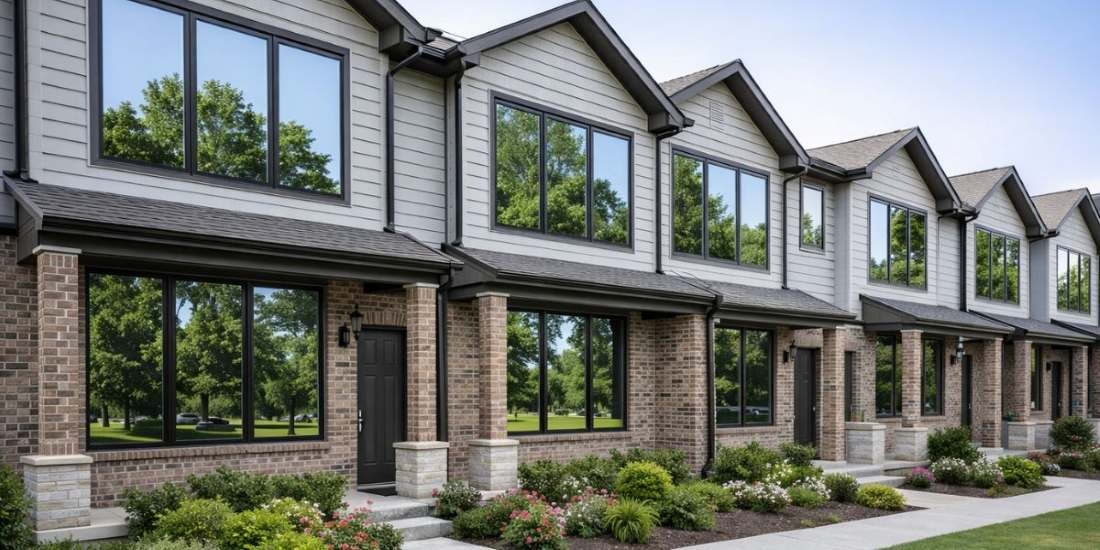
One way privacy window film decorative installation creates a mirror effect on glass surfaces during daylight hours, allowing you to see outside while blocking the view from outside people looking in. This reflective window tinting for homes works by exploiting the light differential between the brighter outdoor environment and darker interior space.
This guide covers residential and commercial applications of privacy window film, including installation methods, performance factors across different window types, and the critical limitation of night time privacy. Whether you’re a homeowner seeking daytime privacy for ground-floor rooms or a property manager evaluating solutions for office spaces, this content addresses the practical realities of one way visibility film—what it can and cannot do.
Direct answer: One way window film provides effective privacy during daylight hours by creating a reflective surface that acts like a mirror on the side with stronger light sources. When sunlight is brighter outside than inside, outsiders see their own reflection rather than your interior. This mirror effect reverses at night when your room becomes bright inside with artificial lighting.
By the end of this guide, you will understand:
- The physics behind how one way film creates privacy through light reflection
- Key differences between static cling, adhesive, and metallized film options
- Installation requirements and performance expectations for different glass types
- Solutions for night privacy and low-light conditions
- Selection criteria for choosing the right privacy film for your space
Understanding One Way Privacy Window Film
One way privacy window film is a reflective glazing treatment that creates controlled visibility through a thin metallic or ceramic layer applied to glass. The film produces a mirror effect by reflecting light on the brighter side while allowing light transmission from the darker side. This technology serves dual purposes: maintaining your clear view outward while protecting your interior from outside observation during daytime, which in turn, enhances security. This mirrors the same light-differential principle that governs how one-way mirrors work in real projects.
How Mirror Film Technology Works
The reflective power of privacy window protection film depends entirely on light differential—the contrast between light levels on each side of the glass. When the sun illuminates the exterior and your room remains relatively dark, the metallic coating reflects outdoor light, creating a mirror appearance from the street while you maintain visibility looking out.
This principle explains why the effectiveness varies throughout the day. Strong sunlight creates maximum reflection and privacy. Overcast conditions reduce the differential, weakening the mirror effect. The film functions because light always travels toward the darker environment, so when outside is brighter, light reflects back rather than passing through to reveal your interior.
Static Cling vs Adhesive Options
Static cling films adhere to glass through electrostatic charge without adhesive, making them super easy to install and remove. These films suit renters or anyone who wants a temporary solution without worrying about residue or damage when removed. However, static cling options typically offer less durability and may shift position over time.
Adhesive-mounted films provide permanent installation with stronger environmental resilience. The adhesive creates a bond that withstands thermal cycling and maintains position through temperature changes. Professional installers generally recommend adhesive films for long-term applications where quality and lifespan matter more than removability.
Understanding these installation methods helps you choose based on your situation—whether you need flexibility to remove the film or prefer a permanent privacy solution for your home or office, and whether you’re comfortable with a do-it-yourself window film installation or prefer professional help.
Types and Applications
Building on the technology fundamentals, different film types offer varying levels of reflectivity, light transmission, and appearance to match specific privacy needs and aesthetic preferences.
Silver Mirror Film
Silver mirror film delivers the highest level of reflective privacy with a distinctly metallic appearance. These films typically feature Visible Light Transmission (VLT) between 10-30%, meaning they significantly reduce the amount of sunlight entering your room while creating a strong mirror effect during daylight hours.
The silver coating provides excellent heat reduction by reflecting solar energy, often rejecting 70-90% of total solar energy. This makes silver mirror film ideal for ground-floor windows facing busy streets, storefront glass, and any position with direct sun exposure. The trade-off is a pronounced reflective appearance from outside and reduced effectiveness—actually reversed privacy—at night when interior lighting makes your space the brighter environment.
Bronze and Gray Tinted Options
Bronze and gray privacy films offer a more subtle appearance with a slight tint rather than aggressive mirror reflection. These options typically allow 30-40% light transmission, maintaining more natural lighting in your room while still providing daytime privacy through their reflective properties, similar in concept to dual-reflective window film for improved visibility.
Bronze tints create a warm appearance that complements certain architectural styles, while gray films produce a neutral, modern aesthetic. Both reduce glare and sunlight intensity without the showroom-mirror look of silver options. Interior reflectance tends to be lower, which slightly improves the view from inside and reduces the mirror effect you see at night—though neither eliminates night privacy concerns entirely.
Perforated Privacy Films
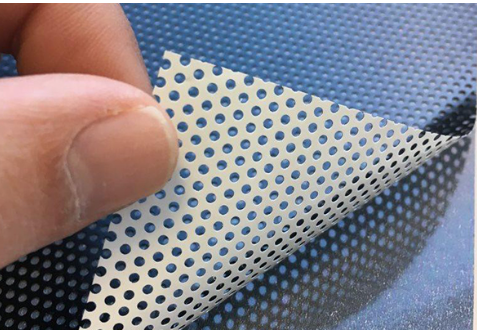
Perforated privacy films use a different approach: thousands of micro-holes that allow you to see out while appearing opaque or displaying graphics from the other side. This technology originated in vehicle and storefront signage applications where one way visibility was essential and is now part of a broader category of privacy and decorative window films for glass.
These films work well for door glass, patio doors, and commercial façades where full reflectivity isn’t appropriate. The perforation pattern does reduce light transmission more than uniform reflective films and requires more careful maintenance when cleaning. Like standard reflective options, perforated films follow the same light differential principle—they work during daytime but reverse at night with interior illumination, making them less suitable when you specifically need day and night privacy window film solutions.
Installation and Performance Factors
Proper installation determines whether your privacy window film delivers its full potential or fails within months. Surface preparation and application technique directly affect both immediate appearance and long-term function.
Surface Preparation and Installation Process
Successful installation requires attention to detail from the beginning. Any dust, residue, or imperfection on the glass surface will create bubbles or adhesion failures that compromise both appearance and effectiveness.
- Clean window surface thoroughly using a lint-free cloth and appropriate glass cleaner, removing all traces of dirt, oils, and previous treatments from the entire glass surface including edges
- Measure and cut film to size allowing slight overlap beyond the visible glass area for precise trimming after application
- Apply with solution or static cling method using soapy water for adhesive films to allow positioning adjustments before the bond sets
- Remove air bubbles and trim edges working from center outward with a squeegee, then cutting precisely along the glass edge with a sharp blade
Temperature and humidity affect adhesive curing. Most manufacturers recommend installation when glass temperature falls between 40-95°F with moderate humidity. Extreme conditions can cause adhesion failure or premature fade, so working with experienced 3M window film products and installers and considering 3M Night Vision (NV) Series low-reflectivity window films can help ensure proper application and balanced privacy performance.
Performance Comparison by Window Type
Film effectiveness varies significantly based on your window configuration, orientation, and existing glazing technology.
| Window Type | Daytime Privacy | Night Effectiveness | Installation Notes |
|---|---|---|---|
| Single pane | Strong mirror effect with low VLT films; maximum reflection | Fully reversed; interior visible from outside | May raise glass surface temperature; monitor for thermal stress |
| Double pane | Slightly reduced reflectivity due to existing coatings | Night reversal similar; interior reflectance more noticeable | Check manufacturer compatibility with low-e glass |
| Patio doors | Large surface creates pronounced mirror appearance; excellent heat reduction | Substantial interior reflection; curtains or blinds typically needed | Edge sealing critical; consider reinforced film for sliding door tracks |
| North-facing windows | Weaker effect due to lower light differential from shaded position | Film appears as tint rather than mirror day and night | May require very low VLT film or alternative privacy solution |
| This comparison helps you set realistic expectations based on your specific window situation rather than hoping any film will work everywhere, especially when you’re evaluating the best window film options for nighttime privacy. |
Common Challenges and Solutions
Understanding typical problems before they occur allows you to make informed decisions and implement appropriate countermeasures.
Night Time Privacy Loss
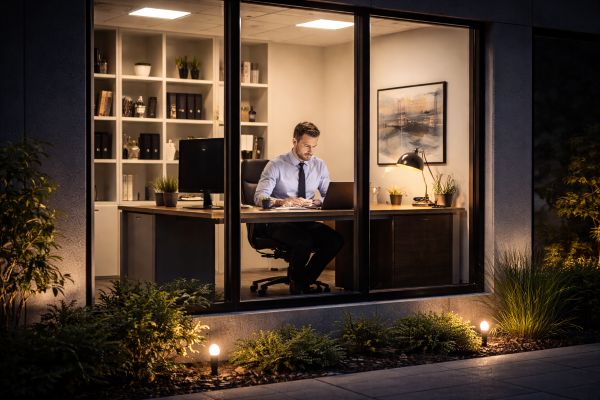
The most common frustration with one way window film is discovering that privacy disappears at night. When you turn on interior lighting, your room becomes the bright side of the glass, and the mirror effect reverses—outsiders can now see in while you see your own reflection.
Solution: Accept that one way film provides daytime privacy only, then supplement with blinds, curtains, or interior lighting control for evening hours. Some homeowners install dimmer switches and use indirect lighting to reduce interior brightness relative to outside. External landscape lighting can partially maintain the outdoor-brighter condition, though complete night privacy requires physical window coverings or alternative day and night privacy window film approaches.
Reduced Effectiveness on Shaded Windows
Windows that receive minimal direct sunlight—north-facing orientations, areas under deep overhangs, or positions surrounded by dense trees—may never develop a strong mirror effect because the light differential is too small.
Solution: Choose films with very low VLT (10-15%) to maximize whatever reflection is possible, or consider alternative privacy films like frosted or decorative options that provide constant opacity regardless of lighting conditions. For spaces where outward visibility matters less than privacy, frosted glass film offers a permanent solution that doesn’t depend on sunlight, similar to many bathroom privacy window film styles and products and privacy window film products from Window Film Depot.
Film Not Adhering to Textured Glass
Patterned, textured, or frosted glass presents adhesion challenges because the uneven surface prevents consistent contact with the film’s adhesive layer.
Solution: Seek films specifically rated for textured glass applications, or consider having the textured glass replaced with clear glass before applying privacy film. For decorative privacy without requiring adhesion, exterior-mounted options or window coverings may prove more practical than attempting to force film onto incompatible surfaces.
Making informed decisions about these challenges protects your money and prevents the disappointment of a solution that doesn’t function as expected.
Conclusion and Next Steps
One way privacy window film provides effective daytime privacy through light reflection physics—blocking outside views during daylight hours while maintaining your clear view outward. The technology offers additional benefits including heat reduction, glare control, UV protection to reduce fading of interior furnishings, and potential energy costs savings of 10-30% on cooling, especially when paired with 3M Night Vision sun control window films for residential use. However, every one way film shares the fundamental limitation of reversed effectiveness at night when interior lighting makes your space brighter than the environment outside.
Immediate next steps:
- Measure your windows and assess the typical lighting conditions throughout the day
- Determine your orientation and whether direct sunlight creates sufficient light differential
- Decide whether daytime-only privacy meets your needs or if supplementary coverings are necessary
- Choose film type based on desired appearance, VLT level, and installation method
- Either proceed with DIY installation following manufacturer directions or engage professional installers for complex applications
Need More Info?
The Window Film Depot team is happy to help.
For related privacy and energy solutions, explore window security films that add shatter resistance, such as the window protection film solutions that reinforce glass, transitional and switchable smart film options for controllable privacy and sun control, and comprehensive window treatment strategies that combine film with blinds or curtains for complete day and night coverage, keeping in mind typical window security film installation costs and price estimates.
Frequently Asked Questions.
Does one way privacy film work at night?
No. One way privacy window film relies on the outside being brighter than your interior. At night when you have lights on inside, your room becomes the bright side, and the mirror effect reverses—people outside can see in while you see your own reflection. Curtains, blinds, or dimmed lighting are necessary for night time privacy.
Can the film be installed on dual pane windows?
Yes, privacy film works on double-pane and low-e windows, though existing coatings may slightly alter light transmission and reflectivity. Installers must account for the combined effect of film plus glazing when predicting performance. Some manufacturers specify compatibility requirements to prevent adhesion issues with certain low-e coatings.
What’s the difference between silver and black privacy film?
Silver mirror films create high exterior reflectivity with a distinctly metallic appearance, offering maximum daytime privacy and heat rejection. Gray or black tinted films provide more subtle privacy through darker tinting rather than aggressive reflection, allowing more natural light while still reducing visibility from outside. Interior reflectance tends to be lower with darker tints.
How long does one way window film last?
High-quality metallized or ceramic films typically last 10-15 years when professionally installed on interior glass surfaces. Exterior applications face more environmental stress and may degrade faster. Lifespan depends on film quality, installation technique, UV exposure, and thermal cycling from sun position changes.
Can I install privacy film on the outside of windows?
Yes, exterior installation is possible and sometimes necessary for certain glazing configurations. However, outdoor placement exposes the film to weather, cleaning wear, and environmental stress that shortens lifespan. Interior installation is generally preferred for durability, with exterior applications using specifically rated films and expecting more frequent replacement.
Does privacy film reduce energy costs?
Yes. Reflective privacy films reject solar heat—quality films often block 55-90% of total solar energy depending on VLT and metallic coating. This reduces air conditioning load during cooling seasons, with documented energy savings typically ranging 10-30% depending on climate, glazing area, and sun exposure. The heat reduction also improves comfort near windows.
Will the film damage my windows when removed?
Proper removal following manufacturer instructions typically leaves no damage. Adhesive films may leave some residue requiring cleaning solution. Static cling films remove more easily without residue. Problems arise from improper removal techniques or when films have degraded and bonded excessively. Professional removal is advisable for aged films on expensive glazing.
How much privacy does one way film actually provide during the day?
Effectiveness depends on light differential and film specifications. When exterior light is 4-5 times brighter than interior, the mirror effect is strong enough that outsiders see only their reflection with virtually no visibility into your space. Films with lower VLT (10-20%) and higher exterior reflectance (40-55%) create stronger privacy. Shaded conditions or overcast days reduce effectiveness proportionally.