Table of Contents:
Introduction
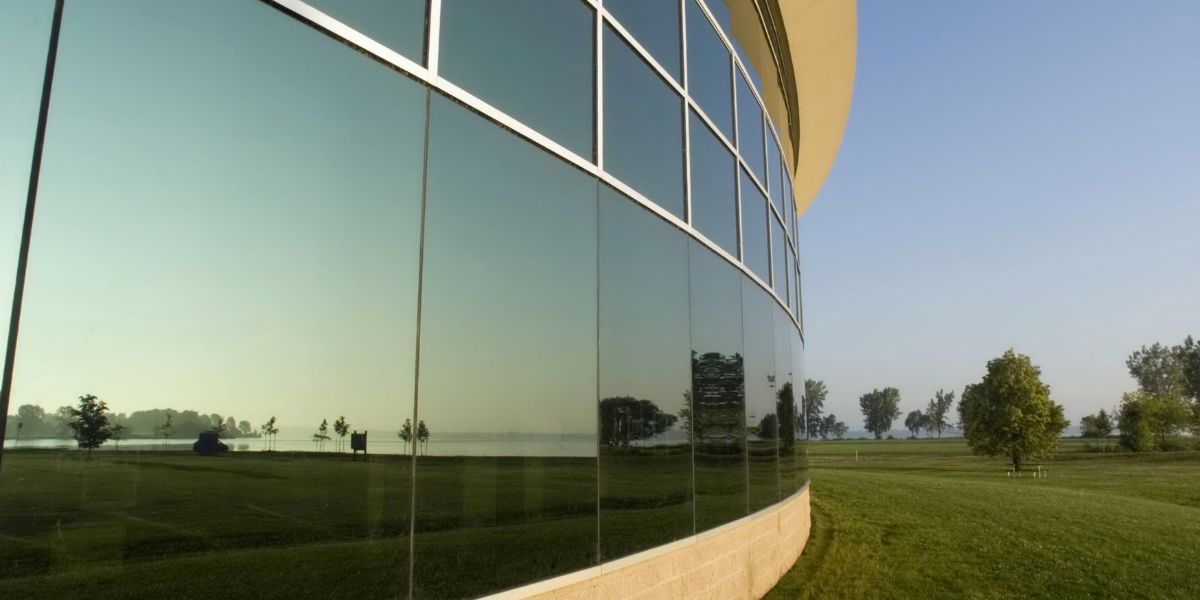
One way glass film is a reflective film for windows solution that creates a mirror effect on the exterior surface of your windows while maintaining transparency from the inside, allowing you to see out while preventing outside people from seeing in during daylight hours.
This guide covers residential and commercial applications of one way window film, including installation methods (both DIY and professional), effectiveness limitations between daytime and nighttime conditions, and the science behind how these privacy films actually function. The target audience includes homeowners seeking daytime privacy for their living spaces, office managers wanting to protect valuable belongings and maintain occupant comfort, and property developers evaluating cost-effective privacy and energy solutions for their building projects.
One way glass film provides daytime privacy by leveraging the difference in light intensity between the brighter exterior and darker interior—when sunlight dominates outside, the film reflects light outward like a mirror, blocking the view into your space while letting you see through from inside.
By the end of this article, you will understand:
- How the one way mirror effect works and its scientific principles
- The key differences between reflective silver, tinted, and dual-layer privacy film options
- Step-by-step installation processes and when to choose professional versus DIY approaches
- Solutions for common challenges including night time privacy limitations
- Practical benefits including UV protection, heat reduction, glare control, and cost-effectiveness
Understanding One Way Glass Film Fundamentals
One way glass film is a type of reflective window film containing metallic or metallized layers—typically aluminum, silver, or metallic oxides—applied onto a polyester base. This construction creates semi-reflective, semi-transparent properties that enable one way visibility under the right lighting conditions.
The relevance of this technology extends beyond simple privacy. These films address multiple needs: visual privacy without blocking outward views, reduced solar heat gain for energy efficiency, UV light blocking to reduce fading of furniture and flooring, and glare control for improved comfort in your room or office space, making them ideal for comprehensive residential window film installation solutions.
How One Way Mirror Effect Works
The one way mirror effect relies on how light interacts with semi-reflective surfaces. When light hits the metallic layer in the film, a portion reflects while the rest transmits through. The perceived “one way” effect occurs when lighting is asymmetrical—the side with stronger light sources dominates reflection, making the film appear mirror-like to that side.
The metallic layers are extremely thin, often backed by dielectric layers that enhance reflectivity while suppressing oxidation and tuning color properties. The thickness and density of this metal layer determines visible light transmission (VLT), reflectivity level, and long-term durability.
For effective privacy, the exterior side must be significantly brighter than the interior. When sun dominates outside, the film reflects exterior light while letting transmitted light through to your eyes inside—creating the one way window effect that blocks outside people from seeing your space.
Daytime vs Nighttime Performance
During daytime hours, with strong sunlight or ambient light outside, the film reflects most exterior light, preventing people outside from seeing in. From inside, your view outward works (though somewhat dimmed). High-quality reflective silver films may reflect 70-90% of visible light depending on specifications while allowing 5-50% VLT depending on the variant selected.
At night, once interior lighting becomes brighter than the exterior, this effect reverses. The film becomes more transparent outward, meaning people outside can see into your illuminated room. This fundamental limitation means one way film alone cannot solve 24-hour privacy needs—you’ll need supplementary solutions like blinds or curtains for night privacy.
This lighting-dependent function is essential to understand before making your purchase decision, as it directly impacts how you’ll use and complement your one way mirror and reflective window film installation.
Types and Applications of Privacy Window Films
With the science of light and reflectivity understood, selecting the right film type becomes the next critical decision. Different films offer varying levels of reflectivity, color, and additional technologies that affect both performance and aesthetics, and professional providers offer broad portfolios of window glass film products and brands to match specific project needs.
Reflective Silver Films
Reflective silver films deliver the highest mirror effect and strongest daytime privacy. These films typically offer the lowest VLT, ranging from approximately 5% to 50% depending on grade. For example, performance data shows that a Reflective Silver 20% film passes about 19% visible light while achieving approximately 79% Total Solar Energy Rejection (TSER) and 79% glare reduction.
Best applications include large storefronts, office curtain walls, and ground-floor residential windows where strong outward reflectivity is needed. The mirror-like exterior appearance works well for commercial building facades but may feel too industrial for some house aesthetics.
The benefits are significant: maximum daytime privacy, substantial heat rejection reducing summer cooling costs, and strong glare control protecting eyes and reducing fading of interior furnishings. The tradeoff is the highly reflective exterior appearance that may clash with certain architectural styles.
Tinted Bronze and Gray Options
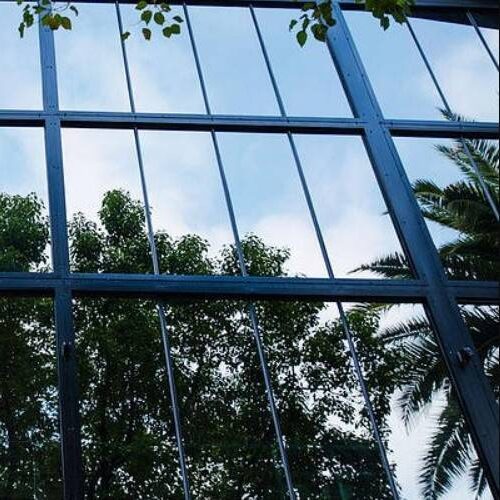
Bronze and gray tinted films offer privacy with reduced reflectivity, creating a more subtle appearance that integrates better with residential and high-end commercial spaces. These films provide privacy through tinting rather than intense mirror reflection.
The advantages include a more natural appearance, reduced harsh mirror effect, better aesthetics for homes, and less dramatic transformation of interior light quality. The film lets light through while still providing meaningful glare control and heat reduction.
For homeowners prioritizing curb appeal alongside privacy, tinted options strike a balance—offering meaningful daytime privacy without the full mirror exterior of silver films. However, the reduced reflectivity means slightly less privacy protection in high-contrast lighting situations, so you may want to pair them with the best window film for bathroom privacy or other room-specific solutions.
Perforated and Dual-Layer Films
Advanced film technologies address specific privacy challenges through innovative construction. Dual-reflective films combine two layers or coatings with different reflectivity on each side, optimizing both inside-out and outside-in performance. This design helps maintain more consistent privacy when interior lighting varies throughout the day.
Perforated films (one-way vision vinyl) contain micro-holes allowing you to see through from one side while the other side displays a graphic or solid appearance and belong to a broader family of decorative films for interior and exterior glass that can combine branding with privacy. These are commonly used for commercial signage and vehicle windows rather than residential privacy applications.
Hybrid ceramic films represent emerging technology, using metal oxides or ceramic nanoparticles instead of thick metallic layers, while dual-reflective window films are engineered specifically to balance interior and exterior reflectivity for improved day and night performance. These offer reflective properties with improved durability, less color shift over time, minimal signal interference with wireless devices, and better infrared rejection. For spaces that demand on‑demand privacy or light control, transitional vs. switchable smart film options provide an additional layer of choice beyond traditional one way films. The cost is higher, but lifespan and performance justify the investment for many applications.
| Film Type | VLT Range | TSER | Best Applications | Aesthetic Impact |
|---|---|---|---|---|
| Reflective Silver | 5-50% | 55-86% | Offices, storefronts, high-privacy needs | Strong mirror exterior |
| Tinted Bronze/Gray | 15-50% | 40-65% | Homes, upscale offices | Subtle, integrated |
| Dual-Reflective | 5-35% | 70-86% | Variable lighting environments | Moderate both sides |
| Ceramic Hybrid | 20-70% | 50-80% | Premium residential, signal-sensitive | Natural, minimal |
Installation Methods and Professional Techniques
A premium one way glass film only delivers its promised benefits when installed correctly. Improper installation undermines performance, longevity, and aesthetics—potentially wasting your money and creating ongoing frustration, which is why many property owners partner with experienced professional window film installers at Window Film Depot.
DIY Installation Process
DIY installation is appropriate for smaller projects, budget-conscious homeowners with patience, and those comfortable with detailed manual work, and many suppliers provide step-by-step resources and do-it-yourself window film installation kits to support this approach. Understanding how much 3M window film costs can also help you weigh DIY material purchases against turnkey professional pricing before you start. Here’s the step-by-step process:
- Surface preparation: Clean the glass thoroughly using non-ammonia glass cleaner, removing all dust, fingerprints, and grease. For dual-pane windows, ensure seal integrity before proceeding.
- Film cutting: Measure your window carefully and cut the film slightly oversized to allow trimming in place. Use a sharp blade—precise dimensions ensure proper edge sealing.
- Application solution mixing: Prepare slip solution (water with a small amount of detergent) at manufacturer-specified concentrations. Environmental conditions like humidity and heat affect drying rate.
- Positioning and smoothing: Peel the backing from the adhesive side, spray solution on both glass and film, position the film, then use a squeegee from center outward to remove bubbles and excess solution with even pressure.
- Edge sealing and trimming: Trim film edges flush or tuck under the frame. Ensure adhesive firmly contacts edges to prevent peeling.
- Final cleanup and curing: Remove solution residue gently and allow a curing period of 3-7 days for adhesive to set. Small moisture bubbles typically disappear during this time. Avoid washing or touching the film aggressively until fully cured.
Professional vs DIY Comparison
Choosing between professional and DIY installation depends on your priorities, budget, and skill level. Here’s how they compare:
| Factor | DIY Installation | Professional Installation |
|---|---|---|
| Cost | Lower upfront; $20-$100 per window for materials | Higher; $6-$14 per sq ft installed, $300-$700 typical project |
| Durability | Risk of bubbles, poor adhesion, edge peeling | Consistent adhesion, proper edge sealing, longer lifespan |
| Warranty | Often voided; minimal coverage | Full material + labor warranty, 5-15 years typical |
| Time Investment | Significant; learning curve, error correction | Fast; expert teams with templates and industrial tools |
| Skill Required | Moderate to high; environmental control matters | Handled by installer; no homeowner skill needed |
| Aesthetic Finish | Prone to visual flaws | Smooth, defect-free professional appearance |
| For larger projects, difficult-to-reach windows, or premium film products, professional installation typically delivers better value despite higher upfront cost, especially when working with certified 3M window film products and installation specialists who can preserve warranties and ensure performance. The warranty protection alone often justifies the expense, as manufacturers frequently void warranties for non-certified installations. |
Common Challenges and Solutions
Even with quality products and proper installation, performance issues can arise. Understanding common challenges and their solutions helps you maintain effective privacy film function over time, particularly when you can consult experienced window film specialists and installers for complex projects or troubleshooting, including regional experts in window film installation and tinting in Palm Springs, CA.
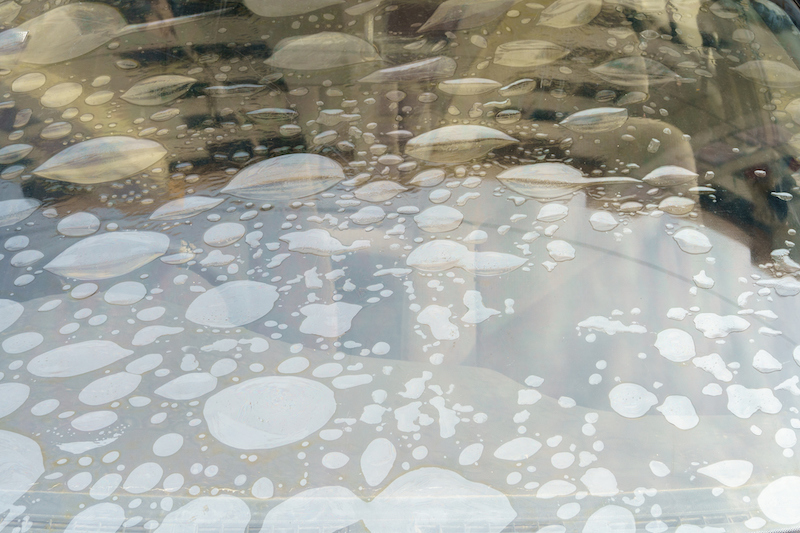
Air Bubbles During Installation
Air bubbles result from trapped air or moisture due to inadequate cleaning, improper squeegee technique, or incorrect solution consistency.
Solution: Clean glass perfectly before starting. Begin squeegeeing from the center and work outward using overlapping strokes. Ensure abundant slip solution and apply proper, even pressure. Work in a clean, dust-free environment. For small bubbles that appear after installation, gentle heat from a heat gun can help smooth them if the film allows this treatment.
Reduced Effectiveness on North-Facing Windows
North-facing windows (in the Northern Hemisphere) receive limited direct sunlight, meaning the exterior is often not dramatically brighter than interior spaces. This reduces the mirror effect and compromises daytime privacy.
Solution: Select films with higher reflectivity (lower VLT) for these windows. Dual-reflective films that tune reflectivity for both sides perform better in lower-contrast conditions. Consider supplementing with exterior lighting to create brightness differential, or combine with sheer curtains for consistent privacy.
Nighttime Privacy Concerns
Once interior lighting dominates, outside people can see into your room—the film no longer hides your space. This is a fundamental physics limitation, not a product defect.
Solution: Install light control such as blinds or curtains for evening use. Position interior lighting away from windows or use dimmer settings near glass areas. For areas requiring 24-hour privacy, combine one way film with frosted film sections, or use opaque decorative film on lower window portions, or consider dedicated day and night privacy window film solutions that provide consistent obscurity regardless of lighting conditions. The film still provides daytime benefits while supplementary treatments handle night privacy.
Understanding that one way glass film is a daytime privacy solution—not a complete answer to all privacy needs—helps set realistic expectations and plan appropriate complementary measures, and resources on the best window film for nighttime privacy can help you choose alternatives that work after dark while you also evaluate window security film installation costs if impact resistance and intrusion deterrence are additional priorities.
Conclusion and Next Steps
One way glass film delivers meaningful daytime privacy by creating a mirror effect that blocks outside views while preserving your ability to see out. Beyond privacy, these films offer substantial benefits including UV protection to reduce fading of interiors, heat reduction lowering summer cooling costs, and glare control improving comfort in homes and offices.
To implement this solution effectively:
- Measure your windows and document which face high-traffic areas, receive direct sunlight, or need the most privacy
- Select your film type based on aesthetic preferences, privacy level needed, and budget—reflective silver for maximum effect, tinted for subtle integration, or ceramic for premium performance
- Choose installation method—DIY for small projects and budget priority, professional for larger installations, difficult windows, or when warranty protection matters
Related topics worth exploring include the difference between shatterproof and security window films for added protection, decorative window treatments for permanent obscurity, and privacy window film and smart coatings that can switch between transparent and opaque states via electrical control, as well as advanced window protection film solutions to reinforce glass and specialized 3M cloaking window film installation services for sensitive digital information.
Need More Info?
The Window Film Depot team is happy to help.
Frequently Asked Questions
Does one way glass film work at night?
The one way effect fails at night when interior lighting is brighter than outside. The film becomes transparent from the exterior perspective, allowing people outside to see in. For night time privacy, combine the film with blinds, curtains, or other light-blocking treatments.
Can the film be installed on dual-pane windows?
Yes, but considerations apply. You must account for heat conduction and compatibility with the window’s construction. Exterior film application is sometimes more effective for heat reduction. Always check manufacturer recommendations for your specific glass type to avoid thermal stress issues.
How long does one way glass film last?
Lifespan varies by quality: ceramic and premium films last 15-25 years, metalized films typically 10-15 years, and basic decorative films 5-10 years before visible degradation. Professional installation and proper maintenance extend longevity.
Does the film affect window warranties?
It can. If film installation violates original glass or window system warranty terms, coverage may be voided. Professional installation using manufacturer-approved films and non-destructive adhesives minimizes this risk. Contact your window manufacturer before installation if warranty status concerns you.
Can one way glass film be removed without damage?
Generally yes, when done carefully. Some adhesive residue may remain and require additional cleaning. There’s minor risk of scratching during removal. Professional removal is safer for valuable or historic glass. Removal cost is typically reasonable per window.
What percentage of light does the film block?
VLT percentages vary widely: high-reflectivity films allow 5-50% visible light through. A Reflective Silver 20% film passes approximately 19% VLT with 79% glare reduction and 79% heat rejection (TSER). Higher privacy means less natural light—choose based on your balance preference.
Is professional installation worth the cost?
For most situations, yes. Professional installation delivers fewer defects, longer film life, better energy savings, and valid warranty coverage. DIY savings are often offset by rework needs or earlier replacement. For small, simple projects on accessible windows, DIY can make sense with careful execution.
How does one way film compare to frosted glass?
Frosted glass provides permanent diffusion, blocking views from both directions with minimal transparency—you cannot see through it clearly from either side. One way film preserves outward visibility during daytime, is removable if preferences change, and costs less than replacing glass entirely. Choose frosted for permanent obscurity, one way film for conditional privacy with maintained views.