Table of Contents:
Introduction
Windows are often seen as the weakest link in home security, as burglars typically target them for easy access to homes. With approximately 23% of burglars entering through first-floor windows—second only to front doors—window security demands serious attention from every property owner in 2026.
This guide covers physical barriers, detection systems, and smart security integration for residential properties. While commercial building security falls outside our scope, homeowners, renters with permission to modify their spaces, and property managers seeking cost-effective security solutions will find comprehensive strategies here. Effective home window security involves reinforcing glass, strengthening locks, and increasing visibility to deter intruders—a layered approach that addresses both prevention and detection.
Direct answer: Home window security involves layered protection using reinforced glass, quality locks, detection sensors, and deterrent systems working together to stop intruders before they can gain entry.
By reading this guide, you will:
- Learn to assess vulnerability across different window types and locations
- Choose appropriate security measures for your specific situation and budget
- Understand installation requirements for various security solutions
- Develop a phased budget plan for comprehensive protection
- Establish maintenance routines that keep your security systems effective
Understanding Window Vulnerabilities
Window security risks stem from several factors that make windows primary targets for break-ins. Glass is inherently fragile, window frames often receive less engineering attention than doors, and many windows come with simple latch mechanisms that may not provide adequate security against forced entry. Understanding these weaknesses is the first step toward creating a home safe from unauthorized access.
Common Entry Points and Weaknesses
Ground floor windows and basement access points present the highest risk for property owners. These entry points offer burglars cover from neighboring visibility and easy reach without climbing equipment. Sliding windows with weak locking mechanisms rank among the most vulnerable—their exposed tracks and basic latches create opportunities for intruders to gain access with minimal effort.
Windows hidden by landscaping or privacy features create ideal conditions for break-ins. Bushes, trees, and decorative elements that shield windows from view allow thieves extended time to work undetected. The connection between window type and vulnerability level matters significantly: double hung windows, casement windows, and sliding designs each present different security challenges based on their locking mechanisms and structural characteristics.
Burglar Methods and Tactics
Intruders typically approach window entry through two primary methods: exploiting unlocked windows or forcing entry through glass. Research indicates that approximately 42% of burglars in certain regions entered through unlocked windows—making proper lock engagement the simplest security improvement available.
When forced break-ins occur, tools commonly used include hammers, bricks, and crowbars. The average burglary takes just 10-12 minutes from entry to exit, meaning security measures that delay access by even a few minutes can determine whether an attempt succeeds or fails. Burglars prefer quiet entry when possible, attempting to slide open or manipulate existing windows rather than smashing glass, which creates noise that alerts neighbors.
These vulnerabilities establish why a layered approach to window security combines physical barriers, technological detection, and visual deterrents—each addressing different aspects of the threat.
Essential Window Security Solutions
Building on our understanding of how intruders target windows, effective protection requires multiple complementary approaches. Strengthening the glass and window frame is a primary defense against forced entry, while detection systems provide alert capabilities when prevention measures are tested.
Physical Barrier Options
Security Bars and Grilles
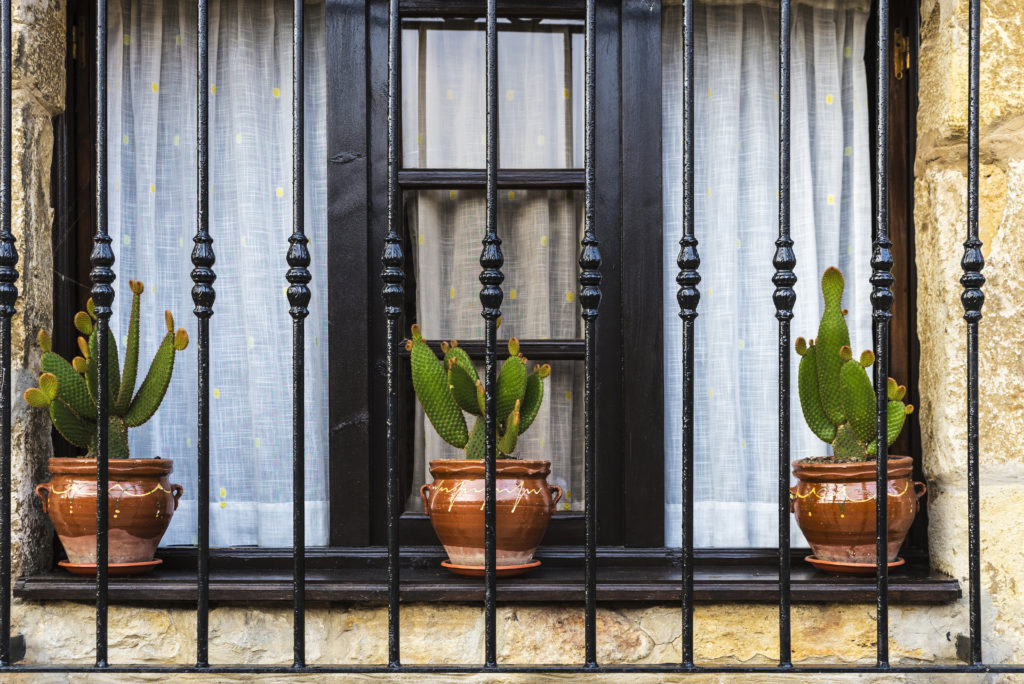
Metal bars provide strong physical deterrents, especially for vulnerable ground-floor or basement windows. Security bars and grilles offer a physical barrier but should have quick-release mechanisms for safety in emergencies. Fixed interior bars typically cost $90-$250 per window, while hinged quick-release models range from $250-$600. Decorative options that maintain home style while providing protection can reach $350-$1,200 per window depending on materials and finishes.
Security Screens and Mesh Systems
Security screens made from stainless steel mesh can protect windows from intruders while maintaining visibility and airflow. These non-intrusive security barriers enhance window safety without compromising the aesthetic appeal of a home. In hurricane zones, screens meeting ASTM E1886/E1996 certifications provide protection against both natural disasters and forced entry attempts.
Reinforced Glass and Polycarbonate Shields
Laminated and tempered glass are designed to resist impact and shattering. Understanding the difference between tempered glass and laminated glass helps you match each glazing type to the specific security role it needs to play. Laminated glass keeps fragments adhered to an interlayer even when cracked, maintaining the barrier and delaying intruder access. Polycarbonate safety shields are 250 times stronger than glass and can withstand high-impact scenarios, making them an effective non-intrusive security barrier for windows. These shields are often used alongside advanced window protection film systems for added resistance to forced entry and extreme weather events.
Window Security Film
Security window tinting for homes is engineered to be tear-resistant and strengthen glass to prevent break-ins, making them a visually appealing alternative to traditional window bars. Homeowners should understand the distinction between shatterproof window film and true security window films when comparing products and performance claims. These films are constructed with multiple layers that enhance durability and provide an added layer of protection against forced entry, slowing down burglars significantly. Security films that are 4–8 mil thick make glass shatter-resistant, holding it in place even after an impact.
When properly installed, security window films act as a form of security glazing, reinforcing existing glass without the need for full window replacement, and help prevent glass from shattering into dangerous shards during natural disasters. Typical window security film installation costs depend on film type, window size, and whether you choose professional or DIY application. Window film is a clear, adhesive material that holds glass shards together when broken, delaying entry. Security window film can stop an intruder long enough to trigger an alarm system or call for help, providing shatter-resistant protection without the need for bars. Commercial properties often rely on 3M Scotchshield safety and security window films for similar impact resistance and hazard mitigation at scale. The virtually invisible nature of quality film means protection without aesthetic compromise.

Locking and Hardware Systems
Physical locks made of durable materials like hardened steel or brass are a key component of window security. High-security locks should be made from hardened steel materials and designed to resist tampering. To effectively deter intruders, it is important to choose window locks and security systems based on window type and prioritize ANSI Grade 1 or 2 ratings. ANSI Grade 1 and 2 ratings indicate the level of security provided by locks, with Grade 1 offering the highest residential security.
Common types of window locks include latches for casement windows, keyed locks for double-hung windows, and sliding locks for horizontal sliders, each suited for different window styles. Keyed locks function like deadbolts, preventing intruders from unlocking the window through broken glass. Locks should be matched to the window type, such as sash locks for double-hung windows and sliding locks for sliders.
Secondary locks, such as pin locks that slide into the window frame or track locks that clip on the track of sliding windows, can be installed to enhance window security. Multi-point locking systems provide superior protection for windows. Wooden dowels or rods can be placed in the track of sliding windows to prevent them from sliding open—a simple upgrade that costs almost nothing but blocks quick access.
Reinforced frames and strike plates increase resistance against force attacks. Upgrading hardware on existing windows often proves more cost-effective than full window replacement while significantly improving security.
Detection and Alert Systems
Window and door sensors trigger an alarm when a window is opened, alerting the homeowner or a monitoring station. Contact sensors trigger an alarm when a window is opened by breaking a magnetic connection between the sensor components. Installing window alarm sensors can alert homeowners the moment a window is opened, broken, or tampered with, enhancing overall security.
Glass break detectors use microphones or vibration sensors to detect the specific frequency of shattering glass. Dual sensors combining acoustic and shock detection reduce false alarms while maintaining sensitivity to actual break attempts. Electronic systems can provide immediate alerts and serve as effective psychological deterrents against intruders.
Motion sensor lighting near windows can eliminate dark spots and deter potential intruders. Motion detectors positioned around exterior windows create an unwelcoming environment for thieves attempting surveillance or entry. Security cameras provide both deterrent value through visible presence and evidence collection if incidents occur. Combined with reinforced glazing, security film, and lighting, they form a broader strategy to burglar‑proof windows and prevent break‑ins.
Visual deterrents, such as privacy film and landscaping, can prevent burglaries before they begin. Trimming bushes and trees away from windows and planting thorny shrubs underneath can eliminate hiding spots for potential intruders. Maintaining landscaping by trimming shrubs ensures burglars have nowhere to hide while assessing your property.
These detection and deterrent systems work best when integrated with physical barriers, creating multiple layers that must be overcome for any entry attempt to succeed.
Professional Installation vs DIY Implementation
Choosing between professional installation and DIY implementation depends on the security solution, your technical comfort level, and budget constraints. Some measures require only basic tools and an hour of time, while others demand expertise for proper function and code compliance.
Security Film Installation Process
Window film installation works best when you understand its capabilities and limitations. Film is most effective on ground-floor windows, large glass panels, and windows that cannot accommodate bars due to aesthetic or code restrictions.
- Clean the window thoroughly using a lint-free cloth and glass cleaner, removing all dust, oils, and debris that could create bubbles or adhesion problems
- Measure and cut the film slightly larger than the glass surface, allowing 1/8 inch overlap for trimming after application
- Spray the glass surface with the application solution (typically water with a small amount of dish soap) to allow positioning
- Apply the film to wet glass, smoothing from center outward using a squeegee to remove air bubbles and excess solution
- Trim excess film using a sharp utility knife and straightedge, cutting precisely along the glass edge
- Allow curing time of 7-30 days depending on film thickness and climate before the adhesive reaches full strength
Tools required include a spray bottle, squeegee, utility knife, and measuring tape. Professional installation typically costs $6-$14 per square foot and ensures proper anchoring to the frame—critical for maximum security performance. Established specialists, such as nationwide window film retrofit providers, focus on secure, code-compliant installations for a wide range of buildings. DIY installation saves money but may result in reduced effectiveness if gaps exist between film and frame. Working with a dedicated window film supplier can help you select the right product mix even if you plan to handle some installation tasks yourself.
Security Solution Comparison
| Security Option | Typical Cost Per Window | Effectiveness Against Break-In | Installation Difficulty | Aesthetic Impact |
|---|---|---|---|---|
| Basic keyed latch/sash lock | $10-$40 | Low-moderate (prevents opening) | Easy, DIY 30 min | Minimal |
| Security film (4-8 mil) | $50-$150 | Moderate (holds shards, delays smashing) | Moderate DIY or professional | Low visibility |
| Laminated security glass | $200-$500+ | High (resists smash-and-grab) | Difficult, professional required | Neutral, slightly thicker frame |
| Quick-release security bars | $250-$600 | High (physical barrier) | Moderate-difficult, code compliance needed | High visibility, changes appearance |
| Glass break + window sensors | $30-$100 per sensor | Detection only (early alert) | Easy, DIY or professional | Low, discrete placement |
| Polycarbonate shields | $100-$300 | Very high (250x glass strength) | Moderate-difficult | Variable based on style |
| High-risk entry points, such as ground-floor or basement windows, may require additional physical barriers for enhanced security. For most homeowners, combining upgraded locks, security film, and detection sensors provides excellent protection at moderate cost. Budget-conscious implementations should prioritize ground-floor and basement windows first, then expand coverage over time. |
Common Window Security Challenges and Solutions
Practical obstacles frequently complicate window security improvements. Understanding these challenges in advance helps you plan effective solutions that work within real-world constraints.
Balancing Security with Emergency Egress
Windows are often seen as the weakest link in home security, making it essential to reinforce them while still allowing for ventilation. Building codes require that bedroom windows provide emergency escape routes, limiting what permanent barriers can be installed. IRC R310 specifies minimum opening dimensions and maximum sill heights for egress windows.
Quick-release mechanisms solve this conflict by providing security bars that open instantly from inside without tools or keys. Security screens can provide a balance between safety and airflow, allowing windows to be opened while keeping intruders out. To safely ventilate without inviting intruders, homeowners can use window guards or shutters that do not compromise the aesthetic of the home while meeting code requirements.
Rental Property and HOA Restrictions
Renters typically cannot make permanent modifications without landlord permission, eliminating options like window replacement or permanently mounted bars. Removable security options include pressure-mounted window bars, portable alarm sensors, and window film that can potentially be removed at lease end.
HOA restrictions may prohibit visible security hardware or specific materials that conflict with community aesthetics. Working with property managers early in the planning process helps identify acceptable solutions. Many security films are virtually invisible, while interior-mounted sensors avoid exterior appearance concerns entirely. Property owners who want to balance security, energy savings, and privacy can choose from a wide range of window film products and brands tailored to different performance goals.
Budget Constraints and Prioritization
Cost-effective security improvements under $100 per window include keyed locks ($10-$40), secondary pin locks ($10-$25), window sensors ($20-$50), and basic security film ($50-$100 with DIY installation). Key methods to secure windows include applying shatter-resistant security film, installing secondary pin locks, using window sensors, and using motion-sensor lighting.
Phased implementation strategies allow comprehensive protection over time:
- Phase 1 (Month 1): Upgrade locks on all ground-floor windows
- Phase 2 (Month 2-3): Add window sensors and glass break detectors
- Phase 3 (Month 4-6): Install security film on high-risk windows
- Phase 4 (Month 7-12): Add motion lighting and consider bars for basement windows
This approach spreads costs while immediately addressing the most vulnerable entry points.
Conclusion and Next Steps
Effective window security requires a layered approach combining physical barriers and detection systems. No single measure provides complete protection, but properly installed combinations of reinforced glass or film, quality locks, detection sensors, and visual deterrents create formidable obstacles that deter most intrusion attempts and delay determined ones long enough for response.
Immediate action steps:
- Conduct a vulnerability assessment of every window, noting ground-floor access, hidden locations, and current lock quality
- Identify your three highest-priority windows based on accessibility and visibility
- Set a budget for security improvements, even if it means phased implementation
- Purchase and install upgraded locks as your first security measure—this provides immediate improvement at minimal cost
Need More Info?
The Window Film Depot team is happy to help.
Related topics worth exploring include door security integration (since front doors remain the most common entry point), smart home system expansion for unified monitoring, and professional security consultation for comprehensive property assessment.
Frequently Asked Questions
How much does comprehensive window security cost?
Basic lock upgrades run $10-$50 per window, while security film costs $50-$200 installed. Laminated glass replacement ranges from $200-$500+ per window. A layered approach for an average home with 10-15 windows typically costs $500-$2,000 for substantial improvement, with costs varying based on which security solutions you prioritize.
Which window security option is most effective?
Laminated glass provides the highest physical barrier effectiveness because it maintains structure even when cracked. However, combining upgraded locks, security film, and detection sensors often delivers better overall protection at lower cost than single premium solutions. The most effective approach matches security service to specific vulnerabilities at each window.
Can I install window security measures myself?
Lock upgrades, sensors, and basic security film installation are manageable DIY projects requiring minimal tools. Security bar installation, laminated glass replacement, and professional-grade film application typically require professional expertise for proper function and code compliance. When in doubt, improper installation can create safety risks or reduce effectiveness.
What building codes affect window security modifications?
IRC R310 governs egress window requirements—bedroom windows must provide emergency escape routes with minimum dimensions. Security bars in sleeping areas require quick-release mechanisms operable from inside without tools. Local codes vary significantly, so check with your building department before installing permanent barriers.
How often should window security systems be maintained?
Test alarm sensors monthly by triggering them and verifying response. Replace sensor batteries annually even if they still function. Inspect film adhesion and lock hardware quarterly, lubricating mechanisms and checking alignment. Security cameras and lighting should be checked monthly for proper function and clear sight lines.
Do window security measures affect home insurance?
Many insurers offer discounts for security improvements, particularly monitored alarm systems and reinforced glazing. Discounts typically range from 5-15% on premiums. Document all security installations and provide specifications to your insurance company to ensure proper credit and coverage.
What’s the difference between tempered and laminated glass for security?
Tempered glass is 4-5 times stronger than regular glass but provides no barrier once broken—it shatters completely into small pieces. For a deeper look at the difference between tempered and regular glass, it’s useful to consider how each behaves under impact and how films can enhance performance. Laminated glass maintains its barrier even when cracked because fragments adhere to the interlayer, forcing intruders to tear through rather than simply climbing through an opening. For security purposes, laminated glass or tempered glass with security film provides superior protection against entry.