Table of Contents:
Introduction to Tempered Glass
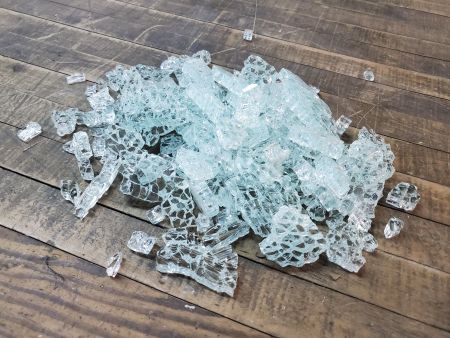
Tempered glass is a type of safety glass that undergoes controlled heat treatment to dramatically increase its strength and alter how it breaks when damaged. Unlike regular glass that shatters into dangerous jagged shards, tempered glass fractures into small, relatively harmless pieces with dull edges, significantly reducing injury risk.
This guide covers everything you need to know about tempered glass—from the manufacturing process and safety properties to real-world applications, customization options, and building code requirements. Whether you’re a homeowner planning shower enclosures, a contractor specifying materials for large windows, an architect designing glass railings, or a safety professional ensuring compliance, this resource provides the technical depth and practical guidance you need.
Direct answer: Tempered glass is heat-treated safety glass that is 4-5 times stronger than standard glass of the same thickness, with tensile strength reaching approximately 24,000-30,000 psi compared to roughly 6,000 psi for annealed glass.
By reading this guide, you will understand:
- How the thermal tempering process creates increased strength and safety characteristics
- Where building codes mandate tempered glass in residential and commercial applications
- How to specify thickness, edge finishing, and custom cut glass dimensions
- Solutions for common challenges including spontaneous breakage and modification limitations
- Cost considerations and quality factors when ordering custom tempered glass
Understanding Tempered Glass Fundamentals
Tempered glass achieves its remarkable strength through a specialized heat treatment process that creates permanent stress patterns within the glass pane. Understanding this manufacturing method explains why tempered glass performs so differently from non tempered glass in both strength and safety characteristics.
Manufacturing Process and Heat Treatment
The thermal tempering process begins with standard annealed glass that has been cut to size, with all holes drilled and glass edges finished to exact specifications. This preparation is critical because the glass cannot be modified after tempering.
During the heat treatment process, the glass is heated in a furnace to temperatures above 620°C—beyond its glass transition point. The outer surfaces and interior of the glass reach uniform temperature before the critical cooling phase begins.
Rapidly cooling both surfaces using high-pressure air jets creates the distinctive stress pattern that gives tempered glass its properties. The outer surfaces cool and harden first, while the interior remains hotter. As the center eventually cools, it tries to contract but is constrained by the already-hardened surface layers. This creates surface compression exceeding 10,000 psi (approximately 70 MPa) balanced by internal tension in the core.
This minimum surface compression is what makes tempered glass approximately 4-5 times stronger than annealed glass of equivalent thickness. The compressed surfaces resist the microscopic flaws and scratches that would otherwise become crack initiation points under stress.
Safety Properties and Breakage Characteristics
When tempered glass breaks, its stored energy causes the entire pane to shatter simultaneously into thousands of small, cube-shaped granules rather than the sharp pieces and ragged edges characteristic of standard glass breakage.
Annealed glass fails differently—cracks propagate from the point of impact, creating large fragments with sharp edges that pose severe laceration hazards. A broken window or glass door made from regular glass produces knife-like shards capable of causing serious injury.
The small, blunt fragments from tempered glass significantly reduce injury severity. While still capable of causing minor cuts, these harmless pieces lack the penetrating danger of traditional glass breakage. This safety characteristic is why building codes require tempered glass in hazardous locations where human contact with glass is likely.
Tempered glass also demonstrates superior thermal shock resistance, withstanding temperature differentials of approximately 160°C compared to just 40-70°C for annealed glass. This makes it suitable for applications involving extreme weather exposure or proximity to heat sources.
These combined properties—increased strength, safe breakage pattern, and thermal resistance—explain why tempered glass is used for safety-critical applications where safety is paramount.
Tempered Glass Applications and Uses
The safety properties and strength compared to regular glass make tempered glass essential across diverse applications, from building construction to consumer electronics. Understanding where and why tempered glass is used helps identify when it’s required versus optional.
Building and Construction Applications
Building codes (IRC R308 and IBC Section 2406) mandate safety glass in hazardous locations where glass breakage could cause injury, and projects may also need to consider additional safety and security glazing standards and test methodologies. These requirements apply to both residential and commercial construction.
Shower doors and shower enclosures must use tempered glass regardless of design—including frameless shower doors that rely entirely on the glass for structural integrity. Typical thickness ranges from 5-6mm for standard installations to 8-10mm for larger or more demanding applications.
Glass doors and sidelights within 24 inches of door frames require tempered glass, as do windows with bottom edges less than 18 inches above the floor when exceeding certain size thresholds. Large windows near stairs, walking surfaces, or swimming pools also fall under safety glazing requirements.
Glass railings, balustrade infill panels, and overhead glazing demand tempered glass (often heat-soak tested) due to impact risks and fall hazards. Commercial storefronts, glass table tops, and glass shelves in high-traffic areas commonly specify tempered glass even when not strictly required by code, while higher-risk locations may instead require unbreakable glass window options like laminated glass, polycarbonate systems, or bullet-resistant glass solutions for elevated security threats.
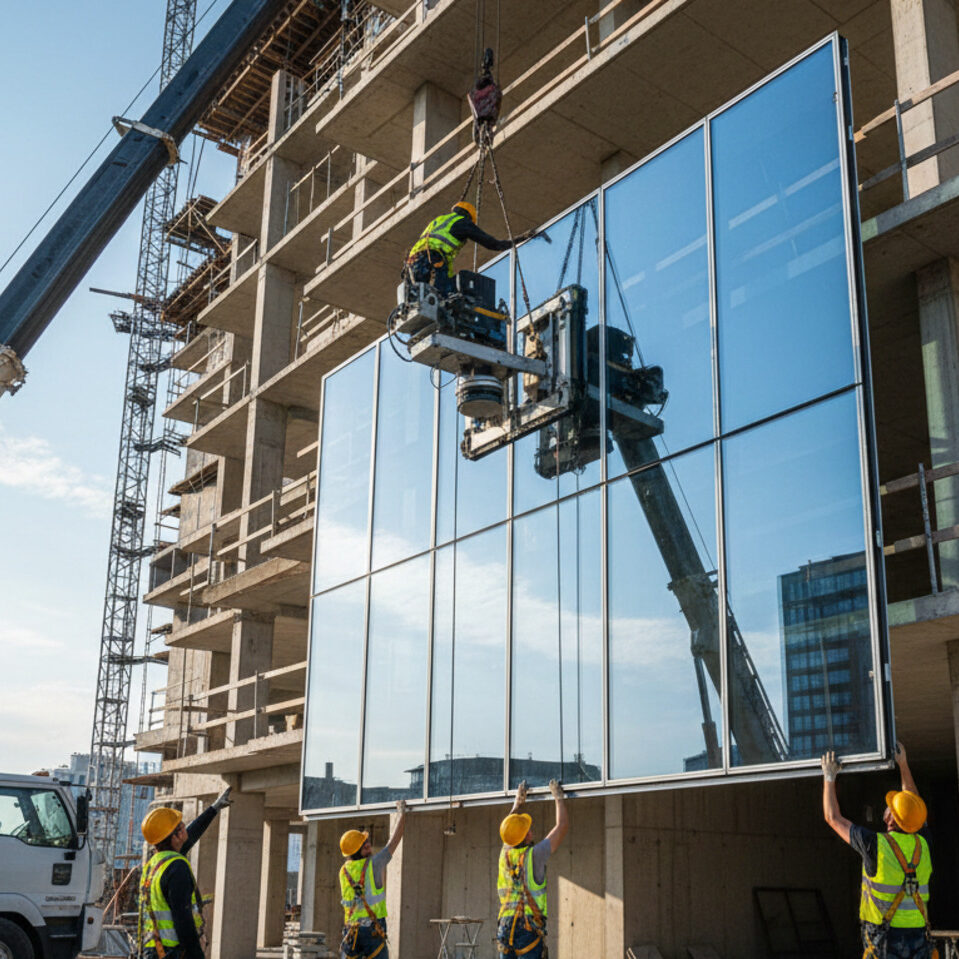
Architectural glazing for facades, canopies, and skylights typically uses tempered glass in thicknesses from 8mm to 19mm depending on span, wind loads, and safety requirements. Maximum panel sizes reach approximately 2600 × 4300mm depending on thickness and manufacturing capabilities.
Automotive and Transportation Uses
Federal Motor Vehicle Safety Standards require all vehicle glazing to be safety glass. Windshields use laminated glass (two layers bonded with an interlayer to prevent spall and maintain visibility after damage), while side and rear windows typically use tempered glass designated AS-2.
When side windows shatter from impact or during emergency extraction, the tempered glass breaks into small granules that minimize injury risk to occupants and emergency responders. This controlled breakage is preferable to sharp shards in collision scenarios.
Some luxury and newer vehicles increasingly use laminated glass for side windows, providing benefits including improved sound insulation, enhanced occupant retention during rollovers, and theft deterrence. However, tempered glass remains standard for most vehicle side and rear glazing due to cost effectiveness and established safety performance.
Public transportation applications follow similar principles, with safety glass requirements protecting passengers in buses, trains, and commercial vehicles, highlighting the importance of understanding the difference between tempered glass and regular glass and the differences between tempered and laminated glass for safety and security when specifying glazing.
Consumer Electronics and Mobile Devices
Tempered glass screen protectors for smartphones and tablets leverage the material’s scratch resistance and safe breakage characteristics. Thinner variants (3-4mm) protect devices while maintaining touch sensitivity and optical clarity.
Kitchen appliances including oven doors, stovetop surfaces, and microwave windows use tempered glass to withstand thermal cycling and potential impact. The material’s heat resistance handles the temperature fluctuations these applications demand.
Household items including shelves, picture frames with glass fronts, and decorative panels may use tempered glass where breakage poses safety concerns. Display cases, museum installations, and retail fixtures often specify tempered glass to protect both contents and people, sometimes combined with decorative film for interior and exterior glass or safety and security window films for commercial glass protection to enhance privacy, branding, and impact resistance.
This range from 3mm device applications to 19mm structural panels demonstrates tempered glass versatility across industries, with the common thread being safety and strength requirements that regular glass cannot meet, and many installations further rely on specialized window glass film products and brands and 3M window film products and professional installation services to fine-tune performance.
Customization and Specifications
Custom tempered glass requires precise planning because all fabrication must occur before the heat treatment process. Understanding specification options and dimensional requirements prevents costly errors and ensures proper fit.
Pre-Tempering Fabrication Process
Every modification to the glass—cutting, drilling, shaping, and edge work—must be completed while the material remains in its annealed state. Attempting to cut or drill tempered glass causes immediate and complete shattering.
Measuring and cutting: Exact measurements are critical, accounting for frame tolerances, expansion gaps, and installation requirements. Templates may be necessary for irregular shapes or precise fits. Specify dimensions to the nearest millimeter when ordering custom glass.
Drilling holes: All holes for hardware, hinges, or handles must be drilled before tempering. Standards specify minimum distances from hole centers to glass edges (typically 2× the glass thickness or more) and between adjacent holes to prevent stress concentration that could cause breakage.
Edge finishing options include:
- Seamed edges: Lightly ground to remove sharp bite; economical for concealed edges
- Ground edges: Smooth matte finish suitable for visible applications
- Flat polished edges: Smooth, glossy finish for exposed edges on glass table tops, shelves, and frameless applications
- Beveled edges: Angled decorative edge for premium aesthetic applications
Cutouts and notches: Complex shapes including corner notches for hardware or curved sections require specialized equipment and increase cost. Each cutout location must maintain adequate glass material to prevent stress failure.
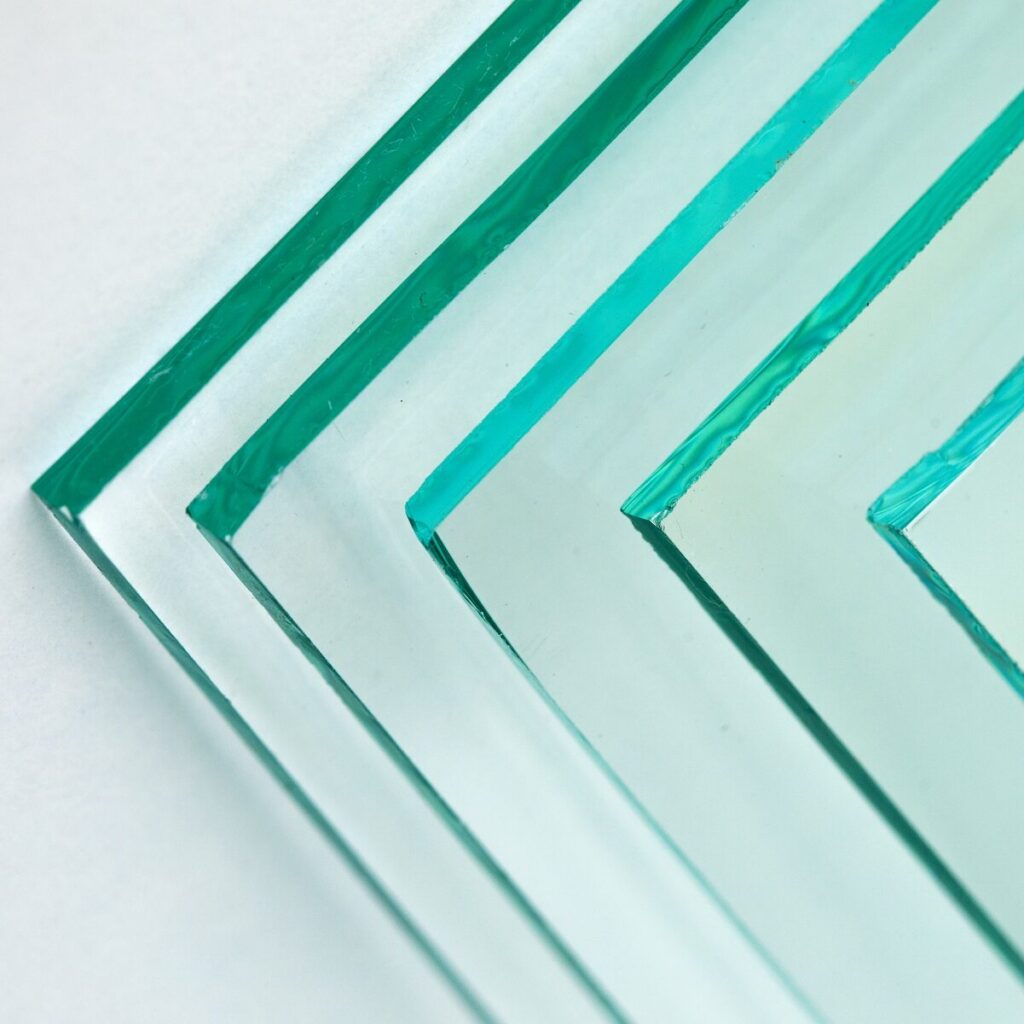
Quality control: Reputable fabricators inspect for defects, measure surface stress, check for roller marks from the tempering furnace, and verify dimensional accuracy before shipping.
Thickness and Size Options Comparison
| Thickness | Typical Applications | Maximum Panel Size | Relative Cost |
|---|---|---|---|
| 3-4mm | Screen protectors, cabinet glass, light-duty partitions, picture frames | Varies by supplier | Lower |
| 5-6mm | Shower doors, interior partitions, glass shelves, residential windows | ~2000 × 3000mm | Moderate |
| 8-10mm | Frameless shower doors, balcony glazing, storefronts, railings | ~2400 × 3600mm | Moderate-High |
| 12-15mm | Overhead glazing, large facade panels, structural applications | ~2600 × 4000mm | High |
| 19mm | Glass floors, heavy-duty canopies, high-load railings | ~2600 × 4300mm | Highest |
| Selection guidance: Choose thickness based on span, load requirements, and safety standards rather than defaulting to thicker glass. Building codes and engineering requirements typically specify minimum thicknesses for specific applications. Oversizing adds cost without proportional benefit. | |||
| Coatings and treatments: Low-e coatings, tinted glass, and patterned surfaces require verification that coatings survive the tempering process. Some coatings may affect heat soak testing compatibility or require special handling. |
Understanding these specifications prepares you for accurate ordering and helps avoid the modification challenges that arise from incomplete planning, while complementary security window films and glass protection systems and commercial safety and security window film solutions can further enhance performance without altering the tempered glass itself.
Common Challenges and Solutions
Tempered glass offers significant benefits, but understanding potential issues helps ensure successful specification and installation.
Cannot Modify After Tempering
The challenge: Once glass undergoes the tempering process, any attempt to cut, drill, or grind the surface causes complete and immediate shattering. The internal tension that provides strength becomes destructive when released through modification.
Solution: Complete all dimensional planning before ordering. Create detailed drawings showing exact dimensions, hole locations (with diameter specifications), edge profiles, and any notches or cutouts. Verify measurements against actual frame or hardware dimensions—not drawings. For critical applications, consider ordering a template or test piece first.
For projects requiring field adjustments, laminated glass or heat-strengthened glass (which has less internal stress than fully tempered glass) may allow limited modification, though with reduced safety characteristics, and some designers supplement these substrates with window protection film solutions to reinforce glass or security window films that prevent glass shattering and intrusion.
Need More Info?
The Window Film Depot team is happy to help.
Spontaneous Breakage Risk
The challenge: Tempered glass can occasionally break without apparent cause due to nickel sulfide (NiS) inclusions in the raw glass. These microscopic particles (50-500 micrometers) can undergo phase transformation over months or years, generating internal stress that exceeds the glass’s capacity. The risk is approximately 0.01% (1 in 10,000 panels) for standard tempered glass.
Solution: Specify heat soak testing for critical applications, particularly overhead glazing, skylights, facades, or any location where replacement is difficult or breakage poses significant risk. Heat soak testing subjects panels to controlled elevated temperatures (260-290°C) for 2-4 hours, accelerating the NiS transformation and causing affected panels to break in the factory rather than after installation.
Heat soak testing reduces spontaneous breakage risk to approximately 0.0001% (1 in 1,000,000), though it cannot achieve absolute elimination. Standards EN 14179-1 and ISO 20657 govern testing procedures, and many projects also review independent test reports for safety glass and window films and glass ballistic testing standards such as UL752 and EN 1063 to confirm performance. Note that heat soak testing may reduce surface compression by 5-10% in thinner glass.
Edge damage during handling or installation can also cause delayed breakage. Protect glass edges during transport, store panels vertically, and inspect edges before installation.
Higher Cost Than Regular Glass
The challenge: Tempered glass typically costs 2-3 times more than annealed glass of equivalent dimensions, with additional costs for edge finishing, holes, cutouts, coatings, and heat soak testing.
Solution: Evaluate total value rather than material cost alone. Consider:
- Code compliance: Tempered glass may be legally required; annealed glass isn’t an option
- Liability protection: Safety glass reduces injury severity and associated legal exposure
- Replacement frequency: Tempered glass withstands impacts and thermal stress that would break standard glass
- Insurance implications: Some insurers recognize safety glazing in risk assessment
For applications where tempered glass isn’t mandated, conduct cost-benefit analysis comparing upfront material cost against potential injury, liability, and replacement expenses. In most hazardous locations, the premium for tempered glass represents sound risk management, especially when paired with professionally installed 3M window films for added security and energy performance.
Conclusion and Next Steps
Tempered glass serves as the essential safety material for applications where glass breakage poses injury risk. Its combination of 4-5 times greater strength than annealed glass, controlled breakage into small granules rather than sharp shards, and superior thermal resistance makes it mandatory for building code compliance and advisable for many additional applications.
Immediate next steps:
- Identify requirements: Determine whether your application mandates tempered glass per building codes (doors, low windows, shower enclosures, railings, stairs proximity)
- Measure precisely: Document exact dimensions, accounting for frame tolerances and expansion gaps
- Specify completely: Determine thickness, edge finish, hole locations, and any cutouts before requesting quotes
- Consider heat soak testing: Evaluate whether overhead or difficult-access applications warrant this additional quality step
- Obtain multiple quotes: Request pricing from established fabricators, comparing lead times and quality certifications
**Related topics to explore: Laminated glass provides alternative safety characteristics with fragment retention after breakage. Heat-strengthened glass offers intermediate properties between annealed and fully tempered glass. Installation requirements including proper support, edge clearances, and gasket materials affect long-term performance. Maintenance considerations include cleaning approaches that avoid edge damage. Many projects also benefit from 3M window film installation for commercial safety, sun control, and privacy delivered by a nationwide, award-winning window film installation company.

Frequently Asked Questions.
What is tempered glass and how is it different from regular glass?
Tempered glass is safety glass produced through controlled heat treatment that increases strength 4-5 times compared to standard annealed glass. The key difference is breakage behavior: tempered glass shatters into small, relatively harmless pieces with dull edges, while regular glass breaks into large, sharp shards capable of causing severe lacerations.
Can tempered glass be cut or drilled after manufacturing?
No. Once glass completes the tempering process, any attempt to cut, drill, or modify it causes complete and immediate shattering. All holes, cutouts, edge work, and dimensional cutting must be completed before heat treatment. This makes precise pre-planning essential.
What are the typical costs for custom tempered glass?
Tempered glass typically costs 2-3 times more than annealed glass of equivalent size and thickness. Additional costs apply for polished edges, holes, complex cutouts, coatings, and heat soak testing. A standard 5-6mm shower door panel might range from moderate to several times the cost of equivalent annealed glass depending on finish and hardware requirements.
Where is tempered glass required by building codes?
U.S. building codes (IRC R308, IBC Section 2406) require safety glazing in: all glass doors, sidelights within 24 inches of doors, windows with bottom edges less than 18 inches above floor (above certain sizes), glass near stairs and walking surfaces within 60 inches, shower and bathtub enclosures, glass railings, and glass near swimming pools. Local codes may have additional requirements.
How do I measure for custom tempered glass panels?
Measure the actual opening at multiple points, as frames may not be perfectly square. Record width at top, middle, and bottom; height at left, center, and right. Use the smallest dimensions, then subtract appropriate clearance for the frame or gasket system (typically 3-6mm per side). For frameless applications, measure precisely and communicate exact specifications to fabricators, and coordinate early with window film specialists who can supply security, solar control, and decorative films if additional performance is required.
What edge finishing options are available?
Common options include seamed (minimal grinding for safety), ground (smooth matte finish), flat polished (glossy smooth edge), and beveled (angled decorative edge). Polished edges are standard for visible applications like glass table tops and frameless shower doors. Seamed edges suit concealed installations where aesthetics aren’t critical.
How long does custom tempered glass take to manufacture?
Standard lead times range from 1-3 weeks depending on specifications, quantity, and manufacturer capacity. Heat soak testing adds 1-2 additional days. Complex orders with coatings, unusual sizes, or multiple cutouts may require longer. Rush services are sometimes available at premium pricing.
What causes tempered glass to break spontaneously?
The primary cause is nickel sulfide (NiS) inclusions—microscopic particles from raw materials that can transform and expand over time, creating stress that exceeds the glass’s capacity. This affects approximately 0.01% of tempered panels. Heat soak testing reduces this risk to approximately 0.0001% by accelerating the transformation in controlled conditions. Edge damage during handling or installation can also cause delayed breakage.