Table of Contents:
Introduction
Frosted window film is a thin, self-adhesive or static cling material applied to glass surfaces to create a translucent, sandblasted, or etched appearance that diffuses natural light while blocking direct visibility. This privacy film transforms ordinary windows into elegant, light-filtering barriers without the permanence or expense of actual etched glass.
This guide covers everything you need to know about frosted privacy window film for residential homes, commercial offices, and decorative applications. Whether you’re a homeowner seeking bathroom privacy, a renter looking for a removable solution, or a business owner wanting to add elegance to glass partitions, this content addresses your specific needs. We exclude automotive tinting regulations and smart glass technologies, focusing instead on passive frosted film solutions.
Frosted window film provides maximum privacy while still allowing natural light to enter a space, making it ideal for residential and commercial settings—it’s an inexpensive way to create privacy without sacrificing the soft glow of daylight.
After reading this guide, you’ll understand:
- The difference between static cling and adhesive frosted films
- How frosted film blocks up to 99% of harmful UV rays
- Step-by-step installation process for DIY applications
- Cost considerations ranging from budget to premium options
- Troubleshooting techniques for common installation challenges
Understanding Frosted Window Film Basics
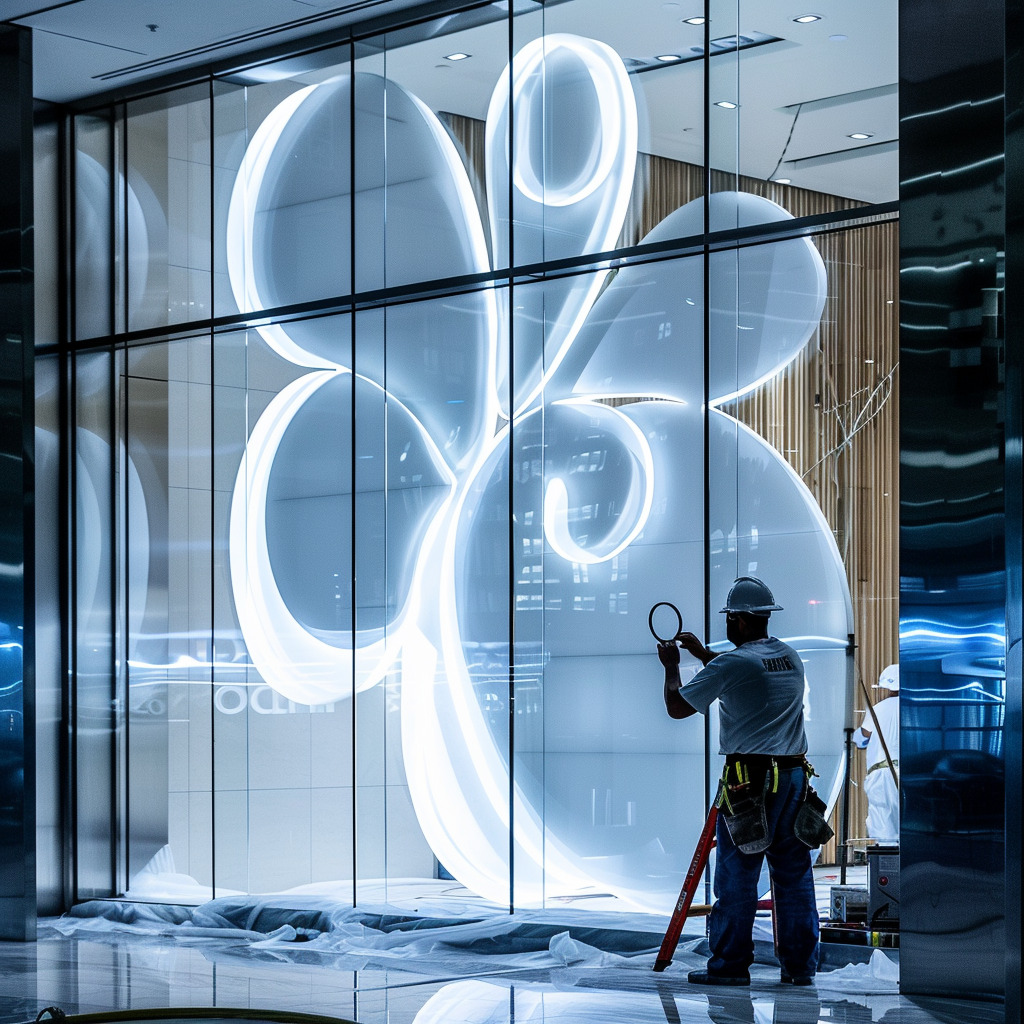
Frosted window film differs fundamentally from curtains, blinds, or actual etched glass. Unlike window treatments you open and close, frosted film provides constant privacy with zero maintenance. Unlike genuine sandblasted or acid-etched frosted glass, window film offers the same appearance at a fraction of the cost—and it’s removable.
The frosting effect works through light diffusion: the textured surface scatters incoming light rays in multiple directions, creating that characteristic soft glow while preventing clear images from passing through. This means you maintain brightness in your room without sacrificing privacy from neighboring windows or street-level views.
Types of Frosted Window Film
Static cling films use micro-suction technology rather than adhesive to bond with glass surfaces. These films contain plasticized vinyl that adheres through cohesion when applied with water. They’re highly repositionable, leave zero residue, and work perfectly for renters or anyone wanting a temporary solution. However, static cling films typically last 1–3 years before edges begin lifting, especially in high-humidity environments like bathrooms.
Adhesive frosted films use pressure-sensitive adhesive layers that create a more permanent bond. These offer superior durability (10–20 years in stable indoor conditions), better UV blocking performance, and higher opacity for great privacy. The trade-off is more challenging removal—you may need heat guns or adhesive solvents, and some residue is possible.
Low-tack adhesive films fall between these categories: removable initially but increasingly permanent over time. They cost more and require more careful installation than either pure static or permanent options.
Materials and Manufacturing
Most frosted films use either vinyl (PVC) or polyester (PET) as their base material. Vinyl films tend to be thicker and less expensive, while polyester films—like those in premium product lines—offer superior dimensional stability and more convincing etched glass appearance. Polyester films replicate the quality of actual sandblasted glass more accurately.
Film thickness typically ranges from 2–8 mil (where 1 mil equals approximately 25 microns). Thicker films provide better structure and durability but may be harder to cut and install. The texture itself varies significantly: some films use printed frosting patterns, others feature actual surface texturing, and decorative versions incorporate patterned designs with clear areas cut from the frost.
Understanding these material differences directly impacts your purchasing decision, especially when comparing long-term value against upfront cost. Premium polyester films may cost more initially but deliver superior durability and aesthetics.
Benefits and Practical Applications
With a clear understanding of materials and film types, you can now evaluate how frosted window film performs across different use scenarios. The practical benefits extend well beyond simple privacy.
Privacy Enhancement
Frosted window film offers 24/7 privacy by obscuring views while allowing natural light to enter your space. During daylight hours, the film provides consistent privacy by blurring images from both sides—silhouettes and shapes become indistinct at any reasonable distance. Dense frosted films achieve approximately 95–98% visual obstruction for recognizable details.
Nighttime privacy requires understanding: if interior lighting is significantly brighter than outside conditions, silhouettes may still be somewhat visible through the film. This differs from reflective film for windows or mirrored films that provide one-way visibility, a topic explored in depth when comparing the best window film options for nighttime privacy. For rooms requiring complete nighttime privacy without curtains, consider denser frost patterns or combining film with other window treatments.
Common applications include bathroom windows, bedroom glass doors, front entry sidelights, and office meeting rooms. Compared to blinds or curtains, frosted film never needs adjusting, never accumulates dust on slats, and never gets tangled or broken. Apartment dwellers find this especially helpful since the film can be removed without damage when moving.
Light Management and Energy Efficiency
This type of window film can help block harmful UV rays, protecting skin and reducing glare, which contributes to a more comfortable indoor environment. In addition to frosted options, photochromic solar window film like CoolVu automatically tints under UV exposure to enhance comfort while preserving outward views. Premium frosted films block up to 99% of UV radiation—the 3M Fasara “Luce” film, for example, achieves 99% UV rejection while maintaining 34% visible light transmission.
Light-diffusing frosted window films help block harmful UV rays, reduce glare, and prevent furniture and carpets from fading, making them a practical choice for homes and offices. The scattered light reduces harsh sun spots on computer screens and eliminates the squinting that comes with direct glare.
Regarding heat, films with integrated solar control layers can meaningfully reduce solar heat gain. Technical specifications measure this through Solar Heat Transmittance (SHT) and Shading Coefficient. Quality films like the “Luce” example show approximately 39% SHT with a 0.59 shading coefficient—meaning noticeable heat reduction during peak sun hours, which translates to lower HVAC loads and energy savings.
Decorative and Design Features
Frosted window films come in various styles, including pure frosted, 3D diamond privacy film, reeded glass window film, and stained glass window film, all of which fall under broader types of decorative film for interior and exterior glass. Beyond plain frost, you’ll find geometric patterns, floral designs, Victorian heritage motifs, gradient effects (transitioning from opaque to clear), and custom-cut patterns with clear shapes.
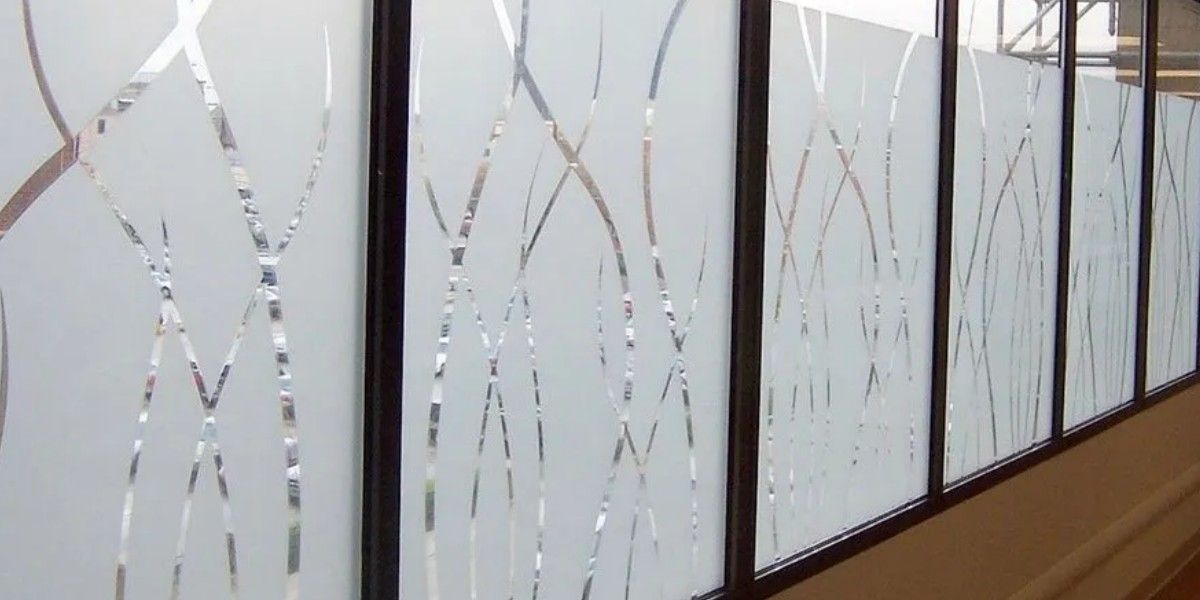
These patterned options let you balance privacy against maintaining exterior views—a gradient film on a living room window might obscure the lower portion while leaving the upper section clear for sky views. Modern minimalist offices favor clean frosted bands on glass partitions, while traditional homes might choose ornate border designs.
The appearance rivals actual etched glass at a fraction of the price. Where custom-etched glass doors might cost thousands, decorative frosted film achieves similar elegance for significantly less while remaining completely reversible.
Installation Guide and Product Comparison
Armed with knowledge of benefits across privacy, light management, and aesthetics, the next consideration is actually installing frosted window film on your windows and doors. The installation process varies based on film type, window size, and your comfort with DIY projects.
Step-by-Step Installation Process
For static cling and adhesive film application, proper surface preparation determines success or failure:
- Clean the window surface thoroughly using a degreasing agent or isopropyl alcohol—remove all dust, oils, silicone residues, and debris. Any contamination trapped under the film creates permanent bubbles.
- Measure and cut the film slightly larger than your glass surface (add 1–2 mm margin on each edge). This allows final trimming for a precise fit after application.
- Spray the glass liberally with a slip solution (water with a few drops of mild dish soap). For adhesive films, spray both the glass and the film’s adhesive side.
- Peel the backing and position the film while surfaces remain wet. The slip solution allows sliding and repositioning before the film sets.
- Smooth from center outward using a squeegee to expel water and air bubbles toward the edges. Work systematically to avoid trapping pockets.
- Trim excess film with a sharp blade held at a consistent angle against the frame edge. Leave approximately 1–2 mm gap from the frame to prevent edge lifting.
- Allow proper curing time—adhesive films need approximately 30 days to reach full bond strength. Avoid cleaning or disturbing edges during this period.
For large windows, complex patterns, or situations requiring perfect alignment, professional installation reduces risk of defects and ensures proper edge sealing, but confident DIYers can follow do-it-yourself window film installation guides for smaller, straightforward projects.
Film Types Comparison
| Criterion | Static Cling | Adhesive/Permanent | Decorative/Patterned |
|---|---|---|---|
| Ease of Installation | Very easy; highly DIY-friendly | More precise; professional preferred for large areas | Varies; pattern alignment adds complexity |
| Removability | Fully removable; no residue | More difficult; may require solvents | Depends on base film type |
| Durability/Lifespan | 1–3 years typical | 10–20 years in good conditions | Base film determines; prints may fade |
| UV/Heat Rejection | Moderate performance | Higher, especially with solar control layers | Clear pattern areas reduce protection |
| Cost Range | Lower upfront ($2–5/sq ft material) | Higher upfront ($8–18/sq ft installed) | Increases with design complexity |
| Best Applications | Rental units, temporary needs | Long-term installations, bathrooms | Design-focused projects |
| Frosted window film prices can vary significantly, with options available from as low as $4.81 to as high as $179.99 depending on the type and size of the film. Common prices for adhesive-backed frosted window films range from $17.00 to $36.00 for various colors and styles, making them accessible for both residential and commercial use. For brand-name products, detailed breakdowns of how much 3M window film typically costs can help you benchmark quotes. The cost of frosted window film can be influenced by factors such as the size of the roll, the type of adhesive used, and any additional features like UV protection or static cling properties. |
When choosing between types, consider your timeline, budget, and environment. Bathrooms need adhesive films that resist humidity. Rental apartments benefit from static cling removability. Offices requiring brand elegance might justify premium 3M FASARA frosted glass finishes with professional installation.
Common Challenges and Solutions
Even with careful installation, frosted window film occasionally presents challenges. Understanding these issues beforehand helps you prevent them—or fix them quickly.
Air Bubbles and Wrinkles
Prevention remains the best approach: clean glass meticulously, use adequate slip solution, and work in appropriate temperatures (ideally 50–80°F). Apply the squeegee systematically from center toward edges rather than randomly.
For existing bubbles, prick tiny holes with a needle at the bubble’s edge, then press flat with a squeegee or credit card. Stubborn wrinkles sometimes respond to gentle heat from a hair dryer, which softens the film for repositioning. Never use a heat gun on static cling films—they melt.
Film Peeling or Not Sticking
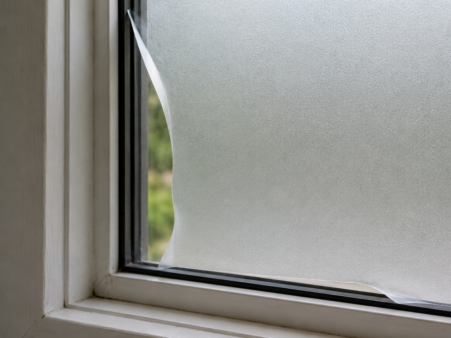
Adhesion failure typically traces back to inadequate surface preparation. Oils from fingerprints, silicone from previous treatments, or cleaning product residue all prevent proper bonding. If film lifts at edges, you may need to remove it completely, deep-clean the glass with isopropyl alcohol, and reapply.
Temperature matters significantly: applying film to cold glass (below 50°F) or in low humidity causes adhesive films to cure improperly. Static cling films lose effectiveness in high heat or humidity environments. For bathroom installations, adhesive films consistently outperform static cling options.
Cleaning and Maintenance Issues
Use only mild soap and water with soft, non-abrasive cloths. Avoid ammonia-based cleaners (like standard Windex), which degrade film surfaces and edge adhesive over time. Never use scraper blades or abrasive scrubbers on film surfaces—scratches are permanent.
For static cling films that you’ll reuse, store flat in a clean, dry location. Rolling introduces creases; stacking without protection causes surface contamination.
Conclusion and Next Steps
Frosted window film delivers a compelling combination of privacy enhancement, UV protection (up to 99% blocking), energy efficiency through reduced heat gain, and aesthetic elegance—all at a fraction of actual etched glass costs. Adhesive-backed frosted window films are popular for providing maximum privacy while still allowing light to enter, making them suitable for both residential and commercial applications. Frosted films can be easily removed without damaging the glass, making them suitable for renters or businesses that may rebrand. Additionally, the film helps hold shattered glass together, reducing the risk of injury.
To move forward with your frosted window film project:
- Measure all windows and doors you want to cover (width × height for each)
- Decide between static cling (temporary/rental) or adhesive (permanent/long-term) based on your situation
- Gather installation tools: spray bottle with slip solution, squeegee, sharp blade, lint-free cloths, and measuring tape
- Start with a smaller window to practice technique before tackling large or prominent glass surfaces
Need More Info?
The Window Film Depot team is happy to help.
Related topics worth exploring include solar control window tinting for additional heat rejection, decorative films with custom patterns or branding, and comprehensive energy-efficient home improvements that complement window treatments, many of which are covered in Window Film Depot’s broader product and brand lineup.
Frequently Asked Questions
Can frosted window film be removed without damage?
Static cling films remove completely without residue—simply peel from one corner and pull slowly. Adhesive films require more effort: use a heat gun or hair dryer to soften adhesive, peel slowly, then clean remaining residue with appropriate solvents. Neither type damages glass when removed properly, especially when you follow proven DIY window film removal and installation techniques.
How long does frosted window film typically last?
Adhesive films in stable indoor conditions last 10–20 years. Static cling films typically last 1–3 years before adhesion degrades, especially in humid environments or areas receiving direct sun. Premium films from certified brands consistently outlast budget options.
Will frosted film work on textured or curved glass?
Textured glass presents challenges—film cannot conform perfectly to uneven surfaces, resulting in air pockets or lifting sections. Static cling performs poorly; adhesive versions work better but still may have issues. Curved glass adds difficulty with pattern alignment and material stress. For both situations, adhesive films with thermal stability perform better, though professional installation is recommended.
Does frosted window film provide insulation benefits?
Frosted film provides solar heat rejection (reducing heat entering through windows) but minimal cold-weather insulation. The film’s R-value is negligible compared to double-glazed windows. Primary energy benefits come from UV blocking and solar heat reduction, not insulating against cold temperatures, though pairing frost with advanced solar control films like CoolVu can further cut heat gain.
Can you see through frosted film at night?
Frosted window film provides consistent privacy during both day and night, blurring images from both sides. However, if interior lighting is significantly brighter than outside, silhouettes become somewhat visible. For complete nighttime privacy without additional window treatments, consider denser frost patterns or reflective films.
Is professional installation recommended for large windows?
Yes—large panes require precise alignment, thorough edge sealing, and consistent squeegee work across expansive surfaces. Mistakes become more visible and costly to fix. Professional installation ensures proper curing and reduces defect risk. For windows under 3 square feet, confident DIYers typically achieve good results.
How do you clean frosted window film?
Use mild soap mixed with water and a soft, non-abrasive cloth. Avoid ammonia-based cleaners that degrade the film surface over time. Never use razor blades, scraper tools, or abrasive sponges—scratches cannot be repaired. Blot dry to prevent streaking.
Does frosted film affect Wi-Fi or cell phone signals?
Standard frosted vinyl and polyester films have no meaningful impact on wireless signals. These materials don’t contain metallic layers that block radio frequencies. Only specialized security films or metallic reflective films interfere with signals—plain frosted privacy films are signal-transparent. If you’re evaluating window security film installation costs alongside privacy upgrades, it’s helpful to work with a nationwide provider like Window Film Depot, which also advises on day and night privacy window film solutions that won’t affect wireless performance.