Table of Contents:
- Why Glass Is Your Building’s Most Exploitable Entry Point
- How Security Window Film Creates a Forced-Entry Delay
- 3M Safety and Security Film: Specifications Built for Commercial Demands
- Security Window Film Compared to Other Protection Methods
- Application Scenarios: How Security Film Performs Across Commercial Environments
- Compliance, Codes, and Specifications for Commercial Projects
- What to Expect from a Professional Security Film Installation
- Building a Glass Security Strategy That Holds Up Under Scrutiny
- Frequently Asked Questions
Why Glass Is Your Building’s Most Exploitable Entry Point
Window Protection from Burglars begins with one critical fact: standard commercial glass can fail in seconds under a focused attack. This guide explains how security window film, perimeter anchoring, and professional installation work together to delay forced entry, protect vulnerable storefronts and offices, and help Window Film Depot deliver cost-effective security upgrades without replacing existing glazing.
The 60-Second Problem: How Quickly Unprotected Glass Fails Under Attack
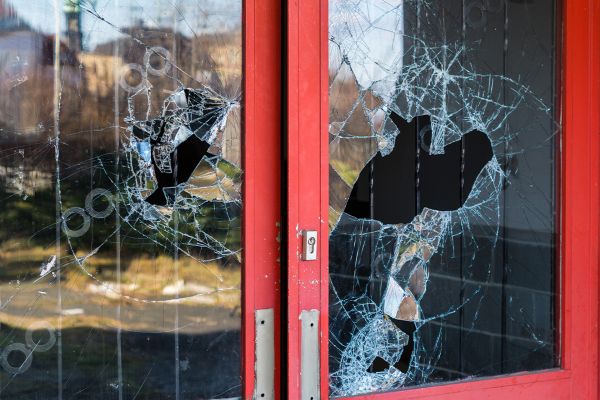
Standard annealed glass fails in under three seconds under a focused strike. A single blow from a common hammer or center punch creates an opening large enough for a person to reach through or climb through. From that point, a motivated intruder can be inside and moving within 60 seconds, faster than most alarm systems can dispatch a response. That timeline is the core problem with treating glass as a passive, low-risk surface in a commercial security plan.
The 60-second window isn’t a worst-case scenario. It’s the baseline. In high-foot-traffic retail corridors or office buildings with visible equipment, the exposure compounds because the reward-to-risk ratio for a smash-and-grab is favorable. An intruder doesn’t need to defeat your access control system. They bypass it entirely by going through the glass beside it.
Burglar Psychology and the Path of Least Resistance
Why Glazed Openings Consistently Rank as Primary Entry Points
Burglars don’t choose entry points based on what looks dramatic. They choose based on what yields fastest with the least resistance and noise. In commercial buildings, glazed openings, including storefront windows, sidelights, and glass doors, consistently rank as primary entry points because they’re large, predictably fragile, and often poorly lit after hours. FBI crime data indicates that a significant share of commercial burglaries involve forced entry through a window or glass door rather than a locked conventional door.
The decision takes seconds. An experienced burglar can assess a target’s glass in a glance: thickness, framing, proximity to an alarm sensor, and whether the pane is large enough to create a usable opening. Standard commercial glazing fails every one of those tests.
The Smash-and-Grab Threat Model for Retail and Commercial Facilities
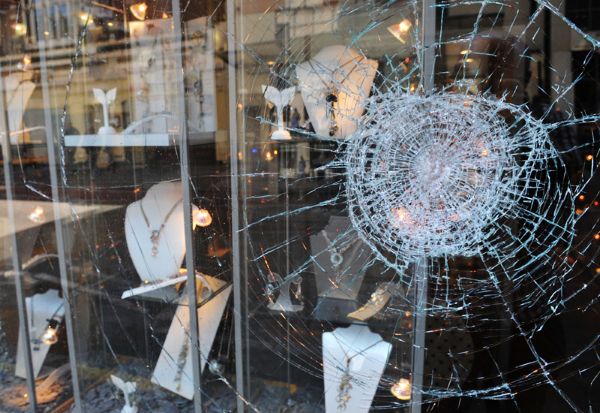
Retail storefronts face a specific and well-documented threat: smash-and-grab. The attack model is simple. Break the glass, grab high-value merchandise, and exit before any response arrives. Jewelry stores, electronics retailers, and pharmacies are consistent targets, but the threat applies to any business with visible inventory or accessible cash storage near a glazed perimeter.
The relevant variable here isn’t whether an alarm triggers. It’s how much time passes between first contact with the glass and a usable breach. Window protection from burglars, in this threat model, is a time problem first and a detection problem second.
What Standard Commercial Glass Actually Offers
Annealed vs. Tempered vs. Laminated Glass: A Baseline Comparison
Most commercial buildings contain a mix of glass types, and their security performance varies significantly:
- Annealed glass is standard float glass with no post-processing. It’s the most common and least expensive option. It breaks easily under impact and shatters into large, dangerous shards, creating an immediate and usable breach.
- Tempered glass is heat-treated to increase surface hardness and break into small, relatively harmless fragments. It resists casual impact better than annealed glass, but a focused strike to a corner or edge defeats it quickly. When it goes, it goes completely.
- Laminated glass bonds two or more glass panes with a polyvinyl butyral (PVB) interlayer. When fractured, the glass adheres to the interlayer rather than falling away, which slows forced entry. This is the baseline for meaningful glass security performance, but it’s also the most expensive option and rarely standard in existing commercial glazing.
Why Existing Glazing Leaves the Building Envelope Exposed
The practical reality on most commercial renovation projects is that the existing glazing is annealed or tempered, installed years or decades ago to meet cost and code requirements that had nothing to do with forced-entry resistance. Replacing that glazing with laminated or impact-rated glass is technically effective but financially prohibitive. Replacement costs routinely run $50 to $100 per square foot or more once labor, framing modifications, and operational disruption are factored in.
The building envelope, from a security standpoint, has a gap. The locks are upgraded. The cameras are installed. The alarm is monitored. But the glass remains the fastest path in.
Window Vulnerability Self-Assessment Checklist
A Step-by-Step Framework for Evaluating Your Building’s Glass Security Posture
Use this checklist during a site walkthrough to identify which glazed openings represent the highest forced-entry risk on your project.
Glass Type and Condition
- Identify whether each primary pane is annealed, tempered, or laminated by checking existing specs or conducting a visual fragment test on a sample.
- Note any visible cracks, chips, or frame separation, as compromised glass fails faster under impact.
- Flag panes larger than 9 square feet with no existing film or laminate layer.
Location and Visibility
- Mark all glazed openings with direct street or parking lot access.
- Note after-hours lighting levels at each opening, since poor lighting increases opportunity.
- Identify any glazed surfaces within arm’s reach of high-value inventory or access control panels.
Frame and Anchoring Condition
- Check whether frames are mechanically fastened or adhesive-set.
- Note frame material (aluminum, wood, vinyl), as each affects anchoring system compatibility for film installation.
- Flag any frames showing separation, rust, or age-related degradation.
Alarm and Detection Coverage
- Document which windows are covered by glass-break sensors or motion detection.
- Identify coverage gaps, particularly on secondary or rear-facing glazed openings.
- Note average alarm response time for the facility if available.
Priority Rating
- High: Large annealed or tempered panes, street-facing, poor lighting, near assets.
- Medium: Tempered panes with alarm coverage but no film or laminate.
- Low: Existing laminated glazing in good condition with active detection coverage.
How Security Window Film Creates a Forced-Entry Delay
The Mechanics of Glass Retention Film Under Impact
What Happens to Glass at the Moment of Strike
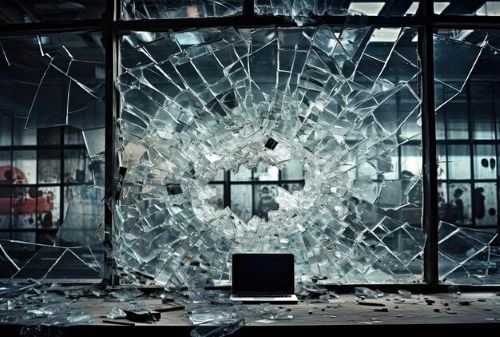
When an unprotected pane takes a focused impact, the glass fractures and the fragments separate from the frame immediately. The breach opens in the same motion as the strike.
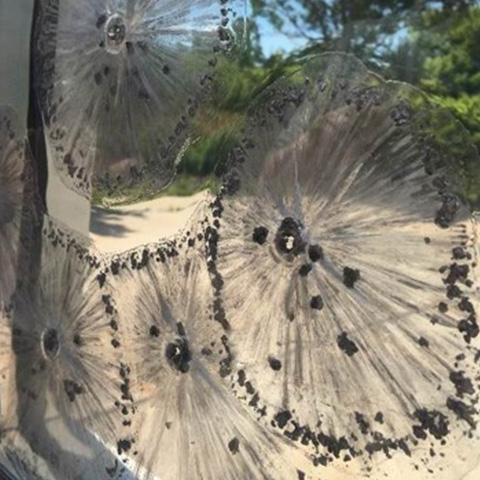
Security window film changes that sequence fundamentally. The film holds the fractured glass together in the frame, converting what would be an instant breach into a sustained attack requiring multiple strikes, sustained force, and additional time.
That is exactly what an opportunistic intruder is trying to avoid.
How Mil Thickness Translates to Measurable Entry Delay
Film thickness is measured in mils (thousandths of an inch), and it directly determines how long a compromised pane can resist continued attack. Entry-level safety films begin around 4 mil and provide basic fragment retention. Commercial forced-entry films typically run 8 mil to 14 mil, with multi-layer constructions reaching higher. At 12 mil with a proper anchoring system, independent testing under ASTM F1233 protocols has demonstrated resistance to sustained attack lasting several minutes, long enough to make the risk profile of a smash-and-grab prohibitive for most opportunistic intruders.
Thickness alone doesn’t define performance. The relationship between film, glass substrate, and anchoring system determines the actual delay time. A thick film installed without proper edge attachment can still delaminate from the frame under repeated impact, undermining the delay entirely.
Anchoring Systems: Why Edge Attachment Determines Performance
Daylight Installation vs. Attachment Anchoring Systems
Daylight installation applies film to the glass surface only, stopping short of the frame edge. It’s faster and less expensive, and it provides meaningful fragment retention for safety applications. For forced-entry performance, it has a significant limitation: when the glass fractures and the intruder applies continued force, the film-and-glass assembly can pull away from the frame along the unanchored edge, creating a breach without the glass fully exiting.
An attachment anchoring system, sometimes called a wet-glaze or mechanical anchor system, bonds the film edge directly to the window frame using structural silicone or a mechanical fastener. This transfers the load of the impact from the glass-film assembly to the building frame itself. The glass can fracture completely and still remain in the opening because the anchored film edge is holding it to the structure.
The Role of Perimeter Anchoring in Holding the Building Envelope Together
In forced-entry applications, perimeter anchoring is what separates a security installation from a safety installation. A properly anchored film on a standard commercial pane performs comparably to laminated glass at a fraction of the replacement cost. It keeps the building envelope closed, meaning the alarm has time to respond, the intruder has to work visibly and audibly against a pane that isn’t yielding, and the probability of abandonment increases with every additional second of resistance.
Can Window Security Film Stop a Break-In or Just Delay It?
The direct answer is that film delays. It doesn’t defeat. No passive glazing treatment will stop a determined attacker with unlimited time and tools. That framing, however, misses the operational reality of commercial burglary. Most commercial break-ins are opportunistic. They depend on speed, low visibility, and the expectation that glass will fail quickly. A film system that forces an attacker to spend four to eight minutes working visibly at a window, under potential camera coverage, generating noise, and risking detection, removes the conditions that make the attack viable in the first place.
Delay is protection. It’s measurable, testable, and directly tied to the likelihood that an intrusion attempt is abandoned before completion.
Performance Standards That Define Protection: ASTM F1233 and GSA Criteria
What ASTM F1233 Tests and Why It Matters for Commercial Specification
ASTM F1233 is the primary voluntary standard for evaluating the forced-entry resistance of window film systems. The test protocol subjects film-and-glass assemblies to a defined attack sequence using hand tools, including hammers, chisels, and pry bars, and measures how long each assembly resists breach. Results are classified by attack level, allowing specifiers to match film performance to the actual threat environment of a given building or project.
For commercial specifications, ASTM F1233 results provide a defensible, third-party basis for product selection. A film that performs to Class A or Class B under that standard has been tested against a defined attack model, not just manufacturer claims. That distinction matters when you’re specifying across multiple locations or presenting a security plan to a client.
GSA Forced-Entry and Blast Mitigation Standards: When They Apply
GSA standards, developed for federal facilities, represent a more demanding performance tier that addresses both forced-entry and blast-pressure scenarios. The GSA’s testing protocols for window film systems include ballistic impact and explosive overpressure, making them directly applicable to government buildings, embassies, courthouses, and facilities adjacent to high-risk targets.
For most commercial and retail renovation projects, ASTM F1233 is the relevant benchmark. GSA standards become the specification requirement when a project involves federal tenants, critical infrastructure, or clients with explicit blast mitigation requirements. Knowing which standard applies to your project and specifying accordingly is the difference between a film that meets the spec and one that looks similar on the product sheet but performs below it under actual test conditions.
3M Safety and Security Film: Specifications Built for Commercial Demands
The 3M Scotchshield Product Line: Matching Film Grade to Threat Level
3M’s Scotchshield line is structured around threat levels, not just thickness, which is the right architecture for commercial specification. The product family spans from basic safety films to heavy-duty forced-entry grades, and selecting the correct tier requires matching film performance to the actual attack profile of each glazed opening on a project.
Light-Duty Safety vs. Heavy-Duty Forced-Entry Film: Knowing the Difference
Safety-grade Scotchshield films, typically in the 4 to 8 mil range, are designed for fragment retention. They keep broken glass in the frame and reduce injury risk from accidental breakage or minor impact. They’re appropriate for interior glazing, upper-floor windows with low break-in exposure, and applications where the primary concern is occupant safety rather than forced entry.
Forced-entry grades, including Scotchshield Ultra 600, Ultra 800, and the multi-layer Ultra Series, run 12 mil and above with reinforced polyester construction. These films are designed to resist sustained attack under ASTM F1233 protocols, not just hold fragments after the fact. The distinction isn’t marketing language. It’s a functional difference in how long the glass assembly stays closed under deliberate, repeated impact. For street-level retail, entry vestibules, or any glazing adjacent to accessible assets, light-duty film is the wrong specification.
Optical Clarity, Tint Options, and Aesthetic Neutrality for Occupied Spaces
One practical advantage of the Scotchshield line for occupied commercial spaces is the range of optical options. Clear films deliver forced-entry performance without altering the appearance of the glazing, which is relevant for storefronts where visibility of merchandise is a design requirement or for office buildings where tenants have approval rights over exterior modifications. Neutral and lightly tinted variants are also available, which can reduce solar heat gain and glare while maintaining the security function.
For project managers working with design-conscious clients or historic properties, the ability to specify security performance without a visible treatment change is significant. The film goes on and the window looks the same. The security posture changes substantially.
What Type of Window Film Is Most Effective Against Burglars?
For commercial forced-entry applications, the most effective security window film combines a mil thickness of 12 or above, a multi-layer polyester construction, and a perimeter anchoring system. Thickness alone is insufficient. The anchoring method determines whether the glass assembly stays in the frame under sustained attack. A 12 mil film with wet-glaze edge attachment outperforms a thicker film installed daylight-only, because the anchored edge transfers impact load to the building frame rather than relying solely on adhesive bond to the glass.
Films tested and classified under ASTM F1233 at Class A or higher represent the practical ceiling for most commercial projects. GSA-rated films address blast scenarios and apply to a narrower project type, as covered earlier in this article.
Anti-Burglary Glass Film vs. Generic Window Film: Why Specification Grade Matters
The commercial market contains a wide range of products sold as security window film, and not all of them perform equivalently. Generic or residential-grade films are typically single-layer polyester in the 4 to 8 mil range, manufactured to cost targets rather than performance standards. They may reduce injury from accidental breakage, but they haven’t been independently tested under forced-entry protocols and shouldn’t be specified for commercial security applications.
Specification-grade film, including 3M Scotchshield and comparable commercial products, carries documented ASTM F1233 test results, defined warranty terms, and installation requirements that are part of the performance specification. When you’re presenting a security upgrade to a client or building owner, that documentation is what differentiates a credible specification from a low-bid substitution that looks similar on paper but underperforms in the field.
Lifespan, Warranty, and Maintenance Expectations for Commercial-Grade Film
3M Scotchshield films carry manufacturer warranties of 10 years for commercial interior applications, with some product lines warranted to 15 years. Exterior-facing installations are subject to environmental exposure variables and carry separate warranty terms. Confirm the applicable warranty at the specification stage, not after installation.
Maintenance requirements are minimal. You can clean the film surface with standard non-abrasive glass cleaners. Avoid cleaning during the 30-day cure period after installation. Temporary condensation may appear between the film and the glass during this time.
This is normal and resolves as the adhesive fully sets. Annual inspections should check for edge lifting, delamination, or frame separation, particularly in high-humidity environments.
Need More Info?
The Window Film Depot team is happy to help.
Security Window Film Compared to Other Protection Methods
Physical Barriers: Security Bars, Grilles, and Shutters
Security bars and grilles are effective at preventing physical entry through a window opening. A properly installed bar set or rolling shutter makes forced entry through that opening impractical for most attackers. The problem isn’t effectiveness. It’s the operational and regulatory context in which commercial buildings exist.
Effectiveness Trade-Offs: Code Compliance and Egress Requirements
International Building Code egress requirements prohibit fixed bars on windows that serve as required emergency exits in occupied spaces. That constraint eliminates bars from most first-floor retail and office applications where they’d provide the most value. Rolling shutters are code-compatible in many configurations but require significant upfront cost, motorized infrastructure, and daily operation. They’re appropriate for after-hours-only facilities such as warehouses or storage facilities, but are operationally impractical for a retail storefront that opens at 9 a.m. and needs to maintain street-front visibility during business hours.
Polycarbonate Glazing and Impact-Resistant Glass Replacement
Polycarbonate panels and impact-rated laminated glass replacements offer the highest passive protection of any glazing option. Polycarbonate is nearly impossible to breach with hand tools. Laminated glass with a thick PVB or SGP interlayer performs comparably to anchored film on standard glass but at substantially higher cost.
When Full Glazing Replacement Is Warranted
Specify glazing replacement when the threat profile is severe and persistent, such as in a jewelry store with prior break-ins, a pharmacy in a high-crime corridor, or a facility that requires blast mitigation. For the majority of commercial renovation projects, the cost differential between full glazing replacement ($50 to $100 per square foot installed) and security film on existing glass ($8 to $20 per square foot installed) is difficult to justify when film on an anchored system delivers comparable forced-entry delay times. Full replacement becomes difficult to justify when the existing frames are in good condition and the threat model is opportunistic rather than targeted.
Alarm Systems and Access Control as Standalone Strategies
Why Detection Without Delay Is an Incomplete Security Architecture
Alarm systems and access control are detection and deterrence tools. They record and report. They don’t physically slow an intrusion. A monitored alarm system with a four-minute average response time offers no protection against a smash-and-grab that completes in 90 seconds. Access control on doors is bypassed entirely when an intruder enters through unprotected glass two feet away from the controlled door. Detection matters as a necessary layer, but it needs a delay mechanism in the physical envelope to be operationally effective.
How to Choose Between Window Film, Bars, and Reinforced Glass for Your Business
The selection framework is more straightforward than it appears:
- Use security film when the building is occupied during business hours, egress compliance is required, aesthetics matter, and the threat model is opportunistic forced entry.
- Use rolling shutters or grilles when the facility is unoccupied after hours, the storefront can tolerate visible security hardware, and budget allows for mechanical infrastructure.
- Specify full glazing replacement when the threat is persistent and targeted, the existing glazing is failing or outdated, or the project budget and scope support it.
Most commercial renovation projects fall into the first category. Film delivers the performance-to-cost ratio that makes it the default starting point for window protection from burglars in active commercial environments.
The Multi-Layered Security Argument: Where Film Fits in the Stack
Film doesn’t replace alarms or access control. It completes them. The security stack for a commercial building needs a detection layer, a delay layer, and a response layer. Alarms and cameras handle detection. Police or on-site security handle response. Film handles delay, and it’s the layer most commercial security plans currently omit. Adding film to an existing alarm and access control system doesn’t require rearchitecting the security plan. It fills the gap that the plan already has.
Application Scenarios: How Security Film Performs Across Commercial Environments
Smash-and-Grab Protection for Retail Storefronts
Retail storefronts are the primary commercial application for forced-entry film, and the performance logic is straightforward. The attack model depends on speed. Film removes speed as a variable.
Display Windows, Entry Vestibules, and After-Hours Exposure
Display windows present the largest glazed surface area and the highest after-hours visibility of merchandise. A 12 mil anchored film installation on a typical display window converts a three-second breach into a multi-minute sustained attack, changing the risk calculation for any opportunistic intruder.
Entry vestibules deserve equal priority. Glass in vestibule walls and sidelights is often overlooked in security upgrades, but it provides direct access to lock hardware and alarm panels from outside the secured perimeter.
After-Hours Security for Office Buildings and Corporate Campuses
Office buildings face a different threat profile than retail. The primary assets are data infrastructure, electronics, and executive areas rather than merchandise. After-hours break-ins target server rooms, reception desks, and executive offices with accessible entry points. Ground-floor and basement-level glazing on office buildings warrants the same forced-entry film specification as retail storefronts. The delay window matters more in these settings because response times to office campus alarms are frequently longer than to retail corridors.
Educational Facilities: Forced-Entry Delay as Part of a Lockdown Protocol
Security film in educational facilities serves a specific function within a broader lockdown protocol. When a threat is identified and a building goes into lockdown, the objective is to keep unauthorized persons out until law enforcement arrives. Film on classroom door lites and corridor windows directly extends the time required to breach a locked door, giving occupants and first responders additional time to respond. Several school safety frameworks now explicitly include glazing protection as a required element of a hardened facility specification.
Installing Security Film on Existing Windows Without Replacement
Film installs directly on the existing glass surface and, in most cases, requires no frame modifications. For anchored systems, the installer applies structural silicone around the frame perimeter, which requires clean, intact frames but does not require structural alterations. A crew can typically complete a single-storefront commercial installation in one day. Project managers can schedule multi-location installations during nights and weekends to avoid disrupting business operations. Because installers leave the glass and frames in place, they eliminate the need for glass removal, framing work, and extended closures. That efficiency allows window film to fit commercial renovation timelines far more easily than full glazing replacement.
Compliance, Codes, and Specifications for Commercial Projects
Building Codes and Safety Glazing Standards for Commercial Window Film
IBC, ANSI Z97.1, and Film Compatibility with Existing Code-Compliant Glazing
Security film doesn’t change what the glass is. It changes how the glass performs under attack. That distinction matters for code compliance. The International Building Code (IBC) and ANSI Z97.1 establish safety glazing requirements for hazardous locations: areas within 18 inches of a door, low-level glazing, and specific occupancy types. These standards govern the glass itself, not the film applied to it. If the underlying glass was code-compliant before film installation, adding film doesn’t create a code violation.
The question becomes more specific when you use film to bring a non-compliant installation up to a safety standard. Some jurisdictions accept documented film testing as evidence that the filmed glass delivers performance equivalent to safety glazing in renovation projects. Verify this with the authority having jurisdiction (AHJ) on your project, because requirements vary by municipality. Obtain written confirmation before you finalize the specification to protect both you and your client if an inspector ever challenges the installation.
Film installed in egress-critical locations must not impede sash operation or reduce visible transmittance below IBC minimums for emergency egress. For forced-entry applications on fixed commercial glazing, this is rarely a constraint, but it’s worth confirming during the site assessment.
How Security Film Affects Existing Window Warranties
Most insulating glass unit (IGU) warranties contain clauses that limit or void coverage if an unauthorized surface treatment is applied. Before specifying film on a recently installed curtain wall or storefront system, review the glazing manufacturer’s warranty terms as part of scope. The practical exposure here is modest on older glazing with expired warranties, but it’s a real consideration on new construction or recently renovated facades.
3M addresses this directly through its Authorized Dealer network. Installations performed by authorized dealers and documented with 3M’s glazing manufacturer acceptance program can preserve the underlying warranty in many cases, because the film is tested for compatibility with specific glass types. This is another reason product specification and installer qualification aren’t separable decisions. The documentation chain that protects the warranty starts with who installs the film and how they record it.
Specifying Security Film for Multi-Location Projects: Consistency and Documentation
Multi-location projects introduce a specification challenge that single-site installations don’t face: maintaining consistent performance across installations completed by different crews, in different buildings, on glass of varying age and type. A specification that reads “8 mil security film” leaves too much room for substitution. A specification that defines product series, mil thickness, construction type, anchoring method, and required ASTM F1233 classification produces a consistent result regardless of location.
Documentation matters equally. For chain retail or multi-site corporate rollouts, a standardized installation record for each location, covering glass type, film product, anchoring method, installer credentials, and warranty registration, creates an auditable security baseline. If a location is breached, the installation record shows exactly what the project team specified and installed. If a protected location withstands an attack while intruders breach neighboring businesses, the same record supports the decision to expand the specification to additional sites.
What to Expect from a Professional Security Film Installation
Site Assessment: Matching Product Specification to Actual Threat Exposure
A credible commercial film installation begins with a site assessment, not a product recommendation. The assessment maps actual glazed openings against the threat model specific to that building: occupancy type, after-hours exposure, asset proximity to glazed surfaces, existing alarm coverage, and frame condition. That mapping drives product selection. Not every window on a project needs the same film grade, and over-specifying on low-risk glazing wastes budget that could strengthen higher-priority openings.
The assessment also identifies installation constraints that affect execution. It confirms whether the frame material will accept anchoring adhesives, identifies interior obstructions that complicate access, and flags glazing that should be replaced rather than filmed because its condition makes anchoring unreliable.

Installation Logistics for Active Commercial and Retail Environments
Phased Scheduling, Operational Disruption Mitigation, and Multi-Site Coordination
Installing office window tinting requires scheduling discipline. A single storefront installation typically runs four to eight hours depending on glazed area and anchoring complexity. That work can be completed outside business hours in most cases, with no need for facility closure. The installation leaves the space fully operational: there’s no odor, no structural work, and no extended cure period that restricts use.
For multi-location rollouts, phased scheduling across a network of sites requires a coordinator who understands both installation sequencing and business operations. Priority sequencing, with highest-risk locations first, ensures that the most exposed sites are protected while the broader rollout continues. Each site should have a defined installation window, a point of contact, and a post-installation walkthrough protocol before the crew moves to the next location.
What Separates a Qualified Commercial Installer from a General Contractor
Why Installation Authority and Product Expertise Are Inseparable
Film installation looks straightforward. The performance gap between a qualified installer and an unqualified one is invisible until the glass is attacked. Proper anchoring requires correct adhesive selection, frame preparation, and cure time management. Improper technique, whether insufficient silicone coverage, a contaminated frame surface, or incorrect film overlap at the edge, creates failure points that only appear under sustained impact. By then, the installation can’t be corrected without removal and reinstallation.
3M authorized dealers carry documented installation training and are held to product-specific installation standards as a condition of authorization. That authorization also connects the installation to the manufacturer warranty. An unauthorized installation may use genuine product but voids the warranty coverage that makes the specification defensible to a client.
Key Specification Criteria for Evaluating a Commercial Security Film Partner
Use these criteria when vetting installers for a commercial forced-entry film project:
- Product authorization: Confirmed authorized dealer status with the specified film manufacturer, with documentation available on request.
- Relevant project experience: Demonstrated history of commercial forced-entry installations, not just residential or decorative film work.
- ASTM F1233 literacy: Ability to explain which film products meet which performance classifications and why that matters for the specific threat environment.
- Anchoring competency: Specific experience with wet-glaze and mechanical anchoring systems, not daylight-only installation.
- Documentation practice: Provides installation records, warranty registration, and product data sheets as standard project deliverables.
- Scheduling capacity: Can accommodate phased scheduling across active business hours and multi-site coordination without subcontracting to unvetted crews.
- Code familiarity: Understands IBC safety glazing requirements and can confirm film compatibility with existing glazing code status.
Building a Glass Security Strategy That Holds Up Under Scrutiny
From Vulnerability Assessment to Installed Protection
The case built across this article reduces to a straightforward operational fact: standard commercial glass fails in seconds, and most commercial security plans don’t address that. Alarms detect. Access control restricts authorized entry points. Neither slows a forced entry through unprotected glass. Security window film for commercial buildings fills that gap by converting an instant breach into a sustained, visible, audible attack that most opportunistic intruders will abandon.
The specification path from vulnerability to protection is clear. Identify glazed openings by threat priority. Match film grade to the actual attack profile at each location rather than applying a uniform spec across every pane regardless of exposure. Specify anchoring method as part of the performance requirement, not as an installation preference. Document everything, from product selection through warranty registration. That approach produces window protection from burglars that’s defensible to your client, consistent across locations, and durable over a ten-plus-year product life.
The Professional Site Assessment as Your Next Step
You can build a preliminary risk picture from the vulnerability checklist earlier in this article. Converting that picture into a specified, code-verified, warrantied installation requires a qualified installer walking the actual building. Frame conditions, glazing types, alarm coverage gaps, and access constraints all affect what gets specified and how it gets installed, and none of those variables are visible from a product sheet or a floor plan.
The professional site assessment is the technical foundation for a security specification that holds up under scrutiny from your client, from the AHJ, and from any forced-entry attempt the installation is designed to defeat.
Visit Window Film Depot to explore professional Window Protection from Burglars for retail, office, and educational facilities.
Frequently Asked Questions
What type of window film is most effective against burglars?
For commercial forced-entry applications, the most effective anti-burglary glass film combines a mil thickness of 12 or above with a multi-layer polyester construction and a perimeter anchoring system. Films tested under ASTM F1233 at Class A or higher give you a third-party verified performance benchmark rather than relying on manufacturer claims alone. The anchoring method is as important as the film itself: a properly wet-glazed 12 mil film will outperform a thicker film installed daylight-only because the anchored edge transfers impact load to the building frame.
Can window security film stop a break-in or just delay it?
Film delays a break-in rather than making entry physically impossible. The important distinction is that most commercial burglaries are opportunistic, not targeted, so delay is operationally equivalent to deterrence. A film system that forces a would-be intruder to spend several minutes working visibly and audibly at a window, under potential camera coverage, removes the speed and low-visibility conditions the attack depends on. Security window film forces most opportunistic intruders to abandon the attempt well before they fully breach the protected pane.
How much does professional security window film installation cost?
Professional installation of specification-grade security window film for commercial buildings generally falls in the range of $8 to $20 per square foot installed, depending on film grade, anchoring method, and site conditions. That compares favorably to full glazing replacement, which typically runs $50 to $100 per square foot or more once labor and framing modifications are included. Anchored systems cost more than daylight-only installations but deliver meaningfully higher forced-entry performance, making them the appropriate specification for street-level and high-priority glazing.
Can security window film be installed on existing windows without replacement?
Yes, and this is one of the strongest practical advantages of film as a security solution. Film applies directly to the existing glass surface. Anchored systems require clean, intact frames for silicone application, but no structural modification to the frame or opening. A professional crew can complete a typical single-storefront installation in one day. Project managers can phase multi-location projects across evenings and weekends to avoid disrupting business operations. Installers apply the film without removing glass, modifying frames, or requiring extended closure periods.
What is the lifespan and maintenance of security window film?
Commercial-grade security window film such as 3M Scotchshield carries manufacturer warranties of 10 to 15 years depending on the product and installation type. Exterior-facing installations carry separate warranty terms that should be confirmed at the specification stage. Maintenance is minimal: clean with standard non-abrasive glass cleaners and avoid cleaning during the 30-day post-installation cure period. Annual inspections should check for edge lifting, delamination, or frame separation, particularly in high-humidity environments.
How do I choose between window film, bars, and reinforced glass for my business?
The decision comes down to threat profile, operational requirements, and code constraints. Security window film is the right specification for occupied commercial buildings where egress compliance is required, aesthetics matter, and the primary threat is opportunistic forced entry. Rolling shutters or grilles are appropriate for facilities that are fully unoccupied after hours and can tolerate visible hardware. Choose full glazing replacement when a persistent, targeted threat exists, such as repeated break-ins or high-value merchandise, or when the existing glazing is in poor condition. For most active retail and commercial renovation projects, anchored security film delivers the best combination of performance, compliance, and cost.