Table of Contents:
Introduction
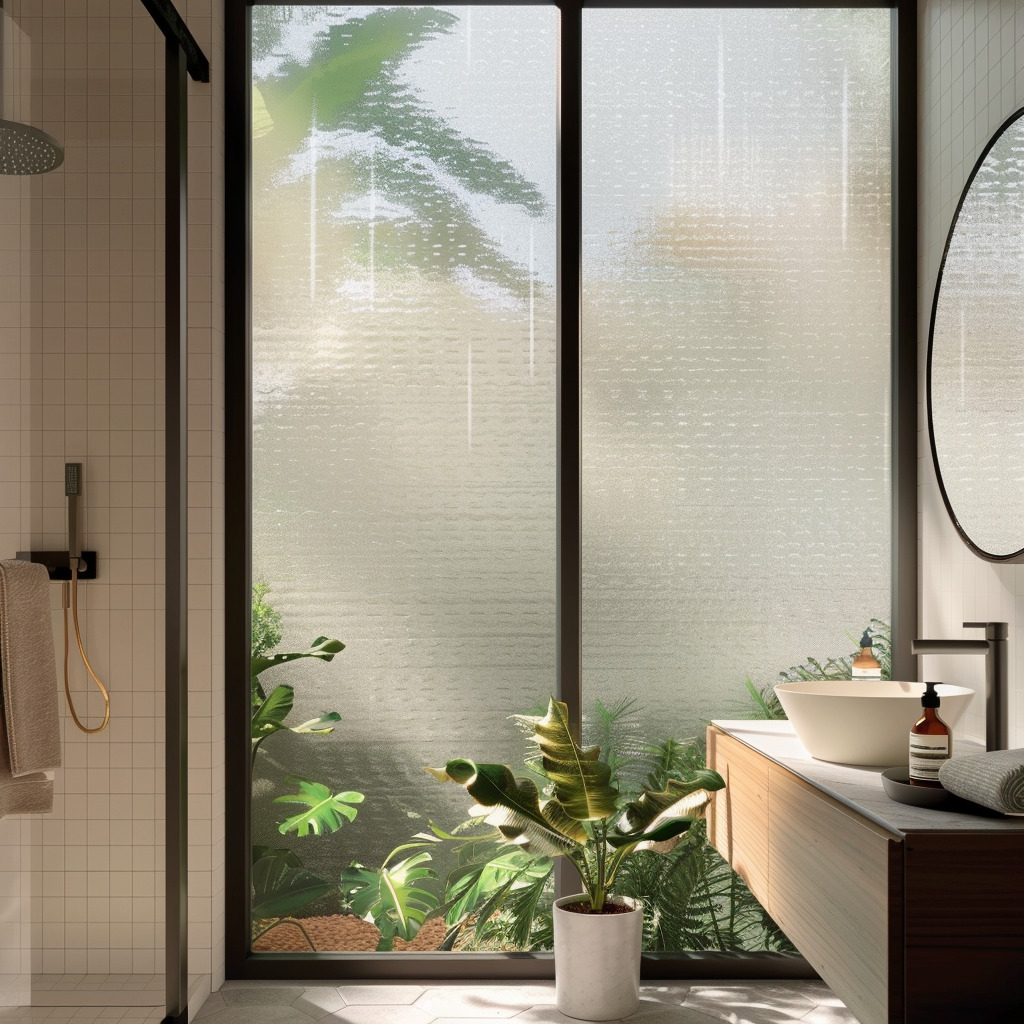
Frosted window film is a translucent covering made from vinyl or multi-layer polyester that transforms clear glass into a privacy surface while allowing natural light to pass through. This inexpensive way to create privacy has become increasingly popular for both residential and commercial applications, offering the elegant appearance of sandblasted or acid-etched glass at a fraction of the cost.
This guide covers everything you need to know about frosted privacy window film—from understanding how it works to selecting the right type for your space and completing a successful installation. Whether you’re a homeowner seeking bedroom privacy, a renter looking for a removable solution, an office manager needing conference room discretion, or a DIY enthusiast ready to tackle a weekend project, this comprehensive resource addresses your specific needs.
Direct answer: Frosted window film provides great privacy by scattering light through microscopic textures, preventing clear visibility while maintaining a soft glow of natural light in your room. Most quality films also block 95-99% of UV rays, protecting your furniture and skin from sun damage.
By the end of this guide, you’ll understand:
- How frosted film creates privacy while preserving natural light
- The differences between static cling and adhesive film options
- Step-by-step installation techniques for professional results
- Solutions for common challenges like air bubbles and adhesion problems
- Cost expectations and realistic lifespan for different film types
Understanding Frosted Window Film
Before selecting and installing frosted film, understanding the technology behind it helps you make informed decisions about which product best suits your windows and privacy requirements.
What is Frosted Window Film
Frosted window film consists of a base plastic layer (typically PVC or vinyl), UV-blocking inhibitors, and either an adhesive backing or static cling surface. The film creates the appearance of frosted glass through microscopic texturing that diffuses light passing through.
Unlike regular window tint designed primarily for heat reduction, or blinds that completely block views, frosted film occupies a unique space in the privacy solution market. It obscures visibility from both directions while still allowing diffused light to enter your room, maintaining brightness without the need for artificial lighting during daytime hours.
This makes frosted film particularly valuable for spaces where you want to add privacy without sacrificing the benefits of natural light—bathrooms, street-facing bedrooms, office partitions, and entry doors all benefit from this balance of privacy and illumination.
How Frosted Film Works
The privacy-creating mechanism of frosted film relies on light diffusion. When light passes through the textured surface, it scatters in multiple directions rather than traveling straight through. This scattering effect blurs detailed images, preventing a person outside from clearly seeing into your space while still allowing overall light transmission.
Most quality frosted films incorporate UV inhibitors that block 95-99% of harmful ultraviolet radiation. Premium films can achieve up to 99.9% UV blocking, providing significant protection for furniture, artwork, and flooring that might otherwise fade from sun exposure. Many films also reduce heat transmission, potentially lowering cooling costs during summer months.
The relationship between opacity and privacy follows a straightforward principle: lower Visible Light Transmission (VLT) means greater privacy but less light entering the room. Heavy frost films allow approximately 7-30% of visible light through, while light frost options permit 60-90% transmission. Heavy frosted options reduce glare by up to 93% compared to clear glass, making them excellent for offices with computer screens or spaces with direct sun exposure.
Understanding these performance characteristics helps you select the right film for your specific application—whether you need maximum privacy for a bathroom or just want to soften harsh glare in a home office while maintaining brightness.
Types and Applications of Frosted Window Film
With the technical foundation established, exploring the variety of available film types and their ideal applications will help you match the right product to your specific needs.
Static Cling vs Adhesive Films
Static cling films contain no adhesive whatsoever, adhering to glass through cohesive forces on smooth, non-porous surfaces. These films are typically thicker than adhesive versions, making them easier to handle during installation. The primary advantages include easy removal without residue, repositioning during application, and reusability—making them ideal for renters or anyone wanting a temporary or seasonal solution. However, static cling films typically last only 2-5 years and may lift at the edges in humid or hot environments.
Permanent adhesive films use pressure-sensitive or wet-applied adhesives that create a lasting bond with the glass surface. Once cured, these films stay flat and sealed at corners, resist moisture better, and typically last 10-20 years. The tradeoff is more difficult removal that may leave residue requiring cleaning. Installation also demands more precision since repositioning is limited once the adhesive contacts the glass.
Low-tack adhesive films offer a middle ground—light adhesive that’s easier to remove than permanent options but provides better durability than static cling. These work well when you want some permanence without committing to a decades-long installation.
Decorative Patterns and Styles
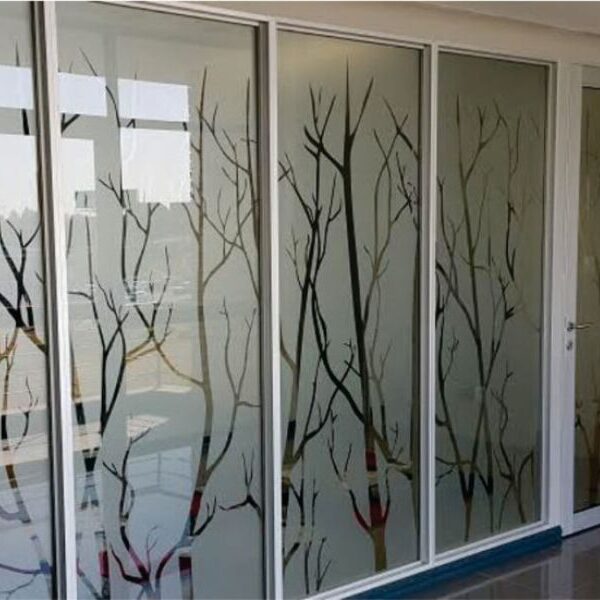
Beyond uniform milky frost, modern frosted films come in numerous decorative options. Geometric patterns add contemporary elegance to office spaces, while organic and floral motifs create softer aesthetics for residential applications. Custom designs can incorporate logos or branded elements for commercial settings.
Gradient frost films transition from opaque to clear, providing privacy at eye level while allowing views above or below. This style works particularly well for street-facing windows where you want to block sightlines from the sidewalk while still seeing the sky.
Reeded or textured frosted films feature vertical or horizontal ribbed patterns that distort views directionally, adding visual interest beyond simple opacity. Patterned frost with clear sections creates decorative bands or shapes within the privacy field, combining function with distinctive style.
Premium finishes can closely mimic acid-etched glass, and some high-end options, such as 3M FASARA frosted window film designs, combine frost effects with solar control properties or security film layers for multi-function protection.
Common Use Cases
Bathrooms and shower doors represent one of the most popular applications. Film must resist moisture in these environments, making adhesive films with scratch-resistant coatings the preferred choice over static cling, which may lift or trap moisture. Full-frost coverage or patterns with clear decorative bands are common design choices, and homeowners can choose from tasteful bathroom privacy window film styles that balance light, privacy, and aesthetics.
Bedroom windows and street-facing glass doors benefit from frosted film’s ability to create privacy without heavy drapes or blinds. In apartment settings or urban areas where windows face sidewalks or neighboring buildings, the film provides daytime privacy while maintaining the room’s connection to natural light; for around‑the‑clock coverage, day and night privacy window film solutions ensure consistent performance regardless of lighting conditions.
Office conference rooms and commercial spaces use frosted film for glass partitions to balance openness with meeting privacy. Custom patterns incorporating company branding combine functional privacy with professional appearance, drawing on a wide range of decorative glass film types for interior and exterior applications. The UV protection also helps preserve furniture and reduce glare on computer screens throughout offices.
Retail storefronts often apply frosted film to lower portions of display windows, creating visual interest and diffused lighting effects while controlling what passersby can see of interior operations, and specialized storefront window tinting solutions can further improve comfort, energy efficiency, and branding.
Understanding these applications helps you identify which technical specifications matter most for your installation, including whether you need window film optimized for nighttime privacy, leading naturally to considerations about how to properly install your chosen film.
Installation Methods and Techniques
With your film type selected and application understood, proper installation technique becomes the determining factor in achieving professional-looking results that last, especially when you’re considering advanced 3M window film products and professional installation services.
Step-by-Step Installation Process
DIY installation is accessible for most homeowners with basic tools and patience, and many follow do‑it‑yourself window film installation guides to get professional-looking results at lower cost. Plan for adequate preparation time—rushing the process leads to most installation problems.
Tools and materials needed:
- Sharp razor blades or utility knife
- Straightedge or T-square
- Squeegee (felt-edge recommended)
- Spray bottle with slip solution (water plus mild detergent)
- Lint-free cloths
- Measuring tape
- Heat gun or hair dryer (optional, for adhesive films)
- Scraper for surface preparation
Installation steps:
- Measure and plan: Measure each window pane individually—they often vary slightly even in the same frame. Add ½-1 inch to all dimensions for trimming margin. Note any obstacles like handles or locks.
- Prepare the surface: Clean the glass thoroughly with mild detergent to remove all dust, oils, and residue. Use a scraper if necessary for stubborn deposits. The surface must be completely clean and dry; any contamination affects adhesion quality.
- Cut the film: Cut your film pieces oversized using a straightedge for clean edges. For patterned or gradient films, plan orientation carefully before cutting.
- Position the film: For adhesive films, spray the glass with slip solution before applying. This allows repositioning. Remove the backing liner gradually while positioning to avoid touching the adhesive. For static cling, the surface can be lightly dampened to ease initial placement.
- Remove bubbles and moisture: Starting from the center, use your squeegee with overlapping strokes toward the edges. Apply firm, consistent pressure to push out all air and water. Work systematically to avoid trapping bubbles.
- Trim the edges: Once positioned, carefully cut along the edge of the glass using your straightedge and razor blade. Leave a tiny gap (1-2mm) from the frame edge to allow for expansion.
- Allow curing time: For adhesive films, avoid cleaning or disturbing the film for approximately 45 days while the adhesive fully cures. Temperature and humidity significantly affect this timeline.
Film Comparison Table
| Criterion | Static Cling | Low-Tack Adhesive | Permanent Adhesive |
|---|---|---|---|
| Installation Method | DIY-friendly, repositionable | DIY with more care | Professional or careful DIY |
| Typical Lifespan | 2-5 years | 5-8 years | 10-20 years |
| Material Cost (per sq ft) | $2-$5 | $5-$8 | $8-$15 installed |
| Removal Ease | Very easy, no residue | Moderate, light residue possible | Difficult, may require cleaning |
| Moisture/Heat Tolerance | Lower, edges may lift | Better performance | Best suited for all environments |
| Best For | Renters, temporary, seasonal | Semi-permanent needs | Long-term, commercial applications |
| When selecting between options, consider both your immediate budget and long-term plans. A renter who might move in two years benefits from static cling’s easy removal, while a homeowner planning to stay should invest in adhesive film’s longer lifespan and better performance. |
Understanding potential problems before they occur helps you avoid common pitfalls during installation and decide when to rely on specialists who offer a wide range of window glass film products and brands.
Common Challenges and Solutions
Even careful installations can encounter issues. Recognizing these challenges and knowing how to address them ensures your frosted film installation achieves professional quality results.
Air Bubbles and Wrinkles
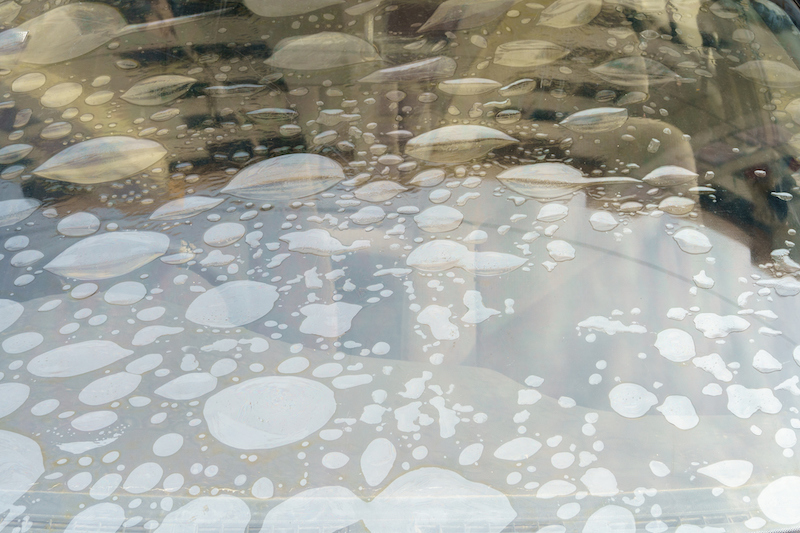
Air bubbles typically result from trapped air or moisture, inadequate squeegee pressure, or dust particles on the glass surface. High temperatures during installation can cause air expansion that creates visible bubbles after the film settles.
Prevention and solutions: Always use the wet method with slip solution for adhesive films—this dramatically reduces trapped air. Squeegee from the center outward with firm, overlapping strokes. If small bubbles remain after installation, they often dissipate during the curing period. For persistent bubbles, use a pin to create a tiny hole, then press out the air with your squeegee. Avoid installing in direct sunlight or when temperatures exceed 90°F.
Measurement and Cutting Errors
Underestimating dimensions leads to visible gaps, while oversizing creates overlap problems or wastes material. Misaligned patterns on decorative films create unprofessional appearances.
Best practices: Measure each pane separately rather than assuming uniformity. Include a ½-inch margin for trimming—it’s far easier to cut away excess than to stretch an undersized piece. For patterned films, mark orientation before cutting and dry-fit before applying. Create paper templates for curved or unusually shaped windows before cutting your film.
Adhesion Problems
Poor adhesion stems from inadequate surface preparation, high humidity during installation, incompatible glass coatings (like some low-e treatments), or environmental extremes. Residual oils, silicone sealants, or cleaning product buildup create invisible barriers that prevent proper bonding.
Solutions: Clean with a degreasing agent, then wipe with isopropyl alcohol before a final water rinse. Ensure the glass is completely dry before beginning. Avoid installation when temperatures fall below 50°F or exceed 90°F. If applying to coated glass, test a small area first or consult the manufacturer’s compatibility information. Never apply film to cracked or damaged glass, as stresses can worsen damage.
Addressing these challenges proactively results in installations that perform well for years, protecting your investment and maintaining the elegant appearance you intended.
Conclusion and Next Steps
Frosted window film delivers an effective combination of privacy, UV protection, and aesthetic appeal at a cost far below replacing windows with frosted glass. Whether you choose static cling for flexibility or adhesive film for longevity, proper product selection and installation technique determine your results.
Take these immediate steps to begin your project:
- Measure all target windows, noting dimensions and any special features like handles or decorative elements
- Determine your priority—maximum privacy, light preservation, or decorative impact—to guide film selection
- Choose between static cling (if you rent or want reversibility) or adhesive (for permanent, high-performance results)
- Gather installation tools: squeegee, spray bottle, razor blade, straightedge, and lint-free cloths
- Select a mild-temperature day with low humidity for optimal installation conditions
For complex installations involving large commercial spaces, curved glass, or specialty coatings, professional installation services ensure proper adhesion and warranty coverage. Many certified installers also offer custom printing and branding options for commercial applications.
Related topics worth exploring include solar control films for heat reduction in hot climates, security films for impact resistance, and combination products that offer frost appearance with enhanced energy performance, many of which are available through full-service window film providers.
Need More Info?
The Window Film Depot team is happy to help.
Frequently Asked Questions
Does frosted window film block UV rays?
Yes, quality frosted films block 95-99% of UV radiation, with premium options achieving up to 99.9% blocking. This protection helps prevent furniture fading, artwork damage, and reduces UV exposure to skin. Check manufacturer specifications for exact UV blocking percentages on your selected film.
Can frosted film be removed without damaging windows?
Static cling films remove easily without residue or damage. Adhesive films require more effort—typically warming with a heat gun and peeling slowly. Some adhesive residue may remain, requiring cleaning with appropriate solvents. Removal rarely damages glass but may affect specialty coatings on treated windows.
How long does frosted window film last?
Lifespan varies significantly by type: static cling films typically last 2-5 years, low-tack adhesive films 5-8 years, and permanent adhesive films 10-20 years. Environmental factors like direct sun exposure, humidity levels, and temperature extremes affect longevity.
Is frosted film suitable for shower doors and high-moisture areas?
Adhesive films with waterproof, scratch-resistant coatings perform well in bathrooms and showers. Static cling films are less suitable for high-moisture environments, as humidity can cause edge lifting and moisture trapping beneath the film. Ensure proper ventilation during installation and curing.
Can you see through frosted window film at night?
Frosted film provides less privacy at night when interior lighting is brighter than outside. Silhouettes and movement become visible through the film in these conditions. For complete nighttime privacy, combine frosted film with curtains or blinds, or choose heavy frost options with very low light transmission.
What tools do I need for DIY installation?
Essential tools include: sharp razor blades or utility knife, straightedge, squeegee (felt-edge preferred), spray bottle with diluted soap solution, lint-free cloths, measuring tape, and a scraper for surface preparation. A heat gun or hair dryer is helpful for adhesive films.
How do I clean windows with frosted film?
Clean using mild, ammonia-free cleaners and soft cloths. Avoid abrasive pads or harsh chemicals that may damage the film surface or degrade adhesion at edges. Wait the recommended curing period (typically 45 days for adhesive films) before first cleaning. Regular gentle cleaning maintains appearance and longevity.
Does frosted film reduce energy costs?
Frosted film can reduce energy costs by blocking solar heat gain—particularly films with solar control properties. According to the U.S. Department of Energy, window films that reduce solar gain directly lower air conditioning loads. Heavy frost films with low solar energy transmission (around 9%) provide more significant energy benefits than light frost options.