Table of Contents:
- The Science of Reflection: How 3M One-Way Mirror Films Truly Operate
- The ‘Nighttime Reversal’: Why Standard One-Way Films Fail After Dark
- Beyond Reflection: Advanced 3M Solutions for Comprehensive Privacy Needs
- Strategic Implementation: Combining Film Technologies for Optimal Performance
- Partnering for Success: Specifying the Right 3M Privacy Solution for Your Commercial Project
- Conclusion: Key Takeaways and Next Steps for Project Managers
- Frequently Asked Questions
- Related Posts from Window Film Depot
The Client’s Expectation vs. Technical Reality in Commercial Projects
Project managers frequently encounter client requests for absolute, round-the-clock privacy solutions that often invoke the concept of a “one-way mirror.” This specific demand for one way window film arises from a desire to maintain interior confidentiality while allowing occupants to see out unimpeded. While perfectly understandable from a client’s perspective, this expectation often clashes with the fundamental technical realities of window film privacy technology. Bridging this gap between a client’s aspirational vision and the scientific limitations of available products is a critical aspect of project management in commercial installations.
Why the ‘One-Way Mirror Day and Night’ Film Concept is Often Misunderstood

The concept of a true “one-way mirror” that provides continuous, 24/7 privacy is a common misunderstanding rooted in popular culture and an intuitive, yet incorrect, interpretation of how reflective surfaces function. Clients often envision a film that behaves like a police interrogation room mirror, where visibility is always one-directional, regardless of ambient lighting conditions. However, a single film cannot inherently defy the laws of physics that govern light reflection and transmission. This misconception, if unaddressed, can lead to significant project failures and client dissatisfaction when the film inevitably fails to perform as expected under specific lighting scenarios, particularly at night.
Setting Realistic Expectations: A Project Manager’s Essential Role
Given these technical limitations, a project manager’s role in setting realistic expectations becomes paramount. It is not merely about saying “no” to a client’s request, but about educating them on the scientific principles at play and guiding them towards viable, technically sound alternatives. This consultative approach prevents downstream issues, reinforces trust, and positions the project manager as a knowledgeable and indispensable partner. Understanding the ‘why’ behind these limitations is the first step in expertly managing client perceptions and ensuring successful project outcomes.
The Science of Reflection: How 3M Films Truly Operate
Understanding Light Differential: The Core Principle of Reflective Films
The fundamental principle underpinning the apparent “one-way” effect of reflective window films is the existence of a significant light differential between the two sides of the glass. These films are engineered to reflect a portion of incident light while allowing another portion to transmit through. The perceived one-way privacy effect is achieved when one side of the film (the brighter side) reflects so much light that it appears mirrored, effectively obscuring visibility into the darker side. Conversely, from the darker side, sufficient light passes through the film to allow a clear view out. This effect is entirely dependent on an imbalance of illumination.
VLT (Visible Light Transmission) and the Physics of Visual Privacy During Daytime
Visible Light Transmission (VLT) is a crucial metric for understanding how reflective films achieve daytime privacy. VLT quantifies the percentage of visible light that passes directly through the film. 3M reflective films designed for privacy typically have lower VLT values, meaning they allow less visible light to pass through them. During daylight hours, the exterior environment is significantly brighter than the interior. The film’s reflective properties cause the brighter exterior light to be predominantly reflected outwards, creating a mirror-like appearance from the outside. Simultaneously, enough interior light can still pass through the film to allow occupants to see out, thus creating the desired daytime one-way privacy effect.
The Critical Role of Interior vs. Exterior Light Balance for Film Performance
The performance of reflective films hinges entirely on the light balance between the interior and exterior environments. During the day, with exterior brightness far exceeding interior brightness, the film works effectively as a daytime privacy solution. However, this dynamic completely reverses at night when interior lights are switched on.
- Nighttime Reversal: As the interior becomes brighter than the exterior, the film’s reflective properties are activated from the inside.
- Mirror Effect: The film now appears mirrored to occupants looking from the inside out, reflecting the brighter interior lights.
- Loss of Privacy: From the exterior, the film allows the relatively darker outdoor environment to be seen through, revealing the illuminated interior.
This shift means that the film no longer provides privacy from the outside looking in, effectively turning it into a conventional window that offers limited concealment.
Technical Specifications and Performance Metrics for 3M Reflective Films
When evaluating 3M reflective films, project managers should focus on a range of technical specifications that define their performance characteristics. These metrics are vital for understanding the film’s capabilities regarding solar control, energy efficiency, and daytime privacy, but they do not negate the fundamental physics of light differential.
Key specifications often include:
Need More Info?
The Window Film Depot team is happy to help.
- Visible Light Transmission (VLT): As discussed, it indicates how much visible light passes through. Lower VLT generally correlates with greater daytime privacy.
- Visible Light Reflectance (VLR): Measures the percentage of visible light reflected by the film. Higher exterior VLR contributes to the mirror effect from the outside.
- Total Solar Energy Rejected (TSER): Represents the percentage of total solar energy (including visible light, infrared, and ultraviolet) rejected by the film, indicating its heat control capabilities.
- Solar Heat Gain Coefficient (SHGC): Measures the fraction of incident solar radiation that enters a building as heat through the fenestration. Lower SHGC values indicate better heat rejection.
- UV Light Rejected: The percentage of harmful ultraviolet rays blocked by the film, contributing to fade protection for interiors.
While these specifications demonstrate the superior performance of 3M films in solar management and daytime privacy, it is crucial to communicate that none of these metrics enable a reflective film to overcome the light differential challenge required for 24/7 one-way privacy.
The ‘Nighttime Reversal’: Why Standard One-Way Films Fail After Dark
Explaining the Loss of Privacy: Interior Light Dominance at Night
The fundamental principle behind a “one-way” mirror effect, whether through specialized one way glass or applied film, relies entirely on a significant light differential between the two sides. During daylight hours, the exterior environment is considerably brighter than the interior. This allows the reflective surface of the film to reflect the bright outdoor light while simultaneously permitting sufficient interior light to pass through, creating the desired privacy effect from the outside.
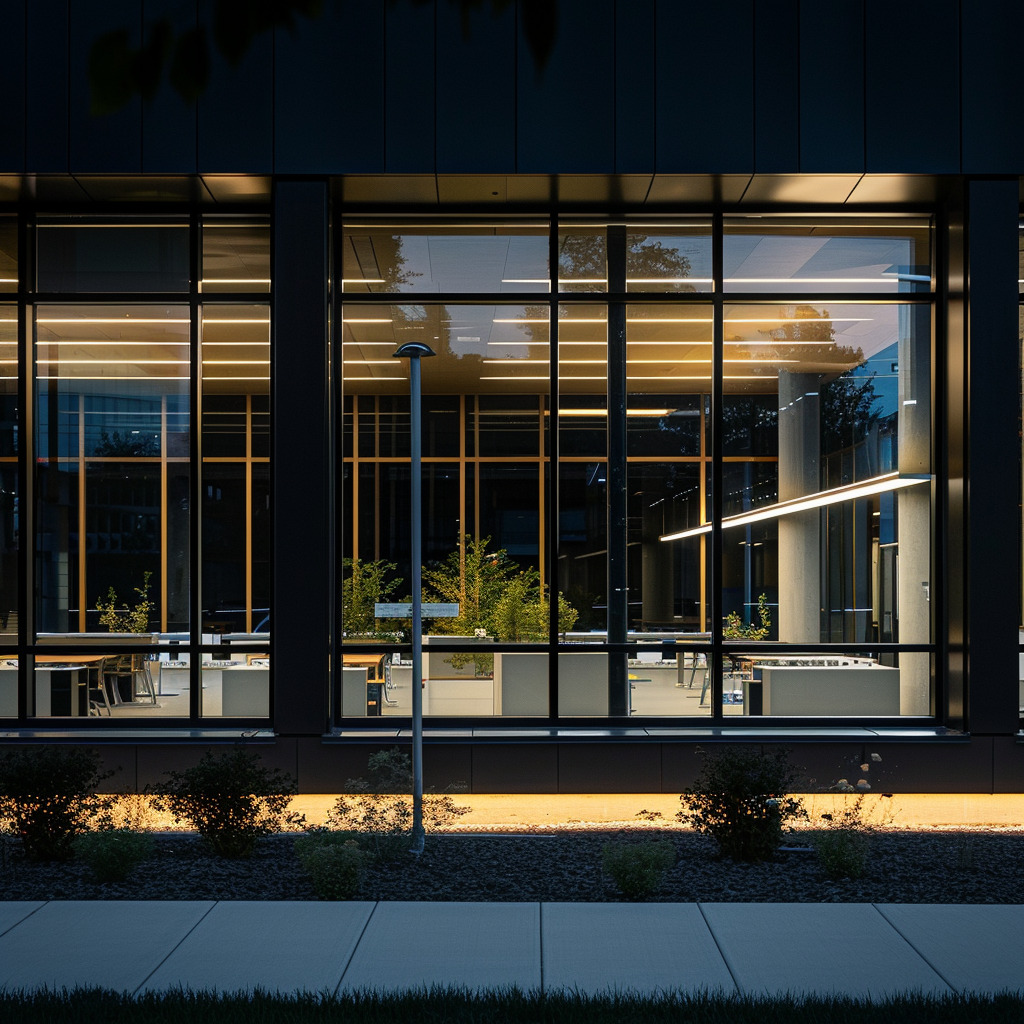
However, as night falls and artificial lighting illuminates indoor spaces, this delicate balance reverses. The interior becomes a brighter environment. When the light inside a room exceeds the light outside, the reflective film begins to reflect the interior light, making the inside visible from the exterior. What was once a privacy barrier transforms into a transparent window, exposing occupants and their activities. This is not a product malfunction but a direct consequence of the laws of physics governing light reflection and transmission.
The Practical Implications for Commercial Spaces and Occupant Privacy
For project managers specifying films for commercial applications, understanding this nighttime reversal is critical. A client expecting 24/7 privacy from a standard one-way reflective film will inevitably face disappointment and potential security liabilities. In office buildings, retail environments, or medical facilities, the exposure of interior activities after dark can compromise proprietary information, employee safety, or patient confidentiality. This undermines the very purpose for which the film was installed, leading to costly re-specifications and damaged client trust. Project managers must anticipate and address this inherent limitation proactively to safeguard both the project’s success and the client’s operational integrity.
Debunking the Persistent Myth: No Single Film Offers True 24/7 One-Way Privacy
The concept of a single film providing true, unobstructed one-way privacy around the clock is a persistent misconception within the market. While manufacturers continually innovate to improve film performance, no current technology can defy the physics of light intensity to maintain a one-way effect independent of the light differential. Any product marketed as offering “24/7 one-way privacy” without additional measures (like external lighting or internal blackout blinds) will fail to deliver on this promise in low-light exterior conditions. This technical reality makes it imperative for project managers to rely on accurate information and manage client expectations from the outset.
Managing Client Disappointment: Proactive Education as a Solution
The most effective strategy for managing client expectations regarding one-way films is proactive education. Project managers must act as technical advisors, clearly explaining the scientific principles that govern these films’ performance, particularly the nighttime reversal. By openly discussing these limitations upfront, you can prevent misunderstandings and disappointment down the line. This approach not only builds trust but also positions you as a knowledgeable and reliable partner, capable of proposing viable alternative solutions that align with the client’s actual privacy and security objectives.
Beyond Reflection: Advanced 3M Solutions for Comprehensive Privacy Needs
While a true 24/7 one-way window film privacy remains a physical impossibility, 3M offers a diverse portfolio of advanced film technologies designed to meet a wide range of privacy, security, and aesthetic requirements. Understanding these alternatives allows project managers to specify solutions that genuinely align with client needs, delivering both functionality and peace of mind.
Diffused Light Privacy: Exploring 3M Frosted and Decorative Films (Fasara™ and Scotchcal™ Series)
For applications where complete visual blockage is desired without sacrificing natural light, 3M’s frosted and decorative films offer an elegant solution. These films work by diffusing light rather than reflecting it, obscuring direct views while still allowing ambient light to pass through.
- 3M Fasara™ Decorative Films: These films transform plain glass into decorative elements, offering privacy with style. They come in a variety of patterns, textures, and finishes that mimic etched, sandblasted, or specialty glass. Fasara films are ideal for conference rooms, private offices, partitions, or retail environments where aesthetic appeal is as important as privacy.
- 3M Scotchcal™ Series Films: Offering robust and versatile decorative options, Scotchcal films provide durable solutions for privacy, branding, or aesthetic enhancement. They are available in numerous colors and finishes, capable of creating custom designs that obscure views and add architectural interest without the light intensity dependencies of reflective films.
Dual-Reflective Films: Enhancing Nighttime Performance While Preserving Views
When a client desires to maximize daytime privacy and heat rejection while minimizing the “mirror effect” from the interior at night, dual-reflective films are an excellent choice. These films are engineered with a darker, more reflective exterior and a lighter, less reflective interior surface.
Unlike standard reflective films, dual-reflective films significantly reduce the interior reflection, making the view out clearer at night compared to conventional mirror films, even with interior lighting. While they do not provide absolute one-way privacy after dark if the interior is brightly lit, they offer a substantial improvement in visual comfort and maintain a degree of obscurity from the exterior under typical conditions. This makes them a strong option for commercial buildings where occupants value their view out, even when the lights are on.
Obscuring Views: Opaque and Blackout Solutions for Ultimate Privacy
For situations demanding absolute and impenetrable privacy, where visual access in or out is completely undesirable, opaque and blackout window film is the definitive answer. These specialized films are designed to entirely block the transmission of light and visual information through glass.
- Complete Visual Obstruction: Opaque films provide a solid, non-transparent barrier. Blackout films offer the highest level of visual privacy, rendering the glass entirely opaque from both sides.
- Applications: These are commonly used in sensitive areas such as server rooms, data centers, archival spaces, medical examination rooms, or any location where privacy and security are paramount and natural light is either not required or undesirable. They ensure that no one can see in or out, providing ultimate discretion.
Integrating Aesthetics and Functionality: Balancing Design and Security with 3M Films
Ultimately, achieving a client’s comprehensive privacy and security goals involves more than just selecting a single film type. It requires a thoughtful integration of aesthetics and functionality tailored to the specific environment and desired outcome. 3M’s extensive film portfolio enables project managers to craft multi-faceted solutions. This might involve combining decorative films for interior partitions with dual-reflective films for exterior windows, or utilizing blackout films for critical areas alongside energy-saving options for others. The ability to precisely match film characteristics with architectural design and operational needs is where expert consultation truly adds value, ensuring that every project delivers on both visual appeal and performance requirements.
Strategic Implementation: Combining Film Technologies for Optimal Performance
Achieving optimal privacy and performance in commercial spaces often requires a nuanced approach, acknowledging that no single film technology can solve every challenge. Project managers must move beyond the misconception of a universal ‘one-way’ film and embrace the strategic combination of specialized film solutions.
Layering Solutions: Achieving Multi-faceted Privacy Goals Beyond a Single Film
While the laws of physics preclude a single film from offering true one-way vision under all lighting conditions, advanced film technology allows for a multi-faceted approach. By strategically combining different film types, project managers can address diverse client requirements simultaneously, from daytime glare reduction and energy efficiency to nighttime privacy and enhanced security. This might involve pairing an exterior solar control film to manage heat gain and provide daytime reflectivity with an interior decorative or frosted film on specific windows to obscure vision at night or in sensitive areas. This layered strategy delivers comprehensive benefits that a singular product cannot, ensuring performance across various scenarios.

Zone-Specific Film Applications: Tailoring Solutions to Different Areas within a Project
Effective film specification demands an understanding that not all glass within a commercial building has the same functional requirements. Applying a uniform film across an entire facade often leads to suboptimal performance or unnecessary expense. Instead, a zone-specific approach tailors the film solution to the unique demands of each area:
- Public-Facing Ground Floors: May benefit from decorative or translucent films to maintain internal privacy without entirely blocking light, or even security films for enhanced protection against forced entry.
- Conference Rooms or Private Offices: Often require switchable films or opaque decorative films to ensure confidentiality during meetings while allowing for transparency at other times.
- Upper-Level Windows: Could prioritize solar control and UV protection to improve occupant comfort and reduce HVAC loads, potentially with a less reflective interior appearance.
- Restrooms and Service Areas: Necessitate maximum visual privacy, making opaque or frosted films the ideal choice.
This tailored application optimizes both functionality and budget, providing targeted solutions where they are most needed.
Beyond the Glass: Complementary Privacy Strategies (e.g., Architectural Features, Lighting)
While advanced films are a critical component of any privacy strategy, they are most effective when integrated into a broader architectural and operational plan. Project managers should consider how films interact with other elements to create a holistic privacy solution. Architectural features like overhangs, louvers, or strategic landscaping can provide additional visual barriers. Crucially, lighting design plays a significant role, particularly in mitigating the nighttime effect of reflective films. Controlling interior lighting levels and utilizing exterior ambient lighting can help manage the visual balance, reducing the ‘fishbowl effect’ and enhancing privacy without solely relying on the film’s reflective properties. This integrated approach ensures that films enhance, rather than solely define, the overall privacy performance.
The Long-Term Benefits of a Hybrid Film Approach for Commercial Buildings
Adopting a hybrid, zone-specific film strategy offers substantial long-term advantages for commercial buildings and their occupants. This approach goes beyond merely addressing immediate privacy concerns; it contributes to the overall operational efficiency and sustainability of a property. Benefits include:
- Enhanced Occupant Comfort: By managing glare, heat, and privacy, creating a more pleasant internal environment.
- Significant Energy Savings: Optimizing solar heat rejection reduces cooling costs, while maintaining natural light can lower artificial lighting needs.
- Extended HVAC System Life: Reduced load on heating and cooling systems leads to less wear and tear and lower maintenance costs.
- Improved Security Posture: Combining films for privacy with those designed for impact resistance can offer layered protection.
- Increased Property Value: A modern, energy-efficient, and aesthetically pleasing building is more attractive to tenants and buyers.
- Adaptive Design: The modular nature of film allows for future adjustments to privacy or energy needs without major structural changes.
This comprehensive approach ensures that clients receive a durable, high-performing solution tailored to their precise requirements, offering a superior return on investment over the building’s lifecycle.
Partnering for Success: Specifying the Right 3M Privacy Solution for Your Commercial Project
Successfully navigating the complexities of commercial film specification requires more than just product knowledge; it demands a strategic, consultative approach. Project managers who understand the nuances of film technology and client needs can position themselves as invaluable expert partners.
A Consultative Approach: Aligning Client Vision with Technical Possibilities
Clients often come with specific requests, such as a “one-way mirror” effect, based on a general understanding rather than technical feasibility. The project manager’s role is to translate this client’s vision into a technically sound and achievable solution. This begins with an in-depth conversation to uncover the underlying privacy objective. Is it to deter visual intrusion, manage glare, control heat, enhance security, or a combination? By clarifying these core needs, the project manager can then educate the client on the physics of light and reflection, explaining why certain films perform differently during the day and night. This empowers the client to make informed decisions and allows the project manager to propose 3M solutions that genuinely align with their practical requirements and expectations, rather than a potentially unachievable ideal.
Assessing Project Requirements: Balancing Security, Aesthetics, Energy Efficiency, and Budget
Every commercial project presents a unique set of constraints and priorities that must be meticulously evaluated. A successful film specification balances these competing demands to arrive at the optimal solution. Key considerations include:
- Security Demands: Understanding specific threats, whether from forced entry, blast mitigation, or simple visual privacy from casual observers.
- Aesthetic Goals: Evaluating how the film will impact both the interior ambiance and the exterior facade appearance, ensuring it complements architectural design and brand identity.
- Energy Efficiency Targets: Quantifying desired improvements in solar heat rejection, glare reduction, and UV protection to meet sustainability goals and reduce operational costs.
- Budgetary Constraints: Determining the cost-effectiveness of various film options, considering both initial investment and long-term energy savings or avoided costs.
Successfully navigating these factors often involves identifying acceptable trade-offs and prioritizing based on the client’s most critical objectives.
Leveraging 3M Product Data Sheets and Expert Resources for Informed Decisions
To confidently recommend and specify advanced film solutions, project managers must rely on robust, verifiable data. 3M provides comprehensive product data sheets that detail critical performance metrics such as visible light transmittance (VLT), solar heat gain coefficient (SHGC), UV rejection, and reflectivity. These specifications are crucial for making informed decisions and ensuring that the selected film will perform as expected. Beyond documentation, engaging with 3M technical specialists and certified installers offers invaluable expert consultation. These resources can provide application-specific advice, clarify complex performance characteristics, and even assist with on-site evaluations, ultimately mitigating risks and ensuring proper product selection and installation.
Building Trust and Authority: Positioning Yourself as the Expert Consultant in Film Technology
For project managers, demonstrating a deep understanding of film technology, its capabilities, and its limitations is paramount to building client trust and establishing authority. By proactively addressing common misconceptions, such as the myth of the 24/7 one-way mirror, and presenting scientifically backed solutions, project managers become invaluable advisors. This expert consultation approach ensures that clients receive realistic expectations and effective, long-lasting 3M solutions tailored to their specific needs. It prevents project failures stemming from misaligned expectations and ultimately solidifies the project manager’s reputation as a knowledgeable, reliable partner capable of delivering complex privacy and security outcomes.
Conclusion: Key Takeaways and Next Steps for Project Managers
Reaffirming the Thesis: Strategic Consultation as the Path to Project Success
As we have thoroughly explored, the fundamental laws of physics dictate that a truly “one-way” privacy film capable of providing absolute obscurity both day and night from a single application is an impossibility. This technical reality, while sometimes challenging to explain, is not a limitation on project goals but rather a critical piece of knowledge that empowers project managers. Understanding this principle transforms a potentially misleading client expectation into an opportunity for expert guidance.
Our core thesis remains: delivering on complex client privacy demands without risking project failure and dissatisfaction hinges on a strategic consultation regarding 3M’s diverse film portfolio. This proactive approach allows for a precise matching of available technologies to the client’s actual, nuanced privacy requirements throughout different times of day and night. By moving beyond the myth of a singular “one-way” solution, project managers can define achievable outcomes and specify products that truly perform as intended.
Empowering Project Managers to Educate and Guide Clients with Confidence
Equipped with a clear understanding of light transmission principles and film technology, project managers are positioned to educate and guide clients with unparalleled confidence. This knowledge allows for transparent discussions about the capabilities and limitations of various privacy solutions, fostering trust and setting realistic expectations from the outset. No longer must project managers navigate these requests with uncertainty.
Instead, they can present a range of effective 3M solutions tailored to specific scenarios. This consultative approach minimizes misunderstandings and ensures that the final installed solution aligns perfectly with the client’s operational needs and aesthetic preferences. Project managers become the authoritative voice, translating technical facts into actionable, client-centric strategies.
The Value of Partnership with 3M Certified Installers for Flawless Execution
The optimal performance and longevity of any advanced film solution extend beyond material selection; they are critically dependent on precise, professional installation. Partnering with 3M Certified Installers is not merely a recommendation; it is an essential component of flawless project execution. These installers possess specialized training directly from 3M, ensuring they understand the unique characteristics and application requirements of each film product.
Their expertise guarantees that films are applied correctly, adhering to manufacturer specifications and preserving product warranties. This professional installation prevents common issues such as bubbling, peeling, or improper alignment, which can compromise both the film’s performance and its aesthetic integrity. Engaging certified installers ensures that the carefully selected 3M solution delivers its full intended benefit.
Initiating Your Next Privacy Film Project with Expert Support
When contemplating your next privacy window film project, leveraging expert support from the earliest stages can significantly enhance project success. We encourage project managers to initiate a detailed consultation with 3M experts and certified installers. This engagement allows for a comprehensive assessment of site-specific conditions, light exposure patterns, and the precise privacy objectives.
This collaborative process ensures that the most appropriate 3M films are identified, whether they are daylight privacy films, decorative and frosted films for consistent opacity, or a combination of solutions designed for layered functionality. By engaging with specialists, you secure not just a product but a complete, meticulously planned solution that meets the demands of your project and exceeds client expectations.
Ready to learn about window security film cost, frosted glass, what are laminated windows, home window tinting, privacy window film bath uv, and decorative window film and more? We’re here to answer all your questions.
Frequently Asked Questions
Why does my client see a “mirror” on the inside of the office at night?
This is known as nighttime reversal. Because one-way privacy film relies on a light differential, the side with the most light becomes the “mirrored” side. During the day, the sun makes the exterior brighter, so the mirror faces out. At night, when the office lights are on and it is dark outside, the mirror faces inward. To the person outside, the film appears transparent, allowing them to see directly into the illuminated office.
Can we achieve 24/7 one-way privacy by adding a second layer of film?
No. Adding more layers of reflective film will only darken the glass (reducing the VLT), but it will not change the physics of light reflection. If the interior light is stronger than the exterior light, the brighter side will always be visible from the darker side. To achieve 24/7 privacy without blinds, you must use a non-directional solution like a frosted or decorative film from the 3M Fasara™ series.
What is the difference between “Reflective” and “Dual-Reflective” films?
Reflective Films: Have high reflectivity on both sides. These are excellent for heat rejection but create a strong mirror effect on the inside at night, making it difficult for occupants to see out.
Dual-Reflective Films: Engineered with a high-reflectivity exterior and a low-reflectivity interior. This helps maintain the “one-way” look during the day while significantly reducing the “internal mirror” at night, allowing occupants to see the city lights more clearly.
How does Visible Light Transmission (VLT) impact the privacy effect?
VLT is the percentage of light that passes through the film. Generally, the lower the VLT (the darker the film), the easier it is to achieve a one-way effect because it increases the contrast between the two sides. However, specifying a film with a VLT that is too low can make an office feel “cave-like” and increase the need for artificial lighting, which ironically speeds up the nighttime reversal effect.
If my client insists on a “one-way” look at night, are there any workarounds?
While the film itself cannot do this, you can “trick” the physics by manipulating the exterior lighting. If you install high-intensity floodlights directed at the exterior of the windows, you can sometimes maintain a light differential where the outside remains brighter than the inside, even at night. However, this is often energy-inefficient and may violate local light-pollution ordinances. A more practical “hybrid” approach is pairing a 3M reflective film with a decorative gradient or frosted pattern.
Related Posts from Window Film Depot
3M Heat-Blocking Window Film: The True Cost of Solar Heat Gain
How to Choose a UV-Blocking Film for Home Windows
3M Sun Control Window Film: The Hidden Cost of Unprotected Windows
Do Home Windows Have UV Protection? Why Standard Windows Fall Short
More Reading: day and night privacy window film, one way privacy window film, dual reflective window film at night