Introduction: Why Custom Decorative Window Film Is in Demand in 2026
Picture a 1990s Atlanta office lobby with dated brass frames and clear glass that offers zero privacy. Or a 2020-built glass conference room that looks sharp but turns into a fishbowl during every meeting. In both cases, replacing the glass is expensive, disruptive, and often unnecessary. Custom decorative window film solves the problem directly on existing glass, delivering upgraded aesthetics, privacy, branding, glare reduction, and UV protection with minimal downtime.
This article is written from Window Film Depot’s perspective. We’re a family-owned, national 3M window film dealer and installer that has served commercial and residential projects since 1992. Whether you’re a facility manager, architect, corporate real estate team, school administrator, or homeowner exploring custom window films and decorative films, you’ll find practical guidance here on design options (including stained glass window film, frosted films, window decals, one way vision, and more), how customization works, realistic costs, the installation process, and how to choose the right specialist.
Table of Contents:
- What Is Custom Decorative Window Film?
- Key Design Styles: From Frosted & Textured to Stained Glass Window Film
- Privacy Film vs. Decorative Film vs. One-Way Vision: Choosing the Right Function
- Where Custom Decorative Window Films Work Best in Commercial & Residential Spaces
- Performance Benefits Beyond Appearance: Light, UV, Energy & Safety
- How the Custom Window Film Design Process Works at Window Film Depot
- Professional Installation: What to Expect on Project Day
- Caring for Decorative Window Films: Cleaning, Lifespan & Replacement
- Common Mistakes to Avoid with Custom Decorative Window Film Projects
- FAQs About Custom Decorative Window Film
- Why Choose Window Film Depot for Custom Decorative Window Films
- How to Get Started: Next Steps for Facility Managers, Designers & Homeowners
What Is Custom Decorative Window Film?
Custom decorative window film is a self-adhesive or static-cling film applied directly to existing glass to add pattern, color, branding, or privacy. Each project is fully customized for size, design, and performance needs. The base material is typically polyester with a printed or textured surface, a pressure-sensitive adhesive layer, and a protective topcoat. Standard film thickness runs around 3 mils (75 microns) for film plus adhesive, with heavier frosted or textured variants reaching approximately 4.7 mils (120 microns).
It’s worth distinguishing decorative window film from standard solar control film. Solar films are engineered primarily to reduce heat gain and glare, while decorative options lead with aesthetics and privacy but can also provide glare reduction and UV filtering. Decorative films can create the appearance of etched or stained glass at lower costs than replacing glazing outright, and films can mimic high-end materials while being budget-friendly.
Frosted or patterned films can improve aesthetics in spaces like bathrooms, while a corporate rebrand might call for full-color printed graphics across an entire glass facade. In every case, the film installs as a retrofit solution directly on existing glass, avoiding the cost and downtime of full glazing replacement.
Key Design Styles: From Frosted & Textured to Stained Glass Window Film
Aesthetics are usually the first reason people explore decorative films. Window Film Depot works with 3M and other architectural film lines to match almost any design vision, from subtle frost to bold full-color murals.
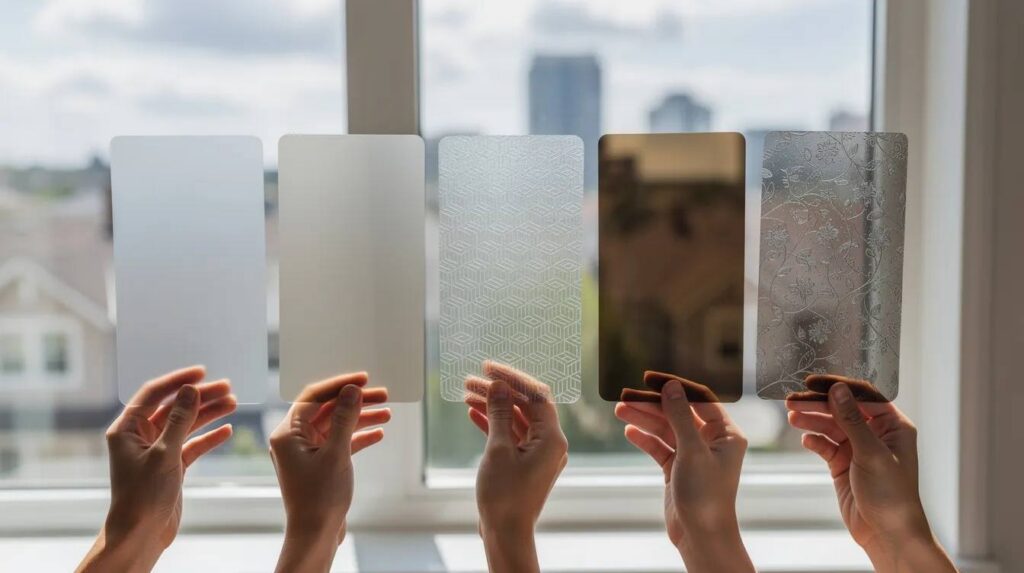
Frosted and etched-look films mimic sandblasted glass and are among the most popular choices for conference rooms, lobby sidelites, and clinic doors. Custom cut patterns or printed elements can be layered in, such as a logo reveal through a frosted band. Textured films can hide unsightly views while diffusing light across interiors, and there are many types of decorative film for interior and exterior glass that combine privacy with design flexibility.
Stained glass window film options range from cathedral-style patterns for churches to abstract colored glass looks for hospitality spaces and subtle tinted patterns for modern offices and homes. Decorative window films can mimic the look of stained glass, and textured stained glass window films create stunning visual effects with vibrant colors that shift depending on the angle of light. For instance, 3M’s dichroic “DF Blaze” film shifts color appearance depending on viewing angle and transmits roughly 77% of visible light.
Gradient window films are increasingly common in 2026 open-plan offices, where linear gradients on glass walls provide privacy at eye level while keeping ceilings and floors visible. Gradient films provide privacy while allowing light entry from above, which preserves the open feel of a space.
Full-color custom printed window films and window stickers handle branding, environmental graphics, and wayfinding for retail chains, schools, and airports. Custom printed window films can feature personal designs or images, and designers can match corporate colors, replicate architectural motifs, or print photography and artwork onto film with high resolution. For higher-performance solutions, many projects rely on innovative privacy and decorative window films and coatings that integrate branding with advanced glass technology. Consider a nationwide roll-out for a 500-location retailer: NuVision once installed approximately 35,000 square feet of 3M Fasara decorative film in the Northwestern Mutual Tower project alone. Transparent window films keep objects visible while providing a decorative touch, and decorative films can transform ordinary windows into art pieces. Custom window decals and window stickers serve similar branding purposes on smaller scales.
Privacy Film vs. Decorative Film vs. One-Way Vision: Choosing the Right Function
“Decorative” doesn’t automatically mean “private.” Understanding three functional categories helps you pick the right product for each piece of glass.
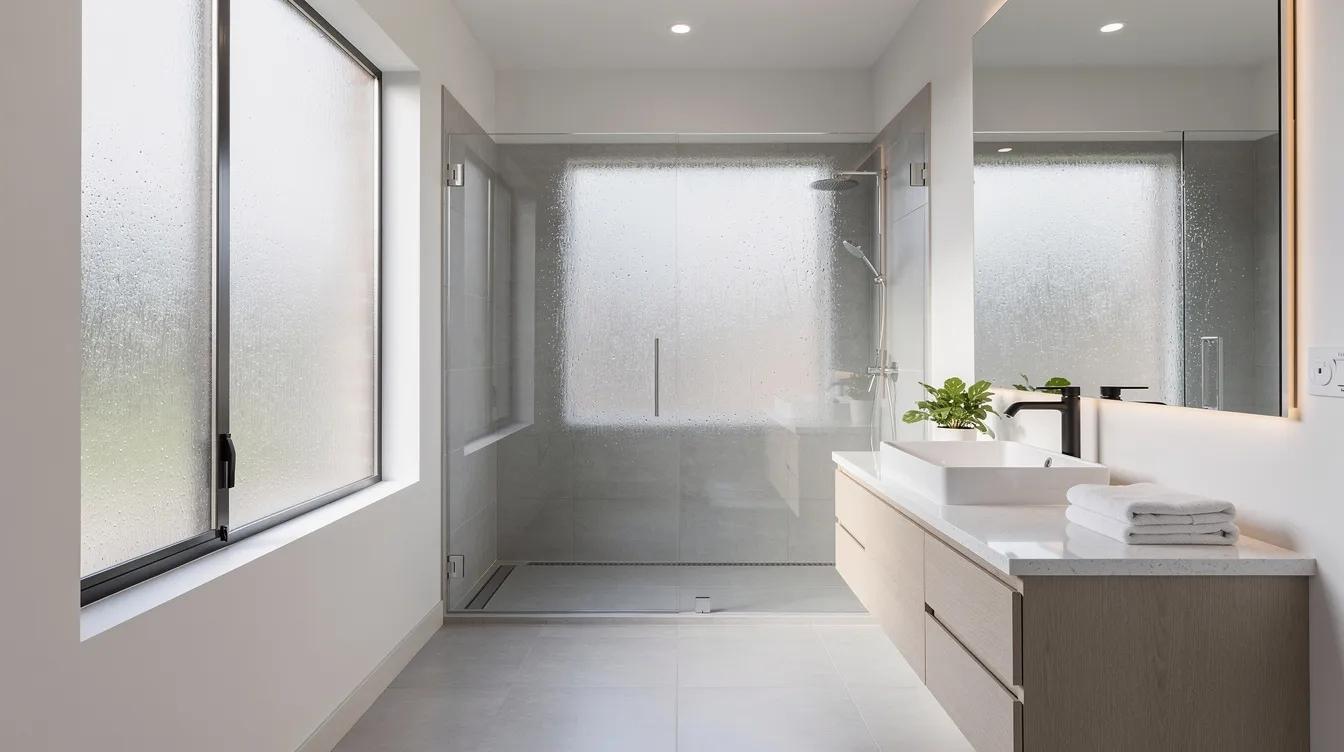
Privacy film obscures direct views while allowing light through. It’s ideal for medical exam rooms, HR offices, residential bathrooms, and school administration areas. Frosted window films provide light while ensuring privacy, making them one of the most versatile options on the market. Custom decorative window films enhance privacy without sacrificing style, which is why they appear in everything from personal residences to Fortune 500 headquarters.
One-way vision film is a perforated window film most often printed with graphics. One-way vision films allow visibility from the inside while blocking outside views, making them a staple on street-level retail and transit windows. One-way vision films allow visibility from the inside only during daytime when the exterior is brighter than the interior.
Here’s a quick decision framework:
| Need | Recommended Film Type |
|---|---|
| Conference room partial privacy | Frosted bands at eye level |
| High-security or medical space | Full-coverage frosted or opaque film |
| Storefront with branding + privacy | One-way vision graphics |
| Residential bathroom or shower | Full frosted or patterned privacy film |
One common misconception: one-way vision does not work equally well day and night. After dark, when indoor lighting is brighter than the outdoor environment, the effect reverses. Additional blinds or shades may be needed for nighttime privacy.
Where Custom Decorative Window Films Work Best in Commercial & Residential Spaces
Decorative films are used across corporate, healthcare, education, government, retail, hospitality, and residential buildings. Window Film Depot services all of these segments with nationwide window film installation coverage.
Commercial applications include:
- Conference room glass and office fronts
- Coworking space dividers and glass partitions
- Storefronts, malls, and hotel lobbies
- Restaurants, banks, and government service counters
Decorative films can be used to personalize office spaces with branding, and common applications of decorative films include office doors and bathroom windows.
Institutional use cases cover school classroom sidelites and door lites for visual privacy, hospital waiting rooms and nurses’ stations, courthouse lobbies, and public libraries. Frosted window films provide privacy and light filtering in settings where occupant comfort and confidentiality matter equally.
Residential applications span bathrooms and shower enclosures, sidelites by front doors in newer subdivisions (especially homes built between 2015–2025 with large glass expanses), kitchen windows facing neighbors, and sunrooms where stained glass window film adds color and UV protection.
For scale, consider a multi-site roll-out: privacy bands installed across all interior conference rooms for a national law firm headquartered in New York, with 25+ offices completed within 90 days by a single coordinated team.
Performance Benefits Beyond Appearance: Light, UV, Energy & Safety
While décor is the primary draw, high-quality window glass film products from leading brands deliver measurable performance gains.
Visible light and glare control: Patterned or frosted decorative films soften glare on screens in open offices, classrooms, and control rooms. Decorative window films can filter ambient light effectively. Consider a south-facing facade in Texas: without film, occupants deal with harsh direct sun and screen washout. A frosted gradient film reduces glare while preserving natural light levels across the floor plate.
UV protection: These films can block up to 99% of harmful UV rays, which directly reduces fading of hardwood floors, artwork, retail merchandise, and furnishings. High-quality window films are UV resistant and waterproof, providing long-term protection for interiors.
Energy implications: Decorative films help regulate indoor temperatures and improve energy efficiency. When paired with 3M window film products and professional installation, the combined system can reduce cooling energy by up to 29% in hot climates, according to GSA building performance data. Indoor air temperatures can drop 2–3°C on sunny days, lessening HVAC load and contributing to potential LEED points.
Safety and security: Decorative films add safety by preventing glass shattering. Thicker decorative films or combined decorative-plus-security glazing systems help hold glass fragments together in the event of breakage or impact, protecting occupants from flying shards.
How the Custom Window Film Design Process Works at Window Film Depot
The end-to-end process runs from first consultation to final walkthrough, with turnkey project management for both single projects and national programs.
Discovery and consultation: We start with a site visit or review of digital plans. The goal is to understand your privacy needs, branding guidelines, and any code requirements such as safety markings on large glass walls. Custom window films can be designed to match any interior decor, so the conversation begins with your vision.
Design development: Our team works with architects, designers, or brand teams to create custom patterns, frosted bands, logo repeats, or full murals. Decorative films can be customized with logos and designs, and custom window films can be printed with user-uploaded designs. We provide digital mock-ups and ship material samples so key decision-makers can evaluate the look and feel before committing. Custom window films can be designed online in minutes for simpler projects, with more complex designs going through proof cycles.
Measurement and survey: Field-verified dimensions of each glass lite are cataloged, including identification of glass type per panel (tempered, annealed, or insulated) and a location schedule for larger facilities. Window films can be customized to fit any window size or shape, so accurate measurements matter.
Production: Printing or plotter-cutting of window films, quality control checks, and batching by location ensure organized installation on multi-story or multi-site projects. Standard 3M decorative polyester rolls come in 60 in × 196 ft, with alternate widths available.
For industry partners, Window Film Depot also supplies rolls of decorative film wholesale, with custom cutting handled by your own installation teams or local glaziers.
Professional Installation: What to Expect on Project Day
Professional installation matters for long-term performance and appearance. Bubbles, misaligned seams, or poor edge work undermine even the best film. Installation of window films is designed to be hassle-free when handled by certified technicians.
Typical installation steps:
- Surface cleaning with appropriate solutions
- Removing old film if present
- Trimming around gaskets and hardware
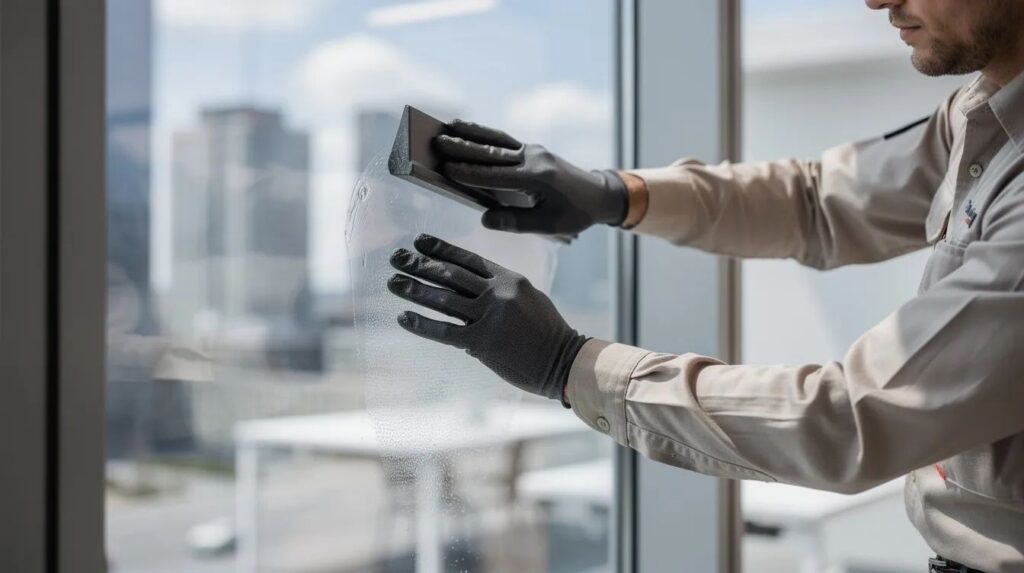
- Applying film with squeegee technique to remove air and solution
- Edge detailing for a clean, seamless finish
Scheduling and disruption management: We routinely work off-hours or weekends for busy retail and corporate environments, and phase large buildings floor by floor to keep operations running. A recent example: a 50,000 sq ft Class-A office tower lobby and conference rooms completed over two weekends with zero disruption to weekday business.
Cure times: Films may appear slightly hazy for a few days as moisture evaporates between the film and glass. Occupants can typically resume normal cleaning after 30 days.
Caring for Decorative Window Films: Cleaning, Lifespan & Replacement
Quality decorative window films from manufacturers like 3M are designed to last years-often 7–15+ years on indoor, non-perimeter glass when properly maintained- backed by 3M residential and commercial window film warranty coverage. Many decorative films can be easily updated or changed as needed.
Cleaning guidance:
- Wait at least 30 days after installation before the first cleaning
- Use non-abrasive cloths and mild, ammonia-free solutions
- Avoid razor blades or harsh scrub pads on the film surface
Expected durability: Professionally installed films resist peeling, discoloration, and cracking on sound glass kept free of constant abrasion or standing water. High-quality window films are UV-resistant and waterproof, which extends their useful life considerably.
Signs it’s time to replace: Visible scratches, pattern changes due to renovations or rebrands, or code changes requiring different visibility bands or markings. Window Film Depot removes old films and updates designs as tenants change, with experience in phased replacements across corporate portfolios and retail chains.
Common Mistakes to Avoid with Custom Decorative Window Film Projects
Choosing the wrong film, skipping professional input, or misjudging privacy can lead to expensive rework. Here’s what to watch for.
Selection errors: Choosing films based solely on a photo without requesting physical samples. A design that looks cool on screen may transmit far less light than expected in person. Always request swatches.
Technical missteps:
- Applying film to compromised or low-quality glass
- Ignoring manufacturer guidelines for insulated glass units (IGUs)
- Layering mismatched films that affect thermal stress on tempered or coated glass
Budget and scope misalignment: Trying to DIY complex glass walls, underestimating labor on multi-story buildings, or neglecting ADA and safety striping requirements on large glass panels. Access issues like scaffolding and lifts can add 80–150%+ to material costs on high-rise installs.
An experienced partner like Window Film Depot, a family-owned national window film specialist, walks through these considerations upfront, reducing change orders and surprises before the first inch of film is cut.
FAQs About Custom Decorative Window Film
These FAQs collect the most common questions from Window Film Depot clients between 2020 and 2026.
How long does decorative window film typically last?
Indoor decorative films generally last 7–15 years depending on film type, sun exposure, and cleaning practices. Many 3M decorative films we installed in the early 2010s are still performing well in 2026, especially when covered under 3M window film warranty programs. Exterior-grade printed films and one-way vision graphics on storefronts have shorter lifespans due to weather and UV, but are engineered for multi-year outdoor performance.
Will custom decorative window film damage my glass or void warranties?
When matched correctly to glass type and climate, reputable window film products are safe and widely specified by architects and glazing professionals. Window Film Depot evaluates each project’s glass construction and recommends specific film families to align with glass warranties and building codes.
How much natural light will I lose with privacy film or stained glass window film?
Frosted privacy films and most decorative patterns still transmit 60–80% of visible light, depending on the product. Frosted window films provide privacy while allowing light to fill a room. Heavier opaque designs or dark one-way vision films intentionally cut more light for specific retail or branding applications. We recommend lightbox-style samples during the design stage to preview the effect before committing.
Can window films help with code compliance or safety marking on large glass?
Yes. Many jurisdictions require visual markers on large glass expanses to prevent collisions, and custom decorative bands or logos are a common, attractive way to comply. Window Film Depot frequently partners with architects to meet IBC and ADA requirements using patterned films at eye level on office fronts and glass stair railings.
Are decorative films removable or changeable if my branding changes?
Quality films are removable by trained technicians using controlled heat and safe adhesive removers, allowing glass to be refreshed for a new tenant or brand update. Window films are easy to apply and remove, making them suitable for renters and short-term leases as well. Many corporate clients schedule film refreshes every 5–7 years to align with new brand standards.
What do custom decorative window films typically cost per square foot?
Installed pricing varies by complexity. Simple frosted films on standard office glass typically start in the $8–$12 per square foot range. Custom printed murals and one-way vision graphics run higher, often $14–$22 per square foot, due to design, print, and production costs. Final price depends on film type, coverage area, height and access requirements, and total project size. Custom window films can be made to fit any window size, so we encourage requesting a detailed quote for accurate budgeting.
What is the lead time from design approval to installation?
Standard decorative films typically ship in 1–2 weeks. Fully custom printed projects require 2–4 weeks after design approval, with rush options sometimes available for time-sensitive openings. Nationwide roll-outs or government projects may follow phased schedules over several months, which Window Film Depot manages with dedicated project teams and detailed files for each location.
Why Choose Window Film Depot for Custom Decorative Window Films
Window Film Depot has operated continuously since 1992, making us one of the longest-standing family-owned window film specialists in the country. Our expertise is focused specifically on window films and architectural surface solutions-not general signage or print shop work.
National reach with local understanding: We service a single Midtown Atlanta condo with the same confidence we bring to multi-state corporate portfolios, government facilities, and retail chains across North America. Our customers range from school administrators needing a personal touch on a few classroom doors to Fortune 500 brands coordinating hundreds of locations.
Manufacturer partnerships: As a certified 3M dealer, we specify from the full 3M solar control, security, privacy, and decorative film catalog, along with specialty architectural films. This lets us tailor specs to each project instead of forcing a one-size-fits-all product.
Turnkey project management: Design assistance, code guidance, field surveys, union and non-union installation options, and detailed documentation for facility records. We’ve completed hospital privacy upgrades during active renovations, branded new tech campus interiors in 2024, and installed stained glass window film enhancements for historic worship spaces-all with phased scheduling that keeps buildings operational.
How to Get Started: Next Steps for Facility Managers, Designers & Homeowners
Whether you have a single office, a multi-building campus, or a national retail footprint, the next step is straightforward.
Gather your basics: Take a few pictures of existing glass, note rough measurements and dimensions, and identify your privacy or branding goals. If you have a deadline-a grand opening, a move-in date, a gift for a congregation’s anniversary-note that too so we can plan accordingly.
Engage Window Film Depot: Request a consultation through our website page or by phone. If architectural drawings or floor plans are available, upload or share them with our team so we can provide an accurate scope and match the right film to your vision and taste.
Get involved early: If you’re in the design stage of a 2026 renovation, bring film specialists into the conversation before construction wraps. Early coordination with lighting, furniture, and signage teams prevents rework and ensures your decorative films save money and time rather than creating last-minute surprises. Friends and colleagues in the architecture world will tell you the same.
Contact Window Film Depot today to plan your custom decorative window film project-whether it’s a single conference room that needs privacy, a regional project such as window film installation in Dallas–Fort Worth, or a capital-area upgrade requiring commercial window film installation in Washington, DC, or a nationwide roll-out that needs to ship on schedule. We’ll help you transform your glass into something that works as hard as the rest of your building.