Table of Contents:
- Unveiling the Technology: How Decorative One-Way Privacy Film Transforms Spaces
- Elevating Design Aesthetics: Beyond Basic Frosted Glass with 3M Fasara
- Specifying Success: Key Performance Metrics and Considerations for Your Project
- Strategic Applications: Illustrative Scenarios for Commercial, Retail, and Education Projects
- Seamless Execution: The Strategic Advantage of a National Installation Partner
- Conclusion: Key Takeaways and Next Steps for Project Managers
- Frequently Asked Questions
- Related Posts from Window Film Depot
The Evolving Landscape of Commercial Design: Openness vs. Enclosure
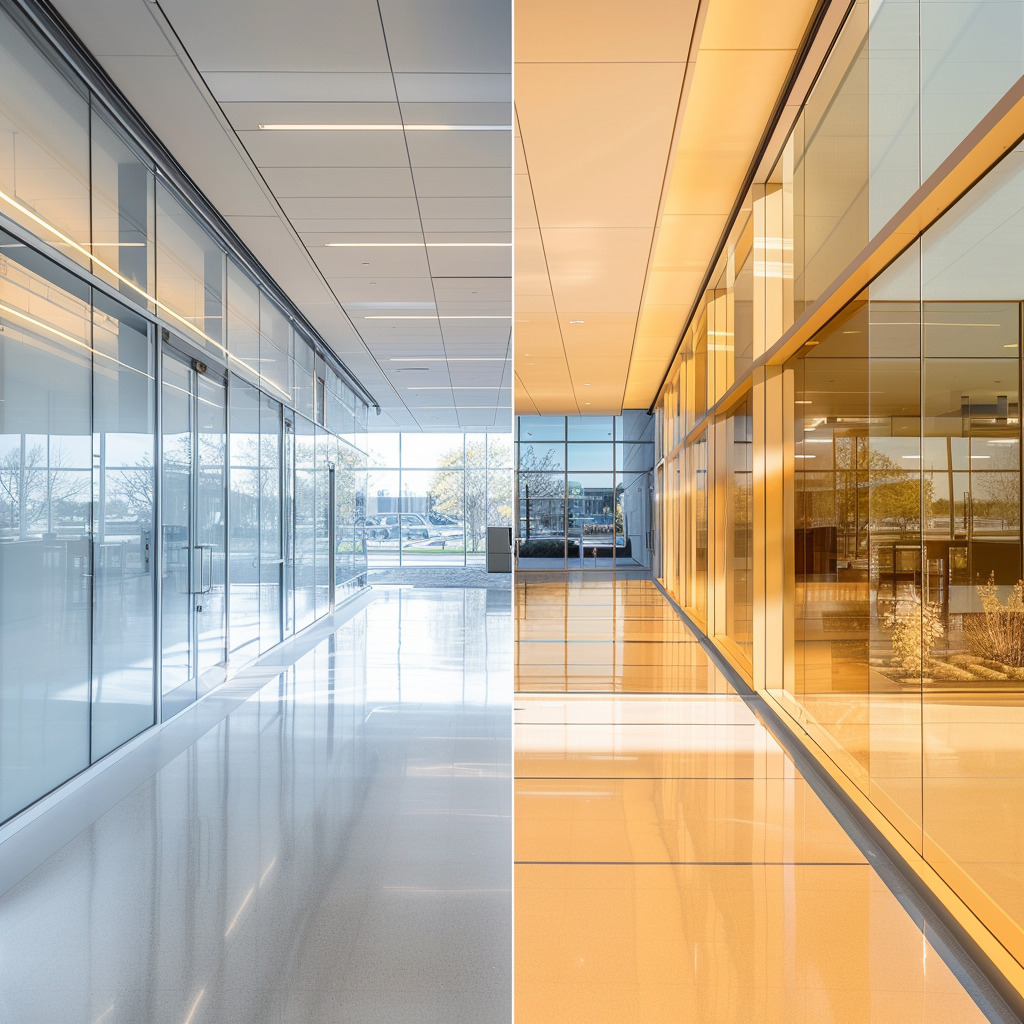
Modern commercial design consistently trends toward open, collaborative spaces, often characterized by extensive use of glass. This design philosophy maximizes natural light penetration, fosters transparency, and promotes a sense of connectedness among teams. However, this pursuit of openness frequently encounters the practical need for discrete, private areas for confidential meetings, focused work, or secure executive offices.
This creates a fundamental paradox for project managers. While clients desire the contemporary aesthetic of glass partitions, they simultaneously require functional solutions for privacy and visual separation in specific zones. The challenge lies in harmonizing these competing demands without compromising either the design vision or the operational requirements of the space.
Project Manager Dilemma: Aesthetics, Privacy, and Budget Constraints
Project managers often find themselves at this intersection, tasked with delivering sleek, modern aesthetics that embrace natural light and foster collaboration. Concurrently, they must address the critical functional needs for privacy in conference rooms, executive suites, or patient consultation areas. This balance is further complicated by strict budget allocations and ambitious project timelines.
Their core challenge is to identify solutions that satisfy both the visual demands for an open, airy environment and the functional requirements for visual and sometimes acoustic privacy. Traditional methods often force a compromise, making it difficult to achieve a superior outcome that fully aligns with all client objectives within predefined cost and schedule parameters.
Why Traditional Solutions Fall Short: Cost, Permanence, and Limited Flexibility
When faced with the need for privacy in glass-heavy designs, traditional solutions often present significant drawbacks. Options like etched or sandblasted glass, while aesthetically pleasing, come with high upfront material and installation costs, are permanent once installed, and offer no design flexibility post-installation. Modifying the design or privacy level means replacing entire glass panels, incurring substantial additional expense and disruption.
Other conventional methods, such as blinds or curtains, tend to obstruct natural light, accumulate dust, and can detract from a modern aesthetic. While “smart glass” offers on-demand privacy, its extremely high cost, complex electrical installation, and long-term maintenance requirements typically push it beyond the budget of most commercial renovation projects. These options either compromise on design, functionality, or budget, failing to provide a truly integrated solution.
Introducing Advanced Privacy Film: A Strategic Solution for Modern Demands
In response to these persistent challenges, advanced decorative one-way privacy window film emerges as a strategic and highly effective solution. This innovative material technology allows project managers to simultaneously achieve sophisticated design aesthetics and robust functional privacy without the prohibitive costs, inflexibility, or permanence associated with architectural glass alternatives. It directly addresses Project Manager Paul’s dilemma by offering a versatile, cost-effective, and adaptable option.
Specifying these films transforms glass into a dynamic surface that meets specific operational needs while maintaining the desired visual openness. It empowers project managers to deliver superior client outcomes by balancing design flexibility, essential privacy, and budget efficiency. This approach positions decorative one-way privacy film not merely as an aesthetic upgrade, but as an integral component of modern commercial build-outs and renovations.
Decorative One-Way Privacy Window Film: How It Transforms Spaces
The Science Behind Visual Obstruction: Reflectivity, Diffusion, and Optical Properties
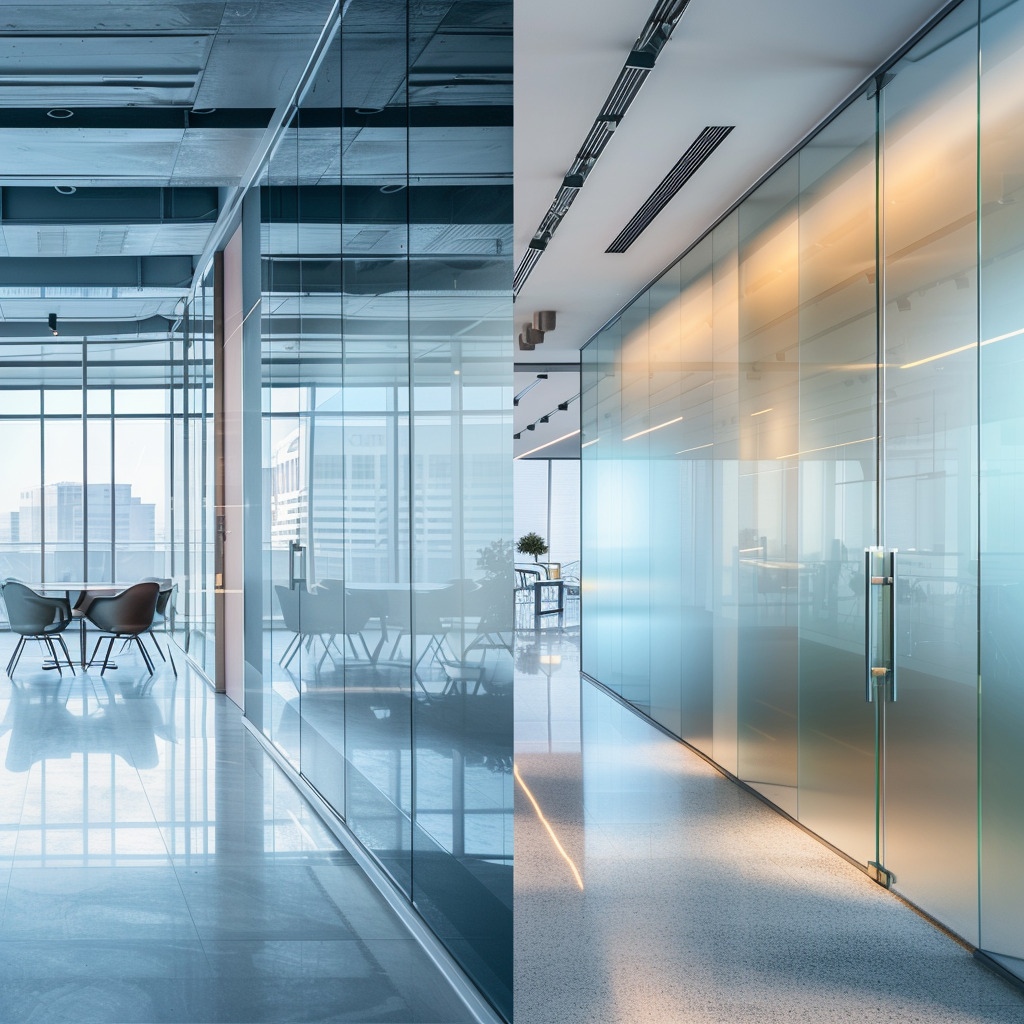
The efficacy of decorative films is rooted in their sophisticated optical properties, primarily leveraging reflectivity and diffusion to control visual access. At its core, the one-way effect is achieved by manipulating how light interacts with the film’s surface. On the “private” side, the film often incorporates a highly reflective layer that acts as a mirror, bouncing incident light back toward the observer.
Simultaneously, the film’s composition can include diffusive elements, especially in decorative patterns, which scatter light. This scattering breaks up clear lines of sight without completely blocking light transmission. For the one-way effect to be pronounced, there must be a significant differential in light levels, with the area intended to be private being dimmer than the viewing side. This careful balance of reflectivity and light diffusion is what allows these films to obscure views from one direction while maintaining clarity from the other.
Understanding Key Performance Indicators (KPIs): VLT and Beyond
To accurately specify and evaluate advanced privacy films, project managers rely on specific Key Performance Indicators (KPIs) that quantify their optical performance. The most critical is Visible Light Transmittance (VLT), which measures the percentage of visible light that passes through the film. A higher VLT maintains brighter interiors, crucial for energy efficiency and occupant comfort.
Equally important is Visible Light Reflectance (VLR), indicating the percentage of visible light reflected by the film’s surface. A higher VLR contributes to the mirror effect essential for one-way privacy. Beyond VLT and VLR, other KPIs provide a comprehensive understanding of a film’s capabilities, including:
- UV Rejection: The percentage of harmful ultraviolet rays blocked, protecting interior furnishings from fading.
- Glare Reduction: The film’s ability to minimize harsh glare improves visual comfort.
- Solar Heat Gain Coefficient (SHGC): Measures how much solar heat is admitted through the film and glass, directly impacting energy consumption for cooling.
By analyzing these KPIs, project managers can select films that meet specific functional and environmental goals, ensuring optimal performance for each application.
Distinguishing One-Way vs. Standard Privacy Films for Project Specifics
It is crucial to differentiate between general privacy films and specialized one-way privacy films for precise project application. Standard privacy films, such as frosted or opaque films, typically obscure views from both sides of the glass equally. Frosted films achieve this through diffusion, allowing light to pass but scattering it to create an opaque appearance, suitable for general partition privacy. Opaque films, conversely, completely block both light and view, ideal for full visual occlusion.
One-way privacy films, however, offer a unique optical effect: they allow a clear view from one side while presenting an obscured or reflective surface to the other. This effect is contingent upon specific lighting conditions, where the viewing side is significantly brighter than the side intended to be private. This characteristic makes them invaluable for applications where discreet observation or selective visibility is required, such as secure reception areas, executive offices, or surveillance rooms, while still permitting light flow and a modern aesthetic. Decorative elements can be integrated into one-way films, enhancing their aesthetic appeal without compromising their unique functional properties.
The Material Advantage: Exploring Sputtered Film and Other Advanced Compositions
The superior performance and durability of advanced privacy films are largely attributable to sophisticated material compositions and manufacturing processes. Among these, sputtered films represent a pinnacle of film technology. This process involves bombarding metal targets (like silver, titanium, or nickel-chromium) with energized ions in a vacuum chamber, causing microscopic metal particles to deposit onto the film’s surface. This precision layering creates incredibly thin, uniform metallic coatings that are responsible for the film’s selective light transmission, high reflectivity, and robust performance.
Beyond sputtering, films utilize multi-layered polyester constructions, incorporating various polymer layers and specialized coatings. These layers are carefully engineered to enhance durability, provide scratch resistance, and offer UV protection. Advanced adhesive systems are also critical, ensuring strong, long-lasting bonds to glass surfaces while allowing for clean removal if design needs change. This combination of innovative material science and precision manufacturing allows films to achieve their unique optical characteristics and deliver lasting value.
Elevating Design Aesthetics: Beyond Basic Frosted Glass with 3M Fasara
Modern commercial spaces increasingly demand design solutions that marry open, collaborative environments with the critical need for privacy and tailored aesthetics. Project managers often navigate the challenge of achieving this balance without incurring prohibitive costs or limiting future flexibility. Advanced decorative films, such as the 3M Fasara line, offer a sophisticated answer, moving far beyond the utilitarian frosted glass of the past to become a strategic design element. These films provide not only functional benefits but also contribute significantly to the overall architectural vision and brand identity of a space.
The Art of Light Management: Achieving Privacy Without Sacrificing Natural Light (Daylighting)
One of the most compelling advantages of high-performance decorative films is their ability to manage light with precision. Unlike opaque barriers, these films are engineered to diffuse light, effectively obscuring visibility while still allowing natural light to penetrate deeply into interior spaces. This promotes daylighting, which is crucial for employee well-being and reduces reliance on artificial lighting during peak hours. The result is a brighter, more inviting environment that feels open and airy, even in areas requiring visual seclusion like private offices, conference rooms, or client meeting areas. This thoughtful light management helps maintain an aesthetic that values openness while securing functional privacy.
Infinite Design Possibilities: Textures, Patterns, and Customization for Branding
The creative potential with modern decorative films is virtually limitless. Manufacturers offer an extensive palette of textures, patterns, and opacities that can transform ordinary glass into striking design features. From the subtle elegance of rice paper and linen textures to bold geometric patterns, gradient fades, and ethereal organic designs, these films allow project teams to craft truly unique environments. Beyond standard offerings, many films can be custom-cut or digitally printed to incorporate corporate logos, brand colors, wayfinding elements, or bespoke artistic expressions. This level of customization ensures that the privacy solution enhances, rather than detracts from, the overall interior design and reinforces brand identity.
3M Fasara Glass Finishes: A Premium Alternative to Etched or Sandblasted Glass
For decades, etched or sandblasted glass was the go-to solution for achieving a frosted or patterned effect on glass. While effective, these methods are permanent, expensive, and difficult to modify or remove. 3M Fasara glass finishes present a superior, premium alternative. They replicate the sophisticated look and feel of etched, sandblasted, or specialty glass at a fraction of the cost, both in materials and installation. The non-permanence of film is a significant benefit for renovation projects, allowing design updates or changes in privacy requirements without the need for costly and disruptive glass replacement. This flexibility is invaluable in dynamic commercial settings.
Crafting Desired Ambience: From Subtle Light Diffusion to Bold Statements
Decorative films empower project managers and designers to meticulously craft the desired ambiance within each distinct area of a project. A delicate, translucent pattern can create a sense of serene privacy in a wellness room or executive office, offering a gentle visual barrier without feeling restrictive. Conversely, a strong graphic or a dense, opaque pattern can make a bold statement in a reception area or delineate a vibrant collaborative zone. The ability to select varying levels of diffusion and opacity means that every space can be tailored to its specific function and desired mood, ensuring consistency with the overall design narrative while meeting practical needs.
Need More Info?
The Window Film Depot team is happy to help.
Decorative One-Way Privacy Window Films: Key Performance Metrics and Considerations
Selecting the right decorative film requires a detailed understanding of its technical properties and long-term implications. As a project manager, integrating these advanced materials into your plan involves more than just aesthetic choice; it’s about making informed decisions that ensure optimal performance, compliance, and lasting value for your client. Diligent specification and consideration of key metrics are paramount to a successful outcome.
Navigating Technical Specifications: Ensuring Optimal Performance and Compliance
When evaluating decorative films, it is essential to delve into their technical specifications to guarantee they meet the project’s functional demands and regulatory requirements. Key performance indicators to consider include:
- Visible Light Transmittance (VLT): This measures the percentage of visible light that passes through the film. It directly impacts how bright a space will be and is critical for daylighting strategies.
- UV Rejection: High UV rejection rates protect interior furnishings, artwork, and occupants from harmful ultraviolet rays, preventing fading and contributing to a healthier environment.
- Glare Reduction: Films can significantly reduce glare, improving visual comfort for occupants working on screens and enhancing productivity.
- Fire Ratings: For commercial applications, confirming that the film meets local building codes and fire safety standards is non-negotiable. Always review manufacturer data sheets for relevant certifications.
- Adhesive Technology: Understanding the adhesive type ensures proper bonding to glass and confirms suitability for interior applications.
Adhering to these technical specifications ensures that the chosen film performs as intended and complies with all applicable safety and performance standards.
Durability and Longevity: What to Look for in Commercial-Grade Film
Commercial environments subject materials to heavy use and diverse conditions, necessitating films engineered for durability and longevity. Residential-grade films often lack the robustness required for high-traffic areas. When specifying, look for films with features such as:
- Scratch-Resistant Coatings: These coatings protect the film’s surface from everyday wear and tear, maintaining its aesthetic appeal over time.
- Dimensional Stability: High-quality films resist shrinking, stretching, or bubbling, ensuring a smooth, consistent appearance throughout their lifespan.
- Resistance to Moisture and Common Cleaning Agents: Films designed for commercial use should withstand regular cleaning without degradation, maintaining hygiene standards.
- Manufacturer Warranties: A comprehensive warranty from a reputable manufacturer indicates confidence in the product’s lifespan and performance under specified conditions.
Investing in commercial-grade film ensures a product that will uphold its appearance and functionality, contributing to the project’s long-term value.
Maintenance and Cleaning: Practical Considerations for Long-Term Project Value
Ensuring the longevity and pristine appearance of decorative film involves implementing appropriate maintenance and cleaning protocols. These films are generally low-maintenance, but specific practices will preserve their integrity. Advise facility managers to use soft cloths and non-abrasive, ammonia-free cleaning solutions. Harsh chemicals, abrasive pads, or razor blades can damage the film’s surface and adhesive, compromising its visual appeal and performance. Establishing a clear, simple cleaning routine as part of project handover documentation can significantly extend the film’s life and uphold the aesthetic quality of the installation, proving its value over many years.
Budgeting and ROI: Cost-Benefit Analysis of Advanced Film vs. Architectural Glass
From a budgeting perspective, advanced decorative films offer a compelling return on investment when compared to traditional architectural glass solutions. The initial outlay for film materials and installation is substantially lower than that for custom etched, sandblasted, or patterned glass panels. Beyond the upfront savings, the flexible nature of film provides ongoing financial benefits:
- Reduced Renovation Costs: Should design preferences or privacy needs change, film can be easily removed and replaced, avoiding the significant cost and disruption associated with replacing entire glass units.
- Energy Efficiency: Many films also offer UV rejection and solar control benefits, which can contribute to reduced HVAC loads and lower energy consumption, translating into long-term operational savings.
- Accelerated Project Timelines: Film installation is typically faster and less intrusive than specialty glass fabrication and installation, helping projects stay on schedule and within budget.
When viewed through a cost-benefit lens, the strategic integration of advanced decorative film demonstrates superior economic viability, aligning directly with Project Manager Paul’s goal of delivering high-value outcomes without compromising on design or functionality.
Strategic Applications: Illustrative Scenarios for Commercial, Retail, and Education Projects
The versatility of decorative one-way privacy film extends across a broad spectrum of commercial, retail, and educational environments, offering tailored solutions that address specific operational and aesthetic requirements. These applications demonstrate how a single, adaptable technology can resolve diverse challenges, from enhancing confidentiality to optimizing visual appeal, all while maintaining cost-effectiveness compared to architectural glass alternatives.
Corporate Offices: Enhancing Conference Room Privacy and Office Glass Walls
In contemporary office design, open layouts and extensive glass partitions create an inviting, collaborative atmosphere. However, this aesthetic often clashes with the fundamental need for privacy in sensitive areas such as conference rooms, executive offices, and human resources departments. Advanced decorative one-way privacy films provide an elegant solution, offering varying degrees of opacity or dynamic visual effects that ensure confidentiality without sacrificing natural light or the modern glass aesthetic. These films allow project managers to define privacy zones flexibly, adapting to evolving workplace needs.
Retail Environments: Creating Dynamic Storefronts and Secure Changing Areas
For retail projects, the application of decorative one-way privacy film offers dual benefits: enhancing customer experience and improving operational efficiency. Storefronts can utilize these films for dynamic branding, seasonal promotions, or to obscure back-of-house operations from public view while still allowing light in. Within the store, privacy films are invaluable for creating secure and comfortable changing rooms, ensuring customer dignity without requiring costly frosted or opaque glass installations. This adaptability allows retailers to quickly reconfigure spaces or update visuals as marketing strategies change.
Educational Institutions: Balancing Open Learning Spaces with Necessary Privacy Zones
Modern educational facilities often feature open, collaborative learning environments designed to foster interaction. Yet, within these dynamic spaces, there remains a critical need for designated privacy zones for administrative offices, counseling rooms, or focused study areas. Decorative one-way privacy films enable schools to delineate these areas effectively, providing visual separation and confidentiality without constructing permanent walls. This supports an adaptive learning environment where privacy can be added or removed as needs evolve, enhancing both student focus and administrative discretion.
Healthcare Facilities: Providing Dignity and Confidentiality in Patient Areas
Healthcare environments require strict adherence to privacy protocols, particularly concerning patient dignity and confidentiality. Decorative one-way privacy films offer a practical and aesthetically pleasing solution for patient rooms, consultation offices, and waiting areas. These films can obscure views into sensitive spaces, aiding HIPAA compliance, while simultaneously reducing the clinical feel of a facility through custom designs and patterns. They provide a barrier that protects patient information and personal space without impeding access to natural light, contributing to a more comforting and secure environment.
Showcasing Transformative Potential: Before-and-After Project Narratives
The most effective way to communicate the impact of advanced decorative one-way privacy film is through tangible examples. Before-and-after project narratives offer a clear visual demonstration of how these films transform challenging spaces into functional, aesthetically pleasing environments. These showcases illustrate the film’s ability to address core design dilemmas, meet specific client objectives, and deliver a superior outcome that often exceeds expectations for both privacy and design flexibility. They serve as a powerful testament to the film’s capacity to solve complex architectural challenges efficiently and effectively.
Seamless Execution: The Strategic Advantage of a National Installation Partner
Beyond selecting the right film, the success of any project hinges on flawless execution. For renovation managers dealing with complex projects, engaging a national installation partner provides a strategic advantage, ensuring consistency, efficiency, and expert application across all sites. This partnership mitigates risks and streamlines the entire process, from initial concept to final installation.
Why Experience Matters: Precision Application for Flawless Finishes
Window film decorative installation is a specialized skill that demands meticulous attention to detail and extensive experience. An experienced national installer ensures precision application, preventing common issues such as bubbles, wrinkles, or misaligned patterns. This expertise is crucial not only for achieving a flawless aesthetic finish but also for guaranteeing the film’s long-term durability and performance, protecting the project investment. Sub-par installation can compromise both appearance and functionality, underscoring the value of certified professionals.
Project Management Efficiency: Coordinating Multi-Site and Large-Scale Implementations
Managing large-scale or multi-site projects inherently introduces complexities in coordination, logistics, and quality control. A national installation partner brings established processes and a unified approach to these challenges. They offer a single point of contact, streamlined communication, and consistent project methodologies across all locations, significantly reducing administrative burdens for the project manager. This efficiency is critical for maintaining project timelines and budgets, ensuring uniform quality and brand consistency regardless of geographical spread.
Leveraging Expertise: Product Selection, Site Surveys, and Technical Support
A true partner offers more than just installation services; they provide comprehensive expertise throughout the project lifecycle. This includes guiding product selection to match specific aesthetic and functional requirements, conducting precise site surveys to ensure accurate measurements and optimal film performance, and offering ongoing technical support. Their in-depth knowledge of film properties, application techniques, and maintenance best practices empowers project managers to make informed decisions and troubleshoot potential issues effectively.
The Assurance of Quality: Exclusive Status as the #1 U.S. 3M Window Film Installer
Partnering with an installer recognized as the #1 U.S. 3M Window Film Installer provides an unparalleled level of assurance. This exclusive status signifies not only a commitment to the highest quality standards but also a deep partnership with 3M, a global leader in adhesive and film technology. It guarantees access to the latest product innovations, specialized training, and robust warranty support, ensuring that every project benefits from industry-leading materials and application techniques. This distinction offers project managers complete confidence in the durability, performance, and aesthetic integrity of their film installations.
Conclusion: Key Takeaways and Next Steps for Project Managers
Reaffirming the Thesis: Decorative Privacy Film as a Strategic Investment
Throughout this discussion, we’ve illuminated how advanced decorative one-way privacy film transcends simple aesthetic application to become a strategic investment for renovation managers. It directly addresses the critical need to balance modern design aspirations with indispensable functional privacy within commercial environments.
Specifying this technology allows project managers to deliver superior client outcomes by offering unparalleled design flexibility and effective privacy solutions without the prohibitive costs, lead times, or permanence associated with etched or specialty architectural glass. This approach fundamentally shifts the conversation from a trade-off to an integrated solution, enhancing building value and meeting diverse client demands with precision.
Empowering Project Managers with Design Flexibility and Functional Superiority
This innovative film technology empowers project managers to navigate the complexities of modern commercial renovations, particularly when facing the inherent tension between open-plan aesthetics and privacy requirements. Its inherent adaptability means that design changes can be implemented with minimal disruption and cost, fostering dynamic environments that can evolve with an organization’s needs. Functionally, these films offer a sophisticated blend of light transmission, one-way visibility where desired, superior UV protection, and enhanced safety from glass breakage. This multifaceted performance directly resolves Project Manager Paul’s challenge, ensuring private spaces remain secure and confidential without sacrificing natural light or the desired contemporary feel.
- Customization and Adaptability: A vast array of patterns, colors, and opacities ensures design intent can be met precisely, with the flexibility to update designs as organizational needs shift.
- Optimal Light Management: Maintains natural light levels, reducing reliance on artificial lighting while mitigating glare and hot spots.
- Enhanced Occupant Comfort: Provides visual privacy and reduces solar heat gain, contributing to a more comfortable and productive interior environment.
- Cost-Effectiveness and Speed: Significantly lower material and installation costs compared to specialty glass, with faster project timelines.
Partnership for Success: Leveraging Expertise for Your Next Project
Successfully integrating advanced decorative one-way privacy film into your projects requires informed decision-making and access to specialized knowledge. As a project manager, partnering with experienced film specialists can significantly streamline the specification process and ensure optimal results. Our expertise extends beyond product provision to offer comprehensive consultation, technical support, and guidance on application best practices. We become an extension of your project team, providing valuable insights into material selection, performance characteristics, and installation considerations that directly impact project success and client satisfaction.
Resources for Specification: Taking the Next Step Towards Enhanced Project Outcomes
To facilitate your next project, access to precise and reliable resources is paramount. We encourage project managers to explore the full potential of decorative one-way privacy films by utilizing available tools and expert guidance. This proactive step ensures that the strategic advantages of this technology are fully realized, leading to enhanced project outcomes and client confidence.
- Technical Data Sheets: Detailed specifications on light transmission, UV rejection, and privacy levels for various film types.
- Product Samples: Hands-on experience with material quality, aesthetic finishes, and performance characteristics in situ.
- Case Studies: Real-world examples demonstrating successful implementations and problem-solving through film technology.
- Consultation Services: Direct access to film experts for project-specific recommendations, cost analyses, and installation planning.
By leveraging these resources and forming strategic partnerships, project managers can confidently specify decorative one-way privacy film as a superior, multi-benefit solution that aligns with both aesthetic ambitions and critical functional demands.
Frequently Asked Questions
How exactly does “one-way” privacy film work on an interior glass partition?
The one-way effect is primarily driven by a lighting differential. The side where you want privacy (the “private” side) must be dimmer than the side you are looking out toward (the “public” side). The film uses a combination of micro-thin metallic layers (often sputtered) and reflective properties to create a mirror effect on the brighter side, while remaining transparent from the darker side. If the light levels are equalized (e.g., at night with lights on in both rooms), the one-way effect will diminish.
What is the advantage of using a decorative one-way film over a standard “mirror” film?
Standard mirror films can look overly industrial or “high-security” in a modern office. Decorative one-way films (like those in the 3M Fasara line) integrate patterns, gradients, or textures into the film. This diffuses the reflection, making the glass look like a sophisticated architectural feature—such as etched or “rice paper” glass—rather than a simple mirror, all while maintaining the functional one-way view.
How does Visible Light Transmittance (VLT) affect the occupant experience?
VLT is the percentage of natural light that passes through the film. Project managers must balance privacy with “daylighting” goals. A film with a VLT of 35% will significantly obscure the view but still allow enough ambient light to reduce the need for artificial overhead lighting. Specifying a film with a VLT that is too low can make a private office feel “cave-like,” while a VLT that is too high may compromise the one-way privacy effect.
Can one-way privacy film be updated or removed if the office layout changes?
Yes, and this is a major strategic advantage over etched or sandblasted glass. Advanced films use specialized pressure-sensitive adhesives that bond securely for years but can be professionally removed without damaging the original glass. This allows for “tenant-ready” spaces that can be rebranded or reconfigured for a fraction of the cost of replacing specialty architectural glass panels.
Why is the Solar Heat Gain Coefficient (SHGC) relevant for an interior film specification?
While often ignored in interior projects, SHGC is relevant if the glass partition is near an exterior window or atrium. If an interior office glass wall is hit by direct sunlight, standard glass can create a “greenhouse effect.” A privacy film with a low SHGC will reject solar heat, keeping the private office cooler and reducing the load on the building’s HVAC system, which contributes to overall LEED points and energy ROI.