Table of Contents:
- What Is the Frosted Glass Effect?
- Benefits of Frosted Glass: Allowing Light While Maintaining Privacy
- Types of Frosted Glass Solutions
- Frosted Glass vs. Frosted Window Film
- Residential Frosted Glass Applications
- Commercial Frosted Glass Applications
- How to Choose the Right Frosted Glass Solution
- Frequently Asked Questions About Frosted Glass
Frosted glass is a translucent glass surface made by etching, sandblasting, acid treatment, or applying frosted window film to existing glass, so it diffuses natural light while obscuring clear views for privacy. Whether you manage a corporate campus, design healthcare facilities, specify glazing for a commercial property, build residential spaces, or want to upgrade your home’s bathroom windows, understanding the differences between permanent frosted glass and frosted window film will help you choose the right approach for your project, timeline, and budget.
This guide compares frosted glass and film options, the privacy and design benefits they deliver, where they work best in residential and commercial settings, what installation involves, how costs differ, and how to choose the right solution for a new build or a retrofit. For facility managers, architects, building owners, residential contractors, and homeowners, that balance of privacy, daylight, occupant comfort, and cost makes frosted glass a practical choice in both modern design and everyday spaces.
What Is the Frosted Glass Effect?
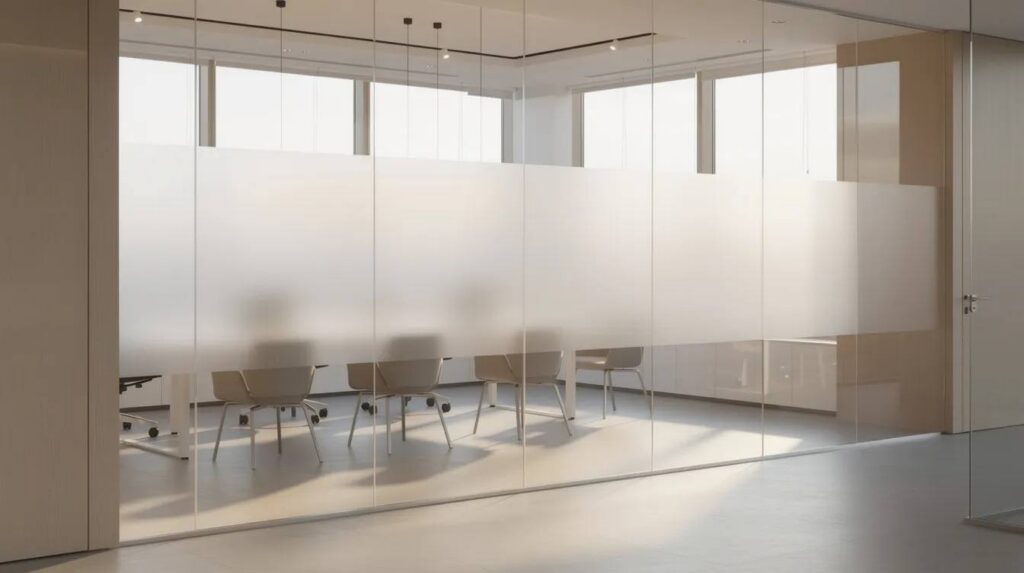
Picture a floor-to-ceiling glass office partition that lets soft daylight flow through while keeping the conference room’s whiteboard completely hidden from the hallway. That is frosted glass at work. The surface appears milky and translucent rather than clear, creating a clean visual barrier that still feels open and bright.
At its core, frosted glass is created by scattering light to make the surface opaque. Instead of passing straight through the way it does with clear glass, light hits thousands of tiny surface irregularities and disperses in all directions. The result is a translucent pane that transmits daylight but blurs shapes, text, and detail on the other side. This frosted glass effect is what separates it from tinted glass, which changes color and solar properties but still allows you to see through, and from fully opaque materials like drywall that block light entirely.
The frosted surface can be produced in several ways. Micro-abrasions from mechanical tools, chemical treatments with acid, high-pressure media blasting, or an applied film all achieve varying degrees of translucency. Different manufacturing techniques create distinct textures and opacities in frosted glass, which means specifiers can dial in everything from a barely-there haze to a heavy frost that hides silhouettes completely.
There are two broad categories worth understanding early:
- “True” frosted glass includes etched, acid-etched, and sandblasted glass where the surface of the glass itself has been permanently altered. These products are ordered from a glass fabricator, shipped as finished panels, and installed in frames or glazing systems. Custom Cut Frosted Glass is available in various styles and sizes, but once the piece is fabricated, the design is locked in.
- Frosted window film applied to existing glazing is a thin adhesive product-typically vinyl or polyester-that a professional installer lays onto clear glass to replicate the frosted look. Frosted window film is a cost-effective and removable option for achieving a frosted look, and it is the primary method Window Film Depot uses to deliver the frosted glass effect for clients nationwide.
Window Film Depot primarily delivers the frosted glass effect via high-performance window films as a retrofit solution for existing glass rather than replacing glass units. This distinction matters because most buildings already have perfectly good glazing that simply needs a privacy or design upgrade.
Common residential uses reflect this trend. Since the early 2020s, urban apartment renovations have increasingly turned to frosted film for bathroom windows facing busy streets, shower enclosures where replacing tempered glass panels is impractical, entry doors with sidelights that need to hide interior views, and interior doors separating home offices from living areas. Frosted glass is often utilized in bathrooms and on entry doors for privacy, whether through permanent glass or applied film.
On the commercial and institutional side, common applications for frosted glass include shower doors and office partitions, but the list extends much further: glass office fronts in corporate headquarters, conference room privacy bands at seated eye level, school admin offices, hospital registration desks, and retail storefronts that need brand graphics with a frosted backdrop.
Frosted solutions can be temporary or permanent. Film-based options are especially useful for leased spaces and national retail roll-outs where designs may change every few years. Permanent frosted glass makes sense for fixtures expected to last decades, like custom entry doors in a luxury hotel lobby.
The rest of this article will help facility managers, architects, and building owners choose between frosted glass and frosted window film for specific residential and commercial applications-covering benefits, types, costs, installation, and design options in detail.
Benefits of Frosted Glass: Allowing Light While Maintaining Privacy
Frosted glass balances two things that rarely coexist in building design: genuine privacy and abundant natural light. Below are the specific benefits that make it a go-to solution for architects, facility managers, and homeowners.
Increased privacy. The frosted surface obscures views both day and night, making it a reliable choice for restroom windows, medical consultation rooms, HR offices, and any space where visual confidentiality matters. Frosted films can provide high privacy levels that range from light diffusion-where you can detect movement but not faces-to full opacity where even silhouettes are blocked. The key is selecting the right frost density and coverage area for each application.
Natural light without sacrificing privacy. Unlike blinds, curtains, or solid walls, frosted glass provides privacy while still allowing natural light to pass through. Occupants avoid the closed-off, cave-like feeling that comes with blocking windows entirely. In open-plan offices and healthcare waiting rooms, this matters for occupant comfort, mood, and productivity. Heavy frost maximizes privacy while still allowing light transmission, so you do not have to choose between the two.
Enhanced aesthetics. Frosted glass delivers a clean, contemporary look that aligns with 2023–2025 interior design trends: open plans with glass partitions, minimalist residential bathrooms, and seamless commercial lobbies. The uniform matte surface reads as intentional and refined rather than as a workaround.
Reduced glare. Frosted glass diffuses light to reduce glare and softens room aesthetics, which is especially valuable in offices with computer screens, classrooms with projectors, and retail spaces with large glass areas. Instead of harsh directional sunlight, occupants get an even wash of diffused light with softer shadows. For more on solving glare problems, read this guide on window film for office glare.
Customizable designs. With decorative films, frosted areas can be cut into bands, patterns, gradients, logos, or wayfinding graphics tailored to brand guidelines. Frosted films can be customized to any design easily, giving designers and brand teams a medium for creative expression directly on glass surfaces.
Low maintenance. Frosted glass and frosted films clean with standard non-abrasive glass cleaners. The matte surface actually hides fingerprints and smudges better than clear glass in most lighting conditions. That said, maintenance and cleaning challenges exist due to the textured surface of frosted glass-particularly with sandblasted finishes where deeper pores can trap grime-but films and acid-etched surfaces minimize this issue.
Energy and performance side benefits. Certain frosted and decorative films from manufacturers like 3M can also offer solar heat rejection and UV blocking, helping protect interior furnishings from fading while improving thermal comfort. Ceramic frit glass mimics frosting while adding solar control and durability in some architectural applications, though film-based solutions achieve similar performance gains at lower cost.
From Window Film Depot’s perspective, these benefits can usually be achieved as a retrofit on existing glazing, avoiding the cost and disruption of full glass replacement in occupied buildings.
Types of Frosted Glass Solutions
The term “frosted glass” covers several distinct fabrication methods and film-based products. Each creates a different texture, opacity, and price point. While traditional methods permanently alter the glass surface, film-based options create a similar frosted glass effect on existing glazing without requiring new panels.
Window Film Depot supplies and installs film and decorative solutions. Permanent etched and acid-etched glass products are handled by glass fabricators and glazing contractors. Understanding each type helps you match the right solution to your project.
Etched Glass
Mechanically etched glass is produced using abrasive techniques or rotary tools, often with a resist mask to create patterns. The result is a smooth, milky-white surface with crisp design edges. Etched glass is usually specified for custom architectural elements like corporate lobby feature walls, decorative doors, or high-end residential partitions where the piece will remain in place for decades.
This method is permanent. Once the glass surface has been altered, the design cannot be changed without replacing the entire panel. Custom frosted glass requires expensive alterations for unique designs, which makes etched glass less flexible for spaces where branding, tenant requirements, or layouts might evolve. Frosted glass requires expensive alterations for custom designs, so etched glass works best when the intent is a permanent, unchanging installation.
Acid-Etched Glass
Acid-etched glass is produced in a factory by treating clear glass with acid-typically hydrofluoric acid or similar compounds-to dissolve a thin layer of silica from the surface. The result is an evenly frosted, satin-like finish that feels smooth to the touch. Acid-etched glass offers a smooth, satin-like finish that resists fingerprints, making it a practical choice for high-touch areas like doors, shower enclosures, and glass shelving.
Its advantages include very uniform appearance, durable surface integrity, and availability in large sheets suitable for interior doors, furniture, and partitions. The downside is that switching or updating designs requires ordering entirely new glass-a process that can be costly and time-consuming for commercial projects with tight schedules.
Sandblasted Glass
Sandblasted glass has its surface blasted with high-pressure sand or abrasive media (aluminum oxide, garnet, or silicon carbide) to roughen and frost the finish. Sandblasted glass creates a rough texture and allows for customizable designs, including multi-level relief patterns where different depths produce varying opacity.
This technique is popular for branded entry doors, feature partitions in restaurants and hotels, and artistic installations. Practical downsides include the risk of surface staining if the porous finish is not sealed, higher cleaning care requirements, and the need for off-site fabrication, shipping, and professional installation. Frosted glass blocks clear outdoor views, showing smudges easily on sandblasted surfaces in particular, which can be an ongoing maintenance concern.
Frosted Window Film
Frosted window film is a thin, adhesive architectural film-often vinyl or polyester-professionally applied to existing glass to simulate frosted glass. Films come in various opacities, textures, and patterns, including standard milky frost, dusted crystal looks, and custom-print options. This product category is where most retrofit projects land.
Key advantages for B2B clients include quick installation with minimal downtime, lower cost versus new glass, removability, and easy design updates across multi-site portfolios. Frosted films can be easily applied and removed without residue, which is critical for tenants in leased spaces or organizations that refresh branding every few years. The films are durable enough for long-term use-quality products from established manufacturers commonly perform for 7 to 15 years indoors-yet they remain fully removable when it is time for a change.
Window Film Depot specializes in specifying and installing 3M frosted window film and other high-performance frosted films on projects for offices, retail chains, schools, and healthcare facilities nationwide.
Decorative Frosted Glass
Decorative frost encompasses both specialty frosted glass products and decorative frost films that incorporate patterns, gradients, or color into the translucent surface. Common decorative looks include stripes, geometric grids, nature-inspired motifs, and privacy bands across conference room glass that mask the interior while allowing light above and below.
Frosted Sparkle SLP films allow vibrant prints and custom images, expanding the design canvas well beyond simple white frost. Window Film Depot often delivers these designs via custom-cut or printed decorative films that integrate branding, wayfinding, or artwork directly into the glass surface. Frosted films can be laser customized to any design, giving architects precise control over every detail.
Decorative frost is especially popular in 2024–2026 office renovations seeking privacy, visual interest, and modest budgets. Because the designs are film-based, they can be updated or replaced without touching the glass itself.
Frosted Glass vs. Frosted Window Film
Facility managers and architects frequently face a decision: should they replace existing clear glass with factory-frosted panels, or retrofit the glazing they already have with frosted film? Here is how the two options compare across the factors that matter most.
Cost comparison. Frosted glass is generally more expensive than frosted film. Replacing clear glass with etched or acid-etched panels typically runs $25 to $75 per square foot installed, depending on process, thickness, and design complexity. Frosted films are more cost-efficient than frosted glass, with professionally installed decorative film generally ranging from $8 to $22 per square foot. For a practical example, retrofitting 50 office sidelites with frosted film might cost a third of what ordering 50 new frosted glass lites would run once you factor in fabrication, shipping, framing, and installation labor.
Appearance. Modern frosted films closely mimic etched or sandblasted glass. Under normal viewing distances, the difference is nearly imperceptible. Slight variations in texture and edge detail may be visible up close, but for the vast majority of applications-privacy bands, full-panel frost, branded graphics-film delivers the same visual result.
Installation. Installation of frosted glass involves significant time and labor: removal of existing glazed units, possible structural adjustments, fabrication lead time, shipping, and on-site glazing work that generates dust and noise. Film installation, by contrast, is often completed after hours or over weekends with minimal disruption. Window Film Depot regularly schedules projects during off-peak hours so that offices, clinics, and retail stores can remain operational.
Maintenance. Both options are straightforward to clean. Films avoid the porous etched surfaces that can trap dirt, especially compared to sandblasted glass. For film, use non-abrasive cloths and mild cleaners. Do not scrape the film with razor blades or use ammonia-based products unless the manufacturer approves them.
Flexibility and removability. Frosted films can be easily removed without residue as tenants change, branding evolves, or privacy needs shift. This is ideal for leased offices, phased retail rollouts, and schools that reconfigure layouts. Frosted glass requires significant work to change or remove-you are essentially replacing the entire panel.
Best use cases. Permanent frosted glass makes sense for high-end custom doors or fixtures in luxury hotels and long-term architectural showpieces. Frosted film is the better fit for privacy bands on conference rooms, storefront branding, phased renovations across a corporate real estate portfolio, and any project where the design might evolve.
From Window Film Depot’s viewpoint, we recommend frosted film for most retrofit privacy, branding, and design projects while acknowledging that true frosted glass remains relevant for new construction millwork and custom glazing packages where permanence is the goal.
Residential Frosted Glass Applications
Since around 2020, homeowners and residential contractors have been using the frosted glass effect more frequently-especially in urban apartments and suburban home offices where privacy and natural light compete for priority. Most residential projects can achieve their goals without replacing glass by using professionally installed frosted film on existing windows and doors.
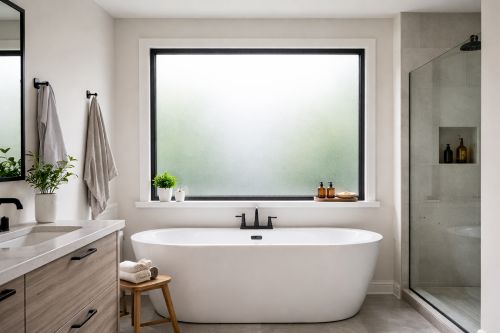
Bathroom windows. Street-facing or neighbor-facing bathroom windows are the single most common residential application. A high-privacy frost film applied to the interior surface keeps the shower and tub area hidden from outside view while still allowing light to fill the room. For style inspiration, explore these bathroom window film options.
Shower enclosures. Partial or full frost on glass shower doors and panels delivers a spa-like aesthetic. When replacing the enclosure is not practical or cost-effective, film provides the same look on existing tempered glass.
Entry doors and sidelights. Frosted film on entry door glass and sidelights obscures views into the foyer while maintaining a welcoming glow from inside. Homeowners can add house numbers, simple patterns, or decorative bands for a personalized touch.
Home offices. The rise of remote and hybrid work since 2020 has driven demand for glass doors and sidelites in home workspaces. A light frost blurs the view during video calls without darkening the room, creating a professional backdrop without heavy drapery.
Kitchen cabinets and interior doors. A light frost applied to glass cabinet fronts or French doors hides everyday clutter while still showcasing interior lighting and design details. Film is the preferred approach here because glass cabinet panels can be expensive and difficult to source in custom sizes.
Window Film Depot works with homeowners and residential contractors in metro areas across the U.S. through its installer network, even though the core business focuses on commercial and institutional projects.
Commercial Frosted Glass Applications
Commercial and institutional buildings are the primary market for frosted glass solutions, and Window Film Depot specializes in these projects-from single-building upgrades to multi-site national rollouts.
Office partitions. Full-height glass walls with frosted bands at seated eye level are standard in corporate campuses built or renovated since 2015. These bands serve double duty: they provide privacy for the people inside while functioning as code-required distraction markers that prevent collisions with full-glass walls. Subtle branding elements-thin logo lines, geometric patterns-can be integrated into the same film.
Conference rooms. Gradient or banded frost protects sensitive meetings, financial screens, and whiteboards from hallway visibility while keeping a bright, open feel along interior corridors. A clear-to-solid gradient is a popular choice: daylight enters at the top of the glass, and privacy increases as the frost density moves downward toward the meeting table.
Storefronts and retail. Frosted film helps national retail chains with dressing room screening, back-of-house separation, and brand graphics on street-level glass. Film ensures a consistent look across hundreds of locations, and it is simple to update when seasonal campaigns or brand refreshes roll out.
Healthcare facilities. HIPAA-driven privacy requirements make frosted glass a natural fit in clinics, pharmacies, and hospitals. Registration counters, consultation rooms, and staff-only areas benefit from frost that blocks patient information from casual view while allowing light into corridors. This is one space where frosted solutions serve as both a design element and a security service, helping facilities protect sensitive information.
Hotels and restaurants. Frosted dividers between dining tables, spa and pool enclosures, and guest bathroom doors in boutique hotels deliver both privacy and upscale design. Decorative frost with custom motifs reinforces brand identity throughout the guest experience.
Schools and universities. Counselor offices, nurse stations, interior classroom sidelites, and secure vestibules all use frost to increase privacy and safety while allowing light into corridors. Film solutions let school districts standardize the look across dozens of buildings without the cost of replacing glass in every facility.
Window Film Depot provides turnkey services for multi-location rollouts, coordinating consistent frosted designs and installation standards across dozens or hundreds of sites through its nationwide project management capabilities.
Decorative Frosted Glass Design Options
Frosted surfaces can be far more than solid white panels-they are a design canvas for brand expression, architectural interest, and functional wayfinding.
Solid frost. Full-coverage frost delivers maximum privacy for restrooms, storage rooms, and back-of-house areas. Even within solid frost, subtle variations exist: “dusted crystal” offers a lighter, more sparkly texture, while “frosted crystal” provides a denser, more uniform opacity. The choice depends on how much light you want to pass through and the aesthetic tone of the space.
Gradient designs. Top-clear to bottom-solid gradients maintain daylight and sightlines at the top of the glass while providing seated privacy at desk or table level. This is one of the most popular options in open offices and conference rooms, and it has become a signature look in 2024–2025 corporate interiors.
Custom patterns. Stripes, geometric grids, organic shapes, and code-required safety bands can all be tailored to complement a building’s interior design scheme. These patterns turn plain glass into an architectural feature while serving practical privacy and safety purposes. Tubes, circles, and linear elements are common in healthcare and education settings where clean geometry supports a calm environment.
Logos and branding. Window Film Depot can plot-cut logos, taglines, and patterns into frosted film for corporate offices, banks, and universities. This approach reinforces brand identity on every glass surface a visitor passes, from the main lobby to individual office fronts. The result is a polished, cohesive look that does not require painting, etching, or permanent alteration of the glass.
Decorative graphics. Combining frost with printed colors, imagery, or wayfinding elements-room numbers, directional arrows, department icons-enhances navigation and adds visual interest. These graphics serve as both a design element and a functional tool, reducing the need for separate signage systems.
All of these options are typically delivered via decorative window films, giving architects and facility managers the freedom to rebrand or refresh spaces every few years without changing the glass.
How Much Does Frosted Glass Cost?
Costs vary based on the method (permanent glass vs. film), total area, site access, and design complexity. The numbers below represent typical industry ranges rather than firm quotes.
Factors affecting cost. The primary price drivers include total square footage, height and access conditions (ground floor vs. atrium requiring lifts), design complexity (solid frost vs. custom-cut patterns with multiple opacity levels), project location, labor rates, and whether union labor is required. The size of each individual panel also matters-oversized lites increase handling and fabrication costs for permanent glass.
Frosted glass vs. window film pricing. Replacing clear glass with etched or acid-etched panels generally costs $25 to $75 per square foot installed, including fabrication, shipping, framing, and glazing labor. Frosted films are often more cost-efficient than frosted glass, with professionally installed film solutions typically falling in the $8 to $22 per square foot range depending on whether the design is a solid frost, gradient, or custom-branded graphic. Material-only film costs for DIY projects run approximately $5 to $12 per square foot, though professional installation ensures proper adhesion, clean edges, and warranty coverage.
Installation costs. Film installation costs include site preparation, glass cleaning, film application, edge trimming, and quality inspection. The process is typically faster-often measured in hours per room rather than days-and far less disruptive than installing new glass units, which may require demolition, temporary board-ups, and structural modifications.
Long-term value. Permanent frosted glass can last as long as the glazing itself-20 to 30 years or more. High-quality films from established manufacturers commonly offer 7 to 15 year performance lifespans for interior use, and they can be updated as branding or layouts evolve. For many organizations, film replacement cycles align naturally with lease renewals, renovation schedules, or brand refresh timelines, making the shorter absolute lifespan a non-issue.
From Window Film Depot’s B2B perspective, total project value matters more than per-square-foot material cost. Film solutions reduce downtime, eliminate structural changes, and scale easily across multiple properties. We encourage readers to contact us for a site-specific estimate rather than relying on generic online numbers, since every project has unique access, design, and scheduling requirements.
Frosted Glass Installation
The focus here is on installing frosted window film to achieve the frosted glass effect on existing glazing-the approach that delivers the fastest results with the least disruption for occupied buildings.
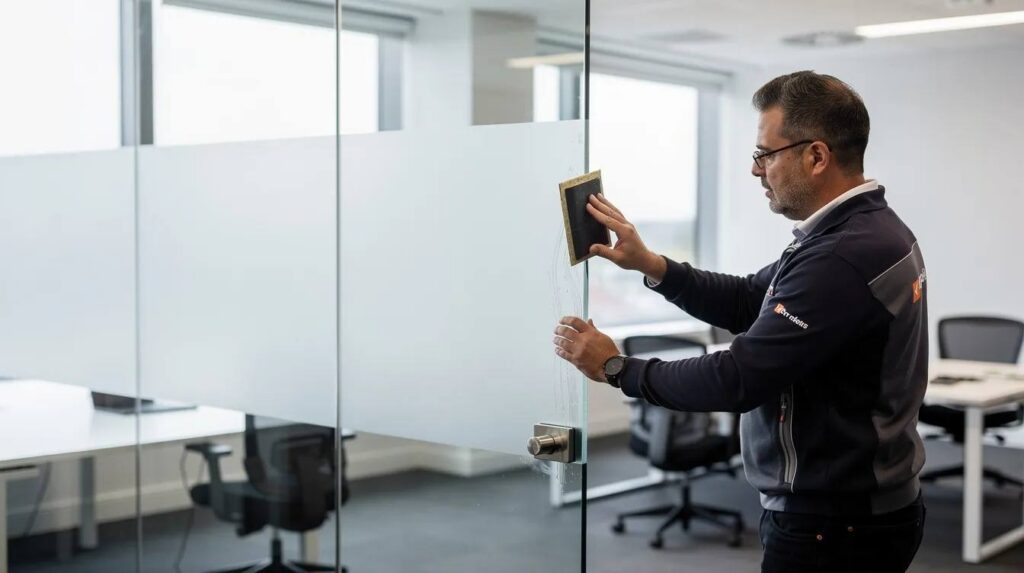
Professional installation. Window Film Depot follows a structured process: site survey and measurements, design approval with the client, surface preparation, film application by certified technicians, edge trimming, and a final quality inspection. Projects are scheduled to minimize business disruption-often after hours, on weekends, or during planned closures. Each piece of film is cut to exact dimensions on site or pre-cut based on field measurements, ensuring tight, seamless coverage.
Retrofitting existing glass. Film can be applied to most existing tempered, laminated, or annealed interior glass panels, sidelites, doors, and windows. This includes single offices, entire floors, or multi-building campuses. Because the glass stays in place, there is no demolition, no temporary board-ups, and no lead time waiting for custom glass fabrication.
Surface preparation. Thorough cleaning and removal of contaminants-dust, adhesive residue, silicone-is critical to avoid bubbles and edge lift. Certified installers use professional-grade squeegees and application solutions that ensure a smooth, void-free bond between the film and the glass.
Maintenance and cleaning. After installation, care is simple: use a non-abrasive cloth or soft sponge with mild glass cleaner. Avoid ammonia-based products if the manufacturer recommends against them, and never scrape the film with razor blades or abrasive pads. Matte frosted surfaces actually show fewer fingerprints than clear glass, reducing cleaning frequency in high-traffic areas.
Longevity. Quality decorative and frosted films typically carry manufacturer warranties when installed by authorized dealers like Window Film Depot. Interior installations generally last longer than exterior ones due to reduced UV exposure and weather stress. For a deeper look at how frosted film compares to etched glass over time, search our guide on how frosted film for glass outperforms etched glass solutions.
Professional installation ensures neat seams, tight edges, and compliance with fire and building codes where required-a critical detail in commercial and institutional projects where inspection and documentation are part of the process.
How to Choose the Right Frosted Glass Solution
The “right” solution depends on privacy level, design goals, budget, and how often the space might change. Here is how to evaluate each factor.
Privacy requirements. Match film opacity and coverage to your specific needs. A medical clinic’s registration window requires near-full opacity from floor to counter height. An open-plan office may only need a 12-inch privacy band at seated eye level. Discuss your use case with an installer who can recommend the right product and coverage for each application.
Design preferences. Consider whether you want a minimal solid frost, branded graphics, or expressive decorative patterns that complement interior finishes. Samples and mockups are essential-what looks suitable on a page may read differently on actual glass in your lighting conditions.
Budget. Compare lifetime costs, not just upfront prices. Retrofitting with film is substantially cheaper per square foot than replacing glass, and the savings multiply at the scale of large corporate or institutional projects. Factor in downtime, labor, and future refresh costs when evaluating total value.
Permanent vs. removable options. Etched and acid-etched glass are long-term permanent solutions ideal for fixtures that will not change. Films offer removability and easy redesigns, which is advantageous for leased or frequently reconfigured spaces. If you find yourself unsure, film is the lower-risk choice-you can always upgrade to permanent glass later.
Residential vs. commercial needs. Homes typically prioritize personal privacy and aesthetics, while commercial clients must also consider brand consistency, code requirements, and rollout logistics across multiple locations. A homeowner upgrading a single bathroom window and a facility manager standardizing frost across 50 clinics have very different decision criteria-but both benefit from expert guidance.
We recommend that facility managers, architects, and owners consult Window Film Depot early in the design process to review samples, mockups, and technical data for informed decisions.
Frequently Asked Questions About Frosted Glass
What is frosted glass?
Frosted glass is glass-or a film on glass-with a translucent surface that diffuses light and obscures clear views. The frosted glass effect is achieved by altering the glass surface through etching, sandblasting, or acid treatment, or by applying a frosted window film to existing clear glass.
Is frosted glass completely private?
High-privacy frosts block detailed views of people, text, and objects. However, strong backlighting-such as interior lights at night-can still create visible silhouettes through frosted glass. Selecting the right opacity and coverage matters. For spaces requiring near-total visual privacy, heavier frost density or layered solutions can be specified to ensure views are effectively blocked.
Can you frost existing glass?
Yes. Frosted window film is the primary way to frost existing glass without replacing it. A professional installer applies the film directly to the interior surface of your current windows, doors, or partitions. This is a key service from Window Film Depot and one of the most requested upgrades across commercial and residential projects.
How long does frosted window film last?
Professionally installed interior films commonly last 7 to 15 years under normal use, depending on the manufacturer and environmental conditions. Exterior-facing films typically last 5 to 7 years due to UV and weather exposure. Quality brands like 3M and Avery Dennison publish specific durability data in their technical sheets.
Is frosted glass easy to clean?
Both frosted glass and frosted films are easy to clean with proper methods. Use a soft, non-abrasive cloth and mild glass cleaner. Avoid razor blades on film surfaces and harsh chemicals on etched glass. Acid-etched surfaces are generally easier to maintain than sandblasted finishes because they have fewer deep pores that trap dirt.
Does frosted glass reduce natural light?
Frosted surfaces diffuse and slightly reduce light transmission, but they are specifically designed for allowing light into a space while improving privacy. Lightly frosted finishes can transmit 70 to 80 percent or more of visible light. The trade-off is minimal compared to the privacy gained.
Which is better: frosted glass or frosted window film?
For most retrofit privacy and design projects, frosted window film is more flexible and cost-effective. It can be applied, updated, and removed without altering the glass. Permanent frosted glass is better suited for high-end new construction or fixtures where the design will not change. Read our detailed comparison of frosted film versus etched glass for a deeper breakdown.
Can we roll out the same frosted design across multiple locations?
Yes. Window Film Depot specializes in national multi-site deployments with consistent specifications, materials, and installation standards. Whether the project covers 5 offices or 500 retail locations, the design, film product, and quality benchmarks remain the same from site to site.
Explore Frosted Glass Solutions for Your Home or Business
Frosted glass solutions deliver the rare combination of privacy, natural light, and design flexibility that modern buildings demand. Whether you are upgrading a single bathroom window or rolling out branded privacy film across a nationwide portfolio, the right approach starts with understanding your goals and choosing a partner with the experience to execute at any scale.
For residential applications-bathrooms, showers, entry doors, home offices, and decorative cabinets-frosted film transforms existing glass without the expense of replacement. Homeowners and remodelers can achieve the frosted glass effect in a single afternoon with professional installation that leaves the space cleaner and more private by the end of the day.
For commercial applications-offices, healthcare, education, retail, and hospitality-Window Film Depot brings more than three decades of experience to every project. Since 1992, the company has served government, institutional, and national retail programs with turnkey project management, consistent specifications, and responsive communication. Custom decorative options let architects and brand teams integrate logos, patterns, and branded graphics into frosted film designs, maintaining cohesive visuals across entire portfolios.
Ready to get started? Visit the Window Film Depot website to explore frosted film solutions, or reach out by email or phone to schedule a consultation. Our team can arrange a site visit, provide sample reviews, and walk through design options tailored to your space and budget. Facility managers, building owners, and trade partners are encouraged to submit drawings or photos for a free estimate and value engineering recommendations on frosted glass and film solutions. Contact Window Film Depot today to turn your existing glass into a privacy, design, and performance asset.