Table of Contents:
- The Strategic Imperative: Understanding One-Way Privacy Film for Commercial Success
- Deconstructing Daytime Privacy: The Science Behind One-Way Film
- The Critical Role of Light Differential: Mastering Day and Night Performance
- Strategic Applications: Where Commercial Privacy Window Film Excels
- Beyond Privacy: UV Rejection and Energy Savings with 3M™ Films
- Key Specifications to Review Before Selecting a Film
- Why Professional Installation is Non-Negotiable for Large-Scale Projects
- Conclusion: Mastering Light Dynamics for Flawless Project Delivery
- Frequently Asked Questions
- Related Posts from Window Film Depot
The Strategic Imperative: Understanding One-Way Privacy Film for Commercial Success

Why Misconceptions About Privacy Film Jeopardize Commercial Projects
For commercial projects, selecting the right one-way window film is less about the product itself and more about a strategic understanding of light dynamics to guarantee client satisfaction and avoid costly specification errors. A pervasive misconception among end-users, and sometimes even within project teams, is that “one-way privacy film” inherently provides constant, unidirectional privacy under all conditions. This misunderstanding can lead directly to client dissatisfaction, unexpected change orders, and significant project liabilities when the film’s performance deviates from these unrealistic expectations.
A prime example of this is the common ‘night-time reverse effect,’ where the privacy desired during the day completely reverses after dusk. Clients often discover this critical limitation only post-installation, leading to complaints and the need for costly remedial actions. Understanding and proactively addressing these nuances are paramount for ensuring project success and protecting your reputation.
The Project Manager’s Role in Proactive Risk Mitigation
As a project manager, your role extends beyond mere product specification; it involves proactive risk mitigation through comprehensive education and expectation management. By grasping the fundamental principles of how reflective window film operates, you position yourself as a trusted advisor, capable of guiding clients toward appropriate solutions and effectively communicating any inherent limitations. This not only builds trust but also safeguards project budgets and timelines by preventing costly misunderstandings down the line. Your informed perspective is critical to identifying suitable applications and articulating realistic performance outcomes for any given commercial environment.
Laying the Foundation: What is Reflective Window Film?
At its core, reflective window film is a sophisticated laminate designed to enhance a building’s energy efficiency and privacy. It achieves this by incorporating microscopic metallic layers within its structure, typically composed of materials like aluminum or silver. These layers are engineered to reflect a significant portion of incident solar radiation, including visible light, ultraviolet (UV) rays, and infrared (IR) heat. Beyond its primary function of solar control, this reflective property is precisely what gives the film its distinctive mirror-like appearance and, crucially, its one-way privacy characteristic under specific lighting conditions.
Deconstructing Daytime Privacy: The Science Behind One-Way Film
How Metallized Film Technology Achieves the “Mirror” Effect
The “mirror” effect observed in one-way privacy films is a direct result of their metallized construction. These films feature extremely thin, atomized layers of metal, which are highly reflective. When light strikes the film, a significant portion of it is bounced back, much like a traditional mirror. The intensity of this reflection depends on the specific metallic composition and the thickness of these layers, influencing how pronounced the mirror effect appears. This reflective capability is the cornerstone of achieving daytime privacy from the exterior.
The Fundamental Principle of Visible Light Transmission (VLT)
Visible Light Transmission (VLT) is a critical performance metric for any window film, quantified as the percentage of visible light that passes directly through the glass and film system. For one-way privacy to function effectively, there must be a substantial difference in VLT between the film and the amount of ambient light present on either side of the glass. A lower VLT means less light penetrates the film, which is essential for creating the privacy effect. The interplay between the VLT of the film and the external light conditions dictates whether the film will appear transparent or reflective from a given vantage point.
The Illusion of Unidirectional Transparency: Light Reflection vs. Absorption
The perception of “one-way” transparency is an illusion, not an inherent property of the film itself. Window film does not selectively block light from passing in only one direction. Instead, it operates on a principle of light differential, where the side with significantly more ambient visible light will see a reflection, while the side with less light will be able to see through. This dynamic is governed by two key optical processes:
- Reflection: The metallic layers primarily reflect light away from the brighter side. The higher the exterior light, the more pronounced the reflective barrier becomes.
- Absorption: A portion of light and heat is absorbed by the film, which then dissipates, contributing to solar control.
It is the contrast in light levels, combined with the film’s reflective and transmissive properties, that dictates the one-way effect. From the brighter side, enough light is reflected to create a mirror, obscuring the view. From the darker side, enough light transmits through the film for clear visibility. This fundamental principle underscores why privacy is typically maintained during the day when the exterior is significantly brighter than the interior, and why it reverses at night.
The Critical Role of Light Differential: Mastering Day and Night Performance
The Core Concept: How Relative Light Levels Drive Privacy
Effective one-way privacy film operates on a fundamental principle of physics: the interaction of light with a highly reflective surface. It is not an inherent “magic” property of the film itself, but rather a dynamic effect driven by the differential in light levels between two spaces. For this film to achieve its intended one-way visibility, the external environment must be significantly brighter than the internal space. The film’s mirrored or highly reflective side faces the exterior, reflecting the abundant outdoor light and creating a barrier to vision from the outside. Simultaneously, from the interior, the darker environment allows light from the inside to pass through, offering a clear view out. This critical balance ensures that privacy is maintained from the brighter side, typically the exterior during daylight hours.
Explicitly Addressing the Night-Time “Reverse Effect” of Mirror Privacy Film
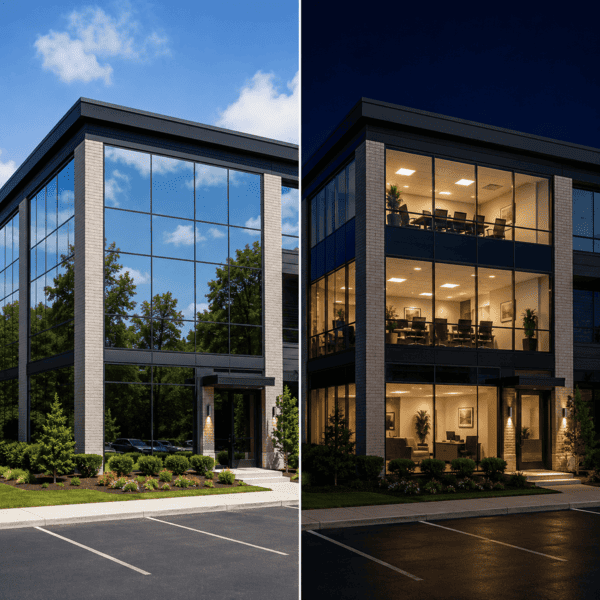
A frequent point of misunderstanding and potential client dissatisfaction arises with the “reverse effect” at night. As daylight fades and interior lights are switched on, the light differential shifts dramatically. The internal environment becomes significantly brighter than the dark exterior. In this scenario, the film’s reflective properties reverse: the film now reflects light from the interior, making it appear mirrored from inside the building, while simultaneously allowing visibility into the building from the darker exterior. This means that at night, with internal lighting, passersby can often see clearly into the previously private space. It is crucial to understand that this is not a product defect, but an unavoidable physical limitation dictated by the laws of light and reflection.
Preventing Client Complaints: Managing Expectations for 24/7 Privacy
Proactively addressing the night-time reverse effect is paramount for successful project delivery and client satisfaction. During the initial specification phase, it is essential to clearly communicate that one-way privacy film primarily offers daytime privacy. Relying solely on this film for 24/7 privacy will invariably lead to unmet expectations and potential client complaints. To achieve continuous privacy, especially in commercial settings where operations extend into the evening, the film must be complemented by additional solutions. These typically include traditional window treatments such as blinds, drapes, or smart glass technologies that can provide active privacy on demand. By setting these expectations transparently from the outset, project managers can mitigate risks, avoid costly rework, and maintain trust with their clients.
Illustrative Scenarios: The Dynamics of Interior vs. Exterior Lighting
To further clarify the performance characteristics of one-way privacy film, consider these practical scenarios:
- Bright Daytime Conditions (Typical Use Case):
- Exterior: Abundant sunlight, much brighter than the interior.
- Interior View: Clear and unobstructed view to the outside.
- Exterior View: The film appears mirrored, preventing visibility into the building. Privacy is highly effective.
- Night-Time Conditions with Interior Lighting (Reverse Effect):
- Exterior: Dark or dimly lit.
- Interior: Lights are on, making the interior significantly brighter than the exterior.
- Interior View: The film appears reflective, reducing the clarity of the view outside.
- Exterior View: Clear visibility into the lit interior. Privacy is compromised.
- Overcast Day or Dim Interior (Reduced Differential):
- Exterior: Moderately bright, but not intensely sunny.
- Interior: Dimly lit or lights off.
- Performance: The privacy effect is reduced. There might be some limited visibility into the interior from the outside, and the interior view out might have a slight reflective quality. The light differential is less pronounced, leading to less pronounced privacy.
- Specific Commercial Application (e.g., Conference Room with Projector during Day):
- Even during the day, if a conference room interior is intentionally darkened for presentations (e.g., projector use), and the exterior is very bright, the film will still provide good privacy. However, if the room’s lights are also on, the differential might lessen, reducing the film’s full effectiveness.
Strategic Applications: Where Commercial Privacy Window Film Excels

Understanding the principles of light dynamics allows for the strategic deployment of commercial privacy window film, maximizing its benefits while avoiding its limitations.
Enhancing Security and Confidentiality for Ground-Floor Offices and Storefronts
For ground-level commercial spaces, the need for daytime privacy is often paramount. One-way privacy film serves as an excellent deterrent against casual observation, making it ideal for:
- Financial Institutions: Protecting client consultations and cash handling areas.
- Executive Offices: Safeguarding sensitive discussions and proprietary information from external view.
- R&D Facilities: Obscuring internal operations and equipment from competitors or the curious public.
- Medical Clinics: Providing patient confidentiality in waiting rooms or consultation areas with exterior windows.
By obscuring visibility without sacrificing natural light or the outward view, these films enhance security and maintain a sense of confidentiality crucial for many businesses.
Optimizing Building Envelope Performance for Executive Suites and Data Centers
Beyond traditional privacy, advanced one-way films, particularly those from 3M, offer significant improvements in building envelope performance. This is particularly valuable for high-stakes environments:
- Executive Suites: The film reduces solar heat gain, contributing to more stable interior temperatures and lower HVAC loads. This translates to increased occupant comfort and reduced energy costs, while simultaneously offering the desired visual privacy.
- Data Centers: Protecting sensitive electronic equipment from excessive heat and UV radiation is critical. High-performance films can significantly lower internal temperatures by rejecting solar energy, reducing the strain on cooling systems and protecting hardware investments. The reflective exterior also adds a layer of visual security.
The dual benefit of privacy and energy efficiency makes these films a robust solution for optimizing critical commercial spaces.
Beyond Traditional Privacy: Glare Reduction and Aesthetic Transformations
The utility of one-way privacy film extends beyond its primary function, offering several additional advantages:
- Glare Reduction: The reflective properties effectively reduce harsh glare on computer screens and workspaces, improving occupant comfort and productivity. This is especially beneficial in offices with large window expanses.
- Uniform Exterior Aesthetics: For multi-tenant buildings or those with varied interior decor, applying a consistent one-way film can create a sleek, uniform exterior appearance, enhancing curb appeal and presenting a cohesive brand image.
- Masking Undesirable Views: From the exterior, the reflective surface can effectively obscure clutter, storage areas, or unattractive views within the building, presenting a more polished facade to the public.
Recognizing Unsuitable Applications: When Not to Specify One-Way Film
While highly effective in appropriate contexts, there are specific scenarios where one-way privacy film is not the optimal solution and should be avoided to prevent client dissatisfaction:
- Requirement for Absolute 24/7 Privacy (Unaided): If a client demands uninterrupted privacy day and night without incorporating complementary window treatments, one-way film alone will fall short due to the reverse effect.
- Interior Always Brighter Than Exterior: In environments where interior lighting is consistently high and the exterior is frequently dark during desired privacy periods (e.g., certain manufacturing facilities operating 24/7 with minimal external light), the film will predominantly offer a view into the space.
- Critical Exterior Visibility: Applications where an absolutely clear, non-reflective view from the outside is crucial, such as retail displays designed to showcase products clearly after hours, or certain surveillance points that require unimpeded external vision, are not suitable for one-way films.
- Small, Confined Spaces: In very small rooms, the internal reflection of the film can sometimes be distracting or create a claustrophobic feel for occupants, especially if the light differential isn’t perfectly maintained.
Beyond Privacy: UV Rejection and Energy Savings with 3M™ Films
While the primary consideration for one-way privacy film often revolves around visual shielding, overlooking the broader benefits of advanced window film technology would be a significant oversight for any commercial project. Modern films, particularly those from 3M, extend their value far beyond basic privacy, offering critical enhancements in occupant well-being, energy efficiency, and interior preservation. Understanding these multifaceted advantages ensures a holistic project solution that maximizes return on investment and long-term client satisfaction.
Comprehensive UV Rejection: Protecting Interiors and Occupants from Harmful Rays
Ultraviolet (UV) radiation is a significant, often invisible, threat to commercial interiors and their occupants. Prolonged exposure can lead to the premature fading and degradation of valuable assets such as furniture, flooring, artwork, and merchandise. More critically, it poses health risks to building occupants, contributing to skin damage and eye strain. Premium 3M™ films are engineered to block virtually all harmful UV rays, typically rejecting over 99% of both UVA and UVB radiation. This high level of UV rejection acts as a crucial protective barrier, significantly extending the lifespan of interior finishes and safeguarding the health and comfort of employees and visitors.
Significant Solar Energy Rejection and Its Impact on HVAC Costs
The glazing of a building is a major conduit for solar heat gain, directly impacting the load on heating, ventilation, and air conditioning (HVAC) systems. Excessive solar heat gain translates into higher energy consumption and increased operating costs, especially in warmer climates or during peak summer months. Advanced 3M™ sun control films are designed to reject a substantial portion of the sun’s solar energy, reducing the amount of heat entering the building through windows. This direct reduction in heat transfer can lead to:
- Lower HVAC Operating Costs: Reduced demand on cooling systems saves energy and lowers utility bills.
- Extended HVAC Equipment Lifespan: Less strain on machinery can lead to fewer breakdowns and longer service life.
- Potential for Downsizing HVAC Systems: In new construction or major renovations, the significant solar heat rejection can sometimes allow for smaller, more efficient HVAC units, reducing capital expenditure.
These energy performance benefits are quantifiable and represent a clear financial advantage over the lifetime of a commercial property.
Glare Reduction for Enhanced Comfort and Productivity
In modern office environments, retail spaces, or educational institutions, excessive glare from sunlight can severely impact comfort and productivity. It leads to eye strain, reduces visibility on computer screens, and can create uncomfortable hotspots within a room, disrupting the intended function of the space. 3M™ window films are meticulously engineered to diffuse and reduce harsh glare without significantly diminishing natural light or obscuring exterior views. By mitigating glare, these films contribute to:
- Improved Occupant Comfort: A more pleasant and visually comfortable environment.
- Increased Productivity: Reduced eye strain and better screen visibility enhance work efficiency.
- Optimized Workspace Functionality: Areas that were previously unusable due to intense glare become functional and inviting.
This enhancement in occupant well-being and operational efficiency is a valuable, often underestimated, benefit of film installation.
The Durability and Longevity of Premium 3M™ Sun Control Window Film Series
The long-term performance of any building material is paramount for project managers. The durability and longevity of window film directly impact maintenance schedules, potential callbacks, and the overall satisfaction of the end-client. 3M™ Sun Control Window Film Series stands apart due to its superior construction, utilizing high-quality materials and advanced manufacturing processes. These films are rigorously tested for:
- Scratch Resistance: A hard-coat finish protects against everyday wear and tear.
- Adhesive Integrity: Proprietary adhesive systems ensure long-term bonding without bubbling, peeling, or delamination.
- Color Stability: Advanced dyes and metallic layers resist fading and discoloration, maintaining aesthetic and performance properties for years.
- Dimensional Stability: The film maintains its shape and integrity under varying environmental conditions.
Investing in a premium film like 3M’s ensures a robust solution designed for commercial demands, minimizing the need for costly replacements or repairs over its extensive service life, backed by comprehensive warranties.
Key Specifications to Review Before Selecting a Film
Selecting the appropriate window film for a commercial project requires more than an aesthetic preference; it demands a thorough understanding of key performance specifications. These metrics provide objective data points to ensure the chosen film aligns precisely with project goals, whether they prioritize privacy, energy efficiency, UV protection, or a combination thereof. Neglecting these specifications can lead to performance gaps, client dissatisfaction, and costly post-installation adjustments.
Decoding Visible Light Transmission (VLT) and External Reflectance for Performance
Understanding how a film manipulates visible light is crucial, especially when specifying for one-way privacy. Two primary metrics govern this:
- Visible Light Transmission (VLT): This specification indicates the percentage of visible light that passes directly through the film into the interior space. A lower VLT means less light enters, resulting in a darker interior view. For one-way privacy, a lower VLT on the interior combined with brighter exterior conditions contributes significantly to establishing the necessary light differential.
- External Reflectance: This metric measures the percentage of visible light that is reflected away from the film’s exterior surface. A higher external reflectance creates a more mirror-like appearance from the outside, enhancing the one-way effect by making it difficult to see through the glass.
The interplay between a low interior VLT and high external reflectance is fundamental to achieving effective daytime one-way privacy. Without a proper balance, especially considering the external light conditions, the desired visual barrier may not materialize as anticipated.
Understanding Solar Heat Gain Coefficient (SHGC) for Energy Efficiency Calculations
The Solar Heat Gain Coefficient (SHGC) is a critical performance indicator for assessing a window film’s energy efficiency. SHGC represents the fraction of incident solar radiation admitted through a window, both directly transmitted and absorbed then subsequently released inward.
- Interpretation: A lower SHGC value signifies that less solar heat is entering the building, indicating superior solar heat rejection and greater energy savings.
- Application: For Project Manager Paul, SHGC is vital for:
- Energy Modeling: Integrating this data into building energy models to predict overall energy consumption.
- Sustainability Certifications: Meeting requirements for green building standards like LEED.
- HVAC Sizing: Providing quantifiable data to engineers for optimizing HVAC system capacities and validating energy performance claims.
Properly specifying a film based on its SHGC allows for accurate projections of energy cost reductions and confirms the film’s contribution to the building’s thermal performance envelope.
Prioritizing UV Rejection Rates for Material Preservation and Human Health
While UV rejection was discussed as a general benefit, its specific rejection rate is a critical specification. This metric quantifies the percentage of harmful ultraviolet radiation (UVA and UVB) that the film blocks. For commercial applications, a high UV rejection rate is non-negotiable due to its direct impact on:
- Asset Protection: Preserving the color and structural integrity of interior furnishings, merchandise displays, and sensitive artwork. This prevents costly premature replacements and maintains the aesthetic appeal of the space.
- Occupant Health and Safety: Minimizing exposure to UV radiation helps protect occupants from skin damage, premature aging, and increased risk of certain eye conditions, thereby reducing potential health-related liabilities for the property owner.
Leading films, like those from 3M, typically offer 99% or greater UV rejection, providing a robust barrier against these damaging rays. This precise figure should always be verified on the product data sheet.
The Importance of Manufacturer Warranties and Comprehensive Product Data Sheets
Reliability and accountability are paramount in commercial projects. Two documents provide this assurance:
- Manufacturer Warranties: A robust manufacturer’s warranty is a testament to the product’s quality and the company’s confidence in its longevity. These warranties typically cover film defects, bubbling, peeling, cracking, crazing, and significant discoloration for a specified period, often 10 years or more for commercial applications. It is crucial to understand what the warranty covers and, equally important, what it does not, distinguishing it from an installer’s workmanship warranty. A strong manufacturer’s warranty minimizes long-term risk and provides peace of mind for both the project manager and the building owner.
- Comprehensive Product Data Sheets: These technical documents are the authoritative source for a film’s precise performance specifications, including VLT, SHGC, UV rejection, glare reduction, and material composition. They also detail installation guidelines, cleaning instructions, and relevant certifications. Relying on these official sheets, rather than general descriptions, ensures that the selected film unequivocally meets all project requirements and helps prevent miscommunication or misapplication.
Collaborating with Experts: The Value of a Certified 3M Dealer
Navigating the complexities of film selection, understanding intricate specifications, and ensuring optimal installation is a specialized task. Engaging with a certified 3M dealer is not merely a convenience; it is a strategic advantage for any commercial project. These professionals bring:
- In-depth Product Knowledge: Certified dealers receive extensive training directly from 3M, ensuring they possess a comprehensive understanding of each film’s technical properties, ideal applications, and specific limitations.
- Expert Consultation: They can conduct on-site evaluations, analyze specific light dynamics and architectural nuances, and recommend the most suitable 3M film solution tailored to the project’s unique goals and performance requirements. This personalized approach is critical to managing client expectations, especially concerning the nuances of one-way privacy.
- Professional Installation: Proper installation is as crucial as film selection for performance and warranty validity. Certified dealers employ trained technicians who adhere to stringent 3M installation protocols.
- Access to Full Technical Support: As partners, they have direct access to 3M’s technical support, ensuring that any complex challenges are addressed promptly and effectively.
Collaborating with a certified 3M dealer effectively extends your project team, providing the specialized expertise necessary to mitigate risks, ensure correct specification, and deliver a high-performing, long-lasting solution that satisfies all project objectives.
Why Professional Installation is Non-Negotiable for Large-Scale Projects
Understanding the intricate technicalities of one-way privacy film, particularly the critical role of light differential, is paramount. However, even the most meticulously chosen 3M film will underperform if not installed with expert precision. For large-scale commercial projects, professional installation isn’t merely an added service; it’s a fundamental requirement for achieving specified performance, ensuring project longevity, and safeguarding against significant liabilities.
The Risks and Costly Failures Associated with Inexperienced or DIY Installation
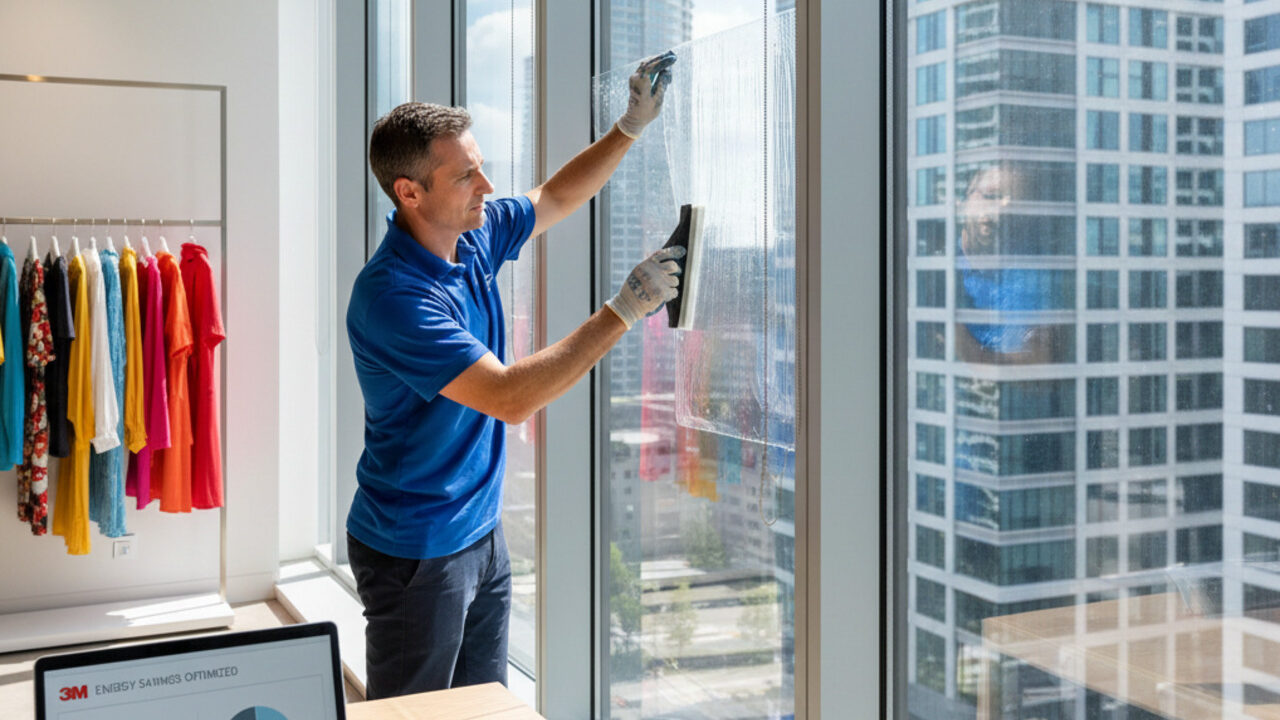
The allure of cost savings through inexperienced or DIY installation methods can be a significant misstep, especially in commercial applications. What might appear as a simple task is, in reality, a complex process demanding specialized skills and tools. Inexperienced application often results in visible defects such as air bubbles, creases, misaligned panels, or trapped debris, which not only degrade the aesthetic appeal but critically impair the film’s optical clarity and reflective properties. These issues compromise the intended daytime privacy effect and can lead to immediate client dissatisfaction, requiring costly and time-consuming rework, material waste, and potential project delays.
The Precision Required for Optimal Performance of Commercial Reflective Window Film
Commercial reflective window films are high-performance materials engineered for specific optical and solar control outcomes. Their optimal performance is intrinsically linked to the precision of their application. This involves a meticulous multi-step process:
- Rigorous Surface Preparation: Windows must be thoroughly cleaned and free of any contaminants, scratches, or residue that could compromise adhesion or clarity.
- Exact Cutting and Templating: Each film section must be cut to precise dimensions, allowing for thermal expansion and contraction while maintaining seamless integration across multiple panes.
- Careful Application Techniques: The film must be applied using specific solutions and tools to ensure uniform adhesion, eliminate air pockets, and prevent streaking or hazing.
- Edge Sealing and Finishing: Proper edge sealing is crucial to prevent delamination, moisture intrusion, and long-term degradation, ensuring the film’s integrity and extending its lifespan.
Any deviation from these precision standards directly impacts the film’s ability to maintain the necessary light differential consistently across the entire glazed surface, potentially leading to varied privacy levels or noticeable imperfections that detract from the building’s facade.
Ensuring Adherence to Manufacturer Guidelines for Warranty and Longevity
Manufacturer guidelines, especially from industry leaders like 3M, are not merely suggestions; they are explicit protocols developed through extensive research and testing to ensure optimal product performance and durability. Adherence to these guidelines is a prerequisite for activating and maintaining the film’s warranty. Employing a non-certified or inexperienced installer risks voiding these crucial warranties, leaving the project exposed to full financial responsibility for any premature film failure, peeling, or discoloration. Professional installers are trained to apply films according to these exact specifications, providing comprehensive documentation of their methods, which is invaluable for long-term project assurance and risk mitigation. This proactive step guarantees the film’s longevity and performance over its specified lifespan.
The Unmatched Expertise of a #1 U.S. 3M Installer
Collaborating with a #1 U.S. 3M Certified Installer brings an unparalleled level of expertise and assurance to large-scale commercial projects. These installers possess:
- In-Depth Product Knowledge: They have a comprehensive understanding of 3M’s diverse film technologies, enabling precise recommendations and applications tailored to specific project needs.
- Specialized Training and Certification: They undergo rigorous training directly from 3M, mastering advanced installation techniques for complex commercial settings and various glass types.
- Access to Proprietary Tools and Solutions: Certified installers utilize specialized tools and application solutions designed to optimize 3M film performance and longevity.
- Problem-Solving Acumen: Their extensive experience allows them to adeptly address unforeseen site conditions, unique architectural challenges and ensure consistent quality across vast areas.
This unmatched expertise is a critical safeguard for Project Manager Paul, ensuring that the chosen 3M film performs exactly as designed, delivering the intended one-way privacy and aesthetic benefits without compromise.
Conclusion: Mastering Light Dynamics for Flawless Project Delivery
Navigating the complexities of commercial window film selection and installation requires a nuanced understanding that extends far beyond product brochures. For Project Manager Paul, success hinges on an informed, proactive approach, particularly when it comes to the unique properties of one-way privacy films.
Recapping the Core Principles of One-Way Film Technology
We’ve established that effective one-way privacy, especially during daylight hours, is fundamentally governed by the principle of light differential. The film itself does not inherently grant one-way visibility; rather, it harnesses the contrast between a brightly lit exterior and a comparatively dimmer interior to create a reflective surface on the outside, while allowing clear viewing from within. This critical distinction is what makes the film an invaluable asset for daytime privacy, but it also underscores the reality of the “night-time reverse effect,” where the privacy dynamic reverses as interior lighting surpasses exterior light levels.
Reinforcing the Value of Proactive Specification and Expert Partnership
To truly master project delivery, a proactive approach to specification is indispensable. This means carefully evaluating a building’s orientation, internal and external lighting conditions, and specific privacy requirements before selecting a film. Partnering with a knowledgeable supplier, such as a 3M authorized dealer, and engaging certified, top-tier installers is not an optional luxury but a strategic imperative. Their expertise ensures that the right film is chosen for the right application and that it is installed with the precision required to meet its performance specifications and secure its warranty. This collaborative model transforms potential risks into assured outcomes.
Securing Client Satisfaction and Mitigating Project Risks
Ultimately, the goal is to achieve client satisfaction and mitigate project risks. This is accomplished by educating stakeholders about the true operational principles of one-way film, transparently managing expectations regarding its limitations (particularly the night-time effect), and ensuring flawless execution through expert installation. By meticulously planning, specifying, and collaborating with certified professionals, Project Manager Paul can confidently deliver projects that not only meet but exceed performance requirements, secure long-term client trust, and avoid the costly pitfalls associated with misunderstandings or shortcuts.
Frequently Asked Questions
How does one way window film for daytime privacy actually work?
It operates on the principle of light differential. During the day, when the exterior environment is much brighter than the interior, the film’s reflective layer bounces sunlight away to create a mirror effect that obscures the view from the outside while allowing occupants to see out.
Will one way window film for daytime privacy provide privacy at night?
No, the privacy effect reverses once the sun sets and interior lights are turned on. Because the interior becomes brighter than the dark exterior, the film will act like a mirror for those inside and appear transparent to anyone looking in from the outside.
What are the additional benefits of using one way window film for daytime privacy?
Beyond visual privacy, these films offer significant solar heat rejection to improve energy efficiency, high UV rejection to protect interior furnishings from fading, and glare reduction to enhance occupant comfort and productivity.
What technical metrics should I check when selecting one way window film for daytime privacy?
You should evaluate Visible Light Transmission (VLT) to balance privacy with interior brightness, External Reflectance to ensure a strong mirror effect, and the Solar Heat Gain Coefficient (SHGC) to determine how effectively the film will reduce cooling costs.
How can I achieve 24/7 privacy if I use one way window film for daytime privacy?
Since these films are primarily designed for daylight hours, you should complement them with other solutions such as blinds, drapes, or smart glass technologies to ensure continuous, uninterrupted privacy during the evening and nighttime.