Table of Contents:
Introduction
Finding qualified privacy window film installers in your local area takes less effort than most homeowners expect. In most U.S. metro areas, certified and insured installers are located within a 15- to 25-mile radius from a typical residence, with major brands like 3M, LLumar, Vista, and Solar Gard maintaining dealer locator tools to help you search for professionals near you.
This guide covers everything you need to select the right local installer, choose appropriate film types for your windows, understand the installation process, and budget accurately for your project. Whether you’re a homeowner seeking maximum privacy for bedrooms and bathrooms or a business owner needing commercial window solutions for your office, this information will help you make confident decisions.
Direct answer: Most areas have certified window film installers within 25 miles, with average installation taking 2-4 hours per room and whole-home projects completing in one to two days.
By reading this guide, you will:
- Learn how to find and evaluate reliable local installers with proper certifications
- Understand the differences between privacy film options and which best suits your needs
- Gain realistic expectations for installation timelines and project scope
- Know what costs to expect per square foot in 2026
- Understand warranty coverage standards and what protection you should demand
Understanding Privacy Window Films
Privacy window film is a thin layer of material—typically polyester or PET—applied directly to glass to alter visibility, reflectivity, or translucency. These product solutions serve multiple functions: blocking views into a space, reducing glare, providing UV protection, controlling heat, and even enhancing security against glass breakage.
For homeowners, privacy window film addresses common concerns about comfort, energy savings, and protecting furniture from UV damage. Businesses benefit from enhanced security, privacy in conference rooms, professional aesthetics, and compliance requirements for facilities like medical offices. Window film can be applied to existing windows as an aftermarket product, enhancing their performance without the need for replacement.
How Privacy Films Work
Privacy films achieve their light-blocking and view-obscuring effects through different optical mechanisms depending on the film type.
One-way mirror films work via differential light intensity between interior and exterior spaces. When outside is brighter than inside during daytime, the reflective layer causes the exterior surface to act like a mirror, preventing those outside from seeing in. However, if the interior becomes brighter at night with lights on, the effect reverses—making the interior visible from outside. This conditional performance is important to understand before selecting reflective films for your home.
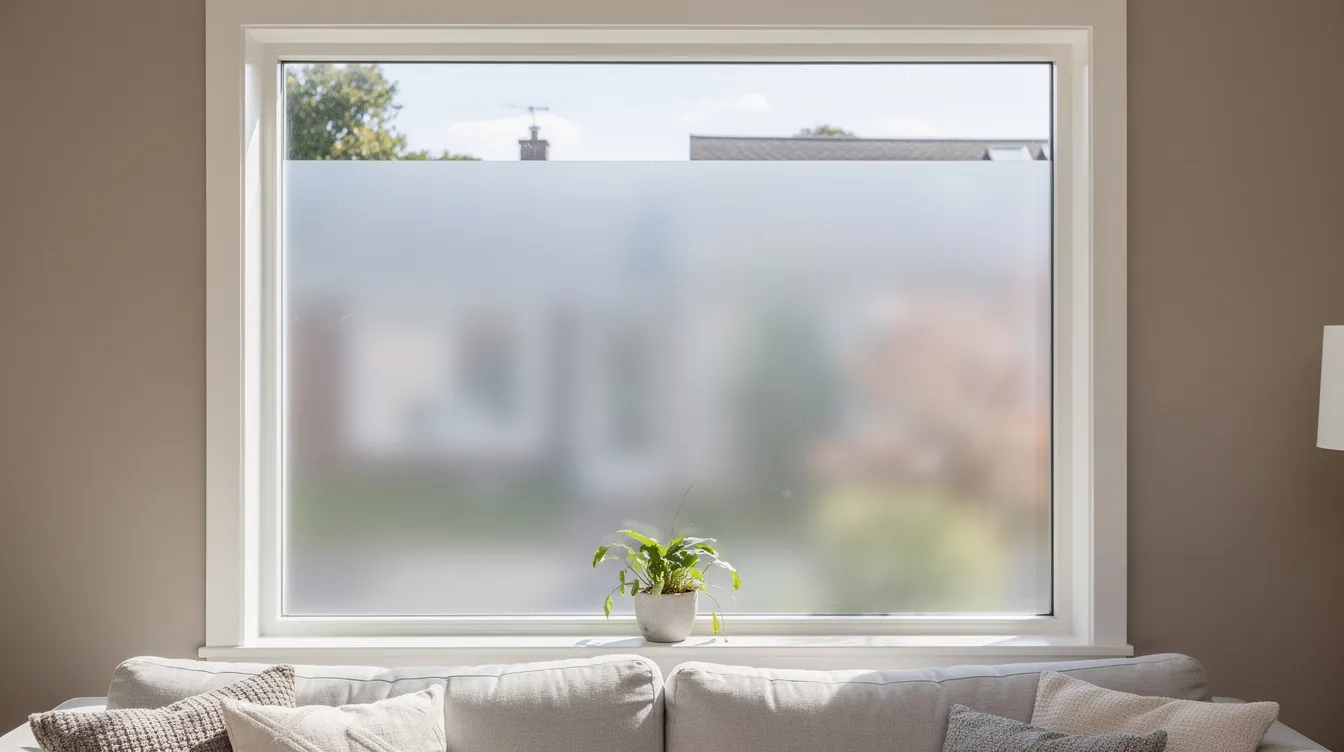
Frosted and etched films operate differently, using micro-texture or chemical etching to scatter light and create diffusion. This approach provides reliable day and night privacy in both directions, though it blocks clear views entirely. Sun control window films can reduce heat and glare while allowing natural light to enter, making indoor environments more comfortable without sacrificing the view.
The impact on energy costs can be substantial. Premium reflective films can block up to 82% of solar heat and approximately 93% of glare. Solar control window films can reject up to 85% of the sun’s total solar energy, helping to maintain comfortable indoor temperatures throughout the year and significantly reducing cooling costs during hot summer months.
Professional vs DIY Installation
Proper installation of window film is crucial for its effectiveness and longevity, requiring a smooth application without bubbles or ripples. Professional installers provide several advantages that directly affect performance and warranty protection.
Benefits of professional installation include:
- Proper surface preparation with meticulous cleaning of the glass prior to application to avoid debris getting trapped under the film
- Correct measurement and cutting, including handling odd-shaped panes, multi-panes, and specialty glass types
- Use of manufacturer-approved adhesives and correct tools for the job
- Warranty coverage—many manufacturer warranties require certified installers, and improper DIY application may void your protection
- Knowledge of local code compliance, especially concerning reflective films that may be regulated by building codes or homeowner associations
DIY installation carries significant risks. Issues include misapplication resulting in bubbles, creases, and edge lifting; difficulties handling specialty films like metalized reflective or security films; and potential for not matching manufacturer specifications, which limits both performance and warranty protection, even when following detailed do-it-yourself window film installation guides.
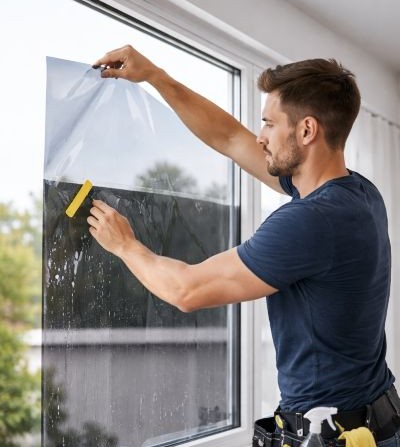
Professional installers understand that installing privacy window film requires cleaning the glass and using a soapy solution to facilitate application. Successful installation involves applying the film and using a squeegee to remove air bubbles working from the center outward. These techniques require experience to perform correctly.
Types of Privacy Window Film Options
Building on the technical foundations above, selecting the right film type depends on your specific privacy needs, lighting preferences, and aesthetic goals. Each category offers distinct advantages and trade-offs.
Frosted and Etched Films
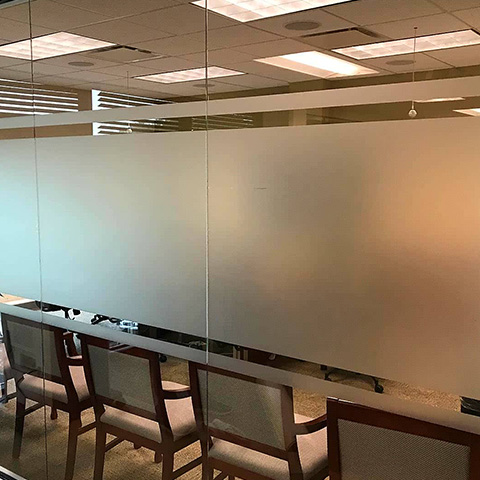
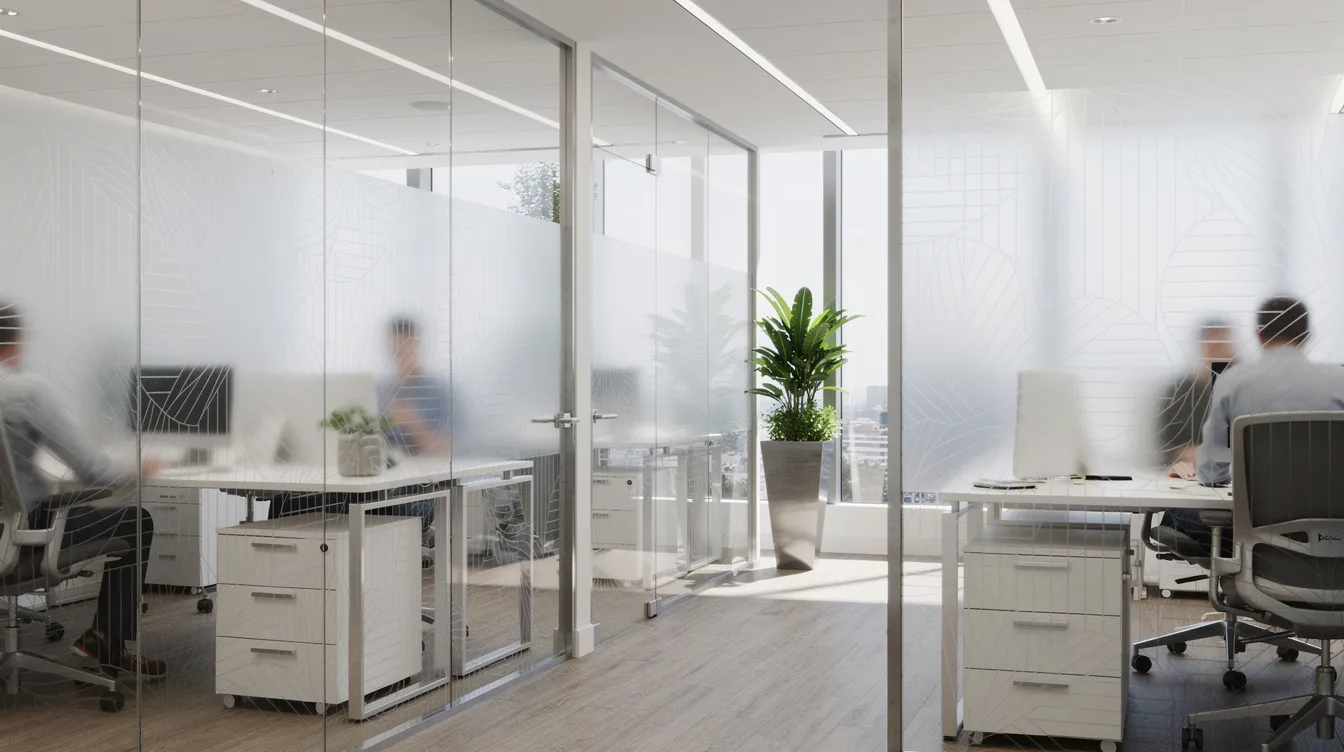
Frosted window films create a translucent appearance that completely obscures vision in both directions while allowing diffused natural light to filter through. Frosted window films are a cost-effective alternative to etched glass, providing privacy while allowing natural light to enter.
Frosted window films provide privacy while still allowing light to enter, making them a popular choice for bathrooms and office spaces. These films excel in applications where you need 24/7 privacy without concern for maintaining an outdoor view and are often recommended as the best window film for nighttime privacy when compared to reflective options. Design options include geometric patterns, abstract textures, gradients, and custom branding for commercial applications.
Best applications:
- Bathroom windows and shower doors
- Office partitions and conference room glass
- Medical facility privacy requirements
- Interior doors with glass panels
- Ground-floor windows facing streets or neighbors
The trade-off is that frosted films eliminate clear views in both directions and may slightly reduce overall light transmission compared to clear or reflective options.
One-Way Mirror Films
One-way mirror films feature a metallic reflective layer that provides strong daytime privacy while preserving your view to the outdoors. As with any reflective system, understanding how one-way mirror films work in real projects is essential, since privacy depends on the light difference between inside and outside. Privacy window films can effectively hide the view into rooms without disrupting the view to the outdoors during daylight hours.
These films offer excellent glare reduction and heat rejection—often 70-80% or higher in premium versions. For homes and storefronts with street-facing windows, one-way films provide an effective balance of privacy and view preservation.
Ideal applications:
- Street-facing residential windows
- Storefronts and commercial façades
- Home offices requiring daytime privacy
- Living rooms with exposure to foot traffic
Important limitations: At night when interior lights are on and the outside is dark, the reflective effect reverses, potentially exposing your interior. Some municipalities and HOAs restrict mirror-like exterior appearances, so check local regulations before installation. Reflective films may also cause thermal stress issues on double-pane or Low-E glass if not properly matched to the glazing type.
Blackout and Decorative Films
Blackout window films provide total privacy by blocking all visibility from outside while still allowing some light to enter depending on the specific product. These films achieve maximum privacy for sensitive spaces.
Decorative window films can enhance the aesthetic appeal of windows without the need for additional hardware, providing a maintenance-free solution for a high-class appearance. Options range from subtle patterns to bold designs, vinyl prints, and custom graphics for business branding, with multiple types of decorative film for interior and exterior glass available to match different design goals.
Perfect applications:
- Bedrooms requiring complete privacy
- Media rooms and home theaters
- Sensitive work areas and security rooms
- Creative commercial spaces seeking design impact
The trade-off with blackout films is reduced natural light and no outward view. Decorative options may cost more than basic privacy films depending on complexity.
Finding Local Privacy Window Film Installers
With a clear understanding of film options, selecting the right local installer becomes your most important decision. The quality of installation directly affects performance, appearance, and warranty protection.
Installer Qualification Steps
Follow this process to evaluate potential installers in your area:
- Verify licensing and insurance – Check that installers carry current business licenses, liability insurance, and workers’ compensation coverage. While no universal national license exists for window film installers, your state or city may require general contractor licensing or specialty permits for commercial work.
- Check manufacturer certifications – Ensure the installer is certified by the brands you’re considering. Certifications from 3M, LLumar, Vista, or Solar Gard indicate completed training, adherence to quality standards, and eligibility for manufacturer warranties. Certified dealers maintain standards that allow warranty validity, especially when installing 3M window film products and systems.
- Review local customer testimonials – Request portfolio photos and examples of installations on similar window types. Look at Google reviews, BBB ratings, and industry association memberships like IWFA. If possible, view installed film after several years to assess durability and verify that 3M residential and commercial film warranty standards or equivalent protections have been met over time.
- Obtain multiple detailed quotes – Each quote should itemize material costs by film type and brand, labor charges, surface preparation including old film removal, project timeline, and any auxiliary costs for access equipment or travel fees.
- Confirm warranty coverage – Ask specifically about manufacturer warranty terms and separate installation warranties. Determine what’s covered (bubbling, peeling, color change, delamination), warranty length, transferability, and required maintenance conditions.
Cost Comparison and Service Evaluation
When comparing installer quotes, use consistent criteria to evaluate your options fairly. Current 2026 pricing data shows:
- DIY kits: $1–$5 per square foot (materials only)
- Professional installation: $7–$24 per square foot depending on film type and project size
- Premium specialty films: $12–$18+ per square foot installed, with window security film installation costs typically falling toward the higher end of that range
| Criterion | Premium Brand Certified Installer | Budget Local Specialist |
|---|---|---|
| Price per sq. ft. | $12–18 (reflective film, 150 sq ft) | $7–10 (standard privacy film) |
| Warranty Length | 15-year to lifetime on film + 5 years installation | 5–10 years on film, 1–2 years installation |
| Brands Available | 3M, LLumar, Vista, Solar Gard | Local brands, generic films |
| Installation Timeline | 1–2 weeks to schedule, 1 day to complete | Available within days, may take longer for complex work |
| Customer Rating | 4.8+ with portfolio and references | Mixed reviews, less polished documentation |
| Interpreting quotes: Lower prices may reflect less durable film, thinner products, weaker warranties, or incomplete service without proper prep and edge sealing. The best value balances quality film, certified installation, strong warranty protection, and transparent itemized estimates. A mid-size home with approximately 520 square feet of window area using dual-use UV-blocking film typically costs $3,800–$5,200 installed. |
Common Installation Challenges and Solutions
Even with qualified installers, certain issues commonly arise during privacy film projects. Understanding these challenges helps you prepare and avoid problems.
Scheduling Conflicts with Local Installers
The problem: Spring and summer are peak seasons for window film installation as homeowners address heat and sun exposure issues. Premium installers may have schedules booked 2–3 weeks out during these periods.
Solution: Contact installers early and schedule consultations before the busy season. Ask about expedited service options for urgent needs—some installers offer priority scheduling at additional cost. For commercial projects, negotiate scheduling terms in contracts.
Film Selection Overwhelm
The problem: The variety of film options, brands, thicknesses, and performance metrics creates confusion. Technical specifications like VLT percentages and SHGC values can overwhelm customers without industry experience.
Solution: Request an in-home consultation where installers bring film samples to test in your actual light conditions. View samples at different times of day to understand performance. Request written specifications and manufacturer datasheets. Ask installers to explain performance differences in practical terms relevant to your goals.
Hidden Costs and Upcharges
The problem: Common hidden fees include old film removal, glass repairs, scaffolding or lift rental for high windows, travel charges for remote locations, special adhesives, and rare permit costs for commercial façade modifications.
Solution: Demand an itemized written estimate covering all potential charges before signing any agreement. Ask specifically about additional costs for complex windows, access challenges, and special materials. Confirm whether the quoted price includes all adhesives, edge sealants, and cleanup.
Post-Installation Bubbling or Peeling
The problem: Improper cleaning, inadequate surface preparation, incorrect adhesive use, glass surface damage, poor edge sealing, or thermal stress can cause bubbles, peeling, and premature failure.
Solution: Choose installers offering minimum 5-year installation warranties with local service support. Verify the installer uses proper preparation processes—the installation process typically involves cleaning the glass surface thoroughly before applying the film to ensure optimal adhesion and performance. Check completed work for edge quality and bubble-free clarity, and consider partnering with a specialized window film provider that offers both product and installation support. Schedule a follow-up inspection after 1–2 weeks to identify early issues while still within the correction window.
Professional installers know that for optimal installation conditions, the temperature should be between 60°F and 80°F, and ammonia-based cleaners should be avoided as they can cause discoloration or lifting of the film. They also understand that a tiny gap of about 1/16 inch should be left between the film and the window frame during trimming to prevent lifting of the edges.
Conclusion and Next Steps
Professional local installation ensures the best privacy film performance and longevity. Certified installers bring expertise in surface preparation, proper application techniques, and manufacturer-backed warranty coverage that DIY approaches cannot match.
Your immediate next steps:
- Contact 3 local certified installers for quotes within the next week
- Schedule in-home consultations to view film samples in your actual lighting conditions
- Compare warranties, certifications, and references before making your decision
- Verify installer insurance and request itemized written estimates
- Book installation 2–3 weeks in advance if scheduling during peak summer months
Related topics to explore: If you’re upgrading windows for privacy, you may also benefit from learning about security window films designed to prevent break-ins and protect against impact, energy-efficient window upgrades that reduce both summer cooling and winter heating costs, or smart glass alternatives that allow electronic control of opacity.
Window films can block up to 99% of harmful UV rays, protecting both occupants and furnishings from sun damage while enhancing energy efficiency. Upgrading windows with energy-saving window film can yield significant energy savings by reducing heat gain in the summer and heat loss in the winter—benefits that extend well beyond privacy to protect your home, family, and budget for years to come.
Need More Info?
The Window Film Depot team is happy to help.
Frequently Asked Questions
How much does privacy window film installation cost per square foot in 2026?
DIY kits cost $1–$5 per square foot for materials only. Professional installation for standard privacy or decorative films runs $7–$24 per square foot depending on film type, project size, and location. Premium specialty films including low-e, reflective, and security options typically cost $12–$18+ per square foot installed.
How long does professional privacy film installation take?
A single average room requires 2–4 hours. Whole-house installations with multiple windows take 1–2 days. Commercial façades or high-rise projects may require several days depending on window count, access requirements, and preparation work. Your installer should provide timeline estimates as part of their quote.
Can privacy window film be installed on all window types?
Most glass types—single pane, double pane, and Low-E glazing—are compatible, but verification is essential. Reflective or mirrored films may cause heat buildup and thermal stress in certain insulated glass units. Odd-shaped, curved, tinted, or coated glass may require special adhesives or film types. Professional installers can assess your specific windows and recommend appropriate products.
What warranty should I expect from local installers?
Manufacturer warranties vary: residential films often carry lifetime or limited lifetime coverage for failures like peeling, cracking, and demetallizing. Commercial films typically offer 10–15 year warranties. Installation warranties are usually shorter—1–5 years—and may include maintenance terms. Certified dealers backed by manufacturers like 3M or LLumar typically provide stronger warranty protection.
How do I maintain privacy window film after installation?
Clean using mild, non-ammonia cleaners and soft cloths. Avoid scraping or sharp tools that could scratch the surface. Allow film to cure properly during initial weeks—moisture and heat cycles help the adhesive fully bond. Perform periodic edge inspections and avoid pressure washing mirrored exterior films. Following manufacturer maintenance guidelines protects your warranty coverage.
Will privacy film affect my home’s resale value?
Quality professional installation typically adds value by improving privacy, lowering energy costs, and protecting interiors from sun damage. However, certain reflective or mirrored films may not appeal to all buyers, and HOA or zoning restrictions must be respected. Poorly installed or damaged films can detract from value. Ensure installations are certified and documented for prospective buyers.
Can privacy window film be removed without damaging windows?
Yes, most quality films are removable. Using a sharp utility knife or razor blade is essential for achieving clean edges when trimming the excess film during both installation and removal. Removal may require heat and careful technique to avoid damaging glass or sealants. Adhesive residue typically needs cleaning. Older or brittle films are more difficult to remove. Removal from double-pane, tempered, or Low-E windows should be handled by professionals.
Do I need permits for privacy window film installation?
Residential installations typically don’t require permits. However, reflective or mirrored films may violate local building or glazing codes in some municipalities. Commercial façade changes sometimes require permits. Historic districts and HOAs often require approval for exterior modifications. Always check local regulations regarding film reflectance, visible light transmission, and exterior appearance before installation.