Table of Contents:
Introduction
Privacy glass film transforms ordinary windows and glass doors into view-blocking surfaces that still allow natural light to illuminate your space. This thin, flexible sheet—typically made from polyester with an adhesive backing—applies directly to existing glass to alter its optical properties, managing both light transmission and visibility without expensive glass replacement.
This guide covers residential and commercial applications of privacy window film, from bathroom shower doors to office conference rooms. Whether you’re a homeowner seeking alternatives to blinds, a renter needing a solution that won’t leave residue, an office manager creating private meeting spaces, or a contractor handling interior fit-outs, you’ll find practical information for selecting and installing the right film. Privacy glass film is a thin, adhesive-backed polyester layer applied directly to existing glass to alter its optical properties, managing light and visibility.
Direct answer: Privacy window films are designed to obscure visibility into a space while still allowing natural light to filter through, making them ideal for residential and commercial use. These films can be applied to various glass surfaces, including windows and doors, and are available in different styles such as frosted, etched, and patterned designs.

By reading this guide, you will learn:
- How different film technologies create privacy through reflection or diffusion
- Which film types work best for specific applications like bathrooms, offices, and storefronts
- Step-by-step installation techniques for both static cling and adhesive window films
- How to troubleshoot common problems like air bubbles and poor adhesion
- The energy efficiency and UV protection benefits that reduce glare and prevent furniture fading
Understanding Privacy Glass Film
Privacy glass film functions as a specialized layer that modifies how light interacts with your windows. Unlike traditional blinds or curtains that block light entirely when closed, or standard window tinting that primarily reduces brightness, privacy films provide targeted visibility control while maintaining your room’s connection to natural light.
How Privacy Glass Film Works
Privacy films work by managing light through either reflection or diffusion. The visible light transmission (VLT) rating determines how much light passes through the film, with higher VLT keeping rooms brighter. A film with 70% VLT transmits most daylight while still obscuring the view, whereas a 10% VLT film creates a much darker interior with stronger privacy.
One-way privacy films use a metalized, mirror-like coating to bounce light away from the surface. Reflective films use a metalized, mirror-like coating to bounce light away from the surface, effective during the day due to light contrast. The side facing the brighter light source appears as a mirror, hiding what’s behind it. For this effect to work properly, the exterior must be significantly brighter than the interior—typically a ratio of at least 5:1. Reflective films lose their effectiveness at night, requiring additional treatments for full privacy when interior lights are on and the outside world is dark, which reflects the same light-differential principles that govern how one-way mirror window films work in real projects.
Two-way privacy films, including frosted and decorative options, work through light diffusion rather than reflection. These films scatter light as it passes through, creating opacity that blocks visibility from both the inside and outside regardless of lighting conditions. This makes frosted window film ideal for spaces like bathrooms where consistent privacy matters more than maintaining an outward view.
Key Performance Features
High-quality privacy films deliver multiple performance benefits beyond blocking unwanted views. Most premium films block 99% or more of ultraviolet radiation, protecting your furniture, carpets, and décor from fading caused by UV exposure. These films can help reduce glare and block harmful UV rays, which can protect furniture and carpets from fading.
High-performance films can block up to 80% of solar heat, significantly reducing cooling costs in hot climates. This solar heat rejection—measured as Total Solar Energy Rejected (TSER)—makes privacy film a practical investment for energy efficiency, particularly on south and west-facing windows that receive intense afternoon sun. During winter, some films also help retain interior heat.
The light transmission levels you choose directly affect your space’s brightness and privacy rating. A heavily frosted film with 30% VLT provides maximum privacy but noticeably reduces light; a light frost at 70% VLT keeps rooms bright while still obscuring shapes and shadows. Understanding this trade-off helps you select the right balance for each window in your home or office.
Types of Privacy Glass Film
Building on how different films manage light through reflection or diffusion, let’s examine the specific categories available for your windows and glass doors. The main options include frosted films, one-way reflective films, and decorative films—each serving distinct applications and aesthetic preferences.
Frosted Privacy Films
Frosted window films provide maximum privacy while still allowing natural light to enter a space, making them a popular choice for both residential and commercial applications. The translucent finish mimics the appearance of etched or sandblasted glass, creating uniform opacity that obscures shapes and movement from both sides.
Light transmission for frosted films typically ranges from 30% to 70% depending on the frost intensity. A heavy frost film with approximately 30% VLT works well for bathroom windows and shower doors where complete privacy takes priority. Lighter frost options at 50-70% VLT suit conference room partitions and office glass doors where maintaining brightness matters. Frosted films are easy to install and can be applied to any smooth surface, allowing for quick transformation of windows and doors without leaving a sticky residue.
The consistent privacy frosted films provide—regardless of whether it’s day or night—makes them the most reliable choice when you need to hide a room’s interior permanently, especially when you’re specifically evaluating day and night privacy window film options. Unlike reflective options, frosted films don’t create mirror-like glare that might affect neighbors or passing traffic.
One-Way Privacy Films
One-way privacy films allow individuals inside a building to see outside while preventing those outside from seeing in, making them ideal for maintaining privacy without sacrificing natural light. These films incorporate metallic or sputtered coatings that create a mirror effect on the brighter side of the glass.
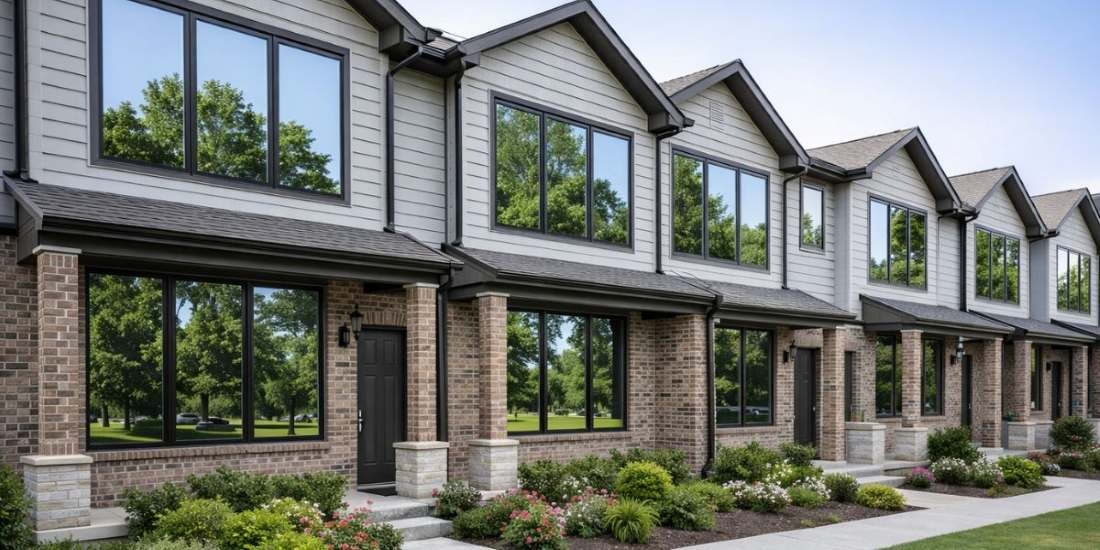
During daylight hours, the exterior appears reflective while the interior view remains clear—perfect for storefronts wanting to display products while preventing passersby from seeing staff areas, or offices needing privacy from street-level observers. However, this effect reverses when interior lights are on at night and the outside world is dark, potentially exposing your space to outside view.
One-way privacy films can also provide additional benefits such as reducing glare, controlling solar heat gain, and blocking harmful UV rays, contributing to energy efficiency in buildings. A high-performance reflective film might offer 17% VLT with 60% exterior reflectance and 77% total solar heat rejection. The trade-off is a noticeably darker interior and the need for supplementary blinds or curtains for nighttime privacy.
Decorative Privacy Films
Decorative films combine visual style with privacy function, offering patterns that transform plain glass into design elements, similar to the wide range of decorative window film types for interior and exterior glass. Options include geometric designs, stained glass effects, bamboo or reed textures, gradient frosting, and custom logos or brand imagery. Some patterns even help prevent bird strikes on large windows by making the glass more visible to wildlife.
These films can help reduce glare and block harmful UV rays, which can protect furniture and carpets from fading. Pattern density determines the privacy level—a dense geometric design provides substantial blocking of unwanted views, while a pattern with clear cutouts allows partial visibility. Gold, blue, and other colored options add decorative impact beyond what frosted or clear reflective films achieve.
Decorative films particularly suit modern office environments, retail spaces seeking to enhance their style, and residential areas like entryway sidelights or kitchen cabinets with glass doors, where premium 3M frosted window film finishes can elevate both privacy and aesthetics. Installed professionally, decorative pattern films typically cost $8-18 per square foot, with custom logos and complex designs at the higher end.
| Film Type | Privacy Level | Light Transmission | Best Applications | Night Privacy |
|---|---|---|---|---|
| Heavy Frosted | Maximum | 30-40% VLT | Bathrooms, medical offices | Yes |
| Light Frosted | High | 50-70% VLT | Conference rooms, partitions | Yes |
| One-Way Reflective | Daytime only | 10-20% VLT | Storefronts, street-facing offices | No |
| Decorative Pattern | Variable | 40-70% VLT | Lobbies, sidelights, cabinets | Depends on pattern |
| Understanding these differences helps you match film type to specific window locations and privacy requirements. The next section covers how to install each type properly. |
Installation Methods and Application Techniques
With your film type selected based on privacy needs and aesthetic preferences, proper installation ensures the product performs as intended. Both DIY and professional installation are viable depending on window size, film type, and your comfort level with the process.
Step-by-Step Installation Process
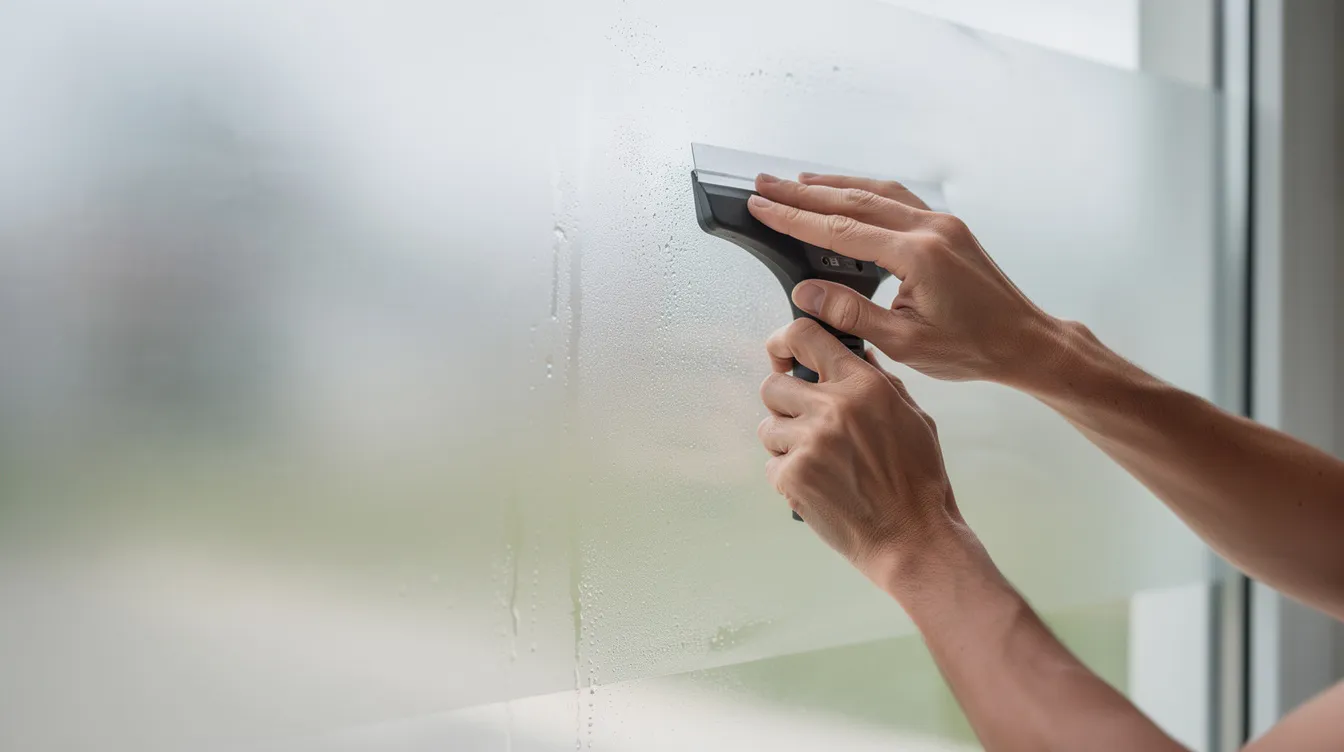
Installing privacy window films is a straightforward process that typically involves cutting the film to size, spraying the window with a mixture of water and soap, and then applying the film to the glass surface using a squeegee to remove air bubbles. Here’s the complete procedure:
- Measure and cut the film to your window size, leaving approximately 1 inch of excess on all edges for final trimming. Use a sharp utility knife and straight edge for clean cutting.
- Clean the glass surface thoroughly using a non-ammonia glass cleaner and lint-free cloth. To install window film effectively, it is recommended to clean the glass surface thoroughly before application to ensure proper adhesion and a smooth finish. Remove any dust, grease, or residue that could trap particles under the film.
- Prepare the slip solution by mixing water with a small amount of dish soap in a spray bottle. This allows you to position the film before it adheres permanently.
- Apply the film by peeling the backing sheet to expose the adhesive layer, then spray both the glass and adhesive side generously with slip solution. Position the film on the window, adjusting as needed while surfaces are wet.
- Remove air bubbles and water using a squeegee, working from the center outward toward edges. Apply firm, overlapping strokes to ensure the adhesive makes full contact with the glass surface.
- Trim excess film at the edges using a sharp blade held at a slight angle against the window frame. Leave approximately 1/8 inch gap from the frame edge to prevent peeling.
- Allow curing time of 24-48 hours before washing or touching the film. Avoid disturbing the edges during this period while the adhesive bonds fully.
Tools and Materials Comparison
Static cling films are non-adhesive and easier to remove, while adhesive films are typically more durable for long-term applications. Static cling window films can be easily applied and removed without leaving any sticky residue, making them a popular choice for renters and those who want a temporary solution for privacy.
| Factor | Static Cling Film | Adhesive Film |
|---|---|---|
| Installation time | 15-30 minutes per window | 30-45 minutes per window |
| Tools required | Squeegee, spray bottle, utility knife | Same plus edge sealer, possible heat gun |
| Removal process | Peel off easily; reusable | More difficult; may require scraping |
| Residue left behind | None | May leave adhesive residue |
| Durability | 2-5 years typical | 10-15+ years with quality film |
| Best for | Renters, temporary applications | Permanent installations |
| Performance in heat/humidity | More sensitive; edges may lift | Better tolerance for harsh conditions |
| Many privacy window films utilize static cling technology, allowing for easy application and removal without leaving any sticky residue behind, while professional installers can help you select and apply 3M window film products for residential and commercial projects. For renters or those who frequently redecorate, static cling offers flexibility. For permanent installations where longevity matters, adhesive films deliver superior performance and resist edge lifting in challenging environments. |
Common Challenges and Solutions
Even with careful preparation, installation and maintenance issues occasionally arise. Understanding common problems helps you address them quickly and maintain your privacy film’s appearance and function.
Air Bubbles During Installation
Air bubbles typically form when insufficient slip solution prevents smooth positioning, or when the squeegee technique doesn’t fully expel trapped air and water. Small bubbles often dissipate naturally as the film cures over several days.
For persistent bubbles, use a pin to create a tiny hole at the bubble’s edge, then press the air out with your squeegee toward the puncture point. Larger bubbles may require carefully lifting that section of film, respraying with slip solution, and reapplying with firmer squeegee pressure from center to edges. Working in a dust-free environment and ensuring the glass surface is completely clean before application prevents most bubble issues.
Film Peeling or Poor Adhesion
Edges that peel or lift usually indicate surface contamination, insufficient curing time, or environmental factors affecting the adhesive. Oil residues, silicone-based cleaners, or microscopic dust particles create barriers that prevent proper bonding.
To fix adhesion problems, clean the affected area thoroughly, reapply slip solution, and press firmly while heating gently with a hair dryer to reactivate the adhesive. For new installations, ensure the glass is cleaned with non-ammonia, residue-free cleaner. Installing in moderate temperatures (50-90°F) with low humidity improves initial adhesion. Edge sealant products help prevent lifting in humid environments like bathrooms.
Reduced Nighttime Privacy
Reflective films lose their effectiveness at night, requiring additional treatments for full privacy. When interior lights are on and the outside is dark, the one-way mirror effect reverses—people outside can see in while your view out becomes a mirror reflection.
The practical solution combines one-way film with traditional window treatments. Blinds or curtains drawn at night provide complete privacy while allowing you to benefit from the daytime privacy and solar control the film provides. For spaces requiring 24-hour privacy without supplementary treatments, frosted or heavy decorative films offer consistent opacity regardless of lighting conditions, aligning with best practices for selecting the best window film for nighttime privacy. Consider your room’s usage patterns when selecting film type to avoid this limitation entirely.
Conclusion and Next Steps
Privacy glass film delivers an effective, cost-efficient solution for blocking unwanted views while preserving natural light transmission. Whether you select frosted films for bathroom privacy, reflective films for daytime office applications, or decorative patterns to transform your space’s style, proper selection and installation ensure lasting performance.
Immediate action steps:
- Measure your windows precisely, noting dimensions and any irregular shapes or textures that might affect film application
- Assess lighting conditions throughout the day to determine whether one-way or two-way privacy best suits each location
- Select your film type based on privacy requirements, desired light transmission, and aesthetic preferences
- Gather installation tools: squeegee, spray bottle with slip solution, utility knife, measuring tape, and lint-free cloths
- Schedule installation during moderate weather conditions for optimal adhesive performance
For those interested in expanding beyond basic privacy solutions, related topics include security film for shatter resistance, energy-efficient window coatings for enhanced climate control, and privacy window film solutions such as smart switchable and cloaking films that use Polymer Dispersed Liquid Crystal (PDLC) technology to switch from transparent to opaque when an electric current is applied—offering privacy on demand for modern applications.
Need More Info?
The Window Film Depot team is happy to help.
Frequently Asked Questions
Can privacy glass film be removed without damage?
Static cling films peel off easily without leaving any sticky residue behind, making them ideal for renters or temporary applications. Adhesive films require more effort—typically using heat to soften the adhesive and scraping tools for removal. Some adhesive residue may remain, requiring cleaning solvent to fully restore the glass surface.
How long does privacy glass film typically last?
Static cling window films last approximately 2-5 years depending on sun exposure and environmental conditions. Quality adhesive films typically last 10-15 years or longer when properly installed, particularly in moderate climates without extreme heat or humidity.
Will privacy film block natural light significantly?
Light transmission varies by film type. Frosted films with 50-70% VLT maintain substantial brightness while providing privacy. Heavy frost or dark reflective films with 10-30% VLT noticeably reduce interior light. The visible light transmission (VLT) rating determines how much light passes through the film, with higher VLT keeping rooms brighter.
Can privacy film be applied to textured glass?
Films adhere poorly to textured, rippled, or patterned glass surfaces. Static cling films especially struggle with uneven surfaces. Some thicker adhesive films work on lightly textured glass, but uniform smooth surfaces provide the best results. Test a small area before full application on textured glass.
Does privacy glass film provide security benefits?
Standard privacy and decorative films don’t provide meaningful impact resistance compared with dedicated security window film solutions designed for impact protection. For security benefits, you need specialized security or safety films—multi-layered polymer products designed to hold glass together upon impact. These are thicker, more expensive, and require professional installation for proper edge sealing.
What’s the difference between static cling and adhesive films?
Static cling films are non-adhesive and easier to remove, while adhesive films are typically more durable for long-term applications. Static cling uses electrostatic attraction and can be repositioned or reused. Adhesive films bond permanently to glass, offering better performance in challenging environments but requiring more effort to remove.
Can privacy film help reduce energy costs?
Yes. High-performance films can block up to 80% of solar heat, significantly reducing cooling costs in hot climates. Reflective and solar control films reduce glare while rejecting solar energy that would otherwise heat your interior. Many films also provide UV protection that preserves furniture and flooring, adding value beyond privacy.
Is professional installation necessary for privacy film?
DIY installation works well for small windows, static cling films, and straightforward applications. Professional installation is recommended for large windows, reflective films requiring precise trimming, security films needing proper edge sealing, and situations where warranty compliance depends on certified installation methods.
Additional Resources
Measurement and Planning Tools:
- Window measurement calculators for determining exact film quantities
- Light meter apps to assess room brightness and VLT requirements
- Solar exposure charts for evaluating heat rejection needs by window orientation
Installation Support:
- Video tutorials demonstrating squeegee technique and bubble removal
- Temperature and humidity guidelines for optimal installation conditions
- Edge sealing product recommendations for humid environments like bathrooms
Supplier Information:
- Major home improvement sellers including HomeDepot offer standard film rolls in common sizes
- Specialty window film suppliers in the USA stock professional-grade products, including providers such as Window Film Depot that serve commercial and residential projects nationwide
- Custom printing services for branded or decorative pattern films
Maintenance Guidelines:
- Cleaning product recommendations (avoid ammonia-based cleaners)
- Inspection schedules for edge lifting or discoloration
- Replacement timelines based on film type and exposure conditions