Table of Contents:
- Introduction: Why Office Window Film Is the Fastest Fix for Glare in 2026
- How Window Film Reduces Office Glare Without Killing Natural Light
- Best Types of Office Window Film for Glare Reduction and Visual Comfort
- Key Office Areas Where Glare-Reducing Window Film Makes the Biggest Impact
- Beyond Glare: Heat Control, UV Protection, and Energy Efficiency Benefits
- How the Office Window Film Installation Process Works (Step by Step)
- Common Mistakes to Avoid When Choosing Office Window Film for Glare
- FAQs About Window Film for Office Glare
- Why Choose Window Film Depot for Office Glare Solutions
- Next Steps: Get a Glare Assessment for Your Office Windows
- Common Mistakes and Misconceptions About One Way Mirror Film
- FAQs About One Way Mirror Film and Reflective Window Film
- Why Choose Window Film Depot for One Way Mirror Film Projects?
- How to Get Started: Consultation, Estimates, and Next Steps
Introduction: Why Office Window Film Is the Fastest Fix for Glare in 2026
Picture a typical afternoon in a glass-heavy office in Atlanta or Dallas. The sun hits the west-facing windows, computer screens wash out, and employees start closing blinds, stacking paper against the glass, or repositioning monitors at awkward angles. Glare can cause discomfort and hinder screen visibility, and window tinting can help reduce eye strain and headaches that follow.
This is where window film for office glare comes in: a thin, professional-grade film applied directly to existing glass that controls how light enters a space. It reduces glare, manages heat, and improves visual comfort-all without replacing windows or restructuring the building envelope.
This article focuses on commercial office environments and B2B needs, not DIY residential tinting. Window Film Depot has been installing commercial window film nationwide since 1992, and the insights here reflect real project experience across offices, schools, and government buildings. Here’s what we’ll cover:
- Glare reduction and how it actually works on your glass
- Heat control, UV protection, and energy efficiency gains
- The installation process and what to expect
- How to avoid the most common specification mistakes
How Window Film Reduces Office Glare Without Killing Natural Light
Glare is the uncomfortable contrast between a bright light source-like an untreated office window-and darker surroundings such as computer screens. Large windows amplify the problem because they flood one side of the room with intense light while the opposite side stays comparatively dim.
Window films reduce glare by reflecting or absorbing sunlight before it enters the room, filtering the harshest wavelengths while still allowing usable daylight through the glass. Modern window films allow natural light while reducing glare, so the workspace stays bright without the painful hotspots. Effective window films can significantly reduce glare and enhance screen visibility across open floor plans.
Glare reduction percentages for window films can vary from 25% to over 90%, and window films can reduce glare by up to 97% depending on the product and glass combination. Compare that to common band-aid fixes like closing blinds (which kills views and daylight), moving desks (which wastes floor space), or dimming overhead lights (which creates its own problems). Office window tinting reduces glare from untreated windows in a way that none of those workarounds can match at scale.
In one corporate campus project, Window Film Depot installed 3M Ceramic CA35 on west-facing glass across multiple floors. Post-installation, employees reported comfortable screen viewing throughout the day, and blinds usage dropped by more than 80%.

Best Types of Office Window Film for Glare Reduction and Visual Comfort
There is no single “best” office window film. The right choice depends on glare severity, building appearance, and whether you also need more privacy or branding elements. All films covered here are commercial window film products commonly used on office windows, including 3M solar control lines installed by Window Film Depot.
Neutral solar control film offers a soft tint with low reflectivity and solid glare reduction for offices that want natural views and a discreet glass appearance. Visible Light Transmission (VLT) indicates how much natural light passes through the window film-a higher VLT allows more light while a lower VLT reduces glare. Neutral films commonly sit in the 30–50% VLT range, striking a practical balance. Non-reflective window tints soften light without changing appearance, making them a popular default.
Dual-reflective film provides stronger exterior reflectivity for maximum glare reduction and heat control. Reflective window tints push sunlight away from glass and block significant sunlight and improve privacy, making them ideal for highly glazed office towers. Dual-reflective films manage glare while keeping interior views comfortable and are a popular commercial dual-reflective window film choice when you need both glare control and daytime privacy. However, reflective films can alter a building’s aesthetics due to their mirror-like appearance, so check façade guidelines first.
Ceramic window tint and spectrally selective films represent the most advanced category. Ceramic window tints reduce glare without darkening the room and block UV exposure effectively. Spectrally selective films block more infrared and ultraviolet radiation than visible light, meaning they reduce heat while maintaining natural light. A product like 3M Prestige Series Sun Control Window Film such as PR50 delivers roughly 50% VLT with 97% infrared rejection and 44–50% glare reduction-serious performance without a dark or shiny look.
Decorative window film and privacy options serve a different but related purpose. Frosted films are often used in meeting rooms for privacy, and 3M Privacy Window Film enhances privacy for sensitive businesses handling confidential information. Privacy window films can improve client comfort in offices by reducing visual distractions. Window Film Depot commonly combines solar control film on exterior glass with decorative window film on interior partitions for a complete comfort and branding package.
Key Office Areas Where Glare-Reducing Window Film Makes the Biggest Impact
Not every pane needs the same treatment. Glare is usually worst in specific hot zones, and a smart commercial window tinting plan targets those first.
Sun-facing perimeter workstations are ground zero. Employees at desks right against the glass often close blinds all day, losing views and daylight. When the sun hits east or west façades at low angles, even anti-glare monitors struggle.
Conference rooms and boardrooms present a different challenge: washed-out TV screens, hard-to-read video calls, and people sitting with bright sun directly in their eyes during afternoon meetings. Film on these windows transforms the room from unusable to presentation-ready.
Reception and lobby areas with large windows affect both front-desk staff dealing with screen glare and first impressions for visitors and customers walking in.
Interior glass partitions and huddle rooms create secondary glare on monitors even away from the exterior walls. Light spill and reflections off untreated interior glass are commonly overlooked but easily solved with frosted or decorative films.
A proper assessment should map sun direction (east, south, west), floor height, and glass type to prioritize which office windows get treated first-creating a phased plan that addresses the worst spaces without overbuilding the budget.
Beyond Glare: Heat Control, UV Protection, and Energy Efficiency Benefits
Most companies pursue glare reduction and heat control together because the same films that soften light also cut solar heat gain dramatically.
Window film rejects up to 97% of heat-producing infrared light, and quality window films can block up to 99% of UV rays. That combination means less radiant heat at perimeter desks, slower fading of furniture, carpets, artwork, and furnishings, and a workspace that feels consistently comfortable rather than swinging between hot and cold zones.
Office window tinting helps maintain consistent indoor temperatures, which directly translates into energy efficiency. Window tinting reduces reliance on air conditioning systems, and window film can lower energy bills during peak use times when cooling demand spikes. A UC Davis study found that high-performance film yielded approximately 27% HVAC energy savings in a Sacramento building, and Premier Business Centers in Southern California documented annual cooling savings exceeding $19,000 after installation.
Window films can block up to 99% of harmful UV rays, which matters for protecting paper documents, displayed artwork, and expensive furnishings in executive and reception spaces. Exterior-grade, spectrally selective options like the 3M Prestige Exterior Series sun control films can be especially effective on hard-to-reach or curtainwall glazing. Some building owners use energy modeling and utility rebates to help justify commercial window film investments, strengthening the business case beyond occupant comfort alone.
How the Office Window Film Installation Process Works (Step by Step)
Office window film is a retrofit solution applied to existing glass with minimal disruption. Here’s how the process typically unfolds:
- Site assessment – Window Film Depot project managers walk the space, measure light and heat exposure, document glass types (single pane, insulated, low-E), and listen to employee complaints about glare and hot spots.
- Film selection and proposal – Specific films are recommended by name with performance data (VLT, TSER, glare reduction percentage) and warranty details, tailored to zones like perimeter desks versus conference rooms.
- Scheduling – Installation is commonly scheduled after hours or phased by floor and wing. Furniture and IT equipment near windows are protected, and key areas like reception stay operational.
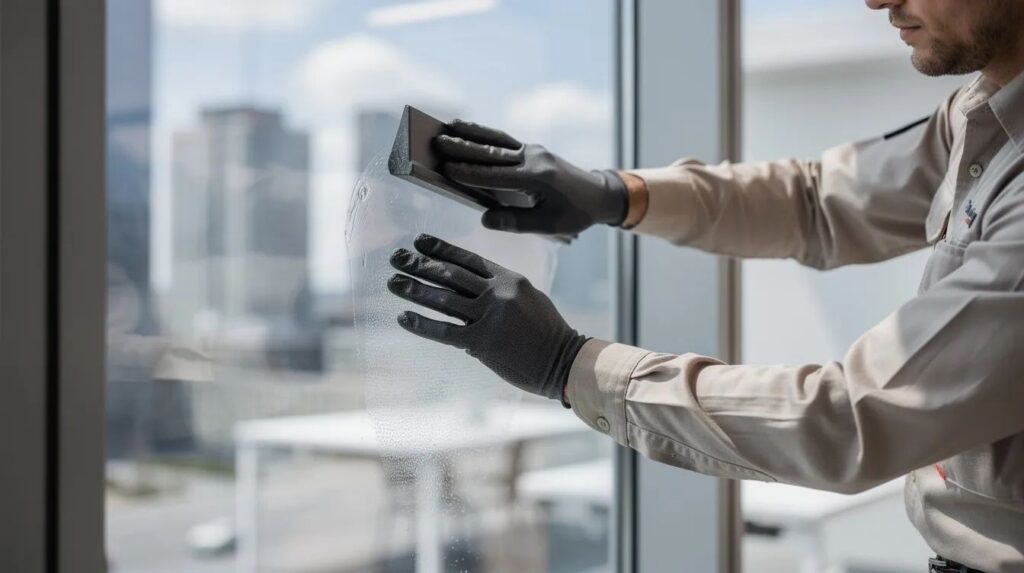
- Installation – Installers perform detailed glass cleaning, wet-apply the film, squeegee out moisture, trim edges precisely, and inspect each pane. Professional crews typically complete 1,000–1,500 square feet per day in standard office settings.
- Curing – Expect a 7–30 day curing period depending on film type and climate. Slight haziness or small water pockets are normal at first and clear as the adhesive dries.
Window Film Depot manages multi-site national roll-outs for corporate portfolios, ensuring consistent glare reduction standards and appearance across every location, similar to other commercial window tinting and office building film installations the company performs nationwide. The process is not complicated-it just requires experience and coordination.
Common Mistakes to Avoid When Choosing Office Window Film for Glare
Glare problems often persist because the wrong film was chosen based only on price or appearance. Here are the mistakes we see most often:
- Going too dark – Picking the darkest film available under the assumption that darker equals better can make office spaces feel cave-like and conflict with lease or façade requirements. A dark room isn’t the goal; balanced, comfortable light is.
- Ignoring building codes – Some buildings, historic districts, and landlord design guidelines restrict exterior reflectivity, color, or style. Check before you specify.
- Using residential-grade or unbranded films – These products may discolor, bubble, or fail prematurely on large commercial windows, voiding any warranty and creating an expensive redo.
- DIY installation – Visible seams on curtainwall glass, contamination trapped under film, and voided manufacturer warranties make this a false economy in any professional building.
- Treating only exterior glass – An affordable and often-overlooked upgrade is coordinating solar control film on exterior windows with decorative privacy film on interior walls and partitions, so glare, branding, and more privacy are all addressed in one project.
FAQs About Window Film for Office Glare
These FAQs address the most common questions facility managers, architects, and office tenants ask Window Film Depot about glare reduction films.
How much can window film actually reduce office glare on screens?
Depending on the film and glass combination, expect anywhere from 25% to over 90% glare reduction. On a west-facing façade with 3M Prestige PR50 installed, employees typically see a dramatic difference in how easily they can read computer screens and monitors without squinting or repositioning. Results depend on window orientation, surrounding buildings, and interior lighting-a quick on-site assessment sets realistic expectations. The goal isn’t blackout; it’s balanced, comfortable daylight across the whole workday.
Will office window film make our space feel too dark?
Not with the right product. Window Film Depot often uses films in the 30–50% visible light transmission range for open offices, which employees perceive as softer, more pleasant light rather than darkness. This isn’t the tinted-car look. Sample panes and mock-ups on a few windows can help decision-makers see the visual effect and sense the difference before committing to a full installation.
Does glare-reducing window film also help with heat and energy costs?
Yes. Most glare-control films are also solar control films that reject a significant portion of solar heat, easing the burden on HVAC systems. This translates into lower cooling costs, more stable temperatures at perimeter desks, and less need for space heaters or extra fans. Some utilities and green building programs recognize commercial window film as an energy-efficiency upgrade, which can enhance the business case.
How long does commercial window film last in an office environment?
Quality window films last for years with minimal maintenance-typically 10–15 years or more when properly installed on commercial office windows. Many 3M films installed by Window Film Depot carry manufacturer-backed warranties covering peeling, bubbling, and discoloration. Longevity depends on climate, glass type, and whether the film is interior- or exterior-applied.
Is there a lot of downtime or disruption during installation?
Most office window film projects are completed with minimal disruption. Installers typically need just a few feet of clearance from the glass, protect nearby equipment, and restore the space the same day. Window Film Depot’s national team is accustomed to working in sensitive environments-call centers, trading floors, hospitals, and government offices with strict security and access rules.
What information should we have ready before requesting a quote?
Have these details ready: building location and orientation, approximate square footage or number of windows, current glare or hot-spot complaints, and any façade or design restrictions. Photos or floor plans allow Window Film Depot to provide a more accurate preliminary recommendation. On-site surveys are typically needed for final pricing and film selection, especially for multi-story or multi-building projects.
Why Choose Window Film Depot for Office Glare Solutions
Window Film Depot is a family-owned commercial window film contractor founded in 1992 in Marietta, Georgia, now delivering turnkey installation and project management to businesses nationwide. With over three decades of experience across offices, retail, education, and government facilities, the company brings a depth of expertise that generalist contractors simply can’t match.
The team specializes in 3M solar control films, security glazing, decorative window film, and architectural finishes-allowing integrated solutions for glare, privacy, branding, and building safety in one project. For companies managing multiple locations, Window Film Depot handles complex multi-site roll-outs with consistent specifications, appearance, and performance across every property. The company also supplies a broad catalog of window glass film products and brands wholesale to glass and glazing partners across North America, which means access to a broad catalog and competitive price points backed by manufacturer-trained installers.
Next Steps: Get a Glare Assessment for Your Office Windows
Office window film is a fast, non-invasive way to reduce glare, improve comfort, and support energy efficiency without replacing a single pane of glass. Rather than guessing at films based on samples alone, schedule a professional glare and solar control assessment with Window Film Depot.
Share a floor plan or photos of your problem areas for a tailored recommendation. Whether you’re dealing with one bright conference room or a 50-building national portfolio, Window Film Depot has the experience, products, and project management ability to deliver results that your employees will notice from day one. Contact the team by phone or through the website to get started.