Table of Contents:
Introduction to Commercial Window Tinting
Commercial window tinting services involve the professional installation of specialized films onto existing glass surfaces in business properties—transforming standard windows into high-performance barriers against heat, UV radiation, and security threats.
This guide covers commercial window film applications across office buildings, retail spaces, warehouses, hospitals, schools, and mixed-use commercial properties. Business owners, facility managers, and commercial property developers will find actionable information for evaluating, selecting, and implementing window film solutions that align with operational goals and budget constraints.
Direct answer: Commercial window tinting reduces energy costs by 15-30% while simultaneously improving workplace comfort, security, and professional aesthetics—with most installations achieving full ROI within 2-5 years.
By the end of this guide, you will understand:
- How different commercial window film types address specific building needs
- Quantifiable energy savings and return on investment calculations
- Security and privacy enhancement options for sensitive business operations
- Professional installation requirements and timeline expectations
- How to select qualified service providers and avoid common problems
Understanding Commercial Window Film Types
Selecting the right window film requires matching technical specifications to your building’s characteristics and business objectives. Each film category serves distinct commercial applications, and understanding their capabilities helps you invest in solutions that deliver measurable returns.
Film performance is measured through several key metrics: Visible Light Transmittance (VLT) indicates how much natural light passes through, Total Solar Energy Rejected (TSER) measures heat-blocking ability, and UV rejection percentages show protection against harmful UV rays that cause fading and health concerns.
Solar Control Films
Solar control films function as thermal barriers, blocking heat from solar rays while maintaining visibility through your windows. These films target infrared radiation—the primary source of solar heat gain—and can reject 40-80% of total solar energy depending on the technology used.
Three main technologies dominate the market. Dyed films offer the lowest cost but moderate heat rejection (25-40% TSER) with potential color fading over time. Metalized films provide stronger heat rejection (40-60% TSER) but may interfere with cell signals and WiFi. Ceramic and nano-ceramic films represent the premium tier, delivering 45-65% TSER without signal interference and maintaining a neutral appearance, especially when sourced from leading 3M window film installers with access to the latest product lines.
For commercial buildings with extensive glazing, spectrally selective films target specific wavelengths of the solar spectrum, rejecting up to 80% of solar energy while preserving high visible light transmission—ideal for retail environments and showrooms where natural light and product visibility matter.
Security and Safety Films
Security window film transforms standard glass into a protective barrier by holding shards together when windows break. Film thickness ranges from 4 mil for basic safety compliance to 14 mil or more for forced entry and blast protection, and understanding the difference between shatterproof and security window films helps ensure you select the correct protective solution for your risk profile.
These films serve critical functions in banks, schools, government facilities, and retail locations vulnerable to smash-and-grab theft. Properly installed security film with structural edge attachment can delay forced entry by 60-90 seconds—enough time for alarm response systems to activate. Beyond break-in protection, security film also guards against storm damage, accidental impact, and earthquake hazards, especially when part of broader window protection film solutions to reinforce glass against severe threats.
Many security films maintain UV rejection above 99% and can be combined with solar control properties, allowing commercial properties to address multiple needs with a single installation. This dual functionality makes security film particularly valuable for glass doors and large storefront windows.
Decorative and Privacy Films
Decorative window film creates visual barriers for conference rooms, executive offices, and customer-facing areas without sacrificing natural light. Options range from frosted and etched appearances to custom graphics, logos, and gradient patterns that reinforce brand identity, including multiple types of decorative film for glass suitable for both interior and exterior applications.
Privacy films satisfy regulatory requirements in healthcare settings (HIPAA compliance), legal offices, and financial institutions where visual separation protects sensitive information. Additionally, decorative films can meet glass manifestation requirements—making large glass surfaces visible to prevent accidents while maintaining aesthetics.
These films typically provide 95-99% UV protection and can incorporate solar control properties when specified. The versatility of decorative film makes it valuable for creating distinct zones within open office environments and enhancing the professional appearance of building facades.
Benefits and Business Applications
Commercial window tinting delivers measurable returns across three primary areas: operational cost reduction, workforce productivity, and facility security. Understanding these benefits helps justify investment decisions and set realistic expectations for outcomes, particularly when planning a comprehensive commercial window tinting and office film installation strategy across multiple properties.
Energy Efficiency and Cost Savings
Window film installation directly reduces energy bills by decreasing solar heat gain during cooling seasons and improving thermal retention during heating seasons. Research demonstrates that commercial window tinting reduces cooling energy consumption by 15-30%, with advanced spectrally selective films achieving 25-35% reductions in regions with intense solar exposure.
A GSA study found that low-emissivity film applied to single-pane glass produced average perimeter HVAC energy savings of 29% across seven climate zones—establishing window film as one of the most cost-effective building envelope improvements available.
For mid-size commercial buildings (10,000-30,000 square feet), these percentage reductions translate to annual savings of $5,000-$15,000 depending on local energy costs and building characteristics. ROI timeframes typically fall within 2-5 years, with most installations achieving payback in 3-4 years.

Additional financial benefits include extended HVAC equipment lifespan from reduced system strain, lower maintenance costs, and eligibility for utility rebates or tax incentives. Section 179D deductions currently offer up to $5.81 per square foot for qualifying energy efficiency improvements, significantly accelerating payback periods.
Employee Comfort and Productivity
Glare reduction directly improves working conditions for employees using computers and attending meetings near windows. By rejecting infrared radiation, solar control films eliminate hot spots and temperature gradients that cause discomfort and distraction, reducing eye strain and creating more consistent indoor environments.
Protection from harmful UV rays extends beyond employee comfort to preserve furniture, carpets, artwork, and product displays from fading—reducing replacement costs and maintaining professional appearance. Commercial buildings with large glazed exteriors often experience 15% or greater reductions in occupant complaints related to overheating and glare following film installation.
Window film allows businesses to maximize natural daylight while controlling its negative effects. This balance supports workplace satisfaction and reduces reliance on artificial lighting and mechanical window shades, creating a more pleasant environment that supports focus and productivity.
Security and Privacy Enhancement
Security film provides a practical deterrent against forced entry while ensuring safety in emergency situations. When glass breaks, the film holds fragments together, preventing shattering that could cause injury or allow rapid access to valuables.
Privacy films create visual barriers for sensitive operations without the maintenance requirements of blinds or the cost of structural modifications. For businesses with customer-facing locations, privacy film balances the need for discretion with the desire to maintain an inviting appearance.
Professional aesthetics matter for commercial properties competing for tenants or customers. Decorative films enable consistent branding across multiple windows while reflective films can create a modern, unified facade appearance. These improvements contribute to perceived property value and can positively influence leasing rates.
Installation Process and Professional Services
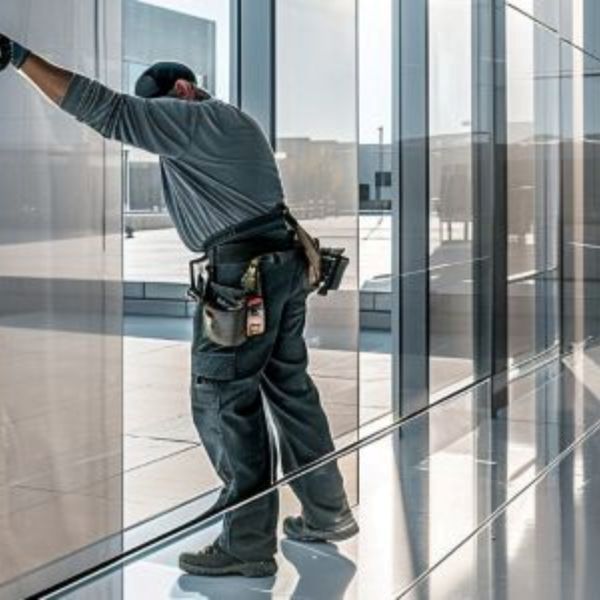
Professional installation ensures window film performs as specified and maintains warranty coverage. The process involves assessment, installation, and quality verification phases that minimize business disruption while maximizing long-term results.
Pre-Installation Assessment
Qualified installers begin with a comprehensive building evaluation covering window measurements, orientation analysis (south- and west-facing windows receive the most solar exposure), existing glass specifications (single-pane, double-pane, low-e coatings), frame conditions, and seal integrity.
Energy audits establish baseline consumption data and enable accurate savings projections using NFRC ratings or simulation software. This assessment informs film selection and helps prioritize installation areas for maximum ROI.
Compliance review addresses local building codes, historical preservation requirements, reflectivity restrictions, fire safety standards, and insurance specifications. Permit requirements vary by location and building type—certified installers familiar with local regulations prevent costly compliance failures.
Professional Installation Timeline
The installation process follows established steps: surface cleaning and preparation, precision cutting, adhesive application with squeegee smoothing, edge sealing where required, trimming, and curing time followed by quality inspection.
Timeline varies by project scope. Small storefronts (hundreds of square feet) typically complete in hours, while mid-size office buildings (tens of thousands of square feet) may require phased installation over days or weeks. Many installers work outside business hours to minimize operational disruption.
| Building Size | Typical Timeline | Disruption Level |
|---|---|---|
| Small retail (<1,000 sq ft) | 4-8 hours | Minimal |
| Mid-size office (5,000-20,000 sq ft) | 2-5 days | Moderate (phased) |
| Large commercial (50,000+ sq ft) | 1-4 weeks | Managed (sectional) |
| Post-installation inspection verifies adhesion quality, optical clarity, absence of bubbles or wrinkles, and proper edge sealing. Documentation of warranty conditions ensures coverage remains valid. |
Service Provider Selection Criteria
Selecting qualified installers significantly impacts long-term performance and warranty protection. Evaluate providers against these criteria:
| Factor | What to Look For |
|---|---|
| Experience | Commercial-specific portfolio, not primarily automotive or residential |
| Certifications | Manufacturer authorization (3M, LLumar, Vista, Madico) |
| Code Knowledge | Familiarity with local regulations and permit processes |
| Warranty Terms | Written guarantees on appearance, adhesion, and durability |
| Pricing Transparency | Per-square-foot quotes including prep, materials, and labor |
| Standard solar control film installation typically costs $7-$12 per square foot, while premium spectrally selective or thicker security films range from $15-$25+ per square foot installed. Request references from comparable commercial projects and verify insurance coverage before signing contracts. |
Common Challenges and Solutions
Understanding potential obstacles helps businesses prepare for successful installation and avoid costly mistakes. Most challenges have established solutions when addressed proactively.
Building Code Compliance Issues
Local zoning ordinances, historical preservation districts, and energy codes may restrict external reflectivity, film colors, or appearance characteristics. Some jurisdictions require permits for commercial window modifications.
Solution: Work with certified installers who maintain relationships with local building departments and understand applicable codes. Submit specifications for pre-approval in historic districts. Choose spectrally neutral films when reflectivity limits apply. Request written compliance documentation before installation begins.
Window Compatibility Problems
Double-pane and insulated glass units respond differently to film application than single-pane windows. Adding film changes thermal stress patterns, potentially causing seal failure or glass breakage—particularly with highly reflective films that create uneven heat distribution.
Solution: Professional assessment identifies compatibility issues before installation. For existing low-e coated or tinted glass, film selection must account for existing properties to avoid interference or warranty voidance. Interior-side application and spectrally selective films minimize thermal stress risks. Old or damaged windows may require repair or replacement before film installation.
Disruption to Business Operations
Film installation requires access to window areas and temporary workspace restrictions. Large projects spanning multiple floors or areas can interfere with daily operations if poorly scheduled.
Solution: Phase installation by zone to maintain operational continuity. Schedule work during off-hours, weekends, or slower business periods. Coordinate with building management and tenant communications. For critical spaces like hospital wards or research labs, develop detailed access protocols that protect sensitive operations while allowing installation to proceed.
Conclusion and Next Steps
Commercial window tinting services deliver quantifiable returns through energy savings of 15-30%, enhanced workplace comfort, and strengthened security—with most installations achieving full ROI within 2-5 years. The technology has matured to offer solutions for virtually every commercial application, from solar control and safety to privacy and branding.
Immediate action steps:
- Schedule a building assessment with a certified commercial installer to evaluate window conditions and identify priority areas
- Request a free quote that includes energy savings projections based on your building’s specifications and location
- Verify installer credentials, manufacturer certifications, and warranty terms before committing
- Review local code requirements and confirm permit needs with your provider
Need More Info?
The Window Film Depot team is happy to help.
Related topics worth exploring include ongoing maintenance requirements (typically minimal—non-abrasive cleaning similar to regular glass care), warranty service provisions for long-term protection, and how window film complements broader building envelope upgrades in energy efficiency planning.
Frequently Asked Questions
How much can commercial window tinting reduce energy costs?
Commercial window tinting typically reduces cooling energy costs by 15-30%, with high-performance spectrally selective or ceramic films achieving reductions of 25-35% in high-solar-exposure regions. A GSA study documented 29% average HVAC energy savings when low-e film was applied to single-pane glass across seven climate zones.
What is the typical ROI timeframe for commercial window film installation?
Most commercial window film installations achieve full payback within 2-5 years, with the majority clustering around 3-4 years. ROI depends on local energy costs, building orientation, glazing area, and available rebates or tax incentives. Section 179D deductions can significantly accelerate payback for qualifying installations.
Do commercial window films require special permits or approvals?
Requirements vary by location. Many jurisdictions require permits for commercial modifications, and historical districts may impose appearance restrictions. Safety glazing codes, fire ratings, and insurance requirements may specify particular film standards. Always verify local requirements through your installer or building department before installation.
How long does commercial window tinting installation take?
Timeline depends on project scale. Small storefronts complete in hours, mid-size office buildings require 2-5 days with phased scheduling, and large commercial buildings may need 1-4 weeks. Professional installers often work outside business hours to minimize disruption to operations.
What maintenance is required for commercial window films?
Window films require minimal maintenance—clean with non-abrasive solutions similar to regular glass cleaning. Avoid sharp tools near film edges. Inspect periodically for edge lifting or delamination. Premium films carry warranties of 10-20 years and expected lifespans of 15-20+ years; lower-cost films may last 7-10 years.
Can window films be applied to all types of commercial windows?
Most commercial windows accept film installation, but compatibility varies. Single-pane glass offers the widest compatibility. Double-pane, low-e coated, and tinted glass require careful film selection to prevent thermal stress or seal failure. Curved glass, frameless installations, and specialty glazing need professional assessment. Not all combinations are advisable.
What warranties are available for commercial window tinting services?
Manufacturer warranties typically range from 5-10 years for standard films to 10-15 years for premium ceramic and spectrally selective products. Some high-end films carry lifetime warranties. Warranty coverage addresses appearance, adhesion, optical clarity, and durability. Proper installation and maintenance are required to maintain warranty validity.
How do I choose between different film types for my business?
Selection depends on primary goals: solar control films prioritize energy savings and comfort; security films focus on protection against break-ins and impacts; decorative films address privacy and branding. Consider your building’s climate exposure, existing glass type, budget constraints, and regulatory limitations. Performance metrics to compare include SHGC, TSER, VLT, film thickness, and warranty coverage. A professional consultation helps match specifications to your specific needs.