Table of Contents:
- Introduction: What Is Commercial Glass Film and Why It Matters in 2026
- Key Benefits of Commercial Glass Film for Your Building
- Types of Commercial Window Film and How to Choose the Right One
- How Commercial Window Film Projects Work with Window Film Depot
- FAQs About Commercial Glass Film
- Why Choose Window Film Depot for Commercial Window Tinting
- Next Steps: Talk to a Commercial Window Film Expert
Introduction: What Is Commercial Glass Film and Why It Matters in 2026
Commercial glass film is a thin, engineered laminate – typically polyester-based with ceramic, metal, or nanotechnology layers – applied directly to existing windows and glass doors on offices, schools, retail storefronts, hospitals, and government buildings. It does not replace the glass. It upgrades its performance in place.
In 2026, facility managers and building owners face a converging set of pressures that make this retrofit technology difficult to ignore. Energy costs continue to climb across the U.S. Stricter building performance standards in major cities – New York’s Local Law 97, Boston’s BERDO, updated ASHRAE 90.1-2025 requirements – are imposing carbon caps and fenestration performance thresholds on existing stock. Meanwhile, security concerns around smash-and-grab theft, active threats to schools, and severe weather events are prompting upgrades to glazing assemblies that were never designed for those risks.
Commercial window tinting is a fast, non-disruptive alternative to full glass replacement. Most films are installed from the interior with minimal downtime. The outcomes are tangible: energy savings often in the range of 10–20%, HVAC cost reduction, improved occupant comfort, added security and anti-graffiti protection, and updated aesthetics – all without tearing out a single pane. Commercial glass films can improve building performance, security, and aesthetics without replacing glass, and they are typically less expensive and less disruptive than window replacement.
Window Film Depot is a family-owned, nationally recognized 3M window film dealer and installer that has been operating since 1992. In this guide, you will learn which commercial window films are available, how they perform, what a typical project looks like, and how to choose the right partner for your building or portfolio.
Key Benefits of Commercial Glass Film for Your Building
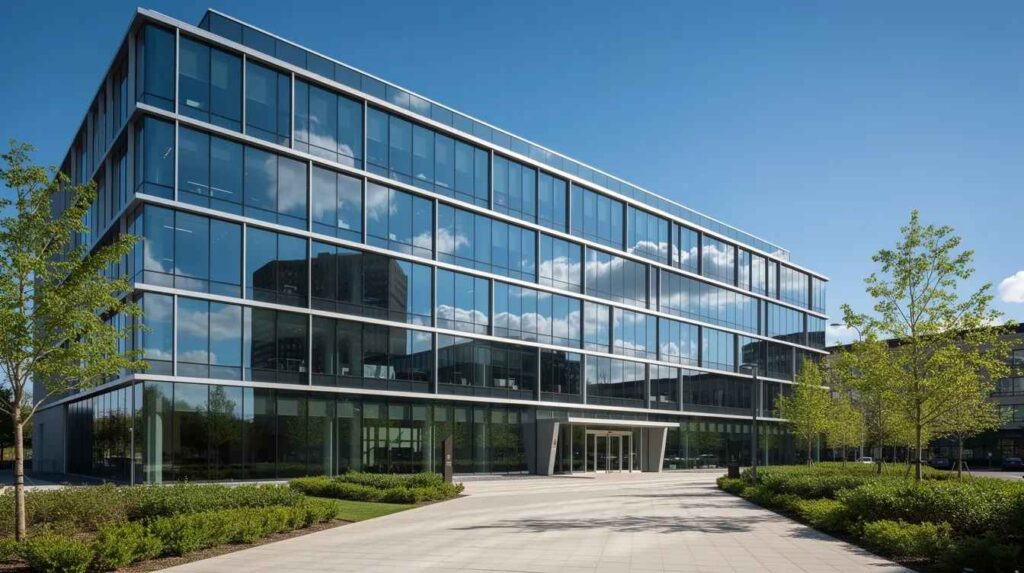
A single commercial window film upgrade can address performance, security, and design goals simultaneously – whether you are improving one commercial building or rolling out a standard specification across a national portfolio. This is why many property teams turn to commercial window tinting solutions that are engineered specifically for business applications. Here is what that looks like in practice.
Energy Savings and Occupant Comfort
Solar control films reduce heat, glare, and UV rays to enhance energy efficiency and comfort inside commercial spaces. Sun control films reduce heat and glare in commercial spaces by intercepting solar radiation before it reaches the interior.
The numbers are compelling:
- 3M Window Film rejects up to 79% of solar heat coming through exposed glass, easing the load on HVAC systems during peak cooling months.
- Window tinting can save about one ton of air conditioning capacity per 100 square feet of treated glass.
- Commercial glass film can lower energy costs by reducing solar heat gain – the fraction of solar energy that passes through windows and becomes a cooling burden.
- Installing solar control films can significantly reduce HVAC load in commercial buildings, with many properties seeing 10–20% cooling cost reductions.
Energy-saving window film can yield significant savings for buildings with large glass facades, particularly in Sun Belt cities like Atlanta, Phoenix, or Dallas where peak cooling demand drives utility bills. Payback periods typically fall in the 3–7 year range, and they accelerate further when utility rebates are factored in. Some projects have achieved payback in under two years.
Beyond the balance sheet, films lower glare on computer screens and reduce hotspots near perimeter zones. Window films improve occupant comfort in commercial spaces, which translates directly into tenant satisfaction, lease retention, and productivity for owner-occupied properties.
UV and Asset Protection
Most modern window films block up to 99% of UV rays, slowing the fading and degradation of flooring, merchandise, artwork, furnishings, and interior finishes. As many facilities discover, standard double-glazed windows often fall short on UV protection, leaving interiors exposed to damaging UVA unless high-performance films are added. This matters for retail stores that need clear views of displayed product, museums and galleries with irreplaceable collections, and corporate lobbies with high-end finishes that would be costly to replace.
The protection happens passively, day after day, without changing how natural light looks inside the space.
Safety and Security
Safety films prevent shattering and damage from impact. When glass breaks – from a break-in attempt, a storm, a blast, or an accident – safety and security films hold the fragments together in the frame rather than letting shards scatter across occupied areas. It is important to understand the difference between shatterproof window film and true security window films when you are evaluating options.
Window films can thwart vandalism and break-ins. Security films protect against smash-and-grab theft by making it dramatically harder and slower to penetrate the glazing. 3M window films can reduce forced entry risks, buying critical response time for law enforcement or building security teams. For school security upgrades, the ability to delay forced entry through exterior glass doors and sidelights has become a standard design consideration, and many campuses evaluate a range of window protection film solutions to reinforce glass against different threat types.

Privacy and Branding
Frosted window films provide privacy while allowing natural light to enter, making them a practical solution for conference rooms, medical clinics, bank offices, and legal firms where confidentiality matters. There are many types of decorative film for interior and exterior glass that can achieve specific branding and privacy outcomes.
Decorative window films enhance building aesthetics without extra maintenance, and decorative and privacy films allow light to pass through while reducing visibility from public corridors or exterior walkways. Options include frosted bands with cut logos, full wall graphics, branded films for national retail roll-outs, and gradient patterns that create visual hierarchy on interior glass walls and glass doors. Decorative films enhance aesthetics without additional hardware – no blinds, no curtain tracks, no ongoing maintenance beyond occasional cleaning.
Code, ESG, and Sustainability Goals
Window film can support ENERGY STAR benchmarking, ESG reporting, and compliance with city energy ordinances by improving the effective performance of existing glass. Because it is a retrofit product rather than a replacement, it avoids the embodied carbon associated with manufacturing, transporting, and installing entirely new glazing assemblies.
Many jurisdictions now offer grants and incentive programs specifically for envelope improvements. Boston’s Equitable Emissions Investment Fund, for example, provides up to $200,000 per project for qualifying buildings under BERDO.
Types of Commercial Window Film and How to Choose the Right One
The term commercial glass film covers several distinct product categories, each engineered for a specific problem – heat, safety, graffiti, privacy, or aesthetics. Commercial glass films include solar control, safety and security, decorative and privacy, and low-E insulating films. Here is how they differ.
Solar Control and Insulating Films
3M solar control films reduce heat gain and glare while preserving views. Spectrally selective and low-reflective options like the 3M Prestige Series Sun Control Window Films for commercial buildings maintain high visible light transmittance (often 60–70% or more) while rejecting a significant fraction of infrared energy, making them well-suited for Class A offices and occupied buildings where appearance and daylight matter.
For buildings in heating-dominated climates, insulating films like 3M Thinsulate Climate Control improve winter performance by reflecting interior heat back into the space and lowering the effective U-value of single- and double-pane glass. Low-E films reduce radiant heat transfer for improved insulation and comfort. 3M Window Film can reduce heat loss by up to 30%, and energy-saving films can reduce heat loss by up to 30% – a meaningful impact on heating costs for older buildings with original glazing. 3M Sun Control Window Films, Ceramic Series also contribute to energy efficiency by rejecting infrared heat while maintaining clarity. Window films can also reduce heat loss by up to 30% in dual-pane assemblies where full replacement is not feasible.
Safety, Security, and Anti-Intrusion Films
Multi-layer polyester safety films, combined with structural silicone or mechanical attachment systems, help the glass remain in the frame during impact. Safety films prevent shattering and damage from impacts – whether from a forced entry attempt, a blast event, or flying debris during a hurricane.
Common use cases include:
- Schools and university buildings
- Federal facilities and courthouses
- Banks and data centers
- Street-level retail vulnerable to smash-and-grab theft
- Airports and transit facilities
Anti-Graffiti and Surface Protection Films
Anti-graffiti films provide a replaceable protective layer against vandalism on glass surfaces, mirrors, and metal panels in transit hubs, elevators, or storefronts. When the sacrificial layer is scratched, etched, or tagged with paint, it is peeled off and replaced – saving the cost and disruption of replacing the underlying substrate. This approach to managing vandalism is far less expensive than glass replacement and keeps the property looking clean.
Decorative, Privacy, and Branded Films
Decorative films mimic etched glass to enhance aesthetic appeal at lower costs than actual etching or custom glazing. Privacy films obscure views while maintaining outdoor visibility from the interior, supporting HIPAA-related privacy expectations in healthcare settings and confidentiality requirements in financial offices.
Custom-printed commercial graphics can transform lobbies, retail fronts, and branded environments. These products create a polished, professional look without structural modification.
How to Select the Right Film
Selecting the right film begins with identifying the main goal, such as energy savings or privacy. The best choice of window film depends on building climate, window type, and goals for the space.
Window Film Depot typically starts with an on-site or virtual assessment covering the specific 3M window film products and installation options that align with your goals, along with:
- Orientation of glass and sun exposure patterns
- Existing glazing type (annealed, tempered, insulated, low-E coated)
- Local climate and seasonal energy profile
- Client goals – whether the priority is reducing energy costs, improving security, updating appearance, or some combination
Professional installation ensures optimal performance of window films, and working with an experienced window film dealer that can recommend specific 3M products and provide manufacturer-backed warranties is far more reliable than a one-size-fits-all approach.
How Commercial Window Film Projects Work with Window Film Depot
Window Film Depot manages projects from initial assessment through final punch list – for single sites and national portfolios alike. As a leading 3M window film installation company for commercial projects, the team follows a proven method. Here is the typical process.
Step 1: Assessment and Consultation
Facility managers, architects, or property owners share building details, energy concerns, and security priorities. Window Film Depot conducts site surveys that document glass types, elevations, square footage, and access conditions. For energy-focused projects, thermal imaging or utility data analysis may be included to establish a baseline and determine whether solutions like 3M Sun Control Window Film Prestige Exterior Series for commercial buildings are a good fit for the exterior glazing.
Step 2: Proposal, Modeling, and Incentives
Energy modeling tools estimate potential kWh and therm savings when specifying 3M sun control or insulating films. The proposal includes projected cost savings, environmental impact, and a timeline, drawing on performance data from commercial window film and tinting projects installed by Window Film Depot.
Window Film Depot also helps clients pursue utility rebates. Prescriptive incentives in many regions fall in the $1–$2 per square foot range, and custom incentive programs may offset 40–50% of total project cost – meaningfully accelerating ROI.
Step 3: Professional Installation
Most commercial window films are applied to interior surfaces and can last 10–20 years with proper care. Installation logistics are designed to minimize disruption:
- Technicians work from the interior, one zone at a time
- Furnishings and flooring are protected with drop cloths
- Work is scheduled during off-hours or weekends for occupied offices, hospitals, and schools
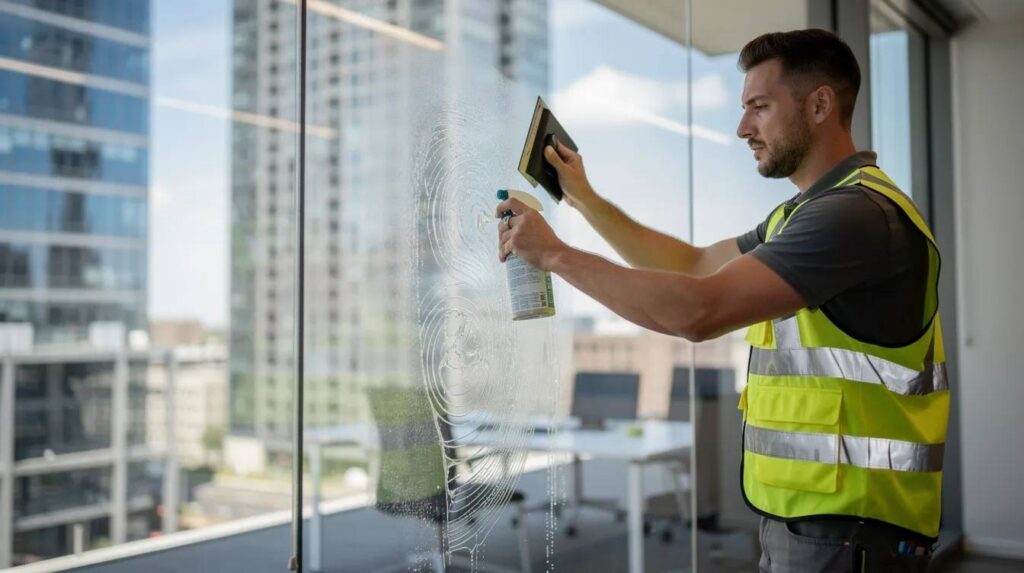
- Trained installers clean the glass, apply film with slip solutions, and squeegee out moisture
- Most windows are usable the same day, with adhesives fully curing over several days
Step 4: Quality Assurance and Warranties
Post-install inspections address any light gaps or edge issues. Window Film Depot delivers manufacturer warranty documentation covering peel, crack, discoloration, and adhesive failure – typically for 10–15 years or more depending on the film and glass configuration, backed by the company’s three decades of experience as a family-owned window film specialist.
Multi-Site and National Roll-Outs
For banks, retailers, and public agencies operating across multiple states, Window Film Depot coordinates standardized specifications, logistics, and timelines to deliver consistent results at every location. Their nationwide window film service locations make it possible to support roll-outs across all major markets. Projects range from a few days for a small office to several weeks for a high-rise or campus. Primary budget drivers include film type, access complexity, and total square footage.
FAQs About Commercial Glass Film
These frequently asked questions address the most common concerns facility managers, architects, and building owners raise before moving forward with a commercial window film project, whether they are exploring office window film installation in Columbus, Ohio, or similar solutions in other markets.
How much energy can commercial window film really save?
Actual energy savings depend on climate, glass orientation, existing glazing performance, and HVAC system design. That said, many commercial buildings see 10–20% cooling-cost reductions after installing solar control film. The mechanism is straightforward: film lowers the Solar Heat Gain Coefficient of the glazing assembly, reducing the fraction of solar energy that enters the building as heat. Window films can reject up to 79% of solar heat on sun-exposed facades, which translates into measurably lower utility bills and reduced peak demand charges.
Will commercial glass film make my windows look dark or mirrored?
Older tints were often dark and highly reflective. Modern 3M commercial window films include spectrally selective options that maintain a neutral, low-reflection appearance while still blocking significant heat and UV. Many spectrally selective products deliver visible light transmittance above 60–70%, so the look from both inside and outside is subtle and professional. If appearance is a concern, Window Film Depot can arrange a sample installation on a test bay or a single elevation before full deployment so you can evaluate the look in real lighting conditions, just as they do on commercial window film projects in Washington, DC and other cities.
How long does commercial window film last on a building?
Interior-applied solar control films typically last 10–15 years or more. Security and decorative films are also designed for long-term durability when properly maintained. Warranties vary by film type, glass configuration, and environmental exposure. Window Film Depot specifies products with appropriate manufacturer coverage for the specific project conditions, and warranty documentation is provided at project close-out.
Can window film be installed on any type of commercial glass?
Most annealed, tempered, and insulated glass units can receive film. However, glass type and any existing coatings – particularly low-E coatings – influence film selection. Applying the wrong film to coated or insulated glass can cause thermal stress or seal failure. This is exactly why having a knowledgeable window film dealer survey the glass and choose compatible products tested for those configurations is essential before any film is installed.
Is commercial window tinting disruptive to building operations?
Installations are designed to be low-disruption. Installers work from the interior, one zone at a time, and can schedule work outside peak business hours if needed. Work areas are protected with drop cloths, and furniture moves are coordinated with building staff to keep tenants productive and safe. A single storefront or small office might be completed in a day, while larger projects are phased across floors or zones to avoid operational impact.
How much does commercial window film cost per square foot?
Cost varies by film category and project scope:
| Film Category | Typical Installed Cost |
|---|---|
| Basic solar control film | $4–$6 per sq ft |
| Spectrally selective film | $9–$12 per sq ft |
| Safety and security film (with attachment) | Varies by system |
| Access conditions, building height, and total square footage also affect pricing. Total project ROI often improves once utility incentives are factored in. The best way to get an accurate number is to request a site-specific quote from Window Film Depot. |
Why Choose Window Film Depot for Commercial Window Tinting
Window Film Depot is a nationally recognized 3M window film dealer and installer focused exclusively on commercial, institutional, and government projects, with regional teams delivering window film installation in Dallas–Fort Worth and throughout Texas. Here is what sets the company apart.
Experience and scale. Family-owned since 1992, Window Film Depot has delivered thousands of commercial projects across the United States – offices, universities, hospitals, retail chains, and federal facilities. Window Film Depot has performed more national installations than any other company in the industry, earning multiple 3M National Dealer of the Year awards that reflect proven performance and deep manufacturer trust.
Technical expertise. In-house project management, trained installation teams, and comprehensive familiarity with 3M solar control, security glazing, privacy, and decorative products mean clients get informed recommendations rather than guesswork. The team coordinates with architects, glazing contractors, and energy consultants on complex building envelope upgrades.
National reach with local service. Window Film Depot mobilizes rapid deployment teams for multi-site roll-outs while supporting single-building projects with local installers across the country, including window film installation services in Santa Monica, CA and other regional hubs. Their network includes partners like Apex Window Films, which serves Upstate New York, including Rochester and Syracuse, ensuring regional expertise is available wherever your property is located.
Consistent quality. From initial survey through close-out documentation, clients receive clear communication, turnkey service, and products that perform as specified for years after installation.
Next Steps: Talk to a Commercial Window Film Expert
Whether you are managing a single commercial space or coordinating upgrades across a national portfolio, the next step is a conversation about your building’s specific needs.
Contact Window Film Depot to schedule a site survey, share floor plans or glazing schedules, or discuss energy modeling and rebate opportunities for upcoming projects. The team serves commercial buildings nationwide and offers flexible scheduling for occupied facilities – including the ability to meet aggressive construction or retrofit timelines.
Your windows are already there. The right film makes them work harder for your building, your budget, and your tenants. Reach out today to get started.