Table of Contents:
- Introduction: Why Privacy Film for Office Windows Matters in 2026
- What Is Privacy Film for Office Windows? (And When You Should Use It)
- Key Types of Privacy Window Film for Offices
- How to Choose the Right Office Privacy Film (Step-by-Step)
- Benefits of Privacy Film vs Blinds, Curtains, and New Glass
- Installation Process: What to Expect When Window Film Depot Installs Office Privacy Film
- Maintenance, Cleaning, and Longevity of Office Privacy Window Films
- Cost, Budgeting, and ROI for Office Privacy Films
- Common Mistakes to Avoid When Selecting Office Privacy Film
- FAQs About Office Privacy Film and Frosted Window Film
- Why Choose Window Film Depot for Office Privacy Window Films
- Next Steps: Get a Privacy Film Plan for Your Office Windows
Introduction: Why Privacy Film for Office Windows Matters in 2026
Glass-heavy office spaces built or renovated between 2020 and 2026 look stunning from the outside. But once people move in, the complaints start rolling in: conference rooms that feel like fishbowls, employees shielding digital screens from hallway foot traffic, and HR teams handling sensitive conversations behind walls that hide nothing.
Privacy film for office windows is a thin, adhesive overlay applied directly to existing glass that controls who can see what, without sacrificing natural light or requiring expensive glazing replacement. Unlike blinds or curtains, it stays flush to the glass, collects no dust, and requires no daily adjustment. Privacy film enhances privacy and aesthetics in commercial spaces, making it ideal for meetings, HIPAA-sensitive areas, finance offices, and client-facing reception zones.
Window Film Depot, a family-owned 3M-authorized installer based in Marietta, Georgia, has been solving these exact problems for commercial and institutional clients nationwide since 1992. In this guide, we cover every type of privacy film-from frosted window film and reflective options to blackout and cloaking products-along with selection criteria, installation details, maintenance, and realistic cost ranges. Every solution here is retrofit-friendly and typically installed with minimal disruption to daily operations.
What Is Privacy Film for Office Windows? (And When You Should Use It)
Privacy film is a thin polyester-based (PET) sheet with engineered adhesives and coatings that you apply to existing glass to control visibility, light transmission, and aesthetics. There is no need to replace windows or partitions. In the case of premium products like 3M Prestige or Ceramic Series, micro-layered construction rejects infrared and UV energy while keeping views intact and colors true.
The most common office use cases include conference rooms facing corridors, glass-front private offices in open-plan layouts, reception areas visible from the street, and interior partitions between departments. Any glass surface where people need to add privacy without building a wall is a candidate.
It helps to understand the two main categories. Daytime privacy films-tinted and reflective types-rely on the difference in light levels between sides of the glass. They work well when the sun is bright outside, and the interior is dimmer. For 24/7 privacy regardless of lighting conditions, frosted, decorative, or blackout films are the right choice because they physically diffuse or block the view.
Privacy films can also serve a dual purpose. Branded frosted bands on a conference room glass wall, for example, simultaneously provide privacy at seated eye level and wayfinding for people walking the corridor. In a typical 2025–2026 corporate build-out, we regularly see companies move into beautiful glass-walled offices, then realize within weeks that their finance team, legal department, and HR suite all need film retrofits to function properly.
Key Types of Privacy Window Film for Offices
Think of this section as a menu of the main privacy film categories used in office spaces. These can be installed on both interior partitions and exterior windows, depending on the challenge you need to solve.
Dark Tinted Film – Dark tinted film increases daytime privacy without full visibility loss. It reduces glare, cuts some solar heat, and preserves outward views for employees. Privacy effectiveness depends on the light differential between sides-bright outside, dimmer inside means strong privacy; the reverse weakens it.
Reflective Film – Reflective film creates a mirror-like appearance on the outside, giving strong daytime privacy on commercial exteriors. One-way reflective films offer good daytime privacy but lose effectiveness at night when interior lighting is brighter than the exterior. These also deliver significant solar heat rejection and a modern façade look.
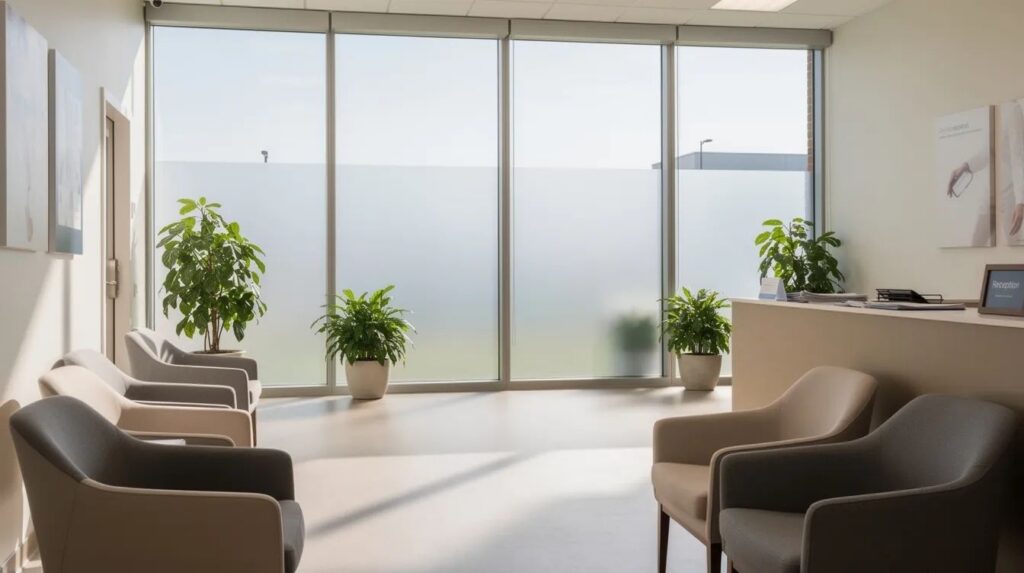
Frosted Film – Frosted film allows light while obscuring views from both sides, making it ideal for conference rooms, open-plan dividers, and glass doors. It diffuses rather than blocks light, keeping the space bright and open. Gradient films offer a modern look with a balance of openness and privacy-clear at the top, frosted at seated eye level.
Blackout Film – Blackout film completely blocks light and visibility through glass. It is the go-to for security-sensitive rooms, server closets, AV suites, and storage areas where nothing should be visible from outside.
Cloaking Film – Cloaking film obscures digital screens from outside views while still allowing people and background elements to remain visible. This is critical in offices where monitors, TVs, or LED walls displayed in meeting rooms face public corridors or exterior windows.
Hybrid and Decorative Films – Decorative films can enhance aesthetics while providing varying levels of privacy. Custom-printed patterns, color gradients, and texture finishes like terrazzo or banded designs combine branding with privacy objectives. Smart films can switch from clear to opaque for flexible privacy options-ideal for executive suites and flex spaces where needs change throughout the day.
How to Choose the Right Office Privacy Film (Step-by-Step)
Choosing the right film depends on privacy needs, aesthetics, and lighting conditions. Here is a practical decision framework for facility managers and architects.
Step 1 – Define the privacy problem. Is it full or partial privacy? Daytime only or 24/7? Interior glass or exterior windows? Consider the sensitivity of information handled in that room-HR interviews require a different solution than a casual huddle space.
Step 2 – Assess natural light needs. Total privacy and maximum daylight rarely coexist. Frosted window film or gradient designs preserve light while blocking sightlines. Blackout is only necessary when you truly need zero visibility.
Step 3 – Consider aesthetics and branding. Patterns, custom graphics, and color palettes can suit corporate brand standards. A law firm and a tech startup will choose very different products, even if both need the same level of privacy.
Step 4 – Evaluate performance add-ons. Many privacy films block up to 99% of UV rays and significantly reduce heat gain. If your glass also causes glare or heat complaints, a dual-purpose solar control and privacy film handles both in one layer.
Step 5 – Account for codes and landlord requirements. Compliance with building codes and safety requirements is important for privacy film, especially in multi-tenant high-rises, historic buildings, hospitals, and schools. Reflectivity limits, fire ratings, and design review boards all come into play.
Step 6 – Work with a professional installer. Window Film Depot provides on-site glass audits, film samples, and mockups so that HR, IT, and design stakeholders can see and approve the result before full installation.
Micro-example: A healthcare office in Atlanta might choose cloaking film for exam rooms where patient records appear on monitors, frosted privacy film for the lobby to keep waiting areas discreet, and a decorative gradient for staff areas to create visual separation without closing off the floor plan.
Benefits of Privacy Film vs Blinds, Curtains, and New Glass
Many companies are replacing or supplementing blinds with privacy window films because the advantages stack up quickly across cost, maintenance, and employee experience.
- Cost: Privacy film typically runs a fraction of the price of replacing glass and installs without construction permits. Basic options range from roughly $7–$12 per square foot installed, while high-performance ceramic or decorative films run $12–$18. Compare that to custom blinds, motorized shades, or full glazing replacement and the savings are significant.
- Space and cleanliness: No bulky hardware. No fabric collecting dust and allergens. Film stays flush to the glass, keeping the room clean and visually open.
- Continuous daylight: Translucent privacy films maintain a bright, open feel that employees expect in modern workplaces. Natural light stays in the space, which supports wellbeing and reduces reliance on overhead lighting.
- Durability: Commercial-grade 3M films last 10–15 years or more on interior glass with proper care. Scratch-resistant top coats protect against everyday contact, and 3M’s commercial window film warranty coverage further protects your investment over the long term.
- Operational benefits: Reduced screen glare, fewer visual distractions in open offices, and improved perceived confidentiality for staff and visitors. Meeting room utilization often goes up after film is installed because people actually trust the room is private.
A glass-walled conference room that used to sit empty because employees refused to hold sensitive discussions in a “fishbowl” can transform into the most-booked room on the floor after a frosted film upgrade.
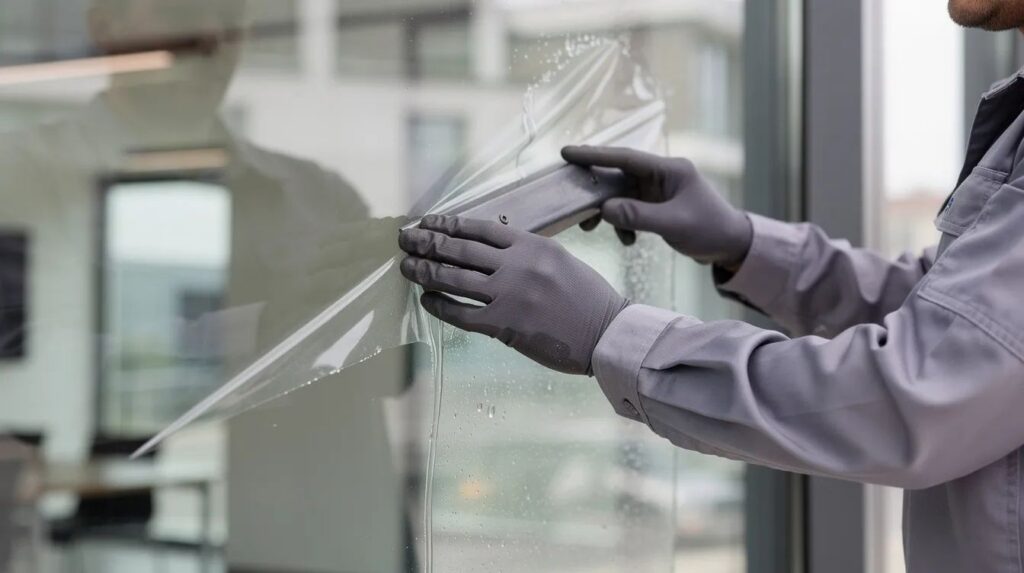
Installation Process: What to Expect When Window Film Depot Installs Office Privacy Film
Professional installation improves the appearance and durability of window films, and the process is faster and less intrusive than most people expect.
Step 1 – Site assessment. A Window Film Depot project manager measures all glass, identifies the right film type for each area, checks access and logistics, and confirms scope with your facilities team or general contractor.
Step 2 – Surface prep. Installers clean every pane, inspect for chips, cracks, or existing coatings, and protect surrounding flooring, furniture, and electronics. Any old film is removed before new material goes on.
Step 3 – Film cutting and application. Film is precision-cut to size, applied using slip solutions and professional squeegees, then trimmed for a clean edge and bubble-free finish. Certified installers work efficiently so that each window takes minutes, not hours.
Step 4 – Curing and aftercare. Most films fully cure within a few days to a few weeks depending on thickness and climate. Mild haze or small water pockets are normal initially and disappear as the adhesive sets.
Window Film Depot manages multi-location roll-outs nationwide, coordinating with corporate facilities teams and property managers across the U.S. In a recent multi-floor university project, installation was phased building by building so that classes and administrative operations continued without interruption.
Maintenance, Cleaning, and Longevity of Office Privacy Window Films
Commercial-grade window films are low-maintenance, but basic care extends their lifespan and keeps the finish looking sharp.
Recommended cleaning: Use soft cloths or squeegees with mild, non-abrasive cleaners. Avoid ammonia-based products on certain films-always check manufacturer guidance for the specific product installed on your glass.
Mistakes to avoid:
- Razor blades or scrapers on the film surface
- Harsh scouring pads or abrasive solvents
- Taping signage, holiday decorations, or notices directly onto the film
Lifespan: Commercial-grade films typically last longer and come with warranties. High-quality 3M privacy and frosted films in normal interior office conditions often perform well for 10–15 years or more. Manufacturer warranties cover issues like peeling, bubbling, and discoloration, while a professional installer like Window Film Depot backs the labor.
Future flexibility: Films can be removed or replaced during remodels without damaging the glass underneath. This matters for tenants on 5–10 year lease cycles who may need to change the design or privacy level of their space over time.
Cost, Budgeting, and ROI for Office Privacy Films
Exact costs depend on film type, square footage, glass condition, and location-but privacy film is consistently one of the most cost-effective retrofit options available for office windows.
Illustrative price ranges (installed, per square foot):
| Film Category | Typical Range |
|---|---|
| Basic frosted or tinted privacy film | $7–$12 |
| Decorative, printed, or gradient films | $10–$15 |
| Ceramic or high-performance solar + privacy | $12–$18 |
| Security or blackout combinations | $15–$25+ |
| What drives cost up or down: |
- Film performance level (3M premium vs. commodity products)
- Project size and glass accessibility (lobby atriums vs. standard partitions)
- Union vs. non-union buildings
- After-hours or weekend scheduling
- Custom graphics or branding elements
ROI in practical terms: Meeting rooms get used more. Employees report fewer distractions and greater comfort. Complaints about glare and heat drop. When paired with solar control or security window films, cooling energy savings and risk reduction alone can pay back the investment within a few years.
Budgeting tips:
- Bundle privacy film with solar or security upgrades for better per-square-foot pricing
- Prioritize high-visibility, front-of-house glass first
- Phase work floor-by-floor to spread cost across budget cycles
For accurate pricing tailored to your building, request a site-specific quote from Window Film Depot.
Common Mistakes to Avoid When Selecting Office Privacy Film
Most problems with office privacy film trace back to poor product selection or DIY installation-not the technology itself.
Mistake 1: Expecting nighttime privacy from reflective or tinted film. Dark tinted film increases daytime privacy without full visibility, but when interior lights are on after dark, the effect reverses. If your office operates evenings, you need frosted or blackout film instead; our guidance on the best window film for nighttime privacy explains why this distinction matters.
Mistake 2: Over-darkening spaces. Covering every pane in blackout film when frosted or patterned options would preserve openness and light. This creates a closed-in feeling that hurts employee morale and drives up artificial lighting costs.
Mistake 3: Ignoring IT and security requirements. If digital screens, confidential paperwork, or protected health information are visible from public areas, advanced privacy window films and cloaking technologies obscure screens from outside view while keeping the room functional. Skipping this step creates compliance exposure.
Mistake 4: Using low-cost, non-commercial films. Cheap products peel, bubble, or yellow within months. In lobbies and client-facing areas, that damage to your brand image costs more than the savings.
Mistake 5: Failing to coordinate with building ownership. In multi-tenant high-rises, landlords and design review boards often have requirements for window treatments. Skipping this step causes rework and wasted budget.
Involve a professional installer early to audit glass, provide samples, and steer you away from these pitfalls. Window Film Depot’s consultative approach starts with understanding your space before recommending any products, backed by deep experience with 3M window film products and installation.
FAQs About Office Privacy Film and Frosted Window Film
These are the questions Window Film Depot hears most often from facility managers, architects, and tenants evaluating day and night privacy window film solutions for office windows.
Does privacy window film work at night?
Daytime reflective and tinted films rely on brighter exterior light to create a one-way mirror effect. At night, when interior lighting is brighter than outdoors, that privacy is reduced or eliminated. For true 24/7 privacy on exterior glass, frosted, decorative, or blackout films are the better options. You can also combine a daytime film with roller shades for full nighttime blackout while still enjoying views during the day.
Will frosted window film make my office too dark?
Quality frosted films diffuse light rather than block it, usually keeping spaces bright while removing direct sightlines. Gradient and banded designs only cover the critical zone-typically seated eye level-leaving the upper glass clear for maximum daylight. Window Film Depot can place sample panels on your glass so decision-makers can gauge light levels before committing to a full installation.
Can privacy film be removed later without damaging the glass?
Yes. Professional-grade window films are designed to be removable by trained installers using proper tools and solutions. Removal is common during tenant improvements, rebranding, or design refreshes. Standard annealed or tempered commercial glass is not harmed when the work is done correctly.
How long does installation take for a typical office?
A few conference rooms can often be completed in a single day. Multi-floor projects may take several days to weeks depending on scope. Window Film Depot frequently works off-hours or in phases to avoid interrupting business operations. Accurate scheduling follows a site walkthrough and confirmed measurements.
Is privacy film compatible with existing solar control or security films?
Stacking films is sometimes possible but must be evaluated by a professional to avoid warranty issues or excessive heat absorption on the glass. In many cases, a single multi-performance film combining privacy, solar control, and safety is the better long-term solution. Let Window Film Depot review any existing films before specifying new layers.
What brands of privacy film does Window Film Depot install?
Window Film Depot focuses on high-performance, proven manufacturers-particularly 3M window films for privacy, solar control, and security. Using leading brands ensures strong warranties, consistent quality, and reliable long-term performance in demanding commercial settings. As a wholesale supplier, Window Film Depot also supports trade partners needing bulk rolls for regional projects.
Why Choose Window Film Depot for Office Privacy Window Films
Window Film Depot is a trusted, family-owned national leader in commercial window films, serving customers from its Marietta, Georgia headquarters since 1992. The company handles everything from single-office upgrades to multi-state portfolio roll-outs with consistent quality.
What sets them apart:
- Deep expertise across privacy, decorative, 3M solar control, security glazing, anti-graffiti, and architectural surface finishes-useful when you want to bundle building upgrades into a single project, supported by a broad portfolio of window glass film products and brands
- Turnkey project management from consultation and product selection through installation and ongoing support for facility teams, architects, and general contractors, leveraging their role as a leading 3M window film installation company
- Proven track record with government agencies, retail chains, schools, healthcare systems, and Fortune-level corporate campuses, including projects requiring complex logistics and security clearances in commercial window tinting and office building film installations
- Consultative approach that starts with understanding your space, not pushing a product-on-site mockups, sample panels, and phased install plans tailored to your operations
When you need expertise you can trust and a range of options that covers every type of office glass, Window Film Depot delivers.
Next Steps: Get a Privacy Film Plan for Your Office Windows
Contact Window Film Depot for a site visit, glass audit, or remote consultation through their nationwide locations network. Here is what happens after you reach out:
- A quick discovery call to understand your privacy, aesthetic, and performance goals
- Review of floor plans, photos, or an on-site walkthrough
- Recommendations for specific privacy film types matched to each area
- An itemized proposal with clear pricing and a phased timeline
Start with the highest-impact areas-boardrooms, HR and finance offices, reception glass, and any windows visible from public corridors. Whether your office is in a major market like Los Angeles with commercial window tinting needs or a smaller city, upgrading to privacy film for office windows is one of the fastest, least disruptive ways to improve comfort, confidentiality, and aesthetics in an existing building.
Offices built or renovated in 2026 and beyond can future-proof their glass with flexible, removable window films that adapt as your space and needs evolve, whether you are in Marietta, GA, Columbus, OH, Washington, DC, or any other market they serve. Reach out to Window Film Depot today and take the first step.