Introduction: Why Window Film for Energy Efficiency Matters in 2026
Modern window films are one of the fastest, least disruptive ways to reduce building energy costs. Professionally installed energy-saving window film can deliver 10–30% HVAC savings on cooling-dominated buildings without the expense and disruption of full window replacement. That matters because untreated glass is the weakest link in any building envelope – it leaks conditioned air, amplifies solar heat gain in summer, allows heat loss in winter, and creates uncomfortable hot spots and cold drafts that drive up utility costs.
Window film improves energy efficiency by blocking solar heat gain before it becomes indoor heat, and the right products also retain warmth during colder months. Independent studies in hot states like Georgia and Florida consistently rank solar control window films among the most cost-effective upgrade options – often outperforming adding insulation or air sealing alone in buildings with large glass areas.
This article covers how window films work, compares the major film type categories, and offers practical guidance on choosing the right window film for your climate, glass, and budget. Window Film Depot – a family-owned, national 3M dealer and installer based in Marietta, GA – has been helping commercial, institutional, and residential clients save energy since 1992.
Table of Contents:
- How Window Films Improve Energy Efficiency and Comfort
- Understanding Film Types: Solar Control, Low-E, Ceramic & More
- Solar Control & Spectrally Selective Films: Cutting Cooling Costs in Sunny Climates
- Low-Emissivity & All-Season Films: Improving Insulation and Year-Round Efficiency
- Choosing the Right Film: Climate, Glass Type, Natural Light, and Building Use
- Energy Savings, ROI, and Real-World Results with Window Film
- Beyond Energy: Natural Light, Glare Reduction, UV Protection, and Comfort
- Professional Installation Process: How Window Film Projects Work with Window Film Depot
- Common Mistakes to Avoid and What to Know Before You Buy Window Film
- Why Choose Window Film Depot for Energy-Efficient Window Films
- FAQs About Window Film for Energy Efficiency
How Window Films Improve Energy Efficiency and Comfort
Windows are the weakest thermal element in virtually every building. Single-pane glass has a U-value around 1.0–1.2 BTU/hr-ft²-°F and a solar heat gain coefficient near 0.80, which means it lets most solar energy straight through. Picture a south-facing office in Atlanta on a July afternoon – interior glass surface temperatures can climb to 120–140°F, forcing HVAC systems to run constantly just to stay cool.
Energy-efficient window films add a thin, high-performance layer to existing windows that:
- Reduces solar heat gain in summer, which can reduce cooling costs by up to 30%
- Slows conductive and radiant heat loss in winter, lowering heating costs near perimeter glass
- Eliminates hot spots and temperature swings across open-plan spaces
Modern 3M sun control films reject 50–78% of total solar energy and block up to 99% of harmful UV rays. Low e window films can improve insulating performance similar to adding an extra pane on certain glazing systems. Because these films block harmful uv rays and infrared energy while still transmitting visible light, occupants enjoy natural light without relying on heavy blinds.
Reduced HVAC load also prolongs the lifespan of heating and cooling systems, and the lower energy consumption helps building operators hit benchmarking targets or earn sustainability certifications like LEED.

Understanding Film Types: Solar Control, Low-E, Ceramic & More
“Window films” is a broad category. The best window films for energy savings vary by construction and coating, and choosing correctly matters far more than simply picking the darkest tint. Here are the main energy-focused categories:
- Solar control films – These films block a significant amount of solar energy and glare to lower cooling costs. Solar control films are designed to reduce heat gain and can block up to 84% of solar energy entering homes. Reflective films provide strong heat rejection by creating a mirrored appearance, though they may not suit every aesthetic.
- Low e films – Low emissivity coatings improve insulation and reflect interior heat back into the room. Low-E films reduce heat loss by reflecting indoor warmth, making them ideal where winter energy bills are high.
- Ceramic films – A non-metallic film type built with nano ceramic particles that block infrared light while preserving clarity. 3M Sun Control Ceramic Series films for commercial buildings resist fading and corrosion over time and won’t interfere with cell or radio signals.
- Spectrally selective films – Advanced multilayer control window films that “tune” which wavelengths pass through, maximizing natural light while minimizing heat. Visible Light Transmission (VLT) indicates how much visible light enters through the film, while Solar Heat Gain Coefficient (SHGC) measures how much solar heat passes through the window.
Window Film Depot primarily specifies 3M solar control and low-E film families – including 3M Prestige, 3M Ceramic, and 3M All Season – because they offer predictable performance data and long warranties.
Solar Control & Spectrally Selective Films: Cutting Cooling Costs in Sunny Climates
In Sun Belt markets – Georgia, Florida, Texas, Arizona – cooling costs dominate annual energy bills, and solar control window films are usually the single most impactful energy upgrade for glass-heavy buildings. During hot summers, west- and south-facing glass drives enormous peak loads that inflate both energy costs and demand charges.
Standard solar control films reduce SHGC by reflecting and absorbing solar energy before it becomes indoor heat. Typical Total Solar Energy Rejected (TSER) ranges from 50–80%, and real-world installations show interior glass-surface temperature drops of 10–15°F on peak summer afternoons. Window film can reduce cooling costs by up to 30%, and energy-saving films can lower HVAC run time by 20–30% in heavily glazed spaces.
Spectrally selective and premium multi-layer films take this further by targeting infrared wavelengths specifically. 3M Prestige films for commercial buildings, for example, reject up to 97% of infrared energy while maintaining VLT in the 60–70% range – so spaces stay cool without looking dark. These are ideal when clients want clear glass aesthetics, high natural light, and minimal reflectivity: think Class A office lobbies, retail façades, hospitals, and museums that can benefit from the 3M Prestige Exterior Series for commercial applications.
Window Film Depot has deployed 3M Prestige across national retail chain rollouts in Phoenix and Las Vegas, where measurable HVAC savings and fewer hot-spot complaints followed installation, and similar Prestige Series solutions for homes deliver comparable comfort and energy benefits in residential settings. These films also provide meaningful glare reduction, allowing occupants to work at screens without closing blinds and preserving daylighting benefits.
Low-Emissivity & All-Season Films: Improving Insulation and Year-Round Efficiency
Low emissivity and all-season control window films are the right choice for mixed and cold climates – the Midwest, Northeast, Mid-Atlantic, and mountain states – where both heating costs and home cooling costs matter.
In practical terms, a low-emissivity coating on the film reflects long-wave radiant heat back toward its source. During colder months, that means warm air stays inside, raising the mean radiant temperature near windows. Low-E films improve insulation by reflecting indoor heat back inside, which reduces drafts, warms interior glass surfaces, and cuts complaints from perimeter offices or classrooms. Low-E films are ideal for climates with hot summers and cold winters because they still provide summer solar control while lowering heating costs significantly. Window film enhances glass insulation on older single-pane windows and basic double-pane units alike.
A common use case: retrofitting a 1970s municipal building or K–12 school with 3M low-E films instead of replacing aging windows. The result is improved insulation and year-round comfort at a fraction of full glazing replacement cost. Low-E films are especially valuable where window replacement is limited by budget, historic preservation rules, or tenant occupancy – allowing energy savings and immediate comfort improvements with minimal disruption. Most homeowners in existing homes also find low-e window films a practical path to lowering heating and cooling costs year-round.
Choosing the Right Film: Climate, Glass Type, Natural Light, and Building Use
There’s no single “best” – the right film depends on local climate, window orientation, glazing construction, and how the space is used.
Climate and orientation:
- Hot, sunny regions with high cooling degree-days (Miami, Houston, Atlanta) benefit most from high-TSER solar control films on south- and west-facing glass
- Cooler or mixed climates (Chicago, Boston, Denver) often see better value from low-E or hybrid all-season films that reduce hot spots in summer and retain warmth in winter
Glass and framing:
- Film selection differs for clear single pane glass, tinted glass, low-E double-pane IGUs, and specialty glazing
- Professional installers like Window Film Depot check glass type, thickness, and seal condition to avoid thermal stress issues and protect warranty coverage
Daylighting and aesthetics:
- Balancing energy savings with visible light transmission and glare reduction is critical in offices, schools, and retail settings that rely on direct sunlight
- Highly reflective films offer strong privacy but can look mirror-like; neutral ceramic or spectrally selective films suit storefronts and Class A buildings better
Regulatory considerations:
- Local energy codes, LEED goals, and security film requirements (where a combination solar-plus-safety film may be needed) all influence the film type recommendation
Energy Savings, ROI, and Real-World Results with Window Film
Professionally installed energy-saving window film can lower energy bills by 15–30% in sun-exposed buildings, with simple paybacks commonly between 2 and 5 years. Window films can reduce energy consumption by roughly 5–17% in commercial spaces across a range of climates. Window film is three times more cost-effective than replacing air conditioners, making it one of the highest-ROI envelope upgrades available.
Key drivers of actual savings include:
- Local climate and the balance between cooling costs and heating costs
- Percentage of façade that is glass and its window orientation
- Existing glazing performance and HVAC system efficiency
- Building type – 24/7 hospitals versus 9–5 offices or schools
Window Film Depot approaches ROI systematically: a site visit and glazing survey, manufacturer modeling tools using historical weather data for cities like Atlanta, Dallas, or Chicago, and a deliverable that shows projected annual kWh savings, cost savings, and expected payback to support capital budgeting.
Window film installation costs range from $750 to $5,000 depending on project scope, and for many commercial portfolios, films qualify for utility incentives – some utilities have covered up to 40% of project cost. Energy-saving films can cut HVAC run time by 20–30%, and that reduced run time translates into lower overall energy efficiency operating costs and deferred equipment replacement. When you compare that to full window replacement, films save energy far more cost-effectively.
Beyond Energy: Natural Light, Glare Reduction, UV Protection, and Comfort
The best energy-efficient window films solve everyday comfort and asset-protection problems, not just energy bills.
Natural light and glare reduction: Properly chosen films control brightness and reflections on screens while keeping sufficient natural light flowing into the space. Energy-saving films reduce glare by up to 95%, and options like 3M Night Vision residential sun control films improve visibility for reading and computer use – reducing eye strain and letting blinds stay open.
UV protection: Quality architectural window films block up to 99% of harmful UV rays, dramatically slowing fading of flooring, fabrics, artwork, and retail merchandise. UV protection helps preserve furniture and flooring from fading, and it reduces occupants’ uv exposure while they work or live near large glass walls. Minimizing UV damage extends the life of interior finishes across existing homes, offices, and retail spaces.
Comfort and usability: Films can improve indoor comfort by reducing temperature imbalances across a room, and window films can stabilize indoor temperatures year-round. That makes perimeter workstations, lobbies, and glass-heavy conference rooms usable regardless of season – reducing “too hot/too cold” complaints. In buildings with large atriums or curtain walls, this eliminates zones that were previously unusable on bright days. Films also reduce hot spots that drive indoor temperatures up unevenly.
Some customers pair energy-saving films with security films or anti-graffiti films on vulnerable glass to get both comfort improvements and protection against break-ins in a single retrofit using Window Film Depot’s full range of window film solutions.
Professional Installation Process: How Window Film Projects Work with Window Film Depot
While DIY kits exist, energy-focused projects – especially on commercial or institutional buildings – require professional installers for performance, warranty, and safety reasons.
Window Film Depot’s typical process:
- Initial consultation – Review energy concerns, utility costs, comfort complaints, and building drawings
- Site survey – Identify glass types, measure windows, note shading and overhangs, assess access requirements
- Film selection – Present side-by-side options with different TSER, VLT, and low-E characteristics, including mockups or test panels
Installation logistics:
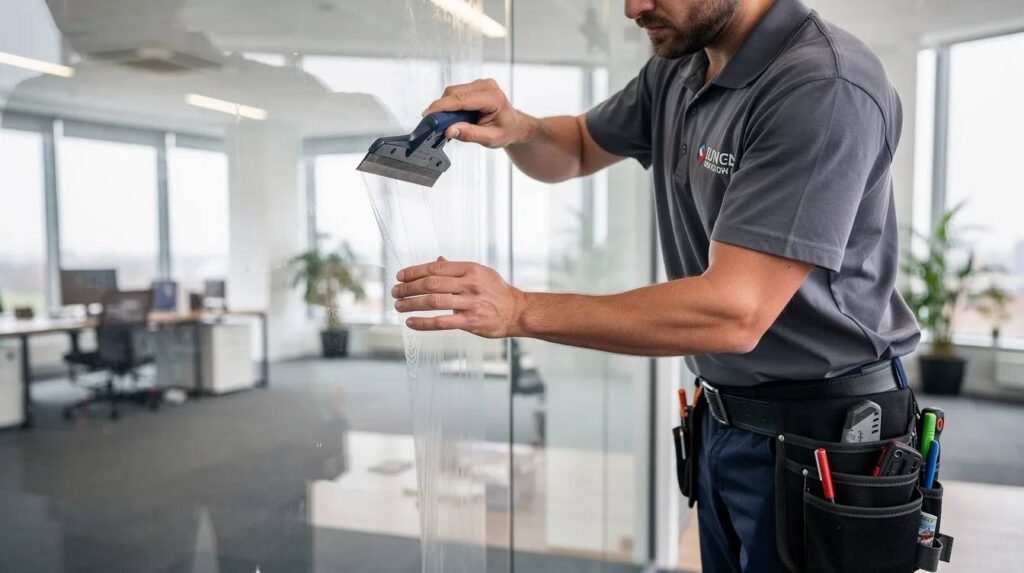
- 3M window film products and installation services rely on trained crews who protect flooring and furnishings, clean glass, and apply films using slip solutions and squeegee techniques
- Timelines range from 1–2 days for a residence to phased multi-week schedules for multi-floor offices or national retail rollouts, minimizing disruption to operations
Curing and aftercare:
- Films may appear hazy or show small water pockets for several days to weeks as they cure
- Maintenance is simple: mild cleaners, soft cloths, and avoiding abrasive tools
- WFD reviews care guidance with each client at project closeout
All projects are backed by manufacturer and workmanship warranties, and WFD coordinates with property managers to schedule work off-hours where needed.
Common Mistakes to Avoid and What to Know Before You Buy Window Film
Not all films – or installers – deliver the same results. Several common missteps can limit energy savings or cause problems.
Wrong film for climate or glass:
- Choosing a film just because it’s very dark or inexpensive can backfire. Mismatched film type can increase winter heating costs or risk glass breakage on certain insulated units
- Always match the right film to climate, glass construction, and performance goals – whether that’s heat rejection, improved insulation, or privacy
Chasing lowest bid:
- Low-cost, off-brand films may discolor, bubble, or lose performance within a few years, erasing your ROI
- Compare manufacturer data sheets, warranties, and installer credentials rather than just price per square foot
DIY on large or critical glass:
- DIY films often result in visible seams, dust contamination, and poor edge sealing, reducing both aesthetics and overall energy efficiency; if you do tackle smaller projects yourself, follow a detailed do-it-yourself window film installation guide
- DIY application can void glass warranties and complicate future professional removal
Skipping performance verification:
- Request documented performance data (SHGC, VLT, TSER, emissivity) and, where feasible, a pilot install to verify comfort and heat reduction before rolling film across a portfolio
Why Choose Window Film Depot for Energy-Efficient Window Films
Window Film Depot is a family-owned company founded in 1992 in Marietta, Georgia, and has grown into one of the nation’s leading 3M window film dealers and installers for building performance retrofits.
National reach with local service: WFD manages turnkey projects for government, education, commercial, and retail clients across the U.S., including multi-site rollouts for banks, big-box retailers, and national restaurant chains, supported by installation locations in all 50 states. The same team supports high-end residential projects in existing homes.
Technical expertise and product range: WFD specializes in 3M solar control, low-E, and ceramic films alongside security, privacy, decorative, and anti-graffiti solutions. This allows energy savings to be combined with other glazing upgrades in a single project. The team works directly with architects, energy consultants, and facility managers to integrate film into broader building envelope strategies.
Proven process and reliability: From specification and mockups to installation, safety planning, and closeout documentation, WFD handles every detail. Projects are completed on schedule with minimal disruption, backed by long-term manufacturer warranties and WFD’s own workmanship guarantee.
Contact Window Film Depot for a complimentary site assessment, energy savings estimate, or to discuss the right film for your building’s climate, glass type, and indoor comfort goals.
FAQs About Window Film for Energy Efficiency
How much can window films really reduce my energy bills?
Many commercial and residential projects see 10–30% reductions in cooling energy use. Window films can block up to 84% of solar energy, which translates to significant drops in energy consumption – particularly in buildings with large, sun-exposed glass. Window Film Depot provides project-specific savings projections using site data, climate modeling, and actual glazing measurements so you know what to expect before committing.
Will energy-efficient window film make my rooms too dark or eliminate natural light?
No. Modern spectrally selective and ceramic films maintain high visible light transmission while blocking a disproportionate amount of solar heat and UV. Spaces stay bright but noticeably more comfortable. WFD routinely tests sample swatches on a few panes so clients can evaluate the balance of natural light, glare reduction, and appearance before choosing a final film type.
Do window films work on double-pane or low-E glass, or only on older single-pane windows?
Many energy-saving films are engineered for a wide range of glass types, including double-pane insulating units and some factory low-E glass. However, the correct film must be matched to the glazing to avoid excessive thermal stress. Window Film Depot surveys existing glass, checks manufacturer guidelines, and specifies films that are compatible and warrantable for each window system.
How long do energy-efficient window films last, and what maintenance is required?
Energy-saving window films can last 20 to 25 years when installed correctly. High-quality architectural films from manufacturers like 3M are typically covered by limited lifetime or long-term commercial warranties against peeling, bubbling, and discoloration. Maintenance is simple: allow curing time after installation, then clean with mild, non-abrasive cleaners and soft cloths.
What is the typical payback period for energy-saving window film?
Payback often falls between 2 and 5 years depending on climate, energy prices, glass area, and operating hours. Buildings in hot markets with significant solar exposure frequently see faster returns. Unlike many capital upgrades, window film installations are quick, low-disruption, and can sometimes qualify for utility rebates, further improving ROI compared to window replacement or major HVAC upgrades.
Can I combine energy-efficient window films with security or privacy film needs?
Yes. Multi-layer films and engineered solutions exist that provide both solar control and safety or security performance. These are ideal for schools, government facilities, and retail storefronts needing both lower energy costs and enhanced protection against forced entry. Window Film Depot regularly designs combined solutions addressing energy efficiency, forced-entry resistance, and privacy in a single glazing upgrade – eliminating the need for multiple film layers or separate projects.