If your home has rooms that turn into ovens by mid-afternoon, or your furniture is slowly fading from relentless sunlight, you’re not alone. Residential window tinting is one of the fastest, most affordable upgrades you can make to existing windows – and finding the right local installer is the first step.
Table of Contents:
- What “House Window Tinting Near Me” Really Means in 2026
- Direct Benefits of Tinting Your Home’s Windows
- How Home Window Tinting Delivers Energy Savings and Lower Bills
- Types of Home Window Film for Different Rooms and Goals
- Professional Installation vs. DIY for Home Window Tint
- FAQ: House Window Tinting Near Me
- How to Get Started with Local Home Window Tinting
What “House Window Tinting Near Me” Really Means in 2026
When homeowners search house window tinting near me, they typically want fast, local, professional help to cool hot rooms, cut glare, and protect interiors – without a full window replacement project. Picture a homeowner in a sun-drenched city who’s watched energy bills climb every summer since 2022, with south-facing rooms hitting temperatures 10–15°F higher than the rest of the house.
Modern home window tinting solves this with a thin, nearly invisible residential window film applied to existing windows. The three main outcomes: better indoor comfort, lower energy costs, and year-round protection from UV damage and fading. Below, we’ll break down benefits, film options, realistic pricing, and how to choose a local installer.
Direct Benefits of Tinting Your Home’s Windows
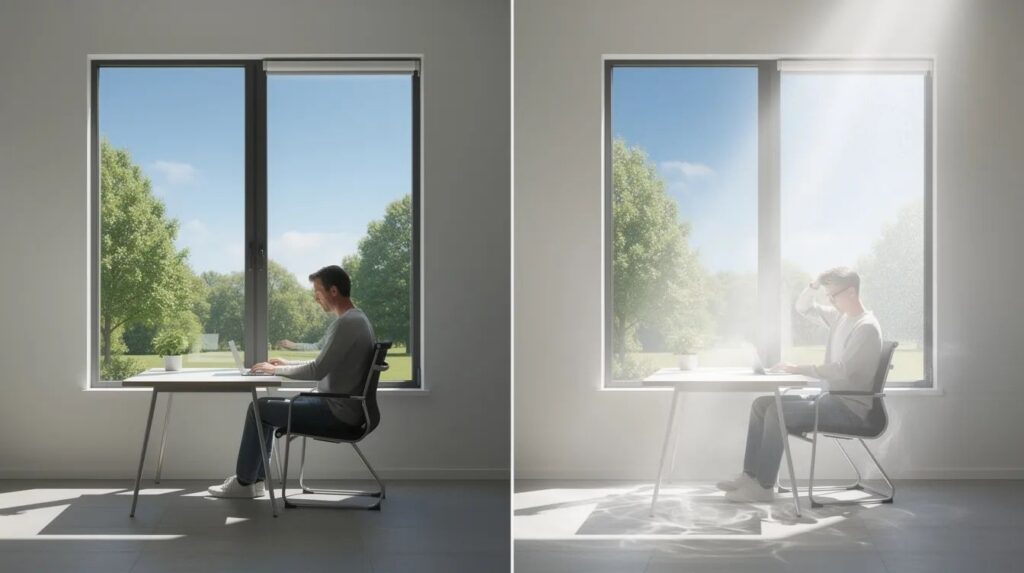
Home window film turns ordinary house windows into energy-saving, glare-reducing, UV-blocking glass – all while preserving your views. Residential window tints control light, temperature, and privacy simultaneously.
Heat and glare control:
- Solar control films can reject up to 79% of solar heat, keeping rooms noticeably cooler in summer
- Window tints can reduce screen glare, making TVs and monitors easier to view without pulling curtains or blinds
- Tinted windows stabilize indoor temperatures between seasons, easing strain on air conditioning costs and heating systems alike
UV and fading protection:
- Residential window tinting can block 99% of UV rays – and window film blocks 99% of harmful UV rays, which matters because 90–95% of sunlight entering homes is UVA and UVB rays
- UV rays can fade furniture and flooring over time; window tinting protects furnishings from UV damage year-round
Privacy and security:
- Window tinting increases privacy in your personal environment. Privacy films use a highly reflective surface to prevent outsiders from seeing in, and window tints can enhance privacy during daytime – especially for street-facing or south-facing rooms
- Privacy tints can completely block visibility while allowing soft light into the space, so rooms never feel dark
- Safety and security tints enhance the structural integrity of window glass. Safety films protect against break-ins and severe weather by holding shattered glass in place, and security-focused window films help hold cracked glass together
A quick real-world example: a homeowner whose afternoon glare made a 4K TV unwatchable installed a clear ceramic film. The result – cuts glare dramatically, the room stays cool, and shades stay open all day.
How Home Window Tinting Delivers Energy Savings and Lower Bills
Home window tinting can meaningfully reduce energy bills depending on climate and window exposure. Window film can reduce energy costs by 5 to 15%, and homes with large west-facing glass walls often see savings at the higher end of that range – sometimes up to 30% on cooling alone (source).
Here’s why: unprotected residential window glass lets solar radiation pass through and heat interior surfaces, forcing your HVAC system to run longer. Window film can reduce HVAC run time significantly by blocking infrared energy before it enters the room. Solar control films reflect or absorb solar heat and UV rays, and high-quality window films can block up to 30% of incoming solar heat even through standard glass.
In cooler months, some films help insulate glass and reduce drafts, supporting more stable indoor temperatures. The result is lower energy costs year-round – and window tinting can pay for itself in about 3 years. Compared to full window replacement (often thousands per window), solar control window film is far less expensive to install and starts delivering energy savings almost immediately.
Types of Home Window Film for Different Rooms and Goals
Not all window tint film performs the same way. Different film materials affect performance and durability, so picking the right film type matters.
| Film Type | Best For | Key Trait |
|---|---|---|
| Solar control film | Heat and glare reduction | Solar control films block up to 79% of solar heat |
| Dyed film | Budget sun control | Dyed films use a layer of dye to absorb solar heat |
| Metalized film | Heat + strength | Metalized films reflect solar heat and UV rays while strengthening glass |
| Carbon film | IR blocking | Carbon films are effective at blocking infrared light and prevent indoor heat build-up |
| Ceramic film | Clarity + performance | Ceramic films block infrared heat without darkening spaces |
| Decorative film | Privacy + style | Decorative films allow natural light while obscuring visibility |
| Security film | Impact resistance | Holds glass together on break-in or storm impact |
Frosted films provide instant privacy without sacrificing natural light – ideal for bathrooms or entry sidelights. Decorative films enhance privacy while adding style to rooms, and decorative films can enhance privacy and style in any room from dining areas to home offices. Privacy films are ideal for bathrooms and first-floor bedrooms where discretion matters most.
Low-reflective or neutral films preserve curb appeal and HOA compliance, while different VLT (visible light transmission) levels let homeowners pick how bright or shaded each room feels. Most modern double-pane residential windows are compatible with professionally installed window film when selected by an experienced installer.
Professional Installation vs. DIY for Home Window Tint
DIY window film kits exist at hardware stores, but professional installation delivers cleaner results and longer life. Film must be applied without ripples or bubbles – something that requires proper tools, technique, and a controlled environment.
Why professional installation wins:
- Professional installation can fit virtually any flat-glass window, including sliders, transoms, and skylights
- Expert installation includes custom cutting, wet application, and edge sealing for a flawless finish
- Most homes are completed in one day with minimal disruption
- Installation typically requires no furniture moving – installers use drop cloths and clean glass thoroughly before application
- Window film installation is safe when following manufacturer guidelines, preserving both film and glass warranties
Common DIY pitfalls include creased edges, peeling after one or two summers, and selecting films incompatible with insulated glass units. One important note: applying aftermarket window film can void the manufacturer’s warranty on windows if the wrong film is used – another reason to rely on a knowledgeable local provider. Safety films also delay forced entry by up to 2 minutes, but only when correctly installed as a security film system.
2026 Home Window Film Innovations Homeowners Should Know About
Home tinting technology has advanced significantly through 2024–2026. Nano-ceramic and multi-layer films now outperform older dyed alternatives in nearly every measurable way.
Modern nano-ceramic layers boost heat rejection to 85–95% of infrared energy while remaining nearly invisible from both sides. Multi-layer film constructions combine UV-absorbing, IR-reflective, and scratch-resistant coatings for longer life on busy residential windows. Some 2026 films block over 80% of infrared heat in key wavelengths without heavy reflective mirror effects.
These newer products are designed to work with modern low-E glass commonly installed in homes built or remodeled after about 2010. Paired with existing double- or triple-pane windows, they create high-performance glazing systems – a major upgrade in energy efficiency without replacing a single pane.
How to Choose the Right Local Home Window Tinting Services
Selecting the right local provider matters more than finding the lowest quote. Here’s what to look for in home window tinting services:
- Years of experience specifically in residential window tinting, not just automotive work
- Willingness to provide in-home consultations that evaluate sun exposure, glass type, and room usage
- Clear explanations of film performance specs – heat rejection percentages, UV blockage, VLT, and warranty terms
- Online reviews from the last 12–24 months mentioning punctuality, cleanliness, and handling of tricky window treatments like high transoms or large sliders
- A written estimate detailing film types, square footage, and total project cost before work begins
Contact a local provider for a customized recommendation based on your home’s orientation, room usage, and budget.
Typical Cost of Tinting House Windows in 2026
Pricing depends on window size, film type, accessibility, and whether security or specialty films are chosen.
- Standard solar films: $6–$12 per square foot installed
- Premium ceramic or spectrally selective films: $10–$15+ per square foot
- Whole-house projects (10–20 windows): typically $2,500–$5,000+
A single 3×5-foot window with ceramic film runs roughly $105–$225 installed. Compared to replacement windows, film is a fraction of the cost and can begin delivering measurable energy savings the first summer. Some utility companies offer rebates for qualifying energy-saving installations – ask your installer about current 2025–2026 incentives. Request an on-site quote so the installer can count panes, evaluate sun exposure, and recommend the most cost-effective film combination.
Where Tint Works Best on Your Home’s Windows
Not every window needs the same treatment. Targeting problem areas first delivers the fastest comfort upgrade and helps you save energy where it counts.
Priority zones:
- Large south- and west-facing windows that catch harsh afternoon sunlight
- Two-story living room glass walls and sunrooms with hot spots
- Home office windows where glare reduction matters for productivity
- Sliding glass and patio doors – large glass areas with frequent direct sun exposure
- Bathroom windows, sidelights, and garage entry doors where decorative or frosted films provide privacy and light
Many homeowners phase projects strategically: treat the hottest rooms first, then expand as budget allows. A time-of-day walk with your installer reveals exactly where sun hits hardest and which windows to prioritize to protect your family and maintain indoor comfort all summer.
FAQ: House Window Tinting Near Me
These are the most common questions homeowners ask before scheduling window tinting services.
Is it worth it to tint house windows?
Yes. Between energy savings of 5–15% on cooling, protection for furniture and flooring from fading, and improved indoor comfort, the investment pays back quickly – often within about three years. It’s one of the most cost-effective upgrades for any house.
How long does residential window film typically last?
Quality matters. Premium ceramic films can last 15–20+ years; dyed films may last 5–10 years. Most manufacturers offer warranties ranging from 10 years to lifetime coverage for professionally installed window film.
Will window tint make my home too dark?
Not with modern films. VLT options range from 35% to 70%+, meaning you can suit any room. Even high-performance films maintain natural light while delivering strong heat rejection and glare reduction – no need for heavy curtains or shades.
How do I clean tinted windows?
Wait about 30 days after installation for the film to fully cure. Then clean with soft cloths and non-ammonia glass cleaners. Avoid abrasive tools to maintain film quality for many years.
Can window tint be removed or replaced later?
Yes. Professional installers can safely remove film using steam or solvents without damaging the glass. Replacement is straightforward when performance degrades, tastes change, or newer film technology becomes available.
How to Get Started with Local Home Window Tinting
If you searched “home window tinting near me,” now is the time to act – current energy prices and summer temperatures make this upgrade especially valuable.
Three simple steps:
- Schedule an in-home consultation to assess your windows
- Review film samples on actual glass during different daylight conditions
- Receive a written quote with recommended films for each room
Flexible scheduling – including weekday and select weekend appointments – makes it easy to fit the visit around work and family obligations. Professionally installed home window tint can transform comfort, appearance, and energy efficiency in a single day, delivering long-term protection and lower energy bills for years to come.