Table of Contents:
- What Is Multi-Family Window Film?
- Why Multi-Family Window Film Matters for Owners and Residents
- Key Benefits: Comfort, Heat Reduction, and Energy Savings
- UV Protection, Glare Control, and Resident Well-Being
- Safety and Security Window Film for Multi-Family Properties
- Privacy, Aesthetics, and Brand Consistency Across Units
- Types of Multi-Family Window Films and Where They Work Best
- How Multi-Family Window Film Projects Work in Occupied Buildings
- Code, HOA, and Design Considerations for Multi-Family Window Tinting
- ROI, Incentives, and Financing for Multi-Family Window Film
- Maintenance, Lifespan, and Long-Term Performance
- FAQs About Multi-Family Window Film
- Why Choose Window Film Depot for Multi-Family Window Tinting
- Next Steps: Schedule a Multi-Family Window Film Assessment
What Is Multi-Family Window Film?
Multi-family window film refers to professional-grade window films installed across apartments, condos, student housing, senior living communities, and mixed-use buildings. The goal is straightforward: improve comfort, safety, and energy efficiency across many units without tearing out existing glass.
Window film offers a cost-effective retrofit solution for existing buildings. Rather than replacing windows-an expensive, disruptive capital project-film is applied directly to the current glass, delivering heat reduction, UV protection, and privacy benefits building-wide while preserving the original window frames and glazing.
What separates multi-family applications from a single-family home job is scale. You’re dealing with dozens to hundreds of units, multiple façade exposures, coordinated access schedules, and the need for a consistent appearance across the entire property. That’s a fundamentally different project from filming a few windows in a house.
Window Film Depot has been installing multi-family window films nationwide since the late 1990s, with projects ranging from 20-unit buildings to portfolios exceeding 1,000 units. Key film categories relevant to multi-family housing include solar control film, security film, decorative privacy film, and specialty options like anti-graffiti and bird-safety films.
Why Multi-Family Window Film Matters for Owners and Residents
Multi-family properties face challenges that most people never think about until they’re fielding tenant complaints. Units on top floors and west-facing windows bake in direct sunlight during summer afternoons. Corner apartments overheat while shaded units stay comfortable. HVAC systems run harder, energy costs climb, and residents start leaving negative reviews.
For owners and asset managers, window film delivers measurable operating improvements:
- Lower cooling loads and reduced peak demand charges
- Improved building envelope performance without major capital outlay
- Potential ENERGY STAR or LEED credits for sustainability reporting
- Stronger asset value at sale or refinance
For residents, the improvements are felt immediately:
- Cooler rooms on exposed floors and elevations
- Reduced glare on screens and TVs
- Better daytime privacy without sacrificing natural light
- Added protection from security films on vulnerable glass
Window films can help reduce tenant complaints related to comfort, and they enhance tenant comfort by stabilizing indoor temperatures-two outcomes that directly affect retention and online reputation.
Professionally coordinated window tinting also solves the common eyesore of mismatched blinds, curtains, and DIY tints scattered across individual apartments. A uniform film application keeps the façade clean and consistent.
Key Benefits: Comfort, Heat Reduction, and Energy Savings
Solar control window films are one of the lowest-friction ways to improve energy efficiency in multi-family buildings. No ductwork, no equipment swaps, no construction dust-just a film applied to existing glass that starts performing the same day.
Modern films work by reflecting and absorbing solar energy before it enters the space. Some 3M solar control films achieve up to 79% solar heat rejection while maintaining high visible light transmission. That means the film can block heat aggressively without making apartments feel like caves. Solar control films reduce solar heat gain and glare, and they reduce heat gain in sunny rooms where residents previously relied on blackout curtains or cranked the AC.
For property owners, the downstream effects are significant:
- Lower cooling loads translate to reduced electricity consumption and lower peak demand charges
- Deferred equipment replacement-less strain on HVAC systems means chillers and rooftop units last longer
- Portfolio-wide impact-in typical Sun Belt multi-family buildings (Dallas, Phoenix, Orlando), energy savings from solar window film often range from 8–15% on cooling costs when applied to the most exposed elevations
Solar control films are effective in hot climates, but benefits extend to mixed climates too. Window film improves energy efficiency in multi-family buildings regardless of geography, and tinted windows can reduce energy costs by lowering HVAC load across heating and cooling seasons alike. Window films can reduce energy costs for multi-family buildings meaningfully enough to shift the operating pro forma.
For REITs and institutional owners, improved energy efficiency supports ESG and sustainability reporting, helping meet 2030 and 2040 carbon reduction commitments without major capital projects.
UV Protection, Glare Control, and Resident Well-Being
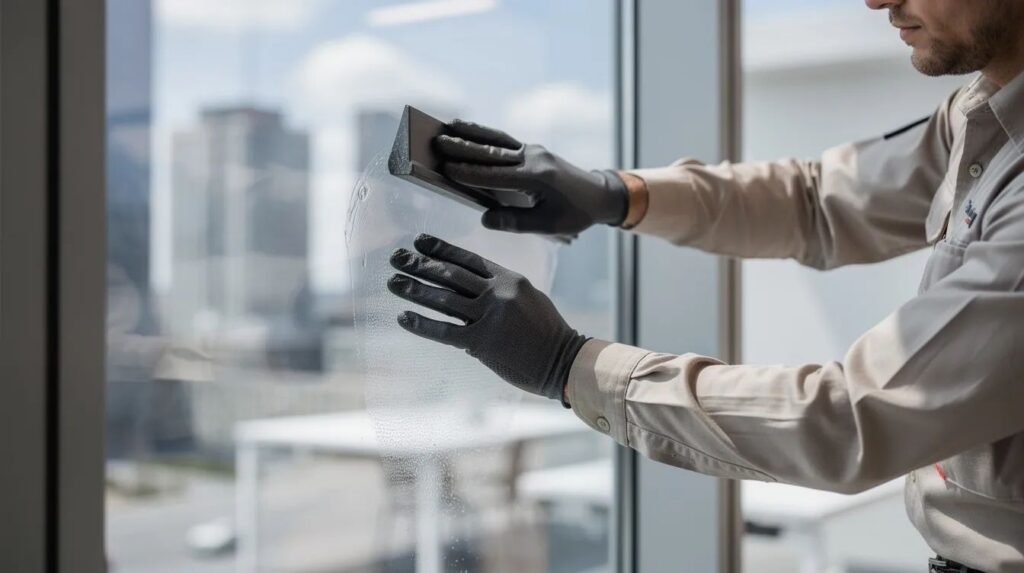
Beyond energy savings, window film directly improves day-to-day living conditions. High-quality window films block up to 99% of harmful uv rays, protecting residents’ skin and dramatically slowing the fading of flooring, furniture, and window treatments in sun-exposed apartments.
Glare control matters more now than ever. With remote work still common in 2026, residents sit at desks near large windows for hours. Solar control films reduce glare without forcing people to close blinds and lose their view. In one documented case, Night Vision series film achieved roughly 72% glare reduction while maintaining clear sightlines-a combination that residents noticed immediately.
In a 2024 student housing project near the University of Texas at Austin, film installation cut measured glare in study lounges by more than 50% during afternoon hours. Students stopped relocating to interior rooms to avoid sun strain, and the lounges saw higher utilization.
These comfort improvements directly influence online reviews and resident satisfaction scores. A property where people can work, watch TV, and relax without fighting the sun is a property that retains tenants and commands stronger rents.
Safety and Security Window Film for Multi-Family Properties
Since 2020, demand for glass hardening in urban multi-family and mixed-use buildings has grown steadily. Smash-and-grab incidents, severe weather events, and general safety concerns at ground-floor retail and amenity spaces have pushed property owners toward solutions that don’t require full glazing replacement.
Security films strengthen glass against shattering. When properly anchored to window frames, these thick films hold cracked glass together during break-ins, accidental impacts, or blasts, reducing injury risk from flying shards and buying critical response time.
Common use cases in multi-family properties include:
- Lobby and entrance door glass
- Street-level amenity spaces and ground-floor apartments
- Parking garage stairwells where broken glass is a recurring maintenance issue
- Retail storefronts in mixed-use buildings
Window Film Depot installs 3M safety and security window film systems tested to forced-entry and blast standards. In a 2022 downtown Chicago mixed-use tower, adding 8-mil security film to retail storefronts and lobby glass reduced smash-and-grab-related breakage and helped management avoid costly full glass replacements after attempted break-ins.
Privacy, Aesthetics, and Brand Consistency Across Units
Many multifamily owners face a frustrating reality: residents install their own reflective window tint, mismatched blinds, and cluttered balcony screens, making the façade look chaotic from the street. This undermines the property’s style and brand, especially during repositioning or lease-up.
Professionally specified window film creates a consistent exterior appearance while giving residents privacy where they need it most. Privacy films allow daylight while reducing visibility from outside-ideal for bathrooms, street-facing bedrooms, and ground-floor units, especially when selecting the best window film for nighttime privacy. Decorative films enhance privacy while complementing interiors, and they enhance privacy with stylish designs that feel intentional rather than improvised, particularly when specified as day and night privacy window film.
Common solutions include:
- Light-neutral solar films that subtly tint the glass without darkening rooms
- Frosted or gradient films for bathroom windows
- One-way privacy films for amenity spaces overlooking public streets (noting that appearance shifts at night when interior lighting reverses the effect)
Decorative films can enhance the appearance of multi-family properties beyond individual units. In leasing offices, co-working lounges, and fitness centers, patterned or branded films reinforce the property’s identity without the permanence or cost of custom glass. Decorative films improve aesthetics without sacrificing functionality.
In a 2025 renovation of a 300-unit property in Charlotte, coordinated use of solar and decorative films eliminated the patchwork of resident-installed window treatments and supported a successful rebrand. Window films enhance privacy while allowing natural light-a balance that residents and ownership teams both appreciated.
Types of Multi-Family Window Films and Where They Work Best
Different parts of a multi-family building call for different film technologies. Owners rarely use a one-size-fits-all product, and the best results come from matching film type to each zone’s specific needs.
Solar Control Films: Neutral or lightly tinted films used on sun-exposed façades to reduce cooling loads while maintaining views. These are ideal for south and west elevations in warm climates, where they block heat most aggressively. Solar control films reduce heat gain in sunny rooms and are the workhorse product for most multifamily retrofits.
Low-E Insulating Films: Spectrally selective or low-emissivity films designed for colder climates or older single-pane glass. Low-E films improve insulation, keeping homes cooler in summer and warmer in winter. Insulating films help retain indoor warmth in winter, and they retain heat in winter and reduce heat in summer, making them a strong choice for mixed-climate portfolios where both heating and cooling costs matter. Insulating films help retain indoor heat during winter months, especially well on older glazing.
Security and Safety Films: Thicker, clear or tinted films for ground floors, amenity spaces, and glass near stairwells or play areas. Focused on impact resistance and occupant safety.
Decorative and Privacy Films: Frosted, patterned, or gradient films for bathrooms, corridor sidelites, leasing offices, conference rooms, and glass partitions. These films keep spaces private without blocking light.
Window Film Depot primarily installs 3M window films and provides professional installation and can mix film types within the same property, ensuring the exterior still reads as uniform while each zone gets the right performance.
How Multi-Family Window Film Projects Work in Occupied Buildings
The biggest concern for property managers considering multi-family window film is disruption. Here’s how a well-run project actually works.
Pre-Construction
- Site survey of representative units and amenity areas
- Glass and shading analysis to identify film type by exposure
- Sample installations on a few test windows so stakeholders can evaluate appearance at different times of day
- Energy modeling or payback estimates where needed
Scheduling and Phasing
Projects are phased building-by-building or stack-by-stack. Advance resident notices go out, and work hours are coordinated around quiet times. Problem areas-like the hottest west-facing units-can be prioritized first so residents see results immediately.
Installation Day
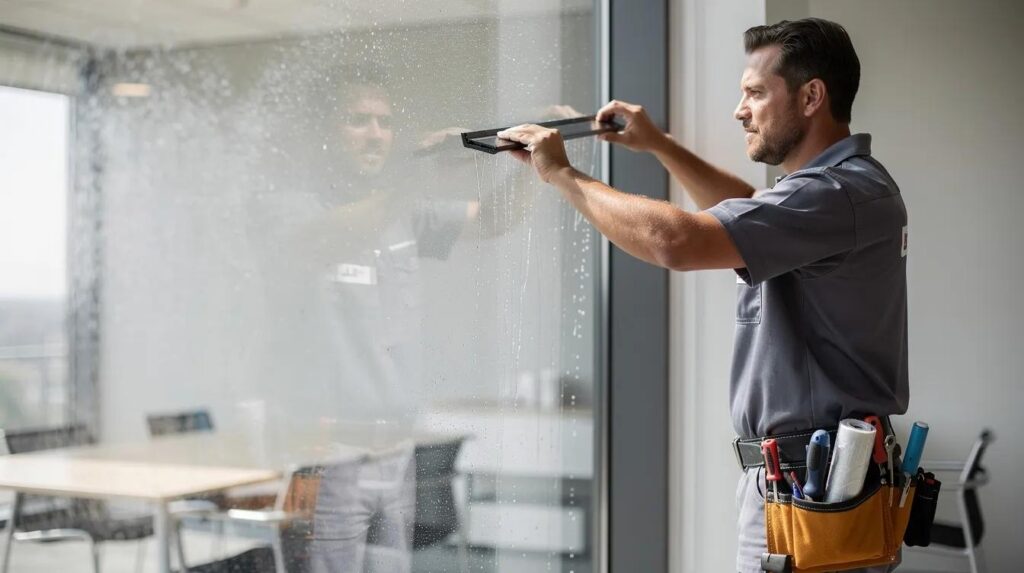
Inside each unit, crews protect flooring and furniture, clean the glass, and apply film with minimal odor and noise. A standard window lite typically takes 15–30 minutes. Professional installation ensures better long-term results compared to DIY approaches, and it ensures better long-term results and warranties that protect the owner’s investment.
Most multi-family projects proceed with residents in place. Vacancy is not required, and units can usually be returned to normal use the same day. DIY window tinting kits are available but may lead to mistakes like bubbles, misalignment, and premature peel problems that professional installation avoids entirely.
Code, HOA, and Design Considerations for Multi-Family Window Tinting
Property owners must balance performance goals with building codes, HOA rules, and architectural standards-especially in historic districts and condominium associations.
Glass Compatibility: Evaluating tempered vs. annealed glass, insulating glass units, and manufacturer limitations is essential. The wrong film on the wrong glass can create thermal stress risks or void the original window warranty. Reputable installers always assess these factors before specifying a product.
HOA and Condo Board Rules: Many boards regulate exterior appearance and reflectivity. Neutral, low-reflective window films can meet heat control and energy goals while preserving the building’s intended look. Window Film Depot assists with documentation for design review-providing samples, spec sheets, mockup photos, and letters from 3M when needed.
Jurisdictional Requirements: Some regions (Florida coastal zones, certain California localities) have specific requirements for safety glazing, bird-friendly façades, or energy codes that influence film selection. Staying compliant is not optional, and it should be addressed during project planning rather than after installation.
ROI, Incentives, and Financing for Multi-Family Window Film
Multi-family window film is typically treated as a capital improvement with a multi-year ROI, often in the 3–7 year range depending on climate, utility rates, and exposure.
Components of Financial Return
| Return Driver | How It Works |
|---|---|
| Direct energy savings | Lower cooling and heating bills |
| Deferred HVAC capital | Less equipment strain extends life |
| Reduced glass replacement | Security film prevents costly break repairs |
| Rent premiums | Improved comfort supports higher asking rents |
| Window tinting costs range from $5 to $15 per square foot depending on film type, whether for multi-family buildings or home window tinting solutions. Basic solar films can cost a few dollars per square foot at the lower end, while premium ceramic films can cost significantly more than basic options. Factors affecting tinting costs include film type and window shape, plus access complexity on upper floors. Large portfolio projects often benefit from volume pricing. |
In a well-documented example, a 400-unit property in Phoenix reached simple payback in just under 4 years after retrofitting sun-exposed façades with 3M solar control film, similar to multifamily window film installation projects in Dallas/Fort Worth.
Many electric utilities in states like California, Texas, Georgia, and New York periodically offer rebates for qualifying energy-efficient window films, and nationwide service coverage ensures window film installation is available in all locations. Window Film Depot helps owners gather data and documentation for rebate submissions and can coordinate phased installations that match annual capital budgets or green financing requirements. That kind of coordination can save money on both the install and the operating side.
Maintenance, Lifespan, and Long-Term Performance
Professionally installed multi-family window films are low-maintenance and designed for long service life in high-usage environments.
Expected Lifespans
| Film Category | Typical Lifespan |
|---|---|
| Standard solar control | 10–15 years |
| Premium ceramic / multi-layer | 15–20+ years |
| Security film | 15+ years |
| Decorative / privacy | 10–15 years |
| Window films can last up to 20 years with proper care-and in many cases longer, depending on climate and exposure. Interior-applied films generally outlast exterior films. |
Maintenance for On-Site Staff
- Use non-abrasive cloths and mild soap or film-safe cleaners
- Avoid razor blades, ammonia, or harsh chemicals on filmed glass
- Inspect film edges periodically for lifting or seal failure
Window Film Depot backs installations with manufacturer warranties from 3M covering bubbles, peel, discoloration, and adhesive failure. If a pane is replaced during the film’s life, the company provides service support for re-tinting.
For property managers worried about resident pets, children, and cleaning crews: once cured, quality film is hard to damage during normal use. Scratches are typically the result of improper tools or abrasive cleaning-not everyday living.
FAQs About Multi-Family Window Film
These questions come up consistently from property managers, asset managers, and condo boards evaluating window film for their buildings.
How much does multi-family window film cost per square foot?
Installed costs for most solar control films in 2025–2026 fall roughly between $5 and $12 per square foot. Security and specialty films run higher, typically $12–$25+ per square foot depending on thickness and anchoring requirements. Total project cost is influenced by access, elevation, glass type, film type, and window shape. Large portfolio projects often benefit from volume pricing, and Window Film Depot provides detailed per-building budgets after a site assessment.
Will window film make apartments too dark or change the view?
This is the most common concern, and the reality is reassuring. Modern spectrally selective window films prioritize heat and UV rejection while preserving visible light transmission-many allow 50–70%+ VLT, so units remain bright and views stay clear. Sample installations are typically done on a few representative windows so owners, residents, and design teams can evaluate appearance before a full rollout.
Can residents stay in their units during installation?
Many energy-saving films are engineered for a wide range of glass types, including double-pane insulating units and some factory low-E glass. However, the correct film must be matched to the glazing to avoid excessive thermal stress. Window Film Depot surveys existing glass, checks manufacturer guidelines, and specifies films that are compatible and warrantable for each window system.
Does window film void my existing window warranty?
Glass compatibility and warranty impact depend on the original window manufacturer and the film type selected. Reputable installers always evaluate these issues before specifying a product. 3M and Window Film Depot offer documented solutions and, in many cases, film warranties that complement or replace portions of the original glass warranty for covered issues like thermal stress breakage.
How long does multi-family window film last before it needs replacement?
High-quality window films deliver 10–20 years of service depending on climate, exposure, and maintenance. Interior-applied films generally last longer than exterior films. Many multi-family owners plan for film replacement on a long-term capital cycle similar to roof or HVAC refurbishments, using performance reviews after the first decade to decide timing. Durability under normal conditions is excellent.
Can we install different films on different façades or properties in our portfolio?
Yes, and it’s common. Hotter west and south elevations might receive stronger solar control to block heat on exposed glass, while north-facing façades or shaded courtyards use lighter films to preserve daylight. Window Film Depot designs packages that match a consistent exterior appearance even with varied performance specs, which is an important factor for brand consistency across multiple properties.
Why Choose Window Film Depot for Multi-Family Window Tinting
Window Film Depot is a national, family-owned company with more than three decades of experience delivering turnkey window film solutions for multifamily portfolios. Founded in 1992 in Marietta, Georgia, the company has maintained a long-standing partnership with 3M and completed thousands of commercial and residential projects spanning solar, security, decorative, and anti-graffiti films.
What sets Window Film Depot apart for multi-family work:
- Multi-location rollout capability with centralized project management, standardized specifications, and coordinated scheduling for owners with assets in multiple states
- Technical support for stakeholders-glass surveys, performance modeling, mockups, and documentation for lenders, HOAs, and design review boards
- Wholesale depth-the company also supplies wholesale film rolls to trade partners across North America, reflecting product knowledge that goes far beyond basic installation
Whether you’re a customer managing a single mid-rise or an asset manager overseeing a national portfolio, Window Film Depot brings the ability to deliver a perfect balance of performance, appearance, and budget discipline at every property.
Next Steps: Schedule a Multi-Family Window Film Assessment
Window film is a strategic building upgrade-one that improves comfort, safety, and energy performance with limited disruption and fast turnaround. If you’ve been weighing options for your property or portfolio, the ideal next step is a straightforward site assessment.
Here’s how to get started:
- Contact Window Film Depot to schedule a walkthrough of one or more properties
- Provide basic building data: location, glazing type, recent utility bills, and top-priority problem areas
- Receive a consultative discussion covering your goals-whether that’s energy savings, UV protection, privacy, security, or all of the above
After the assessment, you’ll receive a clear proposal with pricing, phasing options, and estimated payback. No guesswork.
We encourage decision-makers-asset managers, property managers, condo boards, and REIT sustainability leads-to involve maintenance, leasing, and design teams early so the final specification supports your full property strategy.
Ready to take the next step? Contact Window Film Depot by phone or through the website’s contact page to discuss multifamily window film options for your building or portfolio. A solution that protects your investment and keeps residents comfortable is closer than you think.