Glass conference rooms define the modern office, but they create an obvious problem: everyone can see in. This guide helps facility managers, architects, and office designers choose the right privacy film to protect sensitive meetings without sacrificing the open, light-filled environment that glass walls were designed to deliver.
Table of Contents:
- Why Glass Conference Rooms Need Privacy Film Now
- Understanding Privacy Needs in Glass Conference Rooms
- Visual Privacy Levels for Interior Glass Walls
- Types of Privacy Film for Glass Conference Rooms
- Frosted Window Film: Core Solution for Conference Room Glass
- Decorative Films, Branding, and Interior Glass Design
- Switchable Smart Film and High-Tech Privacy Glass
- One-Way, Blackout, and Specialty Films: When They Make Sense
- How to Choose the Right Privacy Film for Your Conference Room
- Cost, Budgeting, and ROI for Conference Room Privacy Film
- How Professional Film Installation Works (Step-by-Step)
- Common Mistakes to Avoid with Conference Room Privacy Film
- Frequently Asked Questions About Privacy Film for Glass Conference Rooms
- Why Choose Window Film Depot for Conference Room Privacy
- Next Steps: Plan Your Conference Room Privacy Film Project
Why Glass Conference Rooms Need Privacy Film Now
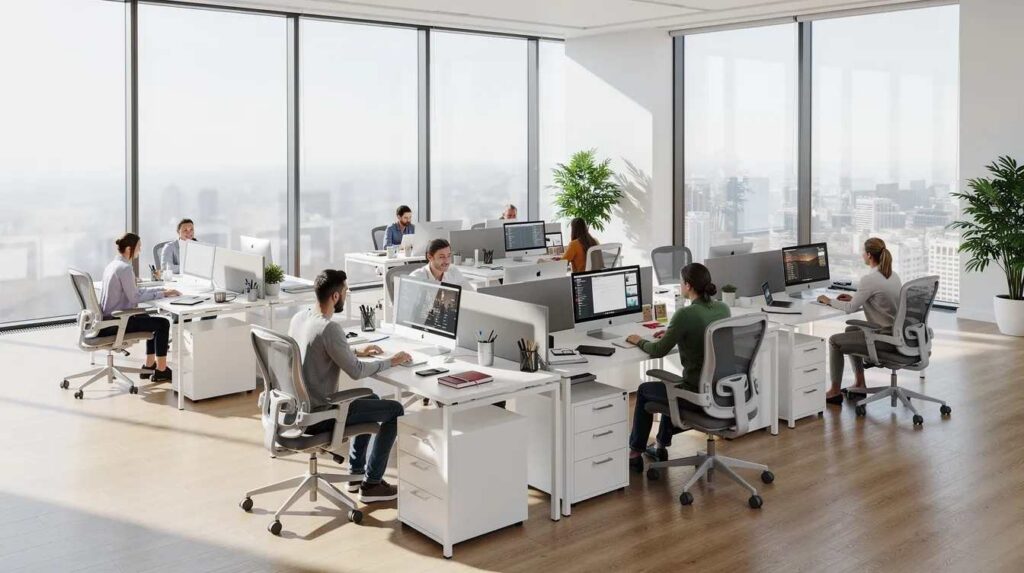
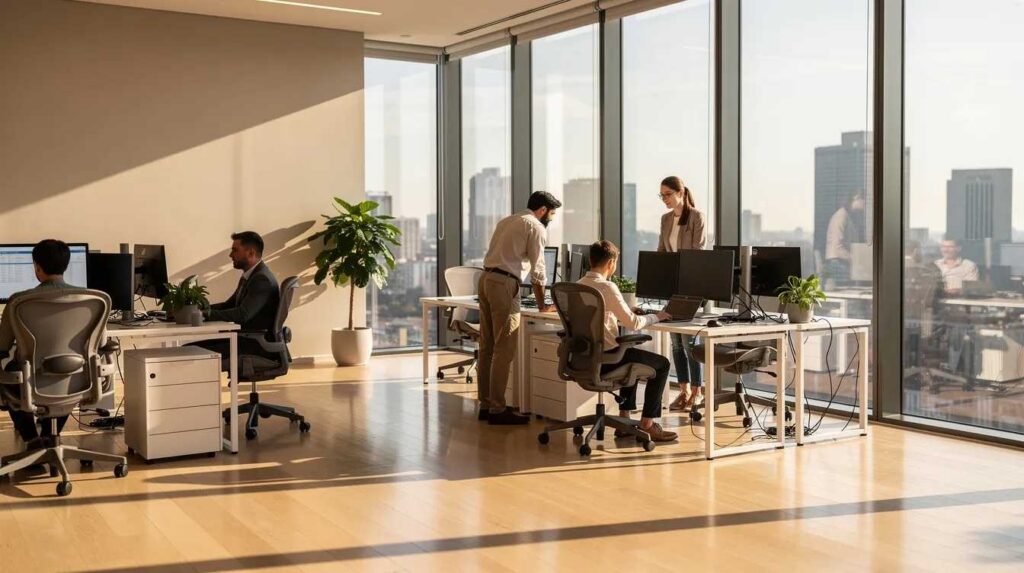
Walk into any Class A office building in 2026, and you will see the same layout repeated floor after floor: glass conference rooms lining corridors, huddle rooms with floor-to-ceiling glass walls, and executive boardrooms surrounded by transparent partitions. These spaces look stunning. They also broadcast every confidential meeting, performance review, and strategy session to anyone passing by. Privacy films enhance confidentiality during sensitive meetings, and the demand for them has never been higher.
The tension is real. Open, transparent design signals collaboration and trust, but it clashes directly with the need to protect discussions about finances, M&A activity, personnel decisions, and regulated data under HIPAA, FERPA, or government security requirements. When whiteboards full of strategy notes and large displays running financial models face a hallway, transparency becomes a liability.
Blinds and curtains solve the visibility problem but kill natural light, collect dust, and look out of place in a modern office environment. Paper taped to glass is worse. Privacy film for glass conference rooms offers something better: a retrofit solution that preserves natural light, maintains the clean aesthetic of glass walls, and converts clear partitions into controlled-privacy surfaces without replacing the glass itself. Privacy films maintain a modern look without blocking natural light, and applying privacy film to glass panels is cost-effective and less disruptive than replacing glass entirely. Window Film Depot has been solving these exact conference room challenges nationwide since 1992, working with facility teams, architects, and building owners across corporate, education, government, and healthcare sectors.
Understanding Privacy Needs in Glass Conference Rooms
Not every conference room needs the same level of privacy. A casual huddle room off an open workspace has different requirements than an HR interview room or an executive boardroom where board-level decisions are discussed. Matching the solution to the room’s function is the first step toward a successful project.
Consider the common layouts where privacy becomes a pain point. Glass conference rooms along a main corridor give passersby a direct view of presentations and participants. Interior glass partitions between meeting rooms and open workstations let nearby employees read slides or watch body language during tense conversations. Glass fronts on shared project rooms expose whiteboards, sticky notes, and screens to anyone walking past. Privacy films reduce visual distractions during meetings, and certain privacy films are designed to block visual access to screens, which matters when sensitive data is on display.
Take a financial services firm with glass-walled conference rooms directly opposite reception. Every client meeting is visible to visitors in the lobby. Or consider a university administration building where student records are discussed in glass meeting rooms with a clear line of sight from the hallway. In both cases, people hesitate to speak freely because they feel exposed.
One critical distinction: window film addresses visual privacy, not acoustic privacy. If conversations can be overheard, sound masking or acoustic partitioning is a separate need. The sections that follow break privacy down into levels and film types so decision-makers can match products to real use cases.
Visual Privacy Levels for Interior Glass Walls
Privacy film for glass conference rooms is not all or nothing. It ranges from a subtle blur to complete opacity, and picking the right level prevents overspending on features a room does not need.
Partial privacy means shapes and movement remain visible, but text on screens and facial details are not readable at normal distances. Partial privacy films allow light while obscuring visibility, making them ideal for everyday team rooms and collaborative spaces. Textured or gradient films provide partial privacy at eye level while keeping the upper glass clear, which is why privacy bands offer necessary privacy at eye level while preserving openness and daylight flow above.
High privacy reduces visibility to vague silhouettes only. Screens, whiteboards, and faces are fully obscured. This level is appropriate for HR, legal, and executive meetings where the content of the discussion and the identities of participants both need protection.
Full opacity means blackout or near-blackout conditions. This is reserved for specialty uses: focus rooms, wellness rooms, AV presentation spaces, or high-security environments where no outside visibility is acceptable.
Film finish and placement dramatically affect the perceived privacy level. A frosted film applied full height creates high privacy, while the same film applied only as a band at eye level creates partial privacy with an open, airy feel above and below. Gradient films transition from opaque to transparent to maintain openness, blending privacy where it matters most with transparency everywhere else. Different privacy film types offer varying levels of privacy and aesthetics, which is why defining the desired level upfront saves money and avoids mismatched solutions, like installing switchable smart glass where a simple frosted window film would do the job.
Types of Privacy Film for Glass Conference Rooms
Most conference room privacy goals can be met with four main categories of window film. Here is what each brings to the table and where it fits best.
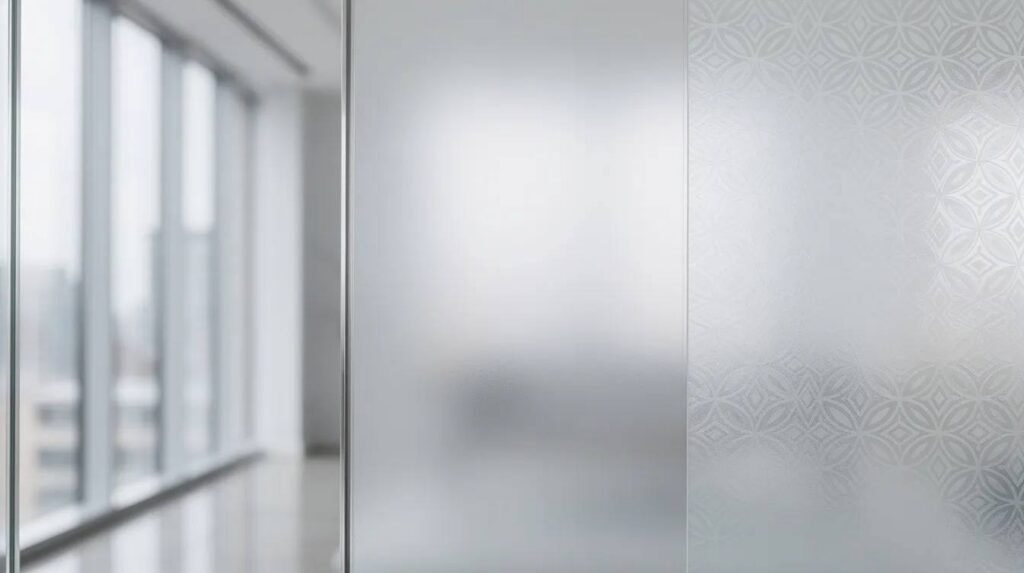
Frosted window film delivers the classic etched-glass look. It is the default choice for permanent privacy on interior glass walls and doors, blocking visibility while allowing abundant natural light through. Frosted window film blocks visibility while allowing natural light, making rooms feel private without feeling dark.
Decorative film adds visual interest and branding opportunities to glass partitions. Patterns, gradients, textures, and custom-printed graphics combine privacy with design, turning plain glass into a brand touchpoint. Decorative window film adds visual interest and branding opportunities that plain frosting cannot achieve.
Switchable smart film (PDLC) is the high-tech option. Switchable smart film changes from clear to opaque on demand, controlled by a wall switch, remote, or building automation system. It works well in multi-use rooms where the glass needs to be transparent sometimes and private at other times.
Specialty films include one-way reflective films, blackout films, and display-blocking options. Specialized privacy films can obscure digital screens from outside views, making them useful for AV rooms and sensitive operational spaces. Privacy films can also reduce glare and block harmful UV rays, adding functional benefits beyond simple visual screening.
Each type affects natural light differently, serves distinct use cases, and fits different budget levels. The following sections take a deeper look at the most commonly specified options, starting with frosted film.
Frosted Window Film: Core Solution for Conference Room Glass
Frosted window film is the most widely specified privacy solution for glass conference rooms across corporate, education, government, and healthcare facilities. It is straightforward, reliable, and solves the most common conference room visibility problems without complexity.
The technology is simple: a micro-etched or matte surface diffuses light passing through the glass, creating a translucent barrier that blocks clear visibility from both sides. Frosted window film blocks over 95% of visibility while still transmitting a high percentage of natural light. The result is a room that feels private without feeling boxed in. Frosted or etched film is highly effective for a balance of privacy and light, which is exactly the tradeoff most facility managers are looking for.
Common applications include full-height frosting on glass walls for HR and legal rooms, partial bands at eye level for standard conference rooms so ceilings remain clear to transmit light, and frosted panels on door lites and sidelites adjacent to meeting rooms. Frosted films provide consistent privacy throughout the day regardless of interior or exterior lighting conditions, which eliminates the guesswork that comes with light-dependent solutions.
On the upside, frosted film is durable, low-maintenance, compatible with most interior glass types, and sits at the most budget-friendly end of the price spectrum. On the downside, the privacy effect is fixed. There is no way to switch to clear when you want an open look, and plain frosting can feel too minimal if branding or design is a priority.
A typical project for Window Film Depot might involve frosting ten conference rooms and several huddle rooms in a regional headquarters over a single weekend, minimizing disruption to the workweek and giving facilities teams a finished result by Monday morning.
Decorative Films, Branding, and Interior Glass Design
Decorative films are the right choice when offices want to create privacy and elevate design at the same time, especially in client-facing conference rooms where appearance matters as much as function.
Patterned films using stripes, dots, or geometric designs provide partial privacy while maintaining a sense of openness and visual interest through the glass. Gradient privacy films are opaque at eye level and transition to clear at the top or bottom, keeping natural light flowing deeper into the floorplate while screening seated occupants from view. Textured and specialty decorative films can mimic etched glass, sandblasting, or fabric weaves, giving interiors a high-end feel that plain frosting cannot match.
Branding is where decorative film really stands apart. Custom-printed films with company logos, taglines, or brand colors turn glass conference room walls into subtle wayfinding and identity markers. Each meeting room can be named and labeled through decorative film graphics, reinforcing brand consistency across the space. Decorative films can combine branding with privacy in conference rooms, and frosted and decorative films can reinforce company branding in office spaces. Custom designs on privacy films can enhance aesthetics and branding without requiring permanent architectural changes. Decorative films can include custom designs and branding elements that evolve with an organization’s identity.
The typical workflow is simple: architects or designers send artwork to Window Film Depot, which manages production and professional installation on interior glass partitions nationwide. Printed films installed by professionals hold up well, maintaining their appearance for years under normal office conditions.
Decorative film sits in the mid-range for both cost and privacy. It delivers more design impact than simple frosting and adds style that elevates the office environment, but costs less than a full switchable glass system.
Switchable Smart Film and High-Tech Privacy Glass
Switchable smart film has become a hallmark of high-end boardrooms and innovation centers, offering on-demand privacy at the touch of a button. Switchable smart films provide on-demand privacy for meetings, making them the most flexible option available for glass conference rooms.
The technology behind it is PDLC (polymer dispersed liquid crystal). When an electrical current runs through the film, liquid crystal molecules align, and the glass becomes clear with visible light transmission above 89%. When the current is off, the crystals scatter randomly, turning the surface opaque with transmission dropping to roughly 2% and haze exceeding 90%. The switch happens in approximately 50 milliseconds. Both the film’s on and off states block around 99% of UV light.
In conference room applications, executive boardrooms can remain clear and open when empty, then switch to private at the start of a confidential meeting. Multi-purpose rooms gain a dual function: when opaque, the glass can double as a projection surface or dry-erase board. Training rooms that occasionally need separation from adjacent workspaces can switch on privacy only when needed. Switchable smart film allows glass to switch from clear to opaque, preserving transparent, open-office aesthetics when privacy is not required.
The tradeoff is cost and complexity. Smart film occupies the premium tier and requires a power supply, wiring, and potentially integration with building automation or room scheduling systems. Professional installation is non-negotiable. Window Film Depot can apply switchable smart film to existing interior glass in many retrofit scenarios, which is often significantly more cost-effective than tearing out and replacing glass with factory-made smart glass panels.
One-Way, Blackout, and Specialty Films: When They Make Sense
Facility teams frequently ask about one-way privacy window film for interior conference rooms, and expectations need to be set correctly before specifying it.
One-way mirror film provides privacy during the day based on lighting conditions, specifically a strong light imbalance between the two sides. On an exterior wall where bright daylight overwhelms interior lighting, the reflective side works as intended. But between two interior spaces in an office corridor, lighting is often similar on both sides. One way privacy film relies on lighting differences for effectiveness, and when those differences do not exist, the privacy effect disappears or even reverses at different times of day. For this reason, mirror-like reflective films are rarely the right choice for interior glass conference rooms.
More appropriate specialty options include blackout films for AV rooms, focus spaces, or war rooms. Blackout film provides maximum visual privacy and blocks nearly all light, making it the right solution when outside visibility must be fully eliminated. Display-blocking film hides digital displays while allowing some visibility of occupants, which can be useful in operational centers where screen content is sensitive but complete opacity is not needed. Dual-reflective or solar control and privacy combinations work well for exterior-facing conference rooms battling heat gain and glare while also needing privacy from the street, and understanding how one-way mirror and reflective films actually work in real projects helps avoid unrealistic expectations about interior privacy.
A practical example: a downtown law firm used blackout film on a single glass wall behind a video wall for total screen security, while applying frosted film on the conference room doors and sidelites for consistent, lighting-independent visual privacy throughout the space. A site visit or lighting assessment before selecting any reflective solution is strongly recommended.
How to Choose the Right Privacy Film for Your Conference Room
Selection should follow a structured decision path, not just a flip through a catalog of film samples. Here is a practical framework that works across most office environments.
Start with room function. A confidential boardroom where M&A discussions happen has different needs than a standard project room or a client pitch room. HR interview spaces and rooms where regulated data is discussed under HIPAA or FERPA demand high or full privacy as a baseline. Everyday team rooms may only need partial screening.
Assess glass configuration. Full-height glass walls, partial glass with solid lower panels, sidelites beside doors, and doors themselves all require different film approaches. Interior glass facing corridors is the highest priority; exterior-facing glass may need combined solar control and privacy solutions.
Define your privacy priority. Is the non-negotiable factor visual separation, brand impact, or light preservation? Often it is a combination, but knowing which one cannot be compromised simplifies the choice. Also consider design preferences and whether the film needs to align with existing interiors.
Think about future flexibility. If the organization anticipates reconfiguring floors or changing branding within three to seven years, removable films or switchable solutions may be worth the premium.
A quick decision guide in plain terms: if you need high privacy on a limited budget, frosted film over the full height is the answer. If you need moderate privacy with strong branding, decorative film with patterns and a logo is the way to go. If you need variable privacy with a premier image, switchable smart film delivers.
When working with Window Film Depot, the typical consultation includes a site assessment, sample review on actual interior glass, privacy testing from common sightlines in corridors and workstations, and specification support for architects who need product data for construction documents.
Cost, Budgeting, and ROI for Conference Room Privacy Film
Prices vary by film type, glass size, access, and project complexity, but realistic ranges help facility managers secure budget approval and compare options effectively.
Frosted window film is the most affordable option, typically running $8 to $20 per square foot installed for standard interior conference room glass. Decorative privacy film costs more due to custom designs, with pricing increasing when multi-layer patterns, custom printing, or branded graphics are involved. Switchable smart film is the most expensive privacy option, ranging from $25 to $55 per square foot for retrofit PDLC film applied to existing glass. Factory-made smart glass panels push costs even higher, from $70 to $150 per square foot. Installation costs vary based on glass size and accessibility, with tall panels requiring lifts, existing film removal, and complex door hardware all driving the number up.
Key cost drivers to account for:
- Total square footage of glass conference room walls
- Number of door lites, sidelites, and transom panels
- Ceiling height and accessibility requirements
- Removal of existing outdated or peeling film
- Electrical work for switchable smart film installations
ROI extends beyond privacy itself. Reduced visual distractions improve meeting productivity. On-screen sensitive data gains a layer of protection from prying eyes. Exterior-facing rooms may reduce shade or blind costs. Professional-looking glass graphics enhance the perceived value of the workspace for tenants and visitors, and privacy films can reduce glare and block harmful UV rays, protecting furniture and interiors from sun damage over time.
For accurate project budgeting, request a site-specific quote from Window Film Depot rather than relying on online calculators that cannot account for your building’s unique conditions.
How Professional Film Installation Works (Step-by-Step)
Conference rooms are some of the most visible spaces in a building, so professional-grade film application is critical. Bubbles, crooked seams, and uneven edges are immediately noticeable and undermine the purpose of the investment. Professional installation ensures proper adhesion and clean edges that read as an integral part of the glass.
The installation process begins before anyone touches a roll of film:
- Site survey and measurement: Every glass wall, door, and panel is documented. Hardware, hinges, mullions, and AV equipment locations are noted.
- Film selection and mockups: Sample swatches are placed on existing glass conference rooms so stakeholders can evaluate the privacy effect and light transmission in real conditions.
- Surface preparation: Clean the glass surface before applying privacy film. Technicians perform detailed cleaning, inspect for scratches or seal failures, and protect adjacent finishes and furniture.
During the actual film application:
- On-site staging is planned to minimize disruption, with many projects completed during evenings or weekends.
- Wet application technique uses a slip solution for precise positioning. Cut the film slightly larger than the glass area needed to ensure full coverage, then use a squeegee to remove air bubbles during installation for a flawless finish.
- Precision trimming around door hardware and glass-to-ceiling joints ensures the film reads as part of the architecture, not an afterthought.
After installation:
- Allow the film to cure for 24 to 72 hours after installation before it reaches full optical clarity. Some moisture haze is normal during this period.
- A walk-through inspection with facilities or construction managers confirms the finished result meets specifications.
- Care instructions are provided for cleaning interior glass film, including avoiding abrasive cleaners and limiting contact during the first week.
Window Film Depot can coordinate multi-location rollouts for corporations with consistent conference room designs across regional offices, leveraging its nationwide window film service locations to ensure the same quality and appearance at every site.
Common Mistakes to Avoid with Conference Room Privacy Film
Many conference room privacy complaints stem not from the film technology itself but from poor planning or installation errors. Avoiding these pitfalls saves time, money, and frustration.
Choosing the wrong film type. Relying on one-way mirror films for interior glass conference rooms leads to privacy failures when lighting changes between day and evening. These films simply do not deliver reliable enough privacy in corridor-to-room applications.
Going too dark. Films that are too opaque can make a small conference room feel cramped and kill natural light. The goal is improving privacy, not making the space feel closed off. A room should never feel dark when a frosted or gradient solution would provide good privacy without blocking light entirely.
DIY installation. Attempting self-installation on large commercial glass panels almost always leaves visible seams, trapped dust, peeling corners, and uneven edges on glass walls and doors. The cost of re-doing flawed work usually exceeds the cost of professional installation in the first place.
Overlooking safety and compliance. ADA and life-safety codes often require banded markings at eye level so people do not walk into clear glass. Failing to integrate these markings into the film design creates a code issue and a potential liability.
Ignoring future needs. Applying permanent branded designs without considering an upcoming rebrand means expensive removal and rework. Similarly, failing to coordinate film layouts with AV screens and whiteboards can leave key areas visible through clear gaps.
Early collaboration with a professional installer like Window Film Depot prevents these mistakes. A brief consultation upfront can save costly removal and rework across multiple glass conference rooms on a single floor.
Frequently Asked Questions About Privacy Film for Glass Conference Rooms
These are the questions Window Film Depot hears most often from facility managers, architects, and corporate real estate teams evaluating privacy film for glass conference rooms.
Will privacy film make our glass conference rooms feel dark or closed in?
Most interior privacy films are designed to transmit high levels of natural light while obscuring detail. A frosted window film, for example, diffuses light rather than blocking light, so rooms stay bright and welcoming. Offices can keep ceilings and transoms clear, or use gradient films, so light penetrates deeper into open-plan spaces. Unless glare control or AV performance is the primary concern, dark tinted films are generally unnecessary for interior glass conference rooms. The room will not feel dark, and the space will not feel closed in with the right product selection.
Can people still see movement or computer screens through frosted window film?
With quality frosted films, movement appears as soft silhouettes, but text on a laptop or presentation screen is typically not readable at normal viewing distances. Frosted window film blocks over 95% of visibility, which is more than enough privacy for most meeting scenarios. For extremely sensitive content such as trading floor data or medical imaging, higher-opacity or layered solutions may be recommended after an on-site privacy test from common sightlines.
How long does privacy film on conference room glass typically last?
Interior films installed on conference rooms are protected from weather and UV extremes, so they typically perform well for a decade or longer when properly maintained. Specification-grade frosted films are rated for 10 to 12 years indoors. Brand-name films from manufacturers like 3M carry commercial warranties of 10 to 15 years when installed by authorized applicators. Correct installation and regular cleaning with pH-neutral products are the keys to maximizing longevity.
Can we install privacy film ourselves, or do we need a professional installer?
While small DIY projects on residential windows are possible, commercial glass conference rooms demand a higher standard due to their size, visibility, and the precision required around mullions, door hardware, and glass-to-frame joints. Seams across large panes must be invisible, tolerances are tight, and a flawed installation is visible to everyone who walks past. The cost of re-doing amateur work almost always exceeds the cost of hiring professionals the first time.
How soon after installation can we use the conference room again?
Rooms are typically usable the same day. However, the film’s moisture cure process can take several days before it reaches full optical clarity. Slight haziness during this period is normal and not a defect. Gentle use and limited cleaning contact with the film surface during the first week protect edges and adhesive, ensuring the best long-term result.
Why Choose Window Film Depot for Conference Room Privacy
Since 1992, Window Film Depot has specialized in privacy, decorative, and security films on glass across thousands of commercial projects in the United States. The company is built specifically for the kind of work that privacy film for glass conference rooms demands: precision, reliability, and scale.
What sets Window Film Depot apart as America’s leading 3M window film installation company:
- National reach with local crews. Multi-site portfolios get consistent conference room film standards whether the project spans two offices or two hundred. Each location receives the same quality of film application, inspection, and documentation.
- Deep manufacturer expertise. Window Film Depot installs 3M and other major manufacturers’ interior glass films, including frosted, decorative, and switchable smart film solutions. This experience across product lines means recommendations are based on real performance data, not just catalog descriptions.
- Turnkey project management. From product selection and mockups through scheduling, installation, and post-install inspection, one team handles every phase. Architects get specification support. Facility managers get budgetary pricing and phasing plans.
The company’s project history includes retrofitting glass conference rooms for corporate headquarters, K-12 school administration buildings, universities, hospitals, and federal agencies. After-hours and weekend work is routine, keeping conference room availability high during the workday so meetings are never displaced.
Window Film Depot’s broader capabilities in solar control, security glazing, anti-graffiti film, and architectural surface finishes mean that clients who start with a conference room privacy upgrade can address other window glass film products and brands and building envelope needs through the same trusted partner. Privacy film for glass conference rooms transforms transparent walls into private areas, and Window Film Depot has been delivering that transformation for over three decades as a family-owned company based in Marietta, Georgia, serving facility managers, architects, and building owners nationwide.
Next Steps: Plan Your Conference Room Privacy Film Project
Privacy film for glass conference rooms solves a specific 2026 problem: safeguarding confidential meetings while preserving the modern, light-filled office design that attracts talent and impresses clients. The right solution is usually simpler and more cost-effective than most decision-makers expect.
Here is how to get started:
- Walk your floor. Identify which glass conference rooms, huddle rooms, and glass-fronted offices have the biggest visibility and distraction problems. Note which rooms host the most secure or sensitive discussions.
- Gather basics. Take photos of the interior glass, estimate approximate dimensions, and jot down how each room is used and what level of privacy is required. This information accelerates the consultation process significantly.
- Contact Window Film Depot. Schedule a consultation, site visit, or virtual review of your plans. Architects can request specification support. Facility managers can request budgetary pricing and phased rollout plans that spread costs across quarters or fiscal years.
Act before your next build-out, renovation, or lease renewal so that privacy film can be integrated into broader interior glass and fit-out decisions rather than treated as an afterthought.
Ready to protect your conference rooms and create the privacy your teams need? Call, email, or submit a quote request through the Window Film Depot Washington, DC, and nationwide installation team for conference room glass privacy solutions anywhere in the United States.