Table of Contents:
- The Pervasive Threat of Ultraviolet Radiation in Commercial Spaces
- Evaluating Your Options: Advanced Film Technology Versus Full Glass Replacement
- Engineering Superior Protection: The Science Behind 3M High-Performance UV Films
- Project Efficiency & ROI: Why Film Outperforms Glass Replacement for Managers
- Maximizing Value: Beyond UV Protection with Integrated Solar Control and Energy Savings
- Specifying for Success: A Project Manager’s Guide to Selecting Advanced UV Films
- Conclusion: Strategic Superiority in UV Protection for Commercial Assets
- Frequently Asked Questions
- Related Posts from Window Film Depot
The Pervasive Threat of Ultraviolet Radiation in Commercial Spaces
Ultraviolet (UV) radiation represents an invisible yet constant environmental factor significantly impacting commercial buildings. Originating primarily from the sun, these electromagnetic waves penetrate standard glass windows and reach interior spaces, often unnoticed until the cumulative effects. Understanding this pervasive threat is the first step for project managers in safeguarding their clients’ investments and ensuring asset integrity. So think, UV protection glass windows.
The Hidden Costs of UV Exposure: Beyond Fading Merchandise and Property Degradation

While fading of fabrics and artwork is a recognized consequence of UV exposure, hidden costs extend beyond visible discoloration issues. Prolonged UV radiation contributes to the accelerated degradation of interior finishes, necessitating premature and expensive replacement cycles for many materials. This impacts operational budgets and diminishes property value while increasing heat gain and elevating various HVAC operational expenses for owners. Addressing UV radiation represents a critical investment in asset protection, operational efficiency, and overall occupant well-being for modern buildings.
Current Approaches to UV Mitigation: A Critical Overview for Project Managers
Historically, managers considered various methods to combat UV exposure, ranging from basic window treatments to specialized architectural glazing options. Installing drapes or blinds offers some UV blockage but often compromises natural light and clear outdoor views for occupants. Standard clear glass provides some protection against UVB rays but generally allows significant harmful UVA radiation to pass through. Tinted or low-e coatings offer enhanced performance but often require a complete and costly glazing overhaul in retrofit scenarios. Each approach presents its own set of trade-offs regarding overall effectiveness, total cost, and specific project installation complexity.
Evaluating Your Options: Advanced Film Technology Versus Full Glass Replacement
The Limitations of Standard Glazing: Understanding UV Penetration in Commercial Windows
Despite advancements in manufacturing, many existing commercial buildings utilize standard clear glass that offers inadequate UV protection for windows. While this glass blocks most UVB rays, it typically allows significant percentages of UVA rays to penetrate interior spaces. UVA is responsible for deep material degradation and can contribute to health concerns for building occupants over time. Relying on standard glazing means accepting a compromise on interior preservation and persistent vulnerability to harmful UV damage.
Full Glass Replacement: Logistics, Disruption, and Cost Implications
When comprehensive UV-blocking window film is deemed necessary, one traditional route is full glass replacement. However, this option introduces a cascade of logistical, disruptive, and financial challenges that project managers must meticulously evaluate:
- Logistical Complexity: Replacing entire glass units involves extensive planning, precise measurements, custom manufacturing lead times, and the coordination of specialized lifting equipment and labor.
- Significant Disruption: The process often necessitates scaffolding, extensive interior and exterior access, and can generate considerable noise, dust, and debris. This leads to operational downtime for businesses, potential tenant displacement, and heightened security considerations for the duration of the project.
- Prohibitive Cost Implications: Beyond the high material cost of new insulated glass units with advanced UV coatings, expenses include labor for removal and installation, disposal of old glass, permit fees, and potential liquidated damages due to project delays. These accumulated costs can quickly render full replacement an economically unfeasible option for large-scale renovations.
Introducing High-Performance Window Films: A Strategic and Versatile Alternative
In direct contrast to full glass replacement, advanced high-performance window films present a strategic and versatile alternative for achieving UV mitigation. These specialized films adhere directly to existing glass surfaces, transforming performance characteristics without the need for any deconstruction or replacement. This approach offers project managers a path to upgrade building performance with minimal intrusion, preserving architectural integrity and functional benefits. Their application is less disruptive, more rapid, and cost-effective, positioning them as an intelligent solution for commercial renovation projects globally.
Engineering Superior Protection: The Science Behind 3M High-Performance UV Films
How 3M Films Block 99.9% of UV Radiation: A Technical Explanation of Advanced Material Science
The effectiveness of 3M window film for high-performance UV protection stems from advanced material science, specifically engineered to intercept harmful ultraviolet radiation. These films are not simply tinted. They incorporate sophisticated technologies that actively neutralize UV light before it can penetrate interior spaces. This superior blocking capability, reaching up to 99.9% across UVA and UVB spectra, is achieved through a combination of specialized polymer layers and integrated UV inhibitors.
These inhibitors are chemically formulated to absorb the high-energy UV photons, converting them into harmless heat which is then dissipated. Simultaneously, the multi-layered construction of the film can also reflect a portion of UV light. This dual mechanism ensures comprehensive protection, significantly surpassing the capabilities of standard glazing and preserving the integrity of building interiors and the well-being of occupants.
Differentiating 3M UV Protection Films: Specialized Coatings and Layering Technology
3M’s UV protection uses proprietary layering and specialized coatings engineered for diverse project needs. Beyond blocking UV, these films offer performance attributes that solve complex building challenges. Some films use microscopic particles to reject solar heat while maintaining high visible light transmission.
This intelligent layering allows for bespoke solutions, ranging from optically clear films to tinted versions that provide privacy and efficiency. Every layer, from robust adhesive systems to durable surface coatings, contributes to the film’s overall performance, longevity, and maintenance ease. These specific components ensure a tailored solution for every commercial application, meeting the unique requirements of various architectural project designs.
Performance Standards and Certifications: Essential Data for Project Managers
For project managers evaluating material specifications, verifiable performance standards and certifications are non-negotiable indicators of product quality and reliability. 3M UV protection window film products are rigorously tested to meet or exceed industry benchmarks, providing objective data for informed decision-making. These certifications confirm the film’s ability to deliver stated UV protection, durability, and safety compliance.
Key standards that project managers should consider include:
- ANSI Z97.1: This American National Standard for Safety Glazing Materials specifies performance criteria for materials used in hazardous locations, ensuring that the film can enhance the safety and shatter resistance of existing glass.
- ASTM International Standards: Various ASTM standards address film durability, optical properties, adhesion, and resistance to environmental factors, validating the film’s long-term performance in commercial environments.
- GBCI & LEED Compliance: Certain films contribute to green building initiatives by improving energy efficiency, aligning with sustainability goals and enhancing building certifications.
Using products that meet these criteria mitigates project risk and ensures regulatory compliance. Specified solutions will perform reliably throughout their entire lifecycle.
Understanding SPF for Windows: A Metric for Superior Protection and Fading Prevention
Just as SPF measures skin protection from UV rays, this concept can be applied to windows to quantify interior protection. While not a formal industry standard for architectural glass, understanding equivalent window SPF provides a practical metric for project managers. 3M protection film is engineered to provide exceptional window SPF, effectively shielding building interiors from the deleterious effects of radiation.
This high level of protection is crucial for:
- Asset Preservation: Preventing the premature fading, discoloration, and degradation of expensive interior furnishings, artwork, merchandise displays, and flooring.
- Occupant Well-being: Reducing UV exposure for building occupants, contributing to a healthier indoor environment.
- Enhancing Longevity: Extending the lifespan of interior materials by mitigating the primary cause of photodegradation.
By blocking nearly all UV radiation, these films significantly slow the aging process of interior assets, protecting investments and maintaining the aesthetic integrity of a space for years to come.
Project Efficiency & ROI: Why Film Outperforms Glass Replacement for Managers
Streamlined Installation Timelines: Minimizing Operational Disruption and Accelerating Project Completion
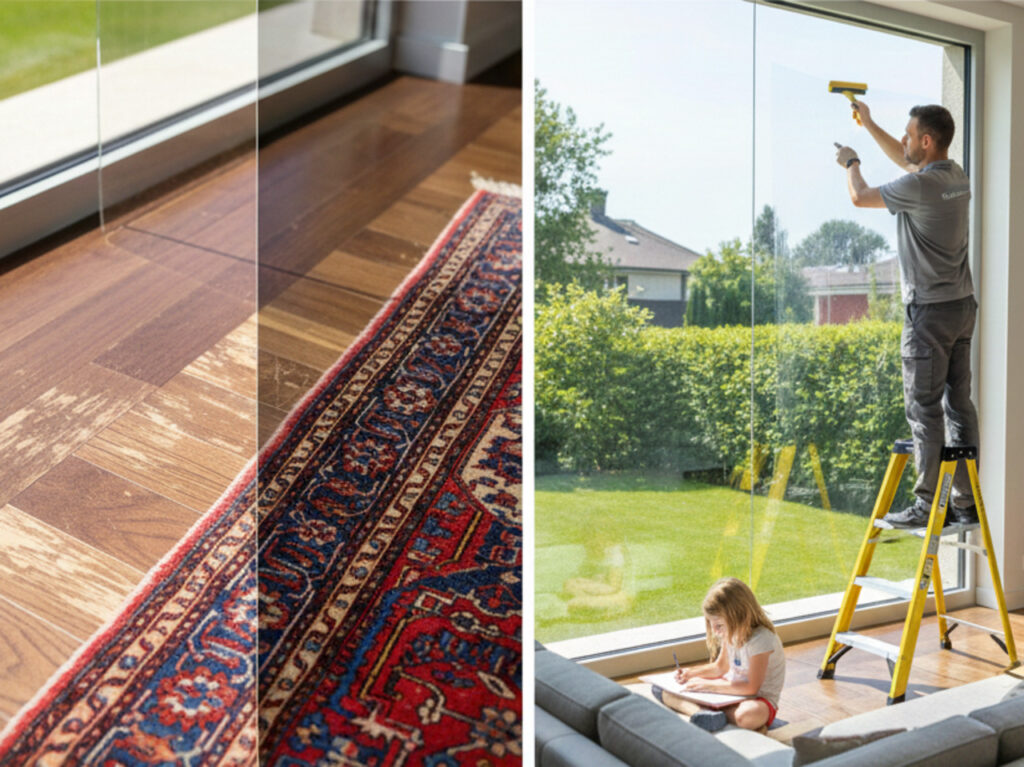
One of the most compelling advantages of specifying 3M UV protection window film over full glass replacement lies in its dramatically streamlined installation timeline and minimal operational disruption. Replacing entire window units is an inherently complex, labor-intensive, and time-consuming process. It typically involves extensive scaffolding, demolition, significant noise, potential weather delays, and prolonged building downtime, which directly impacts tenant occupancy and business operations.
In contrast, professional commercial window tinting for UV protection is a far less intrusive process. It can often be completed with minimal tools, primarily from the interior, and without the need for extensive structural modifications or heavy machinery. This efficiency translates into:
- Faster Project Completion: Reducing the overall construction or renovation schedule.
- Reduced Labor Costs: Requiring fewer skilled trades and less on-site hours.
- Minimal Business Interruption: Allowing occupants to maintain operations with little to no downtime, preserving revenue streams for commercial enterprises.
- Less Waste: Significantly lowering disposal costs and environmental impact compared to glass replacement.
For Project Manager Paul, this means meeting tight deadlines and delivering enhanced performance without the logistical nightmares associated with a full window replacement project for uv protection glass windows.
Significant Cost Savings: Comparing Lifecycle Costs and Upfront Investment for Commercial Window Tinting
When evaluating solutions for UV protection, a comprehensive cost analysis reveals that 3M window film presents substantial savings compared to the upfront and lifecycle costs of full glass replacement. The initial investment for high-performance film is typically a fraction of the cost associated with new, specialized UV-protective glass units. This disparity becomes even more pronounced in large-scale commercial projects or in scenarios involving custom-sized or uniquely shaped windows.
Beyond the initial purchase and installation, the lifecycle cost benefits extend further:
- Material Costs: Film materials are considerably less expensive per square foot than specialty glass.
- Labor Efficiency: As detailed previously, film installation requires significantly less labor and specialized equipment for commercial window tinting for UV protection.
- Reduced Permitting & Engineering: Fewer complex structural changes translate to fewer permits and engineering reviews.
- Energy Savings: While focused on UV, many 3M window film products also offer solar control film properties, contributing to lower HVAC loads and energy efficiency over the building’s lifespan.
- Maintenance & Warranty: 3M window film comes with robust warranties, ensuring long-term performance and protecting the investment.
This clear financial advantage allows project managers to allocate budget resources more effectively across other critical project components while still achieving superior UV performance.
The Impact on Project Budgets: Maximizing Value without Compromising Performance Requirements
The strategic adoption of 3M window film addresses the project manager’s challenge of optimizing budgets while meeting performance specifications. Where clients mandate advanced UV protection for comfort or assets, replacing all glass can quickly inflate project budgets. High-performance films provide an economical alternative that satisfies technical requirements without exceeding the total allocated project funding.
Window film offers a high-performance alternative that respects financial constraints without sacrificing quality or functionality.
This approach maximizes value by:
- Cost-Effective Upgrade: Delivering the desired performance upgrade at a fraction of the cost of new windows.
- Budget Flexibility: Freeing up capital that can be reinvested into other critical areas of the renovation or construction.
- Meeting Mandates: Ensuring all performance requirements, such as 99.9% UV blockage, are met reliably and within fiscal parameters.
For Project Manager Paul, this means delivering a successful project that satisfies client expectations, remains within budget, and avoids costly scope creep, positioning him as a highly effective and resourceful manager.
Quantifying the Return on Investment: Protecting Assets and Enhancing Building Longevity
Quantifying the return on investment (ROI) for 3M UV protection window film extends beyond immediate cost savings and improved project efficiency. The long-term benefits contribute significantly to asset protection, building longevity, and overall property value. By effectively blocking UV radiation, these films safeguard valuable interior assets from premature degradation and fading protection.
The quantifiable ROI drivers include:
- Extended Asset Lifespan: Preserving the value of furnishings, flooring, artwork, and merchandise, reducing the frequency and cost of replacement.
- Reduced Energy Consumption: Many UV-blocking films also have solar control film properties, leading to measurable reductions in cooling costs.
- Enhanced Occupant Comfort and Productivity: A more protected and temperate interior environment contributes to higher tenant satisfaction and reduced employee absenteeism.
- Increased Property Value: Buildings that offer superior occupant comfort and asset protection are often perceived as more premium, potentially leading to higher rental rates or resale value.
- Reduced Risk: Mitigating potential damage claims related to UV exposure, such as faded interiors or health concerns.
These tangible benefits demonstrate that investing in 3M window film is not merely an expense, but a strategic decision that delivers substantial financial and operational returns over the life of the building.
Illustrative Scenarios: Project Scale, Complexity, and Application Versatility for Various Commercial Settings
The versatility and efficiency of 3M high-performance UV films make them the preferred solution across a wide array of commercial project scales and complexities, often outperforming full glass replacement in practical application.
Consider these scenarios:
- High-Rise Office Buildings: Replacing windows in a multi-story building involves enormous logistical challenges, extensive permitting, specialized equipment, and significant disruption to hundreds of tenants. Film installation provides a discreet, rapid upgrade to thousands of windows with minimal impact on daily operations.
- Retail Environments & Museums: Protecting valuable merchandise, artifacts, and exhibits from UV-induced fading protection is paramount. Film allows these institutions to maintain their existing architectural aesthetics and security features while providing critical UV shielding, without the prohibitive cost and disruption of custom UV-protective glass.
- Historical Renovations: In projects involving heritage buildings, maintaining original window frames and glass is often a preservation requirement. 3M window film offers a non-invasive, reversible solution to introduce modern UV protection and energy efficiency without compromising historical integrity.
- Large-Scale Facility Upgrades: For facilities with hundreds or thousands of windows, such as schools, hospitals, or manufacturing plants, the cost and logistical nightmare of glass replacement are often prohibitive. Film provides a scalable, cost-effective, and rapid deployment strategy to enhance building performance across the entire campus.
These examples highlight how advanced film technology offers a flexible, high-performance solution, adapting to specific project needs where glass replacement would be financially, logistically, or aesthetically impractical.
Maximizing Value: Beyond UV Protection with Integrated Solar Control and Energy Savings
While the primary objective might be robust UV protection, advanced 3M window film offers a comprehensive suite of benefits that significantly enhance a building’s performance and occupant experience. For project managers, this translates into delivering superior value and a more holistic solution than simply addressing UV rays in isolation.
Dual-Purpose Solutions: Combining Robust UV Blockage with Effective Solar Heat Rejection
Modern 3M window film is engineered for dual functionality, providing both exceptional UV blockage and effective solar heat rejection. Unlike standard glazing or even some low-emissivity glass that may primarily address heat, these advanced films are designed to filter out up to 99.9% of harmful UV rays while simultaneously reducing the amount of solar heat gain entering a building. This integrated approach means construction and renovation managers can specify a single solution that tackles multiple environmental challenges, optimizing interior climate control and protecting assets without compromising natural light or exterior aesthetics.
Need More Info?
The Window Film Depot team is happy to help.
Enhancing Building Envelope Performance: Reducing HVAC Loads and Optimizing Energy Efficiency
The ability of 3M solar control film to reject significant amounts of solar heat directly contributes to a more efficient building envelope. By preventing heat from penetrating the glass, these films reduce the workload on HVAC systems, particularly during peak cooling periods. This reduction in energy consumption translates into tangible operational savings for building owners, improving the project’s long-term return on investment. For Project Manager Paul, demonstrating these energy efficiency gains can be a critical factor in budget approvals and client satisfaction, showcasing how an upfront investment in film technology delivers sustained financial benefits.
Mitigating Glare and Improving Occupant Comfort: Addressing Productivity and Tenant Satisfaction
Beyond temperature control, excessive glare can severely impact occupant comfort and productivity, leading to eye strain and the constant need for blinds or curtains, which obscure views. Certain 3M window film products are specifically designed to reduce glare by a substantial margin, creating a more visually comfortable environment. This subtle yet significant improvement enhances the overall quality of interior spaces, making offices more conducive to work, retail spaces more inviting, and residential units more livable. Addressing glare contributes directly to higher tenant satisfaction and retention, a key metric for any property manager or building owner.
Preserving Interior Assets: Extending the Life of Furnishings, Displays, and Inventory
The damaging effects of UV radiation are not limited to human health. They also contribute significantly to the fading protection, cracking, and degradation of interior assets. Hardwood floors, expensive furniture, artwork, retail displays, and even stored inventory are all vulnerable to prolonged UV exposure. By blocking nearly all UV rays, 3M window film acts as an invisible shield, dramatically extending the lifespan and preserving the vibrant appearance of these valuable assets. This protection minimizes the need for costly replacements or refurbishments, offering a clear economic benefit that project managers can highlight to their clients.
Contributing to Sustainable Building Practices and Achieving Green Building Certifications
In an era focused on environmental responsibility, specifying 3M window film aligns seamlessly with sustainable building practices. Their energy-saving properties contribute to a reduced carbon footprint by lowering HVAC-related energy consumption. Additionally, the application of high-performance window films can support projects aiming for green building certifications such as LEED (Leadership in Energy and Environmental Design) or WELL Building Standard. These certifications often award points for energy efficiency improvements, occupant comfort, and resource stewardship. For Project Manager Paul, this means the choice of window tinting can play a strategic role in achieving broader sustainability goals and enhancing the building’s market appeal.
Specifying for Success: A Project Manager’s Guide to Selecting Advanced UV Films
For construction and renovation managers, the successful integration of advanced UV protection and solar control film hinges on a methodical approach to selection and implementation. This section outlines the critical steps and considerations for ensuring optimal performance and project delivery.
Identifying Project-Specific UV Protection Requirements: A Comprehensive Needs Assessment
The first step in specifying advanced UV films is conducting a thorough needs assessment specific to the project. This involves understanding:
- Building Orientation and Sun Exposure: South and west-facing windows typically experience the most intense UV and solar heat gain.
- Occupancy and Usage: Is it a residential, commercial office, retail, or museum space? Each has unique requirements for comfort, glare, and asset protection.
- Existing Glazing Conditions: The type of current glass (e.g., single-pane, double-pane, tinted) will influence film selection and expected performance gains.
- Client Priorities: Is the primary driver energy efficiency, glare reduction, UV protection for merchandise, or a combination?
- Aesthetic Considerations: Maintaining natural light levels and preserving exterior appearance are often crucial.
A detailed assessment ensures the selected 3M UV protection window film precisely matches the project’s performance objectives and budgetary constraints.
Key Specifications to Consider: Transparency, Performance Data, Durability, and Warranty of 3M UV Protection Window Film
When evaluating 3M UV protection window film products, project managers should scrutinize specific performance metrics and product characteristics:
- Visible Light Transmission (VLT): Indicates how much visible light passes through the film. Higher VLT means more natural light, crucial for maintaining brightness.
- Ultraviolet Light Rejection (UVR): Quantifies the percentage of harmful UV rays blocked. 3M window film typically offers near-total UV rejection.
- Solar Heat Gain Coefficient (SHGC): Measures the fraction of incident solar radiation that enters through a window. Lower SHGC values indicate better solar heat rejection.
- Infrared Rejection (IRR): Denotes the percentage of infrared energy (heat) rejected. High IRR is key for energy efficiency.
- Durability and Scratch Resistance: Advanced films are engineered with proprietary coatings to resist scratching during cleaning and daily use, extending their aesthetic and functional life.
- Manufacturer’s Warranty: A robust, manufacturer-backed warranty (such as those offered by 3M) provides long-term assurance of product performance and material integrity, crucial for Project Manager Paul’s risk management.
Partnering with Expertise: The Value of Certified 3M Installers and Proven Commercial Project Experience
The performance of advanced 3M UV protection window film is directly tied to the quality of its professional installation. Partnering with certified 3M installers is not merely a recommendation; it is a critical component of successful project execution. These professionals possess specialized training and experience required to apply films flawlessly, ensuring optimal adhesion and manufacturer specification adherence. Their commercial project experience means they understand large-scale logistical challenges, minimizing disruption and maintaining strict project timelines. This expertise mitigates installation risks and safeguards the warranty, providing total peace of mind for every project manager.
The Installation Process: What Project Managers Should Expect from Initial Assessment to Completion
A typical installation process for 3M window film is streamlined to minimize disruption compared to glass replacement. Project managers can expect:
- Initial Site Survey and Consultation: Certified installers conduct a thorough assessment, confirm measurements, and finalize film selection based on the needs assessment.
- Detailed Proposal and Project Plan: A comprehensive plan outlines costs, timelines, and logistical considerations, including staging areas and access requirements.
- Scheduling and Preparation: Installation is scheduled to align with project timelines, often segmenting work areas to maintain building functionality. Glass surfaces are meticulously cleaned.
- Professional Application: Films are precision-cut and applied using specialized techniques, ensuring a bubble-free and seamless finish.
- Quality Assurance and Walk-through: Post-installation, a thorough inspection ensures the film meets all specifications and aesthetic standards. A client walk-through confirms satisfaction.
This methodical approach allows for efficient project completion with significantly less labor, waste, and interruption than full glass replacement for uv protection glass windows.
Long-Term Maintenance and Warranty Considerations for Advanced Film Solutions
One of the significant advantages of specifying 3M advanced window film is its minimal long-term maintenance requirements. Once installed, films typically only require routine cleaning with non-abrasive cleaners, mirroring the care for standard glass. Unlike hermetically sealed insulated glass units which can fail and fog, films do not degrade in the same manner. 3M warranties cover material and workmanship defects, including bubbling or peeling, often outlasting the original glass units. This reliability and low maintenance boost cost-effectiveness, delivering lasting value to building owners and occupants.
Conclusion: Strategic Superiority in UV Protection for Commercial Assets
Reaffirming the Thesis: Advanced 3M Window Film as the Premier Solution for Modern Projects
In-depth analysis of UV strategies for commercial glass facades points to a strategic advantage for advanced 3M window films. Project managers like Paul must balance client performance demands, project timelines, and budget management for every individual construction task. Specifying high-performance 3M window film for UV protection is not merely a value-add but an essential project requirement. It represents a superior, data-backed approach that demonstrably outperforms the logistical and financial burdens associated with full glass replacement. The efficiency, cost-effectiveness, and verifiable performance of 3M window film position it as the premier solution for contemporary projects. It offers optimal UV protection without compromising operational continuity or fiscal responsibility for building owners and project management teams.

Key Takeaways for Construction and Renovation Managers Prioritizing Efficiency and Performance
The decision-making process for upgrading commercial glazing requires a comprehensive understanding of both immediate project impacts and long-term asset protection. For managers focused on efficiency and performance, several key advantages of advanced 3M window film emerge as critical differentiators:
- Unmatched Cost-Efficiency: Film application offers a significantly lower capital outlay compared to glass replacement, avoiding the substantial costs associated with demolition, disposal, new material procurement, and extensive structural work. This directly impacts project budget adherence and allows for resources to be allocated elsewhere.
- Expedited Project Timelines: Installation of window tinting is a fraction of the time required for full glass replacement, leading to faster project completion and minimized disruption to building occupants and ongoing business operations. This efficiency is invaluable for high-traffic commercial environments.
- Superior UV Rejection: Advanced 3M films are engineered to block virtually 99.9% of harmful UVA and UVB rays, providing industry-leading protection against fading protection of interiors and safeguarding occupant health, often exceeding the UV performance of standard replacement glass options.
- Enhanced Performance Versatility: Beyond UV protection, specialized 3M window film can simultaneously deliver additional benefits such as solar control film, heat reduction, glare control, energy efficiency improvements, and increased shatter resistance, all without altering the building’s aesthetic or requiring major construction.
- Minimal Disruption: The non-invasive application process means less noise, less debris, and a much smaller footprint on-site. This translates to fewer inconveniences for tenants and staff, a critical consideration in occupied buildings.
Future-Proofing Commercial Properties with Innovative Advanced Film Technology
Investing in advanced 3M window film is a forward-thinking strategy that extends beyond project completion, effectively future-proofing properties against demands. By preserving window infrastructure, managers retain flexibility for future upgrades without committing to the irreversible and costly window replacement process.
This adaptability is crucial in a rapidly changing architectural landscape where energy efficiency standards and environmental considerations continue to evolve dail
Moreover, the durable nature of 3M window film contributes to the long-term preservation of valuable interior building assets. This strategic choice protects investments within the property, enhancing its longevity and overall aesthetic appeal for all occupants. As a core component of a holistic strategy, advanced film ensures that commercial assets remain compliant and comfortable. This technology safeguards property value and operational integrity for many years to come through superior solar management.
Frequently Asked Questions
How does 3M UV protection window film block UV rays from windows?
3M UV protection window film utilizes advanced material science, incorporating specialized polymer layers and UV inhibitors. These components work together to absorb and reflect up to 99.9% of both UVA and UVB rays, converting harmful UV photons into dissipated heat. This prevents UV radiation from penetrating interior spaces, offering superior protection compared to standard glass.
Is commercial window tinting for UV protection better than replacing glass windows?
For most renovation and upgrade projects, commercial window tinting for UV protection is a significantly more efficient and cost-effective solution than full uv protection glass windows replacement. Film installation causes minimal disruption, is faster, and has lower material and labor costs, while still delivering comparable or superior UV protection. It offers a strong return on investment by preserving assets and enhancing energy efficiency without the logistical complexities of glass replacement.
What are the main benefits of using 3M window film for commercial properties?
Beyond near-total UV blockage, 3M window film offers a range of benefits for commercial properties. These include significant fading protection for interiors and merchandise, reduced solar heat gain for improved energy efficiency and lower HVAC costs, glare reduction for enhanced occupant comfort, and increased asset protection for furnishings and valuable displays. Certain films also contribute to safety by improving glass shatter resistance (e.g., meeting ANSI Z97.1 standards) and can support green building certifications.
How durable is 3M UV protection window film, and what is its lifespan?
3M UV protection window film is engineered for long-term durability, featuring robust adhesive systems and scratch-resistant coatings. When professionally installed by certified 3M installers, these films are designed to perform reliably for many years. 3M provides comprehensive manufacturer-backed warranties that cover issues like bubbling, peeling, or demetallization, ensuring the product’s integrity and consistent performance throughout its lifespan, which often exceeds a decade.