Searching for window privacy film near me usually means you want a faster, cleaner way to make windows more private without replacing glass. In 2026, homeowners are also looking for glare reduction, heat control, UV protection, and style in one simple solution.
Window film is commonly used on bathroom windows, street-facing living rooms, home offices, rental apartments, and glass doors. Compared with blinds or curtains, film saves space, keeps natural light moving through the room, and is easy to clean.
In this guide, we’ll cover privacy levels, decorative options, renter-friendly static cling films, installation tips, and how to compare local buying options.
Table of Contents:
- Why Homeowners Are Choosing Window Film in 2026
- Types of Window Privacy Film and How to Choose
- Where to Buy Window Privacy Film Near You
- Room-by-Room Ideas for Using Window Privacy Film
- Care, Maintenance & Long-Term Performance
- FAQ: Common Questions About Window Privacy Film Near Me
- Conclusion & Next Steps
Why Homeowners Are Choosing Window Film in 2026
More remote work, higher 2025–2026 energy costs, and hotter summers have made residential film a practical upgrade. Since summer 2025 heat waves, many homeowners have started with one west-facing room, then expanded after seeing the result.
Key motivations include:
- Privacy from neighbors, sidewalks, and nearby buildings.
- Glare reduction on screens in offices and living rooms.
- Protection for furniture, art, rugs, and floors from harmful uv rays.
- Heat control for large south- or west-facing windows.
High-quality films block up to 99% of UV rays, and many modern products can significantly cut glare while still allowing daylight. The U.S. Department of Energy notes that window attachments, including films, can support energy performance improvements when selected correctly.
Types of Window Privacy Film and How to Choose
Window privacy films vary by style and functionality, so your goal should guide the choice. A bathroom, office, nursery, and front door may each need a different film.
Common types include:
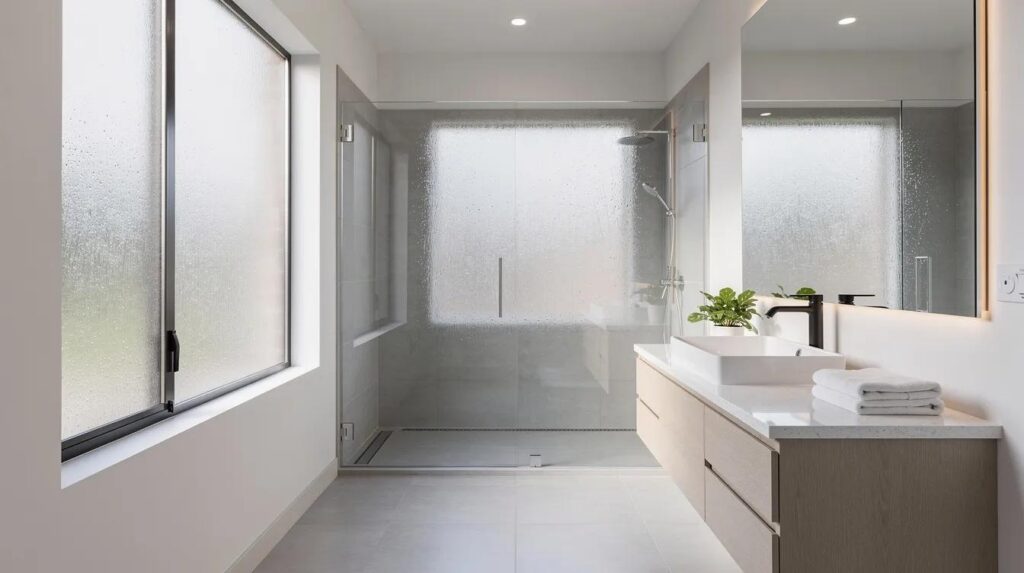
- Frosted: Frosted window film blurs details while allowing daylight in. Frosted styles provide a clean, diffused look for windows.
- Decorative: Decorative window films enhance home aesthetics with stylish designs. Stained-glass effects add color and pattern to plain panes.
- Blackout: Total blackout films block 100% of light and view.
- One-way mirrored: One-way mirror films provide daytime privacy only. Mirrored films create daytime screening for sunlit rooms.
- Heat control: Infrared-blocking films reduce solar heat gain.
- Clear UV film: Designed to protect interiors while preserving visibility.
Privacy films can reduce visibility from outside, but choosing the right film depends on day and night performance and climate exposure. Also check VLT, or visible light transmission: higher VLT means more light; lower VLT means more shading.
Privacy Levels & Light: Getting the Balance Right
Privacy and natural light are a trade-off, but the right VLT and film type can create a comfortable balance.
- Bathrooms and street-level bedrooms often need frosted or blackout coverage.
- Entryways and offices may work better with light-diffusing frosts or soft tints.
- Frosted film hides detail while letting diffuse daylight in, which helps small spaces feel open.
- Test samples in the morning, midday, and night before a full install.
Different rooms in the same house can use different films to match sun exposure, privacy needs, and decor.
Attachment Types: Static Cling vs Self-Adhesive Films
Static cling and adhesive films both solve privacy problems, but they fit different situations.
Static cling film is glue-free, uses water during installation, and is renter friendly. Static cling films are easy to remove and reposition. Static cling films can be repositioned during installation, making them a smart start for beginners, apartments, kids’ rooms, or seasonal updates.
Self-adhesive films provide a more permanent installation option. They are better for high-traffic areas, hard-to-reach glass, or long-term coverage you do not plan to remove quickly.
Both types require careful measuring and clean glass. Dust, bad cuts, or weak edge contact can lead to bubbles or lifting.
Specialized Films: Heat, UV & Glare Reduction
Some window films are engineered for performance beyond privacy, especially where the sun hits hard.
Heat-control films reflect or absorb infrared energy. Architectural window film blocks significant solar heat, and window films can reduce heat by up to 88% depending on product and conditions. Reduced heat gain lowers HVAC workload and utility bills, while window films improve indoor comfort by reducing hot spots.
UV-blocking films help block harmful uv rays that fade floors, artwork, and furniture. Glare reduction films are useful in home offices and TV rooms because they reduce reflection on screens without making the space feel like a cave.
Advanced window films enhance energy efficiency in buildings, but maintaining glass compatibility is essential when installing films. Applying dark or highly absorbing films on dual-pane windows can cause thermal stress, so check product guidance before you apply anything.
Where to Buy Window Privacy Film Near You
You can buy window privacy film from big-box hardware stores, local glass and tint shops, or online specialty retailers. Local stores let you see true color, texture, and opacity, while online shops may offer more size options, niche films, reviews, and bulk rolls.
For a first DIY project, a pre-cut kit with local pickup is often easier. For larger windows, custom rolls may reduce waste. Before adding film to your cart, check store inventory and reviews from the last 12–18 months.
For a large home, complex glass doors, or unusual panes, a professional installer found through local search may save time and deliver a cleaner finish.
Local vs Online: Pros and Cons
The trade-off is convenience, price, selection, and confidence.
- Local purchase: immediate pickup, in-person advice, easier returns, and real samples.
- Online purchase: broader decorative patterns, performance films, and sizes for multiple windows.
- Best approach: research online, then confirm the look locally when possible.
- Professional installers often source higher-spec films not sold directly to consumers.
Reflective films can crease easily and require meticulous installation, so local expert advice can matter.
Step-by-Step: How to Install Window Privacy Film Yourself
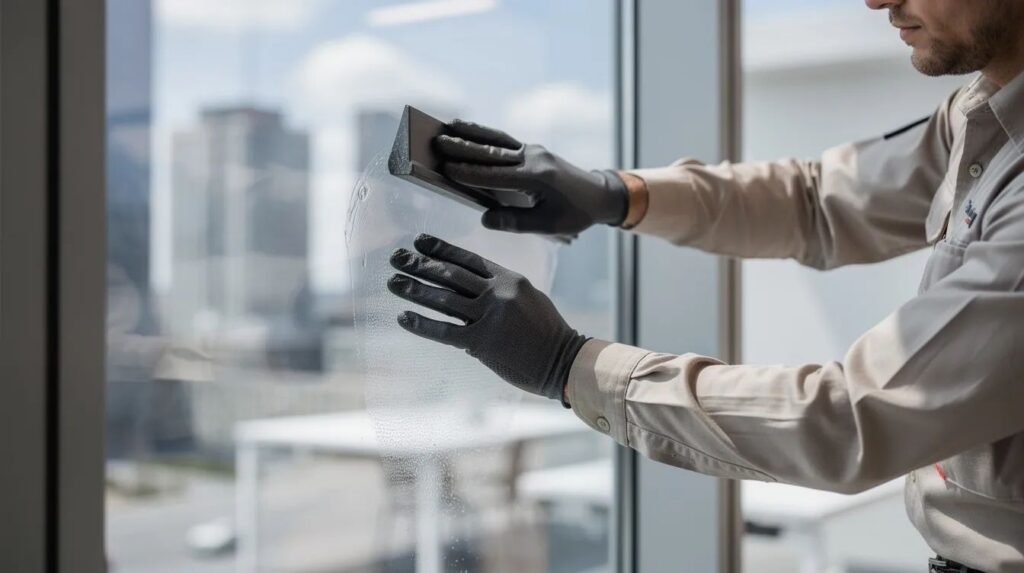
Most DIY installation projects on flat glass are manageable, and installation takes less than 30 minutes for most windows once your tools are ready. Window films apply easily using just water and soap.
Basic steps:
- Measure each glass section carefully. Measuring glass sections before cutting ensures a clean finish.
- Cut film slightly oversized.
- Clean the glass with ammonia-free cleaner and a lint-free cloth.
- Spray the glass with slip solution.
- Place the film, squeegee from center outward, then trim edges with a sharp blade.
Static cling and adhesive films both use a wet method, but static film is easier to lift and reset. Let the film cure for 24–48 hours before heavy cleaning; small water bubbles often dry out naturally.
Common Mistakes to Avoid
Good prep prevents most problems.
Avoid:
- Dust or lint on glass, which creates bumps.
- Cutting film too small.
- Not using enough slip solution.
- Trimming with a dull blade.
- Installing in direct hot sun or very cold weather.
Practice on a smaller side window before large picture windows or doors. Read manufacturer instructions because curing times and cleaning rules differ. Edge lift is a sign that glass prep, sizing, or adhesion needs attention.
When to Hire a Professional Installer
Large, high, or specialty windows often justify professional help. This includes multi-story glass walls, bay windows, sliding patio doors, storefronts, and security applications.
Pros bring the right tools, ladders, and experience to reduce waste and create bubble-free results. Ask for written quotes, film specs, VLT, UV rejection, warranty detail, and photos of similar local work. Quality installation often includes multi-year or lifetime coverage against peeling, bubbling, and discoloration.
Room-by-Room Ideas for Using Window Privacy Film
Different rooms need different privacy, light, and design choices. You can mix frosted, decorative, and performance films throughout the home while keeping one cohesive look.
Think beyond exterior windows. Decorative films can be used on cabinets and interior partitions, as well as sidelites, transoms, shower enclosures, and glass doors. Privacy window films enhance home aesthetics while providing coverage, and decorative window films enhance home aesthetics with stylish designs.
Bathroom & Bedroom Privacy
Bathrooms and bedrooms need consistent private coverage, especially at night.
Frosted or patterned films obscure details while still admitting daylight, making them ideal for first-floor bathrooms. Blackout films may fit nurseries or night-shift bedrooms where the goal is near-total darkness. Partial coverage, such as the lower half of a window, can protect privacy while preserving a view.
Choose moisture-rated films for bathrooms and shower glass.
Home Offices, Media Rooms & Glare Reduction
Since 2020, more people work from home and need glare control without closing blinds all day. Light-tinted or neutral performance films can reduce glare, protect against UV, and preserve outward views.
They can also improve video calls and reduce eye strain during long monitor sessions. In media rooms, pair film with adjustable shades for total light control when needed. Check a sample on your laptop or phone camera before committing.
Entryways, Living Rooms & Decorative Touches
Front doors and living rooms need a balance of curb appeal, privacy, and comfort. Stained-glass-style or geometric films add character to sidelites and transoms, while subtle etched patterns suit modern interiors.
Decorative films can be updated every few years at a lower price than replacing glass. To create a polished look, match the finish with door hardware, trim, and interior color choices.
Care, Maintenance & Long-Term Performance
Properly installed window films need minimal maintenance. Wait for the manufacturer’s curing period, often up to 30 days, before the first deep clean.
Use soft cloths, mild ammonia-free cleaner, and gentle squeegees. Avoid scraping edges. High-quality films can last many years without yellowing when installed correctly.
Static cling films can be peeled off, stored flat or on backing paper, and reapplied if the manufacturer allows reuse. This makes them a flexible solution when you want to remove, move, or update a room.
FAQ: Common Questions About Window Privacy Film Near Me
Here are practical questions homeowners ask when comparing products, local installers, and long-term benefits in 2024–2026.
Does window privacy film work at night with the lights on?
Frosted and blackout films work day and night because they obscure or block the view. One-way mirror films provide daytime privacy only; at night, interior lights can make the inside visible from outside.
Will window film damage my windows or void the warranty?
Not usually, if the film is compatible with the glass. Double-pane, low-E, tempered, and older windows may need specific products, so check manufacturer guidance or ask for a consultation before installation.
How long does window film last in direct sun?
Quality adhesive films can last many years in direct sun. Static cling usually has a shorter life, especially with heat, moisture, or frequent repositioning.
Can I remove static cling film from a rental without leaving residue?
Yes. Static cling has no glue, so it is generally easy to remove and reposition without residue. Clean the glass afterward for the best result.
Is window film better than blinds for glare reduction on computer screens?
Often, yes. Film reduces glare across the whole pane while keeping the view and light. Blinds can help, but they may darken the room or create striped shadows on screens.
How much privacy can I expect from one-way mirror film during the day?
In bright daylight, mirrored film can make a room much harder to see into. After dark, that privacy drops if your lights are on.
How do I compare quotes from different window film installers near me?
Compare film brand, VLT, UV rejection, heat performance, warranty, labor, removal of old film, and glass compatibility. A low price is not always the best value if specs are unclear.
Do privacy films affect resale value or inspections?
High-quality, cleanly installed films are generally viewed as upgrades because they add comfort, privacy, and energy efficiency. Poorly applied, bubbling, or peeling film may raise questions during inspection.
Conclusion & Next Steps
Window privacy film is a simple way to improve privacy, comfort, security, and style without replacing glass. The right choice depends on your room, sun exposure, day and night needs, and whether you prefer static cling or permanent adhesive film.
Start with your top 1–2 pain points: privacy, heat, or glare. Test samples, compare specs, and contact a local expert for product recommendations or a quote. With the right film in place, you can enjoy a cleaner look, better comfort, and a more efficient home without bulky curtains or blinds.