Table of Contents:
- Consumer vs. Professional Blackout Film: A Performance and Risk Comparison
- Mission-Critical Applications for Blackout Film for Windows
- The Project Multiplier: Logistical Advantages of a National Installer
- Partnering for Success: De-Risking Your Project with a Top 3M National Installer
- A Blueprint for Flawless Blackout Film Project Execution
- Frequently Asked Questions
- Related Posts from Window Film Depot
Consumer vs. Professional Blackout Film: A Performance and Risk Comparison
Achieving true blackout conditions is contingent on the product itself. For project managers, the market distinction between consumer-grade and professional-grade films represents a critical decision point that directly impacts project risk, budget, and long-term asset performance. Sourcing a film from a non-specialized retailer introduces vulnerabilities that are often not apparent until after installation, leading to costly rework and client dissatisfaction.
Material Composition and Durability
The functional lifespan of a blackout window film is determined by its core construction. Consumer-grade films, typically available through online marketplaces or big-box stores, are often a single, thin layer of dyed polyester. This simple construction is highly susceptible to physical and environmental damage. Scratches from cleaning, fading from UV exposure, and discoloration can compromise the film’s appearance and light-blocking capability in a short time.
In contrast, professional-grade blackout films are engineered as multi-layered systems. They are significantly thicker and more robust, often incorporating a durable PVC vinyl face stock that resists abrasions and is compatible with standard commercial cleaning protocols. This construction ensures the film maintains its aesthetic integrity and performance for years, representing a lower total cost of ownership and mitigating the risk of premature replacement.
Adhesive System Failure: The Costliest Risk
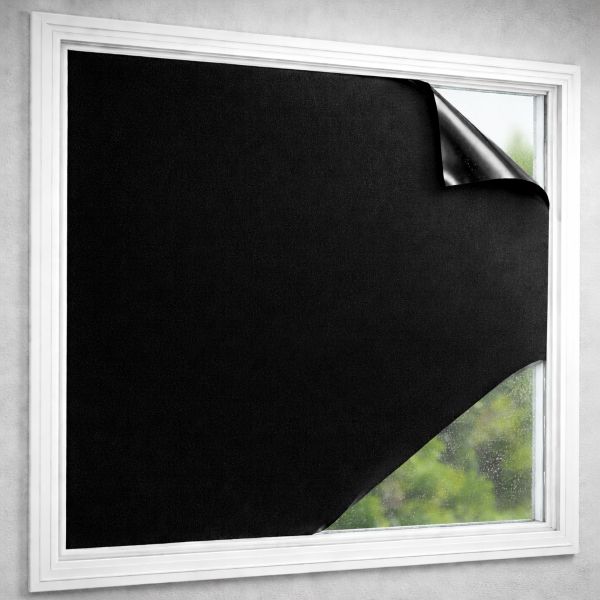
The single greatest point of failure for an inferior window film is its adhesive system. Consumer-grade films typically use a basic, low-tack adhesive that is not formulated to withstand the thermal cycling a window experiences daily. As the glass heats and cools, this weak adhesive can break down.
This failure manifests in several ways that are unacceptable in a commercial setting:
- Bubbling and Blistering: Trapped air and moisture create an unprofessional and visually disruptive appearance.
- Edge Peeling: The corners and edges of the film lift from the glass, creating light leaks that defeat the purpose of a blackout specification.
- Adhesive Residue: Upon failure, removing a cheap film often leaves a stubborn, sticky residue. This requires significant labor and chemical solvents to clean, complicating and delaying the installation of a replacement film.
Professional-grade films use advanced, high-performance adhesives. These systems are chemically engineered to create a permanent, molecular-level bond with the glass. They are stable under extreme UV and heat loads, ensuring the film remains perfectly flat and securely bonded for its warrantied life. Specifying a film with a proven adhesive system is a primary method of de-risking the installation and avoiding budget overruns from rework.
The Impact on Project Warranties and Client Satisfaction
A project’s success is measured by long-term performance and client satisfaction, both directly tied to the warranty. A consumer-grade film offers little to no protection in a commercial environment. Any warranty is typically voided by a commercial application and almost never covers labor for removal and replacement. This leaves the project manager and the client financially responsible for product failure.
Leading professional blackout films, when procured and installed by a certified partner, are backed by comprehensive manufacturer warranties. These warranties often cover both materials and labor for up to 10 years or more. This is not just a product guarantee. It is a critical project assurance that protects the budget from unforeseen costs and guarantees the specified performance for the client. By aligning with a professional film and a certified installer, you deliver a complete, warrantied solution that solidifies the project’s value.
Mission-Critical Applications for Blackout Film for Windows
Understanding the technical specifications of a light blocking window film is the first step. The next, more critical step for a project manager is mapping those specifications to the absolute requirements of a given space. In certain commercial, government, and scientific environments, light control is a core operational necessity. In broader architectural applications, blocking film may also be specified to completely restrict visibility or electronic signal transmission through glass where privacy or security protocols demand it.
For these mission-critical applications, specifying a high-performance film is only half of the solution. The quality of the installation guarantees that the film’s on-paper specifications translate to on-site performance, ensuring a flawless, gap-free barrier against light intrusion.
Need More Info?
The Window Film Depot team is happy to help.
Securing Sensitive Information in Corporate and Government Facilities
In environments where confidential data is handled, visual privacy is a primary security protocol. Corporate boardrooms, legal offices, and government facilities, including Sensitive Compartmented Information Facilities (SCIFs), cannot afford any level of transparency. A professionally installed opaque window film is the standard for these applications. The installation must be precise, with film cut to the exact dimensions of the glazing and sealed perfectly at the edges. This eliminates light bleeds that not only compromise privacy but can also signal to outsiders that a room is occupied, making it a potential target. For a project manager overseeing a secure facilities build-out, relying on a certified installer mitigates this risk.
Optimizing Performance in Conference Rooms and Media Rooms
The effectiveness of modern projection and display technology is directly impacted by ambient light. In corporate presentation rooms, university lecture halls, and dedicated media rooms, stray light washes out screens, reduces contrast, and diminishes color accuracy. This can undermine a critical presentation or ruin a cinematic experience. To achieve the deep blacks and vibrant colors required for high-quality AV, complete control over ambient light is essential. Blackout film serves as a foundational element of the room’s design, creating a perfectly dark canvas. Even minor installation flaws like edge gaps or seams can create distracting slivers of light, frustrating users and defeating the purpose of the AV investment.
Ensuring Light Control in Scientific and Lab Environments
For many scientific and industrial processes, specific wavelengths of light can be a contaminant. Uncontrolled light exposure can compromise research, spoil products, or invalidate testing.
Applications requiring this level of control include:
- Photographic Darkrooms: Require complete darkness to prevent premature exposure of light-sensitive materials.
- Laser Labs: Stray light can interfere with the precise calibration and operation of sensitive optical equipment.
- Cleanrooms and Pharmaceutical Manufacturing: UV or visible light degrades many chemical compounds and biological agents, making total light blocking essential for product stability.
- Material Testing: Facilities that test material durability require a controlled environment where teams can precisely manage light exposure.
In these contexts, the film’s UV rejection and VLT specifications are paramount. A failed installation does not just lead to inconvenience, it can lead to significant financial loss from ruined materials or invalid research.
Retail and Commercial Space Transformation
Beyond technical requirements, blackout film is a powerful tool for aesthetic and atmospheric control. Project managers frequently handle renovations that require them to alter a space quickly and cost-effectively. Blackout film allows for the complete opaquing of glass to hide unsightly storage, conceal renovation work, or prepare a space for a future tenant. In retail, it can create a dramatic, focused environment that directs customer attention. For these applications, the visual finish is critical. A perfectly smooth, seamless application reinforces a high-end brand image.
The Project Multiplier: Logistical Advantages of a National Installer
When a project scope expands from a single building to a portfolio of properties across the country, complexity multiplies. A fragmented procurement strategy introduces significant risk. Engaging a single, expert national installer transforms this logistical challenge into a strategic advantage, streamlining execution and ensuring consistent outcomes from the first site to the last.
Risks of Managing Multiple Local Vendors
For a project manager overseeing a national rollout, delegating vendor sourcing to local managers can seem efficient. This approach, however, introduces variables that are difficult to control. The primary risks include:
- Inconsistent Vetting: The time required to properly vet the insurance, safety records, and technical proficiency of dozens of individual vendors is a significant drain on resources.
- Variable Installation Quality: There is no universal standard among local providers. Each will use their own tools and techniques, resulting in wide variance in finish quality and film longevity.
- Lack of Accountability: When an issue arises at one location, it becomes a localized dispute, with no clear path to resolution.
- Administrative Overload: Managing separate contracts, purchase orders, schedules, and invoices for each vendor creates a massive administrative burden.
Achieving Consistency Across All Locations
The fundamental promise of a national installer is uniformity. When your project requires that a conference room in San Diego has the exact same light-blocking performance as one in Boston, a centralized partner is the only way to guarantee it.
A disciplined, system-wide approach achieves this consistency. It guarantees product integrity. Central sourcing supplies the specified film, such as a 3M blackout film, eliminating any chance of unapproved substitutions. It also standardizes the human element. All installation teams follow the same manufacturer-certified methodologies and use the same preparation processes, cutting techniques, and quality control checklists. This approach ensures the installation remains a controlled, repeatable process that delivers an identical outcome, regardless of geography.

Streamlining Communication with a Single Point of Contact
For a project manager, time and attention are finite resources. A national rollout managed through multiple vendors fragments that attention. Partnering with a national installer consolidates all project communication into a single, efficient channel. You are assigned a dedicated project manager who is your sole point of contact. This individual understands the full scope of your project and is responsible for coordinating site surveys, managing a master schedule, handling logistics, and providing consolidated progress reports and centralized billing.
How a National Partner Mitigates Delays and Budget Overruns
Single events rarely cause project delays and budget overruns in multi-site rollouts. Instead, accumulated friction causes them. A national partner eliminates this friction by design. Proactive planning, based on experience from thousands of installations, allows a national partner to anticipate common site-specific challenges. Because a national installer has dedicated crews and a deep inventory of materials, they have the capacity to meet aggressive timelines without sacrificing quality. Most importantly, the emphasis on high-quality installation from the outset drastically reduces the need for costly and time-consuming rework.
Partnering for Success: De-Risking Your Project with a Top 3M National Installer
While the logistical benefits of a national partner are clear, the specific capabilities of that partner determine project success. The combination of an industry-leading product and a proven, certified installer creates an execution framework that removes uncertainty.
Why 3M’s Engineering Reputation Matters
In applications where performance is non-negotiable, the material itself is the foundation. Decades of leadership in materials science, particularly in adhesives and polymer films, built 3M’s legacy. This is a guarantee of engineering excellence. For blackout films, this translates to tangible performance. 3M films offer exceptional dimensional stability, preventing shrinkage and light gaps. Their proprietary adhesives resist peeling and bubbling, while still allowing for clean removal if needed. The manufacturing process ensures unparalleled consistency, meaning every roll of 3M window films delivers the exact specified light transmittance.
The Execution Guarantee of a Premier National Partner
Specifying a superior product like 3M film is only half the solution. Its performance is entirely dependent on the quality of the installation. As the largest 3M authorized window film installer in the United States, Window Film Depot offers an execution guarantee that other providers cannot match. This status signifies the deepest level of product knowledge and installation expertise, honed over thousands of projects. It ensures our teams are trained directly by 3M on the most advanced techniques. This synergy between the best product and the best installer de-risks your project.
A Partnership Approach from Specification to Sign-Off
We view our role not as a vendor, but as an integrated member of your project delivery team. Our process begins long before installers arrive on site. We provide specification consulting to help you select the precise film that meets your project’s performance, aesthetic, and budgetary goals. From there, we collaborate with your team to build a comprehensive rollout plan. Throughout execution, our dedicated project manager provides transparent communication and regular reporting. We do not complete the project until we conduct a final walk-through at each site to verify that the installation meets our stringent quality standards and your complete satisfaction.
Illustrative Scenarios for National Rollouts
The value of this integrated approach becomes clear when applied to real-world challenges.
- The National Retail Chain: A brand is updating 200 stores, requiring blackout film on stockroom windows for security and to hide back-of-house operations. A national partner ensures brand consistency by using the exact same film and finish quality at every location, managed through a single schedule.
- The Corporate Campus Renovation: A tech company is retrofitting 50 new conference rooms, each requiring a strict light-control specification for optimal AV performance. A single-source installer works with the general contractor to phase installations, conducts on-site light meter readings for verification, and guarantees all 50 rooms meet the technical requirement.
- The Sensitive Government Facility Rollout: A contractor needs to install security and blackout film at 12 facilities in six different states. A national installer with experience in this sector can manage the logistics of vetting installers, navigating the security bureaucracy of each site, and providing the necessary documentation.
A Blueprint for Flawless Blackout Film Project Execution
Successfully deploying commercial blackout window film is less about a single product and more about a complete, integrated solution. For project managers, careful planning and strategic partnership pave the path to achieving specified performance and avoiding costly rework.
Key Takeaways for an Ironclad Project Specification
A detailed project specification is your primary tool for controlling outcomes. To ensure your blackout film installation meets technical and aesthetic requirements, your specification should include:
- Absolute Light Transmittance: Specify a quantitative metric, such as “<0.1% Visible Light Transmission (VLT),” instead of subjective terms.
- Film Material and Adhesive: Define the required film type and specify a permanent or removable adhesive system.
- Seam and Edge Gap Tolerances: Outline precise requirements for seams and the maximum allowable light gap at the window’s edge, often measured in millimeters.
- Surface Preparation and Cleanup: Detail the expected level of cleanliness for the glass before installation and requirements for site cleanup afterward.
- Warranty Requirements: Specify the required manufacturer warranty for the film and a separate warranty for the installation labor.
The Strategic Value of Integrating Installation into Sourcing
The most common point of failure in specialty film projects is the separation of material procurement from installation. Viewing the installer as an integral part of the solution transforms the sourcing process. A qualified national installation partner offers a centralized management system that ensures consistency across every location. This single point of contact is responsible for everything from site surveys and material verification to scheduling and quality assurance. This model de-risks the project, as accountability for the final outcome rests with one expert partner.
Next Steps for Your Project
Initiating a conversation with a national film installation specialist should be a standard step in your project’s due diligence.
The process is straightforward and designed to provide budgetary clarity and technical confidence.
A typical engagement begins with an initial project consultation to review drawings, project specifications, and overall goals.
Following this review, the partner can provide a detailed proposal that includes a firm scope of work, material options, a projected timeline, and clear pricing, empowering you to make a well-informed decision.
Frequently Asked Questions
What is the difference between professional and consumer-grade blackout film?
The primary differences are material, adhesive, and durability. Professional-grade films are thicker, multi-layered constructions (often PVC vinyl) that resist scratches and fading. They use high-performance adhesives engineered to bond permanently to glass without peeling or bubbling. Consumer films are typically thin, single-layer polyesters with weak adhesives prone to failure in commercial settings.
Why is professional installation so important for blackout window film?
Even the best film will fail to provide total light blocking if installed improperly. A professional installer ensures the film is cut precisely to the glass, leaving no gaps for light to bleed through the edges. They are trained in surface preparation and application techniques that prevent bubbles, peels, and contamination, guaranteeing both performance and a flawless aesthetic finish. For multi-site projects, a national installer ensures this same quality standard is met at every location.
What VLT rating is needed for a true blackout effect?
For mission-critical applications like media rooms or secure facilities, you should specify a film with a Visible Light Transmission (VLT) of 1% or less. For the most sensitive environments, such as photographic darkrooms or scientific labs, films with a VLT of less than 0.1% are available and provide a near-total light blocking solution.
Can blackout film also be used as a privacy window film?
Absolutely. Because it blocks virtually all light from passing through the glass, blackout film is an excellent solution for creating 100% visual privacy. It is commonly used for office partitions, conference room glass, and street-level windows in secure facilities where preventing any view into the space is a primary requirement.
What are the main benefits of using one national installer for a multi-site rollout?
Using a single national installer for a large-scale project offers four key advantages:
- Consistency in both product and installation quality across all sites.
- A single point of contact for all communication, scheduling, and billing, which saves the project manager significant time.
- Reduced administrative burden from not having to vet, contract, and manage dozens of local vendors.
- Mitigation of project risk, as a single expert partner is accountable for the entire scope of work.