Table of Contents:
- One-Way Window Film Night Privacy: When ‘One-Way’ Ceases to Function
- Strategic Specification: Guiding Project Managers to the Right 24/7 Privacy Solution
- Key Environmental and Architectural Considerations for Optimal Film Selection
- One Way Window Film Night Privacy: Essential Questions to ask for Precise Specifications
- Conclusion: Choosing the Right 24/7 Privacy Window Film Solution for Long-Term Project Success
- Frequently Asked Questions
- Related Posts from Window Film Depot
The Allure and Limitations of Standard Reflective Film Claims
The concept of a “one-way mirror” holds a significant allure for projects demanding privacy without sacrificing outward visibility. For project managers, the promise of a window film that delivers this effect with a single application can seem like an elegant solution to complex client demands for security and aesthetics. Manufacturers of standard reflective films often market these products based on their daytime performance, where a pronounced difference in external and internal light levels creates the desired one-way effect.
However, this surface-level promise often masks critical limitations that become apparent under different lighting conditions. While standard reflective films do provide excellent daytime privacy by reflecting external light, their performance is inherently conditional. The perception of one-way functionality is not an intrinsic, constant property of the film itself, but rather an optical phenomenon dictated by environmental factors.
One-Way Window Film Night Privacy: When ‘One-Way’ Ceases to Function
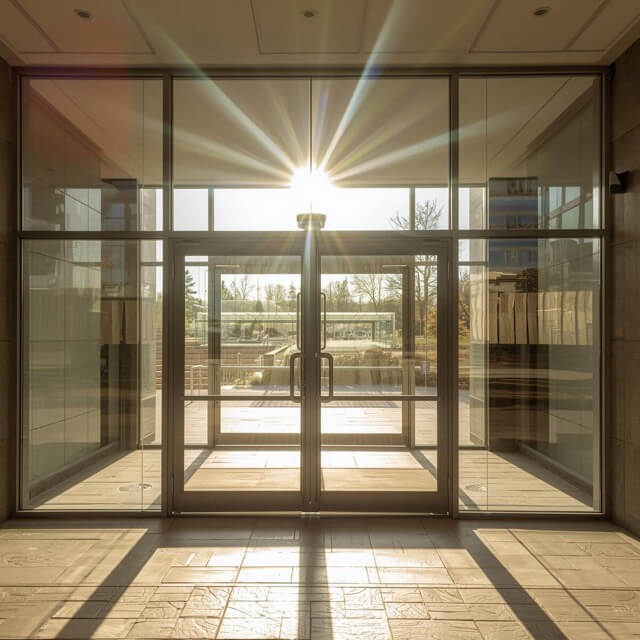
One-way window film night privacy works by creating the illusion of a one-way mirror, which is entirely dependent on a significant differential in light intensity between the two sides of the glass. During daylight hours, the exterior environment is overwhelmingly brighter than the interior. This allows the reflective exterior surface of the film to effectively block visibility into the building, while the comparatively darker interior permits occupants to see out. It performs precisely as advertised under these specific conditions.
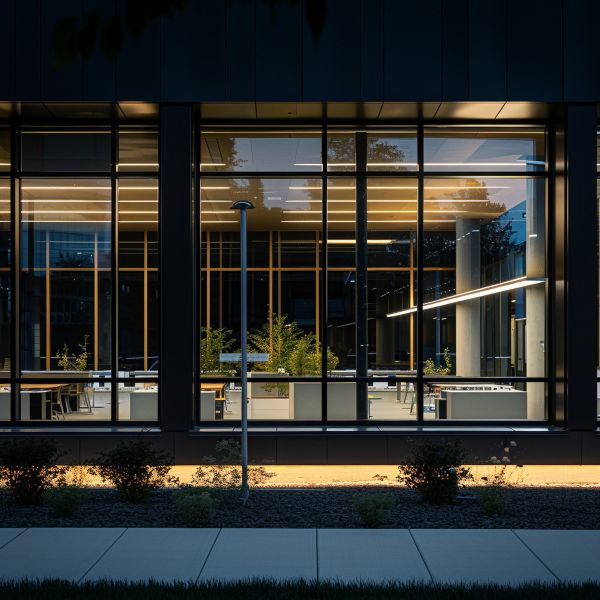
The critical flaw in relying on standard films for continuous privacy emerges as soon as interior lighting becomes brighter than exterior light. As dusk falls and interior lights are activated, the light differential reverses. The previously reflective exterior now appears more transparent, revealing the illuminated interior to external observers. This phenomenon, commonly referred to as the “fishbowl effect,” means that what was a private space by day transforms into a highly visible display window at night. The “one-way” effect unequivocally ceases to function.
The Financial and Reputational Risks of Mis-Specification for Commercial Projects
For commercial projects, mis-specifying a standard reflective film as a 24/7 privacy window security film solution carries substantial financial and reputational risks. A client’s expectation of continuous privacy is rarely met when these films are used without a clear understanding of their limitations. This oversight invariably leads to costly project rectifications.
Consider the following implications:
- Client Dissatisfaction: The most immediate consequence is a client whose security and privacy demands have not been met, leading to frustration and potential loss of trust.
- Budget Overruns: Remedial actions such as film removal, procurement of appropriate alternative solutions, and re-installation can significantly inflate project costs beyond initial estimates.
- Project Delays: The process of identifying the problem, securing new materials, and scheduling re-work inevitably introduces delays, impacting project timelines and potentially incurring penalties.
- Compromised Security: For facilities where privacy directly equates to security, such as data centers or executive offices, the failure of a film to perform at night can expose sensitive operations.
- Reputational Damage: For project managers, delivering a solution that fails to perform as understood can damage their professional credibility and future opportunities.
These risks highlight that a thorough understanding of film technology, beyond general marketing claims, is indispensable for successful project delivery.
Strategic Specification: Guiding Project Managers to the Right 24/7 Privacy Solution
Moving beyond the common misconception that a single reflective film offers universal, one-way privacy around the clock requires a strategic approach. Project managers must shift from an assumption-based selection to a data-driven specification process. This section guides that transition, ensuring that client expectations for 24/7 privacy are met with scientifically sound and professionally installed film solutions.
Assessing Comprehensive Client Needs: Beyond Basic Privacy to Advanced Security Requirements
True privacy in a commercial setting extends far beyond merely obscuring vision. It encompasses a spectrum of considerations from visual security to thermal comfort and glare reduction, all varying significantly between day and night conditions. A project manager’s initial assessment must probe deeply into the client’s operational needs and desired outcomes, recognizing that “one-way privacy” is often an oversimplified request.
Understanding the real need involves asking detailed questions about the occupancy patterns, the nature of activities within the space, and the specific vulnerabilities the client aims to address. For instance, is the goal merely to deter casual glances, or is it to prevent detailed observation of sensitive activities or valuable assets? A solution for passive privacy during business hours differs fundamentally from one designed to prevent active surveillance after dark. Advanced security requirements, such as deterring smash-and-grab attempts or mitigating active shooter risks, introduce further complexities that standard reflective films cannot address.
Key Environmental and Architectural Considerations for Optimal Film Selection
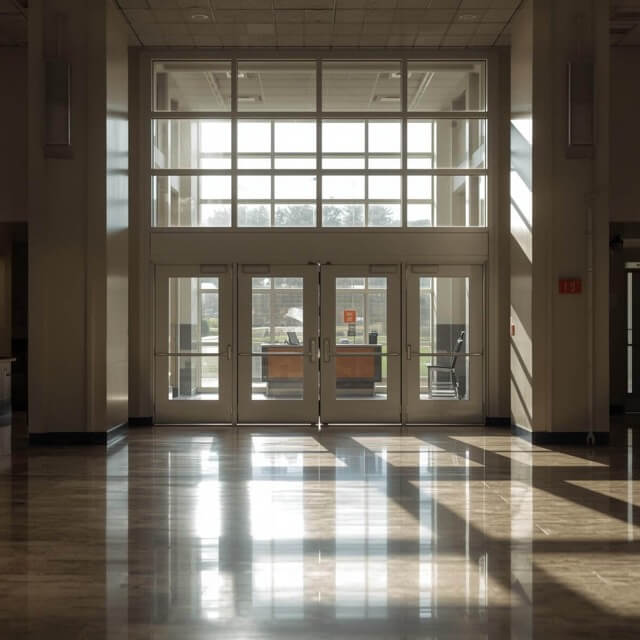
The performance of any reflective window film is intrinsically linked to the environment in which it is installed and the architectural characteristics of the building itself. Overlooking these factors is a common specification error that leads to client dissatisfaction. A meticulous evaluation of both external and internal conditions is crucial for selecting a film that performs reliably.
Critical considerations include:
- Sun Exposure and Orientation: The direction a window faces directly impacts solar heat gain, glare, and the differential light conditions throughout the day and year. South-facing windows, for example, present different challenges than north-facing ones.
- Ambient Light Levels: This is paramount for nighttime privacy. The presence of streetlights, adjacent building lights, or even a full moon can significantly alter the interior-to-exterior light ratio, impacting a film’s reflective properties.
- Interior Lighting Design: The intensity and type of interior lighting (e.g., LED, fluorescent, incandescent) directly influence how much light escapes through the film at night. Higher interior light levels intensify the “fishbowl effect” when external light is low.
- Existing Glass Type: The substrate to which the film is applied – whether it’s single-pane, double-pane, low-emissivity (low-e) glass, or tinted glass – affects heat absorption, thermal stress, and overall performance. Not all films are compatible with all glass types, and incorrect application can lead to thermal stress fractures.
- Aesthetics and View Preservation: While privacy is key, maintaining an acceptable interior view out and a professional exterior appearance is often equally important. Some films offer high privacy with minimal view distortion, while others prioritize performance over perfect clarity.
Illustrative Scenario: Securing a Commercial Ground-Floor Office After Dark
Consider a common scenario: a corporate client with a ground-floor office space needs to protect proprietary information and equipment from external viewing 24/7. During the day, a standard reflective film might appear to offer adequate one-way privacy, reflecting sunlight and presenting a mirrored exterior while allowing occupants to see out. This initial success can lead to a false sense of security.
However, as dusk falls and the interior office lights are switched on, the exterior ambient light diminishes significantly. The interior now becomes the brighter side, effectively reversing the “one-way mirror” effect. What was once a reflective barrier transforms into a transparent pane, clearly revealing the office’s interior to anyone outside. This scenario underscores a critical project specification error: the failure to anticipate and address the fundamental science of light differential. Without an advanced solution specifically engineered for low-light conditions, the client’s costly privacy investment proves ineffective precisely when security concerns are often heightened. This highlights the need for dual-reflective films or strategic layering, which maintain privacy even when interior lights are on and exterior light is scarce.
One Way Window Film Night Privacy: Essential Questions to ask for Precise Specifications
Engaging with an advanced film consultant is a crucial step in preventing specification errors and ensuring optimal film performance. To effectively leverage their expertise, project managers should come prepared with targeted questions that address the nuanced demands of 24/7 privacy.
These questions will help define the scope, manage expectations, and ultimately lead to a solution that truly meets the client’s needs.
- What specific light conditions (interior lux levels, exterior ambient light, direct sun exposure) were considered for this recommendation, especially during nighttime?
- How does the proposed film maintain visual privacy when interior lights are on and exterior light is minimal or absent?
- What is the aesthetic impact of this film, both from the interior looking out and the exterior looking in, across various light conditions?
- Are there any specific glass types or existing window treatments that would be incompatible with this film or require special considerations during installation?
- Beyond privacy, what other performance benefits does this film offer (e.g., heat rejection, glare reduction, UV protection, shatter resistance)?
- Can you provide performance data or case studies for similar installations where 24/7 privacy was a primary requirement?
- What is the warranty period for both the film’s performance and the installation quality, particularly concerning delamination or bubbling?
- For challenging areas, would a layered film solution or a combination with other privacy elements be more effective?
Partnering with Expertise: Why Proven Installers (e.g., Window Film Depot) Matter for Complex Privacy Projects
The complexity of achieving true 24/7 privacy with window security film extends beyond product selection; it encompasses precise specification, correct application, and a deep understanding of how various films interact with different architectural and environmental conditions. This is where partnering with a proven, experienced installer becomes indispensable. An installer like Window Film Depot brings not only the technical expertise in applying advanced materials but also a comprehensive understanding of light dynamics and building science.
Their value lies in their ability to translate a client’s often vague “privacy” requirement into a tangible, measurable solution. They can conduct site assessments, recommend specific film types like 3M’s dual-reflective films, and advise on potential challenges before they escalate into costly project overruns. Beyond installation, a reputable partner ensures long-term performance and offers warranties that protect the client’s investment, providing peace of mind that the 24/7 privacy solution will perform as expected, day and night, for years to come.
Conclusion: Choosing the Right 24/7 Privacy Window Film Solution for Long-Term Project Success
The promise of a “one-way mirror” solution is appealing, but as this article demonstrates, relying on standard reflective film as a 24/7 privacy window film is a critical misstep. The reality is simple: true, consistent privacy cannot depend on changing light conditions. When interior and exterior lighting shifts, so does performance—and with it, your project’s reliability.
For project managers, the takeaway is clear. Successful outcomes are driven not by marketing claims, but by informed specification, environmental analysis, and expert guidance. Whether the solution involves dual-reflective technology, frosted films, or layered systems, achieving dependable privacy requires aligning the product with real-world conditions and client expectations.
Equally important is the role of an experienced installation partner. Proper assessment, precise installation, and long-term support ensure that the selected film performs as intended—day and night—while protecting your budget, timeline, and professional reputation.
Need More Info?
The Window Film Depot team is happy to help.
Ultimately, specifying the right 24/7 privacy window film solution is about eliminating uncertainty and delivering predictable performance. By taking a strategic, consultative approach, you not only meet client demands but also reinforce trust, reduce risk, and ensure lasting value across every project.
Frequently Asked Questions
If “one-way” film isn’t a permanent property, how do I achieve nighttime privacy?
Since transparent films rely on light balance, true 24/7 privacy usually requires one of two approaches:
Dual-Reflective Films: These (like the 3M Night Vision Series) reduce interior reflection, allowing a better view out at night, though they do not provide 100% “one-way” privacy if the interior is significantly brighter than the exterior.
Frosted or Decorative Films: These provide consistent obscurity by diffusing light. They ensure total privacy regardless of the time of day or light levels, though they eliminate the ability to see through the glass.
What is the “Fishbowl Effect” and why should I warn my clients about it?
The “fishbowl effect” occurs at night when interior lights are on and the sun has set. A standard reflective film—which acted like a mirror during the day—reverses its role. The interior becomes a brightly lit stage visible to everyone outside, while the people inside see only their own reflection in the glass. Warning clients about this prevents the reputational risk of delivering a “privacy” solution that fails after 5:00 PM.
How does the existing glass type affect film specification?
Not all films are compatible with all glass. Applying a high-heat-absorption film to certain types of double-pane or Low-E glass can lead to thermal stress, potentially causing the glass to crack. A professional consultant will check the glass “make-up” to ensure the film’s solar absorption rate won’t compromise the structural integrity of the window.
Can ambient exterior lighting (like streetlights) help maintain the one-way effect?
Yes. The one-way effect is a ratio. If the exterior of a building is well-lit with powerful floodlights or streetlamps, it may counteract the brightness of the interior lights enough to maintain some degree of daytime-style privacy. However, this is highly site-specific and should be verified with a light meter (lux readings) before making performance guarantees to a client.
Why is “Internal Reflectivity” a critical metric for office environments?
Internal reflectivity measures how much light the film reflects back into the room. High internal reflectivity turns windows into mirrors at night, which is distracting for employees and can make a space feel claustrophobic. For executive offices or boardrooms where a view out is desired even after dark, specifying a film with low internal reflectivity is essential for comfort and aesthetics.