Table of Contents:
- Introduction: Solving Office Glare Problems Fast
- How Office Glare Reduction Film Works
- Key Benefits of Anti-Glare Window Film in Offices
- Office Use Cases: Where Glare Reduction Film Makes the Biggest Impact
- Choosing the Right Anti-Glare Window Film for Your Building
- Why Professional Installation Matters
- Why Choose Window Film Depot for Office Glare Reduction
- FAQs About Office Glare Reduction Film
- Next Steps: Plan Your Office Glare Reduction Project
Introduction: Solving Office Glare Problems Fast
Picture a glass-heavy corporate office in Atlanta at 2:30 p.m. on a summer afternoon. Half the blinds are drawn, computer monitors are unreadable, and employees are squinting through headaches instead of finishing deliverables. This is the reality in thousands of commercial buildings across the country, and it is entirely fixable. Office glare reduction film is a thin, transparent retrofit layer applied directly to existing windows that controls excessive light and harsh reflections without blocking the natural light your space needs.
Glare in office environments is more than an annoyance. It drives eye strain, headaches, reduced productivity, and a steady stream of complaints to facility managers about washed-out screens and uncomfortable workstations. In this guide, you will discover how anti-glare window film works, the measurable benefits it delivers, ideal applications in commercial buildings, how to select and specify the right film, and why Window Film Depot is a trusted nationwide partner for projects of every scale.

How Office Glare Reduction Film Works
Anti-glare film modifies how visible light and solar energy pass through glass, using methods such as light reflection and UV blocking to reduce glare and cut down on hot spots. The technology varies by film type, and each addresses the problem differently, from basic tints to advanced 3M glare control and reduction films.
Dyed and metallized solar control films absorb or reflect incoming light across a broad range of wavelengths. They are cost-effective for reducing excessive sunlight, and reflective window films in particular help reduce glare and heat gain simultaneously. Carbon films offer a stable, matte finish with better performance than dyed options. Ceramic and spectrally selective anti-glare films represent the current standard for office environments. They preserve high natural light levels while targeting infrared and UV wavelengths, meaning glare goes down without the space going darker than desired. 3M Ceramic films provide approximately 58% glare reduction, while 3M films overall can achieve up to 76% glare reduction depending on the product line. Anti-glare window film can filter up to 94% of glare at the higher end of the performance range. Ceramic films can also block up to 55% of total solar energy. Ultra-clear anti-reflective films maintain visibility while reducing harsh reflections, making them ideal for lobbies and storefronts where clarity is critical.
Here is what matters for screen glare: effective glare reduction films can reduce screen reflections by over 75%, which translates directly to better contrast on computer monitors and conference room displays. Window Film Depot typically recommends 3M anti-glare and solar control films for commercial applications because of their proven performance data and long warranty terms.
Key Benefits of Anti-Glare Window Film in Offices
Anti-glare window film delivers layered benefits that extend well beyond reducing bright spots on a window. The combination of visual comfort, occupant health, aesthetics, and measurable energy savings makes this a worthwhile investment for any commercial building dealing with excessive light.
Glare reduction enhances screen visibility and reduces eye strain, which directly addresses the most common comfort complaint in open-plan offices. Glare control films reduce bright reflections on screens and work surfaces, and glare reduction films can help mitigate squinting and discomfort during work hours. Anti-glare films also enhance comfort by smoothing lighting gradients across a space, so the contrast between a sun-drenched perimeter desk and a dim interior seat is far less jarring. The result is that they improve productivity by reducing eye strain and discomfort, something employees consistently report after film installation with 3M glare reduction solutions.
Unlike blinds or curtains, anti-glare films help maintain natural light while reducing glare. These films allow natural light into the workspace while mitigating harsh sunlight, which supports circadian rhythms and occupant wellbeing. You can enjoy natural light without the penalty of washed-out monitors or overheated perimeter zones, especially when paired with professionally designed commercial window tinting solutions.
Anti-glare films block up to 99% of harmful UV rays, which helps protect skin and prevents the fading of office furniture, carpets, branding displays, and furnishings over time. Many glare reduction films also function as solar control films. Anti-glare films can reduce solar heat gain by 50-60%, and anti-glare window films can lower energy bills by reducing solar heat gain. Reduced glare can lead to lower indoor temperatures and consistent climates across floor plates, and high-performance thermal insulation options can reduce air conditioning loads by up to 30%. Typical energy savings in sun-exposed office environments run 5–15% on cooling costs, with some facilities seeing even more in summer months, and 3M commercial window film warranties help protect that long-term investment.
For Class-A office buildings and multi-story campuses, a neutral or low-reflective film gives a cleaner, more uniform appearance across mixed glazing facades without a mirror-like finish on the building exterior, and owners often look for partners that offer a broad portfolio of commercial window glass film products and brands to meet these aesthetic and performance goals.
Office Use Cases: Where Glare Reduction Film Makes the Biggest Impact
Not every window carries the same glare risk. Orientation, glass size, and room function determine where anti-glare window film delivers the best ROI. The use of glare reduction films can create more usable workspaces near windows, especially in these high-impact zones:
- Perimeter open offices and workstations: Desks near south-facing windows and west-facing glass take the hardest hit from afternoon sun. Film lets employees work comfortably without closing blinds all day, preserving views and daylight, particularly when high-performance Prestige Exterior sun control films are applied on exposed façades.
- Conference rooms and huddle spaces: Washed-out presentations on flat panels or TV screens are a constant frustration. 3M Ceramic Series glare control film improves image contrast so teams can read data and participate in video calls without killing the overhead lighting.
- Executive offices and glass-fronted suites: Film preserves high-end views while bringing bright spots down to manageable levels for reading, laptop use, and client meetings, much like the tailored solutions used in Washington, DC commercial window film projects.
- Reception areas and lobbies: Front-of-house staff, digital directories, and visitor seating stay comfortable in high-sun areas without sacrificing the first-impression appearance of a bright, welcoming space, similar to how retail storefront window tinting balances daylight, comfort, and brand presentation.
- Training rooms, call centers, and control rooms: Higher screen density and longer screen time make glare control especially valuable for focus and fatigue reduction, and many of these environments benefit from broader commercial window tinting strategies that also address heat and UV.
Consider a practical scenario: a 10-story, glass curtain-wall government office built in the late 1990s in Atlanta with south and west facades of dual-pane clear glazing. Employees reported chronic monitor visibility issues and HVAC systems struggling against afternoon heat. After installing 3M Prestige Series spectrally selective film with approximately 35% visible light transmission and around 70% glare reduction, monitor visibility improved across floors, blinds usage dropped by over 80%, and cooling load fell by 8–12%. Employees report improved comfort and productivity with anti-glare films in projects like these, and the estimated payback period was roughly four years.

Choosing the Right Anti Glare Window Film for Your Building
Not all anti-glare films perform the same way. Selection should be driven by orientation, glass type, aesthetics, and your performance goals for glare, heat, and UV protection, with options ranging from ceramic series to 3M Prestige Exterior sun control films for specific façade conditions. Key decision factors include:
- Glare reduction target: A space needing mild improvement may only require 40% reduction, while a south-facing call center may need 70%+ reduction. This directly correlates with visible light transmission levels.
- Natural light balance: Light-tone ceramic films preserve 60–80% of visible light, keeping rooms bright. Darker films trade daylight for stronger glare and heat control.
- Additional benefits: Some projects need privacy, safety, security glazing, or decorative branding layered into the same film specification.
Glass compatibility matters. Certain high-absorbing films are not recommended on some insulated glass units because of thermal stress risk, so manufacturer guidelines and professional assessment are essential for annealed, tempered, laminated, and dual-pane glass, and working with experienced 3M window film installers helps ensure the right match between film and glass.
For office environments, the practical range of options includes neutral or low-reflective solar control films, 3M Sun Control Window Films, Ceramic Series and spectrally selective anti glare window films that maximize clarity, and more reflective films where daytime privacy and solar performance are prioritized. Traditional sun control films offer cost-effective glare reduction for budget-conscious projects, while reflective films improve daytime privacy while blocking sunlight. Ceramic and spectrally selective films do not interfere with wireless signals, which is a critical consideration in tech-heavy offices. Window Film Depot typically specifies 3M commercial films because of their tested performance data, long warranties (often 10–15 years), and consistent quality across multi-site portfolios.
Why Professional Installation Matters
Professional installation is critical for achieving rated performance, longevity, and maintaining glass warranties in commercial and institutional settings. A proper site assessment includes a glass audit (type, thickness, condition, existing coatings), measurement of existing glare and solar conditions by orientation and floor, and identification of problem areas such as complaint zones and rooms where blinds are chronically closed.
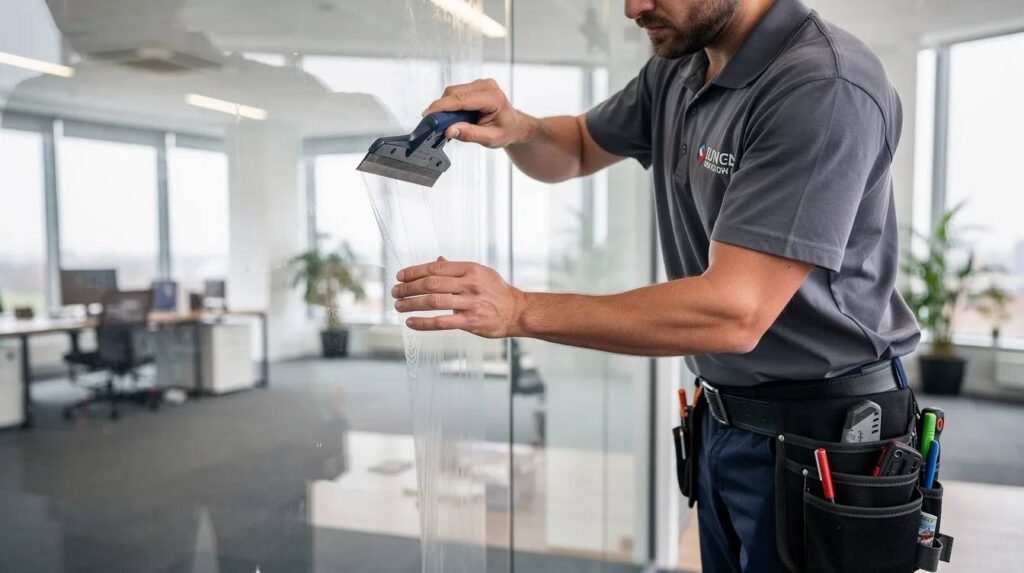
The installation process itself involves thorough surface preparation and cleaning in occupied offices, precise film cutting and application with smooth squeegeeing and edge finishing, and coordination around furniture, monitors, and sensitive equipment. Many commercial projects are completed after hours or phased by floor to minimize disruption. Using a 3M window film installation company Authorized Dealer Installer like Window Film Depot means access to the full commercial film portfolio and manufacturer-backed warranties, trained crews with safety protocols, and consistent quality whether the project spans one building or fifty locations across multiple states.
After installation, expect a brief cure period where mild haziness is normal as the film dries. Cleaning is simple: a soft cloth and non-abrasive solution keep the film in top condition for years, helping you realize the full value of the film’s 3M warranty coverage. For national brands, healthcare systems, school districts, and government agencies, a single turnkey provider with nationwide window film service locations simplifies procurement, scheduling, and warranty handling across every site.
Why Choose Window Film Depot for Office Glare Reduction
Window Film Depot has been a national leader in commercial glare reduction and solar control projects since 1992, headquartered in Marietta, Georgia. With decades of work across corporate offices, government agencies, education campuses, and retail chains, the company handles everything from single-building retrofits to multi-state rollouts under one project management team, as detailed in the Window Film Depot company overview.
Key differentiators include 3M window film installation company Authorized Dealer status with access to high-performance 3M solar control, anti-glare, and security glazing films, plus in-house project management covering survey, specification support for architects, installation scheduling, and final punch-list. Window Film Depot also offers wholesale supply of window film rolls and related products for glass and glazing trade partners who need reliable product sourcing across North America. Every project follows building codes, safety glazing requirements, and manufacturer installation standards, which is especially important for public sector and healthcare work. The bottom line: Window Film Depot helps decision-makers move from chronic glare complaints to documented, measurable building improvements.
FAQs About Office Glare Reduction Film
Does office glare reduction film make rooms too dark?
No. Light-tone ceramic films preserve 60–80% of visible light, keeping offices bright and open. The goal of reducing reflections and controlling excessive sunlight does not require making a space darker than comfortable. Films with higher visible light transmission are routinely specified for open-plan offices where daylight is part of the design intent.
Will glare reduction film also reduce heat and cooling costs?
Yes. Many anti-glare window films double as solar control films. They can reduce solar heat gain by 50–60%, and these films help lower air conditioning costs by reducing solar heat gain. Typical commercial buildings see 5–15% cooling energy savings on sun-exposed facades, with some high-performance options reducing air conditioning loads by up to 30%.
How long does anti-glare window film last in a busy office?
High-quality anti-glare films last 10–15 years with proper care. Factors like orientation, climate, and maintenance affect longevity. 3M commercial products typically carry manufacturer-backed warranties of 10–15 years, giving facility managers confidence in the investment.
Is anti-glare window film safe for all commercial glass types?
Most standard office glazing-annealed, tempered, and laminated-is compatible with a wide range of films. However, certain insulated glass units or specialty coated glass require professional assessment to avoid thermal stress. This is why a site-specific glass audit before film selection is essential.
How do we clean and maintain windows after the film is installed?
Wait approximately 30 days for full curing before the first cleaning. After that, use a soft cloth or squeegee with a mild, non-abrasive cleaning solution. Avoid harsh chemicals or abrasive pads. Routine cleaning keeps clarity and performance intact for the full life of the film.
What does office glare reduction film cost, and what is the typical ROI?
Costs vary by film type, glass area, and project scope. Payback through energy savings, improved productivity, and reduced need for blinds or workspace reconfiguration typically falls in the three-to-five-year range for commercial projects. Contact Window Film Depot for a site-specific assessment and detailed proposal tailored to your building.
Next Steps: Plan Your Office Glare Reduction Project
Office glare reduction film delivers fast, non-invasive improvements in comfort, productivity, and building performance compared with alternatives like full glass replacement or endless blind adjustments. Facility managers, property owners, and architects can contact Window Film Depot for a professional glare and solar control assessment, help selecting the right 3M anti-glare window films, and turnkey installation or wholesale film supply for trade partners. Call today, fill out the online form on our website, or email your project plans and elevations for review. Window Film Depot serves commercial, institutional, and government clients nationwide from its Marietta, GA window film installation hub. Let us help you create a more comfortable, productive environment for your employees and visitors while supporting long-term energy efficiency and building performance.