Table of Contents
Introduction
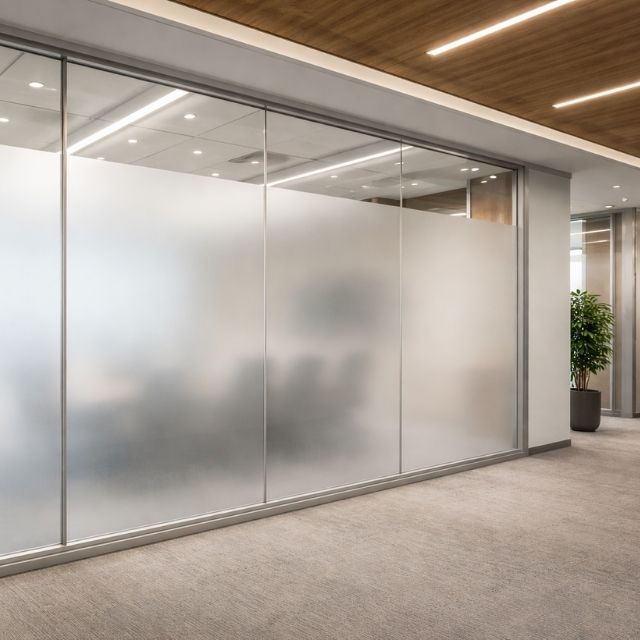
Window frost film is a thin plastic film applied to glass surfaces that mimics the appearance of etched, acid-washed, or sandblasted glass. This translucent material allows natural light to pass through while obscuring the view from both inside and outside, making it a practical privacy solution for residential and commercial windows alike.
This guide covers everything you need to know about selecting, installing, and maintaining window frost film. We’ll explore the different types available—from static cling to adhesive options—discuss their technical specifications including light transmission levels, and walk through installation methods suitable for DIY enthusiasts. Topics outside this scope include specialty security films, electrochromic smart glass, and full window replacement options.
Direct answer: Window frost film is a vinyl or polyester film applied to windows that creates a frosted glass appearance, providing privacy while maintaining natural light flow—typically at $8-15 per square foot installed, compared to $50-150+ for actual frosted glass replacement.
By reading this guide, you will:
- Understand the key differences between static cling and adhesive frost films
- Learn how to select the right privacy level for your specific needs
- Master the step-by-step installation process to achieve professional results
- Discover cost-effective alternatives to expensive glass replacement
- Know how to troubleshoot common installation challenges
Understanding Window Frost Film
Window frost film transforms ordinary glass into a privacy barrier without the expense or permanence of replacing windows with actual frosted glass. The film works by diffusing light as it passes through, which creates the characteristic soft, milky appearance while blocking clear lines of sight—essentially allowing you to watch shapes and movement without revealing details.
Types of Frost Film
Static Cling Films
Static cling films adhere to glass without any adhesive, using the cohesive properties of highly plasticized vinyl combined with surface suction effects. These films are typically thicker (around 8 mil) to facilitate handling and are completely removable without residue. They work best for temporary applications—renters who wanted privacy without permanent modifications, seasonal decorations, or situations where design changes frequently. However, their effectiveness diminishes over time, with an expected indoor lifespan of 2-3 years before cling quality degrades from heat, humidity, or cleaning agents.
Adhesive Films
Adhesive frost films use pressure-sensitive adhesive (PSA) or wet-apply adhesives to create a more permanent bond with glass surfaces. These films deliver superior durability—often lasting 10-15 years with proper installation—and achieve higher optical quality with more uniform diffusion. The trade-off is more involved installation and removal processes. Within this category, you’ll find variations including etched glass film (very uniform diffusion), sandblasted vinyl styles (textured pattern effects), and options from brands like artscape window film that offer decorative designs.
Selecting between these types depends primarily on your permanence requirements, budget constraints, and the environmental conditions your windows face.
Light Transmission and Privacy Levels
Light transmission is measured as Visible Light Transmission (VLT)—the percentage of visible light that passes through the film and glass combination. Understanding these levels helps you balance privacy needs against the desire for natural light in your room:
| VLT Level | Privacy Rating | Light Characteristics | Best Applications |
|---|---|---|---|
| 90% (Light Frost) | 3/5 | Very subtle diffusion, maximum light | Decorative accents, minimal privacy needs |
| 60% (Medium Frost) | 4/5 | Noticeable diffusion, good light | General privacy, offices, partitions |
| 30% (Heavy Frost) | 5/5 | Strong diffusion, reduced light | Bathrooms, high-privacy areas, night privacy |
| Privacy isn’t solely determined by how much light passes through—it also depends on how effectively the film diffuses and scatters that light. A quality film with higher haze will blur objects more effectively than a simple tinted film, even at similar VLT levels. This becomes particularly important at night when interior lighting can reverse privacy effects with lighter frost grades, making it worth understanding the best window film options for nighttime privacy. |
With a clear understanding of film types and privacy levels, you can now evaluate the practical benefits these products deliver across different applications.
Benefits and Applications
Window frost film delivers measurable advantages that extend beyond simple privacy, making it a versatile solution for both homeowners and business owners seeking to transform their glass surfaces.
Privacy Enhancement
The primary benefit of frost film is creating visual privacy while maintaining soft, natural illumination. Heavy frost options (30% VLT) can block visibility completely—even at night when interior lights are on—while lighter grades allow more light at the cost of some visibility for objects very close to the glass.
Practical applications include:
- Bathrooms and shower enclosures: Full privacy without sacrificing natural light
- Street-facing windows: Blocking the view from passersby while keeping rooms bright
- Office partitions and conference rooms: Professional privacy for meetings
- Front doors with glass panels: Preventing visibility of interior layout
- Ground-floor apartments: Creating a barrier from sidewalk-level observation
Aesthetic Appeal
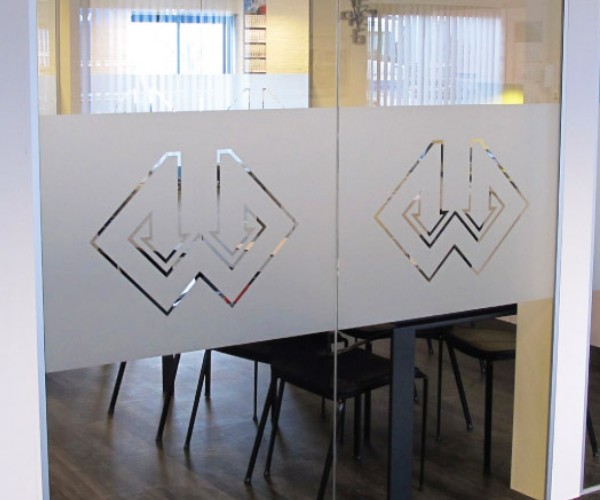
Beyond mere opacity, frost films offer significant decorative potential. Modern options include embossed textures that create visual interest, geometric and organic pattern designs, gradient effects (opaque at bottom transitioning to clear at top), and custom styles for corporate branding. The artscape collection, for example, provides artistic patterns that transform plain glass into design features, similar to many of the decorative film types for interior and exterior glass used in architectural projects.
These aesthetic options work in harmony with privacy requirements—a patterned frost can achieve both decorative and functional goals simultaneously, fitting seamlessly into interior design schemes while solving practical problems.
Cost-Effective Alternative
The financial case for frost film is compelling when compared to glass replacement:
- Frost film installed: $8-15 per square foot
- Frosted glass replacement: $50-150+ per square foot
For a standard 15 square foot window, this translates to approximately $120-225 for film versus $750-2,250 for new glass—a savings of 80% or more. Additionally, frost film is completely reversible, making it ideal for renters or those who might want to change their approach later. Many films also block 95-99% of UV rays, reducing fading on furniture, artwork, and fabrics—a secondary benefit that adds long-term value when paired with professional installation of advanced 3M window film products.
This combination of privacy, aesthetics, and cost efficiency makes understanding proper installation essential for maximizing your investment, whether you hire a pro or follow a do-it-yourself window film installation approach.
Installation Process and Product Selection
Successful installation requires proper preparation, the right technique for your film type, and appropriate product selection based on your specific situation.
Step-by-Step Installation
The following process applies to most frost film installations, with variations noted for static cling versus adhesive types, and mirrors the core steps recommended by window film specialists serving residential and commercial projects:
- Measure glass dimensions accurately Measure the glass pane itself (not the frame) and add 1-2 inches to all sides for trimming margin. For simple rectangular windows, this is straightforward; for pattern films, ensure you’ve bought adequate size to align designs properly.
- Clean glass thoroughly Remove all dust, grease, fingerprints, and residue using glass cleaner or a solution of water with a few drops of dish soap. Dry completely with a lint-free cloth. Any debris trapped under the film will create visible imperfections that cannot be fixed without reapplication.
- Prepare application solution (adhesive films only) Mix water with a small amount of dish soap (approximately 1/4 teaspoon per quart) in a spray bottle. This solution allows repositioning during application and helps remove air bubbles.
- Apply the film
- For static cling: Lightly mist the glass with water, peel the backing, and position the film. Work from top to bottom, smoothing as you go.
- For adhesive films: Spray the glass generously with soap solution, peel the protective liner, and position. The soap solution prevents immediate bonding, allowing adjustment.
- Remove air and water bubbles Using a plastic squeegee or firm credit card wrapped in soft cloth, push from the center outward toward all edges. Work systematically to force out all trapped air and water. For large installations, work in overlapping sections.
- Trim excess material Allow the film to set for a few minutes, then use a sharp utility knife with a new blade to cut along the glass edge. A straightedge or the window frame itself can guide your cut for clean, even edges.
- Allow curing time Adhesive films require 24-48 hours to fully cure. Avoid cleaning or disturbing the film during this period. Some small water bubbles may remain visible initially but typically disappear as moisture evaporates over several days.
Product Comparison
Selecting between static cling and adhesive films requires weighing several factors against your specific needs, as well as the broader range of window glass film products and brands professional dealers offer:
| Criterion | Static Cling Film | Adhesive Frost Film |
|---|---|---|
| Durability | 2-3 years; degrades faster in heat/humidity | 10-15 years with quality materials |
| Removal | Easy, no residue, reusable | More difficult; may require heat and adhesive remover |
| Initial Cost | Lower ($3-8/sq ft DIY) | Higher ($8-15/sq ft installed) |
| Long-term Cost | Higher due to frequent replacement | Lower when amortized over lifespan |
| Optical Quality | Slightly lower; may show distortion | Higher clarity; uniform appearance |
| Privacy Performance | Less effective at night with interior lights | Consistent day and night with heavy frost |
| Best For | Rentals, temporary needs, low-humidity areas | Permanent installations, bathrooms, high-humidity |
| For most permanent residential applications, adhesive films provide better value despite higher upfront costs. Static cling excels in situations where flexibility and easy removal matter more than longevity, while specialized solutions for day and night privacy window film can help maintain consistent privacy in challenging lighting conditions. |
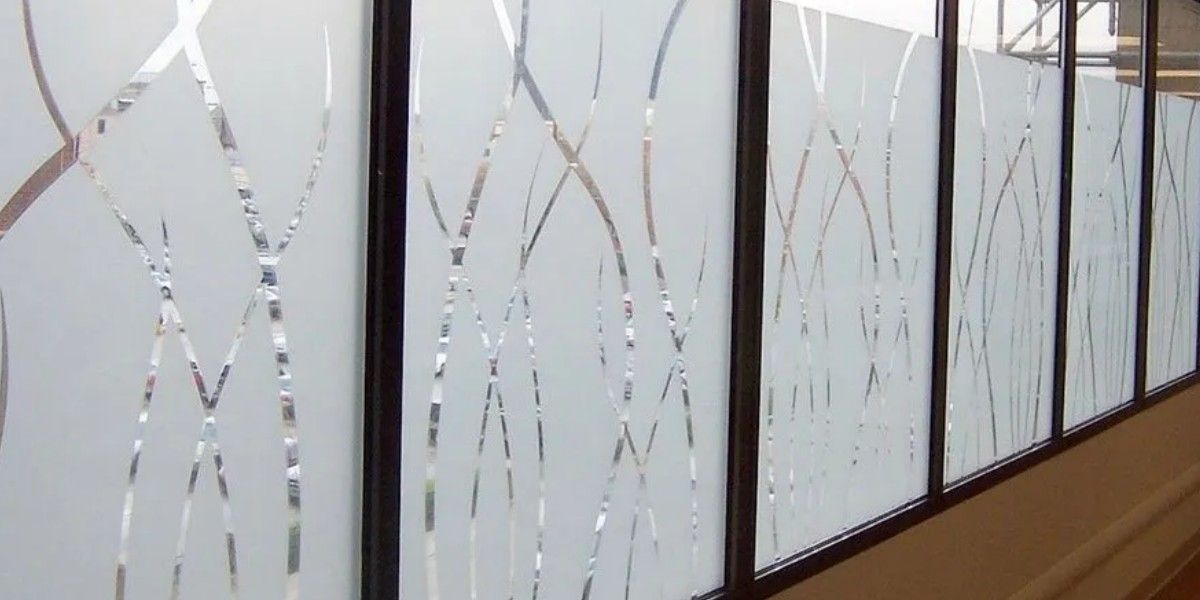
Even with careful product selection and proper technique, certain challenges commonly arise during installation that require specific solutions.
Common Challenges and Solutions
Understanding typical problems before you begin allows you to prevent issues or address them quickly when they occur.
Bubble Formation During Application
Air or water trapped beneath the film creates visible bubbles that detract from the finished appearance. Prevention and correction require proper technique:
- Use adequate soap solution for adhesive films—this allows air to escape during squeegee work
- Apply firm, overlapping strokes from center to edges with your squeegee
- Work in sections on larger windows rather than attempting to smooth the entire surface at once
- Small water bubbles often disappear naturally over 24-72 hours as moisture evaporates through the film
- Persistent air bubbles on adhesive film can be punctured at the edge with a pin and flattened (avoid this with static cling)
Uneven Edges and Cutting Issues
Ragged or misaligned edges result from dull blades, inaccurate measurement, or cutting before the film has settled:
- Always use a fresh, sharp blade—utility knife blades dull quickly on film
- Allow the film to rest for 5-10 minutes after initial application before trimming
- Use the window frame as a guide, keeping the blade at a consistent angle
- For pattern films, align the design before making any cuts
- Make single, confident strokes rather than multiple passes
Removal and Residue Problems
When removing adhesive film, proper technique prevents damage and minimizes cleanup:
- Apply heat with a hair dryer or heat gun (on low, held 6-8 inches away) to soften adhesive
- Peel slowly at a 45-degree angle—rushing causes adhesive to separate from the film
- For remaining residue, apply commercial adhesive remover or a solution of warm soapy water
- Use a plastic scraper rather than metal tools to avoid scratching glass
- Clean glass thoroughly with glass cleaner after all residue is removed
Static cling films rarely leave residue and can typically be peeled off and reapplied or discarded without any cleanup required.
Conclusion and Next Steps
Window frost film provides an accessible, cost-effective way to achieve privacy, enhance aesthetics, and protect interiors from UV damage—all without the expense or permanence of replacing glass. Whether you choose static cling for flexibility or adhesive film for durability, proper installation technique ensures professional results.
Your immediate next steps:
- Measure your windows accurately and calculate the total square footage needed
- Determine your privacy requirements (light, medium, or heavy frost) based on location and lighting conditions
- Choose between static cling (temporary, renter-friendly) or adhesive (permanent, longer-lasting) based on your situation
- Gather tools: spray bottle, squeegee or credit card, sharp utility knife, lint-free cloths
- Schedule installation during moderate temperatures (50-80°F) for optimal adhesion
Need More Info?
The Window Film Depot team is happy to help.
For related applications, you may want to explore decorative window films with artistic patterns, solar window films that automatically tint for heat and glare control, UV-blocking films that offer heat rejection for energy savings, or combination products that provide both privacy and solar control functions.
Additional Resources
Essential Installation Tools:
- Plastic squeegee or application card
- Sharp utility knife with replacement blades
- Spray bottle for application solution
- Lint-free microfiber cloths
- Measuring tape
- Straightedge for trimming
Maintenance Guidelines:
- Wait 30 days before cleaning newly installed adhesive film
- Use non-abrasive, ammonia-free cleaners
- Avoid abrasive pads or scrapers on film surface
- Clean with soft cloth or rubber squeegee
Trusted Product Lines:
- Artscape window film for decorative patterns
- 3M Fasara frosted glass finishes for architectural applications
- Contra Vision for commercial-grade options
Frequently Asked Questions
How long does window frost film last on windows?
Adhesive frost film typically lasts 10-15 years when applied to interior surfaces, with some quality products lasting even longer under ideal conditions. Exterior applications reduce lifespan to approximately 3-5 years due to weather exposure. Static cling films have shorter functional lifespans of 2-3 years before cling quality degrades, particularly in environments with temperature fluctuations or high humidity.
Can frost film be removed without damaging windows?
Yes, both types can be removed safely with proper technique. Static cling films peel away easily with no residue, and many can be reused if stored properly. Adhesive films require more effort—apply heat to soften the adhesive, peel slowly at an angle, and use adhesive remover for any remaining residue. Using plastic scrapers rather than metal tools prevents glass scratches.
Does frost film block UV rays from entering rooms?
Most quality frost films block 95-99% of UV radiation, significantly reducing fading on furniture, flooring, artwork, and fabrics. This protection applies even to light frost grades with high visible light transmission. UV blocking is inherent to the polyester or vinyl material rather than the frosting effect, so you get this benefit regardless of which privacy level you choose.
What’s the difference between static cling and adhesive frost films?
Static cling films use no adhesive—they adhere through suction and the properties of plasticized vinyl, making them removable, reusable, and residue-free. Adhesive films use pressure-sensitive glue for permanent bonding, offering superior durability (10-15 years vs. 2-3 years), better optical quality, and more consistent privacy performance. Static cling costs less upfront but more over time due to replacement cycles.
Can frost film be applied to textured or curved glass?
Textured glass presents challenges because the film cannot make full contact with the surface, potentially creating air gaps or uneven adhesion. Smooth sections of textured glass may work, but heavily patterned glass typically requires specialized products or professional assessment. Curved glass can accept film if the curve is gradual—tight curves cause wrinkles. Cast polyester films handle curves better than standard vinyl due to greater conformability and less shrinkage.
How much privacy does frost film actually provide during day and night?
Privacy performance varies by frost level and lighting conditions. Light frost (90% VLT) provides moderate daytime privacy—people can detect movement but not details from several feet away. Heavy frost (30% VLT) blocks visibility both day and night, even with interior lights on. The critical factor is the light differential: when your interior is brighter than outside (night with lights on), lighter frosts may reveal silhouettes or shapes to outside observers. For consistent around-the-clock privacy, choose medium to heavy frost grades.