Table of Contents:
Introduction
Shatterproof glass represents a category of enhanced safety glass solutions engineered to resist breaking into large, dangerous shards when impacted. Unlike traditional glass that fragments into sharp, hazardous pieces, shatterproof glass is designed to reduce the risk of shattering into dangerous shards when broken, typically composed of multiple layers of glass and a layer of plastic or resin sandwiched between them.
This guide covers the primary types of shatter resistant glass, their applications across residential and commercial properties, key benefits, installation considerations, and cost factors. Property owners, facility managers, and safety professionals seeking improved glass security will find practical information for making informed decisions about safety glass solutions.
Direct answer: Shatterproof glass is laminated or reinforced glass designed to hold fragments together when broken, preventing injury from sharp shards and providing enhanced security against forced entry and severe weather events.
By reading this guide, you will:
- Understand the different types of safety glass and their unique properties
- Learn how to select appropriate solutions for specific security requirements
- Evaluate installation options for both new construction and retrofit projects
- Calculate cost considerations and potential return on investment
- Recognize the measurable safety benefits for protecting people inside buildings
Understanding Shatterproof Glass
Shatterproof glass differs fundamentally from regular glass in both construction and performance. While standard glass windows shatter into jagged, dangerous fragments upon impact, shatterproof options use advanced materials and manufacturing processes to maintain structural integrity or break safely. This distinction makes safety glass essential for protecting occupants and property in high-risk environments.
The term “shatterproof” is a bit misleading as a catch all term—no glass is truly unbreakable when subjected to enough force. However, these engineered solutions dramatically reduce injury risk and provide security benefits that standard glass cannot match. Shatterproof glass is mandated for high-risk areas like vehicle windshields, doors, and storefronts precisely because of these protective properties.
Laminated Safety Glass
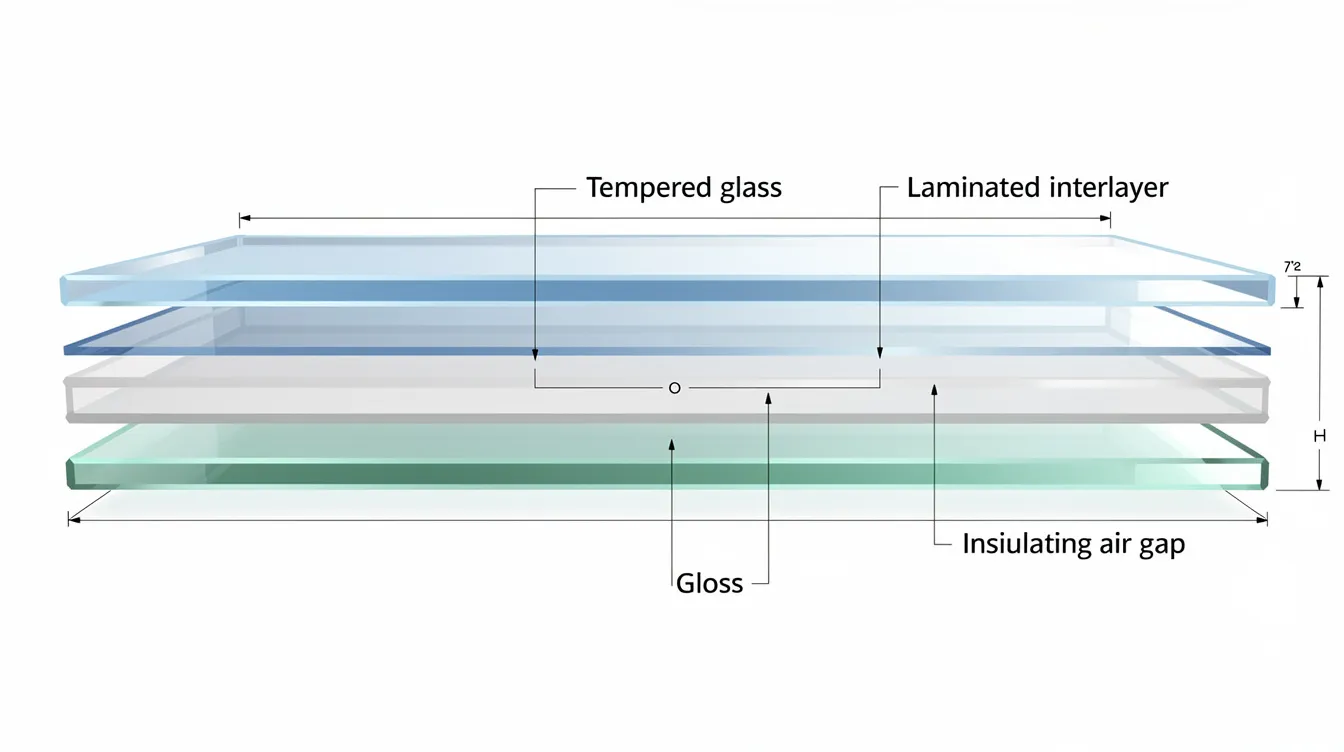
Laminated glass, often referred to as shatterproof glass, consists of multiple layers of glass with a plastic interlayer that holds the glass together when broken, preventing dangerous shards from forming. The thermoplastic interlayer—typically polyvinyl butyral (PVB) or ethylene-vinyl acetate (EVA)—creates a flexible barrier between glass panes that absorbs impact energy and maintains the glass structure even after breakage.
The manufacturing process involves bonding glass layers with the interlayer under heat and pressure in an autoclave, typically at temperatures exceeding 100°C and pressures of 8–12 bar. When laminated glass breaks, it is designed to hold the glass shards in place, preventing them from shattering dangerously inwards and causing injuries. This property makes laminated security glass the preferred choice for applications where maintaining barrier integrity after impact is critical and one of the leading options among so‑called unbreakable glass window solutions.
Polycarbonate Panels
Polycarbonate glass is a highly impact-resistant alternative to traditional glass, often used in applications requiring superior strength and durability, making it significantly more difficult to break than standard glass. This thermoplastic material offers approximately 250 times more impact resistance than regular glass while remaining lightweight and optically clear.
Polycarbonate panels, a type of shatterproof glass, are significantly more resistant to impacts and can withstand high-energy forces, making them ideal for protection against extreme weather. However, polycarbonate requires UV-protective coatings to prevent yellowing over time and is more susceptible to scratching than glass surfaces. Understanding these trade-offs helps property owners select the most suitable solution for their specific needs, including when to supplement glazing with retrofit ballistic polycarbonate shield systems.
Types of Shatterproof Glass
Building on the fundamental technologies, shatterproof windows are available in several distinct categories designed for varying security levels and applications. Each type offers specific advantages in terms of impact resistance, security features, and cost considerations.
Standard Laminated Glass
Standard window laminate provides baseline safety features using two glass layers bonded with a PVB interlayer. Available in various thicknesses ranging from 6mm to 12mm, this option suits residential applications including skylights, glass doors, and ground-floor windows where basic injury prevention and UV protection are primary concerns.
The cost for basic PVB laminated glass typically ranges from $7–12 per square foot, making it accessible for most residential projects. Standard laminated options block over 99% of harmful UV rays while maintaining excellent optical clarity, preventing furniture fading and protecting interiors from sun damage.
Security Laminated Glass
Laminated and tempered glass options offer significant protection against forced entry and security risks when constructed with enhanced interlayers and multiple glass plies. Security laminated glass uses thicker interlayers—often ionoplast (SGP) materials—that provide significantly higher tensile strength (25–34 MPa compared to 12 MPa for basic EVA) and maintain structural capacity even after the glass itself fractures.
Laminated security glass is designed to hold broken glass pieces together, preventing them from shattering into sharp, dangerous shards that can cause injuries. This construction delays intruders attempting break ins while providing time for security response.
Ballistic-Resistant Glass
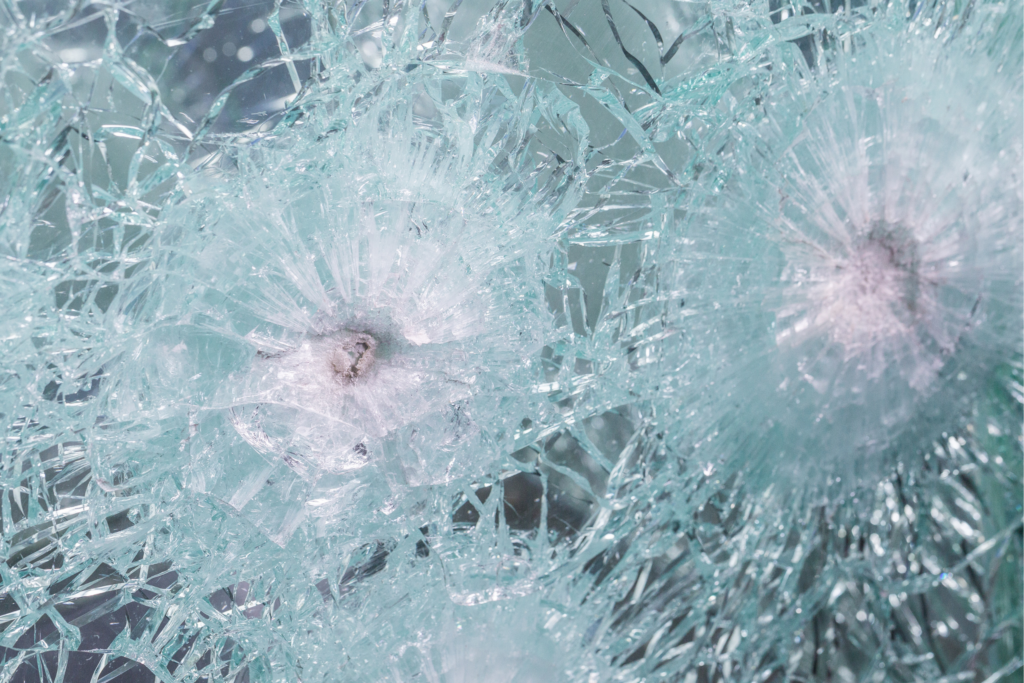
Ballistic-resistant glass represents the highest security level, constructed to meet UL 752 standards and related ballistic test ratings for stopping projectiles of specific calibers. These systems combine multiple glass layers with specialized interlayers and sometimes polycarbonate layers to achieve ratings from Level 1 (9mm handgun) through Level 10 (high-powered rifles).
Both laminated glass and polycarbonate glass are marketed as shatterproof, but neither is truly unbreakable; bullet-resistant glass can still be broken under sustained attack and these systems are designed to withstand significant force and reduce the risk of shattering into sharp pieces. Ballistic-rated panels prevent penetration and reduce spall (fragment ejection) on the protected side, making them essential for security booths, financial institutions, and government facilities.
| Glass Type | Impact Resistance | Security Level | Typical Cost (per sq ft) |
|---|---|---|---|
| Standard Laminated | Moderate | Basic safety | $7–12 |
| Security Laminated | High | Forced entry resistant | $12–25 |
| Ballistic-Resistant | Very High | Projectile stopping | $35–100+ |
Key Benefits and Performance Features
Understanding the measurable advantages of shatterproof glass helps justify the investment and select appropriate solutions for specific protection requirements.
Safety and Injury Prevention
Laminated safety glass is designed to hold broken pieces together, reducing the risk of injury and preventing further damage during extreme weather conditions. When broken glass remains bound to the interlayer rather than scattering as dangerous projectiles, occupant safety improves dramatically.
Shatterproof glass improves occupant safety in vehicles by reducing the risk of ejection during rollover accidents. This same principle applies to buildings—during storms, accidents, or impacts, the glass barrier maintains integrity and prevents people inside from contact with sharp fragments. Tempered glass crumbles into small, blunt pieces rather than jagged shards, providing an alternative safety approach where fragment retention is less critical and is often chosen for tempered glass applications such as windows and doors.
Security Enhancement
Shatterproof glass can delay forced entry by anywhere from around four minutes to complete non entry, providing valuable time for occupants to react and for authorities to arrive. This entry prevention capability represents one of the most significant advantages for commercial and residential security applications.
Polycarbonate glass is significantly more resistant to impacts than traditional glass, making it a preferred choice for high-security applications. Criminal behavior studies indicate that visible security glass acts as a deterrent—most opportunistic burglars abandon attempts when initial breakage does not provide immediate access.
Energy Efficiency and Environmental Control
Installing laminated glass can effectively transform single-pane windows into double or triple-pane windows, significantly improving energy efficiency and reducing heating and cooling costs. The interlayer creates thermal insulation that reduces heat transfer and improves overall building performance.
Shatterproof glass can help maintain comfortable indoor temperatures, which reduces reliance on HVAC systems and leads to lower energy bills. The energy savings from installing shatterproof glass can be significant enough that the investment often pays for itself quickly due to reduced utility bills.
Performance Comparison
| Feature | Regular Glass | Tempered Glass | Laminated Glass | Polycarbonate |
|---|---|---|---|---|
| Impact Resistance | Low | Moderate | High | Very High |
| Fragment Retention | None | Small granules | Held in place | Flexible deformation |
| Forced Entry Delay | None | Minimal | 4+ minutes | Extended |
| UV Protection | Minimal | Minimal | 99%+ blocked | Varies with coating |
| Weight | Baseline | Similar | 10–20% heavier | 50% lighter |
| Durability | Low | Moderate | High | High (with coating) |
| Tempered glass is heat-treated to be 3–5 times stronger than regular glass, breaking into small, blunt granules instead of sharp shards; this illustrates the key differences between tempered, regular, and laminated glass. However, once broken, tempered glass loses all barrier function, while laminated options maintain protection even after the glass cracks. | ||||
 |
Applications and Use Cases
Shatterproof glass serves diverse applications across residential, commercial, and specialized environments where safety, security, and durability requirements exceed what standard glass windows can provide.
Residential Applications
Shatterproof glass can protect homes and businesses from severe weather events such as hurricanes and tornadoes by preventing debris from breaking through windows. In hurricane-prone coastal regions, impact-rated laminated glass meets High-Velocity Hurricane Zone (HVHZ) requirements that tempered glass alone cannot satisfy.
Ground-floor shatterproof windows enhance home security by preventing rapid forced entry through glass doors and accessible windows. The added strength of laminated construction protects against both intentional break ins and accidental impacts from children, pets, or household activities.
Shatterproof glass has sound-dampening properties, which can help reduce noise transmission from the outside, making indoor environments quieter and more peaceful. For homes on a busy street, laminated glass with acoustic interlayers can increase Sound Transmission Class (STC) ratings from 33–35 to the mid-40s, significantly reducing traffic noise intrusion.
Commercial and Institutional
Retail storefronts use security glass to prevent smash-and-grab theft while maintaining product visibility. The combination of visual access and physical security makes laminated security glass, often paired with 3M Scotchshield safety and security window films, ideal for high-value display windows.
Schools, healthcare facilities, and government buildings require enhanced protection against vandalism, forced entry, and potential violence. Glass in heavy machinery, such as construction and agricultural equipment, utilizes shatterproof glass to protect operators from flying debris—similar principles apply to institutional settings where occupant protection is paramount.
The thermoplastic interlayer in laminated security glass is effective in blocking sound, making it a suitable choice for homes and businesses located in noisy areas and a compelling option when evaluating tempered versus laminated glass for different applications alongside residential window film solutions for additional comfort and UV protection. Installing shatterproof glass throughout a property can lead to a significant reduction in noise levels, enhancing comfort in residential and commercial spaces.
Specialized Applications
Shatterproof glass is used in automotive applications like windshields and side windows to enhance safety during accidents. Automotive windshields specifically require laminated construction to meet federal safety standards, while side and rear windows typically use tempered glass.
Aquariums, animal enclosures, and zoo exhibits demand thick laminated or glass-polycarbonate hybrid panels that combine optical clarity with exceptional impact resistance. Polycarbonate shields in these applications offer the necessary strength while reducing overall weight compared to equivalent glass thicknesses.
Installation Methods and Considerations
Selecting the right installation approach depends on whether you’re upgrading existing windows or incorporating safety glass into new construction projects.
Retrofit Installation Process
Window films offer the most accessible retrofit option for existing glass windows, especially when you understand the distinctions between shatterproof and true security window films. Window protection films and related retrofit systems using high-quality security films (4–14 mil polyester) applied to interior glass surfaces improve fragment retention and provide moderate forced entry resistance without full glass replacement. Professional film installation typically completes within hours for residential projects when performed by specialized nationwide installers like Window Film Depot.
Complete glass replacement provides superior protection but requires careful assessment of existing frames. Key steps include:
- Evaluate current frame structural capacity for heavier laminated panels
- Remove existing glazing and prepare frame surfaces
- Install new laminated units with appropriate edge seals
- Apply weatherproofing and complete final adjustments
Professional installation ensures proper edge sealing—critical for preventing moisture ingress that causes delamination, particularly with PVB interlayers in humid climates, and helps manage window security film installation costs and price factors when specifying 3M safety and sun control window film products. EVA and SGP interlayers perform better when edges remain exposed.
Cost Factors and ROI
Material costs for laminated safety glass range from $7–12 per square foot for basic residential options to $18–35 or higher for premium low-iron glass with SGP interlayers or specialty coatings. Commercial storefront panels typically run $800–2,500 installed, depending on size and security rating.
Installation labor, framing modifications, and permits add to project costs. Heavy laminated or ballistic-rated panels require robust framing capable of supporting significantly increased weight—structural assessment before installation prevents costly modifications later.
Laminated glass can block over 99% of UV rays, preventing furniture fading and protecting interiors. Combined with improved insulation properties and complementary window glass film products from leading brands, these benefits contribute to measurable energy savings and extended interior furnishing lifespan. Properties with impact-rated glazing often qualify for insurance premium reductions, particularly in hurricane zones where the investment provides documented risk reduction.
Common Challenges and Solutions
Understanding typical concerns helps property owners make informed decisions during the selection and installation process.
Visibility and Aesthetic Concerns
Modern laminated glass maintains 90%+ optical clarity with minimal distortion when manufactured with quality interlayers. Light transmission typically reaches 89–92% for PVB and SGP interlayers, comparable to standard glass.
Concerns about yellowing or tinting over time are addressed through UV-stabilized interlayer materials. SGP (ionoplast) interlayers offer superior color stability over decades, while EVA may require additional UV coatings for exterior applications to prevent degradation.
Need More Info?
The Window Film Depot team is happy to help.
Weight and Structural Considerations
Laminated glass panels weigh 10–20% more than equivalent single-pane installations. A half-inch laminated unit combining two quarter-inch glass sheets with interlayer requires frames engineered for the increased load.
For applications where weight is a primary concern, polycarbonate alternatives offer comparable protection at roughly half the weight of glass equivalents. Structural interlayers like SGP also enable thinner glass assemblies that achieve equivalent performance with reduced overall weight, while do‑it‑yourself window film installation solutions can further upgrade existing glass without adding substantial mass.
Maintenance and Longevity
With quality materials and proper installation, laminated glass achieves a 25–30 year lifespan without significant optical defects. Regular maintenance involves:
- Cleaning with non-abrasive materials and soft cloths
- Avoiding harsh chemicals near edge seals
- Periodic inspection of frames and edges for delamination signs
- Prompt attention to any visible moisture between layers
Edge seal quality determines long-term performance in humid environments. Specifying moisture-resistant interlayers (EVA or SGP) for exposed-edge applications prevents premature failure.
Conclusion and Next Steps
Shatterproof glass delivers measurable safety and security improvements through advanced lamination technology that standard glass windows simply cannot match. Whether protecting against severe weather, preventing forced entry, or reducing injury risk from breakage, these solutions provide documented benefits that justify the investment for residential and commercial properties.
Immediate next steps:
- Assess your property’s current glazing and identify high-priority areas (ground-floor access points, storm-exposed openings, high-security zones)
- Consult with certified glazing professionals to evaluate frame structural capacity and determine suitable product options
- Obtain quotes specifying material type, thickness, and performance ratings for accurate cost comparison
- Review local building codes and insurance requirements that may affect product selection
For properties requiring enhanced protection, exploring related solutions including security system integration, energy-efficient coatings, and specialized window films provides comprehensive building envelope security.
Frequently Asked Questions
Is shatterproof glass completely unbreakable?
No glass product is completely unbreakable when subjected to enough force. Shatterproof glass is engineered to break safely—tempered glass shatters into small, blunt granules while laminated glass holds fragments together. The term “unbreakable glass” is somewhat misleading; these products provide significant resistance and controlled failure rather than invulnerability.
How much does shatterproof glass cost compared to regular glass?
Regular annealed glass costs a few dollars per square foot. Laminated safety glass with basic PVB interlayer typically runs $7–12 per square foot, while premium options with SGP interlayers, ballistic ratings, or specialty coatings range from $18–35 or more per square foot. Installed commercial panels cost $800–2,500 depending on size and specifications.
Can shatterproof glass be installed over existing windows?
Yes, through several methods. Security window films applied to existing glass improve fragment retention and provide moderate protection. Alternatively, glass panes can be replaced within existing frames, though frame structural capacity must support heavier laminated units. Professional assessment ensures proper fit and code compliance.
What maintenance is required for laminated glass?
Laminated glass requires minimal maintenance—regular cleaning with non-abrasive materials and soft cloths, avoiding harsh chemicals near edges, and periodic inspection for delamination or moisture ingress. With proper installation and quality materials, laminated glass maintains clarity and performance for 25–30 years.
Does shatterproof glass provide UV protection?
Yes. Laminated glass can block over 99% of UV rays, preventing furniture fading and protecting interiors from sun damage. The interlayer material absorbs harmful UV radiation while maintaining visible light transmission, offering superior protection compared to standard glass.
How long does installation take for a typical home?
Retrofit film applications typically complete within hours for residential projects, with regional providers offering professional window film installation and tinting services that minimize disruption. Full glass replacement takes one day or more per opening depending on size, frame modifications, and complexity. Custom laminated or impact-rated panels require fabrication lead times of days to weeks before installation.
What is the difference between tempered and shatterproof glass?
Tempered glass is heat-treated to be 3–5 times stronger than regular glass and breaks into small granules rather than sharp shards—but once broken, it provides no barrier. Laminated glass (commonly called shatterproof) holds fragments together via the interlayer even after cracking, maintaining structural integrity and forced entry resistance.
Can shatterproof glass reduce noise transmission?
Yes. Laminated glass with acoustic interlayers significantly reduces sound transmission. The thermoplastic interlayer dampens sound vibrations, improving STC ratings from typical 33–35 (monolithic glass) to the high 30s or mid-40s depending on thickness and interlayer type—substantial improvement for properties near busy streets or airports.