Table of Contents:
- Why Installation Quality Is the True Risk Variable in Any Security Glazing Specification
- Choosing the Right Film Specification: Thickness, Attachment Systems, and Performance Ratings
- What a Professional Commercial Window Security Film Installation Actually Looks Like
- Coordinating a Large-Scale Window Security Film Installation Within a Live Construction Schedule
- How to Vet a Window Security Film Installer Before Awarding the Subcontract
- Conclusion: What Separates a Compliant Installation from a Liability
- Frequently Asked Questions
Why Installation Quality Is the True Risk Variable in Any Security Glazing Specification
Window security film installation is not just about choosing the right film. For commercial and institutional buildings, the installer determines whether the system performs as specified, passes inspection, protects the warranty, and supports the project’s compliance requirements. This blog explains why certified installation, substrate checks, attachment systems, and closeout documentation matter just as much as the product itself.
The Misconception That Film Selection Alone Determines Performance
Most project managers specify security film by product. They compare mil thicknesses, pull tensile strength data sheets, and select a manufacturer with a recognizable name. That due diligence matters, but it addresses roughly half the risk. The other half lives in the hands of whoever installs it.
A 12-mil safety film applied over contaminated glass with inadequate edge coverage and the wrong adhesion activator will not perform to its rated specification under impact or forced entry conditions. The film did not fail. The installation did. And from a compliance and liability standpoint, that distinction rarely protects anyone on the project team.

How a Substandard Installation Voids Compliance, Liability Protections, and Warranty Coverage
Manufacturers like 3M explicitly tie warranty coverage to installer certification status. An unauthorized or uncertified installer working with genuine product still voids the manufacturer warranty, which means the owner has no recourse if the film delaminates, hazes, or fails an inspection. That warranty gap also affects the general contractor’s liability position if the glazing specification is part of a life-safety or security compliance requirement.
Beyond warranty, many building code citations referencing safety glazing standards require that installation follows tested and documented methods. An inspector verifying compliance with CPSC 16 CFR 1201 or a local blast mitigation ordinance is not just checking the film spec sheet. They are verifying that the system was installed correctly, with the right attachment method and proper substrate preparation.
What Happens When Security Film Fails a Post-Installation Inspection
Rework Costs and Schedule Impact
Failed inspections on security film installations typically require complete removal and reinstallation, not remediation. Film that has bonded to glass, even improperly, cannot be partially corrected. The crew must strip the glazing surface, re-clean it to a contamination-free baseline, and reapply. On a 50,000-square-foot institutional building with high window counts, that is not a two-day fix.
The schedule impact compounds quickly. Window film installation sits downstream of glazing and upstream of final inspection. A failed installation can hold a certificate of occupancy, delay the security system commissioning sequence, or push a phased handover. Rework cost on a large commercial project routinely runs into five figures before accounting for schedule penalties.
Liability Exposure When Fragment Retention or Forced Entry Resistance Is Unverified
If a window treated with security film fails to retain glass fragments during an incident and someone is injured, the first question from an attorney is whether the installation was performed and verified by a certified installer following the manufacturer’s documented process. If the answer is no, every party in the specification chain, including the architect, GC, and subcontractor, carries exposure. An unverified installation is not a grey area. It is an undocumented system making an implied safety claim with no evidentiary support.
Framing the Thesis: Installer Capability as a Project Risk Factor
The practical implication is straightforward: selecting window security film is only half the specification decision. The installer is the other half, and it carries equal weight from a compliance, warranty, and project risk perspective. The sections that follow address both dimensions, covering what the right film specification looks like for commercial and institutional applications and what a qualified installer actually does during a professional installation.
Choosing the Right Film Specification: Thickness, Attachment Systems, and Performance Ratings
How Mil Thickness Translates to Real-World Protection
Mil thickness is the most commonly referenced film specification, but it is a proxy metric, not a performance guarantee on its own. Thicker film resists puncture and tear better during impact events, but the protection outcome depends on how thickness interacts with the attachment system and substrate.
As a general framework for commercial applications:
- 4-mil films handle basic safety glazing requirements, including fragment retention during accidental breakage, and are suitable for interior glazing in low-risk environments.
- 7- to 8-mil films provide meaningful forced entry delay and are commonly specified for retail, schools, and corporate facilities.
- 12-mil and above films are specified where blast mitigation, ballistic resistance, or high-impact threat scenarios are part of the security program.
Specifying a 12-mil film on a building where the attachment system is not anchored to the frame defeats a significant portion of the film’s protective value. Thickness and attachment method are a system specification, not independent choices.
Anchored vs. Unanchored Systems: Why the Attachment Method Changes Everything
An unanchored installation bonds the film to the glass surface only. When the glass fractures under blast pressure or high-impact force, the film holds the fragments together, but the entire glazing assembly can still be propelled inward. For most forced entry deterrence applications, that is acceptable. For blast mitigation, it is not.
Wet-Glazed Anchored Systems and Their Role in Blast Mitigation Compliance
An anchored system, most commonly a wet-glazed attachment where the film’s edge is mechanically bonded to the window frame using a structural silicone sealant, connects the film to the building structure. Under blast loading, the glazing assembly stays in the frame rather than becoming a projectile. This is the system required by GSA standards for federal facilities and is frequently specified in Department of Defense and Department of State construction guidelines. Without the anchored attachment, even the highest-rated tempered glass window for buildings cannot meet blast mitigation compliance thresholds.
When an Unanchored Installation Is Insufficient
Projects with explicit blast resistance requirements in the specification documents, anti-intrusion requirements at entry glazing, or any glazing facing a public plaza at a government or critical infrastructure facility should default to anchored systems. An installer who does not offer wet-glazed anchored installation as part of their service scope is not qualified to bid these project types, regardless of the film products they carry.
Matching Film Specification to Substrate: Tempered Glass, Laminated Glass, and IGU Compatibility
Not every film is compatible with every glass substrate, and the consequences of a mismatch range from warranty voidance to glass failure from thermal stress. Tempered glass is sensitive to heat buildup. Certain darker or highly reflective films can create thermal gradients that cause spontaneous breakage, particularly on south- and west-facing elevations. A qualified installer confirms film-to-substrate compatibility before specifying a product, not after it is on the glass.
Insulated glass units (IGUs) require a different analysis. Applying film to the interior surface of the outer lite changes the thermal dynamics of the unit, and if the film is not rated for IGU application, it can accelerate seal failure and cause condensation between panes. Single-pane and laminated glass each have their own compatibility considerations. The substrate verification step happens during the pre-installation site survey. It is not a decision made from a product catalog.
Understanding the Standards That Govern Commercial Safety Glazing
ANSI Z97.1, CPSC 16 CFR 1201, and What Compliance Actually Requires
Both ANSI Z97.1 and CPSC 16 CFR 1201 establish performance requirements for safety glazing in hazardous locations, including doors, sidelights, shower enclosures, and other areas where human impact is foreseeable. Compliance means the glazed assembly, meaning glass plus film as a system, meets impact resistance and fragment retention thresholds under standardized testing conditions, coming close to unbreakable glass. The standards do not certify products in isolation. They certify systems. A film tested as part of a compliant assembly must be installed using the same method and on the same substrate type to carry that compliance claim on your project.
How 3M Safety Series and 3M Ultra Series Films Align to These Standards
3M Safety Series films, typically 4 to 8 mil, are tested and rated for compliance with both ANSI Z97.1 Class A and CPSC 16 CFR 1201 Category II when applied per documented installation procedures. The 3M Ultra Series, which begins at 8 mil and extends to multi-ply configurations, addresses higher-threat applications and is the product line commonly referenced in blast mitigation and forced entry resistance specifications for institutional and government projects. Both series carry manufacturer documentation linking specific products to specific compliance claims, and that documentation is only valid when installation is performed by a 3M Authorized Installer.
What Certifications and Ratings to Require in a Project Specification
A commercial security glazing specification should name the performance standard being met, whether ANSI Z97.1, CPSC 16 CFR 1201, or GSA blast ratings where applicable. It should specify the attachment system required, identify substrate compatibility requirements, and require that the installing contractor hold current manufacturer authorization. Leaving installer qualification out of the specification document is the most common gap that creates problems at inspection.
Installer and Film Specification Evaluation Matrix
Use this rubric to match film specification, attachment system, and installer requirements to your project type before issuing subcontractor scope documents.
| Project Type | Minimum Film Thickness | Attachment System | Key Compliance Standards | Installer Requirement |
|---|---|---|---|---|
| Retail / Commercial Office | 7–8 mil | Unanchored (daylight zone) | CPSC 16 CFR 1201 Cat. II, ANSI Z97.1 Class A | Manufacturer-authorized installer |
| K–12 Education / Higher Ed | 8 mil | Unanchored or anchored at entry glazing | CPSC 16 CFR 1201 Cat. II, local school safety codes | Manufacturer-authorized installer, documented institutional project experience |
| Healthcare Facilities | 8–12 mil | Anchored at high-risk zones | CPSC 16 CFR 1201 Cat. II, facility-specific security specs | Manufacturer-authorized installer, coordination with facility management |
| Government / Federal | 12 mil minimum | Wet-glazed anchored system required | GSA TS01-2003, UFC blast standards, CPSC 16 CFR 1201 | 3M Authorized Installer, documented blast mitigation project experience |
| Transportation Hubs / Critical Infrastructure | 12 mil+ (multi-ply for high-threat) | Wet-glazed anchored system required | GSA blast ratings, local AHJ requirements | 3M Authorized Installer, demonstrated large-scale institutional capacity |
How to Apply the Specification Matrix
Cross-reference your project type with the attachment system column first. If your project requires a wet-glazed anchored system, confirm that capability with any installer before evaluating their product offering. An installer without anchored installation experience cannot execute the specification regardless of the films they carry. Then verify the compliance standards apply to your jurisdiction and project scope. Some projects carry multiple applicable standards. Where they conflict, the more stringent governs.
This matrix assumes standard single-pane or tempered monolithic glass. Projects specifying IGUs or laminated glass require individual film-to-substrate compatibility verification by the installer prior to product selection. Do not finalize film specification on IGU projects without written confirmation of compatibility from the manufacturer.
Manufacturer warranty coverage for all tiers in this matrix requires installation by a currently authorized installer using documented application procedures. Verify installer authorization status directly with the manufacturer before subcontract award.
What a Professional Commercial Window Security Film Installation Actually Looks Like
A correctly executed safety window film installation process follows a defined sequence. Each phase has specific quality criteria, and each one creates conditions that either support or undermine the phases that follow. Understanding that sequence is how you evaluate whether a proposed scope of work reflects professional practice or a shortcut waiting to become a rework event.
Phase One: Pre-Installation Assessment and Site Survey
Substrate Verification and Daylight Zone Measurement
Before any film is ordered or cut, a qualified installer conducts a full site survey. This means physically verifying glass type at each elevation, whether tempered, annealed, laminated, or IGU, rather than relying on the glazing schedule from the architect’s drawings, which is frequently incomplete or reflects substitutions made during procurement.
Daylight zone dimensions are measured directly off the glass, not from door and window schedules, because film must be cut to fit the actual lite with tolerances that account for frame overlap and edge coverage requirements.

Environmental and Temperature Constraints That Affect Scheduling
Film adhesion depends on substrate temperature. Most professional-grade security films require glass surface temperatures between 40°F and 95°F at time of application. Below that range, the adhesive does not activate properly and the bond will be compromised from day one. On large institutional projects, this means the pre-installation survey should also capture building orientation, HVAC commissioning status, and seasonal exposure conditions for exterior-facing glazing. A crew arriving in January to a building without operational heat is a scheduling failure that should have been caught weeks earlier.
Phase Two: Surface Preparation as a Non-Negotiable Quality Gate
Cleaning Protocols That Determine Film Adhesion Across Large Glazing Surfaces
Surface preparation is where most installation failures originate. Professional installers use a multi-stage cleaning process: a razor blade scrape to remove construction residue, paint overspray, and adhesive deposits, followed by a chemical cleaning solution applied with a clean white scrubber pad, then a final wipe-down to achieve a contamination-free surface. On new construction projects, glass is rarely clean. Silicone sealant smears, sticker residue, and construction dust are standard conditions. None of those contaminants are visible once the film is applied. All of them affect long-term adhesion.
How Contamination at the Substrate Level Causes Long-Term Failures
Contaminants trapped between the glass and film do not compress out during application. They create micro-voids in the adhesive bond that expand over time, particularly under thermal cycling as the glass expands and contracts seasonally. What starts as an invisible preparation shortcut becomes visible delamination within 12 to 24 months, and at that point, the only fix is complete removal and reinstallation. Thorough surface preparation is not recoverable labor. It is the single step that determines whether the installation holds its bond for the life of the film.
Phase Three: Precision Cutting, Measurement, and Film Application
Managing Tolerances Across High Window Counts in Institutional Buildings
On a project with 200 or 400 windows, individual measurement and cutting for each lite is the only reliable approach. Cutting film to a nominal size and applying it across multiple openings introduces cumulative tolerance errors that result in edge gaps, which are areas where the film does not reach the frame line and fragment retention is compromised at the perimeter. Professional installers measure and record each lite, cut film to those dimensions with a consistent edge allowance, and label cuts to the corresponding window before the application crew arrives.
Squeegee Pressure, Water Removal, and Ensuring a Void-Free Bond
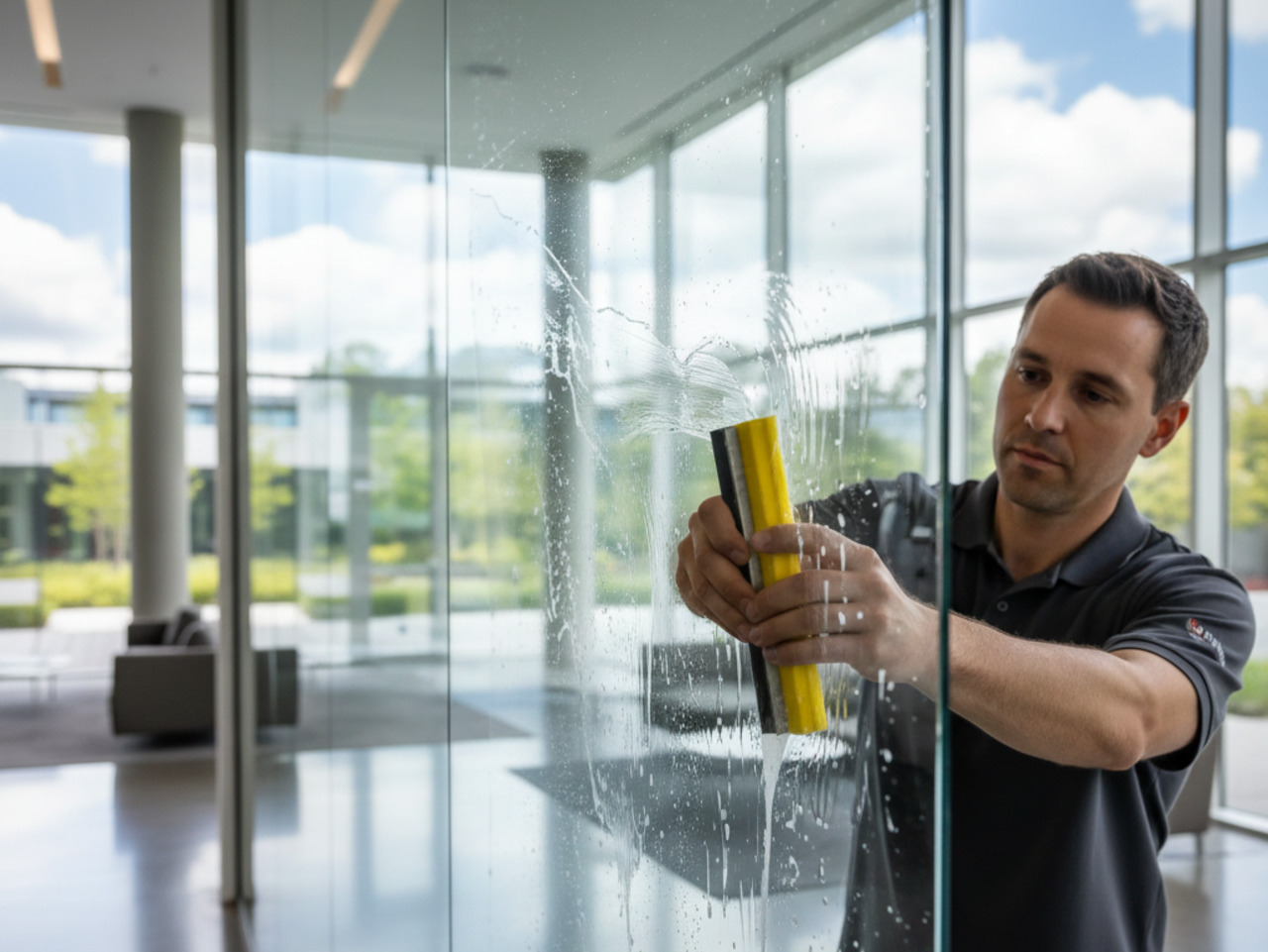
Film is applied wet. A slip solution allows repositioning before the adhesive sets. The application technique uses firm, overlapping squeegee strokes from the center outward to drive water and air from under the film. Squeegee pressure matters: too light and water remains trapped under the film, too heavy on certain films and the adhesive layer shears. The installer’s goal is a void-free bond across the entire surface, confirmed by back-lighting the glass after application to check for water pockets or air inclusions. Any voids found at this stage are corrected before the film begins to set, typically within the first 30 minutes.
Phase Four: Post-Installation Inspection and Quality Verification
What a Compliant Post-Installation Inspection Covers
A professional post-installation inspection is not a visual walkthrough. It covers edge coverage measurement at each lite to confirm the film reaches within specification of the frame line, surface inspection for voids, bubbles, or contamination inclusions, and, on anchored system installations, verification that the wet-glazed sealant bead is continuous and properly adhered to both the film edge and the frame. On projects with blast mitigation or safety glazing compliance requirements, this inspection generates the documentation that connects the installed system to the compliance claim.
How Professional Installers Document Completion for Owner and Permitting Records
Documentation at project closeout should include a window-by-window completion log with lite dimensions, film product and lot number, installation date, and installer name. Anchored system installations require photographic documentation of the sealant application at each frame. The installer delivers this package to the general contractor as part of the closeout file, providing the owner with a traceable record that the installation was performed per specification. Without this documentation, the installation is unverifiable, which matters when a building changes hands, undergoes renovation, or faces an insurance or liability inquiry.
Coordinating a Large-Scale Window Security Film Installation Within a Live Construction Schedule
How Window Security Film Fits Into the Commercial Construction Sequence
Window security film installs after glazing is complete and cured, after interior framing and drywall work that generates dust is finished, and before final cleaning and punch-list. On most commercial projects, that window is narrow. If the installation crew cannot mobilize when the schedule opens, they either delay the certificate of occupancy or get compressed into a period when other trades are still active, which creates contamination risk during surface preparation and application.
Realistic Timeline Expectations: Variables That Compress or Extend the Schedule
Square Footage, Window Count, and Crew Scaling
A two-person crew can typically apply film to 500 to 800 square feet of glass per day under normal conditions on a commercial project. That rate accounts for surface preparation, measurement, cutting, application, and inspection, not just squeegee time. A 50,000-square-foot building with substantial glazing may represent 8,000 to 12,000 square feet of film surface, meaning a two-person crew needs two to three weeks. Scaling crew size compresses the timeline, but larger crews require coordination to avoid cross-contaminating prepped surfaces and to maintain consistent quality across multiple simultaneous application points.
Weather Dependencies, Interior vs. Exterior Installation, and Seasonal Scheduling
Interior installation is largely weather-independent once the building envelope is sealed.
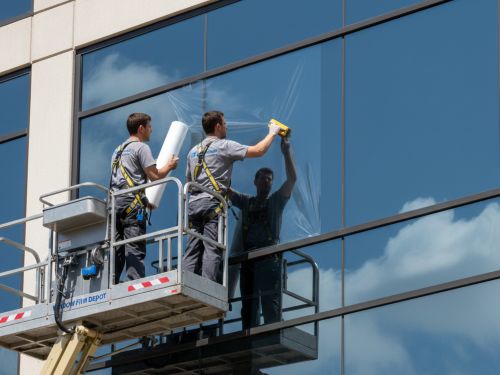
Exterior installation, used on certain multi-story applications where interior access is impractical, depends on ambient temperature, wind, and precipitation, and requires rope access or lift equipment coordination.
In cold climates, exterior application may be unavailable from November through March. Projects that include exterior film scope should schedule that work early in the construction sequence, not at the end.
An Illustrative Scenario: Preventing Rework Through Pre-Construction Coordination
Consider a 120,000-square-foot regional headquarters building scheduled for a security film installation across six floors of curtainwall glazing. The GC assumed a two-week installation window after interior finishes were complete. The security film subcontractor, brought into the coordination conversation early, identified three issues during the pre-construction review: south-facing IGUs on floors four through six required compatibility verification before film selection could be finalized, HVAC was not scheduled to be operational until two weeks after interior finishes were complete which put glass surface temperatures below the adhesive activation threshold, and the building owner wanted an anchored wet-glazed system at all entry points for which the originally specified film product was not rated.
Each of those issues, caught during pre-construction coordination, required a schedule or specification adjustment rather than a rework event. Caught after installation, any one of them would have been a costly problem.
What National Installation Capacity Means for Multi-Site or Phased Projects
For multi-location rollouts, such as a regional school district upgrading security glazing across twelve campuses or a national retailer specifying commercial security window film across 80 locations, the ability to maintain consistent installation quality across geographically distributed crews is the core logistical challenge. A subcontractor with national capacity brings a standardized process, centralized project management, and trained crews operating from the same procedures at every site. The alternative is sourcing local installers market by market, each with different training, documentation practices, and quality verification processes. The consistency risk in that model is substantial.
How to Know If an Installer Is Qualified for Large-Scale Institutional Projects
Ask for verifiable references on comparable projects, not just project names but contacts at the GC or owner organization who can speak to crew performance, schedule adherence, and documentation quality. An installer who has completed security film work on K-12 schools, government buildings, or healthcare facilities at scale will have a reference list and closeout documentation examples they can produce without hesitation.
How to Vet a Window Security Film Installer Before Awarding the Subcontract
The Difference Between a General Window Tinting Contractor and a Certified Security Film Installer
General window tinting contractors and certified security film installers work with similar materials but carry fundamentally different scopes of competency. A tinting contractor applies solar control and decorative films, work where the performance standard is optical clarity and customer satisfaction. A certified security film installer applies systems where the performance standard is compliance with safety glazing codes, blast mitigation specifications, or forced entry resistance requirements. The skills overlap in basic application technique. They diverge in substrate compatibility assessment, attachment system selection, code compliance awareness, and documentation practice. Awarding a security film subcontract to a general tinting contractor based on pricing is the most common path to the inspection failures described earlier in this article.
Need More Info?
The Window Film Depot team is happy to help.
What Certifications a Professional Window Film Installer Should Have
3M Authorized Installer Status and What It Requires to Maintain
3M Authorized Installer status is not a one-time credential. It requires formal product training, demonstrated installation competency, ongoing certification renewals, and adherence to documented application procedures. Installers must maintain the authorization to retain it, which means 3M has a mechanism to revoke status for non-compliant work. From a project risk standpoint, that accountability structure matters. Verify current authorization status directly with 3M before subcontract award, not by accepting a certificate copy from the installer.
Manufacturer-Backed Warranty Coverage and How It Depends on Installer Certification
3M’s commercial warranty on security and safety films is issued to the building owner and requires that installation was performed by a currently authorized installer using documented procedures. The warranty covers film defects and performance failures under specified conditions. Without authorized installer status at the time of installation, the warranty is void regardless of product quality. For a project manager, the authorization verification step is not administrative due diligence. It is the step that determines whether the owner has any manufacturer recourse if the film fails.
Evaluating Demonstrated Capacity: National Coverage, Crew Depth, and Project Management Infrastructure
A single certified installer and a firm with national deployment capacity are not equivalent options for a large institutional project. Crew depth matters when a schedule compression requires parallel work across multiple floors or buildings. Project management infrastructure matters when a GC needs daily progress reporting, RFI responses within 24 hours, and a single point of contact across a 90-day installation sequence. When evaluating candidates, ask specifically how many trained crews can be deployed simultaneously on the project and who holds project management accountability for schedule and quality on-site.
The Right Questions to Ask During Subcontractor Vetting
How to Assess Track Record on Comparable Projects
Request a project history that lists building type, square footage, film specification, attachment system, and a GC or owner contact for each reference project. A qualified installer provides this readily. Evaluate whether their experience matches your project’s specific demands. A firm with an extensive retail portfolio may not have the anchored system experience required for a government facility or the HVAC coordination experience required for a hospital project.
What Coordination Documentation and Scheduling Guarantees to Require in Scope
The subcontract scope should include a mobilization commitment tied to the GC’s construction schedule, a daily progress log format, a punch-list and rework procedure, and a closeout documentation package that meets the owner’s project record requirements. Installers who resist these requirements in negotiation are signaling that their operations do not support them, which is the most direct available evidence that their execution on your project will not either.
Common Installation Mistakes That Disqualify Vendors
Improper Substrate Preparation, Wrong Attachment System Selection, and Ignoring Thermal Stress
Three failure patterns account for the majority of substandard commercial security film installations. Inadequate surface preparation, specifically skipping the razor scrape phase or using a contaminated solution, causes adhesion failure that manifests as delamination within one to two years. Wrong attachment system selection, meaning bidding an unanchored installation on a project that specifies an anchored system, produces a result that fails compliance inspection regardless of application quality. Ignoring thermal stress factors, such as applying a dark or highly reflective window film to a south-facing tempered IGU without thermal compatibility analysis, can cause the glass unit itself to fail from thermal breakage within months of installation.
Experienced installers prevent these failures through the pre-installation survey process. Each of these mistakes is identifiable before the first roll of film is opened. Ask any prospective installer to walk through what their crew identifies and resolves during the site survey. The answer reveals whether their process is built to catch problems before they become project liabilities.
Cold Weather and Winter Month Installation
Cold weather installation is achievable with the right preparation. Interior installations in a heated building with glass surface temperatures above 40°F can proceed through winter without modification to the installation process. When ambient or glass surface temperatures are marginal, professional installers use temporary heat sources directed at the glass surface to bring it into the acceptable application range, confirm temperature with a surface thermometer before proceeding, and may extend the expected cure time before the installation is considered fully bonded. Exterior installations below 40°F ambient should not proceed. Any installer who does not monitor and document glass surface temperature during cold-weather work is skipping a verification step that directly affects bond quality.
Quick-Reference Installer Vetting Checklist
Before awarding a window security film installation subcontract, verify all five of the following:
- Current manufacturer authorization: Confirm 3M Authorized Installer status directly with the manufacturer, not from a certificate copy provided by the bidder.
- Attachment system competency: Verify the installer has documented experience with the attachment system your specification requires, whether unanchored or wet-glazed anchored.
- Comparable project references: Request a reference list of institutional or commercial projects matching your building type, with GC or owner contacts you can call.
- Crew depth and deployment capacity: Confirm the number of trained crews available for your project timeline and who holds project management accountability on-site.
- Closeout documentation practice: Request a sample closeout package from a completed project to confirm their documentation meets owner and permitting record requirements.
Conclusion: What Separates a Compliant Installation from a Liability
Film Specification and Installer Capability Are Inseparable Decisions
Every section of this article builds toward the same point: window security film installation is a system decision, not a product decision. The film specification determines what protection is possible. The installer determines whether that protection is actually delivered. Treating those as sequential choices, picking the film then finding someone to apply it, is the decision structure that produces failed inspections, voided warranties, and rework events on institutional timelines.
The compliance standards that govern commercial safety glazing test systems, not products. Warranty coverage depends on who installs the product, not just which product is specified. Post-installation inspection verifies the method, not just the material. At every accountability checkpoint in a commercial project, installer capability is part of the evaluation. Specifying a high-rated 3M security film and awarding the installation subcontract to the lowest bidder without verifying credentials is not a cost-saving decision. It is a risk transfer to the owner.
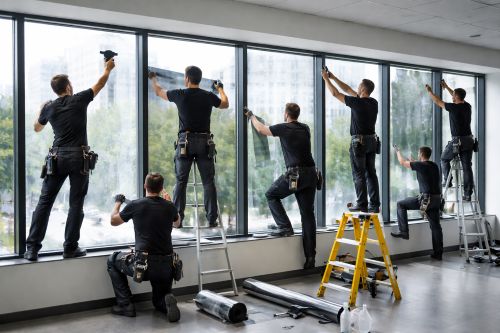
The Project Manager’s Checklist: Technical, Logistical, and Compliance Dimensions of a Qualified Installation
Before awarding a window security film subcontract on any commercial or institutional project, confirm the following across three dimensions.
Technical qualification
- The installer has verified substrate compatibility for every glass type on the project, including any IGUs or laminated glass.
- The attachment system in their scope matches what the specification requires, whether unanchored daylight-zone application or wet-glazed anchored installation at entry and blast-mitigation zones.
- Their film selection is rated for the applicable compliance standard: CPSC 16 CFR 1201, ANSI Z97.1, or GSA blast performance criteria, depending on project type.
Logistical capacity
- Their crew size and deployment model can meet your installation window without compressing quality.
- They have a documented process for cold-weather or constrained-environment installations if your schedule includes those conditions.
- A named project manager holds accountability for schedule adherence, daily reporting, and issue escalation on your site.
Compliance and documentation
- Current 3M Authorized Installer status is confirmed directly with the manufacturer.
- Their closeout package includes a window-by-window completion log, film product and lot numbers, installation dates, and photographic documentation of anchored sealant work where applicable.
- References from comparable institutional or commercial projects are available and verifiable.
A subcontractor who cannot satisfy all three dimensions is not a cost-effective choice at any price point. The exposure created by a non-compliant installation or a failed inspection will exceed any bid savings within the first rework event.
Why Window Film Depot’s Scale, 3M Certification, and Process Infrastructure De-Risk the Vendor Decision
Window Film Depot holds 3M Authorized Installer status and operates with the crew depth and national coverage that large-scale commercial projects require. That combination matters for a specific reason: consistency. On a multi-site project or a phased institutional rollout, the risk is not just whether any single installation is done correctly. It is whether every installation across every location is done correctly. A standardized process, centralized project management, and trained crews operating from the same procedures at every site eliminate the site-to-site quality variance that comes with sourcing local installers market by market.
The 3M Authorized Installer credential represents documented training, demonstrated competency, and ongoing accountability to the manufacturer, which is what makes the manufacturer’s commercial warranty enforceable for the building owner. When the owner needs recourse, that authorization chain is the evidence that the installation was performed to specification.
Beyond credentials, Window Film Depot’s project management infrastructure supports what GCs actually need during a commercial installation: a single point of contact, reliable mobilization against a live construction schedule, and closeout documentation that meets owner and permitting record requirements. For project managers evaluating security film subcontractors on government, healthcare, education, or large commercial projects, the vendor decision is ultimately a risk management decision. The installer either has the credentials, capacity, and process discipline to execute a compliant installation, or the project absorbs the cost of finding that out after the fact.
The Next Step: Engaging Window Film Depot for a Commercial Project Consultation
If you have a security glazing requirement in your current project scope, the most productive next step is a pre-construction consultation before specifications are finalized. Window Film Depot’s commercial team can confirm film-to-substrate compatibility for your glazing types, identify whether your project scope requires an anchored attachment system, and provide a realistic installation timeline based on your window count and construction schedule. That conversation routinely surfaces specification or scheduling issues that are straightforward to resolve before mobilization and expensive to correct after. Contact Window Film Depot directly to initiate a commercial project review.
Frequently Asked Questions
How long does security film installation typically take for a commercial building?
Timeline depends on the total glazable area, window count, and crew size. A two-person crew can typically complete 500 to 800 square feet of glass per day when accounting for surface preparation, cutting, application, and inspection. A building with 8,000 to 12,000 square feet of film surface generally requires two to three weeks with a standard crew. Larger crews can compress that schedule, but coordination requirements increase proportionally to maintain consistent quality across simultaneous application points.
What happens if security film installation fails inspection?
A failed post-installation inspection typically requires complete removal and reinstallation, not a partial fix. Film that has bonded to glass, even incorrectly, cannot be spot-corrected. The entire glazing surface must be stripped, cleaned to a contamination-free baseline, and reapplied. On a large commercial project, this rework can run into five figures in direct cost before accounting for schedule delays that may hold a certificate of occupancy or delay phased handover.
What certifications should a professional window film installer have?
For commercial security glazing applications, current 3M Authorized Installer status is the most critical credential. 3M grants this status only to installers who complete formal product training, demonstrate installation competency, and maintain ongoing certification renewals. Beyond manufacturer authorization, look for documented experience with the specific attachment system your project requires, whether unanchored or wet-glazed anchored, and verifiable references on comparable institutional or commercial projects. Verify authorization status directly with 3M rather than relying on a certificate copy provided by the installer.
What is the warranty on professionally installed security window film?
3M issues its commercial warranty on security and safety films directly to the building owner and covers film defects and performance failures under specified conditions. The warranty remains valid only when a currently authorized 3M installer completes the installation using documented application procedures. An installation performed by an uncertified contractor, even using genuine 3M product, voids the warranty entirely. The warranty verification step is therefore part of the installer qualification process, not a separate administrative task.
Can security film be installed in cold weather or winter months?
Interior installations can proceed year-round provided the building is heated and glass surface temperatures are above 40°F at time of application. When temperatures are marginal, professional installers use temporary heat sources directed at the glass, verify surface temperature with a thermometer before proceeding, and may extend expected cure times. Exterior installations should not proceed below 40°F ambient. Any installer who does not monitor and document glass surface temperature during cold-weather work is omitting a verification step that directly affects bond quality and long-term adhesion.
How do I know if an installer is qualified for large-scale institutional projects?
Request a project history listing building type, square footage, film specification, attachment system used, and a verifiable GC or owner contact for each reference project. A qualified installer produces this without hesitation. Also ask how many trained crews they can deploy simultaneously, who holds on-site project management accountability, and what their closeout documentation package looks like. Request a sample from a completed project. Installers with genuine large-scale institutional experience will have the references, the documentation examples, and the project management structure to demonstrate it clearly.