Table of Contents:
Introduction
Ballistic window film is a retrofit polyester laminate applied to existing glass to improve impact resistance—but it is not bulletproof glass and cannot stop bullets in most cases. This distinction matters because security film products are frequently marketed with misleading terminology that creates dangerous misconceptions among building owners and security professionals.
This guide covers security window film technology, ballistic protection standards, installation methods, real-world performance limitations, and cost considerations for 2026. The scope includes comparing film-based solutions to true bullet resistant glazing while providing clarity on what these products can and cannot accomplish. School administrators evaluating active shooter mitigation, facility managers assessing building security upgrades, and security professionals writing specifications will find actionable guidance here.
Direct answer: Ballistic window film does not stop bullets or provide bullet resistance against rifle fire on standard glass windows. It does delay forced entry by holding broken glass fragments in place and can extend response time during security incidents by 30-60 seconds depending on film thickness and installation quality.
After reading this guide, you will understand:
- The difference between security window film and bullet resistant glass
- How protection mechanisms work and their limitations
- Which industry standards apply to different threat levels
- Installation requirements that affect performance
- Realistic cost expectations versus protection outcomes
Understanding Ballistic Window Film Technology
Security window film, commonly referred to as ballistic window film in marketing materials, is a polyester-based laminate adhered to existing glazing to improve glass performance under impact. The film holds glass fragments together when broken, delays intruder access, and reduces flying debris hazards. True ballistic protection—stopping bullets from firearms—requires ballistically rated glass systems engineered with thick interlayers, reinforced frames, and structural anchoring that film alone cannot provide.
Film Composition and Materials
Security films are manufactured primarily from optically clear polyester (PET), with thickness typically ranging from 4 mil to 15+ mil (approximately 100 to 380+ microns). Thicker films like 3M’s S2400 series use thermoplastic urethane (TPU) at 24 mil thickness with elongation at break around 560%, significantly higher than standard PET films.
Adhesive systems include pressure-sensitive adhesives (PSA) that bond film directly to glass. Adhesive strength determines how well the film will hold glass fragments during an attack. Some manufacturers offer nano-adhesion composite systems that combine film with specialized bonding layers to achieve higher performance ratings.
UV resistance is standard across quality security films, with most products claiming 99%+ UV rejection to protect interior furnishings. Optical clarity is measured by visible light transmittance (VLT), and clear films remain nearly invisible when properly installed on glass windows.
Protection Mechanisms
Glass fragmentation control is the primary function of security window film. When glass breaks, the film prevents shards from flying into interior spaces, reducing injury risk during explosions, storms, or forced entry attempts. Without film, tempered or annealed glass shatters and allows immediate access.
Forced entry delay occurs because attackers must cut through the film or tear out glass after the initial break. Depending on film thickness, edge attachment systems, and frame condition, this can delay entry by seconds to approximately one minute. However, once glass is compromised by gunfire, an intruder can exploit weaknesses in the film relatively quickly.
The relationship between film and ballistic glass protection requires clarity: security film applied to existing windows does not convert standard glass into bullet-resistant glass. Film provides spall control on actual ballistically rated glass (catching fragments on the protected side) but offers limited protection against projectile penetration on ordinary glazing.
Industry Standards and Testing
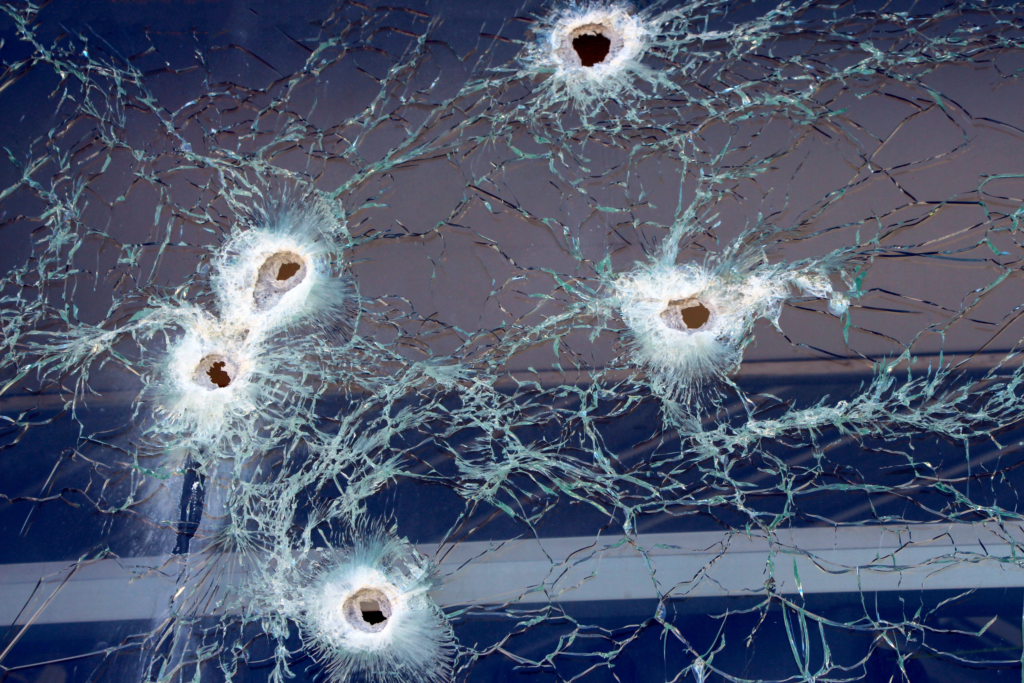
ASTM F3561-22 is the Standard Test Method for Forced-Entry Resistance of Fenestration Systems After Simulated Active Shooter Attack. This test subjects complete assemblies—glass, frame, and anchoring—to a two-phase attack: first, ten 5.56mm AR-15 rounds create ballistic weakening, then mechanical pendulum strikes simulate forced entry attempts. The standard evaluates whether an intruder can gain access through the weakened system, not whether the glass stops bullets.
UL 752 remains the primary ballistic resistance standard in the United States, closely related to other glass ballistic testing standards such as UL 752, NIJ, EN 1063, and ASTM F3561. It defines eight protection levels based on weapon type, caliber, number of rounds, and velocity. Level 1 resists three shots from a 9mm handgun; Level 3 resists three shots from a .44 Magnum. UL 752 requires no penetration and no spall to pass—requirements that standard window film on ordinary glass cannot meet.
The International Window Film Association (IWFA) has issued position statements clarifying that ASTM F3561 was designed for complete glazing systems, not retrofit film applications. Using this standard to evaluate film-only solutions on existing glazing frames is misleading because retrofit film does not strengthen frames, anchoring, or glass bite (the portion of glass held within the frame).
Ballistic Window Film Applications and Performance
Security window film provides measurable benefits in specific applications where forced entry delay and glass fragment control align with security objectives. Understanding where film performs well—and where it falls short—prevents costly misallocation of security budgets.
School Security Applications
Schools represent a primary market for security films due to concerns about active shooter situations and the high cost of replacing all glass windows with bullet resistant products. Round Rock Independent School District in Texas invested approximately $250,000 in security film installations across elementary and middle school campuses, targeting entry points and first-floor windows.
The security value lies in delay entry capabilities during lockdown procedures. If an intruder breaks glass at an entry point, film can slow their ability to gain entry by holding the glass together, potentially providing 30-60 additional seconds for students and staff to reach secure locations. This time advantage matters in active shooter scenarios where emergency response is measured in minutes.
However, security professionals should understand that film alone cannot prevent active shooter situations or stop bullets from penetrating classroom windows, and that dedicated retrofit ballistic protection systems like polycarbonate shields are required when actual bullet resistance is needed. For schools seeking to stop bullets, ballistically rated glass systems tested to UL 752 or similar standards are necessary—at significantly higher cost.
Commercial and Government Uses
Retail storefronts use security window films designed to hold glass in place and deter intrusion to protect against smash-and-grab theft. When criminals attempt to break glass for quick access to merchandise, film holds broken glass together and delays entry, often causing attackers to abandon the attempt. This application prioritizes forced entry resistance over ballistic protection.
Government facilities with limited budgets may apply security film to lower-risk areas while reserving bullet resistant glazing for high-threat zones like courtrooms, law enforcement facilities, and embassy reception areas. Healthcare facilities and critical infrastructure sites use film primarily for blast mitigation and flying debris control rather than ballistic attacks.
Commercial building owners in populated areas frequently install security film on exterior door glass and ground-floor windows following civil unrest or break-in attempts, often working with regional window film installation services for commercial and government buildings. The cost-effectiveness compared to full glazing replacement makes film attractive for risk mitigation where bulletproof protection is not the primary requirement.
Performance Limitations
Security window film cannot stop bullets from rifles, handguns, or other firearms when installed on standard glass. There is no such thing as bulletproof window film that converts ordinary windows into bullet proof barriers—this requires independently tested bullet resistant glazing with engineered interlayers and reinforced installation.

Realistic forced entry delays depend on multiple factors: film thickness (8-14 mil films perform better than 4 mil), edge attachment systems (mechanical clips or structural glazing adhesive), frame strength, and attacker determination. Under ASTM F3561 testing, the measured outcome is whether access is gained, not time duration. Retrofit film installations on existing glass typically perform below OEM systems designed as complete assemblies.
Environmental factors affect long-term performance. UV exposure, temperature cycles, and moisture can degrade adhesive bonds. Poorly installed film may delaminate or peel. Edge retention depends on proper preparation and attachment—film applied without edge bonding offers significantly less resistance than film anchored to the frame system.
Installation Methods and Professional Requirements
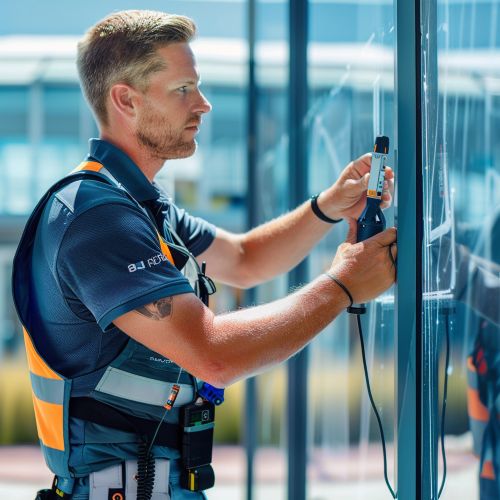
Proper installation is critical for achieving rated performance from security window film, making experienced 3M window film installers and security film professionals an important part of any project. Film applied without attention to surface preparation, edge attachment, and curing time will underperform manufacturer specifications and may fail during an actual security event.
Installation Process
Surface preparation requires thorough cleaning of all glass surfaces to remove residue, dust, oils, and contaminants. Any debris trapped between film and glass compromises adhesion and creates visual defects. Frame edges must be prepped for attachment systems.
Film application involves positioning the film on the interior surface of existing glass and activating pressure-sensitive adhesives. Professional installers use specialized tools to eliminate air bubbles and ensure complete contact, a process best handled by experienced nationwide window film installation companies. Some high-performance systems require heat curing to achieve full adhesive strength.
Edge attachment systems significantly improve performance. Mechanical edge retention kits, structural glazing adhesive, or anchor channels bind film edges directly to the existing glazing frame. Without edge attachment, film may separate from glass under sustained impact, allowing faster access.
Curing time varies by film thickness and affects when the installation achieves full performance:
- Up to 4 mil: 30-60 days
- 4-8 mil: 60-90 days
- 8-12 mil: 90-110 days
- Over 12 mil: 120-200 days
During curing, adhesive strength increases and optical clarity stabilizes. Performance testing before full cure will show reduced results.
Product Comparison Table
| Brand/Product | Thickness | Material | Protection Level | Approximate Cost | Key Features |
|---|---|---|---|---|---|
| 3M Scotchshield S800 | 8 mil | PET microcomposite | GSA fragment retention, forced entry delay | $8-15/sq ft installed | High optical clarity, proven performance |
| 3M S2400 | 24 mil | TPU urethane | Enhanced forced entry resistance | $15-25/sq ft installed | 560% elongation, extreme durability |
| Solarcheck Security Film | 4-14 mil (100-350µm) | Clear polyester | EN 12600, EN 356, GSA criteria | $6-18/sq ft installed | 99.9% UV rejection, multiple thicknesses |
| C-Bond BRS | Composite system | PET + nano-adhesion | UL 752 Level 1-3 with glazing system, ASTM F3561 | $20-40/sq ft installed | Complete system approach, certification included |
| Defendoor (full system) | Laminated glass | Complete glazing assembly | ASTM F3561 Level 7 | $500-2,000+ per door | All-glass door system, not retrofit film |
| Note: Costs vary significantly by region, project size, and installation complexity. Thicker films and edge attachment systems increase total cost; detailed window security film installation cost estimates can help refine budgets. |
Common Misconceptions and Solutions
Marketing claims in the security film industry frequently create confusion about what these products can accomplish. Understanding the difference between marketing language and tested performance helps facility managers make informed purchase decisions.
“Bulletproof Film” Claims
No aftermarket film applied to standard glass creates bulletproof glass. The term “bulletproof film” is technically misleading—bullet resistance requires tested glazing systems with specific interlayer materials (PVB, SentryGlas, acrylic-polycarbonate composites), appropriate thickness, reinforced frames, and structural anchoring.
When manufacturers claim film “meets UL 752,” examine whether this applies to the film as a spall shield on actual bullet resistant glass or as a standalone solution on ordinary windows. Film can control spall (glass fragments) on the protected side of ballistically rated glass, but this is fundamentally different from stopping bullets.
Security professionals should request independently tested documentation specifying exactly what configuration was tested and what standard was applied. Claims without test reports from accredited laboratories should be viewed skeptically.

Ballistic Rating Confusion
Different standards measure different things:
- UL 752 measures actual bullet resistance—whether projectiles penetrate and whether spall occurs
- EN 1063/EN 1522 provides European ballistic resistance classifications (BR1-BR7)
- NIJ 0108.01 applies primarily to body armor but covers some transparent materials
- ASTM F3561 measures forced entry resistance after ballistic weakening—not bullet stopping capability
- ASTM F3279 covers ballistic glazing material testing
Applying ASTM F3561 results to retrofit film on existing windows misrepresents the standard’s intent. The IWFA explicitly warns that F3561 is designed for complete fenestration systems, not film-only retrofits on existing glazing frames.
Cost vs. Protection Expectations
Retrofit security film costs $6-25 per square foot installed, while true bullet resistant glazing systems may cost $100-500+ per square foot including frame modifications and structural upgrades. This price difference creates pressure to view film as an affordable alternative to ballistic glass—but they provide fundamentally different protection levels.
For facilities requiring actual bullet resistance against rifle threats in active shooter situations, film is not a substitute. Budget planning should either allocate funds for complete bullet resistant products in critical areas or acknowledge that film provides forced entry delay and fragment control rather than ballistic protection.
Neglecting frame strength, edge retention, and glass bite during installation undermines even high-quality film. The cost of an inadequate installation may exceed proper installation when including failure consequences.
Conclusion and Next Steps
Ballistic window film provides measurable security benefits—forced entry delay, glass fragmentation control, and reduced injury risk from broken glass—but does not stop bullets or create bullet resistant barriers on standard windows. Understanding this distinction prevents dangerous overreliance on film where true ballistic protection is required.
Immediate action steps:
- Conduct a security assessment identifying which openings require forced entry resistance versus actual bullet resistance
- Request test documentation from vendors specifying exactly what standards their products meet and under what configurations
- Consult certified installers who understand edge attachment systems and frame evaluation
- Establish realistic budgets that match protection expectations—film for entry delay, tested glazing for ballistic protection
- Review local building codes for any permit requirements or safety glazing compliance
Need More Info?
The Window Film Depot team is happy to help.
For facilities where active shooter protection is the primary concern, explore bullet resistant glazing systems tested to UL 752 alongside comprehensive security planning including access control, emergency response protocols, and architectural hardening. Film may complement these measures but should not replace them where bullets must be stopped.
Frequently Asked Questions
Is ballistic window film actually bulletproof?
No. Security window film applied to existing glass does not stop bullets from firearms. True bullet resistance requires tested glazing systems—laminated glass with interlayers like PVB or polycarbonate, engineered frames, and structural anchoring—meeting standards like UL 752 or EN 1063. Film provides forced entry delay and holds broken glass together, but projectiles from handguns and rifles penetrate standard glass regardless of film thickness.
How long does security window film delay forced entry?
Forced entry delay depends on film thickness, edge attachment, frame strength, and attacker determination. Typical delays range from 30-60 seconds for properly installed 8-14 mil film with edge retention systems. ASTM F3561 testing measures whether entry can be gained after prescribed attacks, not specific time duration. Film without edge attachment provides significantly less delay.
What’s the difference between security film and bullet-resistant glass?
Security film is a retrofit laminate applied to existing glass that holds fragments together and delays entry. Bullet resistant glass is an engineered glazing system with multiple glass layers, plastic interlayers, specific thickness requirements, and reinforced framing—tested and certified to stop specific projectiles. The key difference: film controls glass behavior; ballistic glass stops bullets.
Can ballistic window film be installed on any type of glass?
Film can be applied to annealed, tempered, laminated, and insulated glass units, but performance varies significantly based on glass type, thickness, size, frame condition, and edge retention capability. Tempered glass shatters into small fragments (safer but allows faster access); laminated glass holds together better. Existing frame and anchoring limitations may reduce effectiveness compared to OEM assemblies.
How much does professional ballistic window film installation cost?
Costs range from $6-25 per square foot installed depending on film thickness, edge attachment requirements, project size, and region. Round Rock ISD spent approximately $250,000 covering multiple school campuses. Thicker films (12+ mil) with structural glazing attachment cost significantly more than basic 4-mil safety film. Complete bullet resistant glazing systems cost substantially more—$100-500+ per square foot including frame modifications.
What maintenance is required for security window film?
Clean with non-abrasive cleaners (avoid ammonia on metallized coatings). Inspect edges periodically for lifting or separation. Replace film if adhesive fails or significant scratching occurs. UV exposure, temperature extremes, and moisture can degrade adhesion over time. Warranty periods vary by manufacturer; most quality films are warranted for 10-15 years under normal conditions.
Do schools need special permits to install ballistic window film?
Permit requirements vary by jurisdiction. Many localities require glass treatments to comply with safety glazing codes and may specify manufacturer certification or installer credentials. Film adhesives and structural modifications to frames may require building department review. Historic buildings may have additional restrictions. Check with local authorities before installation.
How does ballistic window film perform in extreme weather?
Quality security films include UV stabilizers that maintain performance under sun exposure. Thicker films with proper edge retention resist hurricane winds and blast pressure better than thin films applied without anchoring. Temperature cycling can stress adhesive bonds over time. Products claiming hurricane or explosion resistance should provide test documentation to specific standards (e.g., ASTM E1886/E1996 for hurricane impact).
Additional Resources
- IWFA Position Statement on Security Film Claims — Official industry guidance on appropriate use of standards and marketing claims
- ASTM F3561-22 Standard Documentation — Full test method specifications for forced entry resistance evaluation
- UL 752 Ballistic Resistance Standards — Complete protection level definitions and testing requirements
- School Security Assessment Checklists — Available through state departments of education and security consultants
- Professional installer certification through IWFA and manufacturer training programs