Table of Contents:
- What Tempered Glass Is — and What It Is Not
- The Safety Code Reality: What Compliance Actually Requires
- Tempered Glass, Laminated Glass, and Security Window Film: A Commercial Comparison
- The Gap Tempered Glass Does Not Close
- How 3M Security Window Film Integrates with Tempered Glass
- A Decision Framework for Specifying Safety Glass on Complex Projects
- Conclusion: Building a Defensible, Code-Compliant Glazing Strategy
- Frequently Asked Questions
What Tempered Glass Is — and What It Is Not
Tempered glass is precisely engineered to fail safely. Understanding exactly what that means determines whether it belongs in your specification as a standalone solution — or whether your project requires more.
The Manufacturing Process Behind the Performance Claims
Thermal Tempering: From Annealed Glass to Compression Stress Layer
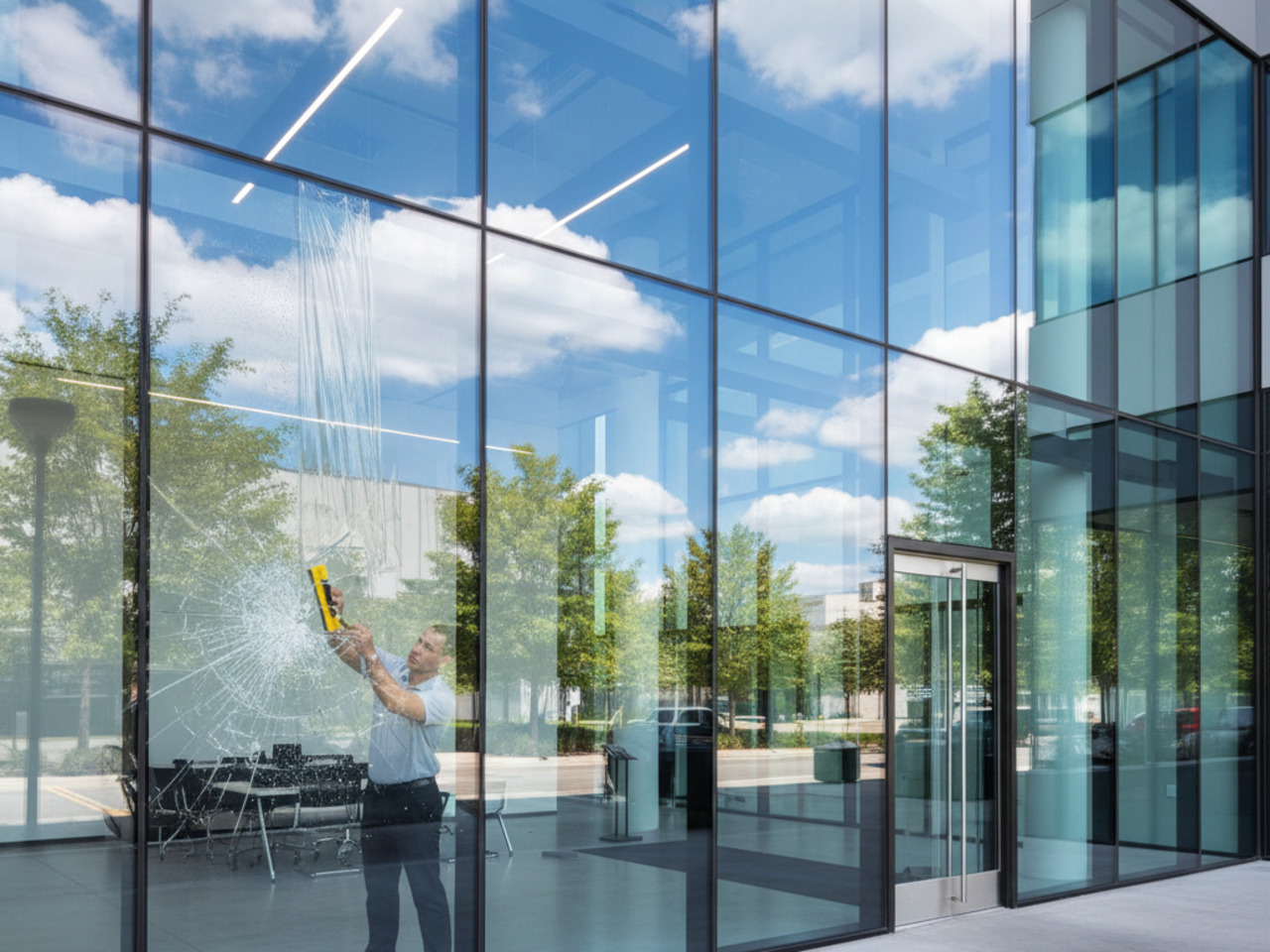
Standard annealed glass is cut to size and fed into a glass tempering furnace, where it reaches approximately 620–700°C. The glass is then blasted with high-pressure air jets that cool the outer surfaces rapidly while the core remains hot for a fraction longer. As the core eventually contracts and cools, it pulls inward against those already-rigid surfaces.
That differential creates a permanent compression layer on the exterior and a tension layer at the center — the stress state that gives tempered glass its performance characteristics.
The result is not chemically different from the glass you started with. It is mechanically transformed through the thermal tempering process.
Chemical Tempering: Ion Exchange and Its Commercial Relevance
Chemical tempering replaces sodium ions in the glass surface with larger potassium ions through an ion exchange bath, creating surface compression without heat. The process produces thinner, lighter panels with high optical clarity, which is useful for specialty applications like display cases or architectural spandrel panels where thermal tempering would distort thin stock. For most commercial glazing applications — storefronts, interior partitions, curtain walls — thermal tempering is the standard. Chemical tempering carries a cost premium and is generally reserved for applications where weight or thickness constraints rule out the thermal process.
Why Tempered Glass Cannot Be Cut or Modified After Tempering
The compression and tension layers are balanced across the entire pane. Cutting, drilling, or grinding after tempering disrupts that balance and causes immediate, complete fracture. Every dimension, hole, notch, and edge must be specified and fabricated before the glass enters the furnace. For project managers, this means dimensional errors caught after production result in full-panel replacement, not field modification. Get your glazing schedule locked before fabrication begins.
How Tempered Glass Differs From Standard Annealed Glass
Strength Differential: What the 4x Claim Actually Means in Practice
The commonly cited figure is that tempered glass is four times stronger than annealed glass of equivalent thickness. That number comes from comparative flexural strength testing and holds up under controlled conditions. In practical terms, a 6mm tempered pane resists roughly 24,000 kPa of surface pressure versus approximately 6,000 kPa for annealed glass. What the 4x figure does not capture is resistance to point-impact from sharp objects, forced entry tools, or blast overpressure — scenarios where the geometry and duration of loading matter as much as raw surface strength.
The Break-Safe Pattern: Dicing Versus Shard Fracture
When tempered glass fails, the stored energy in the compression layer releases uniformly and the pane fractures into small, roughly cubic fragments with dulled edges. That dicing pattern reduces laceration risk significantly compared to annealed glass, which fractures into large, jagged shards. The dicing behavior is why tempered glass qualifies as safety glass under the applicable standards. What it does not do is retain those fragments. After failure, the pane is open. That distinction matters enormously for security applications and is addressed in detail in the sections that follow.
Physical Properties That Affect Commercial Specification
Available Thicknesses, Dimensions, and Clarity Standards
Thermal tempering is commercially available in thicknesses from 3mm to 19mm, with 6mm and 10mm being the most common for commercial storefront and interior partition applications. Maximum panel dimensions vary by fabricator and furnace size, but lites up to 2,400mm x 4,800mm are standard for most commercial suppliers. Optical clarity is governed by ASTM C1048, which classifies tempered glass by type, quality, and finish. Specify Type FT (fully tempered) and Quality q1 (clear) for applications where visual distortion will be evaluated by an owner or end-user.
How Long Tempered Glass Lasts in Commercial Environments
Properly manufactured and installed tempered glass does not degrade in strength over time under normal service conditions. The stress state is stable. What shortens service life in commercial environments is edge damage, frame stress concentration from inadequate glazing clearances, and thermal cycling in poorly designed curtain wall systems. Spontaneous breakage from nickel sulfide inclusions — a known manufacturing defect — occurs in a small percentage of panels and can be reduced significantly by heat soaking during fabrication. For national rollout projects, specifying heat-soaked tempered glass in high-visibility or inaccessible locations is worth the incremental cost.
The Safety Code Reality: What Compliance Actually Requires
Specifying tempered glass because “it’s code” is not a specification strategy — it is a liability exposure. The code sets a floor, and knowing exactly where that floor sits protects you when the inspector, the authority having jurisdiction (AHJ), or a plaintiff’s attorney starts asking questions.
ANSI Z97.1 and CPSC 16 CFR 1201: A Plain-Language Breakdown
What Each Standard Governs and How They Overlap
ANSI Z97.1 is a voluntary industry standard published by the American National Standards Institute that establishes safety performance requirements for architectural glazing materials, including test methods for impact resistance and classification of safety glazing. CPSC 16 CFR Part 1201 is a mandatory federal regulation enforced by the Consumer Product Safety Commission that applies to glazing materials used in specific hazardous locations in residential and commercial buildings. Both standards use a Category I / Category II classification structure based on impact energy levels, and both require that compliant materials carry permanent labeling identifying the manufacturer, standard, and category.
The practical overlap: many products are certified to both, and both are referenced by the International Building Code (IBC). If your project is subject to federal funding or involves federally regulated occupancies, CPSC 1201 compliance is mandatory regardless of what the local building code requires.
Which Standard Applies to Your Project Type
For most commercial construction, the IBC references ANSI Z97.1 and CPSC 16 CFR 1201 interchangeably for hazardous locations. The key is identifying which locations in your project qualify as hazardous under IBC Section 2406 — and that list is longer than most project managers expect.
International Building Code Glazing Requirements by Occupancy Type
Commercial Office and Retail Applications
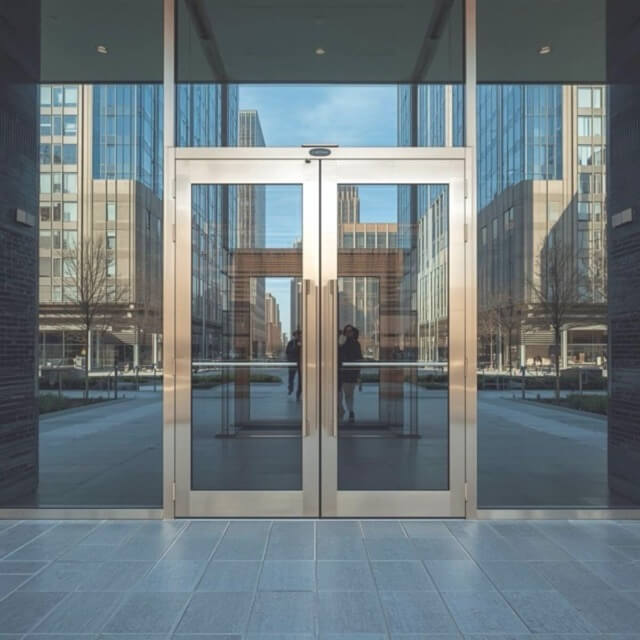
IBC Section 2406.4 identifies hazardous glazing locations that require safety glazing regardless of occupancy. These include glazing in doors and sidelights within 24 inches of a door edge, glazing within 18 inches of the floor in walls adjacent to walking surfaces, and any glazing in wet areas. In retail environments, nearly all storefront glazing meets one or more of these criteria. The default specification for storefront glass in a new commercial build is fully tempered, and the AHJ will expect to see permanent labels confirming compliance on every pane during inspection.
Educational Facilities and High-Traffic Public Spaces
Schools and public assembly occupancies face additional requirements beyond IBC 2406 under many state amendments. Glazing adjacent to corridors, in gymnasium partitions, and in any door assembly regardless of sidelite distance typically requires safety glazing.
Several states have also adopted specific requirements for glazing in classrooms and administrative areas following security-related code revisions — requirements that go beyond minimum safety glazing and begin to address forced entry resistance.
If you are specifying glazing for a K-12 or higher education project, verify current state amendments before finalizing the glazing schedule.
Is Tempered Glass Required by Building Code — or Just Permitted?
Tempered glass is one of several materials that satisfy safety glazing requirements under the IBC. It is not the only compliant option, and in some locations it is not the best one. Laminated glass, wire glass in limited legacy applications, and certain plastic glazing materials also meet ANSI Z97.1 or CPSC 1201 in appropriate configurations. The code permits tempered glass in hazardous locations. It requires safety glazing, and tempered is simply the most common way to deliver it.
This distinction matters when a client asks why you did not specify laminated glass in a high-risk location. “The code allows tempered” is a technically accurate answer that may not satisfy a security auditor or a post-incident review.
Documentation and Testing Evidence You Need to Defend Your Specification
What a Defensible Specification File Should Contain
A defensible glazing specification is not just a product name on a drawing. It includes the following:
- Product certification documentation showing compliance with ANSI Z97.1 and/or CPSC 16 CFR 1201, with category rating matching the application
- Fabricator mill certificates or product data sheets confirming glass type (FT), quality grade, and thickness
- A glazing schedule cross-referencing each pane location to the applicable code section
- Inspection records confirming safety glazing labels were present and legible at the time of installation
- Any project-specific performance requirements, such as blast rating or forced entry resistance, along with the test data supporting product selection
If a claim arises after project completion, this file is your first line of defense. Build it during the project, not after.
How to Verify Installer Competency and Compliance Before Award
Glazing installation quality directly affects code compliance and long-term performance. Before awarding a subcontract, verify that the installer can provide evidence of prior commercial projects with similar scope and glazing systems, demonstrated familiarity with the specific frame system being used and its glazing clearance requirements, a quality control process for confirming safety glazing labels are intact at inspection, and proof of current insurance and licensing in the project jurisdiction.
On national rollout projects, installer consistency across locations is as important as product consistency. A glazing subcontractor who delivers compliant work in one market but struggles in another creates rework exposure that compounds across your entire project schedule.
Safety Glass Specification Compliance Checklist
Use this checklist to build and verify your glazing specification file before permit submission and at inspection.
- Step 1: Code Identification
- Confirm which edition of the IBC or local building code governs the project
- Identify all state and local amendments affecting glazing requirements for the occupancy type
- List all hazardous locations under IBC 2406 based on the current floor plan
- Step 2: Product Verification
- Confirm safety glazing category required for each hazardous location (Category I or II)
- Verify product certification to ANSI Z97.1 and/or CPSC 16 CFR 1201 at the required category
- Confirm glass type (fully tempered), quality grade, and thickness for each location in the glazing schedule
- Step 3: Installer Vetting
- Request project references for comparable commercial scope
- Confirm familiarity with frame system and glazing clearance requirements
- Verify licensing, insurance, and quality control documentation process
- Step 4: Documentation Assembly
- Collect fabricator mill certificates and product data sheets
- Cross-reference the glazing schedule to applicable code sections
- File permanent label verification records at the time of installation inspection
- Step 5: Inspection Readiness
- Confirm safety glazing labels are present, legible, and visible for AHJ inspection
- Verify all field-verified dimensions match the approved glazing schedule
- Document any substitutions with equivalent compliance evidence before closing out the inspection
Tempered Glass, Laminated Glass, and Security Window Film: A Commercial Comparison
Three glazing solutions dominate commercial security specifications, and choosing the wrong one — or stopping at one when you need two — is where project liability begins.
Understanding Post-Breakage Behavior as a Security Variable
Tempered Glass: Safe Fracture Pattern vs. Retained Integrity
When tempered glass breaks, it releases its stored compression energy uniformly and fractures into small, blunt-edged fragments. That behavior protects occupants from laceration. What it does not do is keep the opening closed. The moment tempered glass fails, the glazed area becomes an unobstructed breach point. The fracture is safe. The opening is not.
Laminated Glass: PVB Interlayer and Fragment Retention
Laminated glass bonds two or more glass plies around a polyvinyl butyral (PVB) interlayer. When the glass breaks, the interlayer holds the fragments in place. The pane loses structural integrity but retains its form, keeping the opening covered at least temporarily. That fragment retention is the defining security advantage of laminated glass over tempered. It also means laminated glass can resist repeated impacts longer than tempered, because the interlayer continues absorbing energy even after the first ply cracks.
Security Window Film: Retrofit Adhesion and Fragment Containment
Security window film applies directly to existing glazing surfaces with a pressure-sensitive adhesive. When glass breaks, the film holds the fragments together against the frame, mimicking the containment behavior of laminated glass without requiring pane replacement. Film thickness ranges from 4 mil for basic safety applications to 12 mil or higher for security and blast-rated applications. The critical variable is not just film thickness — it is how the film is anchored to the frame, which determines whether the assembly holds under sustained attack or blast overpressure.
Performance Comparison Across Five Commercial Criteria
Impact Resistance Ratings
Tempered glass meets Category II under ANSI Z97.1 in standard commercial thicknesses (6mm and above), meaning it withstands a 400 ft-lb impact in testing. Laminated glass with a standard 0.030-inch PVB interlayer typically meets the same Category II threshold. Security window film applied to existing tempered glazing can elevate the assembly’s rated impact performance, though the combined system must be tested as an assembly — film alone does not carry a standalone impact rating.
Blast Mitigation Capability
Laminated glass with thicker PVB or ionoplast interlayers (SGP) is the primary specification choice for buildings subject to GSA or DoD blast standards. Security film with a mechanical attachment system anchored to the frame can meet GSA-level blast mitigation requirements when tested as a complete assembly. Tempered glass alone provides no meaningful blast mitigation. It fragments quickly under overpressure, and those fragments become projectiles.
Forced Entry and Smash-and-Grab Resistance
This is where the gap between tempered glass and the alternatives becomes most visible in commercial practice.
A standard tempered storefront pane can be breached in under 60 seconds with basic tools.
Laminated glass with a minimum 0.060-inch PVB significantly increases breach time. Security film at 8 mil or higher, properly anchored, extends breach time further — enough to exceed the average smash-and-grab window that most retail loss-prevention benchmarks use as a threshold.

Retrofit-ability on Existing Glazing Systems
Laminated glass requires full pane replacement, which means frame evaluation, glazing schedule revisions, and lead times of four to twelve weeks depending on pane size and supplier. Security window film applies to existing tempered glazing in place — no frame modification, no replacement lead time, and no disruption to occupied spaces beyond the installation window. For national rollouts on existing buildings, film is the only realistic option for large-scale, fast-cycle security upgrades.
Installed Cost Range for Large-Scale Commercial Projects
Fully tempered glass for standard commercial storefronts runs roughly $25–$45 per square foot installed, depending on thickness and market. Laminated glass in equivalent thicknesses runs $45–$80 per square foot installed, with blast-rated configurations exceeding $100. Security film installation on existing glazing ranges from $8–$20 per square foot depending on film specification and anchorage system — a fraction of replacement cost when applied to a building already glazed with compliant tempered glass.
What Is the Difference Between Tempered Glass and Regular Glass — and Why Does It Matter for Security?
The manufacturing difference — rapid cooling that creates a compression stress layer — produces two outcomes that matter for security specification. First, tempered glass is roughly four times more resistant to uniform surface pressure than annealed glass of the same thickness. Second, it fractures into small fragments instead of large shards. Those properties make it a superior safety product. Neither property makes it a barrier. Annealed glass breaks into dangerous shards when attacked. Tempered glass breaks safely, but it still breaks, and the opening it leaves behind is identical. For any application where breach prevention matters alongside injury prevention, the fracture pattern is not the relevant performance variable.
When Each Solution Is the Right Specification Choice
- Tempered glass alone: new construction where code compliance is the primary requirement, interior partitions, and applications with no forced entry or blast exposure
- Laminated glass: new construction in high-security or blast-exposed locations where budget allows full replacement and the frame system is designed for the added weight and glazing depth
- Security film on tempered glass: existing buildings requiring a security upgrade, national rollouts where replacement is cost- or schedule-prohibitive, and any location where breach delay is the objective but full glazing replacement is not feasible
- Laminated glass plus film: blast-rated assemblies in critical infrastructure or government facilities where both overpressure and forced entry resistance are specified performance requirements
The Gap Tempered Glass Does Not Close
Breakage Versus Breach: Why the Distinction Defines Your Liability Exposure
Project managers make one of their biggest specification mistakes when they treat breakage and breach as the same event. Material failure defines breakage — it describes how the glass fractures. Breach is a security failure — it describes whether an unauthorized person can enter through the opening that fracture creates. Tempered glass is engineered to control the first. It does nothing to prevent the second. In the post-incident record, whether that is an insurance claim, a security audit finding, or a legal proceeding, the question will not be whether the glass broke correctly. It will be whether the specification was adequate for the known threat environment.
Illustrative Scenario: The Retail Storefront Smash-and-Grab
What Tempered Glass Does Correctly in This Event
A vehicle impact or blunt-force strike fractures the tempered storefront pane. The glass dices into small, blunt fragments rather than large shards, which means bystanders and responding employees face reduced laceration risk. The glass performs exactly as specified and exactly as code requires. From a life-safety standpoint, the installation is a success.
Where the Security Failure Actually Occurs
The pane is gone in under ten seconds. The opening is clear. Perpetrators are inside within 30 seconds and out within 90.
Average retail smash-and-grab losses can run into tens of thousands of dollars per event in merchandise, plus additional costs for emergency board-up and glazing replacement.
The tempered glass passed its test. The security specification failed. The distinction between those two outcomes is exactly what a loss-prevention consultant or insurer will document — and what a project manager should have closed at the specification stage.

Illustrative Scenario: The School Security Audit
Glazing Vulnerability Assessments and What They Typically Expose
Third-party glazing vulnerability assessments on K-12 campuses consistently identify the same gap: glazing adjacent to entry hardware — sidelites, transoms, and door glass — that meets safety glazing code but offers no resistance to forced entry. An attacker who breaks the sidelite glass adjacent to an entry can reach the interior hardware and unlock the door in under 15 seconds. Every pane in that assessment may be correctly specified as tempered. None of it delays entry.
The Compliance-Versus-Security Distinction That Auditors Flag
Security auditors operating under frameworks like the Partner Alliance for Safer Schools (PASS) guidelines or CISA’s school security recommendations distinguish between code-compliant glazing and security-rated glazing. A school can pass a building inspection and fail a security audit on the same glazing system. Auditors routinely flag tempered glass at access control points as a vulnerability even when it meets every applicable building code requirement, because the code was written for injury prevention, not intrusion resistance. That distinction has legal and contractual implications for school districts and their construction managers.
Is Tempered Glass Safe for Commercial Buildings — and Is “Safe” the Right Question?
Yes — tempered glass is safe for commercial buildings by every applicable code definition. It reduces laceration injuries, it meets ANSI Z97.1 Category II requirements in standard thicknesses, and it is the correct default specification for hazardous locations under IBC 2406. But “safe” in the code context means injury-reducing, not breach-resistant. For a project manager specifying glazing in a school, a retail chain, or a commercial building with public access, the more useful question is: safe from what, and for whom? Code compliance establishes the floor. The threat environment in your specific building determines where the ceiling needs to be.
How 3M Security Window Film Integrates with Tempered Glass
The Fragment Retention Mechanism: What Film Does After Glass Breaks
3M security window film does not prevent tempered glass from breaking. What it does is change what happens in the seconds after fracture. The film’s adhesive layer bonds to the glass surface, and when the pane breaks, the film holds the fragmented pane together against the frame. The opening does not clear. The breach that would have been instantaneous now requires sustained effort to force through a membrane of film and fragmented glass, adding critical seconds or minutes to the breach timeline.
That mechanism is the foundation of the layered glazing strategy. The tempered glass handles the safety function it was engineered for. The film handles the breach-delay function that tempered glass was never designed to provide.
3M Safety and Security Film Performance Context
Attachment Systems and Anchoring to Frame
Film adhesion to glass alone is insufficient for blast or forced entry applications. A properly specified security film installation includes a mechanical attachment system that bonds the film edge to the frame using a structural adhesive or anchoring channel. This transfers the load from the film-to-glass bond to the frame itself when the pane is impacted or subjected to overpressure. Without frame anchoring, even a high-specification film can peel away from the frame under the loads generated by blast or sustained forced entry attack.
Blast Mitigation Ratings and Forced Entry Resistance Data
3M safety and security films have been tested under GSA and ASTM F1642 blast protocols. The 3M Scotchshield Ultra series provides fragment retention and hazard mitigation at blast levels consistent with GSA-TS01-2003 requirements when installed with an approved attachment system. For forced entry, tested assemblies using 8–12 mil film with frame anchoring have demonstrated resistance to extended attack sequences in ASTM F588 and similar test protocols — performance that no tempered glass specification alone can approach.
Retrofit Application on Existing Tempered Glazing
Site Assessment Requirements for Large-Scale Installations
A professional security film installation on a commercial portfolio begins with a site-level glazing assessment that documents pane dimensions, frame system type, glazing method (wet seal vs. dry gasket), existing glass condition, and any existing coatings that could affect adhesion. On a national rollout, this assessment process should be standardized across locations so that material specifications and attachment system selections are consistent. Panes with existing low-e or tinted coatings require compatibility testing before film specification is finalized.
Lead Times, Sequencing, and Phased Rollout Considerations
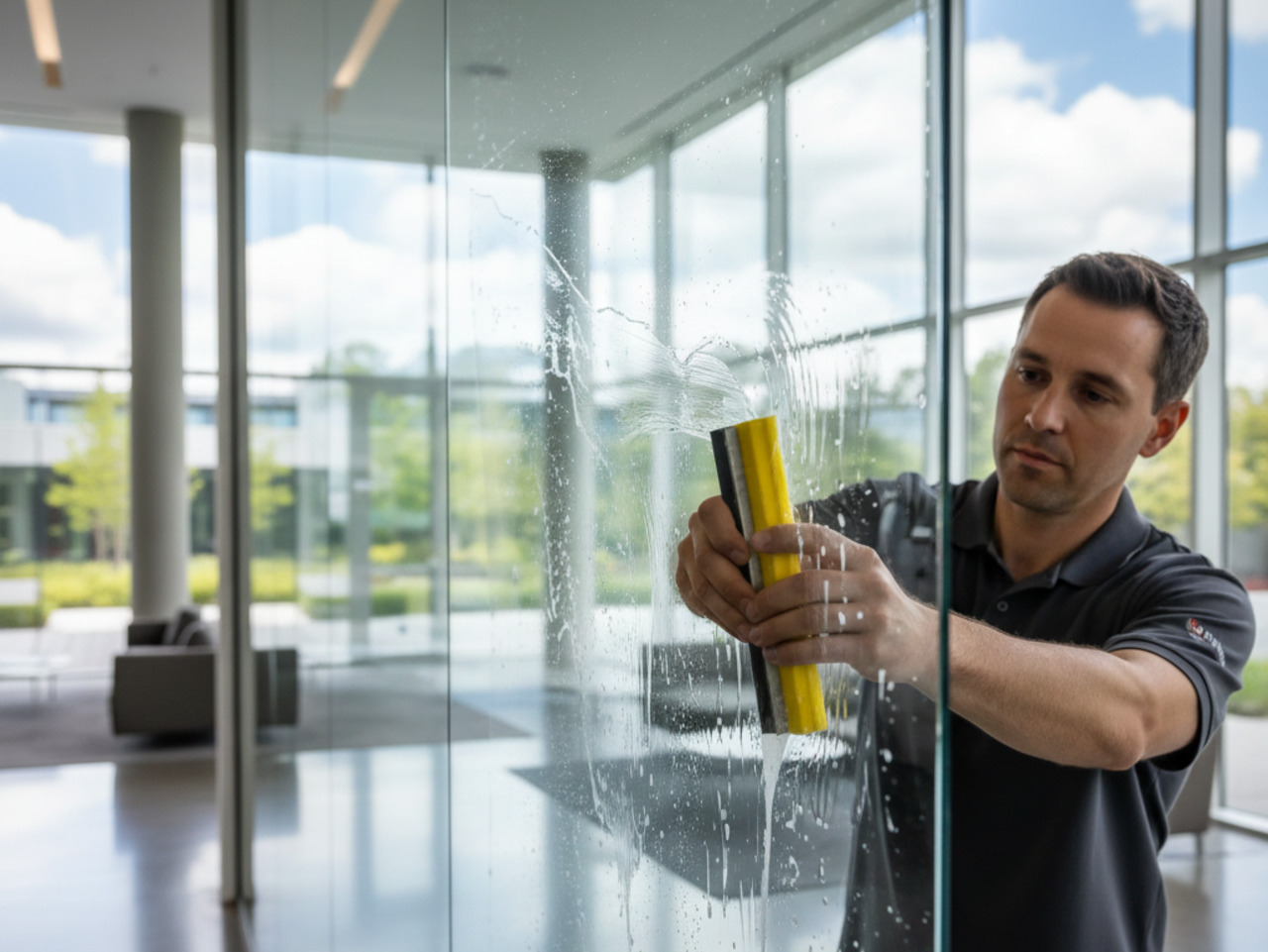
Security film installation is significantly faster to deploy than glazing replacement. A typical commercial storefront with four to eight panes can be completed in a single day by an experienced two-person crew. For a national rollout of 50 or 100 locations, a phased installation schedule organized by region allows for parallel crew deployment and minimizes scheduling conflicts with building operations. Film does not require building permit pulls in most jurisdictions — verify with the local AHJ — which removes a common scheduling bottleneck. Lead time for film material, even in large quantities, is typically two to four weeks, compared to four to twelve weeks for custom-fabricated laminated glass.
Why an Integrated Glazing System Is the Professional Standard for Commercial Projects
Tempered glass and security film address different failure modes. Tempered glass manages the injury risk of breakage. Security film manages the breach risk that follows it. Specifying one without the other means accepting the gap between them.
For project managers whose liability exposure extends beyond code compliance into occupant security — and in retail, education, and high-traffic commercial buildings, it does — that gap is not a design choice.
It is an unaddressed risk. An integrated system that layers both solutions within the same glazing assembly is not a premium upgrade. It is the specification that a post-incident review will expect to find.
A Decision Framework for Specifying Safety Glass on Complex Projects
Every glazing specification involves the same five variables. Resolve them in order and your decision set narrows to something defensible. Skip one and you have a gap that will surface at inspection, at incident, or in court.
The Five Specification Variables Every Project Manager Must Resolve
Building Use Type and Occupant Threat Profile
Occupancy type determines your baseline code requirements, but threat profile determines whether that baseline is sufficient. A corporate office with controlled access has a different threat environment than a retail flagship store or a K-12 campus with public-facing entry points. Start by mapping who can reach the glazing, under what circumstances, and what a breach would cost in loss, liability, and recovery time. That profile drives every downstream decision.
Local Code Requirements and Authority Having Jurisdiction
The IBC establishes the national floor, but the AHJ enforces the local ceiling. State amendments, local fire marshal requirements, and jurisdiction-specific interpretations of IBC Section 2406 vary enough that a glazing schedule compliant in one market may require revision in another. On multi-location projects, confirm code requirements jurisdiction by jurisdiction before finalizing the specification — not after the glazing schedule is issued for fabrication.
Budget Cycle Constraints and Total Cost of Ownership
The installed cost of tempered glass runs roughly $25–$45 per square foot for standard commercial storefronts. That number looks different when you account for total cost of ownership: emergency board-up after a breach event, glazing replacement, and productivity loss during remediation. Security film on existing tempered glazing at $8–$20 per square foot is not a cost premium over a compliant tempered installation — it is a hedge against a replacement cycle that costs more per incident than the film costs per building.
Project Timeline and Installation Sequencing
Tempered glass cannot be modified after fabrication, which means dimensional accuracy upstream of production is non-negotiable. For new construction, the glazing schedule must be locked before the furnace run. For retrofit projects, film applied to existing tempered glazing bypasses that constraint entirely — no fabrication lead time, no permit pull in most jurisdictions, and installation that sequences around occupied building operations. Know which path you are on before you commit the project timeline.
National Rollout Consistency and Vendor Qualification Standards
Consistency across locations requires that every supplier, fabricator, and installer works from the same specification language, the same product certification requirements, and the same quality control process. A glazing subcontractor who delivers correct work in one region but uses an uncertified product in another creates a compliance gap that compounds across your project count. Establish vendor qualification criteria once, apply them universally, and verify compliance at the location level, not just at the contract level.
How to Specify Tempered Glass Across Multiple Locations Without Inconsistency
The failure mode on national rollouts is not usually a bad specification — it is a correct specification that does not survive contact with local suppliers and field conditions. Three practices close that gap.
First, write the specification to the product certification, not the product name. Require fully tempered glass (Type FT per ASTM C1048), Category II compliance under ANSI Z97.1, and permanent safety glazing labels — and make label verification at inspection a contractual requirement for every location. That language travels across jurisdictions and holds regardless of which fabricator is sourcing locally.
Second, standardize your glazing schedule format so that every location uses the same cross-reference structure: pane location, applicable code section, required glass type, thickness, and certification category. When an AHJ in a new jurisdiction reviews the submittal, the documentation is immediately legible. When a rework question arises, the trail is clear.
Third, designate a single point of accountability for glazing compliance across the rollout — someone who reviews shop drawings, confirms label records, and signs off on installation quality before closeout at each location. Distributed accountability across 50 subcontractors is not accountability.
Can Tempered Glass Be Cut or Modified On-Site?
No. This is one of the few absolute constraints in glazing specification. The compression and tension layers created during thermal tempering are in equilibrium across the entire pane. Any attempt to cut, drill, grind, or notch a tempered pane after the tempering process disrupts that balance and causes immediate, complete fracture. There is no partial cut, no field notch, and no core drill — only a destroyed pane and a replacement order.
Every dimension, hole, and edge treatment must be specified before fabrication. For project managers, this means one thing practically: dimensional errors discovered after production result in a full replacement cycle, not a field fix. Lock the glazing schedule before the glass enters the furnace. Verify frame dimensions before issuing the fabrication order. The cost of a field measurement is orders of magnitude lower than the cost of a remade pane on a critical-path schedule.
Choosing the Right Partner: What National-Scale Execution Actually Requires
At single-location scale, glazing execution is a subcontractor management problem. At 20 or 50 locations, it becomes a supply chain and quality system problem. The distinction matters when you are evaluating who to trust with a national rollout.
A partner capable of executing at national scale brings four things that a regional glazing contractor typically does not: a standardized installation methodology that produces consistent results regardless of crew or market, direct relationships with certified film and glass fabricators that protect lead times under demand pressure, documented quality control processes that generate the paper trail your specification file requires, and the project management infrastructure to coordinate phased rollouts across multiple markets simultaneously.
Need More Info?
The Window Film Depot team is happy to help.
Asking a regional subcontractor to scale up for a national deployment is a common source of schedule and compliance risk. The right partner has already solved the problems that scale creates and can show you the documentation to prove it.
Key Takeaways: The Layered Glazing Strategy in Brief
- Tempered glass is the correct safety baseline for commercial construction. It satisfies IBC Section 2406 hazardous location requirements, meets ANSI Z97.1 Category II standards, and reduces laceration risk through controlled fracture.
- Tempered glass is not a breach barrier. It breaks safely, and then the opening is clear. The gap between breakage and breach is where liability lives in retail, education, and public-facing commercial buildings.
- Security film closes that gap without replacing the glass. Applied to existing tempered glazing with a frame-anchored attachment system, it holds fragmented panes in place, extends forced entry breach time, and meets GSA blast mitigation standards in tested assemblies.
- The integrated system is the professional standard. Specifying tempered glass alone in a high-risk location is code-compliant. It is not specification-complete. A post-incident review will ask whether the threat environment warranted more — and for most retail, school, and commercial building projects, it does.
- Consistency requires systems, not intentions. On national rollouts, vendor qualification standards, specification language tied to product certifications, and location-level documentation processes are what produce uniform compliance across every site.
Conclusion: Building a Defensible, Code-Compliant Glazing Strategy
From Minimum Compliance to Maximum Protection: The Case for a Layered Approach
Code compliance is the starting point, not the finish line. The IBC requires safety glazing at hazardous locations because injury prevention is the code’s mandate. It does not require breach resistance because that is a security standard, not a building standard. The project manager who understands that distinction can write a specification that satisfies both — and the one who does not will eventually explain the gap to an insurer or an attorney.
The layered approach is straightforward: specify tempered glass where code requires it, then apply security film with a frame-anchored attachment system wherever the threat profile indicates that breach delay matters. The two products address different failure modes and do not compete — they complete each other. The cost delta between a tempered-only specification and an integrated system is small relative to the liability exposure the gap creates.
The Single-Partner Advantage for National Commercial Projects
Managing a glazing specification across multiple subcontractors, fabricators, and markets generates inconsistency at every handoff. A single partner who installs both the compliant tempered glazing and the security film across all locations eliminates the coordination gaps where compliance failures typically originate. It also produces a unified documentation record — one specification, one certification trail, one point of accountability — that holds up under inspection and post-incident review regardless of which location is being examined.
For project managers running national rollouts, that consolidation is not a convenience. It is a risk management decision.
Your Next Step Toward a Specification You Can Stand Behind
Start with your threat profile. Identify the locations in your current or upcoming projects where the gap between breakage and breach creates real exposure — storefront entries, school sidelites, public lobby glazing. Map those locations against your existing glazing specification. If what you have is tempered glass without film anchorage, you have a specification that passes inspection and fails under real-world threat conditions.
Window Film Depot provides national-scale installation of 3M security window film on existing tempered glazing, with the project management infrastructure to execute consistently across multiple locations. Contact us to schedule a site assessment and get a specification-ready proposal for your next project.
Read more: tempered glass film code, is tempered glass stronger than regular glass
Frequently Asked Questions
Is tempered glass required by building code, and what standards apply to my project type?
Tempered glass is not universally required — it is one of several materials that satisfy the IBC’s safety glazing mandate for hazardous locations defined under Section 2406. The two standards most commonly referenced are ANSI Z97.1, a voluntary industry standard, and CPSC 16 CFR Part 1201, a mandatory federal regulation. Both use a Category I / Category II classification structure, and both are recognized by the IBC. For projects involving federal funding or federally regulated occupancies, CPSC 1201 compliance is mandatory regardless of local code requirements.
What is the difference between tempered glass, laminated glass, and security films — and when should I use each?
Tempered glass fractures into small, blunt fragments on impact, reducing laceration risk but leaving the opening immediately clear. Laminated glass uses a PVB interlayer to hold broken fragments in place, maintaining coverage of the opening even after the glass itself has cracked. Security window film achieves similar fragment retention when applied to existing tempered glazing, anchored to the frame for sustained resistance. Use tempered glass alone where code compliance is the only requirement, laminated glass in new high-security or blast-exposed construction, and security film for retrofit upgrades or national rollouts where full glazing replacement is not feasible.
What documentation and testing do I need to defend my glass specification if an incident occurs?
A defensible specification file should include product certification documentation to ANSI Z97.1 and/or CPSC 16 CFR 1201 at the correct category, fabricator mill certificates confirming glass type and thickness, a glazing schedule that cross-references each pane location to the applicable code section, and inspection records confirming safety glazing labels were present and legible at installation. If the project includes performance requirements beyond code minimums — blast rating or forced entry resistance — include the test data supporting those product selections. Build this file during the project, not after an incident prompts the question.
How do I verify that a tempered glass installer is competent and compliant with safety standards?
Before awarding a subcontract, request references from comparable commercial projects and confirm the installer’s familiarity with the specific frame system on your project and its glazing clearance requirements. Verify current licensing and insurance in the project jurisdiction, and ask specifically about their quality control process for confirming that safety glazing labels are intact and correctly positioned at inspection. On national rollouts, installer consistency across markets is as important as product consistency — a subcontractor who performs correctly in one region but not another creates compounding rework exposure.
Can tempered glass be cut or modified on-site, or must all dimensions be finalized before fabrication?
Tempered glass cannot be cut, drilled, or modified in any way after the tempering process. The compression and tension layers created during thermal tempering are in equilibrium across the entire pane, and any post-tempering alteration causes immediate, complete fracture. Every dimension, hole, and edge treatment must be finalized before the glass enters the furnace. For project managers, this means dimensional errors discovered after production require a full replacement cycle — not a field fix. Lock the glazing schedule and verify frame dimensions before issuing the fabrication order.
What are the total cost implications of tempered glass versus film-based security solutions for large-scale projects?
Fully tempered glass for standard commercial storefronts runs roughly $25–$45 per square foot installed. Security window film applied to existing tempered glazing runs $8–$20 per square foot depending on film specification and anchorage system. The more useful comparison, however, accounts for total cost of ownership: a single breach event on an unprotected tempered storefront can generate costs in emergency board-up, glazing replacement, and operational disruption that exceed the per-building cost of film across an entire portfolio. For national rollouts on existing buildings, film is consistently the more cost-effective path to meaningful security performance.