Table of Contents:
- What Is Glass Scratch Protection Film (and When Do You Need It)?
- How Glass Scratch Protection Films Work on Real-World Glass Surfaces
- Key Applications: Where Glass Protection Film Delivers the Biggest Payoff
- Benefits vs. Glass Replacement: Cost, Downtime, and Appearance
- Types of Glass Scratch Protection & Protective Window Films
- Selection Checklist: How B2B Buyers Choose the Right Glass Protection Film
- Installation & Maintenance: What to Expect from a Professional Window Film Project
- FAQs About Glass Scratch Protection Film
- Why Choose Window Film Depot for Glass Scratch Protection Film
- Next Steps: Protect Your Glass Surfaces with a Custom Film Strategy
What Is Glass Scratch Protection Film (and When Do You Need It)?
Glass scratch protection film is an adhesive-backed layer designed to protect surfaces from scratches, scuffs, acid etching, tagging, and handling damage caused by everyday contact. It is a clear, surface-applied protective film-often called sacrificial film, anti-scratch film, or anti-graffiti film-that can be removed and replaced without touching the underlying glass. This is not a permanent laminated glass product. It is a retrofit solution you apply to glass that is already installed or about to be.
The core problem is straightforward: frequent scratching on storefronts, transit glass, elevators, door panels, and display cases creates cloudy, damaged glass that costs real money to replace. Common applications include smartphone screens and storefront windows, but the technology scales to virtually any glass surface in a building.
In 2026, the most active settings for this film include retail chains, airports, schools, government buildings, multi-family common areas, rail and bus systems, and glass partitions in modern offices. It is important to distinguish between temporary protective film used during fabrication and transport versus in-service protective window film designed for occupied buildings and long-term use.
Window Film Depot serves as both a nationwide installer and wholesale supplier of these films, supporting facility managers, architects, and glass trades with product selection, installation, and ongoing maintenance.
How Glass Scratch Protection Films Work on Real-World Glass Surfaces
A typical glass protection film consists of four layers: a polyester base substrate, a scratch-resistant hard coat on the exposed face, a pressure-sensitive adhesive on the adhesive side, and a release liner that you peel away before application. Polyethylene terephthalate is commonly used to make glass scratch protection films because of its dimensional stability and high optical clarity.
The hard-coated surface absorbs scratching, keying, razor etching, spray paint, and cleaning abrasion so the underlying glass surface remains intact. Scratch protection films can take the wear that occurs on the glass itself, acting as a sacrificial layer. Once damage accumulates, technicians peel and replace the film instead of replacing the glass panel-leaving minimal residue and virtually no downtime.
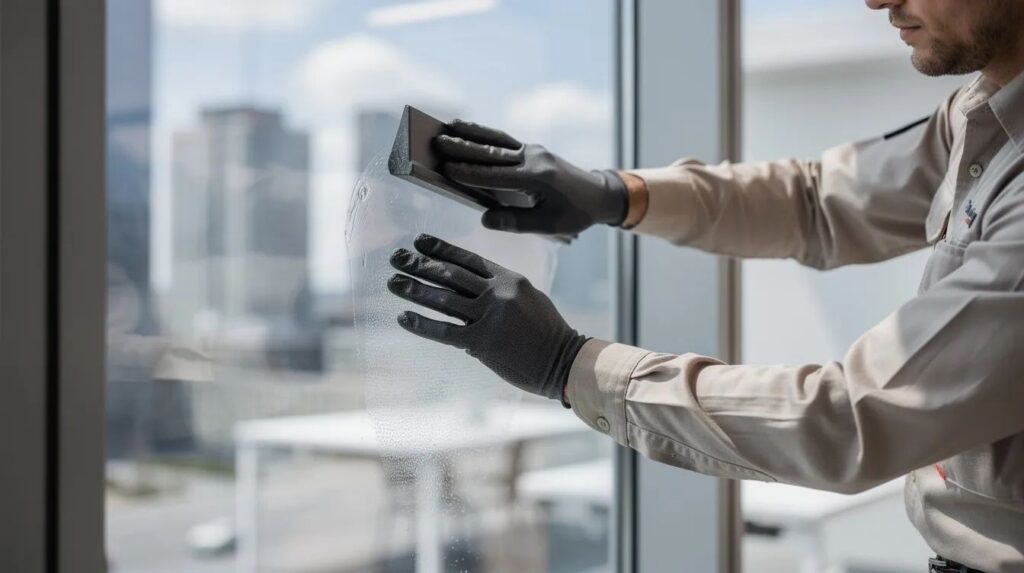
Thickness matters. Standard options include 4 mil (approximately 100 µm), 6 mil (150 µm), and heavier grades. Some scratch protection films are 120 µm thick, providing robust protection for moderate-abuse environments. Thicker films resist deeper scratches and acid etch more effectively, but may introduce a slight change in surface reflectivity.
Key distinctions to understand:
- Scratch protection film: Focused on abrasion and light vandalism on a flat surface or curved panel
- Anti-graffiti protective film: Adds resistance to acid etch, markers, and spray paint
- Security window films: Engineered for impact and shatter resistance, often with scratch-resistant coatings included, and distinct from basic shatterproof window film and other security window films
Glass scratch protection films cannot make glass scratch-proof, but quality scratch protection films can reduce damage from everyday abrasion dramatically. They are transparent and do not affect the glass appearance when properly installed. Pressure-sensitive adhesives are typically used, and permanent adhesive protects glass surfaces from scratches and abrasion in long-term deployments.
UV resistance is important for protecting the film in specific applications, especially outdoors. UV resistance helps prevent yellowing and preserves film integrity over the film’s service life. Thermoplastic polyurethane films can self-heal from light scratches, and some modern films can self-heal minor scratches when exposed to heat-a self-healing capability typically found in thermoplastic polyurethane films. Most professional-grade window films also block 95–99% of UV light, which helps reduce fading on merchandise, flooring, and furniture indoors.
Key Applications: Where Glass Protection Film Delivers the Biggest Payoff
Glass scratch protection film delivers the most value wherever glass is exposed to human contact, carts, equipment, or vandalism.
Commercial and institutional settings:
- Street-level retail storefronts, display windows, and glass door panels
- Malls and big-box entry lobbies with heavy cart and stroller traffic
- Schools, colleges, and municipal buildings with constant public contact
- Transit systems-bus shelters, rail cars, station glazing-where graffiti and scratching are common (over 120,000 public transport vehicles use anti-graffiti films globally each year)
Architectural and interior glass:
- Office glass partitions and conference room walls
- Tempered glass railings in hotels, arenas, and multifamily properties
- Mirrors in restrooms, changing rooms, and fitness centers-glass protection film is essential for preventing scratches on mirrors during handling and daily use
Fabrication and glazing trade uses:
- These films act as a sacrificial shield during construction or manufacturing, covering glass during cutting, shaping, tempering, and glazing
- Annealed glass is fragile and needs protective film; tempered glass benefits from protective film during installation
- Tinted glass uses protective film to maintain aesthetic appeal, and protection films can be applied to tinted glass to maintain aesthetics through the full construction cycle
- Acid-etched glass benefits from protective film against fingerprints and smudges
- Mirrors require protective film to prevent scratches during handling and transport
Glass protection film minimizes breakage during shipping and installation, and glass scratch protection films are commonly used on automotive windshields as well. These films can block UV rays, reducing furniture fading in occupied interiors.
Mini-example: A national retail chain protected over 5,000 sq ft of storefront glass across multiple locations using 4 mil anti-graffiti film. Instead of replacing tagged panels at $800–$1,200 each, crews peeled and reapplied film panels in under an hour per window. A hospital system applied film to interior glass walls in high-traffic corridors, avoiding repeated replacement and keeping the renovation schedule on track.
Benefits vs. Glass Replacement: Cost, Downtime, and Appearance
Building owners typically weigh three options: do nothing, keep replacing glass, or install protective window film.
Cost perspective:
Replacing a damaged film is cheaper than replacing a glass panel-often by a factor of five or more. A master roll of 4 mil anti-graffiti film covering approximately 500 sq ft costs around $1,500 in material. Compare that to a single custom insulated storefront panel, which can run $800–$2,500 or more depending on size and glass type. Protection films minimize cleanup time after glass breakage, saving labor on top of material cost.
Operational and safety benefits:
- Faster turnaround than ordering and installing custom glass, especially for branded storefronts or door panels with graphics
- Avoids boarding up windows and business disruption during the wait for replacement glass
- Reduced risk to occupants and pedestrians from broken glass during removal
- Safety film blocks up to 98% of harmful UV rays, protecting interior carpets, furniture, and merchandise from fading
- Protection film reduces cleanup time after glass breakage in the event of an accident
Aesthetic and brand benefits:
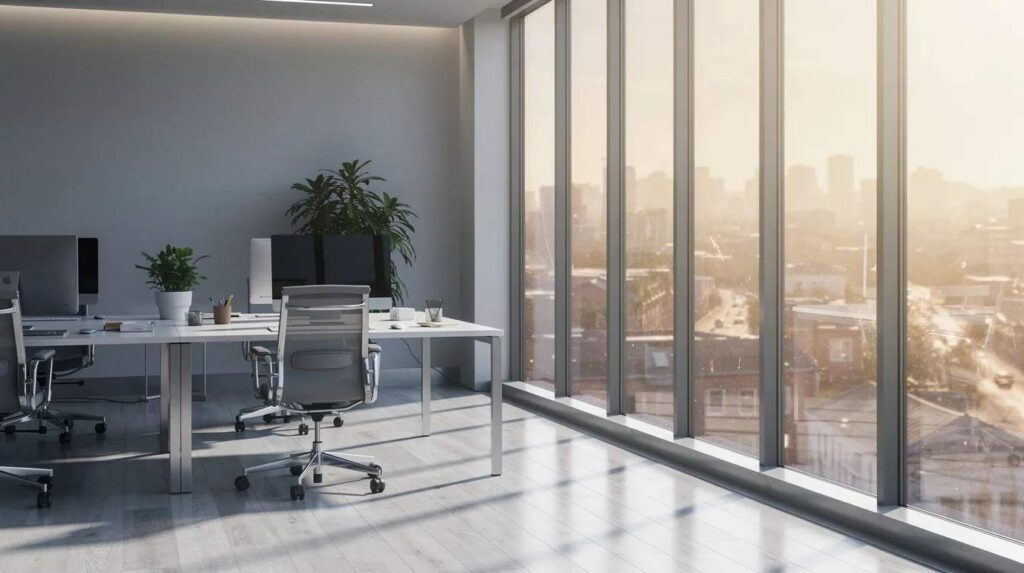
- Maintains a clear, like-new appearance even in harsh urban environments
- Nearly invisible when properly installed-visitors see glass, not plastic
- Simplifies dealing with vandalism: peel off the damaged film and reapply, rather than sandblasting or painting over etched glass
Keeping existing glazing in service through film protection aligns with retrofit and building performance goals. You reduce waste, preserve the embodied carbon in your glass, and save money at the same time.
Types of Glass Scratch Protection & Protective Window Films
Glass scratch protection film sits within a broader family of window films and architectural surface solutions. Here is how the major categories break down:
| Film Type | Thickness | Primary Purpose | Typical Lifespan |
|---|---|---|---|
| Scratch / anti-graffiti film | 4–8 mil | Surface protection, graffiti removal | 1–7 years |
| Temporary protective film | 30–80 µm | Construction, transport, handling | Days to months |
| Security/safety film | 8–15+ mil | Impact, shatter, forced entry resistance | 10–15 years |
| Solar control with hard coat | 4–12 mil | Heat/glare reduction + scratch resistance | 10–20 years |
Scratch protection / anti-graffiti films are clear, hard-coated polyester films designed to resist scratching, tagging, and superficial vandalism. They are removable and replaceable. Polyethylene film coated with acrylic adhesive is common for temporary protective film used during construction, where a low-tack polyethylene film is applied and removed after the job is complete.
Security and safety window films are thicker, engineered to hold glass together when broken. Many include scratch-resistant coatings for daily cleaning and light abrasion, so you get both impact and surface protection.
Solar control and privacy window films with scratch-resistant coatings-like 3M window film products for sun control and privacy-cut heat and glare while adding a durable, cleanable surface. These are useful when clients want both energy efficiency and protection from routine abrasion.
Window Film Depot helps clients discover the right combination: pure anti-scratch film where vandalism is the primary risk, or integrated sun control plus security plus scratch resistance where multi-performance is needed in a single application.
Selection Checklist: How B2B Buyers Choose the Right Glass Protection Film
Use this checklist when evaluating glass protection film for a purchase decision on any commercial or institutional project:
Environmental conditions:
- Interior vs. exterior exposure (outdoors vs. indoors durability differs significantly)
- Climate: UV intensity, freeze–thaw cycles, salt air in coastal areas
- Cleaning practices: squeegee frequency, chemical strength, automated scrubbers
Glass and substrate types:
- Annealed, tempered, laminated, tinted, low-E, mirrors, acid-etched, spandrel
- Check manufacturer warranties for compatible film types to avoid voiding coverage
Performance priorities:
- Primary goal: scratch resistance, graffiti removal, energy savings, shatter resistance, or privacy?
- Need for optical clarity, low reflection, or specific light transmission for storefront merchandising
Durability and removability:
- Expected lifespan in the specific environment before replacement
- Adhesive type: will the film peel cleanly without damaging specialty glass or coatings?
Compliance and standards:
- Safety glazing requirements (ANSI Z97.1, 16 CFR 1201)
- Forced entry resistance (ASTM F3561) for federal or high-security facilities
- Fire and smoke spread classifications where relevant
Window Film Depot typically conducts site surveys, glass audits, and small-scale mockups so decision-makers can evaluate film performance on their actual glass before committing to a full-scale rollout, leveraging its role as a leading 3M window film installation company for commercial projects.
Installation & Maintenance: What to Expect from a Professional Window Film Project
Professional installation on large architectural glass is a different subject entirely from applying a phone screen protector. Here is what the process looks like.
Pre-installation:
- On-site assessment of glass condition, existing coatings, and access requirements (lifts, scaffolding, night work in 24/7 facilities)
- Measurements, film selection from available stock or rolls, and logistics planning around occupied spaces
Professional installation steps:
- Clean the glass with a lint-free cloth and glass-safe tools to remove all dust and dirt from the surface
- Apply film in a clean, dust-free environment for best results-critical for achieving a bond without contamination
- Wet the glass with slip solution, position the film on the adhesive side, and trim to fit slightly within gasket lines at each edge and corner
- Use a felt squeegee to smooth out air bubbles and push out solution beneath the film
- Use pressure-adjustable rollers to bond the film to glass on larger panels
- Trim excess film with a sharp utility knife after application, then inspect under multiple lighting angles for any remaining bubbles or imperfections
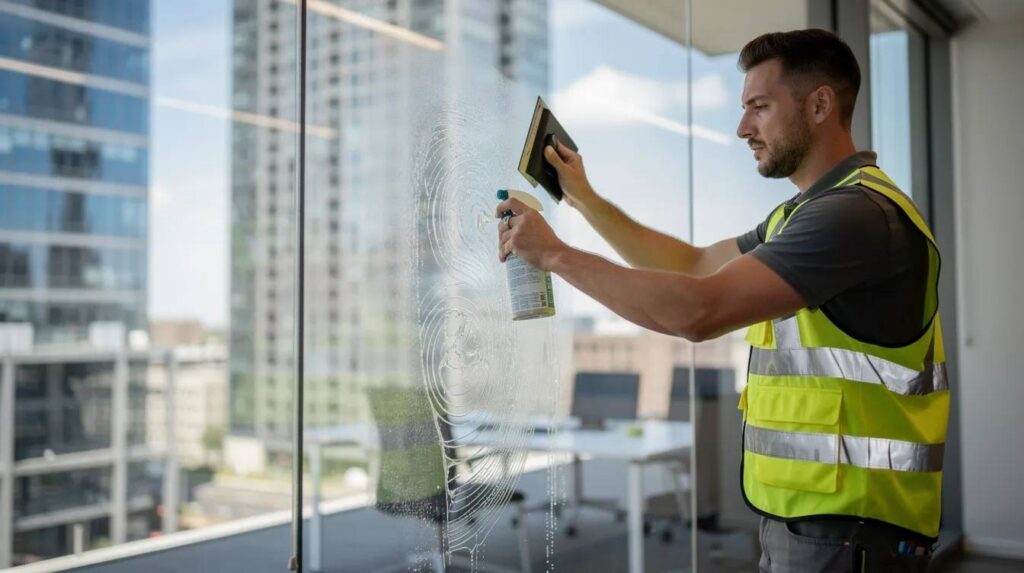
Cure time and care: The film needs several days up to 30 days to reach max adhesion, depending on climate. Avoid cleaning during this period. After curing, clean with non-abrasive tools and approved solutions-never harsh solvents.
Maintenance and replacement: Staff can visually inspect for deep scratches or vandalism and schedule replacement as needed. Smoothing and removing sacrificial film panels takes minutes, not hours. Window Film Depot manages multi-site rollouts with background-checked crews for schools, federal sites, and center-city retail locations nationwide, supported by nationwide window film service locations in all 50 states.
FAQs About Glass Scratch Protection Film
Does scratch protection film actually hide existing scratches on glass?
Clear protective film can visually mask very fine hairline scratches and swirl marks on a glass surface, similar to how hydrogel films disguise micro-scratches on phone screens. However, deeper scratches and chips will still be visible through the film. Glass scratch protection film prevents surface damage and ensures a pristine finish going forward, but it cannot fill or repair existing damage the way a resin might. If scratches are light and uniform, film is a practical way to refresh appearance without new glass. If damage is severe, consider glass replacement first.
How long does glass protection film last before it needs to be replaced?
Typical ranges are 3–7 years in low-abuse interior settings and 1–5 years on heavily abused exterior or street-level glass. Factors that affect lifespan include UV exposure, cleaning frequency, vandalism level, and installation quality. Window Film Depot can set up maintenance plans for high-traffic accounts, budgeting for periodic film replacement instead of surprise glass replacement costs.
Will protective window film change the look or clarity of my glass?
High optical clarity is a key feature of effective scratch protection films. Premium products maintain 85–90% visible light transmission and are virtually invisible once installed. You may notice a very subtle change in surface reflectivity, particularly if combining scratch protection with solar control. We recommend on-site samples so stakeholders can evaluate appearance in real lighting conditions before a full rollout.
Can scratch protection film be applied to tempered, tinted, or low-E glass?
Most protective films are compatible with tempered and tinted glass and are commonly installed on these substrates. Low-E coated surfaces, laminated units, and specialty glass require product-specific compatibility checks to avoid thermal stress or adhesive conflicts. Window Film Depot consults manufacturer data sheets and coordinates with the original glass supplier before specifying film on sensitive glazing to cover any warranty or breakage risk.
Is glass protection film the same as security film or shatterproof film?
No. Pure glass scratch protection film is focused on surface protection-scratches, scuffs, tagging. Security and safety films are engineered to hold glass together under impact, blast, or forced entry and adhere to different standards. Many security films include scratch-resistant hard coats, but not all scratch protection films provide meaningful impact resistance. Define your main risk-vandalism, forced entry, accidental impact, or storms- so a specialist can recommend the right combination of protective, security, or solar films for your situation.
Can my in-house maintenance team install protection film, or do I need a professional installer?
Small, flat interior panels can be handled by trained in-house staff using manufacturer guidelines, especially for temporary construction protection film or covering mirrors during a renovation. But large storefronts, high-visibility façades, multi-story projects, and code-driven safety glazing should be handled by certified installers to ensure performance and warranty coverage. Window Film Depot offers both full turnkey installation and wholesale supply with training support for glass and glazing trade partners across North America. Visit our site or call to discuss which approach fits your job.
Why Choose Window Film Depot for Glass Scratch Protection Film
Window Film Depot is a family-owned window film integrator founded in 1992 in Marietta, Georgia, with projects completed in all 50 states. Our portfolio spans retail rollouts, federal and municipal facilities, schools, healthcare campuses, and corporate properties.
We carry premium 3M window films and other high-performance protective films, with the ability to combine scratch protection with solar control, privacy, decorative, and security glazing solutions in a single specification. Our team manages the full project lifecycle: site surveys, glass audits, specification support for architects, budgeting, installation, and aftercare.
For trade partners, we supply wholesale rolls and cut-to-size film in bulk for glass shops and glazing contractors across North America, including residential and commercial window film services in Los Angeles and Southern California, along with technical guidance on film selection and installation methods for different glass types and building configurations.
Next Steps: Protect Your Glass Surfaces with a Custom Film Strategy
Glass scratch protection film is one of the most practical ways to keep windows, doors, partitions, and mirrors looking new while cutting vandalism cleanup and maintenance cost. Whether you need to protect a single storefront or roll out film across hundreds of locations, the process starts with understanding your glass, your environment, and your goals.
- Facility managers and building owners: Request a site assessment and glass protection plan
- Architects and designers: Contact Window Film Depot for specification support and sample kits
- Glass and glazing partners: Inquire about wholesale pricing, stocking programs, and training
Window Film Depot provides consultations by phone, video, or on-site depending on project scale and location, and can coordinate quickly for time-sensitive renovations or national rollouts, including window film installation and graphics services across the San Francisco Bay Area. Add what you need to your cart and reach out today-call, submit a quote request on our website, or email your project plans for review, whether you need local window film installation services in Washington, DC and surrounding markets or support for a national program.