Table of Contents:
- Introduction: Why Property Management Window Film Matters in 2026
- How Window Film Helps Property Managers Control Operating Costs
- Energy Savings, Benchmarking, and Code Compliance in Commercial Buildings
- Tenant Comfort, Complaints, and Retention in Multi-Tenant Properties
- Safety, Security, and Specialty Films for Risk Management
- Privacy, Branding, and Architectural Surface Films for Modern Commercial Spaces
- Who Pays? Structuring Window Film Projects Across Lease Types
- Phased Rollouts, Volume Pricing, and Portfolio Strategy
- How the Window Film Installation Process Works with Window Film Depot
- Frequently Asked Questions About Property Management Window Film
- Why Property Managers Choose Window Film Depot
- Next Steps: Schedule a Property Assessment
Introduction: Why Property Management Window Film Matters in 2026
Energy codes are tightening across California, New York, Illinois, Texas, and Georgia. Electricity rates have climbed steadily since 2022. Tenants in Class A and B office space expect consistent comfort. For property managers and asset managers dealing with all three pressures at once, window film has become one of the most practical retrofit strategies available.
Property management window film is a specialized multi-functional material applied to existing glass surfaces in commercial buildings to improve thermal performance, safety, privacy, and aesthetics – all without replacing windows. It encompasses solar control, safety and security, decorative film, and low-emissivity products that can be installed on glass across a portfolio in a fraction of the time and cost of full glazing replacement or curtain wall upgrades.
In this guide, you will learn how commercial window film reduces energy costs, improves tenant comfort, strengthens building security, and supports compliance with benchmarking ordinances like New York City Local Law 97 and California AB 802. You will also see how Window Film Depot manages national rollouts for property owners who need consistent results across multiple sites.
How Window Film Helps Property Managers Control Operating Costs
Commercial window tinting is a building envelope upgrade that can be implemented without permits in most jurisdictions, directly impacting energy costs and maintenance budgets. Window film can improve building performance without requiring full window replacement, which makes it appealing for building managers who need results within a single budget cycle.
Solar control films work by reflecting and absorbing a portion of the sun’s heat before it enters through the glass. This reduces cooling loads on shared HVAC systems in multi-tenant properties, particularly on south- and west-facing façades where solar exposure is highest. High-performance options like 3M™ Sun Control Window Films, Ceramic Series for commercial buildings reduce cooling costs by blocking solar energy that would otherwise drive up compressor runtimes on rooftop units and chillers.
The numbers are meaningful. High-performance 3M solar control films can reject 60–70% of solar heat, and 3M™ Sun Control Window Films, Prestige Series for commercial applications can reduce solar heat gain by 35% even on moderate-performance glazing. Quality window film blocks over 99% of uv rays, protecting tenants from skin cancer risk and reducing fading damage to furniture, carpets, and artwork. Installing window film is more cost-effective than replacing windows, and window film can reduce HVAC costs by up to 65% depending on building type and climate.
For property managers overseeing dozens of sites, even a 5–10% reduction in annual energy use intensity per property can add up to six-figure utility savings across the portfolio. Reduced HVAC runtimes also extend equipment life, helping defer capital expenditures like chiller or RTU replacement by several years.
Energy Savings, Benchmarking, and Code Compliance in Commercial Buildings
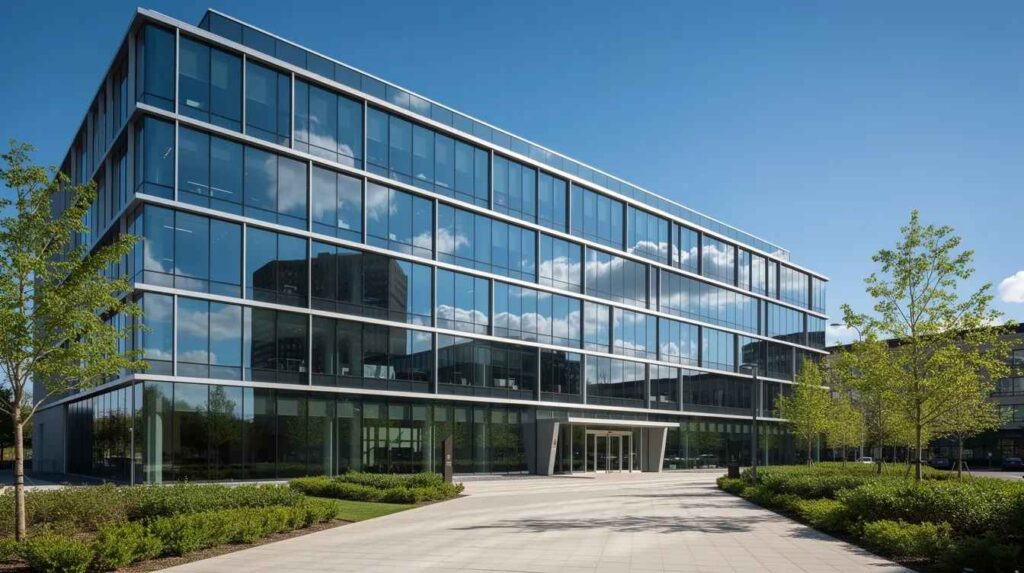
Window film connects directly to the formal metrics that building management teams track: Solar Heat Gain Coefficient (SHGC), U-Value, Energy Star scores, and the energy use intensity figures used in EPA Portfolio Manager. Solar control window film can reduce energy consumption by up to 30%, and window film improves Energy Star scores for commercial buildings – sometimes enough to cross the 75-point certification threshold that gives a property leasing and marketing advantages.
Installing 3M commercial window film or 3M Thinsulate Climate Control films by experienced 3M window film installers offering full product and installation services can effectively upgrade a single-pane window or older double-pane glass to closer-to-modern performance by lowering SHGC and adding an extra layer of insulation. Low-E window films improve indoor heat retention during winter months, and window film can reduce heat loss by 30% in winter, helping address seasonal energy efficiency in heating-dominant climates. Many window films contribute to lower carbon footprints for sustainability reporting and ESG disclosures.
Consider a concrete scenario: a 150,000 sq ft office building in a hot-sun market applies high-performance film to south and west façades. Cooling energy drops 20–25%, and the property’s Energy Star score climbs above 75. Under California AB 802 and Title 24 requirements for buildings over 50,000 sq ft, or New York City Local Law 97 timelines extending through the 2030s, that measurable reduction in kWh and therm usage directly supports compliance.
The typical payback period for window film is 2–5 years. Many utility territories offer rebates of $1–$2 per square foot of treated glass, and Window Film Depot helps document pre- and post-installation performance for rebate submissions, making the energy savings case easier to present to investment committees.
Tenant Comfort, Complaints, and Retention in Multi-Tenant Properties
Tenant comfort complaints are a top maintenance issue for property managers. The calls come weekly: hot spots near perimeter glass in summer, cold spots near untreated windows in winter, glare on monitors in a conference room facing west, and fading furniture and window treatments along south-facing suites. Traditional fixes – adjusting shades, adding blinds, running portable fans – treat symptoms without addressing the root cause.
Window film can significantly reduce glare in indoor spaces while maintaining natural light, giving tenants a comfortable working environment without darkening the building. For residential components of mixed-use portfolios, products such as 3M™ Sun Control Window Films and the Night Vision™ Series for homes provide similar glare reduction and comfort benefits. Window films enhance tenant comfort and satisfaction by stabilizing temperatures across perimeter zones, eliminating the hot and cold swings that trigger work orders and ad-hoc HVAC adjustments. The result is improved comfort with fewer complaints and less operating friction between property management teams and tenants.
The retention argument is straightforward. When leases come up for renewal, documented comfort improvements and lower utility pass-throughs support rental rates and reduce turnover – avoiding broker commissions, build-out allowances, and vacancy downtime. In a hot market like Dallas or Atlanta, perimeter offices that were difficult to lease during summer months have become desirable after solar control film installation, because the space stays consistently comfortable without excessive blinds or supplemental cooling.

Safety, Security, and Specialty Films for Risk Management
Safety and security films are a distinct category of property management window film specifically designed to mitigate risk from break-ins, glass-related injuries, and extreme weather events without changing the building’s appearance. Windows are often the weakest points in a building’s perimeter, and understanding the difference between shatterproof and security window films helps property managers choose the right solution to address that vulnerability directly.
3M safety and security films, paired with proper attachment systems, hold shattered glass in place during forced entry attempts, blast events, and even explosions or windborne debris impacts. Instead of flying glass and loose glass shards injuring occupants, the film keeps fragments bonded to the adhesive layer. Security films can withstand ballistic impacts, and 3M™ Scotchshield™ Safety & Security Window Films, Ultra Series for commercial properties, protect glass against forced entry. This enhanced security can delay intruders long enough for response teams to arrive, reducing property damage and liability. Window film solutions can deter smash-and-grab thefts at ground-floor retail in mixed-use developments. Security-grade window films help protect occupants and reduce liability across schools, healthcare facilities, and government buildings that must meet specific security guidelines. Window film can enhance building security without structural changes, providing meaningful security benefits at a fraction of the cost of full glazing upgrades. Safety films can prevent shattering from impact, offering protection for both residential and commercial applications.
Anti-graffiti films protect exterior-facing glass and mirrors in lobbies, transit hubs, and parking structures. Property managers can peel off vandalized film and replace it for far less than replacing an entire glass panel. For campuses and Class A properties near greenbelts, bird-deterrent films reduce bird strikes – estimates suggest up to 1 billion annual bird deaths from glass collisions in North America, making this an increasingly relevant ESG consideration.
Privacy, Branding, and Architectural Surface Films for Modern Commercial Spaces
Open offices with glass-fronted conference rooms, medical suites, and co-working spaces need visual privacy that coexists with daylight and transparency. Privacy films allow natural light in while restricting visibility outside, and window film provides privacy without blocking outdoor views – a balance that traditional solid walls cannot achieve.
Frosted window film is a traditional option for privacy on interior glass walls and glass doors, creating visual separation along corridors without building permanent partitions. Privacy window film enhances creativity and focus in workspaces by reducing visual distractions. Decorative privacy window film can include customizable patterns, gradients, and textures tailored to each tenant’s brand. Decorative films can personalize internal glass walls and windows, and they can be fully customized with logos and designs for reception areas, retail storefronts, and floor-to-ceiling branded entries. Property teams can choose among multiple types of decorative film for interior and exterior glass, with various colors, patterns, and textures that make them versatile across property types. A 2022 study found that aesthetics enhance healthcare workers’ well-being, which underscores why medical and institutional tenants increasingly request decorative film in their suites.
Architectural surface films like 3M DI-NOC give property managers a parallel tool to re-skin dated doors, elevator cabs, reception desks, and wall panels with wood, stone, or metal-look finishes. There are over 850 finish options for architectural films, and many projects can be completed overnight without disrupting tenants. All decorative film and architectural surface products can be combined with performance films elsewhere in the building, giving property owners a coordinated approach to aesthetics, privacy, and energy efficiency through one vendor, whether in commercial common areas or with 3M™ Sun Control Window Films, Prestige Series for residential units within mixed-use properties.
Who Pays? Structuring Window Film Projects Across Lease Types
Cost allocation for commercial window film depends heavily on lease structure and whether the work is treated as a building improvement or a tenant-specific alteration.
| Lease Type | Typical Funding Approach | Who Benefits |
|---|---|---|
| Gross / Modified Gross | Landlord funds as capital improvement | Landlord retains lower operating costs and higher property value; tenants benefit from comfort |
| Triple-Net (NNN) | Cost amortized via CAM charges over 3–5 years | Tenants see lower energy pass-throughs; landlord improves asset value |
| Tenant-Specific | Tenant funds for their suite only | Tenant gets comfort; risk of patchwork appearance on the façade |
| The best practice for building managers is to position property management window film as a base building upgrade applied consistently to the exterior envelope. This avoids piecemeal tenant improvements that create an inconsistent appearance and might need to be removed at lease end. Property owners who frame the project as a capital improvement can capture the long-term value while offering tenants measurably lower energy reconciliations. |
Window Film Depot provides portfolio-level ROI summaries and payback analyses that owners and asset managers can use to build internal business cases and present to investment committees.
Phased Rollouts, Volume Pricing, and Portfolio Strategy
Many property managers choose a phased installation strategy to manage capital outlay, minimize disruption, and test performance before committing to portfolio-wide deployment. Window film installation can be phased to minimize disruption across occupied commercial buildings.
A common phasing plan for a single building looks like this:
- Phase 1: South- and west-facing elevations with the highest solar load, plus lobbies and conference centers
- Phase 2: Remaining floors and orientations, including east-facing glass
- Phase 3: Secondary spaces – stairwells, back-of-house areas, and any remaining interior glass
When Window Film Depot works with REITs, corporate real estate teams, school districts, or healthcare systems with multiple sites, volume pricing significantly reduces the per-square-foot cost. Standardized specifications mean every property gets the same film performance and appearance, and consolidated warranty coverage simplifies long-term management.
Window Film Depot’s installer network can execute coordinated national rollouts – simultaneous or rapid-sequence projects across different states – while giving property managers a single point of contact and consolidated reporting. Owners can align these projects with budget cycles and anchor major work during lower-occupancy periods like holiday seasons or university breaks.
How the Window Film Installation Process Works with Window Film Depot
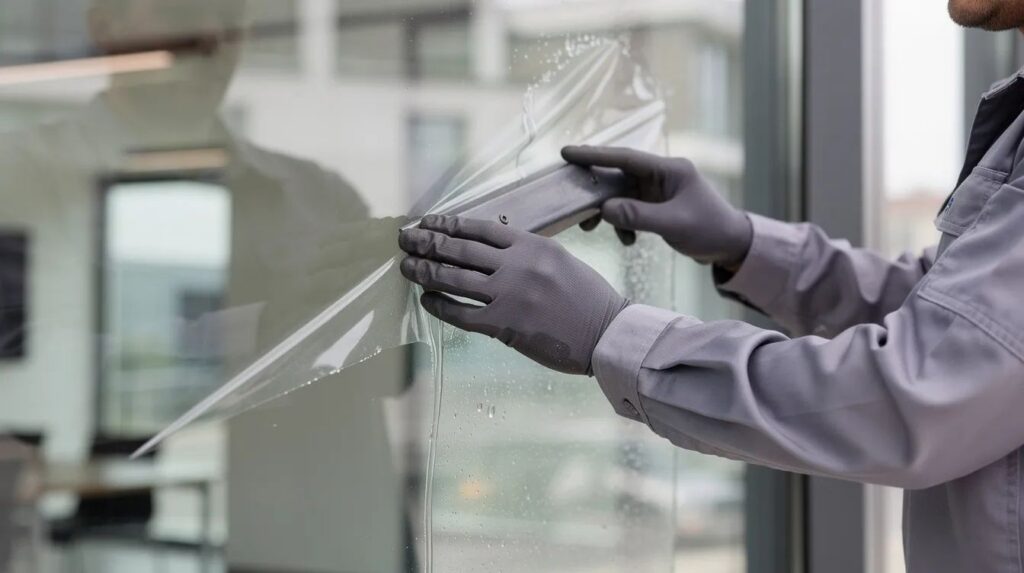
Window film installation is clean, quiet, and fast. There is no demolition, no dust, and no lingering odor. Most tenants can continue working in the same space while the crew completes their section of glass.
Here is what the process looks like from start to finish:
- Consultation and site walk with building management to identify priorities
- Glass audit and measurement – documenting glass type, frame condition, orientation, and existing coatings
- Film selection and specification – solar control, security, decorative, or a combination
- Proposal with energy modeling where appropriate
- Scheduling and tenant communication – coordinated with property management
- Installation – glass cleaned, film precisely cut and squeegeed into place, interior finishes protected with drop cloths
- Final inspection and warranty handoff – including product data sheets, care instructions, and supporting documents for HOA or architectural review boards
Experienced installers can complete several thousand square feet per day on a typical floor. Work is commonly scheduled during early mornings, evenings, or weekends to avoid disruption in sensitive environments like law offices, call centers, and medical clinics. Any moisture used in the mounting solution is contained and wiped away before the crew leaves each space.
Frequently Asked Questions About Property Management Window Film
These FAQs reflect real questions from property managers, facility directors, and asset managers that Window Film Depot has worked with since 1992.
How long does commercial window film last on a building?
High-quality 3M commercial window films commonly carry warranties in the 10–15 year range for vertical glass, and real-world performance often extends well beyond that when properly maintained. Interior-applied films last the longest because they are protected from direct weather exposure. Exterior-applied films are engineered for harsher conditions but typically carry shorter warranty periods. Property teams can review detailed 3M residential and commercial window film warranty information to understand coverage terms, and Window Film Depot pairs manufacturer warranties with workmanship guarantees so property managers have a single point of accountability over the life of the film.
Will window film void my window or glass warranty?
When the correct film is specified for the glass type, reputable manufacturers like 3M design products to be compatible with insulated glass units, tempered glass, laminated glass, and specialty coatings. Before every project, Window Film Depot gathers window manufacturer information and checks film compatibility matrices. When needed, 3M-backed glass breakage and seal failure coverage provides additional protection. Using off-brand or non-certified films can create risk, which is why commercial building owners typically prefer working with authorized 3M dealers on critical façades.
Can window film be removed without damaging the glass?
Commercial window films are designed to be removable. Professional technicians use specialized tools and solutions to soften the adhesive and lift the film without scratching or etching the glass surface. A common example: removing outdated reflective film from a 1990s office tower and replacing it with a modern, neutral ceramic film to meet updated design standards. Removal costs are usually lower than the original installation because measurements and access logistics are already documented.
How much energy can our building actually save with window film?
Expect a 5–15% reduction in cooling energy use in most sun-exposed commercial buildings, with higher savings in older single-pane or poorly performing stock. Actual results depend on orientation, glass type, local climate, and HVAC configuration. Window Film Depot can coordinate energy modeling or work with third-party energy consultants to estimate savings using building-specific data, then verify with post-installation utility tracking. Property managers should also factor in indirect benefits like HVAC life extension and tenant retention when evaluating return on investment.
Will installation disrupt our tenants’ operations?
Most installations are done from the interior and require only a small working area along the window wall. Office, education, and healthcare spaces remain open and functional during the project. Window Film Depot coordinates with property managers to schedule higher-traffic tasks after hours, and installers are accustomed to working in occupied environments. There is no dust-producing demolition, and any moisture is contained and wiped away before the crew leaves each space.
Can we apply window film to only some suites or do we need to treat the entire building?
It is technically possible to treat individual suites, floors, or exposures. This makes sense for pilot projects, limited budgets, or addressing extreme hot spots on particular elevations. However, property managers should consider maintaining a uniform exterior appearance to satisfy HOA or architectural review requirements and avoid a patchwork look that could affect curb appeal. The recommended approach is to start with the most critical areas but outline a path to consistent coverage, with Window Film Depot assisting in phasing and specification for visual continuity.
Why Property Managers Choose Window Film Depot
Window Film Depot is a national partner built around the ongoing needs of property managers, facility directors, and portfolio owners – not one-off residential jobs. As a family-owned window film company established in 1992 and based in Marietta, Georgia, the firm has been recognized multiple times as 3M National Dealer of the Year and is trusted by government, education, retail, and institutional clients across all 50 states.
The service model is turnkey: site surveys, product selection, coordination with architects and energy consultants, tenant communication templates, installation scheduling, and post-project documentation for rebates and compliance filings. From a single source, property managers access 3M solar control films, 3M safety and security films with attachment systems, 3M Fasara decorative films, 3M DI-NOC architectural finishes, anti-graffiti films, and custom commercial graphics.
Real-world experience matters. Window Film Depot has protected glass railings in high-traffic transit hubs, upgraded glazing across multi-state bank branch portfolios, and managed phased rollouts for university systems – the kind of complex, multi-site programs where consistency and communication make the difference between a successful project and a logistical headache.
Next Steps: Schedule a Property Assessment
If you manage commercial property and are dealing with rising energy costs, tenant comfort complaints, security concerns, or aging glazing, the next step is straightforward: request a building assessment or portfolio consultation with Window Film Depot.
In the first conversation, expect a focused discussion about your current pain points, a preliminary review of your building type and glazing, and identification of which properties could see the fastest ROI from window film. To get the most accurate savings estimates, gather recent utility data, floor plans, and any existing energy benchmark reports before the call.
Window Film Depot works directly with ownership groups, third-party property management firms, and facility teams. Services are available nationwide for both single-building projects and multi-site programs.
Contact Window Film Depot by phone or web form to schedule an on-site or virtual walkthrough. A property assessment is the lowest-risk way to uncover energy savings, comfort improvements, and risk reduction opportunities for your portfolio in 2026 and beyond.