Table of Contents:
The glass in your windows does more than let in light. It controls how much heat enters or escapes, how much noise passes through, and how secure the opening is against forced entry. This guide covers what glazing means in buildings, the types available, how each performs, and when retrofit window film makes more sense than full replacement.

What Is Glazing? (What glazing refers to)
In building construction, glazing refers to the glass assembly installed within a window, door, or curtain wall, including the glass itself plus coatings, spacers, sealants, and framing components. The word has other meanings; in art, for example, painters such as Vermeer used glazing to build thin translucent layers of oil color over earlier paint to create depth and shadow, and in internet slang, “glazing” means excessive praise. Those uses refer to other contexts; here, the focus is building glazing and how the glass unit inside a frame affects performance.
Glazing influences how a building handles light, heat, safety, and the surrounding environment, so it directly affects occupant comfort, utility costs, appearance, and code compliance. For facility managers, architects, building owners, retail and institutional clients, and glass and glazing trade partners comparing retrofit options, this guide explains what glazing means in buildings, the main types of glazing, how glazing performs, and where window film, security glazing, decorative and privacy films, commercial graphics, and broader building envelope upgrades fit.
Key reasons glazing matters in modern buildings:
- Safety: Toughened and laminated glass protect occupants from injury and forced entry
- Energy efficiency: Multi-pane units with coatings and gas fills cut heating and cooling loads
- Daylight: Glazing affects daylight penetration, reducing the need for artificial lighting
- Aesthetics: Glass facades, storefronts, and curtain walls shape a building’s identity
Window Film Depot works with both new and existing glazing systems, providing 3M solar control films, security films, and decorative solutions as a nationwide B2B and institutional partner.
How Window Glazing Works
Glazing is part of the building envelope, and its performance depends on glass type, coatings, gas fills, and frame design. Heat moves through a glazed opening three ways: conduction through the glass and frame materials, convection within air or gas gaps between panes, and radiation of solar and infrared energy through the surface.
Here is how each performance factor breaks down:
- Insulation: Double and triple glazing trap air or inert gas between panes, slowing conduction and convection. A single pane of clear glass has a U-factor around 1.02; a double-glazed Low-E unit with argon drops to about 0.24. More glass layers enhance insulation and energy efficiency at each step. Krypton or Argon gas between glass layers boosts insulation further.
- Solar heat gain: SHGC measures the fraction of solar energy admitted. In hot climates like Georgia, low SHGC (below 0.40) cuts cooling loads. In cold climates, higher SHGC (above 0.55) permits passive solar heating. Tinted glass absorbs or filters portions of the solar spectrum to reduce glare.
- UV protection: Many glazing assemblies block over 90% of ultraviolet radiation. Combined with window film, that figure can reach 99%, protecting flooring, furnishings, and occupants.
- Sound reduction: Acoustic control is provided by laminated and multi-pane glazing assemblies. Thicker panes and asymmetrical pane thickness improve Sound Transmission Class ratings.
- Thermal comfort: If interior glass surface temperature drops below about 60°F in winter, occupants sense radiant cold even when air temperature is warm. High-performance glazing raises that surface temperature by 3–5°F.
- Daylight and glare: Modern architectural glazing uses technologies like double or triple panes to improve thermal insulation while spectrally selective coatings let visible light through and block infrared.
Types of Window Glazing
Glazing types include single, double, triple, laminated, and toughened glass, each with specific characteristics. Most commercial and institutional buildings today use insulating glass units with two or more panes, often combined with Low-E coatings and gas fills. The right choice depends on climate, budget, safety requirements, and the building’s energy goals.
Single Glazing
Single glazing is one thin layer of glass with no insulating cavity. Common in buildings constructed before the 1970s, it has a U-factor near 1.0, minimal noise reduction, and frequent condensation problems. Single-pane windows often need reglazing if cracked. Some historic buildings preserve single panes out of respect for heritage character, but window film can enhance UV and solar control on that existing glass without altering the frame. You might be surprised how much a retrofit film can improve comfort on a pane that is otherwise sucking heat out of a room.
Double Glazing
Double glazing uses two panes of glass separated by an air or gas-filled space, sealed as an IGU. Double skin wall glazing uses two glass layers for insulation, and the technique is now standard in buildings constructed or upgraded after early 2000s energy codes. Double-glazed windows improve energy efficiency by cutting U-factors to the 0.24–0.65 range depending on coatings and gas fill. Ontario, for instance, requires new homes to have at least double-glazed windows. Argon is the most common gas fill. Double-pane windows require professional reglazing services when seals fail.
Triple Glazing
Triple glazing adds a third pane and second insulating cavity, pushing U-factors down to 0.17–0.22 with argon or krypton. It is most common in cold climates, net-zero projects, and LEED-certified buildings. The trade-off: triple glazing is costly, heavier, and places greater structural pressure on frames and mullions. In moderate climates, double glazing with good Low-E coatings delivers most of the benefit at a lower point of investment.
Low-E Glazing
Low emissivity glass reflects long wave infrared radiation through a microscopically thin, nearly invisible metallic coating (often silver or tin oxide). This process lowers U-factor and controls solar heat gain while allowing visible light to pass. Two variants exist: passive Low-E coatings with high solar gain for heating climates, and solar control Low-E coatings that reflect infrared to reduce cooling loads in hot climates. Adding Low-E typically costs 10–15% more than bare double pane but can reduce energy loss by 30–50% compared to clear single glazing. Switchable glazing, a related invention, changes light transmission properties based on electrical voltage or heat.
Laminated Glazing
Laminated glazing sandwiches a tough interlayer between two glass panes for safety and sound dampening. Laminated glass consists of layers fused with polyvinyl butyral (PVB), SGP, or EVA. When broken, fragments stay adhered to the interlayer, resisting forced entry and reducing injury risk. Safety and security are enhanced with toughened and laminated glass for protection against impacts. Typical uses include schools, government buildings, storefronts, and areas requiring impact resistance. For buildings where full laminated glass replacement is not feasible, security film retrofits offer similar hold-together performance.
Tempered Glazing
All glass starts as float glass, created by floating molten glass on tin. Annealed glass is then cooled slowly to reduce internal stress. Heat-strengthened glass is twice as durable as annealed glass, while fully tempered glass is four times stronger than annealed glass. When tempered glass fails, it fractures into small, blunt granules rather than sharp shards. Building codes mandate tempered safety glass in doors, sidelites, shower enclosures, and large lites near floor level. Pointed support glass systems use bolts to attach tempered glass in structural facades. Installation of tempered panels requires a steady hand and precise measurement, since the glass cannot be cut after tempering. The durability of tempered glass makes it a standard material in high-traffic areas.
Benefits of Window Glazing
Modern glazing systems solve multiple performance issues at once. Here are the highlights that facility owners and homeowners care about:
- Energy efficiency: Upgrading from single to double or triple glazing cuts heating and cooling loads by 25–50%. A Minnesota retrofit study found that Low-E film alone reduced energy use by about 14%.
- Indoor comfort: Fewer drafts, more stable temperatures, and better daylight control lead to improved occupant satisfaction. This holds true for offices, classrooms, and living rooms alike.
- Reduced energy costs: Lower utility bills, easier compliance with IECC and ASHRAE 90.1, and shorter payback when paired with HVAC upgrades help save money over the life of the building.
- Noise reduction: Laminated and multi-pane assemblies reduce noise for schools near busy roads, hospitals, and urban multifamily housing.
- Security: Laminated and thick glazing slows forced entry. Paired with security window film, resistance to break-ins increases without full glass replacement.
- UV protection: Many assemblies block 90–99% of UV, protecting merchandise, flooring, and art from fading.
- Condensation control: Better insulating glass warms interior surfaces, reducing condensation and mold risk on frames and sills. Electrochromic glass can dynamically change tint to control glare and daylight, adding another layer of depth to modern glazing design. Cable net glazing provides luxurious views but is costly, typically reserved for atriums and feature walls.
Window Glazing vs. Window Film
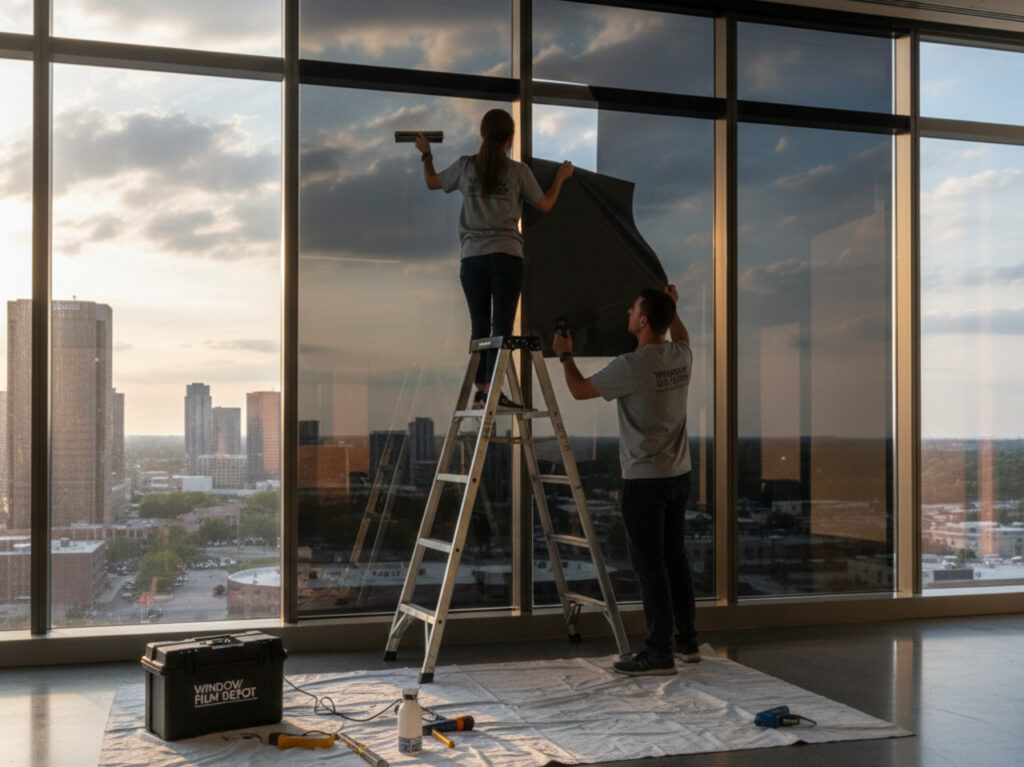
Glazing is the structural glass assembly. Window film is a thin, retrofittable layer applied to existing glass to modify its solar, UV, glare, privacy, or security performance. Film does not replace structural glass properties like U-factor improvement from adding panes, but it can enhance the underlying glazing.
- Key differences: Glazing is permanent and structural; film is surface-applied and reversible. Full re-glazing is a capital project; film installation is a lower-cost, faster retrofit with minimal disruption.
- Performance: Both affect energy efficiency, solar heat gain, and UV blocking. Spectrally selective films replicate Low-E behavior for solar control. A Lisbon building case study found films had lower embodied energy and quicker payback than full replacement in certain climates.
- Cost: Triple glazing adds roughly 45% to the cost of a single-glazed window unit. Film typically costs a fraction of re-glazing and can be installed after hours in commercial settings.
- Choose glazing when: Seals have failed, glass is broken, building codes require safety glazing, or a full facade renovation is underway.
- Choose film when: Existing glass is sound but solar control, privacy, or security needs improvement. Window Film Depot installs 3M sun control films, decorative and privacy films, and anti-graffiti solutions nationwide for exactly these moments.
Residential Window Glazing
Homeowners increasingly prioritize energy efficiency and comfort when talking about window upgrades. Common applications include south-facing bedrooms, large picture windows in living rooms, skylights, and patio doors.
- Double glazing with Low-E and argon is the most popular residential option, delivering strong insulation at a reasonable cost
- Laminated glass adds safety around pools, doors, and play areas where kids are regularly nearby
- Tinted or reflective glazing suits hot, sunny climates for glare control
- Reglazing stops leaks in warped or cracked windows and can preserve the character of older homes; reglazing improves energy efficiency by sealing windows without a full replacement
- Homeowners who want to act without replacing windows entirely can use residential window film to upgrade solar control and privacy on existing glass; it is fun how much a simple film can change a room’s comfort
Commercial Window Glazing
Commercial glazing shapes building performance, branding, and occupant well-being across every building type. Structural glazing bonds glass directly to a building’s structure, eliminating visible metal caps for clean facade lines. Dry glazing uses rubber gaskets or structural tapes, while wet glazing applies structural silicone to bond glass to frames.
- Office buildings: Curtain walls and glass facades prioritize glare control for computer work and HVAC load reduction
- Retail spaces: Storefront glazing balances merchandise visibility with UV protection and after-hours security
- Schools: Impact-resistant glazing or security film protects kids and staff; daylighting strategies support student performance
- Healthcare: Patient comfort, privacy, infection control on smooth glass surfaces, and acoustic performance in waiting and patient rooms
- Hospitality: Views, noise reduction, and solar control in guest rooms and lobbies
- Government buildings: Heightened security and blast-mitigation requirements; laminated or specially engineered glazing in public-access areas
Window Film Depot specializes in nationwide rollout projects, retrofitting existing commercial glazing with solar, security, and decorative films for every subject on this list.
Can You Upgrade Existing Windows Without Replacing the Glass?
Yes. Many performance issues can be addressed through retrofit options that keep existing glazing in place, saving capital expense and avoiding the disruption of full window replacement.
- Air sealing and weatherstripping: Tightening the frame and gaskets stops drafts and reduces infiltration
- Storm windows: A secondary glazing layer added over the existing pane improves insulation
- Window film: Solar control, Low-E, security, privacy, and decorative films applied to existing glass improve energy performance and occupant experience at a fraction of re-glazing cost. Window film insulation solutions from 3M Thinsulate, for instance, reflect interior heat back into the room
- Energy performance without replacement: Films lower solar heat gain, cut cooling loads, and block UV while preserving views. School districts and retail chains regularly use film retrofits to extend the service life of existing glazing rather than begin a full replacement cycle
How to Choose the Right Window Glazing
Selecting glazing is a balancing act among performance, aesthetics, budget, and code requirements. Expert guidance helps determine the best path.
- Climate: Hot climates prioritize low SHGC and UV blocking; cold climates emphasize insulation and passive solar gain. A person in Atlanta and a person in Minneapolis need different glazing strategies.
- Building type: A single-family home, a hospital, and a retail storefront each demand different glazing configurations
- Budget: Triple glazing delivers the best thermal performance but carries the highest cost. Window film can maximize ROI when full replacement is not feasible, and the consistency of results across large portfolios makes it attractive for multi-site owners.
- Energy goals: Connect glazing choices to ENERGY STAR targets, local energy codes, and certifications like LEED or net-zero standards to achieve compliance
- Safety requirements: Building codes specify where tempered or laminated glass is mandatory; security film overlays can supplement existing glass to meet updated threat standards
- Existing conditions: Consult specialists like Window Film Depot to evaluate the underlying paint layer of frames, seal conditions, and glass type before deciding. Even dust buildup and frame degradation affect what retrofit options are viable, and a site assessment removes the risk of specifying the wrong solution.
Frequently Asked Questions About Glazing
What is glazing?
Glazing is the glass assembly installed in a window, door, or facade. The word also appears in art, especially in oil painting, where artists use glazing to describe applying a thin translucent layer over dried paint layers to add depth, and as slang for praise so lavish it sounds insincere. In building science, the definition refers strictly to the glass unit, coatings, spacers, and sealants.
What is the difference between glazing and glass?
Glass is the raw material. Glazing refers to the entire assembly: the glass pane(s), coatings, gas fills, spacers, sealants, and how they are set into the frame. For a fuller overview, see our complete guide to window film types and benefits.
What is double glazing?
Two panes of glass separated by a sealed air or gas-filled space. It reduces heat transfer, cuts condensation, and is now the minimum standard in many building codes.
What is Low-E glazing?
Glass with a thin metallic coating that reflects infrared radiation while transmitting visible light. Low emissivity glass reflects infrared radiation for energy savings of 30–50% over clear single pane.
Can existing windows be upgraded?
Yes. Window film, storm windows, and improved weatherstripping all enhance existing glazing without full replacement.
Does glazing reduce energy bills?
Upgrading from single to double-glazed Low-E with argon can cut window-related heat loss by over 75%, translating to measurable utility savings depending on climate and building size.
Is window film a replacement for glazing?
No. Film does not replace the structural glass. It modifies the performance of existing glazing by reducing solar gain, blocking UV, adding security hold-together strength, or providing privacy. For an in-depth look at the idea behind this, read about how smart buildings choose window film for energy savings.
Find the Right Glazing Solution for Your Property
Whether you need new high-performance glazing or want to upgrade what you already have, the right strategy starts with understanding your current windows.
- Residential options: New double or triple glazing with Low-E, plus residential window film for added comfort and privacy
- Commercial options: Security glazing, energy-efficient IGUs, and specialty architectural glass for offices, schools, hospitals, and government facilities
- Window film alternatives: Window Film Depot’s 3M solar control, security, decorative, privacy, and anti-graffiti films extend the performance of existing glazing across any building type; as a sign of how versatile film is, a single product line can address energy, safety, and aesthetics at once
- Request a consultation: Contact Window Film Depot for a site assessment, energy analysis, and recommendations tailored to your building type, climate, and budget
- Explore resources: Visit windowfilmdepot.com for case studies, technical guides, and detail on every glazing and film solution covered in this guide. Thank god the ability to retrofit existing glass means you do not always need to tear out what you have to get the performance you want.