Not sure if safety film is the right fit for your school building? This guide covers everything you need to decide confidently.
Table of Contents:
- Introduction: Why School Safety Window Film Matters in 2026
- What Is School Safety Window Film and How Does It Work?
- How School Safety Window Film Helps Delay Forced Entry and Protect Students
- Key Benefits of Safety Film for Schools (Security and Beyond)
- Costs, Budgets, and Grant Funding for School Safety Window Film
- Installation Process: What Schools Can Expect from Start to Finish
- Standards, Code Requirements, and Best Practices for School Safety Film
- Why Schools Choose Window Film Depot for Safety and Security Window Film
- School Safety Window Film FAQs
- Next Steps: Plan Your School Safety Window Film Project with Window Film Depot
Introduction: Why School Safety Window Film Matters in 2026
Picture a school entrance at 7:45 a.m. Glass sidelites flank the front doors. Without protection, a single blow from a hammer shatters that glass in under two seconds, giving an intruder immediate access to door hardware and the hallway beyond. Flying glass injuries are a leading cause of harm in school incidents, and unprotected glass windows remain the weakest link at many schools across the country.
School safety window film changes that equation. It is a clear, micro-layered safety film applied directly to existing glass that holds shattered glass together and buys critical time for lockdown and first responders. Window film acts as a non-invasive retrofit method for enhancing existing windows, fitting into a broader school safety and security plan rather than replacing one. Effective security film integration involves a layered security approach alongside access control, cameras, and staff training.
With state mandates expanding (Texas now requires entry-resistant film on ground-level doors and sidelites), demand for retrofit window film solutions is surging nationwide. This article covers how safety film works, its security and energy benefits, grant funding sources, installation timelines, testing standards, and how Window Film Depot supports educational facilities across the U.S. Whether you are a superintendent, facility manager, security director, or architect, the information here will help you evaluate film for schools as part of a layered strategy.
What Is School Safety Window Film and How Does It Work?
School safety window film is a multi-layered polyester film applied to glass surfaces using high-strength adhesive. Film thickness typically ranges from 4 mil for basic fragment retention up to 15 mil or more for high-security applications. Most products are optically clear or lightly tinted, so they preserve natural light while adding a critical layer of protection to glass windows and doors.
The core mechanism is fragment retention. When glass breaks from impact, weather, or spontaneous glass breakage, the film holds shattered glass together instead of allowing dangerous shards to scatter into classrooms and corridors. Security window film holds shattered glass together during impacts, which prevents flying glass from injuring students and staff, especially when districts specify 3M Scotchshield Ultra Series safety and security films designed for commercial-grade glass protection. Window film reinforces vulnerable glass entry points, particularly sidelites, vestibule panels, and classroom doors with vision panels.
There are important distinctions between product tiers:
- Basic safety film (4–6 mil): Prevents flying shards from accidents and storms; minimal forced entry delay.
- Security film (7–12 mil with frame anchoring): Designed to delay forced entry by keeping glass intact and anchored to the window frame after repeated impacts.
- High-security systems (12–15+ mil, attachment systems): Engineered for blast mitigation or extended forced entry resistance, often paired with wet-glaze or mechanical anchoring.
Compared to full laminated glazing or polycarbonate panels, security window films engineered for intrusion resistance are far less expensive and far less disruptive to install. However, it is important to be honest: security window film is not bulletproof and does not prevent all forced entry. It significantly delays breach and reduces injury, but it does not make glass unbreakable.
Typical application zones in school buildings include main entry doors, vestibule glass, sidelites adjacent to exterior doors, interior vision panels in classroom doors, hallway curtain walls, and ground-level windows near entries.
How School Safety Window Film Helps Delay Forced Entry and Protect Students
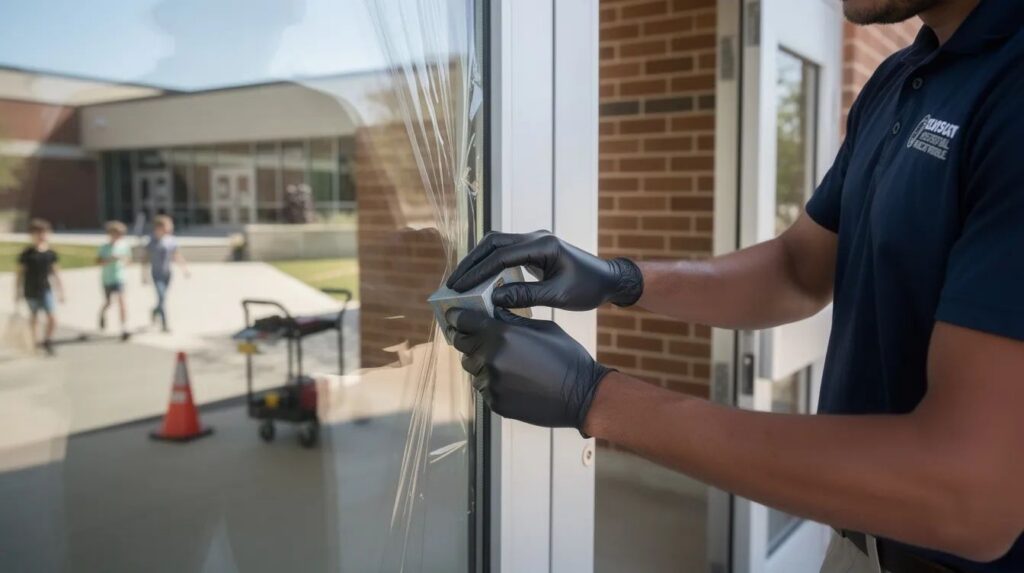
Without film, tempered glass near a school entrance can shatter in one or two blows, allowing an intruder to gain entry in seconds. With properly installed security film and frame anchoring, that scenario changes dramatically. Security films make it significantly more difficult for intruders to break through glass. Instead of instant breach, potential intruders must deliver repeated, noisy impacts over an extended period. Security window film delays forced entry by 1 to 2 minutes, and safety film delays forced entry by 1 to 2 minutes depending on thickness and attachment. In third-party testing, 8 mil film with structural anchoring has resisted hammer and crowbar attacks for 45–60 seconds, while thicker systems exceed 90 seconds.
That critical time matters enormously. Even 60 seconds of delay can allow staff to initiate lockdown, move students away from vulnerable glass, secure classrooms, and alert law enforcement. Security measures deter unauthorized access to schools because intruders encounter resistance they did not expect. Security window films improve resistance to forced entry by keeping glass intact after impact, forcing attackers into prolonged, conspicuous effort.
Flying glass injuries are prevented by security window film, and flying glass injuries are prevented by safety window film as well. Broken glass stays bonded to the film rather than becoming flying shards that injure bystanders in corridors and classrooms.
Beyond active threats, safety film adds resilience against overnight vandalism, break-ins targeting computer labs, and civil unrest near campuses. The building’s appearance stays unchanged while protection improves significantly. Safety and security window film is one layer in a multi-layered approach that includes access control, cameras, communication systems, and drills. No single product replaces a comprehensive plan, but film addresses the physical vulnerability that other measures cannot.
According to recent Texas Education Agency data, approximately 22.5% of campuses still have windows adjacent to exterior doors that are not modified with intruder-resistant materials. That gap represents real risk.

Key Benefits of Safety Film for Schools (Security and Beyond)
School safety window film delivers benefits well beyond forced entry delay. Here is what matters most for educational facilities and school boards:
Security and injury reduction. Safety film protects against flying debris during severe weather and holds broken glass together during seismic events, storms, and accidents. In hallways, cafeterias, and gymnasiums, retained glass means fewer injuries during emergencies, and districts can choose from a wide range of safety and security window film products to match different building types. Over 50 schools have implemented safety window film as part of their safety measures, recognizing the added layer of protection it provides. Security window film is cost-effective for school safety measures compared to full glazing replacement.
Energy savings and sun control. Window film can enhance energy efficiency by reducing heating and cooling costs. Combined solar safety films, sometimes called sun control films, cut solar heat gain on sun-exposed facades, lowering HVAC load and energy costs. East- and west-facing classrooms see the most benefit. Schools gain improved comfort without sacrificing natural light.
Glare and visual comfort. Window film can reduce glare and improve classroom comfort. Teachers report better visibility on smartboards and screens, and students using laptops or tablets experience less eye strain. Tinted sun control options provide this without making classrooms dark.
UV protection. Security window film provides UV protection, blocking 99.9% of harmful rays. Window film blocks up to 99.9% of harmful UV rays, which protects flooring, furniture, artwork, and library books from fading, similar to dedicated UV protection window film solutions used in homes and offices. Reducing exposure to harmful uv rays also lowers the cumulative risk of skin cancer for students and staff who spend hours near windows.
Privacy and aesthetics. Privacy films can prevent outside visibility while allowing viewing from inside. Reflective or frosted safety security films limit views into classrooms and offices while modernizing older campuses without major renovation. These films enhance safety and improve the look of aging school facilities.
Liability and insurance. Some insurers view security film installations favorably. Better glass safety can reduce injury claims from accidental impact, storm events, or natural disasters. Security window films can protect against natural disasters by maintaining the building’s envelope, which reduces repair and replacement costs after severe weather, and can be combined with additional window protection film solutions for higher threat profiles.
Costs, Budgets, and Grant Funding for School Safety Window Film
Understanding cost is a top priority for districts weighing this upgrade. Here are 2026 benchmarks:
| Film Type | Approximate Installed Cost (per sq ft) |
|---|---|
| Basic clear safety film (4–6 mil) | $10–$15 |
| Security film with anchoring (8–12 mil) | $15–$25 |
| High-security / blast-rated systems | $25–$35+ |
| For a typical 50-window elementary school entry and ground-floor retrofit, installed costs might range from roughly $4,800 to $9,000 depending on film thickness and attachment requirements. Compare that to full glass replacement at $800–$1,200 per glazed unit, and film becomes the clear cost-effective solution for upgrading existing glass windows in older school buildings, especially when you understand typical window security film installation costs across different project types. |
Major cost factors include total glass area, number of doors and sidelites, film type, attachment system requirements, site access (height, lifts), and whether installation happens during school breaks or evenings.
Grant funding can offset most or all of the cost. Texas allocated $800M through its SAFE grant program specifically for school safety improvements including film, doors, windows, and fencing, and districts in that state can work with local window film installers in Dallas–Fort Worth to execute projects efficiently. The TEA School Safety Standards Formula Grant explicitly lists forced entry film and installation on windows adjacent to exterior doors as allowable costs. Federal programs and local bond measures can also fund security glazing retrofits. Districts should tie forced entry delay, injury reduction, and energy savings to specific program language about safety and operational efficiency in grant applications. Window Film Depot assists with detailed, line-item proposals and multi-phase rollout strategies that align with multi-year funding cycles, simplifying the procurement process by leveraging its role as a leading 3M window film installation company.
Installation Process: What Schools Can Expect from Start to Finish
Professional installation is crucial for the effectiveness of security film. A poorly applied film or one without proper frame anchoring delivers a fraction of its rated performance. Here is the typical project flow:
- Consultation and threat assessment: Identify vulnerable glass near doors, ground-level entries, and high-traffic areas.
- Glass mapping and measurement: Classify every window and door by glass type, size, frame condition, and exposure to match them with appropriate 3M window film products and installation options.
- Proposal and value engineering: Select film type, thickness, and anchoring. Prioritize the most vulnerable openings first if phasing is needed.
- Scheduling: Coordinate with principals and facility managers. Most projects are scheduled during summer break, long weekends, or after-hours shifts to minimize disruption to the secure learning environment.
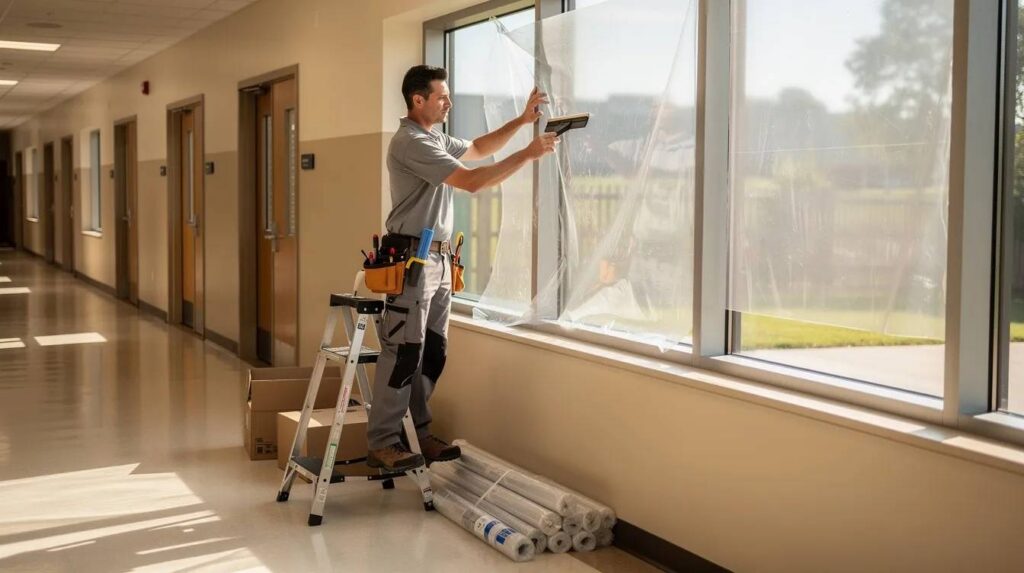
- Installation: Background-checked crews clean glass, apply film, trim, squeegee, and install edge attachment systems where specified. Materials are staged away from student areas with full safety protocols for ladders and lifts.
- Inspection and handoff: Final walkthrough with facility staff to confirm coverage and quality.
Realistic timelines: a small elementary school typically takes 2–4 days; a large high school or multi-building campus may require 1–2 weeks. Film is applied directly to existing glass, so there is no need to remove or replace windows.
After the installation process, expect minor temporary haze or small moisture pockets between film and glass. These clear as the film cures, usually within days to a few weeks. Warranty coverage from major manufacturers typically runs 10–20+ years for defects like peeling, bubbling, or discoloration. Maintenance is simple: clean with non-abrasive, non-ammonia cleaners and schedule visual inspections after severe weather or vandalism events.
Standards, Code Requirements, and Best Practices for School Safety Film
State-level mandates are driving adoption. Texas Administrative Code 19 TAC § 61.1031 requires that ground-level doors and windows adjacent to doors be constructed or modified so glass cannot be easily broken to gain entry, citing forced entry-resistant film as an example solution and aligning with broader safety and security glazing standards. Schools must inspect locking mechanisms twice yearly and certify compliance annually.
Key testing standards districts should reference when evaluating products:
- ASTM F3561-23: Tests fenestration systems (glass, frame, hardware) for forced entry resistance after simulated active shooter attack. This evaluates the whole system, not just the film.
- ASTM F588: Manual attack test for glazing assemblies.
- CPSC 16 CFR 1201: Impact and penetration requirements for safety glazing and injury reduction.
When writing specifications, districts should require documentation of glass type, thickness, side of impact tested, and whether the film was anchored or adhesion-only. Security professionals and architects should be involved early to ensure window film upgrades align with the district’s overall safety and security plan. Specify film thickness relative to threat profile: interior vision panels may need 4–8 mil for fragment retention, while exterior sidelites requiring forced entry delay should have 8–12 mil with structural attachment to the window frame.
Simply applying film without anchoring it to the frame is one of the most common specification mistakes. It holds glass together but the entire pane can be pushed out, undermining the investment.
Why Schools Choose Window Film Depot for Safety and Security Window Film
Window Film Depot is a family-owned company founded in 1992 and based in Marietta, Georgia, with national reach across the U.S. We specialize in turnkey safety, security, and solar control film projects for K-12 districts, charter schools, universities, and government clients, backed by our role as a leading 3M window film installation company.
What sets us apart for school projects:
- Product depth: We specify and install high-performance 3M safety and solar control films, anti-graffiti coatings, privacy and decorative films, and specialty window film solutions tailored to each campus.
- Turnkey management: From initial assessment through final inspection, our in-house team coordinates with district facilities teams to deliver consistent standards across dozens of campuses.
- Education-specific experience: We have completed multi-campus rollouts for districts under tight summer construction windows, meeting state compliance deadlines without disrupting the school calendar, and regularly participate in education and facilities management events to stay aligned with evolving best practices.
- Wholesale supply: Glass and glazing trade partners or local contractors working under district direction can source window films and related products and receive consulting support on film selection and performance.
- Trust: Decades in business, manufacturer-trained installers, strong references, and a track record of on-time delivery for educational facilities.
School Safety Window Film FAQs
How much forced entry delay can school safety window film really provide?
Safety film delays forced entry by 1 to 2 minutes when properly installed with frame anchoring. Performance varies by film type, glass, and attachment system, but even buying critical time of 60 seconds often provides inside time needed for lockdown procedures and 911 response. No film guarantees a specific time in every scenario, but it transforms instant breach into a prolonged, noisy struggle that deters entry attempts.
Will safety film make my classrooms darker or hurt visibility?
Clear safety film is nearly invisible and does not noticeably reduce natural light. Solar safety films come in multiple light transmission levels, so schools can choose mild tinting that cuts glare and heat without creating dark interiors while still providing high-performance UV blocking capabilities. Many schools report improved visual comfort, not a loss of usable light.
Can safety film be installed on all types of school glass windows and doors?
Modern safety and security films are compatible with most common school glazing types, including single-pane, insulated (double-pane), tempered, wired, and some laminated glass, and smaller projects may even consider do-it-yourself window film installation for non-critical areas. Each school window and building should be surveyed to confirm suitability. Window Film Depot conducts on-site assessments to identify any glass requiring special treatment or alternative solutions, ensuring warranty coverage is maintained.
How long does school safety window film last, and what maintenance is required?
Expect 15–20+ years of performance for interior-applied films in school environments. Manufacturer warranties typically cover peeling, bubbling, and significant discoloration when professionally installed. Maintenance is straightforward: use non-abrasive cloths and non-ammonia cleaners after the curing period, and schedule visual inspections after major storms or impact events.
Does safety window film help with energy savings and comfort in our school?
Clear safety film provides minimal energy benefit on its own, but combined solar safety films substantially reduce solar heat gain and block heat on sun-exposed elevations, which may lower cooling costs and improve classroom comfort. Window Film Depot can model approximate energy savings for larger campuses before final product selection, drawing on its commercial window tinting and energy-saving film expertise, helping districts quantify the other benefits beyond security.
When is the best time to install safety film in a busy school calendar?
Summer break is ideal for most projects. Mid-year holidays and long weekends also work well. Experienced installers can work evenings on critical entries if timelines are tight. Window Film Depot helps districts build phased schedules when multiple campuses need completion before a given school year or state compliance deadline, coordinating crews through its nationwide window film service locations so installing security window film does not disrupt learning.
Next Steps: Plan Your School Safety Window Film Project with Window Film Depot
School safety window film is a proven, cost-effective way to strengthen glass windows and doors, delay forced entry, reduce glass injuries, and deliver additional benefits like UV protection and energy efficiency for school facilities. It is one of the fastest, least disruptive upgrades available to protect students and staff while extending the life of existing glazing.
Ready to take the next step? Schedule a building walkthrough, request a district-wide assessment, or send your floor plans and glass counts to Window Film Depot for a preliminary budget. Before reaching out, gather these details:
- Approximate number of school buildings and campuses
- Primary concern (forced entry, storms, vandalism, energy, or all of the above)
- Known grant funding sources or compliance deadlines
- Preferred installation windows (summer, breaks, evenings)
Upgrading your glass is a priority that does not have to be complicated. Contact Window Film Depot today to enhance safety across every campus in your district and create a secure learning environment for every student.