Table of Contents:
- Why Banks Need Specialized Window Film Today
- How Security Window Film Works on Bank Glass
- Security Film Options for Financial Institutions
- Addressing Common Aesthetic Concerns (“We Don’t Want Dark Glass”)
- Critical Glass Areas in Banks & How to Protect Each One
- Lobby, Storefront & Entrance Glass
- Private Offices, Conference Rooms & Back-Office Areas
- ATM Vestibules, Exterior ATMs & Night Depositories
- Drive-Through Lanes, Side Entrances & Secondary Windows
- Blast Mitigation & Compliance for High-Risk or Regulated Facilities
- Energy, Comfort & UV Protection Benefits for Bank Branches
- Insurance, Risk Management & Documentation Considerations
- Installation in Active, Customer-Facing Bank Branches
- What Bank Facility & Security Teams Should Consider Before Choosing Window Film
- Frequently Asked Questions About Window Film for Banks
- Why Banks Choose Window Film Depot for Security & Privacy Film Projects
- Next Steps: Schedule a Bank Glass Security & Privacy Assessment
Why Banks Need Specialized Window Film Today
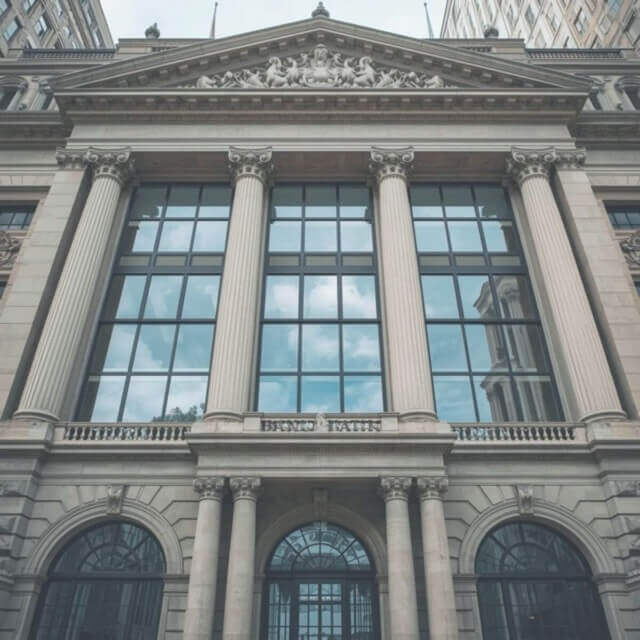
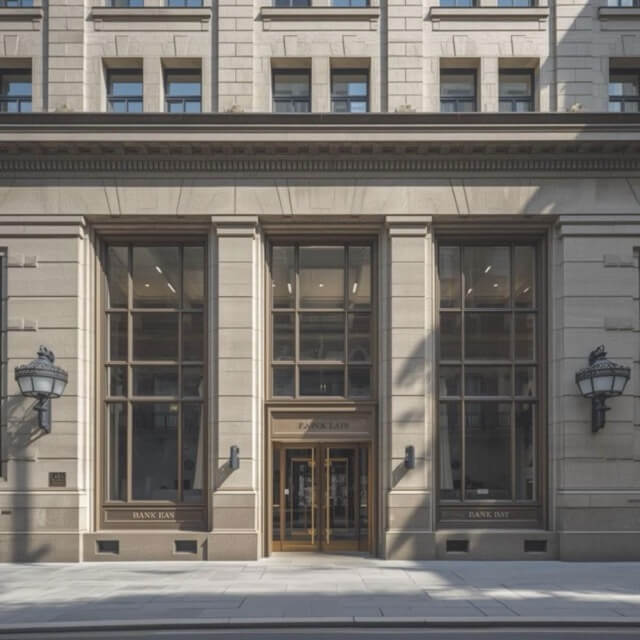
Modern bank branches-from neighborhood credit unions to national chains-use expansive glass for branding, visibility, and a welcoming street presence. But that same glass is now a leading physical security vulnerability. Between 2023 and 2025, smash-and-grab incidents targeting branches and ATM vestibules increased across major metros including Atlanta, Chicago, and Los Angeles. Roughly 80% of U.S. ATM attacks are physical rather than electronic, ranging from brute-force break-ins to ram-raids.
Banks face unique threats from armed robbery and data breaches that go beyond typical property crime. Unlike a generic commercial building, a bank combines cash on hand, sensitive customer data, and high foot traffic. Every broken window becomes a safety event, a potential data exposure, and a reputational hit-all at once.
Window film for banks offers a retrofit solution that hardens existing glass against forced entry, blast pressure, and flying shards without tearing out the façade or rebuilding storefronts. Beyond security, it delivers uv protection for interior finishes, improved comfort in customer-facing lobbies, and enhanced privacy for private offices and conference rooms. Window Film Depot works nationwide with financial institutions, and the rest of this article walks facility leaders through film options, pricing expectations, compliance considerations, and implementation best practices.
How Security Window Film Works on Bank Glass
Security window film is a multi-layer polyester or nano-laminate material bonded to existing glass using high-performance adhesive systems. It transforms ordinary windows into reinforced barriers without altering the building’s exterior appearance.
Standard security film thickness ranges from 8 to 14 mil for general protection, while blast mitigation applications often use 12-mil and above. Thicker films deliver greater tensile and tear strength, requiring substantially more energy to puncture. The core mechanism is fragment retention: when glass breaks under impact or blast, the film stretches and holds shards together as a single membrane instead of releasing dangerous projectiles into the lobby or teller line.
Attachment matters as much as the film itself. For high-security and blast applications, installers use wet-glaze silicone or mechanical anchoring to bond the film edge to the window frame. Without proper attachment, the entire filmed lite can pop out of the frame under sustained force or pressure. Consider the difference: unprotected tempered storefront glass may shatter and allow access in seconds when struck with a crowbar. Apply 12-mil security film with wet-glaze anchoring, and that same window now resists penetration significantly longer-security film delays forced entry by 1-3 minutes on average, which is often the difference between a completed crime and an abandoned attempt.
Clear security film preserves the bright, open appearance banks need. Optical clarity remains high, with visible light transmission often above 80-90%.
Security Film Options for Financial Institutions
“Security film” is not a single product. Branches typically blend several film types according to location, risk profile, and regulatory obligations. Here is how the main categories break down:
Standard 8–14 mil clear security film is the baseline for most branches. It provides forced entry delay and fragment retention across lobby storefronts, side doors, and office windows. Installed cost for this class commonly falls in the range of $12 to $20 per square foot-a fraction of the expense of replacing existing glass with new laminated glazing.
Blast-mitigation rated films are designed to perform under specific test standards such as GSA-TS01-2003 and ASTM F1642, which measure glazing response to dynamic overpressure loadings. These products are most relevant for federal credit unions, downtown headquarters near high-profile targets, or facilities subject to DHS guidance.
Ballistic-resistant glazing systems incorporate film as part of a broader assembly-film plus interlayers plus engineered framing-for higher-risk environments. It is important to understand that security window films do not provide ballistic protection on their own, and that solutions like BulletShield ballistic panels are engineered systems specified by consultants, not a “magic bulletproof film.”
Dual-purpose films combine security thickness with solar control tint to cut glare and heat gain in south- and west-facing facades, which is particularly useful for branches with high cooling costs. Dual-reflective window films can further enhance daytime privacy and glare reduction, but for financial institutions comparing clear versus tinted or reflective options, security performance comes from thickness and attachment, not from darkness or color.
Addressing Common Aesthetic Concerns (“We Don’t Want Dark Glass”)
One of the most frequent objections from bank executives and marketing teams is the fear that security upgrades will make branches look uninviting-dark windows, a bunker-style, or a check-cashing outlet aesthetic.
That concern is understandable, but outdated. Modern security films maintain aesthetics while enhancing privacy. Products installed on banks in 2024–2026 are typically optically clear, with high visible light transmission, and can be nearly invisible to customers and passersby. Clear security film provides identical performance to tinted versions-the protection comes from thickness and adhesive attachment, not from a reflective surface or dark tint.
When exterior daytime privacy or solar control is a priority, a reflective or dual-reflective film can be used selectively on specific exposures rather than across the entire building. For interior glass, frosted or gradient decorative films obscure sightlines without creating a dark or closed-off feeling.
Facility and branding teams can review mockups and small test installations on non-critical windows before approving a network-wide rollout. Window Film Depot regularly works with bank design standards and corporate image guidelines, ensuring a consistent, attractive look across hundreds of locations.
Critical Glass Areas in Banks & How to Protect Each One
Security is only as strong as the weakest piece of glass. A bank risk assessment should map every glazed opening by zone and threat type-exterior façades, secondary access points, interior offices, and semi-isolated areas like ATM vestibules each carry distinct security and privacy requirements.
Facility managers should think beyond teller lines. The subsections below walk through specific areas and recommended film strategies so you can create a prioritized upgrade plan. A phased deployment often starts with the highest-risk glass-street-facing vestibules, ATM enclosures, and primary entry doors-and expands to back-office and upper floors over time. This approach controls budget while addressing the most urgent exposure first.
Lobby, Storefront & Entrance Glass
Full-height glass fronts and entry doors are prime targets for smash-and-grab and quick forced entry attempts, especially after hours when buildings are unoccupied. These are the windows criminals assess first because they offer the fastest path inside.
The recommended minimum for primary entrances is 12-14 mil clear security film with a continuous wet-glaze attachment to the metal frame. At very high-risk urban sites, mechanical anchoring adds another layer of resilience. This treatment delivers measurable results: 12-14 mil security film delays forced entry by 1-3 minutes compared with unprotected tempered glass. That delay is often enough to trigger alarms, attract attention, and cause intruders to abandon the attempt.
Properly installed film does not interfere with emergency exit hardware or ADA-compliant door operation. Glass doors used for code-compliant egress function normally-the film holds fragments together during a break event rather than preventing the door from opening. Branches undergoing remodels can combine film with updated door hardware, cameras, and interior lighting for a complete front-of-house security upgrade.
Private Offices, Conference Rooms & Back-Office Areas
Glass-front offices and conference rooms are standard in modern bank and wealth-management spaces. They create an open, collaborative atmosphere-but they can also expose screens, confidential documents, and private client conversations to anyone walking past.
Privacy solutions such as frosted, gradient, or patterned decorative films obscure direct sightlines while still allowing diffuse natural light into the room. Frosted films provide constant privacy for sensitive areas in banks, regardless of time of day or interior lighting conditions. Partial-height bands at eye level work well for loan-officer desks where limited visual screening is needed, while full-height coverage delivers complete visual blocking for conference rooms used in M&A negotiations, compliance reviews, or HR matters.
Security film can be combined with decorative privacy films on the same pane-either layered or integrated-to deliver both impact resistance and a strong privacy effect. Privacy film can block up to 93% of UV rays, protecting interiors and reducing exposure for staff working near windows. Additionally, privacy films can reduce glare and heat entering a room, which improves comfort on the opposite side of the glass from the sun.
Specific use cases to consider include IT and server rooms with glass sidelites, where visual privacy reduces the risk of targeted theft, and any office where customers can see screens displaying account information.
ATM Vestibules, Exterior ATMs & Night Depositories
ATM enclosures, glass vestibules, and after-hours depository areas are frequent targets for ram-raids, smash-and-grabs, and vandalism. They are semi-isolated, associated with immediate cash access, and often staffed only by a single customer at night.
Thicker security film-often 14 mil or multi-ply systems-with mechanical frame attachment is recommended for ATM vestibules and exterior glass near safes or vault routes. These films are built to resist repeated blows or vehicle-assisted impact and protect customers from flying glass hazards during a blast or impact event. Privacy films can prevent outsiders from easily viewing cash-handling operations through the glass, which reduces the likelihood that opportunistic criminals identify targets.
Reflective films can limit visibility into banks during the day, providing daytime privacy at ATM areas while preserving the ability for passersby and cameras to monitor the space from the street at night-a balance that supports both customer safety and crime deterrence, though nighttime privacy requirements often call for alternative films.
Window Film Depot has seen consistent patterns since the early 2010s: branches that upgrade ATM vestibule glass with security film and proper anchoring experience significantly less damage and prevent physical entry during attempted break-ins, even when the glass is struck multiple times. The film holds, the access is denied, and the criminals move on.
Drive-Through Lanes, Side Entrances & Secondary Windows
Drive-through windows and side entrances often use thinner glass and may be less visible from the street, making them appealing alternate entry points for intruders. These openings are easy to overlook during security planning but represent real exposure.
Applying 8-12 mil security film to drive-through windows and secondary doors, with edge sealing or anchoring appropriate to the frame type, mitigates the risk of quick breach. Ceramic films reduce glare without significantly darkening the space, which makes them practical for drive-through areas where late-afternoon sun hits monitors and cash drawers on the brighter side of the glass. A light solar-control tint or dual-reflective film on these windows can block so much light from the sun’s direct path that teller screen visibility improves immediately, drawing on a wide range of commercial window film products designed for glare reduction and comfort.
Upper-floor and back-office windows should not be overlooked. Security film there protects administrative staff, records storage, and IT rooms from impact, wind-borne debris, and opportunistic break-ins via ladders or adjacent rooftops. Encourage facility managers to include all glass in their next security walk-through, documenting sizes and locations to share with certified installers for accurate take-offs and phasing plans.
Blast Mitigation & Compliance for High-Risk or Regulated Facilities
Blast mitigation is relevant for financial institutions with downtown headquarters near government buildings, facilities covered by DHS or GSA criteria, and branches inside or adjacent to federal complexes. For these locations, standard security film is not enough-specialized blast-rated systems are required.
Blast mitigation film is tested using standardized blast-load profiles and stand-off distances under protocols like ASTM F1642 and GSA-TS01-2003. Results are classified into hazard levels-from “No Hazard” (glazing remains intact, no debris enters the room) to progressively higher ratings based on fragment travel distance and occupant risk. Security window film can increase blast-load resistance by up to 20 times compared to unprotected glass, dramatically reducing laceration injuries and keeping windows in their frames during an explosion. GSA-rated blast mitigation film is typically 12-15 mil thick and engineered for specific overpressure and impulse conditions, and it is often paired with other window protection film solutions to address a spectrum of threats.
Pairing blast-rated film with compatible frames, sealants, and anchoring systems is critical. Weak framing or poor edge attachment can undermine even the best film. Only experienced, certified installers should execute these projects, following manufacturer specifications precisely.
Risk managers and security leaders should involve their security consultants, architects, and insurers when planning blast mitigation upgrades. Window Film Depot can support specification and documentation needs on national programs, ensuring every location meets the required standard.
Energy, Comfort & UV Protection Benefits for Bank Branches
A security or combined solar-security project delivers benefits that extend well beyond protection from forced entry or blast. Window films can provide significant energy savings for banks by reducing solar heat gain and lowering cooling loads across the branch network.
High-performance window films can reject up to 80% of solar heat, and security window films block over 75% of the sun’s heat even when the primary purpose is impact resistance. Window film can block up to 99% of harmful UV rays, protecting bank interiors, flooring, digital signage, and branding materials from fading and sun exposure. This also reduces health risks for staff working near large glass areas throughout daylight hours.
Consider a south-facing branch lobby with high summer AC bills. Window film can reduce workload on HVAC systems by lowering heat gain, cutting peak cooling demand, and reducing glare on teller screens within a single retrofit project. Window film can help improve occupant comfort by providing consistent temperatures across the room, eliminating the hot spots near exterior glass that drive complaints. Combining security film with solar-control films best suits banking environments where both protection and energy-efficient performance are priorities, and budgeting for these upgrades is easier when you understand typical window security film installation costs.
For branches pursuing sustainability goals, some window films can help buildings achieve LEED certification points by improving the building envelope’s thermal performance. Clear safety films offer baseline UV protection, but dedicated solar-control or dual-reflective films deliver the greatest energy-related ROI-particularly in hot-summer markets across the Sun Belt. Window Film Depot can perform site-specific energy modeling to estimate payback periods for solar-control film on bank portfolios with dozens or hundreds of locations.
Insurance, Risk Management & Documentation Considerations
A well-documented security window film program supports a bank’s overall risk-management posture and can influence insurance discussions. While not every carrier offers a direct premium discount, many underwriters view professionally installed security glazing upgrades favorably when evaluating property and casualty exposures. In some markets, documented installations have contributed to insurance premium reductions of 5-15%.
Risk managers should maintain thorough documentation:
- Product data sheets and manufacturer specifications
- Installation certificates from certified installers
- GSA or blast test reports (if applicable)
- Photographs and floor plans showing coverage areas
Financial institutions should engage their insurance broker or carrier before and after a project to clarify how upgrades will be treated and whether specific certifications-such as 3M Certified or manufacturer-authorized installer status-are preferred. Uncertified installations may not qualify for favorable treatment.
Window Film Depot’s national project management experience includes providing consistent paperwork and warranty information for multi-state banking clients, which simplifies internal compliance and audit reviews and gives risk teams a single point of reference for every branch.
Installation in Active, Customer-Facing Bank Branches
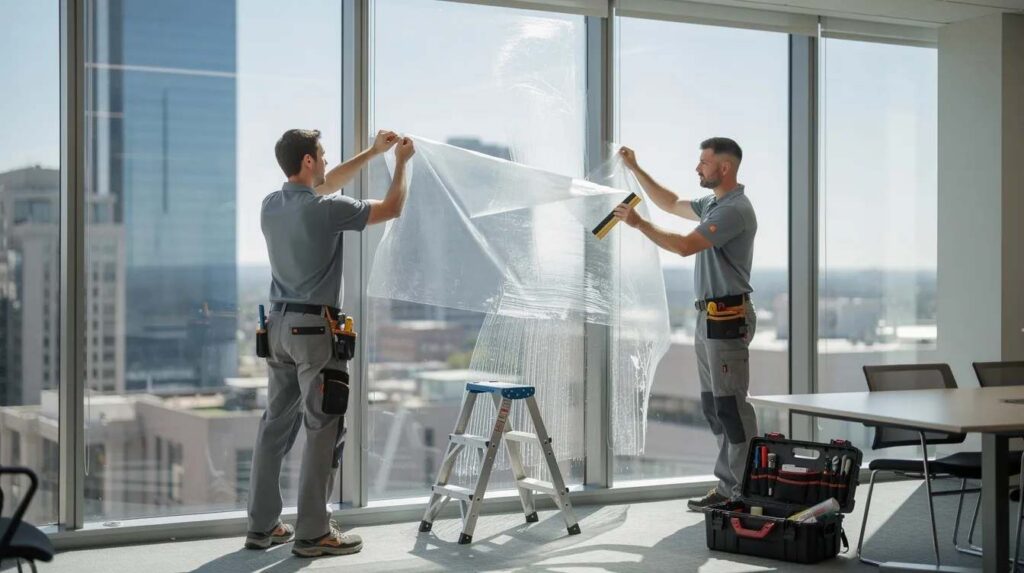
Banks cannot easily close during business hours, and customers expect uninterrupted service. Professional installers schedule work to minimize disruption-early mornings, evenings, weekends, or phased by zone-so the branch operates normally throughout the project. Window film installation is typically faster than replacing architectural glass, making it the practical choice for active locations.
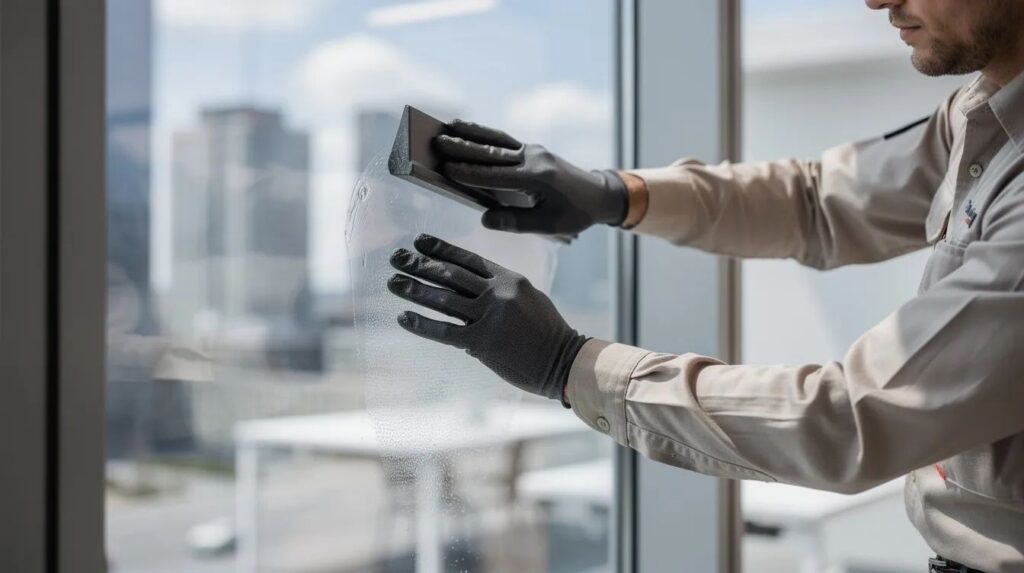
The typical installation process involves surface cleaning, film sizing and application, edge finishing, and cure time. Glass remains usable immediately, and the film is functional from the moment it is applied, though full adhesive cure for security film takes 30 days post-installation to reach maximum bond strength. Installation typically takes 1-2 days for 15-25 windows, depending on film type, anchoring requirements, and access conditions.
Special considerations matter in banks:
- Background-checked crews with proper identification
- Coordination with on-site security teams
- Procedures for working near vaults, cash-handling areas, and server rooms
- Protection of customer privacy during work in the darker side of the branch away from public view
Window Film Depot coordinates multi-branch rollouts across regions, ensuring standardized products, consistent installation quality, and centralized communication for facility and security leaders managing buildings in multiple states.
What Bank Facility & Security Teams Should Consider Before Choosing Window Film
Before issuing an RFP, bank teams should answer several strategic questions:
| Question | Why It Matters |
|---|---|
| What are the primary threats? | Forced entry, blast, vandalism, and UV/heat each require different film systems |
| Which locations are highest priority? | Urban branches, ATM vestibules, and ground-floor glass face the greatest risk |
| What is the budget per branch? | Installed costs range from $12-$25+ per square foot depending on film and attachment |
| What timeline is realistic? | Phased rollouts over quarters often work better than attempting all branches at once |
Cross-department collaboration is essential. Security, facilities, risk management, IT (for equipment near glass), and branding/marketing should all weigh in to avoid conflicting requirements. Request product and performance data, references from other financial institutions, and confirmation that installers are certified by the film manufacturer and properly insured.
A pilot installation at a representative branch-one suburban and one high-risk urban site-validates product selection, aesthetics, and operational impact before scaling. Window Film Depot offers consultative assessments rather than one-size-fits-all packages, helping banks match specific film systems to their security policies and budgets.
Frequently Asked Questions About Window Film for Banks
Does security window film actually prevent bank robberies?
Security film does not guarantee prevention, but it significantly slows forced entry-and speed is the tactic most criminals depend on. When glass resists penetration for 1-3 minutes instead of shattering in seconds, the calculus changes. Alarms activate, cameras capture footage, and police response closes the window of opportunity.
Film is part of a layered security strategy alongside locks, access control, cameras, and operational procedures. It is not a replacement for them, but it eliminates the weakest link in most branch perimeters: the glass itself. Security teams consistently report that upgraded glass deters repeat attempts, as word travels that a particular branch is not an easy target.
Can we keep our branches bright and still use security or privacy film?
Yes. Banks can maintain a bright, welcoming look using high-VLT clear security film that lets in substantial natural light while adding solid impact resistance. For interior offices, light frosted patterns preserve daylight while creating a privacy effect that blocks direct sightlines.
The trade-off is straightforward: darker tints deliver more glare and heat reduction but reduce visible light, while lighter films maximize brightness with moderate solar benefit. Most bank networks use clear film on exterior glass and selectively apply frosted or tinted films only where specific conditions-like intense west-facing sun exposure or interior privacy-require it. Test panes and samples can be reviewed on-site before a branch-wide decision.
What is the difference between privacy film and security film in a bank setting?
Security film is thicker, tear-resistant material designed to keep glass intact under impact or blast. Its purpose is physical protection. Privacy film-whether frosted, opaque, or reflective-is designed primarily to block or limit views through the glass.
Some products combine both functions, but many banks use them in different zones: clear 12-mil security film on main entry doors and exterior glass, frosted privacy film on loan-officer offices and conference rooms, and reflective film only on windows where daytime privacy from the exterior is needed. The ability to layer or zone these products gives financial institutions precise control over both security and visibility throughout the branch.
How long does security window film last on bank windows?
Quality security films installed by certified professionals typically last 10-15 years or more, depending on film type, sun exposure, and maintenance. Leading manufacturers offer warranties for interior-applied films on commercial buildings that cover peeling, bubbling, and discoloration.
If a single pane is damaged-by a break-in attempt, storm debris, or accidental impact-that individual window can be re-filmed without stripping an entire elevation. This is particularly useful for high-traffic branches where minor damage occurs periodically.
How do daytime privacy and nighttime privacy differ for reflective films?
Reflective films create a mirror effect based on light differential. During daylight hours, the exterior is the brighter side, so the film acts as a one-way privacy film-people outside see a mirror-like appearance while occupants inside enjoy full visibility to the other side. One-way privacy film allows full visibility from inside during the day, making it practical for teller windows and customer service desks.
At night, the effect reverses. When interior lights are on and it is dark outside, the reflection shifts to the opposite side, and people on the exterior can see in. One-way privacy film allows visibility from inside only during the day, not at night. For 24/7 privacy, banks typically use frosted or opaque decorative films, interior blinds, or a combination rather than relying solely on reflective film. Dual-reflective films moderate this reversal but do not eliminate it entirely.
Can security film be added to our existing glass, or do we need to replace windows?
In most cases, security film can be applied directly to existing glass surfaces-no window replacement required. This retrofit approach avoids the high cost and downtime of removing and replacing architectural glass across a branch or portfolio of branches.
Replacement may be recommended when frames are severely damaged, when the existing glass is non-safety-wired glass in a high-hazard area, or when the project calls for an engineered ballistic system that requires a complete glazing assembly. For the vast majority of bank locations, however, film applied to existing glass delivers the protection needed. This retrofit advantage is a major benefit for large regional or national banks: hundreds of branches can be upgraded over time without structural changes to the buildings.
Why Banks Choose Window Film Depot for Security & Privacy Film Projects
Window Film Depot is a family-owned company and a leading national provider of window film solutions since 1992. We have deep experience delivering turnkey projects for banks, credit unions, and other financial institutions across the U.S.-from single-branch upgrades to multi-state portfolio rollouts.
What sets us apart for bank clients:
- Nationwide coverage from a single partner. One point of contact, standardized products and pricing across every branch, no patchwork of regional vendors.
- Manufacturer-certified installers. Our crews carry certifications from 3M and other leading film manufacturers, and all work meets or exceeds manufacturer specifications for installation and anchoring.
- Proven experience across security, blast mitigation, and privacy projects. We understand the complete range of film types and how to deploy them in a banking environment-from clear security film on storefronts to frosted privacy solutions for back-office areas.
- Specialization in high-performance products. We install 3M solar control films, security glazing, anti-graffiti film, decorative films, and commercial graphics. This means we can address security, energy, and branding objectives in one coordinated program.
- Project management built for banks. Site surveys, glass mapping, phasing plans, after-hours work schedules, background-checked crews, and detailed documentation that supports internal audits and insurance reviews.
We work seamlessly with architects, security consultants, and general contractors on new branch builds, remodels, and retrofits. Every project is tailored to the institution’s risk profile, brand standards, and budget-not sold from a one-size-fits-all menu.
Next Steps: Schedule a Bank Glass Security & Privacy Assessment
Window film for banks delivers improved forced entry resistance, blast mitigation, customer and staff safety, enhanced privacy for offices and conference rooms, and better comfort and UV protection-all without replacing glass. It is the most practical, cost-effective way to harden your branches’ biggest physical vulnerability.
If you manage or oversee financial institutions, the next step is a professional assessment of your branches’ glass. Window Film Depot’s assessment process includes an on-site inspection, threat-based recommendations mapped to each glass zone, budget ranges for different film systems, and phasing options that fit your timeline and capital plan.
Contact our team by phone or through our website to start planning a pilot project or multi-location rollout. Whether you need to protect a single high-risk vestibule or standardize security film across a national branch network, we will help you find the right solution. Our consultations are consultative, focused on aligning film types with your bank’s unique risk profile, brand standards, and budget-so you can move forward with peace of mind and confidence in your investment.