If your office perimeter turns into a sauna every afternoon while the building core stays comfortable, you’re dealing with a building envelope problem, not an HVAC problem. This guide breaks down how window film for hot offices solves the root cause of overheated workspaces, what types of film work best for commercial buildings, and how to plan a retrofit that delivers measurable comfort and energy savings. Whether you manage a single mid-rise or a national portfolio, you’ll walk away knowing exactly what to specify, what to avoid, and what kind of ROI to expect.
Table of Contents:
- Why Modern Offices Get So Hot (and Why HVAC Alone Isn’t Enough)
- How Heat Reduction Window Film Actually Works
- Types of Heat Control Films for Hot Offices
- Compatibility with Double Pane, Low‑E, and Specialty Glass
- Comfort and Energy Efficiency: What Offices Actually Gain
- Where Window Film Makes the Biggest Difference in Office Buildings
- Choosing the Right Film for Your Hot Office
- Professional Installation vs. DIY for Commercial Offices
- Cost, Payback, and Available Incentives
- Common Mistakes to Avoid When Treating Hot Offices with Window Film
- FAQs About Window Film for Hot Offices
- Why Choose Window Film Depot for Hot Office Solutions
- Next Steps: Cool Down Your Hot Offices with Window Film
This article focuses on B2B and commercial office environments, but the principles and product recommendations apply equally to K–12 schools, government facilities, higher education campuses, and retail spaces dealing with too much heat through glazed facades.
Why Modern Offices Get So Hot (and Why HVAC Alone Isn’t Enough)
Picture a Tuesday afternoon in Atlanta or Dallas: the building thermostat reads 72°F, but perimeter workstations along the south- and west-facing windows are registering 82–85°F. Employees have taped printer paper over the glass. Blinds are locked shut. Someone plugged in a box fan from home. The facilities inbox has three new comfort complaints, and it’s only 2 p.m.
This isn’t unusual. Solar heat gain through large glass facades is the primary driver. When direct sun hits unshaded glass, visible light and infrared radiation pass straight through, warming surfaces, bodies, and air near the windows. South- and west-facing elevations take the worst of it, especially during the summer sun peak hours.
Post-COVID hybrid schedules made the problem more noticeable. Fewer people occupy the building core, reducing internal loads there, but the solar exposure on perimeter glass hasn’t changed. The result is sharper hot and cold zones that rotating employees notice immediately.
The instinct is to crank down the thermostat or upsize cooling systems, but that’s an expensive, blunt fix. It drives up energy use building-wide, creates cold drafts in shaded zones, and still doesn’t address glare or radiant heat near the glass. Window film for hot offices works differently: it upgrades the building envelope itself, intercepting unwanted solar energy at the glass so your mechanical systems don’t have to fight it.

How Heat Reduction Window Film Actually Works
Modern solar control films are engineered multi-layer coatings applied directly to glass surfaces. They manage solar heat, harmful UV rays, and glare while preserving natural light and exterior views, which is the entire point of having windows in the first place.
Here’s what happens at the glass. Infrared radiation is the main source of solar heat, and these films target it specifically. Depending on the product, thin metalized layers, nano-ceramic particles, or spectrally selective coatings either reflect or absorb infrared and UV wavelengths before they enter the room. The key metric is Solar Heat Gain Coefficient (SHGC), which measures the fraction of solar energy that passes through a window assembly as heat. A lower Solar Heat Gain Coefficient means less solar heat enters the space. Untreated double-pane clear glass typically has an SHGC around 0.70. High-performance films can cut that by 50–70%.
Heat-blocking window film doesn’t cool the glass itself. It reduces the amount of the sun’s heat that gets through, which lowers indoor temperatures near windows by several degrees, commonly 3–8°F during peak exposure. Quality window films can reduce indoor temperatures by several degrees without sacrificing the view.
Most high-performance office films block up to 99% of UV rays and reject a high percentage of infrared, while still allowing 30–60% visible light transmission. That means daylight and views stay intact. Older reflective or dark tinted films looked mirror-like and heavily colored. Today’s spectrally selective films block infrared rays while allowing visible light through with a neutral appearance, a significant upgrade from the covering options of a decade ago.
Types of Heat Control Films for Hot Offices
Choosing the right window film starts with understanding the three main families of solar control films used in commercial offices. Each balances heat reduction, glare control, reflective appearance, and cost differently.
Traditional Reflective Films use metallic coatings to reflect solar heat away from glass. Reflective films can block a significant portion of solar heat, making them effective for warehouses, loading docks, and back-of-house spaces. The trade-off is a mirrored exterior appearance that may not meet architectural guidelines for Class A office towers.
Nano-Ceramic Films embed microscopic particles to absorb infrared radiation without heavy metallic layers. Ceramic films resist corrosion and maintain clarity in humid climates, making them popular across the Southeast and Gulf Coast. Products like 3M Sun Control Ceramic Series reject up to 80% of infrared energy with minimal reflectivity and a neutral look.
Spectrally Selective and Low-E Films are the most advanced option. They target specific wavelengths, blocking heat-carrying infrared and UV while letting visible light pass freely. 3M Prestige Series films can reject up to 60% of total solar energy with virtually no visible reflectivity. Low-E films reduce heat in summer and retain warmth in winter, offering year round performance. Dual reflective films have high heat rejection with a less mirrored appearance from the inside, which matters in occupied offices where interior aesthetics count.
Films with a higher total solar energy rejection rating are better for reducing heat. Specific film types are better suited for different office setups like south- or west-facing windows, so a single product rarely covers every elevation optimally.
For interior versus exterior application, interior films are more common and cost-effective. Exterior films serve situations where interior access is limited or when insulation properties of the glass unit demand it, such as historic interiors or inaccessible high-rise panels.
Compatibility with Double Pane, Low‑E, and Specialty Glass
Most commercial buildings constructed after 1990 use double pane insulating glass units (IGUs), often with a low-e coating on one surface and argon gas fill between the lites. Before selecting any film, this glass type must be assessed.
Double pane units consist of two glass lites separated by a spacer system. When film absorbs solar energy, the glass temperature rises. If absorbance exceeds safe thresholds for the specific pane thickness, size, and tint, it can lead to thermal stress cracking or seal degradation. This isn’t a reason to avoid film; it’s a reason to specify it correctly.
Reputable manufacturers like 3M publish detailed compatibility guidelines covering clear, tinted, tempered, laminated, wired, and low-e glass. Window Film Depot follows these on every project, matching film solar absorption to glass specs before recommending a product. Properly specified films are routinely installed on double-pane glass in mid-rise and high-rise offices nationwide without voiding warranties, often with manufacturer-backed glass breakage and seal-failure coverage.
A practical example: at the Goodfellow Federal Center in St. Louis, older bronze-tinted double-pane windows (baseline SHGC ~0.50) were retrofitted with a moderate-absorption film that reduced SHGC to approximately 0.44, staying well within safe thermal stress limits while delivering measurable comfort improvements across monitored zones.
Comfort and Energy Efficiency: What Offices Actually Gain
Heat control films deliver results you can measure on a thermometer and on a utility bill. The connection between comfort and energy efficiency is direct: when you reduce solar heat at the glass, everything downstream works better.
In perimeter zones, window film installations typically lower air temperature near glass by 3–8°F during peak sun exposure. But perceived comfort often improves more than those numbers suggest, because reduced radiant heat and less glare make the space feel noticeably different. High-performance window films help lower cooling costs and improve comfort simultaneously, which is why they consistently rank as one of the highest-impact envelope retrofits available.
From an HVAC perspective, lowering the solar load means fewer cooling spikes, less frequent cycling, and reduced need to overcool the building core just to compensate for hot perimeter zones. Window films help air conditioners run more efficiently, and over time, window films can extend the lifespan of cooling equipment by reducing peak demand stress. The best window films for heat reduction can lower cooling bills by 15–25%, and across a portfolio, window films can reduce energy bills by nearly 20 percent.
Real-world data backs this up. Canton Crossing Tower in Baltimore applied 3M Ceramic Series 30 across approximately 50,000 square feet of exposed glass and documented estimated savings of 1.3 million kWh per year, with payback under four years after utility rebates. Window films lower air conditioning use and electricity costs in a way that compounds every summer season.
Secondary benefits matter too. Reduced glare means fewer closed blinds, better use of natural light, and less reliance on electric lighting. Less UV means flooring, furniture, and carpets fade more slowly. These savings together support ESG initiatives, carbon-reduction goals, and compliance with building performance standards in cities tightening energy codes.
Where Window Film Makes the Biggest Difference in Office Buildings
Not every pane needs the same level of heat blocking. Strategic, targeted application is often the most cost-effective approach.
The worst hot spots in most office buildings follow predictable patterns:
- West-facing windows that catch brutal afternoon sun
- South-facing perimeter offices with extended solar exposure
- Glass-walled conference rooms that trap heat from both sunlight and occupants
- Double-height lobbies with direct sun angles
- Top-floor corner suites exposed on two sides
- Break rooms and stairwells with long afternoon sun exposure
Heat-blocking window film is often phased by elevation or floor, starting with the areas generating the most complaints. A 6th-floor conference room in Phoenix that regularly hits 82°F at 3 p.m. can stabilize in the mid-70s after installation of a high-performance solar film. East-facing glass that overheats in the mornings is another common target, particularly in call centers and trading floors where early shifts start before the building’s cooling systems reach full capacity.
Window Film Depot often conducts infrared imaging or spot temperature readings before and after installation to document improvements. This data helps facilities teams justify the investment to stakeholders and plan subsequent phases across the building.
Choosing the Right Film for Your Hot Office
Successful projects start with clear goals. Are you after maximum heat reduction, preserving bright daylight, meeting landlord appearance standards, or a blend of all three? Defining priorities early prevents mismatched expectations.
Key selection factors include:
- Building orientation: Which facades get the worst exposure during which seasons
- Glass type: Clear, tinted, tempered, laminated, low-e, or some combination
- Current issues: Heat, glare on screens, UV damage to interiors, or all of the above
- Appearance constraints: Landlord or municipal guidelines for exterior reflective appearance
- Privacy needs: Ground-floor offices, street-facing space, or interior glass partitions
Core performance metrics to evaluate include Visible Light Transmission (VLT), Total Solar Energy Rejected (TSER), uv rejection percentage, and glare reduction percentage. Visible light transmission percentages around 50–70% are comfortable for office environments and keep workspaces feeling open. Glare reduction is important in offices that utilize computer screens, where even moderate solar glare can reduce productivity and cause eye strain.
There are trade-offs. Higher heat control often means lower VLT, but modern spectrally selective films narrow that gap considerably, delivering strong solar heat reduction with moderate to high visible light. Professionals recommend commercial-grade solar control window films for office use because residential products don’t deliver the performance or longevity that commercial buildings demand.
Window Film Depot, as a 3M-authorized national dealer, can model energy savings using manufacturer tools and offer side-by-side mockups on select windows so building committees can see the difference in person before committing. Before your consultation, gather data on your hottest rooms, orientation, existing glass make and model if known, and any energy or comfort targets for 2026–2030 planning cycles.
Professional Installation vs. DIY for Commercial Offices
DIY kits are suitable for small projects or temporary solutions, like a single home office window or a seasonal screen. They are not appropriate for commercial offices where performance, appearance, and warranty coverage matter.
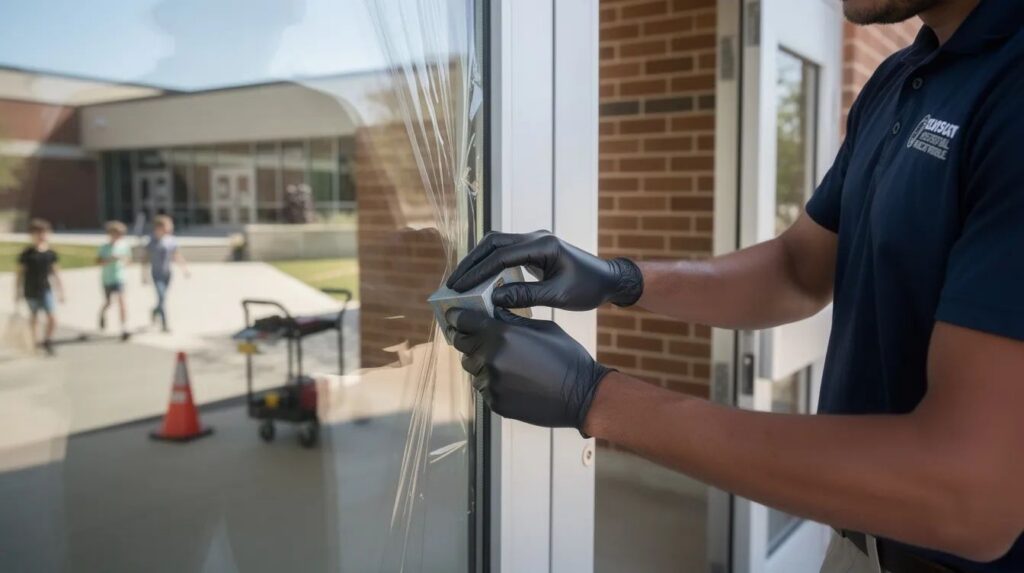
Professional installation in a real office environment involves a site survey, precise measurements, glass mapping, film selection matched to each glass type, and scheduling coordinated by floor or department to minimize disruption. Professional installers ensure precise alignment and smooth application across large panes where any misalignment is immediately visible. Professionals use specialized tools to prevent peeling and bubbling that plague amateur applications.
The contrast with DIY is stark. Improper DIY installation can lead to reduced film life and performance, including trapped debris, poor adhesion, incompatible film on double-pane or low-e glass, and voided warranties. Professional installation typically offers product warranties against defects, covering both the film and the labor.
Window Film Depot’s crews are experienced in occupied environments, working nights or weekends where needed and providing clear communication to property managers and tenants throughout the process. Professional installation ensures maximum performance and longevity, which matters when the film is expected to last 10–15 years or more. The incremental cost over DIY is small relative to a decade of energy savings, comfort improvements, and avoided rework.

Cost, Payback, and Available Incentives
As of 2025–2026, typical installed cost for commercial solar control film runs $7–$16 per square foot, depending on film type, building height, access complexity, and project scale. Premium ceramic or spectrally selective films sit at the higher end; standard reflective or mid-range ceramic products come in lower.
Here’s a straightforward payback example. A 40,000-square-foot office with 10,000 square feet of exposed glass in a warm climate installs ceramic film at $10 per square foot ($100,000 total project cost). If cooling energy drops 10–15%, generating $25,000–$30,000 in annual savings, the simple payback lands between three and four years. Over the film’s 10–15 year life, total savings can reach $250,000 or more, plus extended HVAC life, fewer comfort complaints, and better use of sunlight without the penalty.
Some utilities and local programs offer rebates or incentives for envelope and energy efficiency upgrades, including qualifying window films. Programs vary by region and year, so check current offers through your utility or state energy office.
Window Film Depot can support basic energy modeling and documentation that corporate energy teams or sustainability officers need for capital approvals. Compared with full glass replacement (often $40–$80 per square foot) or major HVAC overhauls, window film is a mid-cost, high-impact measure that can save energy and money starting immediately after installation.
Common Mistakes to Avoid When Treating Hot Offices with Window Film
Think of this as a pre-project checklist. These are the errors that turn a good idea into a frustrating outcome.
Choosing film on price alone. Cheaper films often degrade faster, showing discoloration, adhesive failure, and poor optical clarity within a few years. They rarely carry meaningful warranties or proven energy performance data.
Ignoring glass type. Applying overly absorptive films on certain double-pane, wired, or bronze-tinted glass without thermal analysis can increase stress and risk cracking or seal failure. This is entirely preventable with proper specification.
Going too dark. Extremely dark films might block heat aggressively, but if visible light transmission drops below 30%, offices feel cave-like, and electric lighting usage climbs, cutting into net energy efficiency gains. The goal is to improve comfort and reduce glare, not eliminate daylight.
Treating random windows. Addressing two screens on the 4th floor while ignoring the entire west elevation of the 5th floor creates obvious hot and cold inconsistencies. Occupants will still complain where film wasn’t applied.
Using the wrong installer. A purely automotive-focused shop or unlicensed contractor won’t have the equipment, insurance, or experience to handle complicated commercial glazing. Engage a professional contractor with a documented track record in occupied office buildings.
FAQs About Window Film for Hot Offices
These answers reflect questions Window Film Depot hears regularly from facility managers, property managers, and corporate real estate teams evaluating heat control film projects.
How much cooler can window film make our offices feel?
Most offices see a 3–8°F reduction in air temperature near glass during peak afternoon exposure, depending on the film selected, window orientation, and glass area. In a bright, sunny conference room that was hitting 83°F, you might see it stabilize around 76°F after film installation.
Perceived comfort typically improves even more than the thermometer shows, because reduced radiant heat and lower glare make a meaningful difference in how warm people feel sitting near windows.
Will heat reduction window film make our offices too dark?
Modern spectrally selective and ceramic films allow substantial natural light to pass through, typically in the 40–60% VLT range, while blocking a large portion of solar heat. Most offices actually feel brighter after installation because blinds that were permanently shut can finally be opened.
Choosing the right film for each façade matters. A north-facing wall may need a lighter film (or none at all), while west-facing glass benefits from stronger heat control. The result is balanced daylight, not a dark room.
Is window film safe for our double pane and low‑e windows?
Yes. When properly specified, films are compatible with most double-pane and low-e units and are backed by manufacturer compatibility guidelines and warranties. The key is matching film absorption characteristics to the specific glass type, thickness, pane size, and orientation.
Window Film Depot always assesses glass type, thickness, and orientation before recommending a film. This protects against thermal stress issues and preserves existing glass warranties.
How long does commercial window film last in busy office buildings?
Quality solar control films typically last 10–15 years in commercial applications, with some products performing well for 20 years in moderate climates. Factors that influence durability include sun exposure intensity, film type, and installation quality.
Leading manufacturers like 3M provide multi-year commercial warranties on both film and labor when installed by authorized dealers, covering defects like peeling, bubbling, discoloration, and delamination.
Will window film help us save energy and support our sustainability goals?
Directly. By reducing cooling loads, window film lowers kWh consumption during warm months and can contribute to documented energy savings of 5–15% or more on cooling, depending on building conditions. These reductions align with ESG reporting, LEED credit opportunities, and local building performance mandates in cities tightening their energy codes year long.
Window film is a fast, non-invasive retrofit that can be implemented during normal operations with measurable, documentable results for sustainability officers.
Can staff stay in their workspaces during installation?
In most cases, yes. Professional crews work zone by zone, moving furniture slightly away from glass and coordinating with facilities teams so most employees can remain on-site. Sensitive areas like executive offices, conference rooms, or 24/7 operations centers can be scheduled for off-hours or weekends to minimize disruption.
Installation is typically quiet and produces no fumes or debris, making it far less disruptive than most building upgrades.
Why Choose Window Film Depot for Hot Office Solutions
Window Film Depot is a national, family-owned specialist in commercial window film, founded in 1992 and headquartered in Marietta, Georgia. For more than three decades, the company has delivered heat control, security glazing, privacy film, and architectural surface solutions to commercial clients across the United States.
As a leading 3M Authorized Dealer Installer, Window Film Depot has access to the full range of advanced 3M Sun Control, low-e, ceramic, and specialty films, plus decorative and anti-graffiti products. This isn’t a sideline business; it’s the entire focus.
What sets Window Film Depot apart is turnkey project management. Every project includes site assessment, film specification, energy modeling support where needed, logistics coordination, professional installation, and post-project support. Whether you’re treating a single building or managing a national roll-out across dozens of locations, the process is consistent and documented.
Experience spans diverse sectors beyond traditional offices and across locations nationwide: federal and state government buildings, universities, K–12 schools, retail chains, and healthcare facilities with strict operational requirements that demand minimal disruption and zero room for error.
For trade partners, Window Film Depot also offers wholesale film rolls and technical guidance for glass and glazing companies looking to incorporate heat control films into their own project offerings. The company’s track record on complex, occupied-building installations means your hot offices can be upgraded with minimal interruption to operations.
Next Steps: Cool Down Your Hot Offices with Window Film
The core value proposition is straightforward: heat reduction, improved occupant comfort, better use of natural light, and meaningful energy efficiency gains, all without replacing a single pane of glass. Window film works in every season and protects against fading, glare, and UV exposure year-round.
Here’s a simple three-step path forward:
- Identify your hottest spaces. Walk the building during peak afternoon hours, or pull BMS data and complaint logs to pinpoint the worst zones.
- Gather basic building and glass information. Glass make, model, and age, if available; building orientation; number of floors and approximate square footage of exposed glass.
- Schedule an on-site or virtual assessment with Window Film Depot. The team will recommend the right film for each elevation, provide projected energy savings, and deliver a tailored proposal you can plug directly into your 2026 budget cycle.
The same team can also advise on related needs like security glazing, privacy films, decorative glass upgrades, and anti-graffiti films if your property requires them.
Don’t wait for the next round of hot weather complaints to land in your inbox. Contact Window Film Depot today to make your offices more comfortable, energy-efficient, and productive before the next warm season arrives. Check out more posts on our blog for additional guidance on building envelope upgrades and retrofit glazing solutions.