Table of Contents:
- Introduction: Why Municipal Building Window Film Matters in 2026
- How Window Films Improve Municipal Buildings Without Replacing Glass
- Key Benefits of Window Film for Municipal Buildings & Public Facilities
- Types of Window Film Used in Municipal Buildings
- Solar Control Films: Cutting Energy Costs and Improving Comfort
- Security, Safety & Anti-Graffiti Films for Municipal Facilities
- Privacy, Decorative & Specialty Films for Public-Facing Spaces
- Energy Savings, Payback & Funding Strategies for Municipal Projects
- How the Municipal Building Window Film Process Works
- FAQs About Municipal Building Window Film
- Why Municipalities Choose Window Film Depot
- Next Steps: Plan a Window Film Project for Your Municipal Building
Whether you manage a single city hall or oversee dozens of government facilities, this guide walks you through everything needed to plan a municipal building window film project-from film types and energy performance to procurement and installation logistics.
Introduction: Why Municipal Building Window Film Matters in 2026
Picture a police headquarters where summer afternoon sun turns west-facing offices into ovens, air conditioning costs spike every July, and aging single-pane windows offer minimal protection against forced entry. Now imagine solving all three problems with a single retrofit that takes days-not months-and costs a fraction of full window replacement.
That is exactly what municipal building window film delivers. These high-performance polyester films are applied directly to existing windows in city halls, courthouses, libraries, police stations, fire stations, and other public facilities to reduce solar heat, cut glare, strengthen glass, and improve privacy. Municipal facilities prioritize energy efficiency, comfort, and security, and film addresses all three without the disruption or capital expense of replacing glazing.
In 2026, tighter energy codes, ESG reporting requirements, and growing security concerns are pushing public works directors and facility managers to find cost-effective building envelope upgrades. This guide covers the types of films available, realistic energy savings, safety and security upgrades, the installation process in occupied government buildings, cost and ROI, and how Window Film Depot supports multi-facility rollouts nationwide.
How Window Films Improve Municipal Buildings Without Replacing Glass
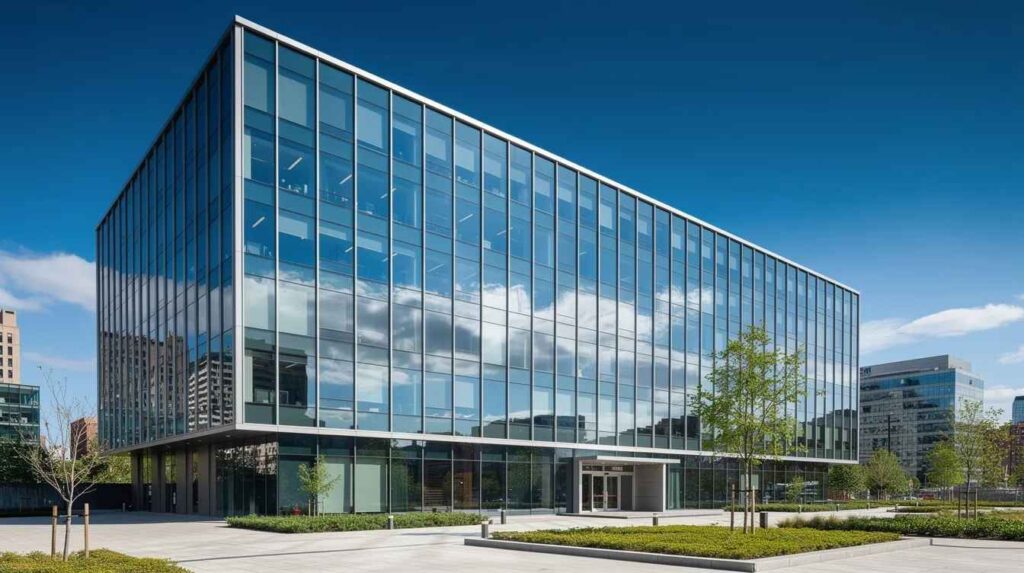
Window films are multi-layer polyester products with advanced coatings-metallic, ceramic, or spectrally selective-bonded to the interior side of existing windows. They do not require removing frames, altering the curtain wall, or disrupting the building envelope beyond the glass surface itself. Films can reduce HVAC workload by improving insulation performance across large glazed facades that are common in office buildings and administrative complexes.
The core functions include:
- Reducing solar heat gain through the glass
- Cutting heat and glare for building occupants
- Blocking harmful UV rays (up to 99%)
- Adding shatter resistance to vulnerable glass
- Providing visual screening without eliminating natural light
Facility managers should understand a few key metrics. Solar heat gain coefficient (SHGC) measures how much solar energy passes through-lower is better for cooling. Visible light transmission (VLT) indicates how much daylight gets in; modern films maintain 50–70% VLT. These numbers directly affect energy consumption and occupant comfort.
Window film reduces heat gain in municipal buildings with single-pane historic windows, double-pane office glazing, low-e glass, tempered entrance doors, and interior partitions. A site assessment evaluates glass types and exposures before installation, ensuring the right product goes on every pane, supported by a broad range of window glass film products and brands suitable for government facilities.
Key Benefits of Window Film for Municipal Buildings & Public Facilities
Municipal buildings benefit from targeted solar control and visual screening across several outcome areas simultaneously:
- Energy cost reduction. High-performance window films can cut energy costs by 5 to 15% in glass-heavy facilities, freeing operating budget for other civic priorities.
- Occupant comfort. Window films can enhance occupant comfort by reducing solar heat, and glare reduction enhances comfort in workplaces with large windows. Films can reduce glare for employees and visitors working at public counters, permit desks, and conference rooms.
- UV protection. Window films can protect interior furniture from UV damage, along with archival records, artwork, and carpet in libraries and courthouses.
- Security and life safety. Reinforced glazing helps protect occupants without turning civic spaces into fortresses.
- Privacy. Visual screening in sensitive areas like HR offices, finance departments, and law enforcement zones.
All of these benefits come from a single, integrated upgrade. Window films provide a cost-effective upgrade compared to full window replacement-typically 5–15% of the cost-and can be installed on commercial properties of any size. There is no need to juggle separate projects for heat, security, and privacy when window film solutions address them together.
Types of Window Film Used in Municipal Buildings
The main categories relevant to municipal buildings include:
| Film Type | Primary Function | Common Locations |
|---|---|---|
| Solar control films | Reduce heat, glare, UV | Upper floors, west/east facades |
| Security and safety films | Resist breakage, forced entry | Ground-level entrances, lobbies |
| Decorative and privacy film | Obscure visibility, add branding | Clerk offices, council chambers |
| Anti graffiti window film | Sacrificial protection from vandalism | Transit shelters, libraries, street-facing glass |
| Specialty films | Bird safety, daylight redirecting | Large library facades, atriums |
| Many municipal projects combine several film types within one building-solar control on upper floors of commercial buildings, security window film at street level, and frosted films in back-office spaces. Different film types can obscure visibility while allowing natural light, which matters in public-facing environments. |
Film selection varies by facade orientation, occupancy type, and regulatory environment. Historic districts may limit reflectivity; emergency service facilities may require blast-rated products. Compliance with safety standards is crucial for window film installations in municipal buildings, and Window Film Depot works with 3M and other manufacturers to match each facility’s performance and procurement requirements.
Solar Control Films: Cutting Energy Costs and Improving Comfort
Solar control films are the workhorses of commercial window tinting for municipal buildings. Applied to sun-exposed facades, they block incoming solar heat before it drives up cooling costs. Solar control films can reduce solar heat gain by 75% or more on directly exposed glass, and window films can reduce cooling costs by up to 30% across an entire building-with some heavily glazed facilities seeing air conditioning costs drop by up to 50%.
Three main solar film categories serve different needs:
- Reflective films offer maximum heat rejection but create a mirror-like exterior. Best suited where appearance guidelines allow it.
- Neutral films maintain the building’s natural look-ideal for historic downtown corridors and civic architecture.
- Ceramic films and spectrally selective options block infrared heat without heavy tint or metal, achieving strong energy performance while sacrificing natural light minimally.
Solar control films block up to 99% of UV rays, and certain films block most ultraviolet radiation to reduce fading of furniture, flooring, and documents. Window films block up to 99% of harmful UV radiation, making them essential for libraries and archives. Low-E films improve insulation and energy efficiency year-round, reducing heat loss in winter alongside summer cooling gains.
For building occupants, the impact is immediate: fewer hot spots near windows, less glare on computer screens in permit offices, and a more comfortable environment at public counters. Solar control films help meet energy reduction mandates for government buildings while supporting sustainability goals. Window films can lower air conditioning costs by up to 50% on the most exposed facades, and they help reduce energy consumption across the portfolio.
Security, Safety & Anti-Graffiti Films for Municipal Facilities
Security window film strengthens glass against breakage, turning ordinary glazing into a barrier that holds together under impact. Security window films versus basic shatterproof films reinforce glass against breakage and shattering, which means that in an attempted break-in, flying glass shards stay bonded to the film rather than scattering into occupied spaces. Security films hold shattered glass together on impact from attempted forced entry, severe weather, or even natural disasters.
For government buildings like courthouses, police stations, and city halls, security films delay forced entry during break-ins, buying critical response time. Security films protect public entrances in government facilities, covering vulnerable entry points where legacy glass is weakest. Combined with proper security protocols, these films help protect occupants without requiring costly structural modifications. Safety film rated to ANSI Z97.1 and CPSC 16 CFR 1201 standards can bring older glazing up to current safety and security requirements.
Anti-graffiti film protects glass from vandalism by adding a sacrificial clear layer that can be peeled off and replaced at a fraction of the cost of glass repair. Window protection film solutions such as anti-graffiti films protect glass surfaces from vandalism and scratches on bus shelters, transit stations, libraries, and public-facing storefronts. Replacing a damaged sacrificial layer costs roughly $3–8 per square foot, compared to $25–65 or more for glass replacement-making anti graffiti window film a clear win for facilities dealing with recurring vandalism.
Many security films also deliver solar control benefits, combining energy savings with shatter resistance. A police HQ upgrading to dual-benefit security window film gets both reduced cooling costs and reinforced glazing from a single product, and the films remain optically clear from the street, preserving civic architecture.
Privacy, Decorative & Specialty Films for Public-Facing Spaces
Decorative window film enhances aesthetics without replacing glass, offering patterns, gradients, and custom graphics that transform interior and exterior commercial window surfaces. Frosted window film increases privacy and aesthetic appeal in spaces like clerk’s offices, HR departments, and election rooms where confidentiality matters. Day and night privacy window film solutions ensure consistent confidentiality in public-facing spaces while still allowing daylight to pass through.
Common municipal applications include:
- Frosted or patterned decorative film on glass partitions between public lobbies and back offices
- Custom-printed municipal seals and department names on interior glass
- Branded graphics in city service centers and community rooms
- Building wraps that can transform the exterior appearance of a building for special events or campaigns
Custom wall murals can strengthen branding in commercial spaces and public facilities alike. Types of decorative film for interior and exterior glass can create a cohesive look for multi-tenant properties or multi-department government buildings. Specialty window treatments like bird-divert films on large library facades or daylight-redirecting films that push light deeper into open floor plans round out the options.
Window Film Depot can custom-print graphics, department labels, and campaign messaging, and install 3M frosted window film finishes for both interior and exterior applications on any commercial window surface.
Energy Savings, Payback & Funding Strategies for Municipal Projects
Energy savings from commercial window film are quantified through pre- and post-installation utility bill analysis and energy modeling. In glass-heavy municipal buildings, energy-efficient window films typically deliver 5–15% whole-building savings, with cooling-dominated facades seeing even greater reductions. Installing window films can yield a payback in less than three years when glass area is large, utility rates are high, and rebates are available.
Realistic payback ranges for municipal projects:
| Scenario | Typical Payback |
|---|---|
| Single pane windows, hot climate | 2–4 years |
| Double pane windows, mixed climate | 4–7 years |
| With utility company rebate | Under 3 years |
| Full window replacement (comparison) | 15–25+ years |
| Funding approaches include capital improvement budgets, energy performance contracts, federal or state energy-efficiency grants, and utility rebate programs that recognize solar film as a qualifying building envelope upgrade. Many municipalities use window film retrofits from a national window film provider to help hit greenhouse gas reduction targets and align with local climate action plans. |
Window Film Depot supports documentation for rebates, ESG reporting, and council presentations, including life-cycle cost analysis and simple payback calculations. Energy-efficient upgrades like window film help reduce energy costs and demonstrate fiscal responsibility to taxpayers.
How the Municipal Building Window Film Process Works
The installation process for municipal buildings follows a structured lifecycle:
- Consultation and goals. Discussion of priorities-energy savings, security, privacy-and review of building types across the portfolio.
- Site survey. Technicians evaluate glass types, facade orientations, existing window treatments, and access conditions. Security protocols at government facilities are factored into scheduling.
- Film recommendations and samples. Product options are matched to each area’s needs. Sample installations on a few panes let decision-makers evaluate appearance and daylight impact before committing.
- Procurement documentation. Detailed specs, test data, and NFRC performance sheets support RFP requirements, cooperative purchasing, and prevailing wage compliance.
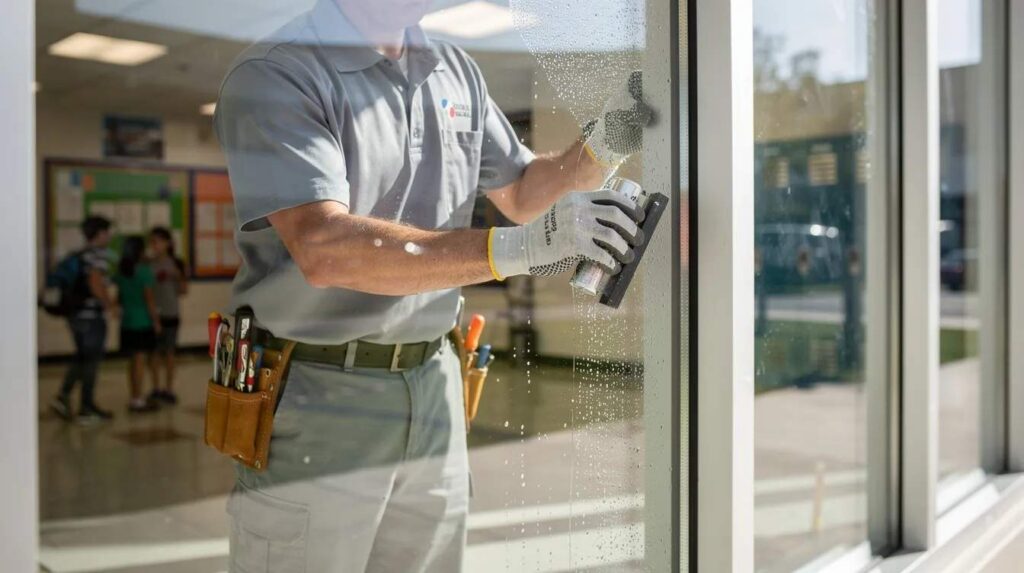
- Phased installation. Window film installations must accommodate public operations in government facilities, so work is typically scheduled by floor or wing, often after hours or on weekends. Most windows can be filmed in 15 minutes with minimal disruption, and installation typically takes a few days for multiple windows across a building.
- Quality review and training. Professional installation ensures proper adhesion and warranty coverage. Staff receive guidance on cleaning, cure time expectations, and long-term performance care.
Window Film Depot specializes in multi-site, multi-building rollouts for cities, counties, and state agencies, offering nationwide window film services and locations that ensure consistent film specs and appearance across an entire portfolio.
FAQs About Municipal Building Window Film
The following questions come up regularly from city managers, school districts, and public works departments evaluating window film for their facilities.
Will window film make our municipal building interiors too dark?
Modern spectrally selective and neutral films maintain high visible light transmission-often 50–70% VLT-while still reducing solar heat and glare. Offices, council chambers, and libraries stay bright. Sample installations on a few panes are standard practice so decision-makers can evaluate the real impact on daylight before approving a full rollout. You are not sacrificing natural light with properly specified film.
How long do window films last on government and municipal buildings?
Quality interior-applied films typically last 10–20 years depending on climate, exposure, and film type. Premium manufacturers like 3M back products with multi-year warranties. Window Film Depot’s professional film installation and proper maintenance help municipal clients achieve long term performance at the upper end of expected service life.
Are there building code or procurement issues with installing window film?
Professional installers ensure compliance with local reflectivity limits, life-safety glazing codes, and any historic district guidelines. Window Film Depot supplies detailed specs, test data, and documentation packages to help procurement teams and risk managers evaluate and approve products for commercial properties and government buildings.
Can window film be removed or changed in the future?
Most municipal window films can be professionally removed without damaging the underlying glass, allowing cities to change tint levels, branding, or security specifications as needs evolve. This flexibility is valuable in leased spaces, temporary municipal offices, or during rebranding-making film a fully reversible window treatment unlike permanent coatings.
How much does municipal building window film cost?
Pricing depends on total glass square footage, film type, access conditions, and security requirements. Solar control films run approximately $4.50–$7.75 per square foot installed, while safety film and security options vary by thickness. Films typically cost a fraction-often 5–15%-of full window replacement. The investment delivers measurable energy savings and risk reduction across the life of the product.
Will window film change the exterior look of our historic or civic buildings?
Many municipalities choose low-reflective, neutral films that are nearly invisible from the street, preserving historic facades and civic aesthetics. Where a more uniform or modern appearance is desired, reflective or tinted films can intentionally update the look while meeting design review guidelines. Reversibility is key-film can be removed without altering existing windows or causing broken-glass concerns.
Why Municipalities Choose Window Film Depot
Window Film Depot is a family-owned national window film contractor founded in 1992 in Marietta, Georgia. The company specializes in complex commercial and government projects including city and county offices, police headquarters, courts, libraries, transit facilities, and schools across multiple states.
What sets us apart for municipal work:
- Product-neutral recommendations from a leading 3M dealer with access to top-tier solar control, security, decorative, and anti graffiti film solutions
- Turnkey project management including energy analysis, security assessments, and certified crew installation
- Public procurement expertise covering RFPs, cooperative purchasing contracts, and prevailing wage requirements
- Multi-facility rollout capability ensuring consistent specs across entire building portfolios
- Documentation support for rebates, ESG reporting, and council presentations
From commercial window tinting on a single office building to installing window film across a countywide portfolio of emergency service facilities, Window Film Depot delivers measurable results.
Next Steps: Plan a Window Film Project for Your Municipal Building
Rising energy costs, evolving security expectations, deferred glazing maintenance, and new sustainability mandates make 2026 the right time to act. Municipal building window film is one of the fastest, least disruptive ways to reduce heat, strengthen glass, and improve comfort for the communities you serve.
Contact Window Film Depot for a no-obligation assessment or budgetary quote. From first contact, expect a focused conversation about your goals-whether that is reducing cooling costs, upgrading security at vulnerable entry points, or adding privacy in sensitive areas. We will review your building types, schedule a site visit or remote drawing review, and deliver preliminary recommendations.
We encourage facility managers, city energy managers, and risk managers to involve all relevant stakeholders early. The sooner your team aligns on priorities, the faster a rollout moves from concept to completed installation. Reach out today to start the conversation.