Table of Contents:
- Industry Standard Applications: Where Building Codes Mandate Tempered Glass
- The Critical Security Blind Spot: Why Tempered Glass Alone Creates Vulnerability
- Elevating Protection: The Role of Advanced Security Film in Modern Commercial Projects
- Strategic Implementation: Enhancing Existing and New Glazing for Robust Commercial Security
- Empowering Project Managers: Specifying Superior Security for Lasting Client Value
- Conclusion: Key Takeaways and Next Steps
- Frequently Asked Questions
- Related Posts from Window Film Depot
Industry Standard Applications: Where Building Codes Mandate Tempered Glass
Understanding the intrinsic properties of tempered glass naturally leads to an examination of its mandated applications within commercial construction. Building codes, established through extensive research into public safety, unequivocally specify where impact-resistant glazing is required. These regulations are designed to minimize injury risks from accidental human impact, reflecting tempered glass’s primary function as a safety material. This foundational understanding is crucial for any project manager navigating the complexities of commercial glass specifications.
Identifying Critical Areas Requiring Tempered Glass Specifications
Building codes universally identify specific zones within a structure that demand safety glazing to protect occupants from accidental breakage. These requirements are often guided by standards such as CPSC 16 CFR 1201 (Consumer Product Safety Commission) and ANSI Z97.1 (American National Standards Institute), which dictate performance criteria for safety glazing materials. Recognizing these critical areas is paramount for compliance and risk mitigation.
Common locations mandating tempered glass include:
- Doors: All glazing in swinging or sliding doors, including storm doors and closet doors.
- Windows Near Doors: Windows within 24 inches of the vertical edge of a door, where the bottom edge of the glazing is less than 60 inches above the walking surface.
- Large Panels: Glazing in individual panes exceeding a certain size (typically 9 square feet), with the bottom edge less than 18 inches above the floor.
- Windows Near Walking Surfaces: Windows with the bottom edge less than 18 inches above the walking surface.
- Guardrails and Balustrades: Glazing used as all or part of a protective barrier, whether structural or infill panels.
- Bathtub and Shower Enclosures: All glazing within these wet areas due to the high risk of slips and falls.
- Fixed or Operable Panels Adjacent to Stairs or Ramps: These areas pose a fall hazard, similar to windows near walking surfaces.
These specifications are not merely suggestions. They are legally binding requirements foundational to safe building design and construction, defining what is tempered glass used for in many applications.
Balancing Safety and Performance: Why Tempered Glass Becomes the Default Choice
Tempered glass has become the default choice as shatterproof glass due to its unique combination of enhanced strength and its distinctive fracture pattern. Compared to annealed glass, it boasts significantly higher resistance to impact, thermal stress, and bending forces. This superior performance minimizes the likelihood of breakage under normal operational conditions and accidental impact.
Critically, when tempered glass does fail, it shatters into small, relatively harmless, blunt fragments. This drastically reduces the risk of severe lacerations common with annealed glass shards. This controlled breakage mechanism is the core reason for its widespread adoption in safety-critical applications. While other safety glazing options exist, such as laminated glass, tempered glass offers a cost-effective solution for meeting basic impact safety standards across a broad spectrum of commercial uses. Its inherent durability and predictable failure mode provide a reliable baseline for occupant protection, addressing the fundamental question, what is safety glass?
Common Commercial Applications and Their Inherent Glazing Requirements
The application of tempered glass extends across virtually every segment of commercial construction, dictated by both code requirements and practical performance needs. Its use ensures occupant safety in high-traffic or high-risk environments.
Some prominent commercial applications include:
- Storefronts and Entrances: Glazing in entry doors, adjacent sidelights, and large display windows frequently situated at ground level.
- Office Partitions and Conference Rooms: Internal glass walls and doors, particularly in open-plan offices, require tempered glass for occupant safety against accidental contact.
- Retail Display Cases: For both safety against breakage and to withstand routine handling in a commercial setting.
- Elevator Interiors and Stairwell Glazing: Areas where human contact and potential for impact are high.
- Public Buildings and Schools: Windows, doors, and interior partitions in high-occupancy environments, where accidental impact is more probable.
- Sports Facilities and Gymnasiums: Glazing in doors, partitions, and viewing areas where projectiles or direct impacts are a higher risk.
- Skylights and Overhead Glazing: Although often laminated for fall-through protection, some overhead applications may incorporate tempered glass for thermal stress resistance.
In each of these instances, the primary driver for specifying tempered glass is safety against injury from glass breakage. However, this inherent design for safety, while crucial for occupant well-being, simultaneously presents a significant vulnerability where security is concerned. The very mechanism that prevents severe injury, shattering into small pieces, instantly compromises the building envelope, leaving a gaping, unprotected entry point.
The Critical Security Blind Spot: Why Tempered Glass Alone Creates Vulnerability
While tempered glass is an industry standard for safety, its inherent design ironically becomes its greatest vulnerability in security-sensitive environments. Project managers often specify tempered glass due to its robust safety profile, yet overlooking its post-breakage characteristics can expose critical security gaps. The strength of tempered glass is undeniable, but its failure mode is the issue.
The ‘Safety Shatter’ Paradox: A Benefit That Becomes a Weakness in Security Contexts
Tempered glass window is engineered through a controlled thermal or chemical process that creates high compressive stress on its surfaces and balancing tensile stress in its core. This treatment makes it approximately four to five times stronger than annealed glass of the same thickness. Crucially, when it does break, it shatters into thousands of small, relatively blunt fragments, significantly reducing the risk of serious lacerations. This characteristic is a paramount safety feature, fulfilling code requirements for areas of human impact.
However, this very “safety shatter” mechanism presents a profound security paradox. The instantaneous disintegration of tempered glass, while safe for occupants, means that upon failure, a once-secure opening immediately transforms into an unimpeded breach. The complete collapse of the glazing leaves no residual barrier, creating an immediate, unhindered pathway for intruders or projectile entry.
Understanding Glazing Failure: Spontaneous Breakage and Thermal Stress Considerations
The failure of tempered glass is not always due to direct impact from an external force. Several factors can lead to its compromise:
- Impact: Direct force, whether accidental or intentional, exceeding the glass’s localized stress tolerance.
- Edge Damage: Even minor damage to the edges of the glass during installation or throughout its lifecycle can create stress points that lead to sudden failure.
- Nickel Sulfide Inclusions: Microscopic impurities within the glass (nickel sulfide inclusions) can expand over time and with temperature fluctuations, leading to spontaneous breakage without any external impact.
- Thermal Stress: Significant temperature differentials across the glass pane, often seen in shaded and sun-exposed areas of a window, can induce stress levels that exceed the glass’s tolerance, resulting in thermal stress breakage.
Regardless of the cause, the outcome is consistent: a complete loss of integrity and the creation of an immediate, wide-open entry point.
The Unprotected Opening: Immediate Security Gaps Upon Tempered Glass Compromise
When tempered glass fails, whether through impact, thermal stress, or spontaneous breakage, the resulting opening is total. There are no remaining shards held in place, no residual structure to impede access. This creates an immediate and undeniable security vulnerability, leaving property and personnel exposed. For facilities concerned with forced entry, asset protection, or maintaining a secure perimeter, this instantaneous failure mode represents a critical and often overlooked Achilles’ heel in their building envelope strategy. The rapid loss of a physical barrier allows for swift ingress, negating any time-delay benefits that might otherwise be afforded by a robust frame or locking system.
Why Standard Tempered Glass Strength Falls Short Against Modern Threats and Forced Entry
While tempered glass offers superior resistance to general impacts compared to annealed glass, its strength profile is not designed for sustained, aggressive attacks or modern threat scenarios.
- Brittle Failure: Tempered glass exhibits brittle failure. It either holds or shatters completely. There is no intermediate state of controlled damage or resistance once its breaking point is reached.
- Limited Ballistic Resistance: It provides virtually no ballistic protection. Upon impact from even small caliber firearms, it shatters entirely, creating both an open portal and potentially dangerous glass shrapnel.
- Vulnerability to Forced Entry Tools: Standard tempered glass, while resilient to light accidental impact, can be quickly compromised by determined individuals using readily available tools like hammers, crowbars, or even specialized glass-breaking tools designed to exploit its brittle nature. The objective of these threats is often rapid entry, and tempered glass‘s failure mode facilitates just that.
- Inadequate Blast Mitigation: In the event of an explosive blast, tempered glass will fragment catastrophically, propelling thousands of sharp, high-velocity shards inward. This poses a severe threat to occupants and creates a wide, unsecured opening for post-blast exploitation.
Relying solely on tempered glass for security in commercial settings is a common but critical oversight. True protection against modern threats requires reinforcing it with advanced security film to mitigate risks from forced entry to blast events.
Elevating Protection: The Role of Advanced Security Film in Modern Commercial Projects
Understanding the inherent vulnerabilities of tempered glass highlights the need for a complementary solution that can maintain the integrity of the building envelope even after the glass itself has been compromised. This is where advanced security window film plays a crucial, transformative role in modern commercial security strategies.
The Science of Reinforcement: How Security Film Transforms Tempered Glass Performance
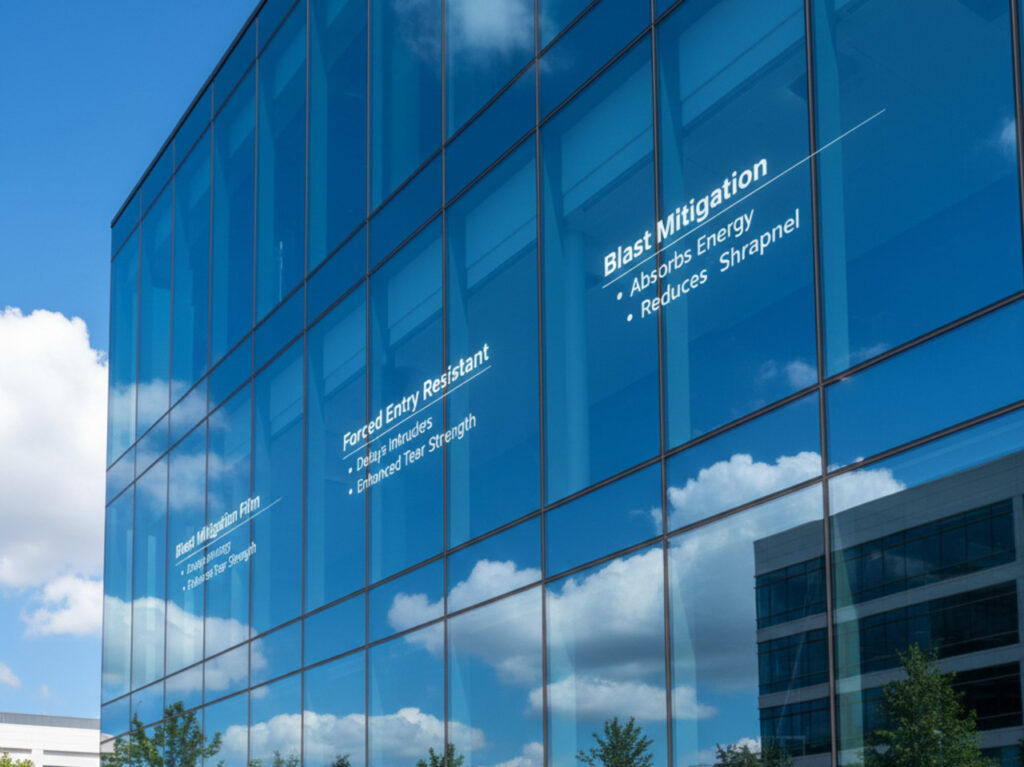
Security window film is a multi-layered polyester laminate, typically applied to the interior surface of the glass. Its scientific principle relies on two key properties: remarkable tensile strength and superior adhesive bonding. When tempered glass, reinforced with security film, is impacted or shattered, the film acts as an invisible, high-strength net. Instead of allowing the glass to disperse into countless fragments, the film securely holds the shattered pieces together, maintaining a continuous barrier within the window frame. This transformation significantly alters the glass’s post-breakage performance, delaying intrusion attempts and containing dangerous flying debris. The film’s ability to absorb and dissipate impact energy further enhances its protective qualities.
Introducing 3M™ Security Window Film: Engineered for Extreme Protection and Durability
Leading manufacturers, such as 3M, have engineered security window films specifically to address the vulnerabilities of standard glazing. 3M™ Security Window Film is a prime example of advanced material science applied to building security. These films are constructed from multiple micro-layers of strong, tear-resistant polyester, bonded together with robust acrylic adhesives.
Key features include:
- Exceptional Tear Resistance: Designed to resist tearing and penetration, even under severe stress.
- Superior Adhesion: The adhesive system is formulated to bond aggressively to glass, ensuring that shattered fragments remain firmly attached to the film.
- High Impact Resistance: Capable of withstanding significant force, providing a substantial delay against determined forced entry attempts.
- UV Rejection: Many films also incorporate UV inhibitors, protecting interiors from sun damage and improving energy efficiency.
This engineering ensures that the film performs reliably under extreme conditions, providing a critical layer of protection that standard commercial glass cannot offer.
Mitigating Threats: From Blast Mitigation and Forced Entry to Natural Disasters
The application of advanced security film to tempered glass creates a robust composite system capable of mitigating a wide array of threats:
- Forced Entry: The film significantly increases the time and effort required for an intruder to gain entry. What might take seconds with unprotected tempered glass can become minutes of sustained, noisy effort, providing critical response time for security personnel or law enforcement.
- Blast Mitigation: In the event of an explosion, the film helps contain glass fragments, preventing them from becoming dangerous projectiles. This dramatically reduces blast-related injuries and maintains the structural integrity of the window opening. This is a critical function of blast mitigation film.
- Natural Disasters: During hurricanes, tornadoes, or seismic events, windborne debris and building movement can shatter unprotected glass. Security window film holds the glass in place, maintaining the building envelope and preventing water or further debris intrusion.
- Vandalism and Smash-and-Grab: While not completely impenetrable, the film frustrates quick acts of vandalism or “smash-and-grab” theft by making the glass much harder and slower to penetrate.
The Advantage of Combination: Tempered Glass with Security Film vs. Laminated Glass Alone
While laminated glass offers some security benefits by using an interlayer (typically PVB) to hold glass pieces together upon breakage, the combination of tempered glass reinforced with security film often presents a superior solution for commercial applications. This addresses the question of tempered glass vs laminated.
- Enhanced Post-Breakage Performance: Tempered glass, when combined with security film, retains its beneficial safety-shatter characteristic but gains the critical ability to remain in the frame. The film’s tear strength and adhesion are often specifically engineered for higher impact and blast scenarios than a standard PVB interlayer in basic laminated glass.
- Integration with Safety Standards: Many building codes mandate tempered glass in specific locations. Adding security film to already code-compliant tempered glass provides an additional layer of security without requiring a change in the fundamental glazing type.
- Cost-Effectiveness and Retrofit: Applying security film can be a more cost-effective solution than replacing all existing tempered glass with laminated glass, especially for retrofit projects.
- Energy Efficiency and UV Protection: Many high-performance security films also incorporate solar control properties, adding energy efficiency and UV protection, which may not be present in all laminated glass options.
The synergy created by pairing tempered glass’s inherent strength and safe breakage with the tenacious hold and tear resistance of advanced security film provides a level of protection that often surpasses either material used in isolation, particularly for threats involving significant impact or blast pressures. This combined approach leverages the best attributes of both technologies to deliver comprehensive security.
Strategic Implementation: Enhancing Existing and New Glazing for Robust Commercial Security
The proactive integration of advanced film technology into a project’s glazing strategy is paramount for establishing robust security. This strategic approach applies equally to new construction and comprehensive renovation projects, ensuring that glass, a historically vulnerable point, becomes a resilient component of the building envelope.
Assessing Project Needs: Identifying High-Risk Areas for Advanced Film Application
Effective security begins with a thorough risk assessment. Not all glazing within a commercial property presents the same vulnerability or requires an identical level of reinforcement. Project managers must evaluate the specific threat profile associated with each area. Considerations include the building’s function, its occupants, the value of assets behind the glass, and the surrounding environment.
High-risk areas frequently include ground-level windows, primary entry and exit points, vestibules, glass near critical infrastructure, data centers, executive offices, and public-facing facades. For institutions such as schools, government buildings, or retail establishments, the assessment might extend to any accessible glass where the intent to delay or deny entry is critical. A layered approach, informed by a detailed threat analysis, allows for targeted application of security window film, optimizing both security efficacy and project budget.
Seamless Integration: Planning for Security Film in Construction and Renovation Schedules
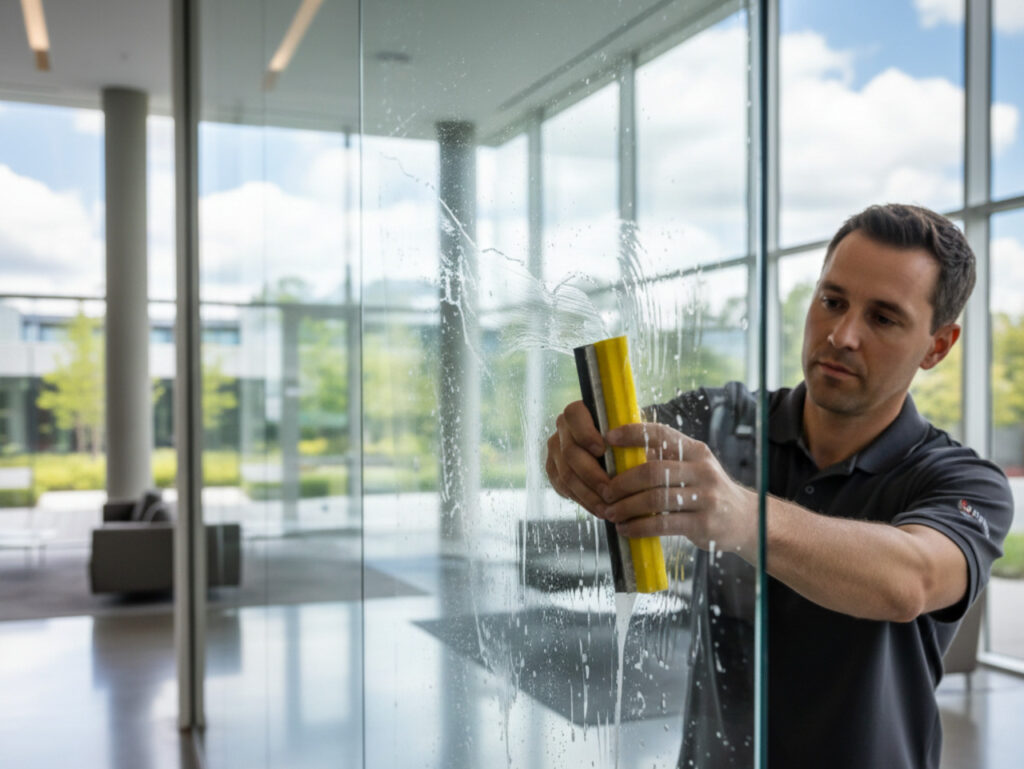
Integrating security film requires foresight, ideally during the initial design and specification phases. Planning for its inclusion from the outset ensures that the glazing system is considered holistically, avoiding costly retrofits or scheduling conflicts later in the project lifecycle. For new construction, this means specifying film type and installation as part of the overall glazing package.
In renovation scenarios, security film can be a highly efficient upgrade. Installation typically occurs after the rough construction is complete and the glazing is in place, but before final finishes or occupancy. This timing minimizes disruption to other trades and allows for a clean, controlled environment for application. Early coordination with the film installer is essential to guarantee appropriate conditions and allocate sufficient time for the professional application and curing process, preventing delays in project handover.
Illustrative Scenarios: Deploying Enhanced Glass Security in Commercial Environments
The practical benefits of enhanced glazing security become clear through specific applications in diverse commercial settings. Each scenario highlights how security film transforms standard tempered glass into a formidable barrier against targeted threats.
- Retail Establishments: For high-end boutiques or electronics stores, security film applied to tempered display windows acts as a critical deterrent against smash-and-grab incidents. While tempered glass shatters easily, the film holds the shards together, denying immediate access and creating valuable response time for security personnel.
- Educational Institutions and Public Buildings: In spaces vulnerable to active threat scenarios, security film mitigates the risk posed by projectile impacts. Instead of allowing immediate penetration, the reinforced glass maintains its integrity, forcing intruders to expend significant effort and time to breach. This offers occupants crucial seconds for escape or lockdown.
- Corporate Offices and Data Centers: Protecting sensitive information and high-value assets is paramount. Security film reinforces external windows and internal partitions, acting as a robust deterrent against unauthorized intrusion. This enhancement prevents quick forced entry, safeguarding intellectual property and ensuring business continuity.
- Government and Critical Infrastructure Facilities: In environments demanding the highest level of protection, advanced security films offer blast mitigation capabilities. When subjected to explosive forces, the film ensures that the glass remains intact within its frame, preventing deadly shards from becoming secondary projectiles and significantly reducing injuries and structural damage.
Demonstrating Value: Quantifying the Return on Investment of Enhanced Glazing Security
The return on investment (ROI) for enhanced glazing security extends beyond simple cost savings, encompassing critical aspects of risk mitigation, safety, and operational resilience. While upfront costs are a consideration, the long-term advantages often far outweigh them.
- Reduced Losses and Damage: By deterring forced entry and containing property damage during incidents, security film directly reduces financial losses from theft, vandalism, and the subsequent costs of repair and replacement.
- Enhanced Occupant Safety: The primary benefit lies in protecting people. Minimizing the risk of injury from shattered glass during accidents, natural disasters, or security breaches provides an invaluable return in human safety and well-being.
- Operational Continuity: Preventing or delaying successful intrusions helps maintain business operations. Reduced downtime following an incident ensures that critical functions can resume faster, safeguarding revenue streams and client trust.
- Insurance Premium Reduction: Some insurance providers recognize the enhanced security and risk reduction offered by advanced glazing films, potentially leading to lower premiums or more favorable policy terms.
- Reputation and Liability Protection: Proactively investing in security measures demonstrates a commitment to protecting assets and personnel. This can bolster an organization’s reputation and significantly reduce potential liability in the event of an incident.
Empowering Project Managers: Specifying Superior Security for Lasting Client Value
Project managers are uniquely positioned to elevate a project’s security profile, moving beyond minimum code requirements to deliver truly resilient solutions. This involves a comprehensive understanding of available technologies and a commitment to specifying superior materials and installation practices.
Making Informed Decisions: Crafting a Comprehensive Glass Security Specification
A well-crafted security specification is the cornerstone of effective protection. It moves beyond generic directives, incorporating precise technical details that ensure the deployed solution meets the project’s specific threat assessment. For security film, this includes specifying:
- Film Thickness (Mil Rating): This is a direct indicator of impact and tear resistance, with higher mil ratings (e.g., 8-mil, 12-mil, 14-mil) offering greater protection.
- Adhesive Strength and Type: The bonding agent is critical for holding glass fragments together and maintaining the film’s integrity during an impact.
- Anchoring Systems: For blast mitigation or extreme forced entry scenarios, edge retention systems or structural silicone glazing may be required to anchor the filmed glass to the frame.
- Performance Standards: Specifying adherence to relevant industry testing standards (e.g., ASTM F1642 for forced entry, GSA TS01-2003 for blast protection, UL 972 for burglary resistant glazing) ensures validated performance.
- Optical Clarity and UV Rejection: While security is primary, maintaining aesthetic integrity and protecting interiors from UV damage are also important considerations.
A detailed specification acts as a roadmap, ensuring all stakeholders understand the performance expectations and material requirements for a truly secure glazing system.
Partnering with Experts: Ensuring Professional Installation and Guaranteed Performance
The effectiveness of even the highest-quality security film is contingent upon its professional installation. A poorly applied film, regardless of its specifications, will compromise its protective capabilities. Project managers should prioritize partnering with certified, experienced installers who specialize in security film application.
These professionals possess the technical knowledge of various film types, adhesive properties, and proper installation techniques necessary to achieve optimal performance. They are also adept at managing the nuances of different glass substrates and frame types. Furthermore, reputable installers and manufacturers often provide comprehensive warranties covering both the product and the labor, offering additional assurance regarding the long-term reliability and performance of the security film solution. This partnership ensures that the investment in advanced film technology translates directly into guaranteed, robust security.
Addressing Client Demands: Proactively Recommending Advanced Glazing Solutions
Project managers serve as trusted advisors, and anticipating client needs, particularly concerning security, adds significant value. Instead of merely responding to explicit client demands, proactively recommending advanced glazing solutions, especially security film as an enhancement to tempered glass, demonstrates a commitment to foresight and comprehensive risk management.
Educating clients on the inherent vulnerabilities of standard tempered glass, even when code-compliant, and presenting security film as a proactive, cost-effective layer of defense, positions the project manager as a strategic partner. This approach fosters greater client confidence, mitigates future security risks, and prevents potential project rework due to overlooked vulnerabilities. It transforms a basic compliance conversation into an opportunity to deliver superior, future-proof security infrastructure.
The Long-Term Advantage: Protecting Assets, People, and Reputation with Proactive Measures
Investing in enhanced glazing security through advanced film technology offers a multifaceted, long-term advantage that extends across critical facets of any commercial enterprise. This is not merely an expense but a strategic investment in resilience and sustainability.
By reinforcing tempered glass, project managers ensure a foundational layer of protection for valuable assets and, more importantly, for the lives of occupants. This proactive stance significantly reduces liability exposure, bolsters business continuity in the face of unforeseen events, and fortifies an organization’s reputation as one that prioritizes safety and security. Ultimately, implementing these advanced measures contributes to a more secure, stable, and trusted operational environment for years to come.
Conclusion: Key Takeaways and Next Steps
Understanding Tempered Glass: A Foundation, Not a Fortress
As we have explored, tempered glass holds a crucial position in modern construction due to its inherent safety properties. Its design ensures that upon impact, it fractures into small, relatively harmless granular pieces, significantly reducing the risk of severe lacerations compared to traditional annealed glass. This characteristic makes it a non-negotiable component in numerous commercial applications, ranging from storefronts and curtain walls to interior partitions, mandated by building codes for occupant safety. This addresses “what is tempered glass used for” in a safety context.
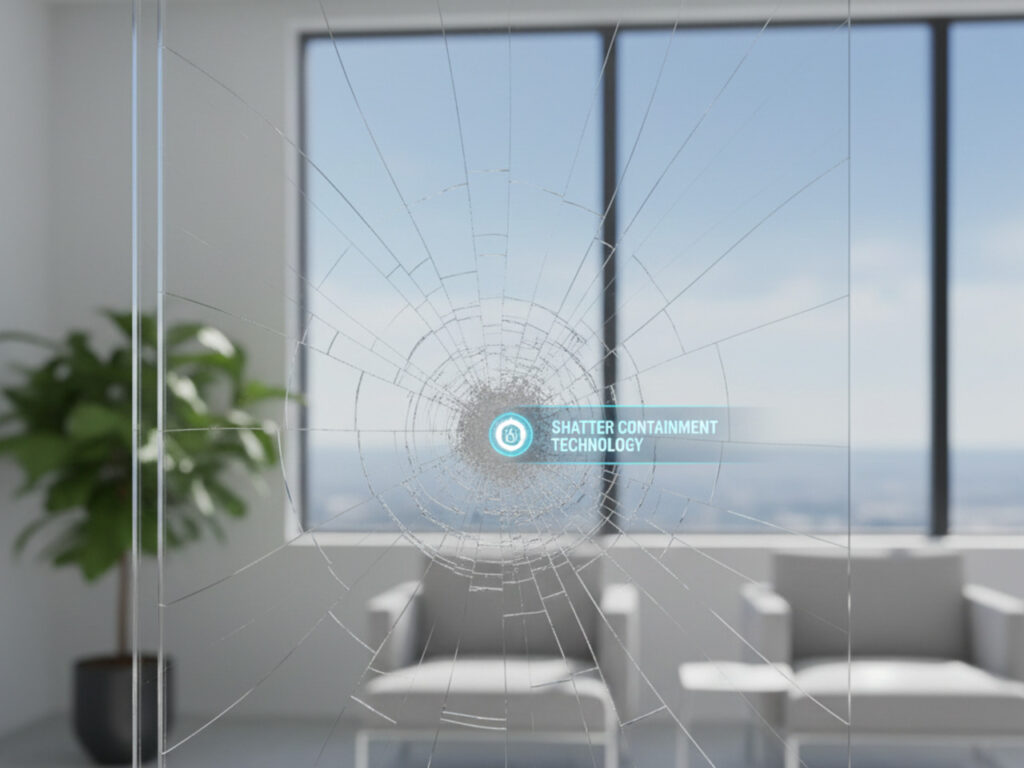
However, it is precisely this safety feature that presents a critical vulnerability when security is paramount. The complete disintegration of a tempered glass pane, while safe for individuals nearby, simultaneously eliminates the building’s envelope integrity. This immediate and total loss of a barrier leaves a property susceptible to a range of threats, from opportunistic smash-and-grab intrusions to more deliberate forced entry attempts, creating an instant and unfettered access point for unauthorized individuals.
The Indispensable Role of Security Window Film
Recognizing this critical distinction between safety and security, advanced security window films emerge as an indispensable layer of protection. These specialized films, engineered with robust polymer composites and aggressive adhesives, transform the failure mode of tempered glass without compromising its safety-break characteristics. When subjected to impact, the film holds the shattered glass fragments firmly within the frame, maintaining a formidable barrier.
This enhancement offers several direct and measurable security benefits:
- Deterrence of Forced Entry: By significantly increasing the time and effort required to breach a glass opening, security film acts as a powerful deterrent, often causing intruders to abandon their attempts. This directly enhances forced entry resistance.
- Mitigation of Blast Effects: In the event of an explosion, security film helps contain dangerous glass shards, preventing them from becoming lethal projectiles and minimizing damage to interiors. This highlights its value as blast mitigation film.
- Enhanced Perimeter Security: It maintains the structural integrity of the building envelope post-impact, preventing immediate access and allowing critical response time for security personnel or emergency services.
- Protection Against Natural Disasters: In severe weather events, it helps keep the building sealed, protecting occupants and assets from wind-borne debris and water ingress.
Strategic Considerations for Project Managers
For project managers, understanding the dual nature of tempered glass and the transformative capabilities of security film is crucial for delivering projects that truly meet contemporary security demands. It moves beyond merely adhering to safety codes to proactively addressing real-world threats.
Consider these strategic next steps for your projects:
- Holistic Risk Assessment: Evaluate project sites not just for occupant safety but for potential security vulnerabilities. Factor in local crime rates, asset value, and specific client security objectives.
- Proactive Specification: Integrate security film specifications into the design and procurement phases. Retrofitting, while effective, can sometimes be less efficient than a planned installation during construction.
- Consultation with Specialists: Engage with qualified security film providers early in the project lifecycle. Their expertise can help tailor solutions to specific threat profiles, ensuring optimal film thickness, adhesive strength, and anchoring systems.
- Value Proposition for Clients: Frame security film as a tangible investment in asset protection, business continuity, and occupant safety. This not only mitigates project risk but also significantly enhances the value you deliver to your clients.
By moving beyond the baseline safety offered by tempered glass and strategically incorporating advanced security films, project managers can ensure that building envelopes provide the robust protection required in today’s evolving security landscape. This proactive approach elevates project outcomes, offering peace of mind and genuine security.
Frequently Asked Questions
What is tempered glass used for in commercial buildings?
Tempered glass is widely used in commercial buildings for applications where occupant safety is paramount. This includes doors, windows near doors, large glass panels, guardrails, shower enclosures, and other areas where accidental human impact is a risk. Its primary use is to minimize injury from breakage, as it shatters into small, blunt pieces.
What is the main difference between tempered glass and laminated glass for security?
Tempered glass is designed for safety, shattering into small pieces upon impact. Laminated glass, however, incorporates an interlayer (like PVB) that holds shattered glass fragments in place, providing some level of security and fall-through protection. For enhanced security against forced entry or blast events, combining tempered glass with a high-performance security window film often provides superior resistance compared to laminated glass alone.
How does security window film improve the strength of tempered glass?
Security window film, made from multiple layers of polyester with strong adhesives, reinforces tempered glass by holding shattered fragments firmly within the window frame. While the inherent tempered glass strength remains the same, the film prevents the immediate, complete collapse of the glass, creating a much tougher barrier against intrusion, blast impacts, and natural disasters.
Can security film prevent spontaneous breakage in tempered glass?
No, security film does not prevent spontaneous breakage caused by factors like nickel sulfide inclusions or extreme thermal stress. However, if spontaneous breakage does occur, the security film will hold the shattered glass pieces in place, maintaining the integrity of the window opening and preventing the sudden, dangerous collapse of the pane.
Is security film a cost-effective alternative to replacing tempered glass with more secure options?
For existing structures, applying security window film to tempered glass is often a highly cost-effective retrofit solution compared to entirely replacing all glazing with specialized laminated or ballistic glass. It provides a significant upgrade in forced entry resistance and blast mitigation at a fraction of the cost and with minimal operational disruption.