Table of Contents:
- Defining Laminated Safety Glass: A Clear Definition
- The Engineering Behind Safety: How Laminated Glass Achieves Its Resilience
- Beyond Protection: Common Applications and Building Code Imperatives for Laminated Glass
- Decoding Glass Options: Laminated vs. Tempered for Project Specifications
- The Strategic Retrofit: Why Advanced Security Film Redefines Glass Safety for Renovations
- Unlocking Efficiency and Value: The Practical Advantages of 3M Security Window Film
- Project Success Scenarios: When 3M Security Film Outperforms Full Glass Replacement
- Navigating Your Options: Choosing the Optimal Security Solution for Your Project
- Conclusion: Strategic Security for Modern Projects and Future-Proofing Assets
- Frequently Asked Questions
- Related Posts from Window Film Depot
Defining Laminated Safety Glass: A Clear Definition
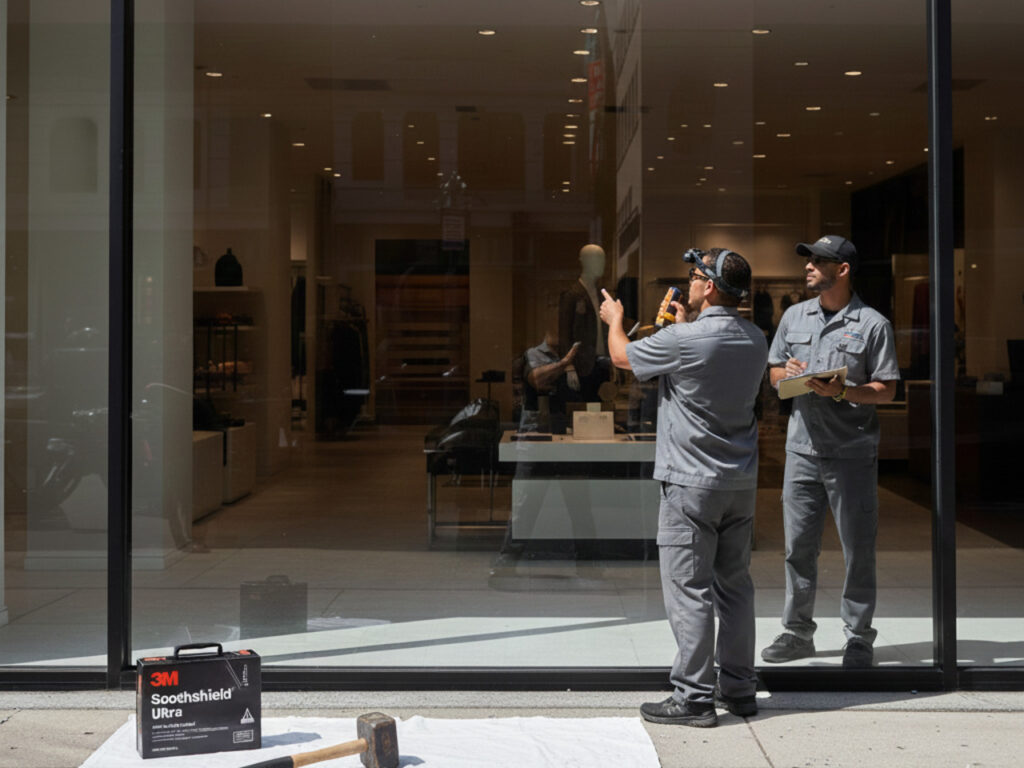
Laminated safety glass is a type of glazing engineered for enhanced safety and security. It consists of two or more panes of glass permanently bonded together with one or more polymeric interlayers, typically polyvinyl butyral (PVB). This composite structure ensures that when the glass is broken, the fragments remain adhered to the interlayer, preventing dangerous shards from scattering and maintaining the overall integrity of the pane. Understanding what is laminated safety glass is foundational for any project manager evaluating glazing solutions.
Key Characteristics and Core Benefits for Building Integrity
The distinct construction of laminated safety glass imparts several critical characteristics and benefits essential for modern building integrity. Its primary function is to enhance safety by holding glass fragments in place upon impact. This characteristic also contributes significantly to security by delaying forced entry and providing a resilient barrier against various threats.
Key benefits include:
- Enhanced Safety: Significantly reduces the risk of injury from broken glass.
- Improved Security: Offers resistance to penetration, deterring intruders.
- Noise Reduction: The interlayer dampens sound transmission, enhancing acoustic comfort.
- UV Protection: Blocks a substantial portion of harmful ultraviolet rays, protecting interiors and occupants.
- Post-Breakage Integrity: Maintains a barrier even when damaged, preventing immediate breaches.
The Critical Role of Shatter Resistance and Impact Performance
The cornerstone of a window laminate safety profile is its superior shatter resistance. Unlike monolithic glass, which breaks into sharp, often dangerous, fragments, laminated glass is designed to fracture in a way that minimizes hazard. The viscoelastic interlayer absorbs impact energy and firmly holds glass pieces in position, preventing them from detaching and becoming projectiles. This inherent impact resistance makes it a critical specification for areas where human safety is paramount, mitigating the risks associated with accidental breakage or intentional force. It ensures that even under significant stress, the glazing remains largely intact, preventing large openings and maintaining a protective barrier.
Understanding UV Protection and Sound Dampening Qualities
Beyond its mechanical strength, laminated glass offers valuable environmental benefits for building interiors. The interlayer is highly effective at absorbing ultraviolet radiation from the sun. It typically blocks 99% of harmful UV rays up to 380 nanometers. This protection helps to safeguard building occupants from dangerous skin and eye exposure. It also prevents the fading and degradation of interior furnishings and valuable artwork. Additionally, the interlayer’s damping properties make laminated glass an excellent material for sound control. It creates a barrier that significantly reduces the transmission of external noise. This improvement to acoustic comfort is particularly valuable in busy urban environments.
The Engineering Behind Safety: How Laminated Glass Achieves Its Resilience
The Polyvinyl Butyral (PVB) Interlayer: The Heart of Laminated Glass
The Polyvinyl Butyral (PVB) interlayer is the core of laminated safety glass’s exceptional performance. This component is precisely engineered for maximum strength, elasticity, and adhesion. When bonded between glass panes, PVB acts as a powerful adhesive. It holds the glass together even after it shatters from an impact.
Its viscoelastic nature allows it to absorb impact energy effectively. This energy dissipates across the surface rather than allowing the glass to fracture explosively. This critical component ensures that laminated glass remains structurally sound after breakage occurs. It is a cornerstone for modern safety glazing and advanced security applications.
The Manufacturing Process: From Annealed Glass to Safety Glazing
The transformation of individual glass panes into safety glazing involves a precise manufacturing process. Initially, two or more sheets of glass, which can be annealed glass, heat-strengthened, or fully tempered glass, are thoroughly cleaned. A PVB interlayer is then carefully placed between these glass sheets. This assembly is then subjected to a series of heating and pressing operations.
Typical steps include:
- Pre-pressing: The glass and interlayer are passed through rollers or a vacuum process to remove trapped air and initiate the bonding.
- Autoclave Treatment: The assembly is then placed in an autoclave, where it undergoes a controlled cycle of high heat and pressure. This process fully melts the PVB and ensures a strong, permanent chemical and mechanical bond between the glass and the interlayer.
This rigorous process creates a unified, resilient composite material engineered for superior performance.
Exploring Different Interlayer Types and Their Performance Variations
While PVB is the most common interlayer, advancements in materials science have introduced other types, each offering distinct performance characteristics. These variations allow for specialized laminated glass products tailored to specific project requirements.
Common interlayer types include:
- Standard PVB: Offers excellent adhesion, flexibility, and UV protection, suitable for general safety and security applications.
- Enhanced PVB: Thicker or multi-layered PVB for improved impact resistance, blast mitigation, and acoustic performance.
- SentryGlas Plus (SGP): A stiffer, more rigid interlayer than PVB, offering significantly higher post-breakage strength and clearer optics. SGP is often specified for structural glazing, hurricane resistance, and advanced security applications where edge stability and ultimate strength are critical.
- Ethylene-vinyl acetate (EVA): Used in specific applications, particularly for decorative laminates or when unique bonding properties with certain materials are required.
The choice of interlayer directly impacts the laminated glass’s stiffness, clarity, post-breakage integrity, and resistance to environmental factors, allowing project managers to specify solutions aligned with performance demands.
How Laminated Glass Mitigates Breakage and Enhances Security
Laminated glass effectively mitigates breakage and enhances security through its unique composite structure. Upon impact, the initial glass pane may crack or shatter, but the PVB interlayer absorbs the shockwave and holds the broken fragments firmly in place. This prevents the formation of large openings and maintains a continuous barrier, even after the glass is compromised. For security applications, this means an intruder must expend considerably more time and effort to create a penetrable opening, delaying access and providing critical response time. The robust adhesion of the interlayer ensures that the glass remains integral, resisting attempts to dislodge or remove pieces, thereby significantly bolstering the security envelope of a building.
Beyond Protection: Common Applications and Building Code Imperatives for Laminated Glass
Typical Installations: Where Laminated Glass is a Standard Specification
Laminated glass is a standard specification in a wide array of building applications where safety, security, and specific performance criteria are paramount. Its ability to remain intact upon breakage makes it essential in locations prone to human impact or where falling glass poses a significant hazard.
Common installations include:
- Overhead Glazing: Skylights, sloped glazing, and canopies where protection from falling glass is critical.
- Balustrades and Railings: Providing a safe, clear barrier in balconies, staircases, and walkways.
- Storefronts and Display Cases: Enhancing security against smash-and-grab theft and protecting merchandise.
- Doors and Sidelites: Especially in high-traffic commercial and public buildings.
- Windows in High-Rise Buildings: Preventing glass shards from falling onto streets below.
- Areas of Human Impact: Gymnasiums, schools, and hospitals where accidental collisions are possible.
- Sound Control: Windows and partitions in noisy urban environments or sensitive acoustic spaces.
Building Code Requirements: Compliance and Safety Glazing Standards
For project managers, understanding building code requirements for safety glazing is non-negotiable. Laminated glass plays a crucial role in meeting these standards, which are designed to protect occupants from injuries related to broken glass. Codes such as the International Building Code (IBC) and local jurisdictional amendments mandate shatterproof glass in specific hazardous locations.
Key standards and requirements often referenced include:
- ANSI Z97.1: Specifies performance criteria for safety glazing materials used in buildings.
- CPSC 16 CFR 1201: Consumer Product Safety Commission standard for safety glazing materials.
These building codes dictate that glass in doors, shower enclosures, areas immediately adjacent to doors, and low-level windows in high-traffic zones must be safety glazed. Specifying laminated glass ensures compliance, mitigating legal liabilities and safeguarding building occupants.
Considerations for Forced Entry Resistance and Blast Mitigation Applications
Beyond general safety, laminated glass is a key component in advanced security systems. For forced entry, the interlayer increases the time and effort required to breach a window. While no glass is impenetrable, specialized constructions can delay access for several minutes. This delay provides critical time for security personnel to respond to the threat.
In blast mitigation, specialized multi-layer constructions absorb the extreme pressure of an explosive event. This contains glass fragments and prevents them from becoming dangerous projectiles. Maintaining the building envelope significantly reduces potential injuries and structural damage. Achieving these performance levels typically requires specific engineering and thicker, multi-ply interlayers.
Need More Info?
The Window Film Depot team is happy to help.
Aesthetic and Design Flexibility with Laminated Glass Solutions
Laminated glass offers considerable aesthetic and design flexibility, allowing architects and project managers to integrate safety and security without compromising visual appeal. It can be produced with various glass types, including clear, tinted, reflective, or patterned glass, and the interlayer itself can be colored or opaque for decorative or privacy purposes. This versatility enables the creation of large, uninterrupted glass expanses, curved panels, or unique decorative elements while adhering to stringent safety requirements. From transparent balustrades that maximize natural light to security glazing that seamlessly blends with a building’s facade, laminated glass solutions provide a robust yet visually appealing option for diverse architectural visions.
Decoding Glass Options: Laminated vs. Tempered for Project Specifications
Navigating the array of glass options is a critical task for any project manager, especially when enhancements to safety and security are paramount. Two common yet distinct types, laminated and tempered glass, serve different purposes and come with varying implications for renovation projects. Understanding their fundamental differences is key to making informed specifications. The discussion of laminated glass vs tempered glass highlights these critical distinctions.
Laminated Glass vs. Tempered Glass: Fundamental Structural Differences
Laminated glass is engineered by bonding two or more panes of glass with one or more interlayers of polyvinyl butyral (PVB) or ionoplast. This composite structure is then subjected to heat and pressure, creating a single, durable unit. The interlayer acts as a structural adhesive, holding the glass layers together.
In contrast, tempered glass begins as standard annealed glass which undergoes a thermal tempering process. It is heated to over 1,200°F (650°C) and then rapidly cooled. This process creates high compression in the outer layers and tension in the core, making it approximately four to five times stronger than annealed glass of the same thickness. However, tempered glass is a single pane unit, unlike the multi-layered laminated glass.
Performance Under Stress: Impact Resistance and Breakage Patterns Compared
The structural differences manifest in vastly different performance characteristics under stress. When impacted, laminated glass tends to stay within its frame, with the PVB interlayer holding the broken fragments together in a characteristic “spider web” pattern. This prevents large, sharp shards from scattering, significantly reducing the risk of injury and maintaining a barrier against intrusion or environmental elements. Its resistance to penetration is high, as an intruder must break through multiple layers and the tenacious interlayer.
Tempered glass, while strong, behaves differently when its integrity is compromised. Upon breaking, it shatters into thousands of small, relatively blunt, pebble-like pieces. This “safety glass” characteristic is designed to minimize laceration injuries in situations like automotive accidents or shower door failures. However, once broken, tempered glass offers no residual barrier against intrusion or weather, as the entire pane disintegrates from its frame.
Cost Implications and Installation Complexity for Each Glass Type
From a project management perspective, the cost and installation complexity of these glass types are significant factors to consider. Laminated glass is inherently more expensive to manufacture due to the additional materials (interlayer) and the specialized bonding process. Its increased weight and thickness often necessitate stronger framing systems and more involved installation procedures, contributing to higher labor costs and longer project timelines. Specialized equipment may also be required for handling and placement.
Tempered glass, while cheaper to produce than laminated glass, still involves the complete removal and replacement of existing window units. This means incurring costs associated with demolition, disposal, new fabrication, and the labor for a full-scale installation. While less complex than installing laminated glass, it is still a substantial undertaking that can lead to operational downtime and project delays.
Identifying When to Specify Laminated vs. Tempered Glass in Renovations
Determining whether to specify laminated or tempered glass depends on the specific renovation goals and risk profile of a given area.
- Laminated glass is typically specified for:
- High-security areas: Where protection against forced entry, ballistic attacks, or bomb blast mitigation is critical.
- Noise reduction: The interlayer dampens sound waves effectively.
- UV protection: The PVB interlayer can block up to 99% of UV radiation.
- Hurricane or severe weather zones: To prevent glass shattering and maintain the building envelope.
- Overhead glazing: Where falling glass poses a significant risk.
- Tempered glass is commonly used for:
- Safety glazing: In areas like shower enclosures, entrance doors, and side panels where human impact is likely, and complete, safe breakage is preferred for egress.
- Thermal stress resistance: Its increased strength helps prevent breakage from temperature fluctuations.
- General safety: When the primary concern is preventing large, sharp shards from forming upon breakage.
For many renovation projects, particularly those focused on enhancing security in existing structures, the full replacement required by either laminated or tempered glass can present formidable challenges related to budget, logistics, and disruption. This often leads renovation managers to seek more strategic, less intrusive alternatives for shatterproof glass.
The Strategic Retrofit: Why Advanced Security Film Redefines Glass Safety for Renovations
The traditional approach to upgrading glass security often defaults to replacing existing panes with laminated glass. However, for renovation managers grappling with tight budgets, aggressive timelines, and the imperative to minimize disruption, a more strategic and modern alternative has emerged: high-performance security window film.
This innovative technology offers a compelling solution that addresses the core pain points of complex renovation projects, making costly and disruptive laminated glass replacement an outdated approach for many scenarios.
Introducing High-Performance Security Window Film as a Modern Alternative
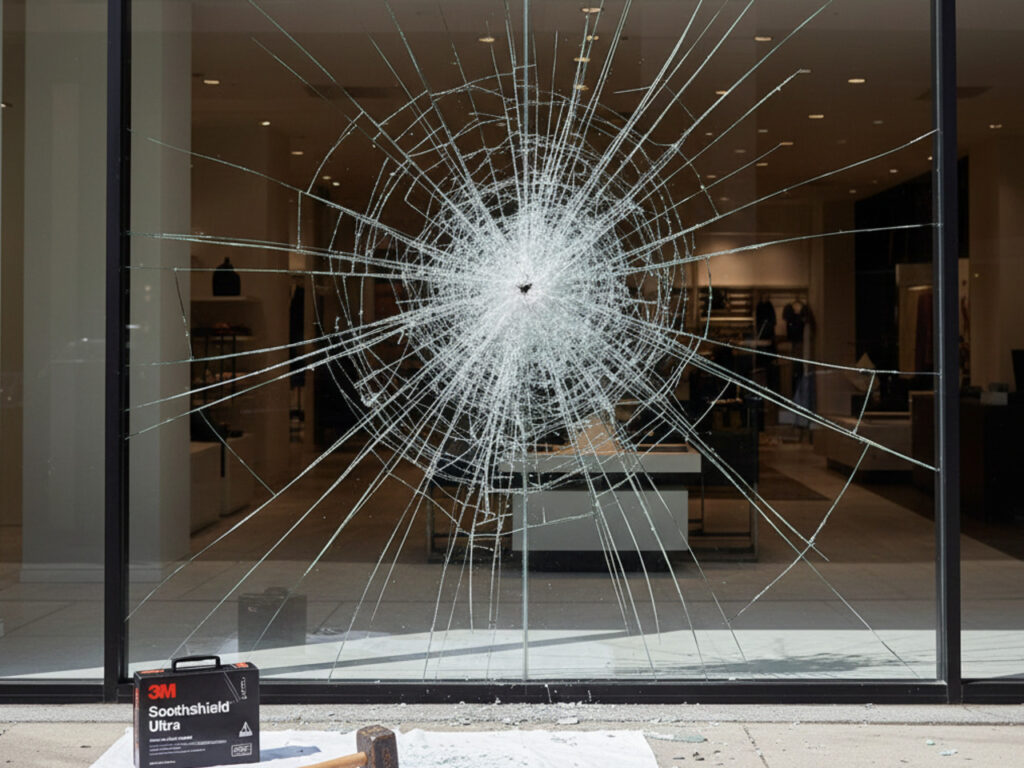
High-performance security window film represents a significant leap in glass safety technology. Unlike laminated glass, which is factory-manufactured as a composite unit, security film is an adhesive-backed polyester material applied directly to the interior surface of existing glass panes. Engineered with multiple layers and advanced adhesives, these films are designed to dramatically enhance the resilience of standard glass against impact, whether from forced entry attempts, accidental breakage, or natural disasters. Its primary function is to hold glass shards securely together upon impact, preventing dangerous fragmentation and maintaining a protective barrier. This retrofit security solution transforms existing windows.
Addressing Project Manager Paul’s Pain Points: Budget, Timeline, and Disruption
For project managers like Paul, whose success hinges on staying within budget and avoiding costly delays, security window film offers a powerful solution. This is especially true for security window film for commercial buildings.
- Budget: The cost of installing security film is often a fraction of the expense associated with full glass replacement. It eliminates the need for purchasing new glass units, specialized framing, and the extensive labor involved in demolition and reconstruction.
- Timeline: Film installation is significantly faster, typically measured in days or weeks for a large project, compared to the months often required for sourcing, fabricating, and installing custom laminated glass units. This accelerated timeline directly contributes to meeting project deadlines.
- Disruption: Perhaps most critically, security film causes minimal operational disruption. It can be applied with little to no impact on the building’s daily operations, avoiding the need for extensive site closures, relocation of occupants, or interruption of business activities.
The Argument for Retrofit Security: Enhancing Existing Glass Structures
The strength of advanced security film lies in its ability to enhance existing glass structures without altering their fundamental appearance or requiring structural modifications. Most commercial buildings feature standard annealed or tempered glass, neither of which provides significant resistance to forced entry or protection from flying shards. By retrofitting these existing windows with high-performance film, project managers can elevate their security profile to a level comparable to, or in some cases exceeding, that of laminated glass. This approach is particularly advantageous in renovation scenarios where preserving architectural integrity and minimizing structural changes are priorities. The existing glass remains in place, yet its performance under stress is profoundly transformed, offering robust retrofit security.
Shifting Paradigms: From Full Replacement to Advanced Film Technology
The advent of advanced security window film marks a paradigm shift in how project managers approach glass safety upgrades during renovations. The traditional mindset of “full replacement” for enhanced security is giving way to a more intelligent, efficient, and cost-effective strategy: leveraging cutting-edge film technology. This shift recognizes that simply replacing glass can be overly disruptive and expensive for many projects. Instead, it champions a solution that maximizes the value of existing assets while providing robust, measurable security enhancements. This modern approach aligns perfectly with the demands of contemporary renovation management, prioritizing efficiency, fiscal responsibility, and minimal operational impact.
Unlocking Efficiency and Value: The Practical Advantages of 3M Security Window Film
When it comes to advanced film technology, 3M stands out as a leader, offering solutions that translate directly into tangible benefits for renovation projects. Project managers seeking to optimize efficiency, enhance security, and deliver exceptional value will find the capabilities of 3M security window films particularly compelling.
How 3M™ Scotchshield™ Ultra Safety & Security Window Films Transform Standard Glass
3M™ Scotchshield™ Ultra Safety & Security Window Films, part of the 3M Ultra Series, represent the pinnacle of glass reinforcement technology. These films are distinguished by their unique micro-layered construction, which provides superior tear resistance and elongation properties compared to conventional security films. Unlike single-layer films, Scotchshield Ultra is composed of multiple, ultra-thin layers of polyester, creating a film that is incredibly strong yet optically clear. When applied to standard annealed or tempered glass, this film integrates with the glass using a proprietary, pressure-sensitive adhesive system. This bond effectively transforms ordinary glass into a significantly more robust barrier, dramatically altering its performance characteristics upon impact without changing its original appearance.
Superior Impact Resistance and Forced Entry Protection with Film Technology
The advanced design of 3M Scotchshield Ultra films delivers exceptional impact resistance and forced entry resistance. Upon impact from an intruder, a projectile, or a blast event, the film holds the shattered glass fragments firmly together within the window frame. This creates a formidable deterrent, preventing easy access and delaying entry significantly. Instead of glass shattering and creating an immediate opening, the film-reinforced pane acts as a flexible, protective membrane that is extremely difficult to penetrate. This not only frustrates intruders but also provides critical time for occupants to react and for security personnel to respond. Furthermore, by containing broken glass, the film protects building occupants and property from injury and damage caused by flying shards, a critical safety advantage in any high-stress scenario. This contributes to robust glass security systems.
Streamlining Project Timelines: Faster Installation, Less Operational Downtime
One of the most compelling practical advantages of 3M security window film for renovation projects is its impact on project timelines and operational continuity. Installing security film is a notably faster and less intrusive process than full glass replacement. Certified installers can apply the film directly to existing windows on-site, requiring minimal disruption to the building’s occupants or daily operations. There is no need for extensive demolition, the removal of existing frames, or the complexities associated with transporting and installing heavy new glass units. This streamlined process means projects can be completed in a fraction of the time, dramatically reducing operational downtime and accelerating the overall renovation schedule.
Cost-Effectiveness: A Direct Comparison to Laminated Glass Replacement
The cost implications of choosing 3M security window film over laminated glass replacement are substantial and directly address a key pain point for project managers. While the exact cost savings vary by project, installing high-performance security film typically ranges from one-third to one-half the cost of replacing existing windows with laminated glass. This comparison extends beyond just material costs. It includes:
- Reduced labor expenses: Film installation is less labor-intensive and requires less specialized equipment than glass replacement.
- Elimination of demolition and disposal costs: Existing windows remain in place.
- Minimized logistical complexities: No need for heavy machinery or specialized transport for large glass units.
- Reduced operational interruptions: Less downtime translates directly into financial savings for the client.
These combined factors make 3M security film a significantly more budget-friendly solution for achieving enhanced glass safety and security in renovation projects.
Leveraging Window Film Depot’s Expertise: The #1 U.S. 3M Window Film Installer
Partnering with a reliable and experienced installer is crucial to realizing the full benefits of advanced security film technology. Window Film Depot stands as the #1 U.S. 3M Window Film Installer, offering unparalleled expertise and consistent quality across projects. For project managers, this provides a vital advantage, addressing concerns about sourcing reliable, specialized vendors. Window Film Depot’s national presence ensures consistent quality and service delivery for multi-site or large-scale renovations. Their certified installers are extensively trained in 3M’s rigorous application standards, guaranteeing optimal performance and durability of the film. This partnership brings peace of mind, knowing that the security enhancement is installed correctly, efficiently, and to the highest industry standards, backed by a trusted leader in the field of security window film for commercial buildings.
Project Success Scenarios: When 3M Security Film Outperforms Full Glass Replacement
For project managers overseeing renovations, the strategic choice of security solutions can significantly impact timelines, budgets, and operational continuity. While laminated glass offers a baseline of protection, 3M security window film presents a compelling alternative, particularly when upgrading existing structures under tight constraints. Its retrofit capability often delivers superior value and performance in critical scenarios.
Illustrative Scenarios: Securing Commercial Buildings with Minimal Disruption
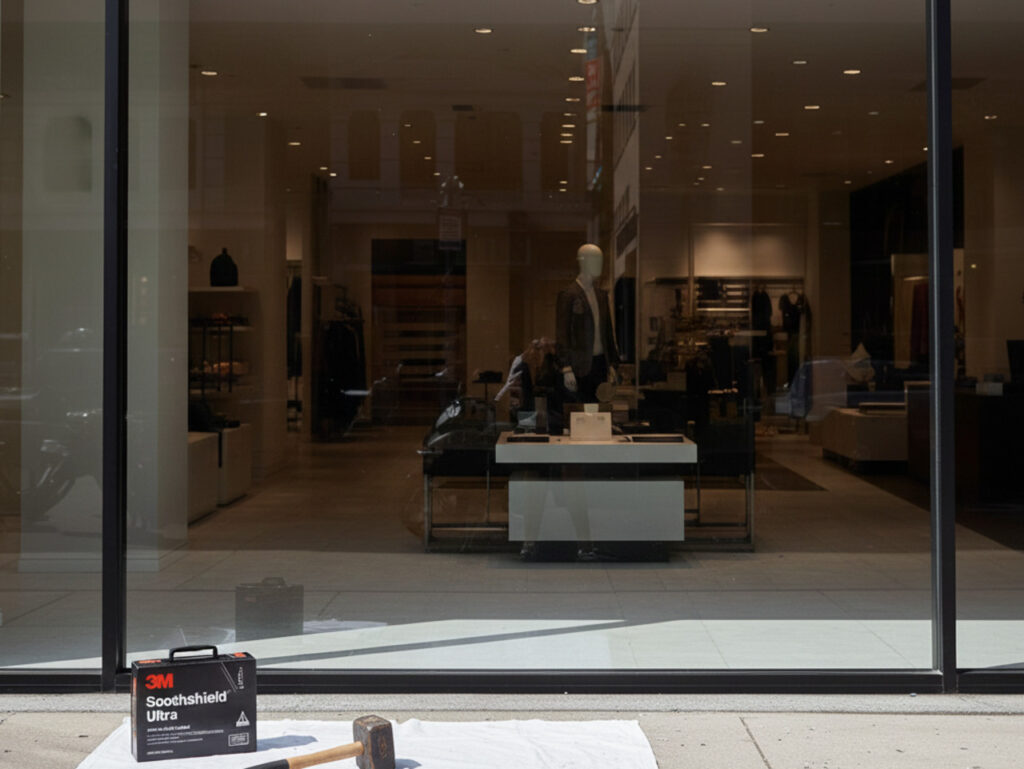
Consider a high-traffic retail storefront that requires enhanced smash-and-grab protection without prolonged closure. Replacing large panes of laminated glass would entail demolition, specialized lifting equipment, and potential business interruption spanning days or weeks. In contrast, 3M security film can be applied to the existing glass in hours, often outside of normal operating hours, allowing the business to continue trading with minimal or no downtime. Similarly, an office building upgrading its internal partitions or external windows for increased occupant safety benefits from the non-invasive nature of film installation, preserving daily operations and tenant satisfaction. This exemplifies the efficacy of security window film for commercial buildings.
Enhancing Existing Glazing for Increased Impact Resistance and Safety
The primary function of security film is to enhance the integrity of existing glass. These advanced films transform standard glass into a robust barrier against impact. This protection covers risks from vandalism, forced entry, or natural disasters. The film holds shattered fragments together to prevent dangerous shards from flying inward. This maintains the building envelope’s integrity even after significant damage occurs.
This retrofit capability achieves performance levels comparable to many laminated glass specifications. These results are achieved without the logistical complexity and expense of full replacement. This makes it a smart choice for achieving comprehensive shatterproof glass benefits.
Budget-Conscious Upgrades: Maximizing Security Without Overspending
For renovation managers, budget adherence is paramount. Full replacement of windows with laminated glass involves substantial costs encompassing materials, specialized fabrication, removal of old glass, and labor-intensive installation. 3M security window film offers a distinctly more economical pathway. It leverages the existing glazing infrastructure, drastically reducing material and labor expenses. This cost-effectiveness allows for broader implementation of security enhancements across an entire facility, rather than being limited to a few critical areas due to budget constraints, thereby maximizing the overall security footprint for the investment.
Meeting Regulatory Needs with Retrofit Security Solutions
Building codes, insurance mandates, and evolving security standards often necessitate upgrades to glazing systems. Some regulations require enhanced protection against active threats or specific levels of impact resistance. Undertaking a costly and disruptive overhaul to install new laminated glass is often unnecessary. High-performance security films offer a strategic retrofit solution for these compliance needs. These films bring existing windows up to required safety and security specifications efficiently. They often include documented performance data that satisfies most regulatory bodies. This approach makes achieving compliance both economical and practical for existing structures.
Prioritizing Business Continuity During Security Enhancements
One of the most significant advantages of security film in a commercial renovation context is its minimal impact on business operations. The application process is relatively clean, quiet, and swift compared to glass replacement. This means less noise, dust, and disruption to occupants, tenants, and customers. For a facility manager, ensuring that a renovation project does not impede an organization’s core functions or revenue generation is a critical success factor. 3M security film enables security upgrades to proceed with a strong emphasis on maintaining uninterrupted business continuity.
Navigating Your Options: Choosing the Optimal Security Solution for Your Project
Selecting the right security solution requires a systematic evaluation of project specifics and available technologies. For renovation projects, the balance between security performance, cost, timeline, and operational impact is crucial.
Assessing Project-Specific Security Goals and Performance Requirements
The first step in any security upgrade is to clearly define the desired outcome. This involves asking critical questions: What specific threats are we mitigating (e.g., smash-and-grab, forced entry resistance, blast mitigation, natural disaster resilience)? What level of resistance or delay is required? Are there aesthetic considerations, such as maintaining existing window frames or visual transparency? Understanding these security goals and measurable performance requirements will guide the selection process, ensuring that the chosen solution effectively addresses the unique vulnerabilities of the building.
Evaluating Budget Constraints, Timeline Imperatives, and Operational Impact
Project managers consistently juggle three primary constraints: budget, timeline, and operational impact.
- Budget Constraints: Full glass replacement with laminated units typically incurs significantly higher material, labor, and disposal costs. Security film, as a retrofit, presents a more budget-friendly option, allowing funds to be allocated more broadly or to other critical project elements.
- Timeline Imperatives: Renovation schedules are often aggressive. The lead time for custom laminated glass fabrication and the installation period can be extensive. Security film installation is substantially faster, helping to keep projects on track and avoid costly delays.
- Operational Impact: Minimizing disruption to building occupants and business operations is key. Security film application is far less intrusive, producing less noise and debris, allowing for continued occupancy and productivity.
The Role of a Trusted Partner: Expert Consultation and Installation Services for Security Window Film for Commercial Buildings
The effectiveness of any security window film solution hinges on proper selection and professional installation. Engaging a trusted partner with specialized expertise in 3M security window films for commercial buildings is non-negotiable. An experienced provider offers:
- Comprehensive Assessment: Evaluating your specific threats, existing glass types, and structural considerations.
- Tailored Solutions: Recommending the optimal film product and attachment system for your performance requirements.
- Precision Installation: Ensuring the film is applied flawlessly, maximizing its protective qualities and aesthetic finish.
- Compliance Guidance: Helping navigate relevant building codes, insurance standards, and industry best practices.
Long-Term Value: Maintenance, Warranties, and Future-Proofing Investments
Investing in security solutions should offer long-term value. 3M security films are engineered for durability, requiring minimal maintenance beyond standard glass cleaning. They come with robust warranties, ensuring peace of mind regarding product longevity and performance. Furthermore, by choosing a retrofit security solution, you are future-proofing your assets. Should security threats evolve or regulations change, the flexibility of film allows for easier upgrades or modifications compared to the structural commitment of laminated glass replacement, protecting your initial investment and adaptability for years to come.
Conclusion: Strategic Security for Modern Projects and Future-Proofing Assets
Recapping the Core Advantages of 3M Security Film for Renovation Managers
For renovation managers, the advantages of 3M security window film are clear and compelling. It offers a cost-effective, time-efficient, and minimally disruptive method to significantly enhance the safety and security of commercial buildings. From increased impact resistance and protection against forced entry to compliance with regulatory standards, security film provides a robust solution without the financial and logistical burdens associated with full laminated glass replacement. This includes specific benefits of the 3M Ultra Series.
The Paradigm Shift: Embracing Smart, Cost-Effective Security Upgrades
The landscape of building security is evolving, along with strategies for achieving optimal protection. The traditional approach of defaulting to costly laminated glass replacement is giving way to a new paradigm. This intelligent shift focuses on solutions that are adaptable and budget-conscious. Advanced security window films represent this change perfectly. They offer high-performance results strategically aligned with the practicalities of modern renovation.
Empowering Project Managers to Make Informed, Strategic Decisions
Our aim is to empower project managers with the knowledge to make informed decisions that deliver superior security outcomes while respecting project constraints. Understanding the capabilities and benefits of 3M security film enables a strategic approach to security upgrades, moving beyond conventional choices to solutions that truly align with project success metrics.
Partnering for Enhanced Safety and Operational Efficiency in Construction
Ultimately, choosing 3M security window film for your renovation projects is about partnering with advanced technology to achieve enhanced safety and operational efficiency. It’s about securing assets and protecting people, all while maintaining project integrity, budget adherence, and business continuity. This strategic approach ensures that security upgrades are not just effective but also smart investments for the future.
Frequently Asked Questions
What is laminated safety glass, and how does it compare to tempered glass for renovations?
Laminated safety glass consists of multiple glass panes bonded by an interlayer (often PVB), which holds fragments together upon breakage, reducing injury risk and offering forced entry resistance. Tempered glass, however, shatters into small, blunt pieces when broken, providing no residual barrier. For renovations, replacing existing glass with either type can be costly and disruptive. Security films offer a less invasive retrofit solution.
What is PVB interlayer, and why is it important in laminated glass?
The polyvinyl butyral (PVB) interlayer is a transparent, viscoelastic film bonded between glass panes in laminated glass. It’s crucial because it absorbs impact energy, holds broken glass fragments together, and prevents shattering, making the glass safer and more resistant to penetration.
Can security window film for commercial buildings offer comparable protection to laminated glass?
Yes, high-performance security window film, such as 3M Ultra Series films, can dramatically enhance the impact resistance and forced entry protection of existing commercial building glass to levels comparable to, or in some cases exceeding, laminated glass. It achieves this by holding shattered glass securely within the frame, creating a formidable barrier without the need for full glass replacement.
How does 3M security film help manage renovation budgets and timelines?
3M security film offers significant cost savings compared to full laminated glass replacement, often costing 1/3 to 1/2 as much. Installation is much faster, typically measured in days or weeks, reducing project timelines. It also minimizes operational disruption, as it’s applied to existing glass, avoiding extensive demolition, labor, and business downtime.
Where can I find a reliable installer for security window film for commercial buildings?
To ensure optimal performance and durability, it’s critical to partner with a certified and experienced installer. Window Film Depot, recognized as the #1 U.S. 3M Window Film Installer, offers unparalleled expertise and consistent quality for security window film for commercial buildings, backed by 3M’s rigorous application standards and comprehensive warranties.