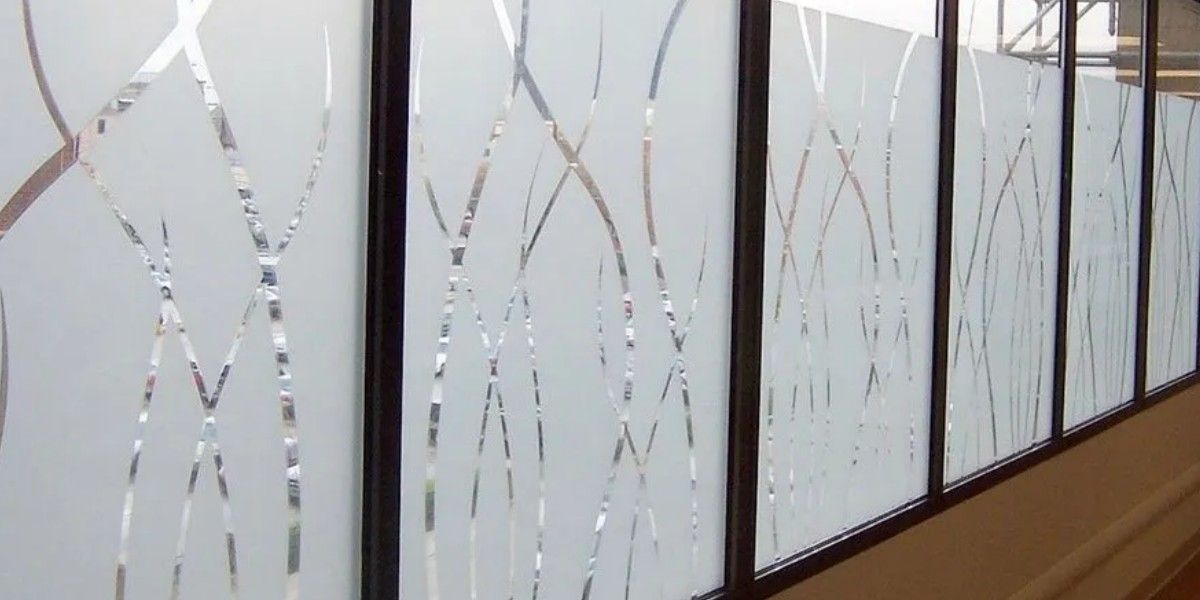
Table of Contents:
- The Premium Glass Assumption Is Costing Your Projects More Than You Think
- What Is Frosted Glass Film and How Does It Work?
- Frosted Glass Film vs. Etched and Sandblasted Glass: A Specification Comparison That Changes the Conversation
- Key Applications Across Commercial, Education, and Retail Environments
- Performance Specifications: What to Look for When Writing the Spec Sheet
- How 3M Frosted Window Films Set the Performance Baseline for Commercial Specifications
- Installation Considerations for Large-Scale and Multi-Site Projects
- How to Specify and Source Frosted Glass Film for Your Project
- Specifying With Confidence: Key Takeaways and Your Next Step With Window Film Depot
- Frequently Asked Questions
The Premium Glass Assumption Is Costing Your Projects More Than You Think
Frosted Glass Film is changing how commercial projects approach privacy, cost, and installation timelines. Instead of relying on etched or sandblasted glass, project teams now have a solution. It delivers the same visual effect with far greater flexibility. Frosted glass film provides consistent privacy and faster installation. It also delivers significantly lower total project costs. This makes it a practical specification choice across office, retail, and institutional environments.
Why Etched and Sandblasted Glass Became the Default Specification
Etched and sandblasted glass earned its reputation honestly. For decades, it was the only credible way to deliver a sophisticated, permanent frosted finish on commercial glazing. Architects specified it because the finish was integral to the glass itself, the aesthetic held up over time, and no one questioned whether a more practical alternative existed. That logic made sense when it was true.
The specification stuck even after it stopped being the only viable answer. Design standards get embedded in firm templates, subcontractor relationships get established around particular material channels, and procurement teams default to what passed client review last time. The result is a default specification built on legacy assumptions rather than current performance data.

The Hidden Project Risks Buried in That Default Choice
The specification risk isn’t in the finished product. Etched glass looks excellent. The risk is in everything that surrounds it. Fabrication lead times run eight to twelve weeks on custom orders. Glass breakage during transit or installation can restart the timeline entirely. A permanent surface treatment becomes a liability when a tenant reconfigures a floor plan.
On a multi-story office renovation or a multi-site retail rollout, those variables compound quickly. A single broken panel on a curtain wall application can hold up occupancy sign-off. A tenant who needs a partition relocated six months after move-in faces full glass replacement costs, not a film swap. These aren’t edge cases. They’re predictable outcomes of specifying a permanent, fragile, long-lead material in a schedule-driven environment.
Reframing the Specification Decision: Performance Metrics Over Perceived Prestige
The real question isn’t which option looks more high-end, but which one delivers the privacy performance you need. It has to fit the project timeline, keep total ownership costs low, and reduce the risk of costly change orders. When you look at it that way, frosted glass film becomes a strong contender—far from just a budget-friendly compromise.
What Is Frosted Glass Film and How Does It Work?
The Science of Light Diffusion: VLT, SHGC, and What the Numbers Actually Mean
Frosted glass film works by scattering transmitted light rather than blocking it. The film’s micro-textured surface disrupts the direct path of light passing through the glass. It produces diffusion that obscures lines of sight. It also maintains usable ambient light in the space.
Two numbers matter most when writing the spec:
- Visible Light Transmittance (VLT) expresses the percentage of visible light the film allows through. A typical commercial frosted film runs between 40% and 70% VLT depending on opacity level. Higher VLT maintains daylight in interior spaces, while lower VLT increases visual privacy.
- Solar Heat Gain Coefficient (SHGC) measures how much solar energy passes through the glazing assembly. Some frosted films carry an SHGC below 0.40, which contributes to building envelope performance and can support energy code compliance.
Specifying by these values rather than by visual description gives the design team a defensible, measurable target and gives the installer a clear performance threshold to match.
Film Construction: Mil Thickness, Adhesive Type, and Substrate Compatibility
Commercial-grade frosted film is a polyester substrate, typically 1.5 to 4 mils thick, with a factory-applied adhesive layer on one face and a protective release liner on the other. Thicker mil profiles offer better durability and dimensional stability on large glass panels. Thinner profiles conform more easily to complex or curved substrates.
Substrate compatibility matters more than most specs acknowledge. Standard soda-lime float glass, low-e coated glass, tempered glass, and laminated safety glass each behave differently under film. Certain adhesive formulations are incompatible with specific low-e coatings and can cause adhesion failure or coating delamination. A professionally specified film product will include a substrate compatibility chart. If it doesn’t, that’s a procurement flag.
Static Cling vs. Pressure-Sensitive Adhesive: Choosing the Right Bond for Commercial Glazing
Static cling film uses no adhesive. It holds to glass through electrostatic attraction and can be removed and repositioned without residue. It’s appropriate for temporary applications, seasonal graphics, or situations where the building owner needs frequent reconfiguration. The trade-off is that static cling film can lift at edges in high-humidity environments or on glass with heavy texture.
Pressure-sensitive adhesive (PSA) film bonds chemically to the glass surface and is the standard for permanent commercial installations. PSA film stays flat across large glass panels. It resists edge lifting and handles thermal cycling. This is common in exterior or high-solar-exposure glazing. For conference rooms, office partitions, and retail storefronts, PSA is the correct specification. It is also ideal where the film must perform for five or more years.
How Frosted Film Differs from One-Way Mirror Film
Frosted film and one-way mirror film, also called reflective privacy film, serve different privacy functions. Frosted film diffuses light in both directions, obscuring visibility from either side of the glass regardless of lighting conditions. It reads as opaque and delivers consistent privacy around the clock.
One-way mirror film creates directional privacy based on a lighting differential: the brighter side reflects while the viewer on the darker side sees through. That effect reverses at night when interior lighting is higher than exterior ambient light, which eliminates privacy in the evening hours.
For spaces that require consistent visual privacy throughout the day and after dark, frosted glass film is the specification that delivers without caveat.
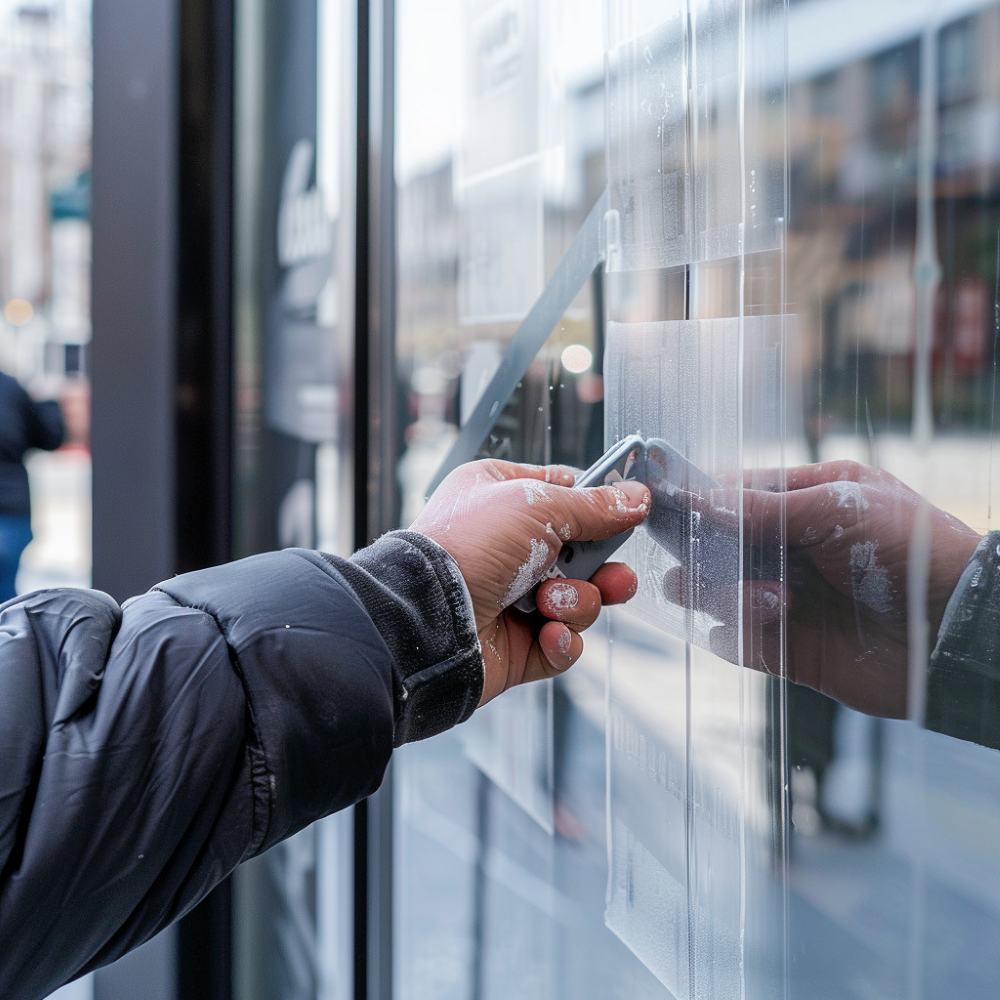
Frosted Glass Film vs. Etched and Sandblasted Glass: A Specification Comparison That Changes the Conversation
The Dimensions That Matter to a Project Manager: Cost, Lead Time, Reversibility, and Maintenance
Cost Per Square Foot: Installed Budget vs. Glass Fabrication and Replacement
Professionally installed frosted glass film typically runs $8 to $20 per square foot installed. This depends on film product, panel complexity, and project scale. Custom etched or sandblasted glass panels start at $25 to $50 per square foot fabricated. This excludes freight and installation labor. On a 5,000-square-foot glazing scope, that differential can represent substantial hard budget exposure before a single change order is written.
Lead Time and Schedule Impact on Active Construction or Renovation Phases
Standard commercial frosted film ships from distributor stock in one to five business days. A professional installer can complete a 2,000-square-foot partition scope in one to two days on-site. Custom etched glass panels require four to twelve weeks from fabrication order to delivery, with no acceleration path if the schedule slips.
On any project with a fixed occupancy date, that lead time gap is a schedule risk. Frosted glass film is the only privacy glazing option that can be specified, procured, and installed within a compressed punch-list window.
Reversibility and Future Adaptability for Tenant or Campus Changes
Etched and sandblasted finishes are permanent. Reconfiguring a partitioned space means replacing glass. This requires fabrication lead time, mobilization cost, and construction disruption in an occupied building.
PSA frosted film removes cleanly from float glass and most coated substrates. This requires a trained installer using proper technique. That reversibility is a genuine asset for multi-tenant office buildings. It also benefits campus environments and retail portfolios where floor plans shift with business needs.
Maintenance Requirements and Long-Term Surface Integrity
Etched and sandblasted glass surfaces are porous at a microscopic level. They attract oils, soaps, and mineral deposits that are difficult to remove without abrading the finish further. In high-traffic restroom or lobby applications, the surface degrades visibly over time.
Frosted film presents a sealed, non-porous surface that wipes clean with standard glass cleaner. The finish doesn’t absorb contaminants, and if a panel is damaged by impact or vandalism, the film replaces for a fraction of the cost of a fabricated glass panel.
Specification Comparison: Frosted Glass Film vs. Etched and Sandblasted Glass
The table below compares the two specifications across the dimensions that drive project decisions, not aesthetic preference.
| Specification Factor | Frosted Glass Film | Etched / Sandblasted Glass |
|---|---|---|
| Installed cost per sq ft | $8 to $20 | $25 to $50+ |
| Lead time to installation | 1 to 5 days (stock) | 4 to 12 weeks (custom fab) |
| Reversibility | Fully removable, no glass damage | Permanent, requires full replacement |
| Maintenance burden | Sealed surface, standard glass cleaner | Porous surface, absorbs contaminants |
| Warranty coverage | Manufacturer-backed (e.g., 3M: 10 years commercial) | Fabricator-dependent, no post-install warranty |
| Installation disruption | Low: no structural work, no glazing removal | High: existing glass must be removed and replaced |
| Change-order exposure | Minimal: film swaps are low-cost | High: any change restarts fabrication cycle |
| Aesthetic finish quality | Comparable visual result | Comparable visual result |
The only column where etched glass holds a genuine advantage over film is permanence. If the building program will never change and the budget has no ceiling, that argument holds. On every other dimension a project manager controls, frosted glass film is the stronger specification.
Where Frosted Film Has Honest Limitations
Frosted film is not the right answer for every condition. A few scenarios where etched glass remains the better specification:
- Exterior glass surfaces exposed to constant mechanical abrasion will wear film faster than interior applications. This includes ground-level storefronts on high-pedestrian streets. Film life in these conditions shortens to three to five years. In protected interior applications, film typically lasts seven to twelve years.
- Fire-rated glazing assemblies often carry strict requirements about what can be applied to the glass surface. Some fire-rated glazing manufacturers will void their listing if film is applied. Always verify compatibility with the glazing manufacturer before specifying film on rated assemblies.
- Textured or heavily patterned glass substrates may not accept film adhesion consistently, which can produce visible bubbling or edge gaps over time.
These are real constraints, not hypothetical ones. A credible specification process identifies them early and routes those specific panels to etched glass while applying film across the remainder of the scope.
What This Comparison Means for Client Deliverables and Sign-Off
Clients approve specifications based on outcome confidence, not material loyalty. When a project manager shows that frosted glass film delivers an equivalent visual finish, the conversation shifts. It also offers significantly lower installed cost and a schedule that avoids adding weeks to the critical path. It provides flexibility to reconfigure space without full construction mobilization.
The objection to film is usually aesthetic perception. Some assume it looks less permanent or less refined than etched glass. That objection dissolves on-site when the client sees a properly installed 3M Fasara glass finish film panel. The specification decision then becomes about the data. The data favors film.
Key Applications Across Commercial, Education, and Retail Environments
Conference Room and Office Partition Privacy
Glass-walled conference rooms create a recurring specification challenge: the building program calls for visual connection and light continuity, but the occupancy type demands sightline privacy from corridors and open-plan floors. Frosted glass film resolves that tension without walling off the space.
A mid-height band application, typically 36 to 60 inches from the floor, blocks seated sightlines from adjacent workstations while preserving upper-glass daylighting. Full-height film at 40% to 55% VLT maintains a bright, open feel while delivering consistent privacy.
Both approaches install in hours on existing glazing, which means a conference room retrofit fits into a single off-hours shift rather than a multi-week glass replacement cycle.
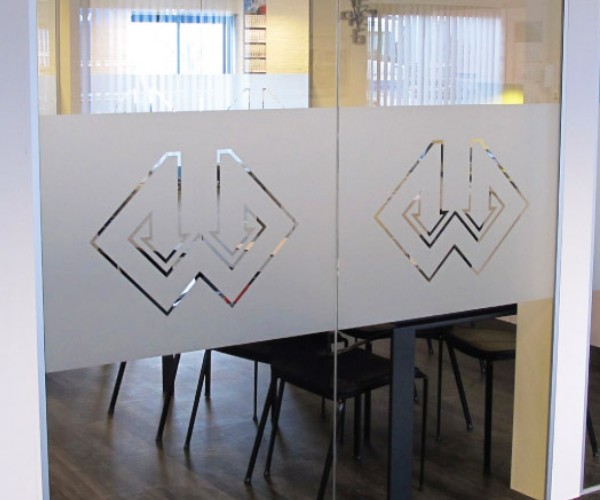
For open-plan offices using glass demountable partitions, privacy window film for commercial applications also addresses BIFMA and WELL Building Standard considerations around visual privacy zones without requiring structural changes to the partition system.
Retail Storefronts and Display Glazing: Decorative Window Film as a Brand Asset
Retail glazing does two jobs simultaneously. It draws pedestrian attention and controls the view into back-of-house or inventory areas. Decorative window film for offices and retail environments handles both. This works best when it is specified as a brand element, not an afterthought.
3M Scotchprint Decorative Film allows retailers to apply full-color graphics and frosted window bands. It also supports cut patterns directly on storefront glazing. A flagship location might use a semi-transparent frosted gradient across the lower third. This frames a product display while obscuring floor-level merchandising infrastructure. The same pattern can roll out to 50 additional locations. It uses the same digital file with consistent color and opacity across every panel.
The specification advantage is scalability. A sign fabricator cutting new glass panels faces custom fabrication lead times at every site. A film installer working from a digital production file can match the pattern precisely. This can be done across any number of locations on a coordinated timeline.
Educational Facilities: Privacy Film, ADA Glass Manifestation Requirements, and Code Compliance
IBC Section 2406 and ADA accessibility guidelines both require that large expanses of transparent glazing in public corridors carry visible manifestation markings to prevent occupant contact injuries. Those markings must fall within specific height bands, typically 34 to 38 inches and 66 to 72 inches above the floor, and meet minimum contrast or visibility thresholds.
Frosted glass film satisfies both requirements in one installation. A two-band frosted strip at ADA-specified heights reads clearly against the transparent glass behind it, meets the contrast requirement, and adds a layer of visual privacy for classrooms adjacent to public corridors. Schools and universities that specify film for ADA glass manifestation compliance also get corridor privacy at no additional material cost, which is a straightforward efficiency gain over etched markings that accomplish only the code function.
Healthcare and Corporate Interiors: Translucent Film for Regulatory and Acoustic Zoning
Healthcare interiors operate under HIPAA sightline requirements that mandate visual separation between patient care zones and public corridors. Frosted glass film on consultation room sidelights and corridor glazing creates the required visual barrier without the construction disruption of adding solid walls in occupied facilities.
In corporate environments, frosted film often gets deployed alongside acoustic partition systems to create quiet focus zones or HR interview rooms within open office floors. The film addresses the visual privacy requirement while the partition system handles sound. These two scopes typically run in parallel under different subcontractors but share the same installation sequence: film installs after glazing is set and before furniture moves in, which keeps both scopes on the same punch-list window.
How Privacy Window Film Commercial Applications Differ From Residential Installs
The film product may be the same, but the scope, risk profile, and installation requirements are fundamentally different at commercial scale. Residential installs typically involve panels under 20 square feet, standard float glass substrates, and a single visit by one installer. A commercial project may involve 300 to 3,000 square feet of glazing across multiple substrate types, occupied floors, restricted access windows, and coordination with active construction trades.
Commercial installation requires substrate documentation before procurement, not after. It requires staging logistics for large rolls, wet application technique on oversized panels, and quality verification protocols that hold up under owner inspection. Residential product tolerances and warranty terms don’t transfer to commercial conditions. Specifying a commercial-grade product from a manufacturer like 3M, rather than a consumer-grade equivalent, is the distinction that protects the project record when the owner’s rep does the final walkthrough.
Performance Specifications: What to Look for When Writing the Spec Sheet
Aligning VLT and SHGC Values With Building Envelope Goals
The spec sheet should define VLT and SHGC thresholds before selecting a film product, not after. Starting with aesthetics and working backward to performance data creates gaps that show up during energy modeling or commissioning review.
For office and education applications targeting ASHRAE 90.1 compliance, a film with an SHGC below 0.45 on south- and west-facing glazing reduces cooling load without requiring a separate solar control film. Products like 3M Fasara SH2DCLAR combine privacy diffusion with an SHGC in the 0.38 to 0.42 range, which means a single film product addresses both the privacy requirement and a portion of the building envelope performance target.
Need More Info?
The Window Film Depot team is happy to help.
LEED Glazing Credits and Architectural Window Film’s Role in Sustainable Design
Frosted glass film contributes to LEED v4 credit pathways in two areas: Daylight (EQ Credit 7) and Thermal Comfort (EQ Credit 5). By diffusing direct solar gain without eliminating daylight, properly specified film can help maintain spatial daylight autonomy (SDA) values above the 55% threshold required for credit compliance. Films with confirmed low-emissivity values also support envelope compliance documentation under EA Prerequisite 2.
The key is documentation. A manufacturer-issued technical data sheet showing tested VLT, SHGC, and UV rejection values is required for credit submission. Generic or unbranded film products rarely carry NFRC-tested data, which disqualifies them from LEED documentation regardless of their actual performance.
3M Fasara Glass Finish Film: Product Line Overview, Specification Data, and Warranty Terms
3M Fasara glass finish film is the commercial specification standard for architectural frosted film. The product line includes over 100 patterns across four opacity categories: clear (87 to 90% VLT), light (60 to 70% VLT), medium (40 to 55% VLT), and dense (15 to 30% VLT). Each SKU carries published NFRC performance data including VLT, SHGC, U-factor, and UV rejection.
For commercial applications, 3M backs Fasara with a 10-year warranty against delamination, bubbling, and color shift when installed by a certified 3M dealer on compatible substrates. That warranty is transferable to a building owner and survives a tenant change, which matters for multi-tenant office and retail properties where the owner carries long-term responsibility for the building envelope.
3M Scotchprint Decorative Film: Custom Patterns, Brand Graphics, and Surface Finish Options
3M Scotchprint Graphic Films extend the specification into custom branding territory. Designers supply vector artwork or photography, and the film is digitally printed with UV-stable inks onto a translucent substrate that reads as frosted or semi-opaque depending on the base film selected. The result integrates a corporate logo, wayfinding pattern, or branded graphic directly into the glass surface.
Scotchprint is the correct product when the design intent calls for something beyond a stock Fasara pattern. It’s specified on lobby glass, executive suite entry doors, and retail storefronts where brand expression and privacy are the same requirement, not separate ones.
How Long Does Frosted Window Film Last? Lifespan Variables by Environment and Use Case
Interior applications on standard float glass with PSA adhesive routinely achieve seven to twelve years before any visible degradation. The variables that compress that range are UV exposure, cleaning chemistry, and surface contact frequency.
Films installed on interior sidelights in climate-controlled environments last toward the upper end of that range. Films on lobby entry glass with direct sun exposure and daily cleaning by custodial staff land closer to seven years. Films specified near food service or industrial cleaning stations need to account for chemical compatibility between the adhesive and the cleaning agents in use. 3M Fasara technical data sheets include cleaning compatibility guidance, which should be reviewed against the facility’s standard cleaning protocols before final specification.
Does Frosted Film Block Heat as Well as Provide Privacy?
Standard frosted film provides modest solar heat reduction, primarily through scattering rather than reflection. A film at 50% VLT with no additional solar control layer will reject a portion of incoming solar energy, which is meaningful but not equivalent to a dedicated solar control film.
If the project brief requires both privacy and significant heat rejection, a dual-layer specification works: a solar control film applied first, topped with a frosted overlay, or a single product with integrated solar performance like 3M Fasara SH2DCLAR. The important distinction is that frosted appearance alone doesn’t guarantee thermal performance. If heat load reduction is a design requirement, verify SHGC values in the product data sheet rather than inferring performance from opacity level.
How 3M Frosted Window Films Set the Performance Baseline for Commercial Specifications
What Separates Professionally Specified Film From Generic Catalog Products
The visible difference between a 3M Fasara panel and an unbranded frosted film often isn’t apparent at installation. The difference shows up at year three or year five: color shift, edge adhesion failure, micro-bubbling from off-gassing, or delamination at seams. Generic products rarely carry tested performance data, which means their VLT and SHGC values are estimates at best.
Generic film products also don’t carry the batch consistency or documented shelf life that a large commercial order requires. If a 50-location retail rollout specifies a product that the distributor can no longer source in consistent stock, the project manager absorbs the cost of sourcing a substitute and reverifying performance. Specifying a named 3M product eliminates that variable by tying the spec to a product with global manufacturing consistency and a documented supply chain.
Warranty Coverage, Product Consistency Across Large Orders, and Batch Traceability
3M’s commercial warranty for Fasara film covers ten years on interior applications when installed by a 3M Authorized Dealer. That warranty covers the product against manufacturing defects, adhesion failure, and color shift under normal commercial use conditions. Physical damage or improper cleaning is excluded, which is standard for any surface warranty.
Batch traceability matters on multi-site projects where panels may be installed months apart. 3M assigns lot numbers to film production runs. A nationally operating installer maintains procurement documentation that ties each installation location to a specific lot, which means that if a warranty claim arises at one site, the installer can verify whether adjacent locations from the same production batch require inspection. That’s not a capability most regional installers or generic-product suppliers can match.
UV Blocking Performance: What High UV Rejection Means for Interior Furnishings and Occupant Comfort
3M Fasara blocks up to 99% of UV radiation in the 300 to 380nm range. That figure matters because UV is the primary driver of interior fade damage. Upholstery, carpet, wood finishes, artwork, and merchandise all degrade faster under direct UV exposure from unfiltered glass.
For a corporate headquarters with significant furniture investment, or a retail environment where displayed merchandise cannot be yellowed or faded, that level of UV rejection translates to a direct return. Frosted glass film on high-solar-exposure elevations closes that gap without altering the daylighting character of the space.
Installation Considerations for Large-Scale and Multi-Site Projects
Why Installation Quality Variance Is the Biggest Hidden Risk in Multi-Location Rollouts
A project manager coordinating a 30-location retail film installation faces a problem that doesn’t exist on a single-site job: installer quality isn’t uniform across a distributed subcontractor network. A regional installer who does excellent work in one market may have a two-person crew in another market with a fraction of the experience on large-panel commercial glazing. The result is visual inconsistency across locations, including different installation patterns, edge gaps, or seam alignment on identically specified panels.
That inconsistency doesn’t just create punch-list items. It creates brand perception problems for retail clients who expect their store environments to read identically across markets. Catching that variance during quality walkthrough at installation 18 of 30 is not the moment to discover the subcontractor network can’t hold a consistent standard.
How Professional Architectural Window Film Installation Eliminates Schedule Fragmentation
A nationally credentialed installer with its own field crews across multiple regions solves the variance problem at the source. The same installation standard, the same tool kit, and the same quality verification checklist apply at every location. Site supervisors report to a single project coordinator who tracks progress against the master schedule in real time.
That structure also compresses the schedule. Rather than sequencing locations through a single regional crew over six months, a national installer stages multiple crews across geographic clusters, compressing a multi-location rollout significantly without sacrificing quality consistency. For retail openings tied to lease commencement dates, that compression is a hard budget benefit.
Removing and Replacing Frosted Film Without Damaging Glass
PSA frosted film removes cleanly from standard float glass when a trained installer uses the correct combination of heat application and mechanical lift technique. The adhesive softens under a heat gun at approximately 120 to 130 degrees Fahrenheit, allowing the film to peel from the surface without tearing or leaving adhesive residue embedded in the glass.
On low-e coated glass, removal requires additional care. The metallic coating layer is sensitive to mechanical abrasion, and aggressive scraping during removal can damage the coating irreversibly.
An experienced installer assesses the substrate type before removal and adjusts technique accordingly. That’s a skill gap that shows up immediately on a multi-site rollout if the installer team doesn’t have documented experience with coated glazing.
Meeting Commercial Building Codes and Safety Standards
The primary code question is whether applying film to safety-glazing assemblies affects their performance rating. ANSI Z97.1 and CPSC 16 CFR Part 1201 govern safety glazing in hazardous locations. Film applied over a rated safety glazing assembly does not change the glass’s underlying rating, but the film product itself should carry independent test documentation confirming it doesn’t compromise the breakage pattern or safety performance of the assembly beneath it.
3M Fasara carries independent safety glazing test data that satisfies this requirement. For fire-rated assemblies, the governing question is different: the glazing manufacturer’s certification may prohibit film application entirely. Always request written confirmation from the glazing manufacturer before specifying film on fire-rated panels, and document that confirmation in the project record.
Subcontractor Coordination, Site Sequencing, and Keeping the Master Schedule Intact
Film installation fits into the construction sequence after glazing is set and cleaned, and before furniture installation and final cleaning. That window is often 48 to 72 hours in an active construction schedule, which means the film subcontractor needs to be coordinated with the glazing contractor’s completion timeline and the furniture installer’s start date.
On multi-floor commercial projects, sequencing by floor rather than by building allows the film installation to run concurrent with other trades on unfinished floors without holding up occupancy on completed floors. A project manager who builds that sequencing into the master schedule at preconstruction avoids the common scenario where film installation sits idle waiting for glazing sign-off on all floors simultaneously.
Certifications and Credentials for Commercial Frosted Film Installers
The minimum credential for a commercial frosted film installer is 3M Authorized Dealer status, which requires documented training, product knowledge certification, and authorization to issue 3M-backed warranties. Without that authorization, the installer cannot deliver the manufacturer warranty that protects the owner’s long-term interest.
Beyond manufacturer authorization, commercial-scale architectural window film installation on occupied buildings requires:
- General liability insurance at limits appropriate to the project scope, typically $2 million per occurrence minimum on commercial projects
- Workers’ compensation coverage for all on-site personnel
- OSHA 10 or OSHA 30 certification for crew leads working on active construction sites
- Documented experience on comparable-scope commercial projects, verifiable by project reference
For multi-site national rollouts, the installer should also carry a centralized project management structure with a named account manager who maintains contact with the project manager throughout the engagement, not just during site visits.
How to Specify and Source Frosted Glass Film for Your Project
Writing the Specification: Performance Thresholds, Approved Products, and Installation Standards
A well-written spec for frosted glass film does three things: it defines measurable performance targets, names approved products by manufacturer SKU, and sets installation standards the contractor must meet before sign-off. Without all three, the specification leaves the project manager dependent on installer judgment at the moment of procurement.
Performance thresholds should define minimum VLT, SHGC, and UV rejection values for each glazing zone, tied to the building program requirements for that space. A conference room spec and a south-facing exterior lobby spec will carry different thresholds, and both should be explicit in the document.
Approved product lists should reference named 3M Fasara or Scotchprint SKUs rather than generic descriptions like “frosted film, medium opacity.” Naming the product locks in the performance data, the warranty coverage, and the batch consistency the project depends on.
Installation standards should specify substrate documentation prior to procurement, minimum panel preparation requirements, acceptable wet application tolerances, and the quality verification process the installer must complete before the scope is considered closed. These aren’t bureaucratic additions to the spec. They’re the terms that give the project manager leverage if an installer delivers work that doesn’t hold up under inspection.
Procurement Risk Mitigation: Why Vendor Credentialing Matters at Enterprise Scale
At single-site scale, a regional installer with a good track record and a 3M Authorized Dealer credential is a reasonable procurement choice. At enterprise scale, a 20-location rollout spread across eight states, that calculus changes significantly. The risk isn’t whether the lead crew can install film correctly. The risk is whether every crew deployed across every market can hold the same standard, documented and verifiable, across a compressed timeline.
Vendor credentialing at enterprise scale should confirm:
- 3M Authorized Dealer status, verifiable through 3M’s dealer locator, not just claimed on a quote document
- Demonstrated experience on comparable multi-site commercial scopes, with project references by location count and square footage
- A centralized project management structure with a single accountable contact, not a handoff to regional subcontractors at each market
- Insurance and safety credentials that apply uniformly to all deployed crews, not just the primary field team
The distinction between a nationally operating installer and a regional firm that advertises national reach matters most when a quality variance surfaces at location 14. A truly national installer has the project management infrastructure to identify the variance, correct it, and prevent it from repeating at the remaining sites on the schedule. A loosely coordinated subcontractor network doesn’t have that visibility or that authority.
What Performance Guarantees Should a National Installer Provide?
The manufacturer warranty and the installer warranty are separate instruments, and a project manager needs both. The 3M manufacturer warranty covers product performance against delamination, bubbling, and color shift for ten years on interior applications installed by a certified dealer. The installer warranty covers workmanship: edge adhesion, seam alignment, surface preparation, and the absence of visible defects at the time of installation.
A qualified national installer should provide a written workmanship warranty of at least two years, covering any installation defect that appears under normal use conditions after acceptance. That warranty should be tied to a documented punch-list process with photographic quality records for each installation location, so that any post-installation claim can be evaluated against a baseline record of the work at sign-off.
The project manager should also confirm that the installer can service warranty claims at every project location without relying on local subcontractors who weren’t part of the original installation. A warranty that requires calling a different contractor in each market to perform remedial work isn’t a meaningful warranty. It’s a claims management problem.
Customization for Branding and Compliance: Incorporating ADA Manifestation and Corporate Graphics Into the Spec
The specification for branded or compliance-driven film applications requires coordination between the design team, the client’s brand standards, and the ADA accessibility requirements for the building type. Those three inputs don’t always align by default and reconciling them before the spec is issued saves a revision cycle after procurement.
ADA glass manifestation requirements set height and contrast parameters. Corporate brand standards set colors, graphic elements, and pattern treatments. The spec writer’s job is to confirm that the proposed design satisfies the manifestation height bands of 34 to 38 inches and 66 to 72 inches above the floor, meets the contrast threshold against the background glazing, and reproduces the brand graphic accurately in the film production file. 3M Scotchprint handles both functions on a single substrate when the design is developed with those constraints built in.

On multi-site retail or corporate campus projects, the digital production file becomes a controlled asset. The installer should maintain version-controlled files by location type so that a reprint for a damaged panel two years after installation matches the original specification exactly.
Quick-Pick Film Specification Guide by Project Type
| Project Type | Recommended 3M Product | Specification Priority |
|---|---|---|
| Office retrofit (conference rooms, partitions) | 3M Fasara medium opacity (40 to 55% VLT) | Privacy performance, PSA adhesive, 10-year warranty |
| Multi-site retail rollout | 3M Scotchprint decorative film | Brand consistency, digital file version control, batch traceability |
| Educational facility (corridors, classrooms) | 3M Fasara light opacity (60 to 70% VLT) with ADA-compliant banding | Manifestation compliance, UV rejection, easy maintenance |
Specifying With Confidence: Key Takeaways and Your Next Step with Window Film Depot
The Specification Decision Summarized: Control, Cost, and Performance Without Compromise
The argument for frosted glass film over etched or sandblasted glass isn’t about accepting a substitute. It’s about specifying a product that outperforms the legacy option on every project management dimension that matters: installed cost that runs significantly below custom-fabricated glass, lead times measured in days instead of weeks, full reversibility when tenant requirements change, and a sealed surface that holds up under commercial cleaning protocols without degrading.
The aesthetic result is equivalent. The project control is substantially better. For a project manager accountable to a fixed schedule, a client budget, and a building that will need to adapt over time, that combination makes frosted glass film the stronger specification, not a compromise one.
How Window Film Depot’s National Credentialing and Project Management Infrastructure Reduces Your Risk
Window Film Depot operates as a 3M Authorized Dealer with national installation capacity across the continental United States. That means a single contract, a single point of accountability, and a consistent installation standard applied across every location in a multi-site rollout, without handoffs to unverified regional subcontractors.
The project management infrastructure includes dedicated account management from preconstruction through closeout, coordinated site sequencing that integrates with the master schedule, and documented quality verification at each installation location. Warranty claims are handled directly by Window Film Depot, not rerouted to a different contractor in each market. For a project manager whose risk exposure increases with every subcontractor added to the coordination matrix, that structure has direct value.
What the Specification Support Process Looks Like
Window Film Depot’s specification support starts before the spec is issued. The process begins with a glazing scope review, during which the technical team identifies substrate types, confirms film compatibility, flags any fire-rated or coated glazing assemblies that require special handling, and recommends approved product options aligned to the project’s performance and aesthetic requirements.
From there, the team provides a draft specification section with performance thresholds, approved product SKUs, and installation standards written to the project’s specific conditions. That document drops into the project spec book as a complete, defensible section.
For multi-site projects, Window Film Depot also provides a rollout plan with site sequencing, crew deployment schedule, and a project tracker that gives the project manager real-time visibility into installation progress across all locations. The goal is to function as a specification and installation partner from day one, not just a subcontractor who shows up when the glazing is ready.
To start that process, contact Window Film Depot directly with your project scope and schedule requirements.
Frequently Asked Questions
How do you install frosted glass film professionally across multiple locations without quality variance?
The most reliable method is to engage a nationally credentialed installer who deploys its own trained crews rather than coordinating through a regional subcontractor network. A single installation standard, a shared tool kit, and a centralized quality verification checklist applied at every location eliminates the variation that appears when different crews interpret the spec independently. Photographic documentation at each site provides a baseline for comparing results across locations and catching inconsistencies before they become punch-list patterns.
What certifications and credentials should a frosted glass film installer hold for commercial projects?
At minimum, the installer should hold 3M Authorized Dealer status, which is the credential required to issue manufacturer-backed warranties. Beyond that, commercial installations on occupied buildings require general liability insurance (typically $2 million per occurrence minimum), workers’ compensation coverage for all on-site personnel, and OSHA 10 or OSHA 30 certification for crew leads. For multi-site rollouts, look for a centralized project management structure with verifiable references on comparable commercial scopes, not just a claim of national reach.
What is the lifespan and warranty coverage of professional-grade frosted glass film?
Interior applications using pressure-sensitive adhesive film on standard float glass typically last seven to twelve years before any visible degradation, with climate-controlled environments trending toward the upper end of that range. 3M backs Fasara with a 10-year commercial warranty against delamination, bubbling, and color shift when installed by a certified dealer on compatible substrates. A qualified installer should also provide a separate workmanship warranty of at least two years covering edge adhesion, seam alignment, and surface preparation defects.
Can frosted glass film be removed and replaced without damaging glass or leaving residue?
Yes, when removal is performed by a trained installer using proper technique. Applying heat at approximately 120 to 130 degrees Fahrenheit softens the pressure-sensitive adhesive, allowing the film to peel cleanly without tearing or embedding residue in the glass surface. Low-e coated glass requires additional care because the metallic coating layer is sensitive to mechanical abrasion. An experienced installer assesses the substrate before removal and adjusts accordingly, which is a meaningful distinction on projects involving multiple glass types across a large scope.
What is the cost structure and timeline for large-scale frosted film installation projects?
Professionally installed frosted glass film typically runs $8 to $20 per square foot depending on film product, panel complexity, and project scale, compared to $25 to $50 or more per square foot for custom-fabricated etched glass. Standard commercial film ships from distributor stock in one to five business days, and a professional crew can complete a 2,000-square-foot scope in one to two days on-site. For multi-site rollouts, a national installer staging crews across geographic clusters can compress a large rollout from several months to a matter of weeks.
How do you ensure frosted glass film meets commercial building codes and safety standards?
The key steps are substrate verification and documentation before procurement. Film applied over a rated safety glazing assembly does not change the glass’s underlying ANSI Z97.1 or CPSC 16 CFR Part 1201 rating, but the film product should carry independent test data confirming it doesn’t affect the breakage pattern or safety performance of the assembly beneath it. For fire-rated glazing, always obtain written confirmation from the glazing manufacturer before specifying film, since some fire-rated assemblies prohibit surface applications entirely. Document that confirmation in the project record as part of the specification close-out package.