Table of Contents:
- The Science of Seclusion: Understanding Light Ratios for True One-Way Privacy
- Strategic Specification: Key Technical Criteria for Project Managers
- Navigating the 3M Portfolio: Advanced Technologies for Commercial Privacy
- The Integrated Approach: Balancing Aesthetics, Energy Efficiency, and Security Demands
- Beyond the Product: The Non-Negotiable Role of Professional Installation and Project Management
- Conclusion: Elevating Commercial Projects with Intelligent Film Specification and Execution
- Frequently Asked Questions
- Related Posts from Window Film Depot
For commercial project managers navigating the intricate landscape of building specifications, the term ‘best’ transcends superficial product descriptions. It transforms into a strategic assessment of how a material integrates into the overall building system, meets specific performance criteria, and delivers predictable, long-term project outcomes. This perspective is particularly critical when choosing the best one-way privacy window film, where common consumer assumptions often diverge sharply from commercial realities.
The Commercial Project Manager’s Perspective on Privacy Film
For a project manager, privacy film is a critical security and performance component, not just a simple aesthetic upgrade. Selection requires understanding how film helps achieve LEED certification, tenant satisfaction, and strict security protocols for the project. The goal is to procure a seamless solution offering verifiable benefits without adding unforeseen liabilities or heavy maintenance burdens.
Shifting Focus: From Product Features to Project Outcomes
The common consumer might prioritize a film’s immediate aesthetic appeal or its ‘mirror-like’ quality. In contrast, the commercial specification process necessitates a profound shift in focus from isolated product features to their comprehensive impact on project outcomes. This involves evaluating film not just on its visible light transmission (VLT) or external reflectivity percentage, but on how these technical specifications translate into tangible results for the building owner or occupants. Key outcome considerations include:
- Operational Security: Providing effective daytime visual screening without compromising egress or emergency access.
- Energy Performance: Contributing to solar heat gain reduction, thereby lowering HVAC loads and operational costs.
- Occupant Comfort: Mitigating glare and excessive heat while maintaining natural light levels where desired.
- Durability and Longevity: Ensuring the film’s performance characteristics are maintained over its projected lifespan, minimizing replacement cycles.
- Aesthetic Integration: Harmonizing with the building’s architectural design and maintaining curb appeal.
Understanding the Core Challenge: Balancing Client Demands for Security, Energy Efficiency, and Aesthetics
Paul’s biggest challenge is balancing the competing demands of building security, energy efficiency, and overall architectural aesthetics. Highly reflective films provide privacy but may negatively impact interior light quality or create unwanted external glare. Conversely, a film prioritizing energy savings might fail to offer the necessary level of visual security for occupants. The best solution is a calibrated choice that optimizes interdependent factors to align with the client’s specific needs. This complex balancing act requires deep technical knowledge of film properties and their real-world operational implications.
The Argumentative Thesis: Strategic Specification and Installation as the True Measure of ‘Best’
The “best” commercial one-way privacy window film results from a strategic specification process followed by expert, professional installation. A film’s true quality lies in being precisely matched to project requirements and flawlessly applied to the glass. Without robust specifications and professional installation, even superior films may fail to deliver their intended performance benefits. Successfully integrating film technology into commercial environments relies on this comprehensive, system-level approach to building management.
The “best” commercial one-way film results from a strategic specification process followed by expert, professional installation. A film’s true quality lies in being precisely matched to project requirements and flawlessly applied to the glass. Without robust specifications and professional installation, even superior films may fail to deliver their intended performance benefits. Successfully integrating film technology into commercial environments relies on this comprehensive, system-level approach to building management.
The Best One-Way Privacy Window Film: The Science of Seclusion
Reliable commercial one-way privacy requires more than just reflective material; it hinges on manipulating specific light ratios. Understanding the science behind this effect is crucial for making informed specification decisions and managing client expectations.
Deconstructing Visible Light Transmission (VLT) and External Reflectivity
Two primary metrics are foundational to understanding how one way privacy window film functions:
- Visible Light Transmission (VLT): This metric quantifies the percentage of visible light that passes directly through the film. A lower VLT indicates less light entering the interior, often correlating with increased privacy and reduced glare.
- External Reflectivity: This refers to the percentage of visible light that is reflected away from the film’s exterior surface. A higher external reflectivity enhances the ‘mirror effect’ from the brighter side, which is essential for creating the one-way privacy illusion.
These values are not independent; they are intricately linked to the film’s construction and material composition. For commercial applications, selecting films with specific VLT and external reflectivity values is paramount to achieve desired privacy levels while managing interior light and energy performance.
The Critical Role of Light Differential in Achieving Consistent Daytime Privacy
The cornerstone of effective one-way privacy is the light differential. For a one-way visual barrier, the observation side must be significantly brighter than the side being obscured. Typically, a light ratio of at least 3:1, and ideally 5:1, is required between exterior and interior levels.
During daylight hours, the vast illumination from the sun naturally creates this differential, making the exterior significantly brighter than the interior. This causes the film to appear reflective from the outside, while allowing occupants to see clearly out from the comparatively dimmer interior. Without this critical light differential, the one-way effect diminishes, and transparency increases from both sides.
Factors Influencing Daytime vs. Nighttime Privacy Performance
The efficacy of one-way privacy film is inherently dynamic, shifting dramatically between daytime and nighttime conditions due to changes in light differential.
- Daytime Performance: During the day, abundant natural exterior light establishes the necessary brightness differential. The film performs optimally, presenting a reflective surface to outside observers while allowing clear vision from within the building.
- Nighttime Performance: As evening falls and interior lights are switched on, the light differential reverses. The interior becomes brighter than the exterior. Consequently, the film’s reflective properties shift to the inside, making it difficult for occupants to see out clearly, while simultaneously allowing observers from the darker exterior to see into the illuminated interior. This results in a loss of privacy, often referred to as the “fishbowl effect.”
Addressing this inherent limitation often requires supplementing privacy film installations with secondary solutions such as blinds or curtains for nighttime hours, a critical consideration in commercial project planning.
Addressing Common Misconceptions About “Mirror Film” Functionality and Limitations
The term “mirror film” is a common misnomer that often leads to misunderstandings regarding the film’s capabilities. It implies an absolute, constant mirror effect, which is not accurate. True one-way privacy films function based on light differential, not by being inherently opaque or having a perfect mirror surface.
Common misconceptions include:
- Constant Mirror Effect: The belief that the film will always provide a reflective surface regardless of lighting conditions. In reality, its reflective quality is entirely dependent on the comparative brightness of the two environments.
- Absolute Privacy: The expectation of complete, 24/7 visual obscurity. As discussed, nighttime conditions reverse the effect, compromising privacy.
- Elimination of View: Some assume the film will block the view from both sides. While it reduces interior visibility from the exterior during the day, it preserves the view from the interior out.
Educating clients and project stakeholders about these fundamental scientific principles and limitations is paramount for setting realistic expectations and ensuring that the selected privacy solution genuinely meets the commercial project’s nuanced requirements.
Strategic Specification: Key Technical Criteria for Project Managers
Selecting the optimal one-way privacy film for a commercial project extends far beyond aesthetic preference; it demands a rigorous evaluation of technical specifications that directly impact building performance, occupant comfort, security, and long-term operational costs. For project managers, a strategic approach means understanding how these technical criteria align with overarching project goals, ensuring that every film choice is a calculated investment.
Solar Performance Metrics: Total Solar Energy Rejected (TSER), Solar Heat Gain Coefficient (SHGC), and Glare Reduction
The energy efficiency of a commercial building is a primary concern, and window film plays a significant role in managing solar heat gain. Project managers must analyze key solar performance metrics to achieve desired environmental control and reduce HVAC loads.
- Total Solar Energy Rejected (TSER): This metric represents the percentage of total solar energy (including ultraviolet, visible light, and infrared radiation) that is rejected by the window film. A higher TSER value indicates superior heat rejection capabilities, directly contributing to cooler interiors and substantial energy savings.
- Solar Heat Gain Coefficient (SHGC): SHGC quantifies the fraction of incident solar radiation admitted through a window, both directly transmitted and absorbed and subsequently radiated inward. A lower SHGC signifies less solar heat gain, which is crucial for mitigating cooling costs, especially in sun-drenched commercial spaces.
- Glare Reduction: Beyond heat, excessive glare can severely impact occupant comfort, productivity, and visual acuity. Films with high glare reduction percentages diminish the intensity of visible light entering a space, creating a more comfortable work environment and addressing common complaints in office or retail settings. Balancing glare reduction with sufficient natural light is key to maintaining occupant satisfaction and reducing reliance on artificial lighting.
Durability and Longevity: Understanding Film Construction, Adhesion, and Manufacturer Warranties
The long-term performance and value of a window film installation hinge on its durability. Commercial environments subject films to various stresses, making robust construction and reliable adhesion paramount.
- Film Construction: High-quality commercial window films are engineered with multiple layers of polyester substrates, often incorporating metals, dyes, or ceramics, along with a protective scratch-resistant coating. The specific composition dictates the film’s performance characteristics, including its resistance to wear, fading, and environmental degradation. Multi-layered designs typically offer enhanced stability and lifespan compared to simpler, less robust films.
- Adhesion Technology: The adhesive system is the lifeblood of window film longevity. Advanced acrylic pressure-sensitive adhesives are formulated to bond securely to glass surfaces, resisting peeling, bubbling, and delamination over many years. Poor adhesion leads to premature film failure, aesthetic compromise, and the need for costly re-installation, underscoring the importance of specifying films with proven adhesive technologies.
- Manufacturer Warranties: A comprehensive manufacturer’s warranty is a critical indicator of product confidence and a safeguard for the project’s long-term investment. Reputable manufacturers offer warranties that cover against common failures such as bubbling, peeling, cracking, crazing, and significant discoloration. Understanding the scope and duration of these warranties is essential for risk mitigation and ensuring accountability for product performance over its intended service life.
Addressing Safety and Security: Integration with Security Film Capabilities for Enhanced Protection
While one-way privacy films primarily offer visual deterrence, commercial projects frequently require solutions that also enhance physical security. Integrating privacy with security capabilities offers a multi-faceted approach to protection.
Traditional one-way privacy films are not designed to withstand significant impact. However, the benefits of one-way privacy can be effectively combined with the robust protection offered by specialized security films. Thick security films offer impact resistance against forced entry, severe weather, and injuries from shattered glass. Combined solutions provide both visual privacy and a significant enhancement to building envelope integrity. This dual-purpose strategy meets complex security demands without compromising on aesthetic or performance goals.
Optical Clarity and Distortion: Maintaining Unobstructed Views from Within
A critical, yet often overlooked, aspect of one-way privacy film is its impact on the internal occupant experience. While providing exterior privacy, the film must maintain exceptional optical clarity for those inside the building. Inferior films can introduce undesirable effects such as haziness, rainbowing, or optical distortion, detracting from the view and potentially causing discomfort or eye strain for occupants.
High-quality commercial-grade films are engineered to minimize these optical aberrations, ensuring that internal views remain crisp, clear, and undistorted. This commitment to optical integrity directly contributes to occupant satisfaction and the overall aesthetic appeal of the interior space, aligning with client expectations for a premium environment. Careful material selection and precision manufacturing techniques are vital to achieving this delicate balance.
Fire Ratings and Building Code Compliance for Diverse Commercial Applications
Navigating the complex landscape of building codes is a non-negotiable responsibility for any commercial project manager. The selection of window film, like any other building material, must adhere to stringent fire safety regulations and local building codes.
- Fire Ratings: Commercial window films must possess appropriate fire ratings, typically Class A, which indicates the film’s surface burning characteristics. These ratings confirm the film will not contribute significantly to flame spread or smoke development in the event of a fire. Compliance is not merely a formality; it is a critical measure to ensure occupant safety and structural integrity.
- Building Code Compliance: Commercial applications, from healthcare to retail, have unique requirements that project managers must address. Managers must ensure films meet all national and local building codes regarding flammability and composition. Partnering with experienced providers helps avoid costly delays, fines, and potential liability issues.
Navigating the 3M Portfolio: Advanced Technologies for Commercial Privacy
3M’s advanced materials science offers diverse window films that address complex commercial privacy and performance needs. Understanding these film series helps project managers match specific technologies to project requirements for superior results.
Exploring Reflective Film Series: The Technical Advantages of 3M Mirror Film
3M’s reflective film series, often referred to as mirror films, are engineered to provide the highest level of daytime privacy by creating a strong mirrored effect on the exterior. This optical phenomenon relies on a difference in light intensity, where the brighter side of the glass appears reflective.
- Exceptional Daytime Privacy: The highly reflective exterior surface effectively prevents outsiders from seeing into the building during daylight hours, making them ideal for areas requiring maximum visual security.
- Superior Solar Performance: These films excel in solar heat rejection, often featuring high TSER values and low SHGC, significantly contributing to energy savings and temperature control.
- Glare Reduction: The reflective properties also provide excellent glare reduction, enhancing occupant comfort and reducing visual strain in bright environments.
- Aesthetic Impact: While highly functional, their reflective aesthetic should be considered for exterior building appearance, as they create a distinct, modern look.
Advanced Daylighting Solutions: How 3M Night Vision Series Balances Views and Privacy
The 3M Night Vision Series represents a sophisticated approach to privacy, meticulously engineered to offer a balanced solution that maintains excellent daytime privacy while significantly improving nighttime interior views. Unlike highly reflective films, Night Vision films utilize a unique construction that reduces interior reflectivity.
- Reduced Interior Reflectivity: This series is designed with a lower interior reflectance, allowing occupants to see out clearly at night with minimal mirror effect from indoor lighting. This addresses a common limitation of traditional reflective films, enhancing the overall occupant experience.
- Balanced Solar Control: While optimizing nighttime views, Night Vision films still deliver robust solar heat rejection and glare reduction during the day, contributing to energy efficiency and comfort.
- Enhanced Aesthetics: The subtle, rich charcoal hue of Night Vision films often blends seamlessly with various architectural styles, offering a sophisticated aesthetic that complements a building’s design. This series is an ideal choice for projects where maintaining outward visibility after dark is as important as daytime privacy.
Specialty Films for Unique Aesthetic Requirements and Performance Goals
Beyond the core reflective and Night Vision series, 3M offers an array of specialty films designed to meet highly specific aesthetic and performance objectives for commercial spaces. These films allow project managers to customize solutions, adding unique design elements while delivering functional benefits.
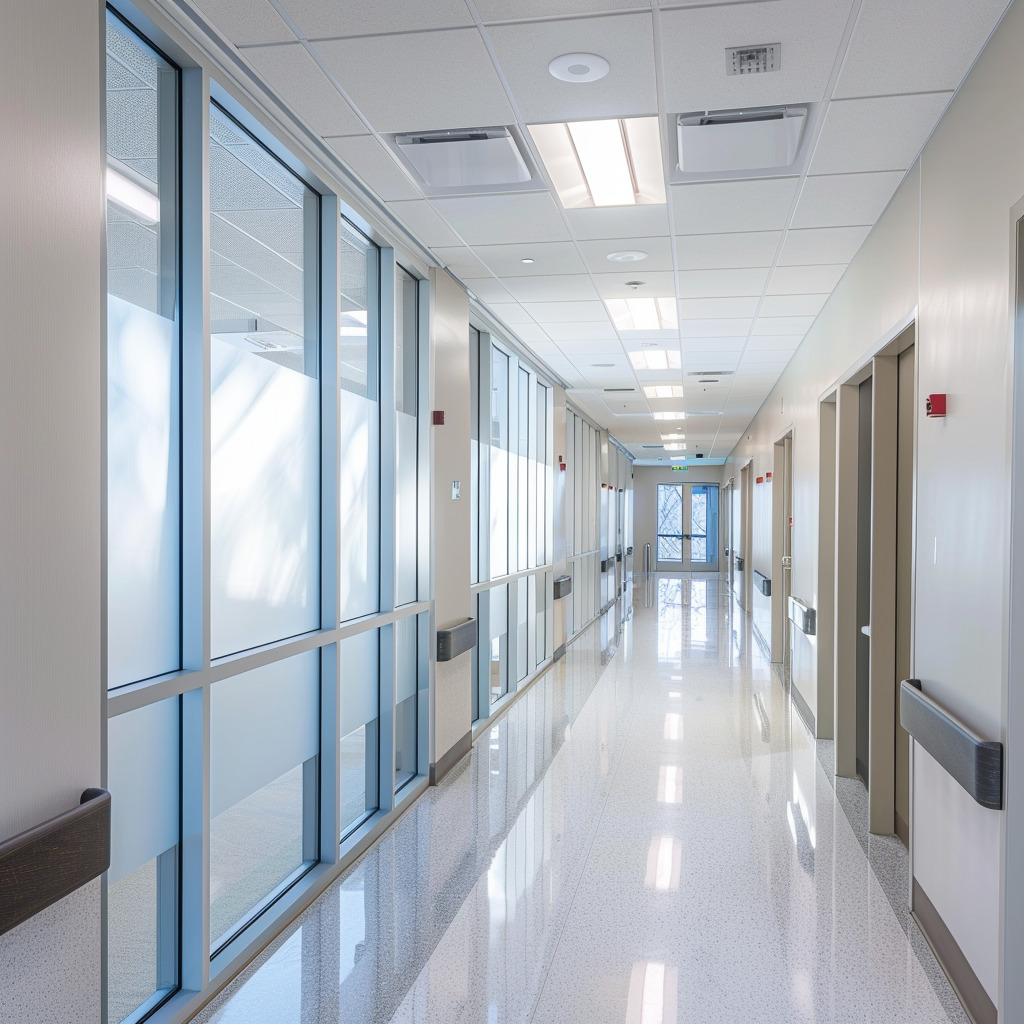
- Decorative and Frosted Films: For interior partitions, conference rooms, or areas requiring partial privacy without blocking natural light, decorative and frosted films provide a versatile solution. They can replicate etched glass, offer customizable patterns, or create a uniformly diffused look, enhancing interior design.
- Custom Graphics and Branding: Specialty films can be custom-printed with logos, branding elements, or unique graphic designs, turning glass surfaces into powerful marketing tools or architectural features.
- Safety and Anti-Graffiti Films: While not strictly privacy films, 3M’s portfolio includes films that can protect glass from vandalism, scratches, and graffiti, preserving the aesthetic integrity of high-traffic commercial installations and extending the lifespan of the glazing. By integrating these specialty films, project managers can achieve highly tailored solutions that elevate aesthetics and fulfill unique functional requirements.
Leveraging 3M’s Innovation for Long-Term Performance and Value in Commercial Settings
3M’s longstanding reputation in advanced materials science translates directly into the superior engineering and performance of its window film products. This commitment to innovation provides a distinct advantage for commercial projects seeking long-term value and reliability.
- Research and Development: 3M’s extensive investment in R&D ensures that their films incorporate cutting-edge technologies, from advanced adhesive systems to multi-layered optical designs that maximize performance and durability.
- Consistent Quality: Strict manufacturing processes and quality control standards guarantee product consistency, meaning project managers can rely on advertised performance metrics being delivered in practice.
- Comprehensive Solutions: The breadth of the 3M portfolio, supported by rigorous scientific backing, allows for tailored solutions that holistically address energy efficiency, security, privacy, and aesthetic demands across diverse commercial applications. Opting for 3M films is an investment in proven performance, backed by a global leader in innovation.
Why Partnering with the #1 3M Window Film Installer Matters for Technical Guidance and Product Selection
The most advanced window film technology will only perform to its full potential when coupled with expert installation. For commercial projects, partnering with a leading 3M Window Film Installer is not just about labor; it’s about securing a collaborative partner who brings unparalleled technical guidance, precision, and assurance to the entire process.
- Expert Product Knowledge: Certified 3M installers possess deep, up-to-date knowledge of the entire 3M portfolio, understanding the nuances of each film’s technical specifications and optimal application scenarios. They can translate complex data into practical recommendations tailored to specific project goals and building characteristics.
- Precise Specification and Solution Design: These partners excel at conducting thorough site assessments, analyzing light conditions, building orientation, and client objectives to recommend the precise 3M film series that will achieve the desired outcomes for privacy, energy savings, and security. They ensure that the chosen film is technically appropriate for the glazing system and environmental conditions.
- Adherence to Manufacturer Standards: Certified installers are trained directly by 3M, ensuring that films are applied according to strict manufacturer guidelines. This is critical for maximizing film performance, ensuring warranty validity, and preventing common installation errors like bubbling, peeling, or premature degradation.
- Risk Mitigation and Long-Term Value: By guaranteeing a professional, compliant installation, a top-tier installer significantly mitigates project risk, reduces the likelihood of future issues, and ensures the film delivers its intended long-term performance and value. Their expertise transforms a product selection into a complete, high-performing system.
The Integrated Approach: Balancing Aesthetics, Energy Efficiency, and Security Demands
The selection of one-way privacy film for commercial applications transcends mere product features; it demands an integrated approach that meticulously balances often-competing requirements. For project managers, the challenge lies in optimizing for security, energy efficiency, and aesthetic congruence without compromising any critical aspect. This strategic alignment is paramount to delivering a solution that performs technically, visually, and financially over the long term.
Achieving Architectural Harmony: Film Aesthetics and Seamless Integration with Building Design
The visual impact of privacy film is a primary consideration, influencing both interior comfort and exterior building appearance. Architectural harmony dictates that the selected film should complement, not detract from, the building’s design intent. Factors such as visible light transmittance (VLT), external reflectance, and color neutrality play a crucial role. A film with high external reflectance, while excellent for privacy during the day, might alter the facade’s appearance significantly. Conversely, a more subdued option might offer less privacy but maintain visual consistency. The objective is to achieve the desired level of visual opacity or one-way functionality without introducing undesirable glare or a mismatched aesthetic, ensuring the film integrates seamlessly into the architectural language.

Quantifying Energy Savings: Impact on HVAC Loads, Occupant Comfort, and Potential for LEED Certification
Beyond aesthetics, the quantifiable energy performance of privacy film offers substantial operational savings and environmental benefits. Key performance indicators include the Solar Heat Gain Coefficient (SHGC), which measures how much solar radiation passes through a window, and the U-value, indicating thermal transmittance. By strategically reducing solar heat gain, high-performance films can significantly lower HVAC loads, decreasing energy consumption and operational costs. This directly impacts occupant comfort by mitigating hot spots near windows. For projects targeting green building accolades, selecting films with favorable SHGC and U-value ratings can contribute valuable points towards certifications like LEED, reinforcing a commitment to sustainable construction practices.
Enhancing Occupant Wellbeing: Glare Reduction and Heat Mitigation Strategies
Occupant well-being is an increasingly critical factor in commercial building design and management. Persistent glare on screens can reduce productivity and cause eye strain, while excessive solar heat penetration creates uncomfortable interior environments. One-way privacy films, particularly those with spectrally selective properties, are highly effective glare reduction and heat mitigation strategies. They can filter specific wavelengths of sunlight, allowing ample natural light for visibility while blocking the heat-producing infrared spectrum and reducing harsh glare. This creates a more uniformly comfortable and productive interior space, directly improving the daily experience for building occupants.
Fortifying the Building Envelope: Privacy Film as a Critical Layer of Security and Protection
While one-way films are known for privacy, they also significantly strengthen a building’s envelope against various security threats. Their reflective properties create a one-way effect, obscuring internal activities and enhancing perimeter security through visual deterrence. Certain privacy films feature high tear resistance and adhesive strength, allowing them to function as effective fragment retention layers. During impacts or blasts, these films hold shattered glass together, minimizing injuries and delaying unauthorized entry into the building.
Navigating Competing Demands: A Framework for Prioritizing Project-Specific Needs
Project Manager Paul’s challenge often lies in navigating the inherent trade-offs between aesthetic preferences, energy goals, and security imperatives. A structured framework is essential for making informed decisions:
- Define Primary Objectives: Clearly identify the paramount need for the specific space (e.g., maximum daytime privacy for a boardroom, optimal energy efficiency for a south-facing facade, or enhanced security for a ground-floor perimeter).
- Establish Performance Thresholds: Quantify acceptable limits for VLT, SHGC, external reflectance, and safety ratings based on project specifications and regulatory requirements.
- Stakeholder Collaboration: Engage architects, facility managers, security personnel, and even occupant representatives early in the process to gather diverse perspectives and align expectations.
- Total Cost of Ownership (TCO) Analysis: Evaluate film options not just on upfront cost, but on long-term energy savings, potential for reduced security risks, and maintenance implications. This holistic financial view informs the “best” value proposition.
By systematically addressing these criteria, project managers can prioritize and select a one-way privacy film solution that achieves the optimal balance for their unique commercial project.
Beyond the Product: The Non-Negotiable Role of Professional Installation and Project Management
Even the most technically superior one-way privacy film is merely a material until it is expertly applied. For commercial projects, the transition from a product specification to a performing asset hinges entirely on the quality of installation and the precision of project management. This is where the ‘system’ approach truly differentiates long-term success from costly failures, directly impacting performance guarantees, longevity, and overall project outcomes.
The Criticality of Expert Installation for Optimal Film Performance and Longevity
The intricate technical specifications of privacy film—its optical clarity, adhesive properties, and durability—are fully realized only through professional installation. Substandard application can lead to a host of issues that compromise both appearance and performance. These include:
- Visual Imperfections: Bubbles, creases, dust inclusions, and misaligned edges detract from the film’s aesthetic and visual clarity.
- Adhesive Failure: Improper surface preparation or application techniques can weaken the adhesive bond, leading to peeling, bubbling, and premature film failure.
- Compromised Performance: Films designed for specific SHGC or glare reduction will not perform to their rated capacities if installed incorrectly, as air gaps or poor adhesion can affect their thermal and optical properties.
Expert installers possess specialized tools, techniques, and environmental controls necessary to ensure a pristine, durable application that maximizes the film’s lifespan and performance characteristics.
Ensuring Quality Control and Consistency: From Site Assessment to Final Walkthrough
A robust quality control (QC) process is indispensable for commercial film deployments, guaranteeing consistency and adherence to specifications across all installed units. This process extends beyond the actual film application:
- Pre-Installation Assessment: Thorough site surveys evaluate glass type, window conditions, environmental factors (temperature, humidity), and potential access challenges.
- Material Handling and Preparation: Proper storage, cutting, and preparation of the film material minimize waste and ensure precise sizing.
- Installation Protocols: Adherence to manufacturer-specific guidelines for cleaning, solution application, film positioning, and squeegee techniques is critical.
- Post-Installation Inspection: Detailed checks for visual defects, edge seal integrity, and overall finish, culminating in a formal client walkthrough and approval.
This systematic approach mitigates common issues and ensures every installed window meets the project’s exacting standards.
Managing Large-Scale Commercial Deployments: Logistics, Coordination, and Minimizing Operational Disruption
Large-scale commercial projects present unique logistical and coordination challenges. Effective project management is key to minimizing disruption to ongoing operations while ensuring efficient installation:
- Detailed Scheduling: Coordinating installation phases to align with building occupancy, operational hours, or other construction trades.
- Material Logistics: Managing the procurement, delivery, and staging of significant quantities of film and associated materials.
- Workforce Management: Deploying and supervising skilled installation teams across multiple work areas or phases.
- Communication Protocols: Maintaining clear lines of communication between the installation team, project management, and client stakeholders to anticipate and resolve issues proactively.
A well-managed deployment ensures timely completion within budget, with minimal impact on daily business activities.
The Value of Unmatched National Reach and Consistent Service for Multi-Location Projects
For organizations with multi-location portfolios, the consistency of product, installation, and service is paramount. Partnering with a provider offering national reach means:
- Standardized Product Selection: Ensuring the same high-performance film is available and installed uniformly across all sites, maintaining brand consistency and performance parity.
- Uniform Installation Quality: Leveraging a network of certified installers who adhere to consistent training and quality control protocols, regardless of geographic location.
- Streamlined Procurement: Simplifying the purchasing process and contract management across multiple projects and regions.
- Centralized Support: Offering a single point of contact for project oversight, warranty, and ongoing service needs, greatly simplifying complex multi-site deployments.
This capability significantly reduces the administrative burden and ensures a predictable, high-quality outcome across an entire enterprise.
Mitigating Project Risk Through Certified Expertise, Comprehensive Support, and Proven Track Record
Ultimately, the choice of a film partner is a risk mitigation strategy. Project managers can significantly reduce potential liabilities and ensure long-term performance by prioritizing:
- Certified Expertise: Verifying that installers are factory-trained and certified, demonstrating their adherence to manufacturer standards and best practices. This ensures warranty compliance and technical proficiency.
- Comprehensive Support: Access to robust manufacturer warranties, ongoing maintenance guidance, and responsive technical support post-installation. This safeguards the investment over its operational lifespan.
- Proven Track Record: Evaluating a vendor’s history of successful commercial installations, reviewing case studies, and requesting references. A demonstrated ability to deliver complex projects on time and within budget provides critical confidence.
By focusing on these elements, project managers can move beyond simply selecting a film product to strategically partnering for a complete solution that guarantees performance, security, and sustained value.
Conclusion: Elevating Commercial Projects with Intelligent Film Specification and Execution
Recapping the Pillars of Superior One-Way Privacy Film Selection
Throughout our discussion, we have deconstructed the nuanced criteria that define truly superior one-way privacy film applications in commercial environments. The ‘best’ solution transcends generic product specifications, emerging instead from a meticulously planned and executed strategy. It is a synthesis of advanced film technology, precise technical specification, and flawless installation methodology.
The critical pillars underpinning this strategic approach include:
- Performance Metrics Beyond the Basics: Moving past simple visible light transmission (VLT), a superior selection process meticulously evaluates spectral selectivity, solar heat gain coefficient (SHGC), and external visible light reflectance (VLR) to meet specific energy efficiency targets and aesthetic outcomes without compromise.
- Durability and Longevity: Commercial applications demand films engineered for endurance, assessed not just by warranty periods but by demonstrable material resilience against environmental factors, abrasion, and degradation over time, safeguarding the long-term investment.
- Installation Expertise and Environment Control: The film’s inherent technical capabilities are fully realized only through professional, certified installation under controlled conditions. This ensures optical clarity, adhesion integrity, and avoids costly rework, directly impacting both visual quality and overall system performance.
- System Integration for Security: Integrating the film’s one-way privacy function with broader building security requirements, addressing potential vulnerabilities, and ensuring compliance with relevant safety and security standards are paramount for comprehensive protection.
The Enduring Value of a Strategic, Performance-Driven Approach to Building Envelope Enhancement
Adopting a performance-driven approach to building envelope enhancement through advanced film technology delivers enduring value that extends far beyond initial installation costs. This strategic perspective shifts the focus from a transactional product purchase to a long-term asset improvement, directly impacting operational efficiency, occupant comfort, and overall facility value. The careful selection and expert application of one-way privacy film contribute to measurable reductions in HVAC load, glare mitigation, and enhanced daylighting, all while fulfilling critical privacy and security objectives.
This approach transforms the building envelope into an active participant in facility management, contributing to:
- Optimized Operational Costs: Significant energy savings derived from reduced solar heat gain and improved insulation properties lead to a lower total cost of ownership.
- Enhanced Occupant Experience: Consistent indoor temperatures, reduced glare on screens, and a sense of privacy contribute to a more comfortable and productive working environment for tenants and employees.
- Preserved Asset Value: Protecting interior furnishings, mitigating UV-induced material degradation, and upgrading the building’s aesthetic appeal collectively contribute to maintaining and enhancing the property’s market value.
- Mitigated Risk Profile: A well-specified and installed film system addresses security vulnerabilities, enhances emergency egress safety, and ensures compliance with building codes, thereby reducing potential liabilities.
Empowering Project Managers to Make Informed, Outcome-Focused Decisions for Client Success
For project managers navigating the complexities of commercial construction and renovation, understanding these distinctions is not merely academic; it is a powerful tool for strategic decision-making. By focusing on the integrated system of film technology and expert application, project managers are empowered to move beyond superficial product comparisons. This detailed insight enables them to articulate the tangible benefits to stakeholders, align solutions precisely with client requirements for security, energy efficiency, and aesthetics, and confidently mitigate project risks.
This clarity fosters a collaborative environment where project managers can:
- Translate Client Demands into Technical Specifications: Effectively bridge the gap between abstract client wishes for “privacy” or “energy savings” and precise, measurable film characteristics and installation protocols.
- Validate Value Propositions: Justify investments in high-quality film and installation by demonstrating clear, data-backed returns on investment (ROI) through energy savings, extended product lifespan, and enhanced security.
- Navigate Trade-offs with Confidence: Make informed decisions when balancing competing project requirements—such as maximizing natural light versus minimizing solar heat gain or ensuring privacy without compromising external aesthetics—by understanding the specific performance profiles of different film systems.
- Ensure Long-Term Project Success: Select partners and solutions that guarantee not just immediate performance, but also sustained durability, optimal functionality, and comprehensive support, ultimately securing client satisfaction and project reputation.
Frequently Asked Questions
Why does my one-way privacy film “reverse” at night?
One-way privacy is not a static property of the film; it is a result of light differential. The film creates a mirror effect on whichever side is brighter. During the day, the sun makes the exterior much brighter than the interior, creating privacy. At night, when interior lights are on and it is dark outside, the interior becomes the “bright side,” causing the mirror effect to face inward and allowing outsiders to see in.
Can I achieve one-way privacy without making the building look like a giant mirror?
Yes. While high External Reflectivity (mirror effect) is the traditional way to achieve privacy, modern dual-reflective or Night Vision series films are engineered to provide excellent daytime privacy with a more subtle, charcoal, or neutral aesthetic. These films also feature lower interior reflectivity, which means occupants can see out more clearly at night without seeing their own reflection in the glass.
What are the logistical advantages of using a single national installer for a multi-location rollout?
Privacy films are multi-functional. Beyond visual security, they significantly impact the building’s Solar Heat Gain Coefficient (SHGC). By rejecting a high percentage of infrared heat (often measured via TSER), these films lower the load on HVAC systems. This directly contributes to Energy & Atmosphere (EA) and Indoor Environmental Quality (EQ) credits within the LEED framework.
Is “Mirror Film” the same as “Security Film”?
No. Standard one-way privacy films are thin and designed for light manipulation. However, you can specify Privacy-Security hybrids. These are thicker, micro-layered films that provide the “mirror” effect for privacy while offering the tear resistance needed to mitigate glass shards during a blast, impact, or forced entry attempt.
Why is “Total Cost of Ownership” (TCO) better than “Lowest Bid” for this specification?
A low-bid installation often uses generic films with inferior adhesives that can bubble, peel, or “purple” within 2–3 years. A strategic specification focuses on certified installation and high-performance materials (like 3M) that carry 10–15 year commercial warranties. When you factor in the energy savings and the avoidance of early replacement costs, the higher-quality system offers a much lower TCO.