Table of Contents:
Introduction: Why Security Window Tinting Matters in 2026
Forced entry, smash-and-grab theft, and severe weather events have all increased in frequency across U.S. cities and suburban communities since 2020. Glass remains one of the weakest points in any building envelope, and on average, burglars can break a standard glass window in under 10 seconds.
Security window tinting refers to a professional-grade safety or security window film applied to existing glass. It is not a magic solution that makes windows unbreakable. Instead, it holds shattered glass together under impact, slows intruders, and reduces the risk of flying glass during storms and accidents. This article covers what security film is, how it works, who benefits most, how installation works, and what to ask before you buy. Whether you manage a family home, a retail storefront, a school campus, or corporate offices, the core value is the same: added protection and peace of mind without replacing your windows.
What Is Security Window Film and How Does It Work?
Security window film is a clear or tinted polyester laminate bonded to existing glass with high-strength adhesive. Its primary purpose is to increase glass safety and security by keeping broken glass attached to the film after impact.
The film is constructed from multiple layers of polyester. This multi-layer design can increase glass strength by 2 to 3 times and make glass up to 20 times more resistant to breaking through, depending on the product and attachment method. The thickness of security film typically ranges from 4 mil to 14 mil, with heavier options available for high-threat environments. The adhesive layer is engineered to absorb and distribute impact force across the pane rather than letting glass fracture into loose shards.
Security window films are considered a delay and glass-retention measure. A simple scenario illustrates the difference: a burglar hits an unprotected storefront window and clears the opening in seconds. With security film installed to the glass edge and properly anchored to the frame, the pane cracks but stays largely in place. Multi-layer film holds shattered glass together, delaying intruders and forcing repeated, loud blows. Security window film can prolong forced entry time to 1 minute or more, often enough to trigger alarms and drive opportunistic thieves to an easier target.
Standard window tint (solar or privacy film) is typically 1 to 2 mil thick and designed for heat and UV control, not impact resistance. True security film is built to meet safety and forced-entry standards like ASTM F3561, ANSI Z97.1, and CPSC 16 CFR 1201.
Key Benefits of Security Window Tinting for Homes and Buildings
Security window tinting delivers layered benefits beyond stopping crime. It is as much about occupant safety and building continuity as it is about deterring theft and vandalism.
Anti-intrusion protection. Security films deter break-ins by turning a quick, quiet smash into a loud, prolonged event. Since 23% of burglars enter through first-floor windows, filming those openings first addresses the most common entry point. Multi-layer security film delays intruders and buys critical time for occupants or responders.
Storm and disaster protection. During natural disasters like hurricanes, tornadoes, and earthquakes, security window film holds shattered glass in place during storms and helps prevent flying glass from injuring people inside. It also helps maintain envelope integrity, reducing water intrusion and property damage.
Accident protection. Kids, landscaping mishaps, or a slipped ladder at an office can send glass fragments into occupied areas. Film keeps broken glass adhered to the protective layer, reducing the chance of cuts and injuries from broken glass shards.
UV and energy performance. Security window film blocks 99% of UVA and UVB rays, offering 99% UV protection that prevents furniture and flooring from fading. Since 40% of fading is caused by harmful UV rays, this is a measurable benefit for any space with sun-facing windows. Security window tinting can also reduce solar heat and glare, improving energy efficiency by lowering utility bills. Many security films allow natural light through while cutting cooling load.
Privacy and deterrence. Tinted security films can obscure expensive items from outside view to deter theft and provide privacy while allowing visibility from the inside, giving occupants a clear view out without giving passersby a stock list of valuables.
Alarms and cameras react after an event. Security window film is a passive physical barrier working around the clock, providing peace of mind with or without power.

Types of Security Window Film and Choosing the Right Level of Protection
Not every window needs the thickest film. Thickness levels vary to suit different applications from light residential to heavy commercial use. Right-sizing saves cost while meeting the actual risk.
| Film Thickness | Typical Use | Best For |
|---|---|---|
| 3–4 mil | Basic safety glazing | Injury reduction, light natural disaster protection |
| 7–8 mil | Anti-intrusion, retail, schools | Smash-and-grab delay, forced entry resistance |
| 12–15 mil | High-security, government, financial | Blast mitigation, targeted attacks, civil unrest |
Clear security film works well for storefronts, showrooms, and historic buildings where the view must remain unchanged. Tinted or reflective options combine security with glare reduction, privacy, and energy savings.
Attachment systems are crucial for enhancing the effectiveness of security films. Without anchoring the film to the window frame using structural silicone or mechanical profiles, a large pane can be dislodged even if the glass stays on the film. Security films are most effective when combined with proper frame attachment and edge retention. Prioritize ground-level windows, patio doors, sidelites near entries, and storefronts before moving to upper floors.
Professional Installation: How Security Window Tinting Is Applied
Professional installation ensures proper adhesion and longevity of film. A poorly applied film can trap bubbles, peel at edges, and fail under stress. Improper installation can lead to bubbles and damage to the film, voiding warranties and reducing performance.
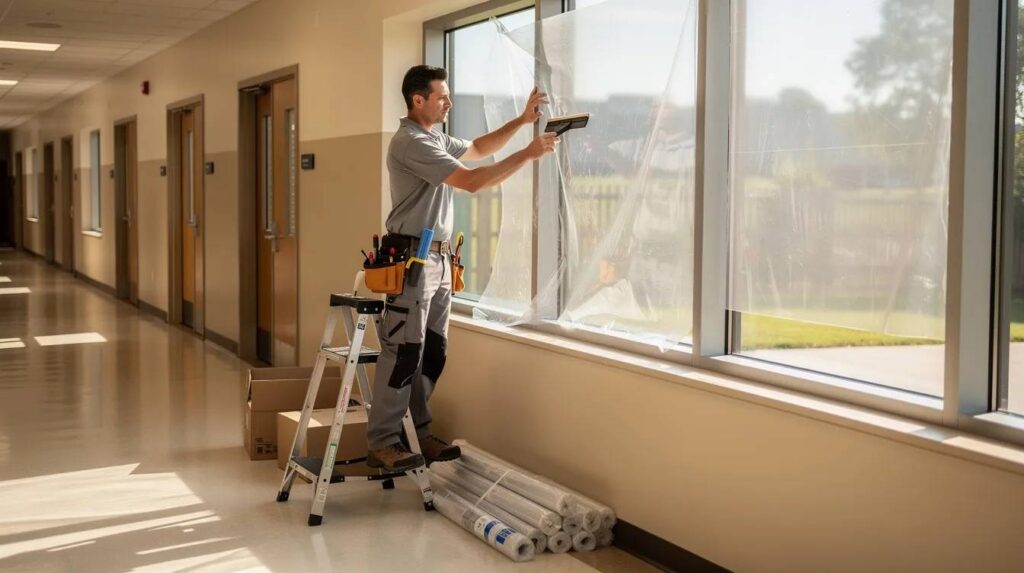
Installation involves cleaning, measuring, cutting, and applying the film with a slip solution, then squeegeeing out moisture and air. Technicians inspect existing glass for chips, seal condition, and type (annealed vs. tempered), then detail edges and install any anchoring system. Security window film can be applied on both interior and exterior surfaces depending on glass type and frame access.
Timelines vary. A single home or small retail space is often complete in one day. Schools and multi-site commercial rollouts may be phased over weeks. After installation, film may appear slightly hazy for days to weeks as adhesive cures. Wait at least 30 days before aggressive cleaning, and avoid ammonia-based products that degrade adhesives.
Where Security Window Tinting Delivers the Most Impact
Security window tinting is versatile, but certain environments see the highest return.
- Residential: First-floor windows, patio and sliding doors, basement windows, and sidelites near entry doors. These are the openings burglars target first, and where family members face the greatest risk from accidents.
- Retail and commercial: Storefront glazing, display windows, and glass doors are vulnerable to smash-and-grab theft. Film keeps stock secure and reduces loss from vandalism.
- Schools and campuses: Main entrances, classroom sidelights, and administrative offices. Delaying an intruder at the glass buys time for lockdown procedures.
- Healthcare, government, and corporate facilities: Lobbies, ground-floor offices, data centers. Maintaining the building envelope during storms or a security event protects people and operations.
Security window tinting complements alarms, access control, reinforced doors, and surveillance. It does not replace them; it fills the gap where glass is the weakest link.
FAQs About Security Window Tinting
Does security window film make my windows unbreakable?
No. Glass will still break under force. The film holds broken glass in place, preventing shattering into dangerous shards and making it far harder to create a pass-through opening. Security window film can make glass up to 20 times more resistant to breaking through, but “unbreakable” is not an accurate claim for any film product.
Can security film stop smash-and-grab break-ins entirely?
A determined intruder with tools and time can eventually penetrate any glazing system. Security film turns a quick, quiet entry into a loud, time-consuming effort. That delay, often a full minute or more, is frequently enough to send opportunistic thieves to an easier target.
Will security window tinting change the look of my glass?
Clear security film is nearly invisible once cured. Tinted or reflective versions will change appearance, reducing visibility from the outside while maintaining your view from the inside. Ask for samples before committing to a tint level.
How long does security window film last?
Quality security films last 10 to 15 years or more with proper installation and care. Many manufacturers back their products with limited lifetime residential warranties and 10- to 15-year commercial warranties covering peeling, bubbling, and discoloration.
Is security window film effective during a natural disaster?
Yes. Properly installed film keeps glass fragments attached during high winds, flying debris, and seismic activity. It protects against injuries from broken glass shards and helps maintain the building envelope, reducing water intrusion and interior damage.
Can security film be combined with other types of window film?
Security film can be manufactured with built-in solar or tinted layers, or paired with separate window film solutions. Customers can achieve both safety and performance, including heat reduction, glare control, and privacy, in a single upgrade. This makes the investment easy to justify on both security and comfort grounds.
Why Choose Our Team for Security Window Tinting
Window Film Depot has been a family-owned installer and wholesale supplier since 1992, with over three decades of hands-on experience in security window film, solar control, and architectural surface solutions. We service single homes, individual offices, schools, government facilities, and multi-location commercial portfolios nationwide with consistent product quality and installation standards.
Our technicians work with 3M-grade safety and security glazing products, attachment systems for forced-entry and blast mitigation, and retrofit solutions for older buildings. Every project includes consultation, glass and risk assessment, film selection, project management, professional installation, and post-install support. We also supply wholesale film rolls and project guidance to trade partners across North America.
We focus on clear communication, realistic timelines, clean job sites, and long-term performance. Our customers come back because we meet commitments, not because we cut corners.
Take the Next Step Toward Safer, More Secure Windows
Schedule a security window assessment for your home, office, school, or retail space. Come ready with questions: which glass is most vulnerable, what level of security film fits your risk profile, and how security window tinting integrates with your existing security systems.
Investing in security film now reduces the impact of future break-ins, accidents, and natural disasters while providing everyday peace of mind for your family, employees, or customers. Request a customized quote and timeline based on your building type, location, and security priorities.