Table of Contents:
- Why Privacy Window Screens Matter in 2026
- What Is a Window Privacy Screen and How Does It Work?
- Main Types of Privacy Window Screens for Homes
- Film-Based Privacy Window Screens: Frosted, Decorative, and One-Way
- Physical Window Screens & Panels: Solar Mesh, Fabric, and Custom Inserts
- Choosing the Right Privacy Solution by Room and Orientation
- DIY vs Professional Installation
- Common Problems and How to Avoid Them
- Maintenance, Cleaning, and Longevity
- Privacy, Security, and Energy Savings
- Costs, Timelines, and What to Expect
- FAQs
- Why Choose a Professional Installer
- Next Steps
Introduction: Why Privacy Window Screens Matter in 2026
Lot lines in newer suburban developments and urban infill projects keep shrinking. A home built in the 1990s might have had 15 feet between side windows; a 2024 townhome in metro Atlanta or Dallas often has six. That closing gap means people outside can see inside ground-floor rooms with little effort, and standard blinds or curtains block the view in both directions, killing the natural light that makes a room livable.
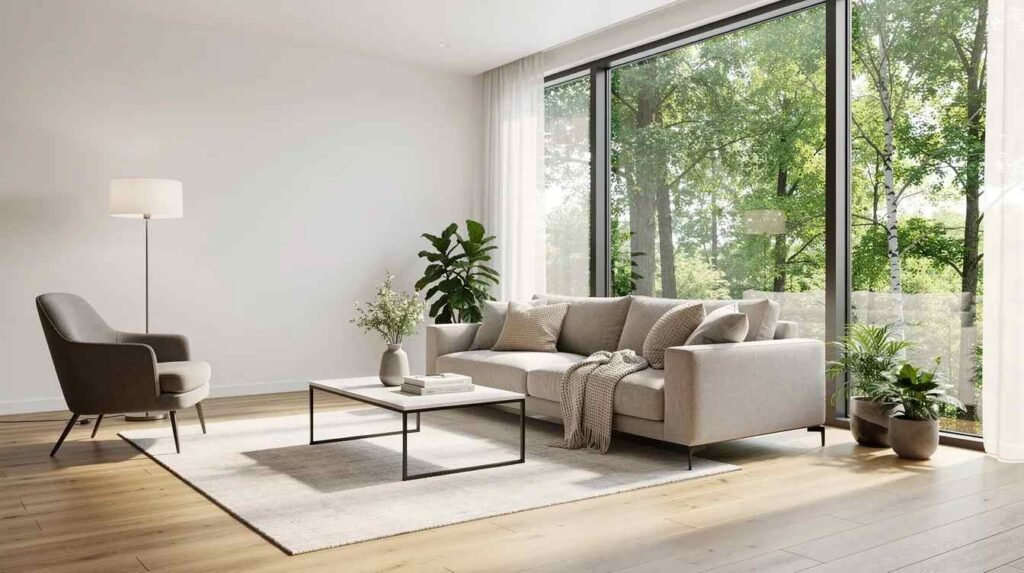
A privacy screen for home windows solves that trade-off. Whether it is a film applied directly to glass or a physical screen mounted over the window, the purpose is the same: block outside visibility while allowing natural light to enter. Privacy screens also reduce glare, protect furniture from fading, and can add a design element without replacing the glass itself.
This guide covers every practical privacy option available in 2026 for homeowners, renters, and small commercial spaces. You will learn how different privacy window screens compare on light, cost, and durability; when to install them yourself; and when a professional makes the difference between a project that lasts a decade and one that peels off in a year.
What Is a Window Privacy Screen and How Does It Work?
A window privacy screen is any film, mesh, or panel designed to limit visibility from the outside in. The category splits into two broad groups: film-based products applied to glass and physical screens that mount in front of or over the window.
Films work through one of three optical principles:
- Reflection (one-way mirror films bounce light back toward the brighter side, creating a mirror effect for privacy during the day)
- Diffusion (frosted or decorative films scatter light so shapes become blurred on both sides)
- Absorption (tinted films absorb a portion of visible light, reducing what passes through)
Physical window screens use material density and pattern to block line-of-sight. Solar mesh, fabric panels, and louvered inserts all fall into this category. Physical privacy screens can be made from fabric, wood, or plastic, depending on the application.
Key distinctions to keep in mind:
- See-through from inside vs. blurred view on both sides
- Permanent adhesive vs removable static cling
- Day-only privacy (reflective films) vs 24-hour privacy (frosted films)
- Privacy-only vs combined privacy and insect screening
Traditional insect window screens have an openness factor of 45% to 60%, which does little for privacy. Modern solar and privacy mesh products drop that openness to 10% to 30%, blocking views and heat at the same time.
Main Types of Privacy Window Screens for Homes
No single product is perfect for every window. Each type fits different rooms, budgets, and rental or ownership situations. Here is a high-level look at the options before we go deeper in the next sections.
- Frosted privacy film: Provides consistent privacy day and night. Visible light transmission typically ranges from 20% to 50% for standard frosted grades, though frosted and etched glass film allows 80% to 90% of natural sunlight to filter through in lighter variants. Price runs $1 to $5 per square foot for DIY roll material; $7 to $10 per square foot installed professionally.
- Decorative and patterned films: Highly customizable and serve as a design feature. Patterns like reeded glass or geometric lines break up sight lines while preserving most daylight. Good for kitchens, entryway sidelights, and anywhere you want inspiration beyond plain frost.
- One-way reflective films: Excellent daytime privacy with a mirror effect from outside. Reverse their privacy effect at night when indoor lights are on, so they need curtains or shades after dark.
- Static-cling removable films: Require no adhesive for installation; they adhere using static electricity, not adhesive. Ideal for renters due to easy removal and can be removed without leaving residue. Lifespan is shorter (1 to 3 years).
- Solar and thermal mesh screens: Exterior-mounted panels that block 80% to 90% of solar heat before it hits the glass. Best for hot climates.
- Interior fabric panels: Track-mounted or tension-rod panels, easy to install and remove. Great where lease rules limit permanent changes.
Adhesive films offer superior durability compared to static cling, lasting 10 to 15 years when professionally installed versus 1 to 3 years for cling products. Before adding anything to your cart, consider whether you need day-only or round-the-clock coverage.
Film-Based Privacy Window Screens: Frosted, Decorative, and One-Way
Adhesive and static-cling films remain the most popular window privacy screen options for U.S. homes because they require no exterior hardware, preserve the original glass, and come in a wide range of styles.
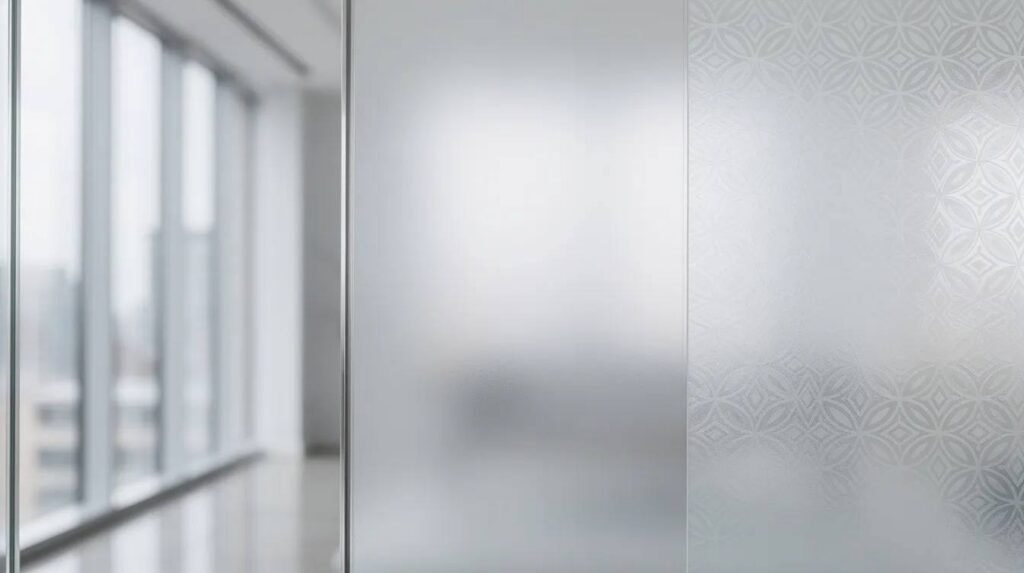
Frosted films scatter incoming light so that shapes on the other side appear blurred. Frosted or decorative privacy window films can obscure vision while maximizing light diffusion. A standard frosted film reduces visible light transmission to 20% to 50%, while lighter etched-style films transmit up to 90%. Frosted and etched glass film provides 24/7 total privacy, making it the go-to choice for bathrooms, sidelights flanking front doors, and interior glass office partitions.
Decorative films offer partial privacy by breaking up lines of sight with patterns, faux etched glass, or stained-glass looks. They tend toward higher VLT (60% to 95%), so rooms stay bright. Pattern alignment across large panes or multi-lite doors takes a bit more care during installation, and cleaning requires gentle technique to avoid lifting textured surfaces.
One-way reflective films create a mirror effect on the exterior surface when outdoor light is brighter than indoor light. One-way window films provide daytime privacy with a mirror effect, and the best products reject up to 70% of solar energy while still letting 25% to 35% of visible light through. The trade-off: reflective film can reverse its privacy effect at night when indoor lights are on, making occupants visible from outside. Pairing these films with roller shades solves the nighttime gap.
Adhesive films can block up to 99% of harmful UV rays, which protects hardwood floors, rugs, and upholstery from fading. Film sold by the roll for DIY use typically costs $1 to $5 per square foot; professional installation brings the total to $7 to $18 per square foot depending on product grade. Natural light preservation is a key benefit of many modern privacy screens, so choosing the right VLT for each window matters more than defaulting to the darkest option available.
Physical Window Screens & Panels: Solar Mesh, Fabric, and Custom Inserts
When glass cannot be filmed (historic single-pane windows, damaged seals, or situations where blackout is needed), physical privacy screens fill the gap. Physical screens can be mounted in frames or as standalone panels, giving flexibility in how they attach to different window types.
Solar mesh screens like Phifer SunTex 80 and SunTex 90 mount in aluminum or vinyl frames on the exterior of the window. They block 80% to 90% of solar heat gain before sunlight reaches the glass, lowering interior glass-surface temperatures by about 15°F on south and west exposures. Solar privacy screens reduce solar heat gain by up to 80%, and exterior solar privacy screens block visibility while maintaining a muted view outward, so occupants can still see shapes and color outside.
For homes with non-standard shapes (half-circles, eyebrow arches, quarter-rounds), companies that specialize in custom fabrication can build frames to match. Hardware and color choices (bronze, charcoal, silver) affect the final price, but the result is a clean, consistent exterior look across all windows.
Interior fabric panels work well for renters and for rooms where you want to open and close coverage throughout the day. Track-mounted sliding panels, tension-rod-mounted fabric, and magnetic-frame inserts all leave minimal marks when removed. The trade-off: physical screens add depth, make the inside a bit darker than films, and require measuring and hardware. But they also add acoustic dampening and a layer of thermal insulation that films alone do not provide.
Choosing the Right Privacy Solution by Room and Orientation
Privacy needs vary by room, floor level, and the direction the window faces. Here is a room-by-room guide:
- Bathrooms: Frosted or etched film is the default. These films provide consistent privacy day and night and still let in enough diffused light to avoid turning on overhead fixtures during the day. Heavy frost (20% to 40% VLT) works for shower-adjacent windows; lighter frost suits powder rooms.
- Bedrooms: Ground-floor bedrooms facing a street or neighbor benefit from frosted film with moderate VLT (40% to 60%) or a dual approach: reflective film for day, blackout curtains for night. Upper-story bedrooms often need only a light decorative film.
- Living rooms: Street-facing picture windows are covered best by one-way reflective film during the day, paired with drapes or roller shades after dark. For large panes, spectrally selective films keep VLT above 50% while rejecting heat.
- Kitchens: Light-diffusing film on the lower half of the window prevents people outside from seeing countertops and activity, while the upper half stays open for sky views and ventilation.
- Home offices: Glare-reducing film (reflective or lightly frosted) cuts screen glare on monitors while keeping the room bright enough for video calls.
Climate and orientation matter. In Arizona, Texas, and Florida, solar mesh screens or dual-reflective films on south and west exposures pay for themselves through lower cooling bills. In the Pacific Northwest or New England, preserving every bit of daylight is the priority; high-VLT frosted or decorative films prevent rooms from feeling like a cave.
Renters should default to static-cling films or tension-mounted fabric panels. Both can be removed cleanly without damage to the window or frame.
DIY vs Professional Installation of Privacy Window Screens
The choice between DIY and professional installation comes down to project scope, glass type, and how long you need the product to last.
DIY works well for:
- Single bathroom windows or sidelights
- Static-cling films on small panes (no adhesive, no curing, easy to reposition)
- Tension-mounted fabric panels that require no drilling
Professional installation is worth the cost for:
- Large picture windows, bay and bow configurations, or multi-story homes
- Projects combining privacy with security or solar control films
- Any window with double-pane, low-E, or tempered glass where thermal stress is a risk
For DIY film installation, the process follows these steps: clean the glass thoroughly, spray the surface with soapy water application solution, position the film, squeegee from center to edges to push out air and water, trim with a sharp blade, and allow adhesive films 24 to 48 hours of curing time before cleaning. Measure each window individually for accurate film sizing; assuming two windows are the same width is a common and costly mistake.
A professional installer starts with an on-site assessment: identifying glass type (tempered, laminated, insulated), checking for existing low-E coatings, and matching product specifications to avoid thermal stress. For solar mesh window screens, professional measurement and framing is often needed for arched and specialty shapes to ensure there are no light gaps or warping in the frames.
Common Problems with Privacy Window Screens (and How to Avoid Them)
Most issues with privacy window screens trace back to product mismatch or rushed installation. Here are the problems that come up most often and how to prevent them.
- Air bubbles and wrinkles: Almost always caused by dry glass, dust particles, or insufficient application fluid. Air bubbles can be eliminated using a soapy water solution applied generously before laying the film. Use a lint-free cloth to clean the glass first, then squeegee firmly from the center outward.
- Edge lifting and peeling: High-humidity rooms like bathrooms accelerate adhesive failure at the edges. Seal edges carefully during installation. Avoid cheap films over tile grout lines or directly adjacent to showers. Premium UV-stabilized adhesives hold up far longer.
- Nighttime privacy failure: The most common surprise with one-way reflective films. When interior lights are on and the outside is dark, the mirror effect reverses. People outside can see in. The fix: pair reflective film with curtains, blinds, or roller shades, or choose frosted film if 24-hour privacy is the priority.
- Measurement errors on physical screens: Double-check width, height, and diagonals. Account for frame depth and hardware clearance. Windows that look square often are not, especially in homes built before 2000.
Homeowners with complex window shapes or multiple panes should get a professional assessment before committing to a purchase. Rework on a botched film job often costs more than hiring an installer from the start.
Maintenance, Cleaning, and Longevity
Well-maintained privacy window screens last a long time. Professionally installed adhesive films routinely hold clarity and adhesion for 10 to 15 years. Solar mesh screens last a similar span when frames and corners are kept in good condition.
Film cleaning best practices:
- Wait at least two weeks after installation before cleaning
- Use mild soap and water with a soft microfiber cloth
- Avoid ammonia-based cleaners (like standard glass sprays), razor blades, and abrasive pads
- Wipe gently near edges to prevent lifting
Mesh and physical screen maintenance:
- Remove screens seasonally and rinse with a garden hose at low pressure
- Brush off pollen, dust, and debris from the exterior side
- Allow screens to dry fully before reinstalling
Inspect seals, edges, and mounting hardware once or twice a year, especially on south and west exposures where UV exposure is highest. Check for discoloration, corner separation, or frame corrosion. For large installations covering 10 or more windows, schedule a professional inspection every two to three years to catch small issues before they become expensive replacements.
Privacy, Security, and Energy Savings: Getting More from Your Screens
Modern privacy window screens do more than hide interiors. When selected and installed correctly, they contribute to home security and lower energy bills.
Some privacy films can be combined with security laminate layers that hold shattered glass in place after impact. This adds a barrier against forced entry, storm debris, and accidental breakage. Security-grade privacy film projects average around $650 per home for a targeted application on ground-floor entry points.
On the energy side, privacy screens can reduce glare and protect furniture from fading by blocking up to 99% of harmful UV rays. Solar mesh screens on south- and west-facing windows drop interior temperatures enough to reduce cooling loads by 25% to 40% for those specific exposures. Interior frosted and decorative films primarily aid privacy and UV protection, while reflective and dual-reflective films contribute more to temperature control by rejecting up to 70% of solar energy.
For homeowners planning whole-house upgrades or remodels in 2026, treating privacy window screens as part of a broader building performance strategy (alongside insulation, HVAC, and glazing improvements) produces better results than treating them as a cosmetic add-on.
Costs, Timelines, and What to Expect from a Professional Project
Costs vary by product, window size, and building type. Here are ballpark ranges for 2026:
| Product Type | DIY Cost (per sq ft) | Installed Cost (per sq ft) |
|---|---|---|
| Standard frosted or decorative film | $1 – $5 | $7 – $10 |
| Reflective or dual-reflective film | $3 – $7 | $12 – $18+ |
| Solar mesh screen (standard) | $3 – $5 | ~$4 + labor |
| Custom-shape solar screen | Varies | $6 – $12+ |
A whole-house film project covering roughly 500 square feet of glass typically runs $3,800 to $5,200 installed, depending on film grade and window access.
Timelines: A single-room bathroom or home office is usually finished in a few hours. Whole-house film projects take one to two days depending on window count and whether furniture and blinds need to be temporarily moved. During installation, expect minimal odor, thorough glass cleaning, and a cure period where minor haze may be visible for a day or two.
Before scheduling work, request a written scope, product data sheets, and manufacturer-backed warranties. These documents protect your purchase and ensure the installer is accountable for product performance.
Frequently Asked Questions About Privacy Window Screens
Below are answers to the questions homeowners ask most often.
Can privacy window screens be removed without damaging my glass?
Static-cling films peel away cleanly with no residue, making them easy to remove and often reusable if kept clean. Permanent adhesive films can also be removed, but the process requires professional tools and adhesive-dissolving solutions. The glass underneath is usually undamaged, though residue must be cleaned carefully. Physical solar screens and fabric panels detach from their frames or brackets, leaving only minor screw holes if hardware was used. For large or multi-pane projects, contact an installer to avoid scratching insulated glass during removal.
Do privacy films and screens make rooms too dark?
Light levels depend entirely on product choice. Blackout and very dark tints will noticeably dim a room, while higher-VLT frosted and decorative films still allow comfortable daylight. Solar mesh screens with 80% to 90% shading reduce brightness more than clear glass but still permit outside views, similar to looking through polarized sunglasses. Choose films with visible light transmission above 40% when the goal is privacy without a cave-like feel, especially in north-facing rooms. Testing a small sample on one window before committing to a whole-house installation is worth the time.
Will a one-way window privacy screen give me privacy at night?
One-way reflective films work when the exterior is brighter than the interior, which is a daytime condition. At night, with interior lights on and the outside dark, people outside can often see in. Pair one-way films with curtains, roller shades, or blinds for nighttime privacy, or choose frosted or decorative films if 24-hour coverage is the top priority. After installation, walk outside at night with your lights on to check actual performance under your specific conditions.
How do I clean and care for my new window privacy screen?
For films, wait at least two weeks after installation, then use mild soap and water with a soft cloth. Wipe gently, especially near edges, to avoid lifting. For solar mesh window screens, remove them seasonally and rinse with low-pressure water, brushing off dust and pollen from the exterior side. Avoid harsh chemicals, abrasive pads, or scraping tools on any privacy screen surface. Routine inspection once or twice a year catches peeling, warping, or hardware issues early.
Are privacy window screens safe for double-pane or low-E glass?
Not every film is compatible with every glass type. Certain high-absorption dark films create thermal stress on insulated or low-E units, which can lead to seal failure or cracking. Reputable installers match films to manufacturer specifications, accounting for glass thickness, tint, and whether the pane is tempered or laminated. Many modern privacy films are tested for common residential glass configurations installed since the early 2000s. Get a professional assessment before applying any film to large, sun-exposed double-pane windows to avoid voiding glass warranties.
Can I use privacy window screens in a rental without violating my lease?
Static-cling films and tension-mounted or pressure-fit fabric panels are usually lease-friendly because they leave no permanent marks when removed. Check your lease terms and, when in doubt, get written approval from your landlord before installing adhesive films or drilling for screen hardware. Document the original condition of your windows with photos before and after to protect your security deposit. Removable solutions are popular in downtown apartments and student housing where window treatments are basic or nonexistent.
Why Choose a Professional Installer for Your Privacy Window Screens
DIY works for simple projects, but a professional installer brings product knowledge, safety awareness, and finish quality that most homeowners cannot replicate on their own. Window Film Depot has installed privacy, solar, and security films since 1992, working with commercial, institutional, and residential clients across the country.
Key advantages of professional installation include accurate product selection for specific glass types, access to commercial-grade films and solar meshes sold by companies like 3M, and manufacturer-backed warranties that are only valid with certified installation. Experienced installers coordinate around occupants’ schedules, protect furnishings, and leave spaces clean.
For multi-window, multi-floor, or mixed-performance projects (privacy combined with security and solar control), a professional consultation prevents costly mismatches and ensures every window is covered with the right product.
Next Steps: Plan Your Privacy Upgrade Today
Start by walking through your home at night with all interior lights on, then step outside. Note which rooms are visible from the street, sidewalk, or neighboring windows. Repeat during the day to see where glare and heat are worst. That two-pass inspection tells you exactly where privacy gaps exist and which product category (film, mesh, or panel) fits each window.
Once you have a list of windows and their measured dimensions, reach out to Window Film Depot to request a consultation. Share your window measurements or photos so a specialist can recommend the right privacy window screen options for your glass type, climate, and budget. Homeowners planning renovations in 2026 can reduce total project cost and disruption by integrating privacy and solar control solutions at the same time.
The right window privacy screen makes a home quieter, cooler, and more comfortable without sacrificing the daylight that makes each room work.