Table of Contents:
- Introduction to privacy film on glass windows
- Types of privacy window film and where to use them-from bathroom windows and glass doors to office partitions
- How privacy film on glass windows is installed and maintained
- Frequently asked questions about privacy window film
- Why choose our team for window film installation
- How to get a quote and next steps
Introduction: Why Privacy Film on Glass Windows Is in Such High Demand
Modern architecture leans heavily on glass. Floor-to-ceiling conference rooms, storefront facades, open-plan offices with interior glass partitions, bathroom windows that face a neighbor’s yard, and glass doors lining retail corridors-all of it looks great until someone on the other side can see straight through. The more glass a building uses, the more privacy, glare, and security concerns follow.
Privacy film on glass windows is a thin sheet-either adhesive-backed or static-cling-that can be retrofitted directly onto existing glass. It obscures the view through the window while still allowing natural light to pass through. Rather than ripping out and replacing glass panes (an expensive and disruptive process), privacy film offers a cost-effective alternative to replacing windows entirely. It works on everything from small bathroom windows and sidelights to large commercial glass walls and patio doors.
Privacy films come in frosted, decorative, and stained glass designs, giving property owners a wide range of visual options. The core benefits go beyond blocking unwanted views: many films filter UV rays and reduce heat, cut glare on computer screens, and add a layer of security to vulnerable glazing. Privacy films obscure visibility day and night, depending on the type selected. Professional-grade window film can also be combined with solar control or security glazing films on the same pane, turning a simple privacy upgrade into a full building-envelope improvement. In the sections ahead, we will walk through the main types of privacy window film, how they are installed and maintained, and how to choose the right film for your specific space.
Types of Privacy Window Film and the Best Places to Use Them
Not all window films are the same. The right choice depends on where the film will be used-bathroom windows require different solutions than conference room glass or storefront glass doors-and on how much privacy you actually need. Here is a breakdown of the most common types and where each one works best.
Frosted and Etched-Glass Style Privacy Film
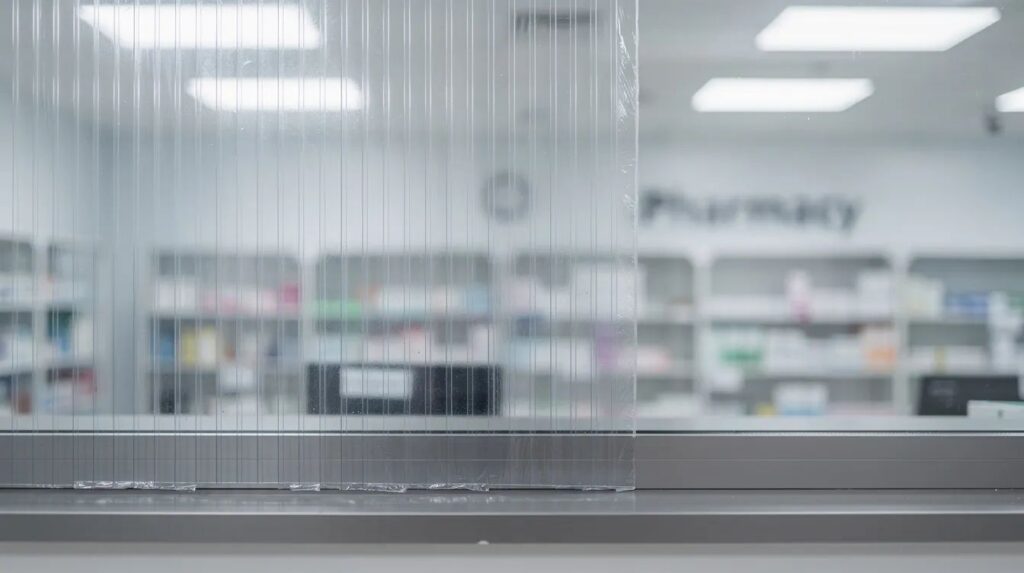
Frosted film mimics the look of sandblasted or acid-etched glass. It diffuses light passing through the pane, turning sharp details into soft, blurry shapes. Frosted films obscure visibility day and night, whether the lights are on or off, making them one of the most reliable options for around-the-clock privacy. That said, frosted films can obscure details, but not vague shapes-someone standing close to the glass may still see a silhouette, though they will not be able to identify faces or read documents.
This is the go-to film for bathroom windows, medical exam rooms, office doors, and interior glass partitions. High-quality frosted films can transmit roughly 56 to 72 percent of visible light on standard 3mm clear glass while blocking over 99 percent of UV radiation. That means rooms stay bright and comfortable without sacrificing privacy. If you have a ground-floor half-bath facing the sidewalk or a clinic treatment room with a glass sidelight, frosted film solves the problem immediately.

Decorative and Patterned Privacy Films
Decorative films take privacy a step further by adding visual interest. Styles include stripes, geometric textures, gradient fades, and stained glass looks that can transform plain glass into an architectural feature. Patterned privacy films can maintain light while providing good privacy, making them popular in spaces where aesthetics matter as much as function-think hotel lobbies, law firm conference rooms, restaurant partitions, and retail sidelights.
Decorative films can enhance the appearance of plain glass surfaces without the cost of custom-etched or leaded glass. Some films allow light while providing privacy, particularly lighter frost patterns and gradient designs that transition from opaque at eye level to clear at the top of the pane. For branding purposes, custom patterns can be digitally printed to include logos or design motifs, turning a glass wall into a marketing asset.
One-Way and Reflective Privacy Window Film
One-way reflective films work by creating a light imbalance between the two sides of the glass. Reflective coatings create a mirror effect on the brighter side of the glass, which means that during the day-when sunlight is stronger outside than interior lighting-people on the street see their own reflection while occupants inside maintain a clear view out. Reflective films provide daytime privacy by creating a mirror effect outside, which makes them popular on street-facing storefronts, office facades, and school classroom windows.
One-way films allow viewing outside during the day but offer poor nighttime privacy. Once interior lights come on and the exterior gets dark, the effect reverses: people outside can see in, and occupants inside see their own reflection. Some films provide a false sense of security at night if building owners assume the daytime privacy carries over after sunset. The fix is straightforward-pair reflective film with interior blinds or shades for evening hours.
High-performance reflective films reject 65 to 82 percent of total solar energy, making them a dual-purpose solution. Solar-control films can reflect and absorb solar energy to reduce heat, which translates directly into lower cooling costs. Some films reduce glare to enhance visibility of screens and displays, and more specifically, privacy film reduces glare from sunlight on screens and displays-a significant benefit for offices and classrooms where employees and students stare at monitors all day.
One-way vision films use tiny holes (micro-perforations) to create a solid image from one side while allowing see-through visibility from the other. These are commonly used on retail window graphics and transit vehicles.
Blackout, Whiteout, and Translucent Films
When full privacy is the only goal, blackout films offer maximum privacy and block all light transmission. A blackout film has essentially zero percent visible light transmission, making it ideal for storage rooms, server closets, vacant tenant spaces, theater rooms, or any back-of-house glazing where daylight is unnecessary. Some blackout formulations also reject up to 70 percent of solar energy.
Whiteout films provide the same level of visual privacy but with a matte white finish instead of total darkness. Translucent films sit somewhere in between-they let in softened, diffused light without allowing anyone to see through. These are well-suited for shower enclosures, private offices, and medical facilities where you want ambient brightness without a clear line of sight.
Specialty Privacy Films for Bathrooms and Showers
Bathrooms and wet environments present unique challenges. Moisture, steam, and daily cleaning can take a toll on window film if the wrong product is selected. For bathroom windows facing a street or neighbor, full-coverage frosted film is typically the best approach. For shower enclosures, frosted bands applied at eye level provide privacy where it matters while leaving the top and bottom of the glass clear for light.
Manufacturers offer moisture-resistant films with adhesive formulations designed for high-humidity areas. Proper edge sealing during installation prevents the film from lifting over time. Whether you are treating a single bathroom window in a home or outfitting dozens of patient bathrooms in a hospital renovation, the key is selecting a film rated for wet environments and having it installed correctly.
Smart and Switchable Privacy Films
A newer category worth mentioning: liquid crystal film uses electricity to switch between opaque and clear states. Smart films provide adjustable privacy on demand by switching states, making them ideal for conference rooms, executive offices, and medical exam rooms where privacy needs change throughout the day. These are more expensive than static films but offer flexibility that no other solution can match.
For added peace of mind, safety film holds shattered glass shards together when impacted, and it can be layered with privacy film on the same pane for combined performance. This approach is common in schools, government buildings, and ground-floor retail locations.
How Privacy Film on Glass Windows Is Installed and Maintained
Small residential jobs using static-cling film can be a straightforward DIY project-the process is super easy for a single bathroom window or a sidelight beside a front door. But for commercial-grade window films in offices, schools, healthcare facilities, and multi-site rollouts, trained technicians handle the installation to ensure durability, warranty coverage, and proper film-to-glass compatibility.
The Professional Installation Process
A professional installation begins with a site walk-through. The installer inspects every pane to determine glass type-annealed, tempered, or laminated-and checks for existing coatings such as Low-E or factory tint. This step matters because applying the wrong film to certain glass types can create thermal stress, which may lead to cracking. Installers also evaluate window orientation, shading patterns, and interior lighting conditions to recommend the right film.
Measurements are taken at the top, middle, and bottom of each pane (and left, center, and right) because not every window frame is perfectly square. The technician then selects the appropriate film based on performance specifications-visible light transmission, solar energy rejection, UV blocking, and reflectance-matched to the customer’s privacy and energy goals.
Before film goes on, the glass surface is thoroughly cleaned and scraped to remove any paint flecks, adhesive residue, tape, or mineral deposits. Even a speck of dust trapped under the film will create a visible imperfection, so this prep stage is critical.
The Wet-Application Method
Nearly all professional window film installations use a wet-application method. The installer sprays the glass with a slip solution-clean water with a small amount of soap-and then positions the film on the wet surface. The soapy solution allows the film to slide into precise alignment before it bonds. Use soapy water to apply privacy film easily, and the result is a smooth, bubble-free finish.
Once the film is in position, a squeegee helps remove bubbles during installation by pushing trapped air and water from the center of the pane outward toward the edges. Technicians work methodically, overlapping squeegee strokes to ensure full contact between the adhesive and the glass. Edges are trimmed with a sharp utility knife, leaving a small gap of about 1 to 2 millimeters around the frame to allow for thermal expansion. It is standard practice to cut the film slightly larger than the window for a clean edge, then trim it precisely in place.
Installation takes less than 30 minutes for most windows, though large commercial panes or complex glass partitions may require more time. A skilled two-person crew can typically film an entire office floor of interior glass in a single day.

Curing Time and What to Expect
After the film is applied, it enters a curing period during which the adhesive fully bonds to the glass. Depending on film thickness, climate, and humidity, this can range from a few days to several weeks. During curing, you may notice slight haziness or small water pockets trapped beneath the film-this is completely normal and clears as the adhesive dries. Avoid touching, cleaning, or pressing on the film during this period.
Maintenance and Cleaning
Once cured, privacy window film is low-maintenance. Wait the recommended period (typically 30 days for adhesive films) before the first cleaning. When you do clean, use a non-abrasive, ammonia-free glass cleaner and a soft cloth or rubber squeegee. Avoid razor blades, abrasive pads, and harsh chemicals-these can scratch or degrade the film surface. In wet environments like showers and bathroom windows, proper edge sealing during installation prevents moisture from working under the film over time.
Retrofit Scenarios and Layered Solutions
Privacy window film can be applied over existing clear glass, and in many cases it can be installed over certain older films. Installers regularly handle large single panes, full-height glass doors in retail locations, and interior glass partitions in open-plan offices. Privacy films are renter-friendly and easy to apply, and privacy film can be removed without leaving residue when leases end or design preferences change-making it a practical solution for tenants who cannot make permanent alterations.
In some projects, privacy film is installed alongside solar control window film or security glazing to deliver both daytime privacy and improved building envelope performance. For example, a school might combine reflective privacy film on exterior classroom windows with safety film on the inside to address heat gain, glare, and forced-entry resistance in a single installation.
Frequently Asked Questions About Privacy Film on Glass Windows
Does window privacy film work at night?
It depends entirely on the type of film. Frosted and etched-look films provide consistent privacy regardless of lighting conditions-they obscure the view from both sides around the clock. One-way reflective films, however, rely on having the brighter light source on the exterior side. At night, when interior lights are on and the outside is dark, the mirror effect flips and people outside can see inside. Some films provide a false sense of security at night if you assume daytime performance carries over. If nighttime privacy is a priority, choose a frosted, translucent, or decorative pattern rather than a reflective film-or pair reflective film with blinds.
Can I use privacy film on bathroom windows and shower glass?
Absolutely. Frosted privacy film is one of the most popular solutions for bathroom windows because it blocks the view while still letting in natural light. For shower enclosures, manufacturers offer moisture-resistant films with adhesive formulations designed for high-humidity environments. The key is selecting a film rated for wet areas and ensuring proper edge sealing during installation. Many homeowners have bought frosted bands that cover the glass at eye level, leaving the top portion clear for extra light. A qualified installer will know which products hold up best in steamy bathrooms over the long term.
Will privacy film damage my glass or void the warranty?
When installed correctly, privacy window film does not damage glass. However, applying the wrong film to certain glass types-particularly dark or reflective films on the interior surface of double-pane or Low-E glass-can increase thermal stress and, in rare cases, cause cracking. This is why a professional assessment matters: an experienced installer evaluates glass type, coatings, and sun exposure before recommending a film. Some glass manufacturers do require approval before aftermarket film is applied, so it is worth checking your window warranty in advance.
How long does privacy window film last?
Quality window films installed on interior glass surfaces typically last 10 to 20 years. Lifespan depends on several factors: UV and heat exposure, humidity levels, cleaning methods, quality of installation, and film grade. Static-cling films and budget products may need replacement sooner-sometimes within 3 to 5 years. Professional-grade adhesive films from established manufacturers generally carry warranties of 5 years or more for defects like cracking, peeling, or discoloration.
Can privacy window film also reduce heat and UV?
Yes. Privacy films can filter UV rays and reduce heat, often blocking up to 98 to 99 percent of ultraviolet radiation. This protects furnishings, flooring, and artwork from fading while also reducing solar heat gain through the glass. High-performance reflective privacy films can reject 65 to 82 percent of total solar energy, which directly lowers air conditioning costs. Even frosted decorative films typically block the vast majority of UV, so you get privacy and sun protection in one installation.
Is window film removable if my design or tenant changes?
Window film can typically be removed by professionals without damaging the glass underneath. This is an important consideration for leased commercial space, where tenants may want privacy film during their occupancy but landlords need clean glass for the next tenant. Privacy film can be removed without leaving residue when done properly, and fresh film can be applied to suit the new occupant’s needs. This reversibility is one of the biggest advantages of film over permanently etched or sandblasted glass.
Why Choose Our Team for Privacy Window Film Installation
We have been installing window films in offices, schools, healthcare facilities, government buildings, multi-family properties, and private homes since 1992. Over more than three decades, our team has developed deep expertise in matching the right film to the right glass in the right environment-whether that means frosted privacy film on bathroom windows in a boutique hotel, decorative film on glass doors in a corporate lobby, or reflective solar control film across an entire school campus.
Our product range covers privacy films, frosted and decorative films, 3M solar control film, security glazing upgrades, anti-graffiti film, and architectural surface finishes for doors, walls, and interior glass. We are not a one-product shop. When a facility manager needs privacy on conference room partitions, heat rejection on south-facing windows, and blast mitigation on ground-floor storefronts, we handle it all under one project with one point of contact.
We manage turnkey projects nationwide, including multi-site rollouts for retail chains and institutional clients. Our crews work after hours and on weekends to minimize disruption for businesses and tenants. Every project begins with a technical consultation: we evaluate glass type, film compatibility, energy performance goals, and code considerations to deliver tailored recommendations-not a one-size-fits-all product pulled off a shelf. We use manufacturer-backed films from trusted brands like 3M, and our installations carry factory warranties that give you confidence the work will hold up for years.
How to Get Started: Quotes, Site Visits, and Next Steps
If you are dealing with unwanted visibility into bathroom windows, street-level glass doors, open-plan offices, or any glass windows where privacy is a concern, the next step is straightforward. You can send us photos and approximate measurements of the glass you want treated, share floor plans for larger commercial projects, or schedule an on-site assessment for complex buildings with multiple glass types.
During a consultation, one of our specialists will review your privacy needs space by space-bathroom windows versus storefront glass versus interior partitions-and recommend specific window film types for each. We bring physical samples so you can hold them up to the glass and see exactly how the finished product will look from both inside and outside. For residential projects, most installations are completed within a day or two of an approved proposal. Larger commercial projects follow a detailed timeline, and we can coordinate night and weekend work to keep your business running without interruption.
Privacy film on glass windows is one of the most affordable, fast, and reversible upgrades you can make to a building. There is no demolition, no glass replacement, and no extended downtime. Email us your project details, call our team, or fill out the contact form on our website to get a free quote. Whether you are an architect specifying film for a new fit-out, a facility manager upgrading a portfolio of buildings, or a homeowner who just wants to hide from the neighbors, we are here to help you find the right solution.