
Table of Contents:
- Why Searching “Window Film Installation Near Me” Is the Wrong Starting Point for Commercial Projects
- The Commercial-Residential Divide: Why Installer Type Determines Project Outcome
- Building Your Vendor Vetting Framework: What “Qualified” Actually Looks Like
- How National Installers Execute Locally Without Sacrificing Oversight
- The Pre-Contract Conversation: Questions That Separate Qualified Vendors from Risky Ones
- Conclusion: Reframe Your Search, Protect Your Project, and Choose a Partner Built for Scale
- Frequently Asked Questions
Why Searching “Window Film Installation Near Me” Is the Wrong Starting Point for Commercial Projects
Window Film Installation Near Me is often the first phrase project managers search when sourcing a contractor. For commercial projects, however, location alone says very little about a vendor’s ability to manage specifications, warranties, and multi-site schedules. This guide explains how Window Film Depot helps construction teams evaluate installers based on the capabilities that actually determine project success.
The Logic Behind the Local Instinct, and Where It Breaks Down
Searching for window film installation near me makes sense for a homeowner tinting a sunroom. For a project manager coordinating a multi-floor office retrofit or a 12-location retail rollout, the same search logic imports a residential procurement model into a commercial context, and that mismatch has real consequences.
The instinct toward local vendors is defensible. Local means faster site visits, easier communication, and an assumption of accountability. When a vendor is in your city, the thinking goes, they have more to lose from a bad outcome. For routine, single-site, low-stakes work, that logic holds. For commercial window film installation, where glazing complexity, energy performance specs, scheduling coordination, and warranty accountability are all load-bearing requirements, proximity tells you almost nothing about whether a vendor can actually execute.

What “Near Me” Optimizes For, and What It Ignores
A location-based search returns vendors ranked primarily by geographic relevance and review volume, not by commercial project capability. The results page is optimized for the search engine’s definition of “helpful,” which defaults to businesses that are physically close and have accumulated enough ratings to appear credible. Neither filter maps to the criteria that determine whether a commercial installation goes smoothly.
Proximity vs. Capability: Two Very Different Credentials
A vendor five miles from your project site and a vendor operating at national scale face entirely different qualification thresholds. Commercial window film installation requires film specification knowledge, glazing system experience, multi-crew scheduling logistics, and a warranty chain that traces back to the manufacturer. None of those capabilities appear in a Google Business profile distance marker.
Proximity becomes meaningful only after capability is confirmed. Before that, it is a sorting mechanism that can actively mislead procurement decisions.
How Residential-Volume Installers Fill Commercial Search Results
Most window film contractors that surface in local search results built their business on residential work: auto tinting, home window film, small retail storefronts. They are legitimate businesses with real skills. They also dominate local search rankings because residential volume generates far more reviews, check-ins, and web activity than commercial project work.
The result is that a project manager searching for a commercial vendor is effectively browsing a list curated for homeowners. The overlap in terminology, “window film installer,” “commercial film,” “energy window film,” obscures a genuine capability gap. A company that handles residential and light commercial work regularly may have never managed a project with more than a few hundred square feet of glazing, a phased installation schedule, or a general contractor’s closeout documentation requirements.
The Real Cost of a Misqualified Vendor on a Commercial Timeline
A misqualified installer does not just deliver a poor result. They create downstream schedule and budget problems that compound quickly. Consider a retail chain opening ten new locations in a 90-day window. If a local installer misses the installation window at three sites because they lack the crew capacity to run concurrent deployments, those delays can push back certificate of occupancy requests, delay fixture installation, and cascade into lease commencement penalties.
Film specification errors are equally damaging. A commercial building with a specific solar heat gain requirement tied to an energy code compliance pathway can fail its commissioning review if the installed film’s TSER (Total Solar Energy Rejected) value does not match the specification. Correcting that error means removing and replacing film on occupied glazing, which carries both labor cost and operational disruption.
Neither of these failure modes shows up in a vendor’s Google reviews, because most residential-volume installers have never been exposed to a project with that level of specification accountability.
How Your Evaluation Criteria Should Actually Be Structured
The right starting point for evaluating a commercial window film installer is not location. It is a structured capability assessment built around the actual demands of the project. That means leading with questions about certification tier, project scale history, crew deployment capacity, and warranty documentation, not zip code proximity.
The sections that follow lay out exactly what that assessment looks like, starting with the commercial-residential capability divide that most proximity-based searches ignore entirely.
The Commercial-Residential Divide: Why Installer Type Determines Project Outcome
What Separates a Commercial-Grade Installer from a Residential Tinter
The distinction between a residential tinter and a commercial-grade installer is not just a matter of scale. It reflects fundamentally different technical training, equipment, crew structure, and project management infrastructure. A residential installer optimizes for speed and aesthetics on standard double-pane windows. A commercial installer is expected to read glazing specifications, work within construction schedules, and deliver documented proof of installation for warranty and compliance purposes.
Film Specifications: TSER, VLT, and Why Tolerances Matter at Scale
Commercial film selection is driven by performance metrics with real engineering consequences. TSER, or Total Solar Energy Rejected, determines how much solar heat load a film removes from a building’s thermal envelope. VLT, or Visible Light Transmittance, affects daylighting levels and interior comfort, and is often constrained by architectural design standards or tenant lease requirements.
On a large project, say 40,000 square feet of south-facing curtain wall, a film selection error of even a few percentage points in TSER can materially affect HVAC load calculations and energy code compliance. A commercial installer understands these tolerances and documents film specifications as part of the project record. A residential tinter typically selects film based on customer preference and visual results, without reference to energy performance data.
Commercial Glazing Complexity vs. Residential Glass Profiles
Residential glass is overwhelmingly standard annealed or tempered double-pane. Commercial glazing introduces a much wider range of profiles: structural glazing systems, spandrel panels, low-e coatings, laminated safety glass, high-performance insulated units, and curtain wall assemblies with internal silicone seals.
Each substrate type has different film compatibility requirements. Applying the wrong film to a low-e coated glass unit can void the glass manufacturer’s warranty, create thermal stress fractures, or cause adhesive failure within months. A qualified commercial installer assesses the glazing specification before film selection, not after.

The Certification Stack That Signals True Commercial Capability
What 3M Authorization Actually Means, and What It Does Not Automatically Guarantee
3M authorization indicates that an installer has completed 3M’s training program and is approved to purchase and install 3M window film products. That is a meaningful baseline. It signals product knowledge, access to the full 3M film catalog, and eligibility for manufacturer-backed warranties.
What it does not guarantee is commercial project experience. 3M’s authorized dealer network includes high-volume residential tinters, auto film shops with a commercial line, and true commercial specialists. The authorization level is the same across all of them; the project execution capability is not. The distinction that matters for commercial procurement is whether an installer holds a higher-tier designation, such as 3M Prestige Dealer or 3M Elite Dealer status, which typically reflects sustained commercial installation volume and performance accountability standards above the baseline authorization threshold.
Why Warranty Chain of Custody Depends on Installer Tier
Manufacturer warranties on commercial window film are not automatic. They require that an authorized installer at the appropriate tier documents the installation, submits required paperwork, and issues a warranty certificate linked to both the film product and the installation location. If the installer is not at the required authorization tier for the film product installed, the manufacturer warranty may be voided, even if the film itself is legitimate.
This matters for project managers because warranty chain of custody is a procurement deliverable, not a nice-to-have. On a commercial building, warranty documentation becomes part of the building’s maintenance record and can affect the owner’s ability to make future claims if the film fails.
LEED Compliance, Energy-Efficient Retrofits, and the Specs That Local Generalists Miss
Projects targeting LEED certification or participating in utility rebate programs for energy-efficient building retrofits add another layer of specification accountability that most local generalist installers are not equipped to handle. LEED credits in the energy and atmosphere category require documented performance modeling, and the installed film must match the specified TSER and solar heat gain coefficient (SHGC) values used in the energy analysis.
Utility rebate programs often require pre-approval of the film specification, post-installation inspection, and paperwork submission by a qualified contractor. A qualified commercial installer can navigate all three steps. A residential-volume vendor typically cannot.
What Certifications Should a Commercial Window Film Installer Have?
At minimum, a commercial window film installer should hold current manufacturer authorization from the primary film brands specified on the project, most commonly 3M. Beyond that baseline, look for the following:
- Manufacturer elite or prestige dealer status, indicating sustained commercial volume and performance reviews above standard authorization
- IWFA (International Window Film Association) membership or certification, which signals commitment to industry standards and ongoing technical education
- Documented experience with LEED documentation or energy code compliance submissions
- General liability and workers’ compensation coverage appropriate to the project size
- The ability to provide manufacturer warranty certificates as a project closeout deliverable
Certification is a signal, not a guarantee, but it separates vendors who have invested in commercial competency from those who have not.
Commercial Installer Evaluation Matrix
Use this rubric during the procurement stage to compare commercial window film installer candidates on the criteria that actually determine project outcomes.
| Evaluation Criterion | What to Look For | Red Flag |
|---|---|---|
| Certification Tier | Manufacturer elite or prestige dealer status (e.g., 3M Prestige or Elite) | Basic authorization only, no tiered designation |
| Project Scale Experience | Documented projects of comparable scope (square footage, glazing type, building class) | Portfolio limited to residential or small retail |
| Multi-Site Logistics Capability | Demonstrated ability to coordinate concurrent crews across multiple locations | Single-crew operation with no multi-site project history |
| Warranty Chain of Custody | Manufacturer warranty certificates issued as a closeout deliverable, linked to film product and installation record | Warranty described verbally or covers labor only |
| Scheduling Accountability | References from general contractors or construction managers confirming on-time delivery | No GC references; only end-user or homeowner reviews |
| Film Specification Fluency | Can discuss TSER, VLT, SHGC, and glazing compatibility without prompting | Describes film products primarily by appearance or brand name |
| LEED and Code Compliance | Experience with energy code documentation or utility rebate program submissions | No familiarity with performance documentation requirements |
How to Use This Matrix
Request a written response or conduct a structured interview using these criteria before shortlisting vendors. A qualified commercial installer should answer questions in each category with specificity: project names or types, documentation examples, and warranty process detail. Vague or general answers in the certification, warranty, or multi-site columns are functional disqualifiers for any project with real accountability requirements.
Weight the criteria based on your project’s specific demands. A single-site energy retrofit prioritizes film specification fluency and warranty chain of custody. A 15-location rollout makes multi-site logistics capability and scheduling accountability the top filters. Either way, proximity to your project site should appear nowhere on this rubric.
Building Your Vendor Vetting Framework: What “Qualified” Actually Looks Like
How to Verify an Installer’s Track Record with Construction Managers and Project Timelines
References from general contractors and construction managers carry more signal than any other source when evaluating a commercial window film installer. A homeowner’s five-star review confirms that an installation looked good on a Sunday afternoon. A GC’s reference confirms that the installer showed up during a coordinated access window, completed work without punch-list rework, and submitted closeout documentation on schedule. Those are different competencies entirely.
When requesting references, ask specifically for contacts from projects where the installer was one of several active trades, not standalone work scheduled at open availability. Ask the reference how the installer handled conflicts between the installation window and other critical path activities. Ask whether the warranty documentation arrived before or after project closeout. The answers reveal whether the installer has been tested under real commercial conditions or only in lower-stakes environments.
Film Type Fluency as a Baseline Qualification Signal
A qualified commercial installer does not just carry multiple film products. They can explain the performance trade-offs between them without prompting. If a vendor can only describe film by brand name or tint shade, they are not equipped to specify film against your project’s energy, safety, or design requirements. Film type fluency is a baseline, not a differentiator.
Solar Control Film for Energy Performance Mandates
Solar control and sun control films reduce solar heat gain through glazing, which directly affects HVAC load and energy consumption. On projects with energy performance mandates, whether driven by code, LEED targets, or utility rebate eligibility, the film’s TSER and SHGC values must align with the performance model used in the energy analysis. A qualified installer can match film specifications to those targets, not just recommend a product that “reduces heat.”
Safety, Security, and Blast-Resistant Window Film for Occupied Buildings
Safety and security films add a structural layer to glazing that holds glass fragments together on impact, reducing injury risk from break-ins, accidents, or blast events. For occupied commercial buildings, the specification often references ANSI/DASMA standards or GSA blast mitigation guidelines. An installer working in this category should be able to cite the relevant test standards and explain how film thickness, adhesive type, and attachment system selection affect performance at those thresholds.
Anti-Graffiti Coatings, Privacy Film, and UV Protection Applications
These product categories require different installation approaches and serve distinct project goals. Anti-graffiti coatings protect surface glazing in high-traffic areas and are designed to be removed and replaced after vandalism without glass replacement.
Privacy film controls sightlines in office, healthcare, or government environments and must be specified against applicable daylighting requirements.
UV protection film blocks the vast majority of ultraviolet radiation and is commonly specified to protect interior finishes, merchandise, or occupant health. A commercially fluent installer can speak to all three without conflating their performance characteristics.
How Installation Tolerances and Quality Assurance Standards Are Enforced on Large Projects
On a large commercial project, quality assurance is not a post-installation inspection. It is a process built into the execution workflow. Qualified installers maintain edge gap tolerances, control for air bubbles and contamination during application, and conduct panel-by-panel review before moving to the next section of glazing. The standard varies by film type and glazing system, but a qualified vendor should be able to describe their QA protocol in concrete terms: who inspects, at what intervals, and what the acceptance criteria are.
Ask whether the installer uses a documented punch-list process and whether QA records are retained as part of the project file. On projects where warranty registration is a closeout requirement, those records support the manufacturer’s documentation chain. An installer who describes QA as “we check our work before we leave” is not operating with commercial-grade accountability.
What Red Flags Look Like During Initial Vendor Conversations
Several patterns in early vendor conversations reliably predict execution problems downstream:
- Vague answers about crew size and deployment capacity (“we can handle it” without specifics on headcount or scheduling)
- Inability to name the film products they plan to use before a site visit
- Warranty described as a general assurance rather than a manufacturer-documented certificate
- No familiarity with the GC or construction manager’s typical closeout requirements
- Resistance to providing references from commercial projects comparable in scope
None of these signals alone is conclusive. Collectively, they indicate a vendor who has not regularly operated in environments where accountability is structural rather than optional.
What Guarantees Do Window Film Installers Offer on Large Projects?
Warranties on commercial window film work at two levels: manufacturer coverage on the film product itself, and installer workmanship coverage on the application. Manufacturer warranties on commercial-grade 3M window film products typically range from 10 years to lifetime coverage depending on film type and application, and require installation by an authorized dealer at the appropriate tier.
Workmanship warranties from qualified commercial installers typically cover adhesion failures, edge lifting, and bubbling for a defined period, often five to ten years. The critical question is whether these two warranties are issued as separate documented certificates. A single verbal assurance that “the work is guaranteed” does not constitute a warranty chain of custody that will survive a building ownership transfer or a future warranty claim. Request both certificates as a proposal deliverable before contract signature.
How National Installers Execute Locally Without Sacrificing Oversight
The Multi-Site Logistics Problem Most Local Vendors Cannot Solve
Running concurrent installations across multiple locations is a project management problem, not just a labor availability question. A single-crew local installer can technically travel between sites, but sequential deployment on a multi-site project means later sites absorb all schedule risk from earlier ones. Any delay at site one propagates to every subsequent location. A national installer with regional crew infrastructure eliminates that dependency by deploying independent teams to each location within the same scheduling window.
A 12-Location Retail Rollout: Where the Execution Gap Becomes Clear
A 12-location retail chain opening stores across four states in a 60-day window illustrates the problem precisely. Each location requires the same film specification, the same installation quality, and the same warranty documentation. A local installer in each market would require separate qualification, separate spec verification, and separate warranty coordination for each site. That is 12 vendor relationships, 12 potential specification inconsistencies, and 12 independent warranty certificates to track.
A national installer treats the 12-location rollout as a single project with a unified film spec, a master schedule with location-level milestones, and one warranty administrator. The project manager interfaces with one point of contact rather than 12.
Simultaneous Scheduling, Consistent Film Spec, and Cross-Site Quality Control
Consistent film specification across sites is not automatic even when the same national installer handles the project. It requires centralized procurement to ensure the same film is specified for all locations, and a field supervision structure that can enforce installation standards across sites. Qualified national installers build this through regional project supervisors, documented installation protocols, and post-installation photo documentation reviewed against acceptance criteria before site sign-off.
How a National Installer Manages Local Crews Across Multi-State Deployments
National installers typically maintain a combination of direct-employed crews in primary markets and vetted subcontractor networks in secondary markets.
The qualification criteria for subcontractor crews should mirror the installer’s own standards, covering the same training requirements, QA protocols, and documentation obligations.
Ask any national installer how they qualify field crews in markets where they do not have direct staff. The answer reveals whether their quality control infrastructure is real or assumed.

Timeline Predictability and Project Delivery Frameworks for Construction Managers
Construction managers need installation windows expressed in terms of sequenced activities and confirmed access dates, not general availability estimates. A qualified commercial installer builds project timelines that specify mobilization date, square footage per day per crew, access requirements, and a float buffer for glazing access conflicts with other trades. That structure lets the CM integrate window film installation into the master schedule as a defined activity rather than a coordination variable.
How Long Does Window Film Installation Take on a Commercial Building?
Installation speed depends on three variables: total glazing square footage, glazing accessibility (interior access, lift equipment requirements, work-hour restrictions), and crew size. A practical baseline for planning purposes is 500 to 1,000 square feet of film per crew per day under standard interior access conditions. A 20,000 square foot building with two crews working under normal access conditions would require approximately 10 to 20 working days.
Projects with restricted access windows, such as overnight-only installation in occupied buildings, extend that timeline significantly. A qualified installer scopes timeline estimates against your specific access constraints, not against a generic production rate.
Why Top-Tier 3M Installer Designation Matters for Vendor Reliability
The designation of a top-ranked 3M window film installation contractor in the United States is not a marketing claim. It reflects documented installation volume and performance accountability reviewed by 3M directly. It signals that the installer operates at a project scale that most local vendors never reach, and that 3M has sufficient visibility into their work to validate ongoing authorization at that level. For project managers who need a single vendor capable of handling national scope, that designation is a concrete proxy for the capability and reliability that proximity cannot provide.
The Pre-Contract Conversation: Questions That Separate Qualified Vendors from Risky Ones
How to Choose a Window Film Installer for a Multi-Location Commercial Project
Start with scope matching. The installer’s demonstrated project history should align with your project’s size, site count, and film specification complexity. An installer who has never managed more than three concurrent locations is a capacity risk on a ten-site rollout, regardless of their single-site quality. Confirm that capability with documented project references, not with the vendor’s self-description.
Then verify the administrative infrastructure: unified warranty documentation, a single project management contact, centralized film procurement, and a reporting format compatible with your project controls requirements. The vendor who can describe all of those systems in detail during the proposal conversation is the one who has actually used them.
Questions That Surface Scheduling Accountability and Downtime Minimization Practices
The following questions cut through general reassurances and reveal whether a vendor has a real scheduling system:
- “Walk me through how you build your installation schedule when you have multiple sites opening within the same 60-day window.”
- “What happens to the schedule at site three if you encounter an unexpected access delay at site one?”
- “How do you coordinate with the GC’s superintendent to protect your installation window from competing trades?”
- “What is your protocol for occupied-building installations where work hours are restricted?”
Need More Info?
The Window Film Depot team is happy to help.
A qualified installer answers these questions with process, not with reassurance. If the response is “we are flexible and figure it out as we go,” that is a scheduling risk, not a scheduling system.
Questions That Confirm Warranty Chain of Custody and Post-Installation Support
- “What warranty documentation will we receive at project closeout, and who issues it, you or the manufacturer?”
- “How is the warranty registration linked to the specific film product and installation location?”
- “If the film fails at one of ten locations two years from now, what is the claims process, and who is the point of contact?”
- “Does your workmanship warranty transfer if the building changes ownership?”
The warranty chain of custody question is often where unqualified vendors reveal themselves. A vendor who cannot describe the manufacturer’s registration process in specific terms has likely not completed it for previous projects.
How to Evaluate Budget Transparency for a Large-Scale Commercial Rollout
A credible proposal for a multi-site project itemizes costs by location and by cost category: film material, labor, equipment, and mobilization. Lump-sum proposals for multi-site projects make it impossible to evaluate where cost risk sits or to scope change orders accurately when project conditions change.
Ask for unit pricing by square footage at each location, and confirm that the pricing holds for the full project scope rather than being contingent on site-by-site conditions. An installer who cannot provide unit pricing transparency is either under-resourced for commercial procurement or building margin through opacity.
What the Difference Between 3M Certified Installers Actually Means at the Proposal Stage
At the proposal stage, the relevant distinction is not whether a vendor is 3M authorized. It is which tier of authorization they hold and what that tier requires. Prestige and Elite tier designations reflect higher installation volume thresholds, performance review standards, and access to 3M’s full commercial product catalog with full warranty support. A vendor at baseline authorization level may be limited in which film products they can install under a full manufacturer warranty.
Ask each vendor to confirm its current 3M authorization tier in writing and to identify which 3M film products in its proposal qualify for full manufacturer warranty at that authorization level. These responses distinguish vendors who understand the warranty implications of their certification tier from those who treat all 3M authorizations as equivalent.
How to Structure the Final Vendor Comparison Before Contract Signature
By the time you reach final vendor comparison, the evaluation should be quantitative, not impressionistic. Each vendor should have answered the same set of structured questions, provided references from comparable commercial projects, and submitted proposals with equivalent scope and cost transparency. Compare them against the criteria from the evaluation matrix: certification tier, project scale history, multi-site logistics capability, warranty chain of custody, and scheduling accountability.
If two vendors are genuinely close on all criteria, weight the factors most relevant to your specific project risk profile. A project with aggressive schedule constraints should weight scheduling accountability highest. A project with complex energy compliance requirements should weight film specification fluency and LEED documentation experience. Geography is not a tiebreaker. It is irrelevant once capability is confirmed.
Quick-Qualification Checklist: Pre-Contract Go/No-Go for Commercial Window Film Installers
Use this checklist before advancing any vendor to final proposal review. A “No” on any starred item is a functional disqualifier for projects with compliance, multi-site, or warranty requirements.
- Holds manufacturer authorization at prestige or elite tier for specified film products (required)
- Can provide GC or construction manager references from projects of comparable scope (required)
- Submits warranty documentation as a project closeout deliverable, not a verbal assurance (required)
- Provides itemized unit pricing by location and cost category
- Can describe crew deployment capacity for concurrent multi-site scheduling
- Demonstrates film type fluency across solar control, safety, and specialty applications
- Has a documented QA protocol with defined acceptance criteria
- Carries general liability and workers’ compensation coverage appropriate to project size
- Can confirm film specification in writing before mobilization
Conclusion: Reframe Your Search, Protect Your Project, and Choose a Partner Built for Scale
The Shift from “Who Is Closest” to “Who Is Most Qualified at Scale”
Every framework in this article points to the same conclusion. The search criteria that make sense for a homeowner are the wrong criteria for a project manager sourcing a commercial subcontractor. Proximity is not a proxy for certification tier, project scale history, crew deployment capacity, or warranty accountability. For a multi-site rollout or a technically specified building retrofit, optimizing for location produces a shortlist built for the wrong project type.
The shift in search criteria is practical, not abstract. Instead of window film installation near me, the productive search is for an installer whose documented project history matches your scope, whose manufacturer authorization tier covers the film products you are specifying, and whose project management infrastructure can absorb your timeline without treating it as an improvisation problem. That search produces a shorter list, but a list that actually contains qualified vendors.
This reframe does not make geography irrelevant. It makes geography the last filter, applied after capability is confirmed, rather than the first filter that shapes the entire list. A national installer with regional crew infrastructure solves the local presence question without sacrificing the project management accountability that a local generalist cannot provide.
Why Window Film Depot’s Scope, Certification, and Delivery Framework Resolve the Vendor Reliability Problem
Window Film Depot holds the top-ranked 3M window film installer designation in the United States. That reflects documented installation volume and ongoing performance accountability reviewed by 3M directly. It means the warranty chain of custody for 3M film products is intact at the highest authorization tier, which is the tier that matters when you need manufacturer warranty certificates as a project closeout deliverable.
That designation also reflects project scale that most regional and local vendors have never reached. The crew infrastructure, centralized film procurement, and project management systems that make multi-site coordination reliable are built through sustained commercial volume, not assembled on demand for each new project.
A vendor who has executed dozens of multi-location rollouts has already solved the scheduling conflict problems, glazing compatibility edge cases, and access coordination challenges that surface on those projects. That experience does not show up in a proximity ranking.
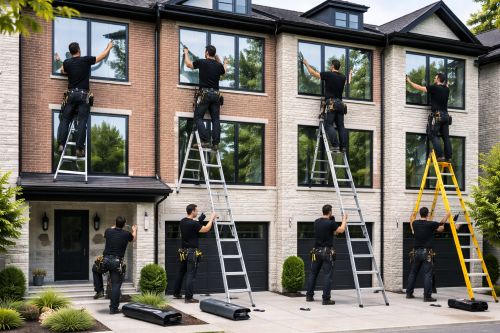
The practical implications for a project manager are direct:
- Single point of contact for projects spanning multiple states, with unified film specification and centralized warranty administration
- Crew deployment capacity for concurrent site installations, eliminating the schedule dependency that sequential local vendors create
- Film type fluency across solar control, safety and security, anti-graffiti, UV protection, and specialty applications, with the ability to document performance specifications for energy compliance or LEED submissions
- Warranty documentation issued as manufacturer certificates, not verbal assurances, as a standard project closeout deliverable
The vendor reliability problem that makes commercial window film procurement risky, mismatched capability, inconsistent specification across sites, warranty documentation gaps, schedule exposure from under-resourced crews, is a structural problem. It requires a structural solution: a vendor whose scale and certification tier were built to handle it, not one who will handle it for the first time on your project.
How to Initiate a Project Consultation Without Friction
A project consultation with Window Film Depot starts with scope, not with a sales conversation. The information that matters at the front end is the project type, approximate glazing square footage, site count, target schedule, and any known specification requirements, including energy code compliance, film performance targets, building type, or access constraints. That information is enough to confirm scope fit and move to a detailed assessment.
You do not need a completed specification to start the conversation. Many projects come in with a performance requirement, a specific TSER target, a security film standard, a UV protection specification, but without a final film selection. A qualified commercial installer uses that requirement as the starting point for film specification, not as a prerequisite for engagement.
To initiate a consultation, contact Window Film Depot directly with your project parameters. The conversation will cover scope confirmation, preliminary timeline assessment, and the certification and warranty documentation structure relevant to your project type. If the project involves multiple sites, the consultation includes a discussion of deployment sequencing and the single-point-of-contact project management structure that governs the rollout.
The goal of that first conversation is to give you enough concrete information, film specification options, timeline structure, warranty documentation format, and unit pricing framework, to evaluate Window Film Depot against the criteria in the evaluation matrix and pre-contract checklist covered earlier in this article. Qualified vendors support informed procurement decisions. That is the standard the consultation is designed to meet.
Frequently Asked Questions
How do I choose a window film installer for a multi-location commercial project?
Start with scope matching rather than location. The installer’s documented project history should reflect comparable scale, site count, and glazing complexity to your own project. From there, verify administrative infrastructure: confirm they offer a single point of contact, centralized film procurement, unified warranty documentation, and a reporting format compatible with your project controls. Any vendor who can walk through all of those systems in detail during an initial conversation has almost certainly used them before.
What certifications should a commercial window film installer have?
At minimum, look for current manufacturer authorization from the film brands specified on your project, most commonly 3M. More importantly, confirm the tier of that authorization. Prestige and Elite tier designations from 3M reflect higher commercial installation volume and more rigorous performance accountability than baseline authorization. IWFA membership is an additional indicator of commitment to industry standards. For energy or compliance-driven projects, documented experience with LEED submissions or utility rebate program paperwork is equally important.
What is the difference between 3M certified installers?
Not all 3M authorized dealers operate at the same level. Baseline authorization confirms that an installer has completed 3M’s training and can purchase 3M products, but it does not reflect commercial project volume or performance accountability beyond that threshold. Installers earn higher-tier designations, such as 3M Prestige Dealer or 3M Elite Dealer, by maintaining sustained commercial installation volume and passing ongoing performance reviews. These tiers determine which film products the installer can warranty at the manufacturer level and directly affect the warranty documentation you receive at project closeout.
How long does window film installation take on a commercial building?
A practical planning baseline is 500 to 1,000 square feet of film per crew per day under standard interior access conditions. A 20,000 square foot building with two crews working normal hours would require roughly 10 to 20 working days. Projects with restricted access, such as overnight-only installation in occupied buildings, extend that timeline. A qualified installer will scope the timeline against your specific access constraints and provide a schedule tied to confirmed mobilization dates rather than general availability estimates.
Can window film installation be coordinated across multiple sites simultaneously?
Yes, but only by installers who have built the crew infrastructure and project management systems to support it. Concurrent deployment across multiple locations requires synchronized scheduling with each site’s general contractor, centralized film procurement to ensure specification consistency, and a reporting structure that gives the project owner real-time visibility across all sites. This is not a capability a residential-volume installer can improvise at commercial scale. When evaluating national installers for multi-site work, ask directly how they qualify field crews in markets where they do not have direct staff. The answer reveals the actual depth of their quality control infrastructure.
What guarantees do window film installers offer on large projects?
Commercial window film warranties operate at two levels. The manufacturer warranty covers the film product itself and typically ranges from 10 years to lifetime coverage depending on film type, but it requires installation by an authorized dealer at the appropriate certification tier. The installer’s workmanship warranty covers application quality, including adhesion failures, edge lifting, and bubbling, and typically runs five to ten years with a qualified commercial contractor. The installer and manufacturer should issue both warranties as separate documented certificates at project closeout. A verbal assurance that “the work is guaranteed” does not create a warranty chain of custody that will survive a building ownership transfer or support a future manufacturer claim.