
Table of Contents:
- Why Operational Accountability Separates Reliable Installers from Risky Ones
- The Full Spectrum of 3M Window Film Products for Commercial Applications
- Custom Glass Security Systems vs. Standard Window Film: A Decision Framework for Construction Managers
- How Window Film Depot’s Installation Process Is Engineered to Protect Your Schedule
- Industry-Specific Applications: Commercial, Education, and Retail Project Contexts
- Warranties, Certifications, and Quality Assurance: The Documented Proof Behind Every Installation
- Conclusion: Choosing a Window Film Partner Who Performs at the Scale Your Projects Demand
- Frequently Asked Questions
Why Operational Accountability Separates Reliable Installers from Risky Ones
Window Film Depot has built its national reputation by delivering consistent commercial window film installation across large-scale projects with demanding schedules and compliance requirements. This guide explains how Window Film Depot combines certified 3M installation, centralized project management, and operational accountability. It shows construction managers how to avoid delays, reduce subcontractor risk, and maintain quality across multi-location rollouts.
The Hidden Cost of Subcontractor Underperformance on Multi-Site Rollouts
A single underperforming installer on a multi-site rollout does not cause a localized problem. It creates a cascade. One crew that misses a mobilization window pushes your general contractor’s punch list and delays tenant occupancy.
It also forces a return visit that was never in the budget. Multiply that across six locations, and you have a project that lands late and over cost. You also end up with a client who remembers the experience more than the outcome.

The exposure is structural, not incidental. Most window film vendors operate as distributors who route work to regional subcontractors. That model works for a single-building replacement job. For a coordinated national rollout with fixed milestone dates, it introduces a layer of variable accountability that you have no direct mechanism to manage. You are trusting that each regional sub has the crew capacity, the correct product inventory, and the quality controls your contract requires, without a single point of contact who owns all of it.
What “National Capacity” Actually Means and Why Most Vendors Don’t Have It
National coverage and national capacity are not the same thing. A vendor can list service territories in 40 states while still routing every job through independent local contractors who have never worked together, share no common quality standard, and operate under separate insurance policies. That is coverage. Capacity is something different. It is the ability to deploy trained, certified crews across multiple markets simultaneously, from a single organizational structure that owns the scheduling, the quality control, and the warranty.
Real national capacity requires direct employee infrastructure or tightly managed certified installer networks with uniform training standards, centralized project management, and supply chain relationships that guarantee product availability regardless of market. Few window film vendors have built that. Window Film Depot has, which is why it holds the position as the top-ranked national 3M installer in the country.
How to Vet a Window Film Installer Before Committing to a Large-Scale Contract
Before any contract award, a construction manager should require documentation, not just references.
Credentials That Matter: 3M Authorized Installer Status vs. General Film Distributors
A 3M Authorized Installer designation is not cosmetic. It means the installer has met 3M’s technical training requirements, maintains active certification, and is authorized to install 3M window tint products under 3M’s commercial warranty program. That last point is operationally critical. If the installer is not 3M authorized, the manufacturer’s warranty is void, regardless of what the installer’s own warranty says. On a commercial project where warranty transferability affects asset value and lease negotiations, that distinction matters.
General film distributors can sell 3M product. They cannot guarantee the warranty backing that comes with authorized installation. For procurement purposes, those are two different categories of vendor.
IWFA Certification vs. a Standard Trade License
The International Window Film Association (IWFA) offers a professional certification program that tests installer competency against standardized performance benchmarks. A standard trade license establishes that a contractor is legally permitted to work in a given state. It does not evaluate technical skill, product knowledge, or installation methodology.
When vetting a national film contractor, require both: state licensing for the jurisdictions where work will be performed and IWFA certification as the baseline indicator of technical competency. A vendor who holds neither should not advance to the bid shortlist for a commercial-scale engagement.
Why Window Film Depot’s Position as the #1 National 3M Installer Changes the Procurement Calculus
For a construction manager running due diligence, Window Film Depot’s standing as the leading national 3M installer compresses the qualification process considerably. The 3M Authorized Installer designation, IWFA certification, and the operational infrastructure to manage multi-site deployments are already verified through 3M’s own program standards. You are not assessing a local contractor’s claims about capacity. You are evaluating a national organization whose credentials have been validated by the manufacturer whose products carry the performance liability.
That changes the risk profile of the sourcing decision and the documentation burden that comes with it.
The Full Spectrum of 3M Window Film Products for Commercial Applications
Solar Control and Heat Rejection Film: Performance Specifications That Drive HVAC Outcomes
Solar control film selection on a commercial project is an energy modeling decision as much as a glazing decision. The film you specify directly affects your building’s thermal load, which determines HVAC runtime, utility costs, and occupant comfort. These are measurable outcomes that facility managers and building owners will track for the life of the installation.
Understanding Solar Heat Gain Coefficient in Building Envelope Decisions
Solar Heat Gain Coefficient (SHGC) quantifies how much solar energy passes through a glazing assembly into the building interior. A lower SHGC means less heat enters, reducing cooling load. For commercial buildings in sun-intensive climates, moving from an untreated clear glass SHGC of 0.86 to a high-performance film assembly in the 0.25 to 0.40 range can substantially reduce solar heat gain through treated glass. That is a measurable change in thermal load that mechanical engineers and energy modelers use in LEED and ASHRAE compliance calculations.
3M Prestige Series and Sun Control Film: What the Specs Mean for Facility Managers
3M Prestige Series films use multi-layer optical film technology to reject solar heat without the heavy tint or reflectivity that compromises daylighting or exterior aesthetics. The Prestige 70, for instance, transmits 70 percent of visible light while rejecting up to 97 percent of infrared radiation, a combination that is difficult to achieve with conventional dyed or metallized films. For corporate campuses or Class A office buildings where tenant experience and building identity depend on glass clarity, this performance profile resolves the trade-off between solar control and visual quality that standard films cannot.
Safety, Security, and Blast Mitigation Film for High-Stakes Environments
Safety film serves a different performance function than solar control film, and confusing the two categories in a specification document creates real liability exposure.
3M Safety Series: Rated Performance in Forced-Entry and Blast Resistance Scenarios
3M Safety Series films are tested against recognized threat standards including GSA/ASTM blast performance protocols and ANSI/DASMA forced-entry resistance benchmarks. Film thickness, adhesive system, and attachment method all affect the rating. A 4-mil safety film without an anchored attachment system will not perform the same way as an 8-mil film with perimeter wet-glazed edge attachment. That distinction matters for specifications written to meet security requirements in government, education, or high-value retail contexts.
When Safety Film Alone Is Insufficient: Identifying Projects That Require Escalated Protection
Applied safety film is an effective hazard-mitigation layer for the majority of commercial applications. However, for projects requiring protection against forced entry beyond standard deterrence thresholds, or blast resistance ratings above what applied film can achieve, the specification should consider laminated security glazing or a combined film-plus-anchoring system. The trigger for that escalation is typically driven by building classification, occupancy risk profile, or a specific threat assessment, not by budget alone. A qualified installer can identify that threshold during the pre-installation site assessment rather than after the film has been installed.
UV Protection, Privacy, Decorative, and Perforated Film Applications
Beyond thermal and security performance, 3M’s commercial film catalog covers applications that address occupant experience, branding, and interior protection. UV-blocking films reject up to 99 percent of UV radiation, extending the life of furnishings, flooring, and merchandise displays, which translates directly to reduced replacement costs over time.
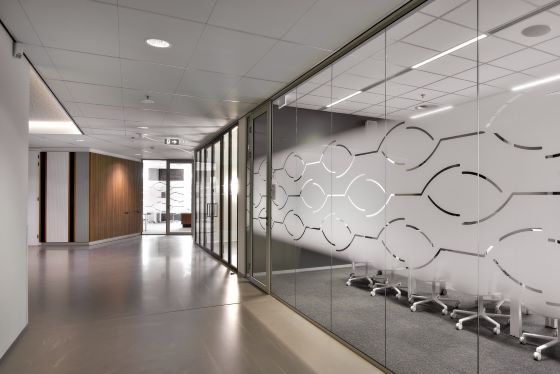
Privacy and decorative films serve conference rooms, interior partitions, and street-facing retail without requiring structural modifications. Perforated window film allows outward visibility while delivering graphic display capability on exterior glass, an option that retail and hospitality projects regularly use for brand expression without sacrificing the open feel of a glazed facade.
How Product Selection Aligns to Building Type, Occupancy, and Compliance Requirements
Film selection is not a catalog exercise. It is a specification decision driven by building use, occupancy classification, and the compliance documentation the project requires.
LEED Contribution and Building Code Adherence: What Procurement Managers Need to Document
Window film can contribute to LEED credits in multiple categories, most directly under Energy and Atmosphere through reduced energy consumption, and under Indoor Environmental Quality through improved thermal comfort and glare control. To document those contributions, procurement managers need manufacturer-provided performance data, including SHGC values, visible light transmittance, and U-factor, tied to the specific film product and installation method used. 3M provides certified performance data for its commercial film products, and Window Film Depot’s installation documentation supports the project record-keeping that LEED submissions require. For projects subject to local energy codes, the same performance data supports compliance verification without requiring the project team to source it independently.
Custom Glass Security Systems vs. Standard Window Film: A Decision Framework for Construction Managers
Defining the Distinction: Layered Security Glazing vs. Applied Film Solutions
Applied window film and custom glass security systems occupy different positions in the glazing security hierarchy, and confusing them in a specification creates either costly over-engineering or dangerous under-protection. Applied film is a post-glazing treatment, a polyester-based layer bonded to existing glass that modifies how the glass behaves under impact, blast pressure, or forced entry. Custom security glazing, including laminated glass, polycarbonate composites, and multi-ply assemblies, is a replacement glazing system where the protective capability is built into the glass unit itself. The performance ceiling is fundamentally different between them, and so is the installation scope, budget, and disruption to the building envelope.
When Standard Commercial Window Film Is the Operationally Correct Choice
For the majority of commercial projects, applied film including 3M Safety Series at 4-mil to 8-mil thickness delivers compliant, cost-effective protection without a full glazing replacement. If the project goal is occupant hazard mitigation from accidental breakage, deterrence against opportunistic forced entry, blast-pressure fragment containment, or UV and solar control layered with a safety function, applied film meets the specification and keeps the construction timeline intact. The existing glazing stays in place, installation is measured in hours per floor rather than days, and the building remains occupied throughout.
When Custom Glass Security Systems Are Required by Project Scope or Risk Profile
Escalation to custom security glazing is appropriate when the threat assessment exceeds what film can certifiably address. Specific triggers include:
- Forced-entry ratings above what a film-plus-anchoring system can achieve under the applicable ASTM or UL standard
- Blast resistance requirements mandated by GSA or DoD facility criteria for federal buildings
- Ballistic resistance specifications, which film cannot meet regardless of thickness
- Glazing replacement already in scope, where specifying laminated security glass adds marginal cost relative to installing film on new standard glass
The decision should be driven by the threat profile and compliance documentation the project requires, not by a preference for one product category. A qualified installer will identify the correct solution during the site assessment phase, before the specification is locked.
Vendor and Solution Selection Matrix
| Project Variable | Standard Solar/UV Film | Safety Film (4–8 mil) | Custom Security Glazing |
|---|---|---|---|
| Building Type | Office, retail, hospitality | Schools, government, retail | Federal, high-security, embassy |
| Threat Profile | UV, heat, glare | Forced entry, blast fragments | Ballistic, high-blast, forced entry above film thresholds |
| Budget Range | Lowest | Moderate | Highest |
| Compliance Requirements | LEED, energy codes | ANSI/ASTM forced-entry, GSA blast (lower tiers) | GSA/DoD blast, UL ballistic ratings |
| Installation Complexity | Low, existing glass retained | Low to moderate, attachment method affects rating | High, full glazing replacement |
| Occupant Disruption | Minimal | Minimal to moderate | Significant |
| Lead Time | Short | Short to moderate | Long, fabrication required |
How Window Film Depot’s Installation Process Is Engineered to Protect Your Schedule
Pre-Installation: Site Assessment, Scope Documentation, and Logistics Planning
Every commercial installation begins with a structured site assessment, not a quote visit. The assessment documents glazing dimensions, glass type and condition, site access constraints, occupancy schedules, and any building code or lease requirements that affect product selection or installation sequencing.
That documentation drives the scope of work, the crew size and composition, and the product order, so by the time mobilization begins, the variables that typically cause field delays have already been resolved on paper.
Logistics planning at this stage includes sequencing multi-floor or multi-building installations to minimize interference with tenant operations, coordinating product delivery to align with crew deployment windows, and identifying any permitting requirements before the schedule is set.

Project Execution: Crew Deployment, Quality Control, and Communication Protocols
Crews are deployed against a defined scope, not a general work order. Each installation phase includes documented quality control checkpoints covering adhesion verification, edge finishing inspection, and visual clarity review before the crew advances to the next zone. A single point of contact manages communication between the field team and the construction manager throughout, so schedule changes, access issues, or specification clarifications are resolved without routing through a subcontractor chain.
What to Require From Any Commercial Window Film Vendor Before Signing
Before signing a commercial installation contract, require a written service level agreement that specifies mobilization timeframes, daily production minimums by crew size, escalation procedures for schedule variances, and warranty activation timelines. A vendor who cannot produce that documentation is operating without accountability metrics, which means schedule risk sits entirely with you.
Operational Redundancy: Backup Crew Availability and Supply Chain Contingency
Ask any prospective vendor two direct questions: what happens if a crew cannot mobilize, and what is the lead time on product replenishment if a shipment is damaged or delayed? Window Film Depot’s national infrastructure supports backup crew deployment from adjacent markets and maintains product inventory relationships with 3M that support rapid replenishment. Those are not hypothetical capabilities. They are the operational requirements for managing multi-site rollouts where a single point of failure cannot be allowed to cascade.
Multi-Site Rollout Management: Coordinating Simultaneous Installations Across States
Managing simultaneous installations across multiple states requires centralized scheduling authority, not coordinated subcontractors. Each site needs its own mobilization timeline, crew assignment, and supply allocation, but those elements have to be managed from a single project record to catch conflicts before they become delays.
Illustrative Scenario: A Multi-Location Retail Rollout Delivered on Timeline
A national retail client with 22 locations across 11 states required solar control and safety film installation completed within a 90-day window tied to a lease renewal cycle. Window Film Depot assigned a dedicated project coordinator, sequenced installations by region to reduce crew travel time, and pre-staged product at regional distribution points to eliminate shipping lead time from the critical path. All 22 locations completed within the window, with zero return visits required for quality corrections.
Commercial Window Film Installation Timelines by Project Scale
| Project Scale | Approximate Timeline |
|---|---|
| Single building, under 10,000 sq ft of glass | 1–3 days |
| Single building, 10,000–50,000 sq ft of glass | 1–2 weeks |
| Multi-building campus or single large facility | 2–6 weeks |
| Multi-site national rollout (10+ locations) | 45–120 days depending on sequencing and access |
These ranges assume standard access conditions and occupied-building installation protocols. Projects with restricted access windows, phased occupancy, or safety film with anchoring systems will require adjusted timelines established during the site assessment.
How Window Film Depot Prevents the Delays and Budget Overruns That Define Poor Vendor Selection
The most common sources of commercial film installation delays are product availability gaps, crew no-shows, and rework from installation defects caught at final inspection. Window Film Depot structures its process to eliminate each of these problems. Project managers confirm and allocate product before mobilization, assign crews directly instead of dispatching them from a regional pool, and use quality checkpoints to prevent defect accumulation that leads to post-completion rework. Construction managers should treat this approach as a baseline operational standard rather than a marketing differentiator when evaluating vendors for commercial engagements.
Industry-Specific Applications: Commercial, Education, and Retail Project Contexts
Commercial Office and Corporate Campus Projects: Energy Performance and Tenant Experience
Corporate campus projects typically carry two parallel requirements: measurable energy performance and tenant satisfaction metrics. Solar control film addresses both, but the product selection has to reconcile them. A film that reduces SHGC aggressively enough to satisfy the energy model may create a tinted interior environment that tenants find dim or unappealing. 3M Prestige Series films resolve that tension through high visible light transmittance combined with significant infrared rejection, delivering the thermal load reduction that mechanical engineers need while maintaining the glass clarity that Class A office tenants expect.
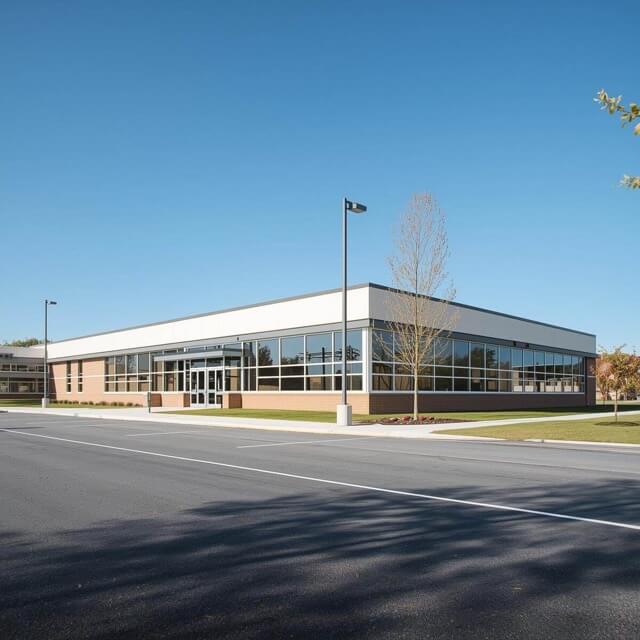
Education Facilities: Security Film, Forced-Entry Deterrence, and Code Considerations
School security specifications have tightened considerably in recent years, with many districts now requiring forced-entry deterrence on ground-floor and entry-point glazing as a condition of facility funding or insurance coverage.
Safety film with an anchored attachment system, whether perimeter wet-glazed or mechanically attached, meets most current deterrence specifications and allows installers to work without replacing existing glazing, helping projects stay within renovation budgets.
Project teams should also review local code requirements for education facilities to confirm whether the jurisdiction requires a specific film performance rating for emergency egress glazing, since some safety films affect the breakability of designated egress panels.
Retail and Hospitality: Balancing Solar Control, Aesthetics, and Occupant Comfort at Scale
Retail and hospitality projects add a brand dimension to film selection that office and institutional projects typically do not. Street-facing glass is part of the visual identity, and a film that reads as heavily tinted or reflective from the exterior can conflict with design intent. For these applications, neutral-tone solar control films with low exterior reflectivity preserve the visual character of the facade while delivering the heat rejection and glare control that improves the shopping or guest experience inside. Perforated window film adds a graphic layer to exterior glass for brand expression without compromising outward visibility from the interior.
Government and Institutional Projects: Blast Mitigation, Procurement Compliance, and Documentation
Government projects introduce procurement compliance requirements that most commercial projects do not, including GSA specifications, documented performance certifications, and in some cases prevailing wage and domestic sourcing requirements. Window Film Depot’s experience with federal and institutional projects includes familiarity with the documentation package these projects require: certified performance data, installer credentials, warranty documentation, and inspection records tied to specific film products and installation methods. That documentation readiness reduces the administrative burden on the construction manager’s team during project closeout and supports the compliance record the owner needs to maintain.
Warranties, Certifications, and Quality Assurance: The Documented Proof Behind Every Installation
What Window Film Depot’s 3M Authorized Installer Certification Covers and What It Guarantees
The 3M Authorized Installer designation does more than confirm technical training. It activates manufacturer-backed warranty coverage that independent installers cannot offer. When Window Film Depot installs 3M film under its authorized status, the warranty obligation runs from 3M directly, not just from the installer. That distinction matters on commercial projects where the owner expects warranty continuity beyond the installer’s business lifespan and where lease agreements or asset documentation require manufacturer-level coverage.
The certification also confirms that 3M has validated Window Film Depot’s installation methodology against its own quality standards for surface preparation, film handling, adhesion technique, and edge finishing. These manufacturer-audited performance requirements directly determine warranty eligibility rather than relying on internal self-assessments.
Understanding 3M Film Warranties in a Commercial Context: Coverage, Duration, and Transferability
3M commercial film warranties vary by product line, but most cover defects in materials and workmanship including adhesive failure, bubbling, delamination, and significant color shift. Coverage periods range from 10 years to the lifetime of the original installation depending on the product specified. Solar control films and safety films carry separate warranty terms, so a project that combines both product types requires warranty documentation for each.
Transferability is a factor that procurement managers on owner-occupied or investment properties frequently overlook. Many 3M commercial film warranties are transferable to subsequent building owners, which adds measurable value to the asset record and simplifies due diligence during a property transaction. Confirm transferability terms with the specific product before specification and require that the warranty documentation identifies the installation address, film product, and installation date, not just the contractor’s name.
The Quality Assurance Inspection Process: From First Panel to Final Sign-Off
Quality control on a commercial film installation is not a final walkthrough. By the time a defect is visible at project closeout, it has already cost time to correct. Window Film Depot’s inspection process runs continuously through installation. Inspectors verify adhesion after each application zone, check edge finishing before the crew moves to the next section, and correct any bubbling, contamination, or alignment deviation before it becomes a documented punch list item.
Need More Info?
The Window Film Depot team is happy to help.
At project completion, a formal sign-off inspection produces a documented record tied to the installation address, product specifications, and crew assignment. That record supports warranty registration, LEED documentation, and any post-occupancy compliance review the owner or facility manager requires. Construction managers who have dealt with vendors who deliver a verbal sign-off at project close will recognize the difference.
Industry Recognition as a Verification Signal: Third-Party Validation That Matters
Window Film Magazine is the trade publication of record for the architectural and commercial film industry. Recognition in its rankings, including its annual Top Dealer lists, reflects verified installation volume, not self-reported claims. Window Film Depot’s consistent recognition in those rankings, combined with its standing within 3M’s commercial installer program, provides two independent verification points that go beyond the installer’s own marketing materials.
For procurement managers conducting vendor due diligence, third-party industry recognition functions the same way a bonding capacity letter does. It confirms that an organization operates at the scale it represents and has maintained that performance over time. Require documentation of both when evaluating any national window film contractor.
Quick-Reference Credential Checklist: What to Require Before Project Award
Before awarding a contract to any national window film contractor, confirm the following in writing.
Certifications
- 3M Authorized Installer status, with current certification date
- IWFA professional certification for lead installers
- State contractor licensing for all project jurisdictions
Warranty Documentation
- Manufacturer warranty terms for each film product specified, including duration and coverage scope
- Confirmation that warranty is tied to authorized installation status
- Transferability provisions, if applicable to the building ownership structure
Service Level and Operational Requirements
- Written mobilization timeframe commitments by project location
- Daily production minimums and crew size documentation
- Escalation procedure for schedule variances
- Backup crew and supply chain contingency protocol in writing
Project Closeout Documentation
- Inspection record tied to address, product, and installation date
- Warranty registration confirmation from manufacturer
- Performance data documentation for LEED or energy code compliance, if applicable
Conclusion: Choosing a Window Film Partner Who Performs at the Scale Your Projects Demand
Technology Means Nothing Without Execution
3M makes exceptional film products. The manufacturer documents the performance data, validates the certifications, and offers a product range that covers virtually every commercial application a project requires. None of that matters if the installer misses a mobilization window, delivers inconsistent quality across sites, or cannot produce the warranty and compliance documentation a project closeout requires. Product quality is a prerequisite. Execution is the differentiator.
Every section of this article returns to that point from a different angle: crew deployment, site assessment rigor, service level documentation, multi-site coordination, product selection matched to compliance requirements. The through-line is accountability, specifically where it sits and who holds it when something goes wrong.
How Window Film Depot’s National Infrastructure Translates to Reduced Procurement Risk
Window Film Depot’s position as the top-ranked national 3M installer simplifies the due diligence process because the manufacturer has already verified much of the qualification work. Manufacturer authorization, industry certification, documented installation volume, and the operational infrastructure to manage simultaneous multi-site rollouts are not attributes to evaluate from a proposal. They are conditions of the program standing Window Film Depot already holds.
For a construction manager whose core risk is committing to a vendor who underdelivers, that pre-verified accountability structure changes the sourcing calculus. You are not absorbing the uncertainty of a regional subcontractor’s self-reported capacity. You are engaging a national organization that documents and audits its credentials, warranty backing, and project management process through a manufacturer relationship that holds it accountable.
Next Step: Requesting a Project Consultation Before Your Next Bid Cycle Closes
The most useful conversation to have with Window Film Depot is before the specification is locked, not after. A pre-bid consultation identifies the correct product selection for your project’s compliance and performance requirements, establishes realistic installation timelines that align with your construction schedule, and produces the documentation framework your team needs for procurement, warranty, and project closeout.
Contact Window Film Depot to schedule a project consultation. Bring your site list, your timeline, and your compliance requirements. The conversation will either confirm that your current specification is correct or identify adjustments that save rework later. Either outcome is worth the time.
Frequently Asked Questions
How do I choose a reliable window film installer for a multi-location commercial project?
Start with documentation, not just references. Require proof of 3M Authorized Installer status, IWFA certification, state licensing for every project jurisdiction, and a written service level agreement that specifies mobilization timelines and escalation procedures. A vendor who can provide all of that before contract award has the operational infrastructure to support a multi-site rollout. One who cannot is transferring schedule risk to you.
What certifications and credentials should a 3M window film installer have?
At minimum, require current 3M Authorized Installer status to activate 3M’s manufacturer-backed commercial warranty and IWFA professional certification to verify technical competency against standardized industry benchmarks. Also confirm state contractor licensing for every project jurisdiction. Together, these three credentials confirm that the installer has the training, manufacturer relationship, and legal standing required to perform commercial work at the level your project demands.
How does Window Film Depot manage large-scale national installation projects?
Window Film Depot assigns a dedicated project coordinator to each multi-site engagement, sequences installations by region to reduce crew travel time, and pre-stages product inventory to eliminate shipping delays from the critical path. A single project record manages all scheduling, quality control, and communication instead of a chain of independent subcontractors, allowing teams to catch conflicts before they turn into field delays.
What is the typical timeline for commercial window film installation across multiple sites?
A single building under 10,000 square feet of glass typically takes one to three days. Larger single-building projects in the 10,000 to 50,000 square foot range run one to two weeks. Multi-building campuses or large facilities generally require two to six weeks. A national rollout covering ten or more locations typically falls in the 45 to 120-day range depending on sequencing, site access conditions, and installation protocols. Final timelines are established during the site assessment phase, before the schedule is committed.
How do I avoid delays and cost overruns with window film installation contractors?
The most common sources of delay are product availability gaps, crew no-shows, and rework from defects caught at final inspection. Require vendors to provide a written service level agreement before contract award, confirm product allocation before mobilization begins, and document backup crew and supply chain contingency procedures. Quality checkpoints built into the installation process, rather than a single final walkthrough, prevent defect accumulation that forces costly post-completion corrections.
What guarantees or warranties does Window Film Depot offer on 3M film installation?
Because Window Film Depot installs as a 3M Authorized Installer, warranty coverage runs from 3M directly, not solely from the installer. 3M commercial film warranties cover defects in materials and workmanship including adhesive failure, bubbling, delamination, and color shift, with coverage periods that vary by product line. Many 3M commercial warranties are also transferable to subsequent building owners, which supports asset value and simplifies property transactions. Window Film Depot provides full warranty documentation tied to the installation address, product specified, and installation date at project closeout.