Table of Contents:
- Why Medical Offices Need Privacy Film Now
- HIPAA, Patient Confidentiality & Physical Safeguards
- Key Film Types for Medical Environments
- Zoned Privacy Planning for Medical Offices
- Frosted & Decorative Film for Exam Rooms and Interior Glass
- Solar Control Film for Patient Comfort & Energy Savings
- Security Window Film for Pharmacies and Sensitive Areas
- Privacy Film vs. Curtains and Blinds in Healthcare Facilities
- Installation in Active Healthcare Facilities: How the Process Works
- Cost Ranges & Budgeting for Medical Office Window Film
- Common Mistakes to Avoid in Healthcare Film Projects
- How to Choose the Right Window Film by Healthcare Zone
- FAQs About Privacy Film for Medical Offices
- Why Choose Window Film Depot for Healthcare Facilities
- Next Steps: Schedule a Medical Office Assessment
Why Medical Offices Need Privacy Film Now
Post-COVID medical facility design pushed healthcare toward more glass walls, sidelights, and open floor plans. The logic was sound: more natural light, fewer shared opaque surfaces that trap pathogens, and better visual oversight for staff. But all that transparency introduced a serious side effect. Patients sitting on exam tables are now visible from hallways. Monitors at check-in desks display protected health information where other patients and visitors can see it. South-facing waiting rooms bake in solar heat, driving up energy costs and making the patient experience uncomfortable.
Privacy film for medical offices solves these problems without ripping out glass or redesigning floor plans. It is a family of polyester-based films applied directly to existing glass surfaces-on doors, interior partitions, sidelights, and exterior windows-delivering varying degrees of visual privacy, UV protection, glare reduction, and even security reinforcement. Privacy film is a cost-effective tool in healthcare design because it retrofits what you already have instead of requiring full glazing replacement.
The applications span nearly every healthcare setting: primary care clinics, dental offices where glare control during procedures matters, imaging centers where patients change behind glass sidelights, behavioral health facilities, urgent care centers, and multi-tenant medical office buildings with public corridors. Window Film Depot works with both small independent practices and large healthcare systems nationwide, bringing experience from busy urban clinics to suburban medical campuses with multiple buildings.
In the sections ahead, you will learn about the key film types available for medical environments, how HIPAA physical safeguards relate to glass and sightlines, realistic cost ranges for 2026, the zoned planning process, and how to schedule a professional assessment for your healthcare facility.
HIPAA, Patient Confidentiality & Physical Safeguards
HIPAA requires physical safeguards for patient privacy under 45 CFR § 164.310. That regulation mandates covered entities to implement policies and procedures limiting physical access to protected health information. While the rule does not name privacy film specifically, it frames requirements in terms of what is “reasonable and appropriate.” Glass walls and sidelights that give corridor traffic a clear view into clinical or administrative areas are exactly the kind of vulnerability auditors flag.
Privacy window film alone does not make a medical office fully HIPAA compliant. Compliance demands a broader program-policies, staff training, workstation positioning, and procedural safeguards all play a role. But film is a documented, practical physical safeguard that directly reduces the risk of visual exposure of PHI. Privacy film can prevent unauthorized viewing of computer monitors and patient information at check-in desks and nurses’ stations. Healthcare window films can block views into areas where patient information could be seen, such as charting stations and billing windows.
Privacy officers and auditors increasingly identify specific risk points: floor-to-ceiling glass in exam corridors, sidelights beside exam room doors, and open reception windows where forms and ID numbers are casually visible to passersby. Two concrete fixes illustrate how film addresses these:
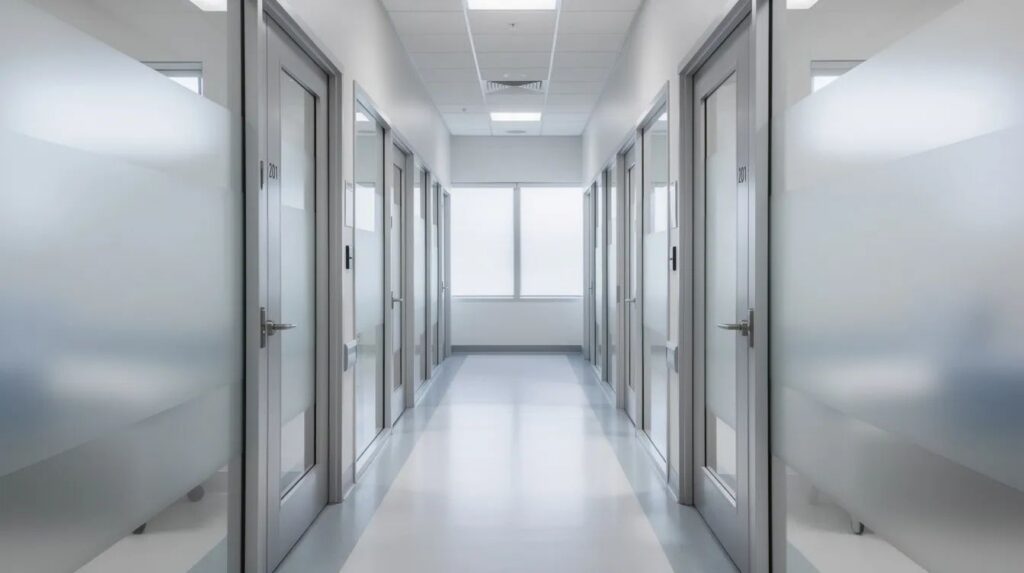
- Frosted film applied full-height on exam room sidelights eliminates corridor sightlines to the exam table while preserving daylight through the clear glass above.
- Patterned or gradient film on reception windows obscures monitor screens and intake forms at eye level while keeping the upper portion transparent, so staff maintains an open, welcoming feel.
Window Film Depot can provide drawings, film specifications, and product documentation that facility managers share with HIPAA compliance officers and legal counsel, creating a paper trail for internal audits and risk assessments.
Key Film Types for Medical Environments
There is no single product that handles every glass surface in a medical office. Different zones present different problems-full visual privacy here, glare control there, forced entry resistance somewhere else. Here are the main film types used across medical environments:
Frosted window film delivers full or near-full opacity while diffusing natural light. It is the go-to for exam room sidelights, interior partitions, and consultation room glass. Frosted film is a popular privacy solution for medical offices because it works immediately, requires no power, and creates consistent coverage 24/7.
Decorative and patterned privacy film provides partial opacity with visual interest. Patterns can incorporate practice branding, wayfinding cues, or nature-inspired designs for pediatric spaces. These films are ideal for reception areas and consultation rooms where you want to block casual views without making the space feel closed off.
Solar control and ceramic film target glare reduction, UV protection, and energy savings on perimeter glass. Ceramic films are non-metallic, so they do not interfere with wireless signals-an important detail in connected healthcare facilities. Solar control film reduces glare by up to 80 percent in many configurations.
Clear UV and spectrally selective films maintain near-transparent glass while filtering harmful uv rays and rejecting solar heat. These work well in patient rooms, labs, and anywhere color rendering or visual clarity is critical for diagnostics.
Security and safety film reinforces glass against impact and forced entry. Security window film makes glass up to 40 times more shatterproof, which matters for pharmacies, drug storage areas, and ground-floor exterior windows. Ceramic solar control film blocks over 99% of UV rays when specified for perimeter applications.
Switchable smart film provides on-demand privacy in treatment rooms-toggling from transparent to opaque electronically. It suits high-acuity or multi-use spaces like telehealth booths and procedure rooms where flexibility is essential. Choosing commercial-grade films over residential alternatives improves both durability and light transmission for healthcare use.
One-way mirror films are useful for daytime privacy but lose effectiveness at night when interior lighting is brighter than the exterior, so they are typically limited to specific daytime applications.
Window Film Depot installs professional-grade 3M window film products from premium manufacturers like 3M and can combine multiple film types within the same facility. Most high-quality films last 10 to 15 years or longer, tolerate hospital-grade disinfectants when cleaned according to manufacturer guidance, and work with virtually all existing glazing systems.
Zoned Privacy Planning for Medical Offices
Treating every piece of glass the same way wastes money and light. The smarter approach is zoned planning-segmenting your medical office into distinct areas based on privacy and security requirements, then specifying the right window film for each.
Zone 1: Public and semi-public areas. Lobbies, corridors, and waiting rooms typically face exterior sidewalks or parking lots. The main concerns here are solar heat, glare, and casual visibility from outside. Solar control or ceramic film handles heat and glare effectively, while optional decorative privacy bands on lower sections of exterior windows address street-level sightlines.
Zone 2: Intake and administrative areas. Reception desks, billing counters, and check-out windows are where PHI is most casually exposed-forms, screens, insurance cards. Patterned or gradient privacy film at patient eye level blocks unauthorized views without making staff feel boxed in. Privacy film can shield consultation rooms while preserving an open design, which matters for patient experience.
Zone 3: Clinical and exam rooms. This is where patient privacy demands are highest. Full-height frosted film on sidelights and interior partitions prevents anyone in corridors from seeing patients on exam tables or during procedures. Where staff need some visibility-say, to check if a room is occupied-a clear band at the very top of the glass can be left untreated.
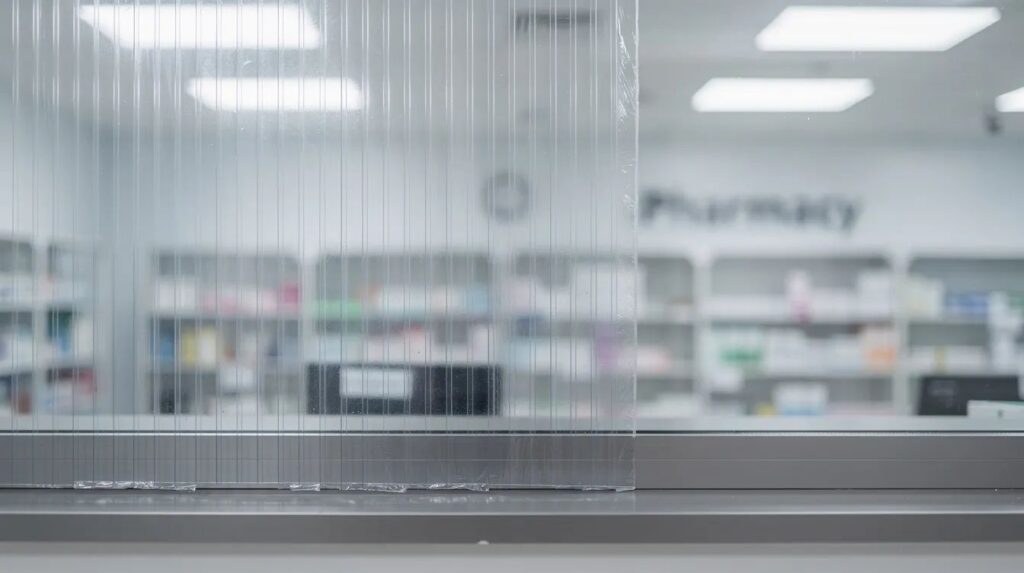
Zone 4: High-risk security zones. Pharmacies, controlled-substance storage, imaging review stations, and records rooms need security film on exterior windows and sometimes privacy layers as well. Clear or tinted security film on pharmacy glazing can be paired with frosted or decorative film where appropriate.
Window Film Depot conducts walk-throughs with facility managers using floor plans and real-time sightline checks-standing in corridors, waiting areas, and parking lots-to map exactly where film is needed and where clear glass should remain. In a typical 4,000 square foot medical office with roughly 1,000 square feet of glass, a zoned approach that concentrates heavy film only on Zones 2 through 4 and uses lighter solar control in Zone 1 can reduce total film costs by 30 to 40 percent compared to frosting everything.
Frosted & Decorative Film for Exam Rooms and Interior Glass
Exam rooms, consultation rooms, and interior glass partitions are where patients notice privacy film most directly. This is the glass that separates them from the hallway during vulnerable moments, and frosted films are highly recommended for patient exam rooms and glass partitions for good reason.
Frosted window film blocks visual access while allowing natural light to filter through, creating a soft, diffused glow rather than the stark darkness of a closed blind. It installs quickly, disinfects easily on its smooth surface, and works with standard cleaning protocols in healthcare facilities. Frosted window film is a superior alternative to traditional clear glass in medical environments because it delivers immediate, permanent privacy without structural changes.
Layout options matter. You can apply full-panel frosting for maximum privacy, use a gradient design that is dense at eye level and fades to clear at the top, or specify custom cut-heights based on your corridor geometry and exam table positioning. A practical detail often overlooked: the privacy band should account for both standing height in corridors and seated height on exam tables so coverage is effective from every angle.
Decorative and patterned films bring a different dimension. Subtle geometric patterns, nature-inspired textures, or films carrying practice branding and wayfinding icons reduce patient confusion and enhance the interior design of medical settings. For pediatric offices, playful patterns on interior partitions can make the space feel less clinical. One caution: avoid overly busy patterns near diagnostic reading stations or areas where staff review imaging, as visual noise can interfere with focused work.
Frosted films provide a visual barrier that makes patients feel secure during exams and consultations. High-quality privacy films allow natural light to filter through while blocking visibility, so rooms stay bright and welcoming rather than dim and isolating. Window Film Depot can work with architects and designers to match existing finishes and provide sample boards or mock-ups before committing to a full rollout in a healthcare facility.
Solar Control Film for Patient Comfort & Energy Savings
Solar control film addresses the practical reality that many medical offices have large windows that turn waiting rooms into greenhouses by mid-morning. In sun-exposed exam rooms, glare makes it difficult for doctors to read charts or examine skin, and patients squint through consent forms. Solar control tackles all of this while delivering measurable energy savings.
Modern ceramic and spectrally selective films reject solar heat gain while maintaining high visible light transmission. Solar control film rejects up to 80% of infrared heat, which directly reduces the cooling load on your HVAC system. Window film blocks solar heat gain in summer and heat loss in winter, meaning benefits extend beyond just the cooling season. For healthcare administrators managing tight budgets, healthcare facilities see 10 to 20% energy savings on cooling costs after film installation, depending on glass type, orientation, and climate.
UV protection is critical for patient safety in healthcare settings. Window film blocks up to 99% of UV radiation, protecting patients with photosensitive conditions, staff working near windows all day, and furnishings throughout the facility. Ceramic solar control film blocks over 99% of UV-A and UV-B radiation specifically, which is the performance tier most medical offices should target. UV exposure accelerates fading of furniture and flooring, so film also protects your interior investment. Many privacy films block up to 99% of UV rays, protecting patients and staff across different areas of the building.
Energy-efficient window films contribute to LEED certification points for facilities pursuing sustainability goals. Window film reduces HVAC workload, extending equipment lifespan-a benefit that compounds over the years and reduces unexpected maintenance costs. Window Film Depot can provide manufacturer performance data and basic energy modeling to help justify capital expenditures and support budget approvals with hospital leadership or property management.
Security Window Film for Pharmacies and Sensitive Areas
Healthcare facilities face real physical security threats every day. After-hours break-ins targeting controlled substances, smash-and-grab attempts at clinic pharmacies, and the risk of shattered glass in behavioral health or pediatric environments are not hypothetical concerns-they are documented realities that drive insurance claims and patient safety incidents.
Security window film is a clear or tinted layer applied to existing glass that reinforces it against impact, forced entry, and even blast events, and understanding the difference between basic shatter-resistant films and true security window films is critical when specifying products for healthcare facilities. When glass breaks, the film holds fragments together in the frame, creating a physical barrier that slows intruders and buys critical time. Security film delays unauthorized access, giving security personnel time to respond before a full breach occurs. That forced entry delay can be the difference between a successful theft and a failed attempt.
Key applications in a medical facility include:
- Pharmacy counters and exterior windows in medical office buildings
- Drug storage areas and sample closets with ground-floor or accessible glass
- Emergency rooms and ground-floor clinics on busy streets or in retail centers
- Behavioral health units where broken glass poses a direct patient safety risk
Security window film protects against blast events and severe weather, making it relevant for facilities in hurricane-prone or high-risk zones as well, and commercial-grade options like 3M™ Scotchshield™ Safety & Security Window Films, Ultra Series, are commonly used in these applications. Professional-grade security films meet GSA and ASTM testing standards, and premium products are tested against ANSI Z97.1, which received an updated version in 2026. Film thickness ranges from 4 mil to 12 mil and beyond, with anchoring systems available for higher-threat applications.
Privacy and security can be layered effectively. A clear security base film can be paired with frosted or decorative privacy film, either as a laminate or as coordinated products on different glass surfaces, and many facilities also evaluate window protection film solutions to reinforce glass windows and doors against more severe threats. This way, a pharmacy window gets both forced entry resistance and visual privacy in a single treatment. Window Film Depot has national experience deploying security window film in healthcare settings and can coordinate with corporate security teams, risk managers, and insurers to specify the right product for each application.
Privacy Film vs. Curtains and Blinds in Healthcare Facilities
Many medical offices still rely on fabric curtains, mini-blinds, or roller shades for visual privacy. These function, but they come with persistent drawbacks that privacy film eliminates.
Non-porous privacy film does not trap dust or bacteria, unlike traditional curtains, which require regular laundering and still harbor allergens between wash cycles. Smooth, non-porous films are easier to disinfect than curtains or blinds-a quick wipe with an approved solution is all it takes. Privacy film should withstand regular cleaning in healthcare settings, and commercial-grade products are designed for exactly that.
Operationally, film has no cords, slats, or moving parts to break. It is always in place, so staff does not need to remember to close blinds before every exam. There is no laundering schedule, no replacement slats to order, and no liability from dangling cords in patient areas. Privacy film contributes to a more welcoming environment by maintaining natural light, whereas drawn curtains and closed blinds darken rooms, reduce patient comfort, and increase dependence on overhead fluorescent lighting.
Consider the life-cycle comparison: fabric curtains in a typical healthcare facility need replacement every two to four years due to staining, wear, and infection control concerns. A one-time privacy film installation lasts a decade or more with minimal maintenance. Over a 10-year span, the cost difference is substantial-and the consistency of coverage is incomparably better with film.
That said, a hybrid approach sometimes makes sense. Privacy film provides baseline coverage for everyday use, while blackout shades can be added only in rooms where total darkness is clinically required, such as certain imaging or sleep study rooms.
Installation in Active Healthcare Facilities: How the Process Works
Installing privacy film in an occupied medical office requires careful coordination. Window Film Depot plans and executes these projects with minimal disruption to patient care, following a consistent process:
- Initial consultation and site walk-through. An in-person visit or virtual review of floor plans identifies every glass surface, maps sightlines, and documents glass types and conditions.
- Product selection and final specification by zone. Film types are matched to each area based on the zoned privacy plan, with samples reviewed on-site when needed.
- Phased scheduling. Installation is sequenced around clinical operations-after hours, weekends, or low-traffic days-so patient flow is not interrupted.
- Room-by-room installation. Most individual windows or sidelights take 30 to 60 minutes depending on size and complexity. Spaces remain operational: waiting rooms can be done in sections, and exam rooms are turned over quickly between appointments.
- Final inspection and punch list. Facility management reviews every treated surface with the installation team, and any touch-ups are completed on the spot.
Installers follow infection control and safety protocols appropriate to the healthcare setting: wearing ID badges and PPE as required, using low-odor installation solutions, containing all debris, and coordinating with nurse managers or charge nurses for access to clinical spaces. The installation process requires no structural changes-films retrofit directly onto existing glass-so permits are rarely needed for standard interior privacy applications, though specialty security projects may differ by jurisdiction.
Staff can continue charting, intake, and patient care while adjacent areas are being treated. The goal is that patients walking through a clinic during installation barely notice the work happening.
Cost Ranges & Budgeting for Medical Office Window Film
Cost is a top concern for practice managers and healthcare administrators evaluating film. Pricing varies by film type, glass condition, installation height, and regional labor rates. Here are realistic 2026 price ranges per square foot for professional, commercial-grade installation in the U.S.:
| Film Type | Approximate Installed Cost (per sq ft) |
|---|---|
| Standard frosted privacy film | $8–$14 |
| Premium decorative or custom patterns | $10–$18 |
| Ceramic / spectrally selective solar film | $12–$20 |
| Clear UV-only film | $7–$12 |
| Security film (with anchoring) | $15–$25+ |
For detailed security-specific pricing, many facility managers also reference window security film installation cost estimates when budgeting for higher-threat applications.
For a typical 3,000 to 4,000 square foot medical office with 800 to 1,200 square feet of treatable glass, a project mixing frosted privacy film on exam room sidelights and solar control on perimeter windows might land in the $12,000 to $25,000 range depending on film selection and site conditions.
Factors that move the number up or down include upper-floor access requiring lift equipment, unusual glass shapes or curves, removal of old degraded film, overnight or weekend installation premiums, and volume discounts for multi-location rollouts. A multi-site health system treating 20 clinics at once will see meaningfully different per-square-foot pricing than a solo practice doing a single suite.
Film is best understood as a capital improvement, not an expense. Benefits accrue over years through energy savings, lower maintenance costs compared to blinds and curtains, reduced PHI exposure risk, and improved patient comfort. Window Film Depot provides detailed, line-item proposals so decision-makers can compare options by zone and film type before committing.
Common Mistakes to Avoid in Healthcare Film Projects
Most problems with medical office film projects come from rushed decisions or DIY shortcuts, not from the technology itself. Here are the mistakes seen most often:
- Using residential or low-grade film. Products not rated for commercial or healthcare use may fail safety tests, degrade faster, and void warranty coverage. Always specify commercial-grade.
- Over-frosting entire spaces. Eliminating all daylight creates dim, uninviting rooms that increase dependence on artificial lighting and hurt the patient experience. Evaluate privacy needs by zone.
- Ignoring HIPAA sightlines at reception. Many offices frost exam room glass but leave reception monitors and intake forms fully visible to the waiting room. Map sightlines from every public vantage point.
- Forgetting about monitor glare. A reflective or dark-tinted film can create screen glare for staff using diagnostic monitors or EHR workstations. Select film with appropriate visible light transmission for each area.
- Skipping coordination with facilities, infection control, or IT teams. Film installation in a medical facility touches multiple stakeholders. Include compliance officers and IT early in planning.
- Hiring installers without healthcare experience or proper insurance. Medical environments require awareness of patient safety, OSHA compliance, and infection control protocols. Verify qualifications before signing a contract.
Window Film Depot conducts a pre-project review- on-site or via video-to flag these issues before they become expensive corrections after installation, drawing on a broad portfolio of window glass film products and brands to match each healthcare zone’s requirements.
How to Choose the Right Window Film by Healthcare Zone
Here is a practical, quick-reference guide to help you visualize the right window film specification for each area of your medical office:
Waiting rooms and lobbies. Solar control or ceramic film handles heat and glare on perimeter glass. If windows face a busy sidewalk or parking lot, add decorative privacy bands at the lower portion to block street-level views without compromising the open, welcoming atmosphere. Patient comfort improves immediately when you address glare and infrared heat in these high-traffic spaces.
Exam rooms and consultation rooms. Frosted or decorative privacy film on sidelights and interior partitions is non-negotiable for patient privacy. Consider where staff need visibility-a narrow clear strip at the top of a sidelight lets nurses confirm room occupancy without compromising privacy at patient level.
Treatment rooms, imaging suites, and labs. Clear UV or spectrally selective films protect equipment and patients without distorting light characteristics. Note that radiation-rated rooms may have special glazing considerations, so consult with your physicist or equipment vendor before specifying film in those spaces.
Reception, billing, and check-out. Patterned or gradient privacy film blocks casual viewing of PHI and payment screens while keeping the transaction window feel approachable. This is where privacy film blocks unauthorized views into sensitive areas most visibly-and where patients form their first impression of your practice’s professionalism.
Pharmacies and controlled-substance areas. Clear or tinted security film on exterior glass and transaction windows provides forced entry delay and physical security. Pair with privacy film where appropriate to keep inventory and operations out of public view.
A practical phasing approach: start with patient-facing zones (reception and waiting rooms), then move to exam rooms, and address back-of-house areas as budgets allow. Window Film Depot can tailor packages for a single suite medical office, an entire medical office building, or system-wide standards for multi-state healthcare networks, leveraging nationwide locations and installation coverage to support multi-site deployments. No single product covers every zone-the right window film comes from matching each area’s specific risk and function to the correct film type.
FAQs About Privacy Film for Medical Offices
These frequently asked questions come from facility managers, practice owners, and administrators in healthcare facilities across the U.S. who are evaluating privacy film for their medical offices.
What window film is best for medical office privacy?
The best privacy film depends on where it goes and what it needs to do. Frosted film is ideal for exam room sidelights and interior partitions where complete visual blocking is needed. Decorative or gradient film works well at reception and billing windows where you want partial privacy without a closed-off feel. For perimeter windows where heat and glare are concerns, ceramic or spectrally selective films deliver privacy benefits alongside energy performance. Most medical offices end up with a coordinated mix of film types across different zones, and Window Film Depot helps select a palette that looks consistent throughout the facility.
Does privacy film help with HIPAA compliance?
Privacy film cannot by itself guarantee HIPAA compliance, but it is a recognized physical safeguard that reduces the risk of visual exposure of protected health information at check-in desks, nurses’ stations, and clinical areas. Window film enhances patient confidentiality in medical facilities when used as part of a broader program that includes policies, training, and workstation orientation. Involve your HIPAA compliance officer or privacy consultant early, and know that Window Film Depot can provide product data sheets and layout drawings to support internal reviews.
How long does window film last in a medical facility?
Many interior privacy films last well over 10 years under normal conditions. High-quality solar or security films on properly prepared glass can perform for 10 to 15 years or more. Factors that affect longevity include sun exposure intensity, cleaning practices, and the type of glass. Professional installers typically include both manufacturer and workmanship warranties, giving you documented coverage for the investment.
Can privacy film be cleaned with hospital disinfectants?
Most professional-grade films installed in healthcare settings are designed to tolerate standard glass cleaners and many common disinfectants when used as directed. Use soft, non-abrasive cloths and avoid harsh scrubbing pads or razor blades. Window Film Depot provides care and cleaning guidelines tailored to the specific film installed so your environmental services team knows exactly what to use and what to avoid.
Will film make exam rooms or waiting areas too dark?
Modern films come in a wide range of light transmissions. Frosted films still pass substantial daylight-rooms stay bright with a soft, diffused quality rather than going dark. Spectrally selective solar films can appear almost clear while still cutting heat and UV significantly. The best approach is reviewing sample swatches applied to your actual glass so clinicians and administrators can see the real impact on light levels before committing to a full installation.
Can window film be installed without closing our medical office?
In most cases, yes. Installers work room by room, after hours, or on weekends, allowing clinics, urgent care centers, and specialty practices to keep seeing patients throughout the project. Window Film Depot regularly works in occupied medical environments and coordinates with front-desk staff or charge nurses to sequence rooms so appointments are not disrupted and operational efficiency stays intact.
Why Choose Window Film Depot for Healthcare Facilities
Window Film Depot is a national, family-owned company specializing in commercial and institutional window film since 1992, with decades of experience delivering large-scale healthcare and commercial projects. Over more than three decades, the company has built deep experience in medical offices and healthcare facilities-from single-doctor practices to hospital campuses and multi-state health system rollouts.
What sets Window Film Depot apart for healthcare projects:
- Medical environment expertise. The team understands the unique demands of healthcare-infection control coordination, sensitivity to patient experience, tight renovation schedules, and the need to keep clinical operations running during installation.
- Turnkey service. From initial product selection and specification through installation and project management, everything is handled under one company. No subcontractor confusion, no finger-pointing between suppliers and installers.
- Premium film access. Window Film Depot works with leading manufacturers including 3M, offering the full range of privacy, solar control, security, and decorative films needed for healthcare environments. This is not a one-size-fits-all operation.
- Nationwide reach. For health systems managing clinics across multiple states, Window Film Depot can deliver consistent film standards and installation quality across an entire portfolio, with centralized project coordination.
The company’s installers are fully insured, background-checked where required by facility policy, and experienced in working around patients, staff, and sensitive equipment. Multi-clinic rollouts for regional health networks and privacy upgrades for busy outpatient imaging centers are part of the regular workload. Long-term relationships with facility managers and architects mean that when needs change or new locations open, the phone call is short and the ramp-up is fast.
Privacy film helps reduce accidental disclosure of protected health information. That is not a small thing. Combined with glare control, energy efficiency, and physical security, the right film program protects patients, staff, and the bottom line simultaneously.
Next Steps: Schedule a Medical Office Assessment
You now have a clear picture of how privacy film for medical offices works-the key film types, how HIPAA physical safeguards connect to glass and sightlines, realistic cost ranges for 2026, and what the installation process looks like in an active healthcare facility.
The next step is getting expert eyes on your specific space. Window Film Depot offers no-obligation consultations and walk-throughs for practice managers, administrators, architects, and facility directors. Whether you manage a single medical office, an entire medical office building, or a multi-site healthcare portfolio, the assessment is collaborative: together, you will prioritize zones, choose the right film types, and phase the project to match your budget and operational constraints.
Contact Window Film Depot by phone or through the website contact form to discuss privacy, security, or energy-saving film options for your exam rooms, waiting rooms, pharmacies, and other sensitive areas. Bring your floor plans if you have them, or simply schedule a walk-through and let the team map everything on-site.
The result is a medical facility with stronger patient confidentiality, better patient comfort, lower energy costs, and a building envelope that performs the way modern healthcare demands. That is a cost-effective solution that pays dividends for years.