Table of Contents:
- What Is Opaque Window Film & How It Works
- Key Benefits of Opaque Window Film
- Best Places to Use Opaque & Frosted Window Films
- Types, Styles & Performance Levels of Opaque Window Films
- Installation: DIY vs Professional Window Film Depot Service
- Care, Maintenance & Longevity
- How to Choose the Right Opaque Film for Your Space
- Mistakes to Avoid When Choosing Opaque Film for Your Space
- FAQs About Opaque & Frosted Window Film
- Why Choose Window Film Depot for Opaque Window Film Projects
- Next Steps: Talk With a Window Film Expert
Whether you manage a 200,000-square-foot campus or a two-bedroom apartment with street-facing windows, the core problem is the same: you need privacy without walling off natural light or gutting your glass. Opaque window film solves that problem at a fraction of the cost of glass replacement, and the technology available in 2026 is sharper, more durable, and more versatile than ever. This guide walks you through how these films work, where to use them, how to choose the right one, and what mistakes to sidestep so your project delivers results you’re glad about for years.
What Is Opaque Window Film & How It Works
Opaque window film is an applied film that blocks visibility through glass while controlling how much light passes into a room. It sits on a spectrum: at one end, fully opaque blackout films allow almost zero view or light; at the other, frosted window film diffuses daylight into a soft glow while obscuring shapes and detail. This makes it fundamentally different from clear solar control film, which stays transparent and focuses on heat and glare reduction, and from lightly tinted films that darken a view without truly providing privacy.
The film itself is applied to glass and is made from polyester or vinyl, typically built on a polyethylene terephthalate (PET) base between 1.5 and 4 mils thick. Multiple layers work together: the PET substrate, a scratch-resistant top coat, and an adhesive or static cling backing that bonds the film to the surface. Frosted or matte films scatter incoming light to prevent clear vision, while printed or etched patterns are added through surface treatments or printed layers to create decorative effects. The level of privacy varies with different window film types-some deliver a gentle blur where you can sense movement but not detail, while others create complete privacy with zero see-through.
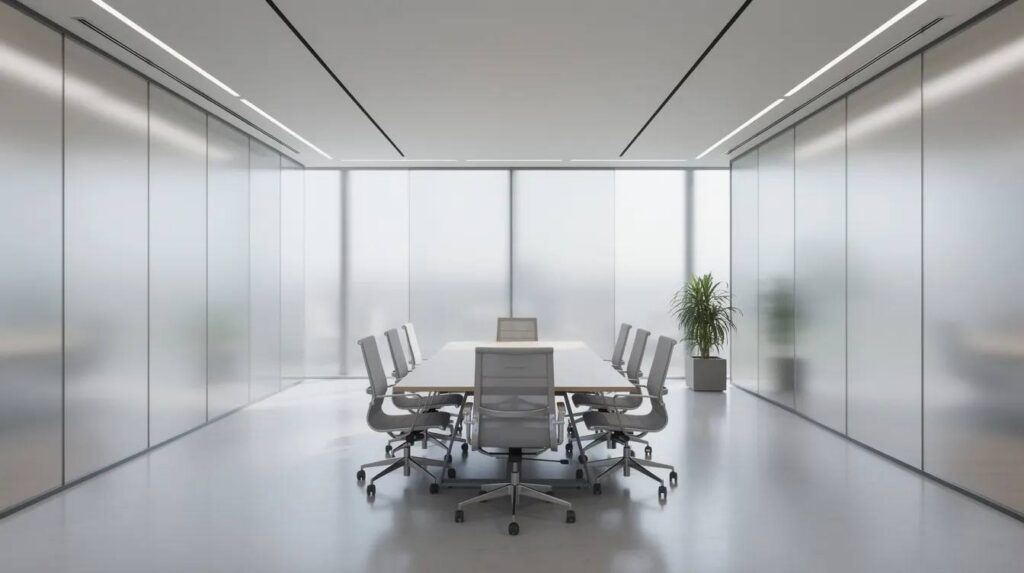
Window Film Depot has been specifying and installing privacy films for commercial, institutional, and residential clients across the U.S. since 1992. A typical 2026 project might look like this: a professional services firm converts full-height clear conference room glass into privacy glass using white opaque film. The result is filtered light that still brightens the room, but the person walking past in the corridor can no longer read the slides on screen. No demolition, no new glass-just film, applied in a morning.
Key Benefits of Opaque Window Film
Facility managers and homeowners turn to opaque window film for one overarching reason: it lets you create privacy without replacing glass. That retrofit is faster, cheaper, and far less disruptive than ordering custom frosted or obscured glazing. But privacy is only the starting point.
Visual privacy is the most obvious win. Opaque and frosted privacy films deliver high privacy for bathroom windows, ground-floor offices, clinics, school counseling rooms, and storefront back-of-house areas. Frosted window films provide 96% privacy protection, making them ideal where you need to block sightlines without sealing off a room. For spaces requiring absolute concealment-HR offices during sensitive meetings, medical exam rooms under HIPAA-blackout or heavy frost films give complete privacy day and night.
Light control and glare reduction come built in. Films that allow filtered light reduce harsh glare from direct sun, improving comfort for screen-based work and reducing eye strain. A well-chosen privacy window film reduces glare significantly while still keeping interior spaces bright enough to avoid turning on overhead lights during the day. Window films can improve comfort and reduce glare from sunlight across offices, classrooms, and living rooms alike.
UV and fade protection matter more than most people realize. Opaque window film blocks up to 99% of harmful ultraviolet rays, which are the primary driver of fading in flooring, artwork, and retail merchandise. Without protection, direct sunlight can visibly fade dark fabrics within six to twelve months. With quality film, that fading slows by 90–99%, helping protect furniture, carpets, and inventory.
Opaque window film also helps regulate indoor temperatures by reducing heat gain in summer. When combined with solar control window film or when a privacy film includes ceramic or reflective layers, you get cooler interiors and lower HVAC loads. In sunbelt states like Georgia, Texas, and Arizona, that translates to measurable energy savings. Opaque window film can enhance energy efficiency by lowering energy costs over time, especially when paired with specialized solar and security window glass film products.
Beyond performance, opaque window film can enhance aesthetics with various designs and patterns. Printed or custom window films can incorporate branding or decorative graphics-think logos on glass partitions, gradient bands in a hotel lobby, or wayfinding signage etched into corridor glass. You can choose from multiple types of decorative film for interior and exterior glass to align privacy and branding goals. Safety films hold shattered glass together after breakage, improving security for schools, government buildings, and retail.
For renters who cannot alter glazing permanently, static cling and removable adhesive films are renter-friendly options. They install without permanent changes, come off cleanly, and leave no residue, making them practical for leased offices and apartments.
Best Places to Use Opaque & Frosted Window Films
Placement matters more than the specific pattern. Window Film Depot advises clients on a glass-by-glass basis because the same film can perform brilliantly in one location and fall short in another.
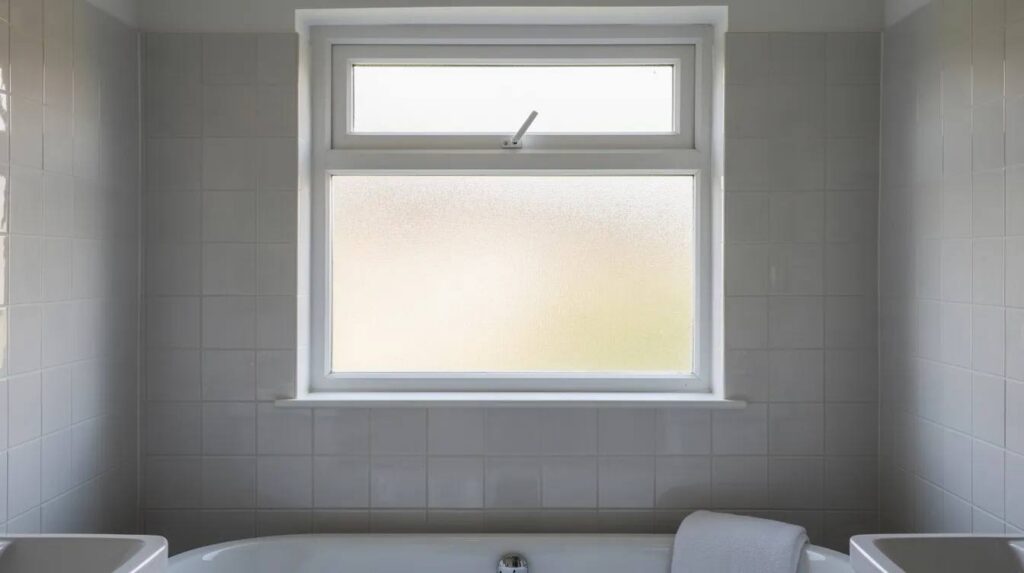
Residential. Opaque window film is commonly installed in residential bathrooms for privacy-picture a 3×5 ft window over a tub in a 2026 Atlanta townhouse. A frosted film with roughly 70% visible light transmission turns that window from a privacy liability into a bright, private space without sacrificing natural light. Sidelights next to entry doors are another frequent target: visitors at the door can no longer peer inside, but the homeowner still gets daylight in the foyer. Street-facing bedroom and nursery windows benefit from decorative films that add a personal touch while blocking the view from the sidewalk. Many window films are suitable for high-humidity areas like bathrooms, so moisture is not a barrier when the right product is specified.
Commercial and institutional. Commercial applications of opaque window film include conference rooms and offices with glass walls, medical exam rooms, HR suites, and campus labs housing sensitive equipment. A Northeast university, for example, applied frosted horizontal bands across glass door sidelights in counseling rooms, providing privacy at eye level while leaving clear vision strips near the top to meet safety and monitoring codes. Office partitions in coworking spaces regularly receive frosted or decorative films to give tenants a sense of private, enclosed rooms without building drywall.
Retail and hospitality. Storefront lower panels covered with white opaque film hide stock and back-of-house clutter while keeping the upper glass clear for passersby to see inside. Restaurants use frosted bands on booth-side windows to shield diners. Hotels apply opaque film in spa areas and on bathroom glass for guest privacy. Glass doors to staff-only zones get frosted or branded film to signal “private” without a clunky sign.
Specialty. Data centers, law firms, and government buildings rely on opaque film where line-of-sight control is critical. Interior glass railings or balustrades in high-traffic corridors sometimes get subtle frosted bands that increase perceived safety while enhancing the space. When a large window faces a busy sidewalk in a harsh sun climate, exterior-grade film may be preferable to interior application for durability and UV resistance.
Types, Styles & Performance Levels of Opaque Window Films
“Opaque” covers a wide spectrum. Understanding where each style sits on that spectrum helps you match the film to the job.
Frosted privacy films give glass a sandblasted or etched look. They are a cost-effective alternative to etched glass, delivering a similar appearance at a fraction of the price. Frosted films allow natural light while blocking visibility, and frosted window film provides 96% privacy protection-meaning shapes are barely discernible. VLT (visible light transmission) for lighter frosts ranges from 50–80%, so rooms stay bright. Frosted window film is a cost-effective alternative to etched glass and works well for day and night privacy in bathrooms, offices, and healthcare settings.
Blackout and whiteout films sit at the opposite end. Blackout films block almost all light transmission, with VLT under 5%. They’re used in AV rooms, darkrooms, storage areas, and any space where no visibility is acceptable. In a typical office, a 20% VLT film feels noticeably dim-fine for a media room but oppressive for daily work. A 70% VLT frosted film, by contrast, barely reduces perceived brightness.
Decorative films blend privacy with design. Patterns, gradients, reeded glass textures, and custom graphics let you transform a plain glass door or partition into a branded or architectural feature. These films combine partial opacity with aesthetics-some areas more opaque than others-so you can get creative with how you cover a space.
Reflective films are worth mentioning because they come up often in privacy discussions. Reflective films act as a mirror on the brighter side of the glass, giving strong daytime privacy. But at night, when interior lights are on and the outside is dark, that mirror effect reverses. For reliable night privacy, frosted or blackout films outperform reflective options; understanding the best window film choices for nighttime privacy helps avoid disappointing results.
Static cling vs adhesive-backed. Static cling films require no glue for installation. They’re removable, reusable, and renter-friendly-best on smaller panes and interior glass. Static cling films are easy to apply and remove without residue. Adhesive films provide a more durable bond than static films and are the better choice for large glass, exterior applications, and code-driven projects where long-term performance matters, especially when sourced from a full-service window film provider offering security, solar, and decorative solutions.
Specialty combinations deserve a quick mention. Dual-purpose security and privacy films add fragment retention, holding shattered glass together after impact. Solar and privacy combination films deliver glare control, heat rejection, and visual screening in one layer. A wide portfolio of 3M window film products and installation services can cover sun control, safety, decorative, and specialty performance needs. Before selecting any film, confirm compatibility with tempered, laminated, or low-E glass. Window Film Depot can review your glazing specifications and prevent costly mismatches.
Installation: DIY vs Professional Window Film Depot Service
Static cling and simple frosted films can be a super easy DIY project for small residential jobs. Larger, code-sensitive, or multi-location projects benefit from professional installation.
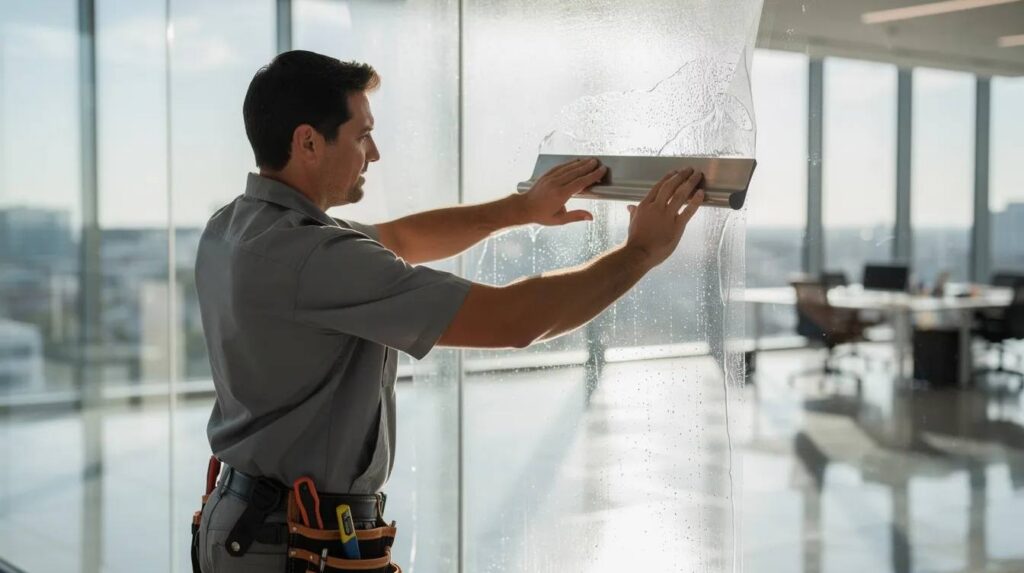
DIY on a small bathroom window follows a straightforward installation process. Start by taking precise measurements of the glass, then cut the film slightly oversize-about a quarter inch on each edge. Clean the glass thoroughly with a mild soap solution, removing every speck of dust and residue. The installation involves spraying soapy water on the glass to create a slip layer, then peeling the backing from the film and positioning it on the wet surface. Frosted window film can be repositioned during installation, so you have some room to adjust. Use a squeegee or plastic scraper from the center outward to push out moisture and air. Bubbles can be removed easily with a plastic scraper. Trimming window film can be done with a utility knife; run it along the edges for a clean finish. Statically clinging films are removable and DIY-friendly, making the whole install approachable for a single person. A single home window typically takes under one to two hours, especially when you specify day and night privacy window films designed for 24/7 coverage.
Professional installation is a different game. Window Film Depot’s crews start with a site assessment, inspecting glass type, existing coatings, frame condition, and surrounding environment. They control dust, align patterns precisely across multiple panels, and check for bubbles and edge light gaps that an untrained eye misses. For a typical mid-size office floor with glass fronts and conference rooms, installation takes one to three days depending on scope.
Where Window Film Depot really separates from a DIY approach is in scale. In 2026, the company manages multi-location roll-outs-think 50+ retail stores across multiple states within a narrow time window. That kind of coordination requires certified installers, project management, and manufacturer-backed quality controls. Larger panes, tall curtainwalls, specialty glass, and security or privacy combinations should not be DIY. The risk of damage, warranty issues, and ladder work makes professional service the smarter purchase.
Care, Maintenance & Longevity
Quality opaque and frosted window films can last 5 to 15 years when properly selected and installed. That lifespan depends on the environment, product quality, and how the film is maintained.
Cleaning. Wait the recommended cure period-usually 30 days-before the first cleaning. During this time, the adhesive fully bonds to the glass surface. After curing, use a soft cloth or squeegee with mild non-ammonia cleaner or plain soap and water. Avoid abrasive pads, blades, or harsh chemicals like acetone on the film surface.
Warranties. Major manufacturers typically offer 5- to 10-year warranties for interior films, covering peeling, bubbling, discoloration, and adhesive failure. Exterior films often carry shorter warranties due to weather exposure. Decorative and printed films may have separate warranty terms worth reviewing before you purchase, especially when working with an experienced 3M window film installation company for commercial projects.
What shortens lifespan? Direct sun exposure on south- and west-facing glass, high humidity in bathrooms, frequent aggressive cleaning, and thermal stress on large insulated glass units all take a toll. Low-quality films yellow faster and lose adhesive integrity sooner.
When to replace. Watch for visible scratches or gouges that compromise opacity, edges curling or peeling, sections losing their frosted appearance, or outdated branding that no longer reflects your brand. Commercial clients often update decorative films every few years as part of refreshes.
Window Film Depot offers removal and replacement services, including after-hours work to minimize disruption for hospitals, schools, and retail stores. With nationwide window film installation services across all 50 states, support is available wherever your facilities are located. Removal of permanent adhesive films may require heat or solvent-based removers; Window Film Depot handles this without damaging glass or mullion finishes.
How to Choose the Right Opaque Film for Your Space
This is where most projects succeed or stumble. Choosing the right opaque film requires balancing privacy, light, aesthetics, and budget in directions that fit your specific space.
Privacy level. Decide whether you need full blackout or soft frosted glass. A street-facing window needs stronger opacity than a glass partition inside an office suite. Consider night privacy too-if interior lights will be on after dark, lighter frosted films may not block enough visibility.
Light needs. Rooms that depend on daylight-bathroom windows, open-plan offices-call for films with higher VLT (50–80%). AV rooms, storage, and darkrooms can handle blackout. The nature of the work happening inside the room should drive this choice.
Aesthetic goals. Options range from clean satin frosted glass to reeded textures, gradient patterns, and custom etched logos. Opaque window film can enhance aesthetics with various designs and patterns, so don’t settle for generic when your space deserves something that matches its appearance and design intent.
Budget and project size. For a DIY kit covering one or two bathroom windows, the total price is modest. For large commercial projects, cost per square foot typically runs $6 to $10 for standard opaque or frost films, with advanced spectrally selective or solar/privacy combinations costing more. Larger installs yield lower per-unit cost, including labor, so the price per square foot drops as square footage rises.
Building codes and regulations. Fire and life-safety markings on glass must remain visible. ADA codes require vision strips at certain heights on corridor doors. Healthcare facilities face HIPAA-driven sightline control requirements. Installing window film can void some window manufacturer warranties, so always confirm compatibility before committing, ideally with commercial window film installation specialists familiar with local code requirements.
Involve experts early. Bringing Window Film Depot into the design or renovation phase-before final glazing decisions-lets you align privacy film choices with energy, security, and aesthetic upgrades in one coherent strategy.
Mistakes to Avoid When Choosing Opaque Film for Your Space
Most film complaints stem from poor product choice or installation prep, not from the technology itself. Here are the pitfalls that keep coming up.
Choosing the wrong opacity. Selecting full blackout for a room that needs daylight creates a gloomy, uncomfortable space. Choosing a light frost that doesn’t create privacy at night when interior lights are on defeats the purpose. Match the opacity to both daytime and nighttime conditions.
Ignoring glass type. Applying high-heat-absorbing films to tempered, insulated, or low-E glass without checking specifications can cause thermal stress cracks or void the glass manufacturer’s warranty. This is one of the most expensive mistakes to fix.
Skipping surface prep. Dust, paint specks, silicone residue, and window cleaner residue trapped under the film cause bubbles and adhesion failures. Proper cleaning before application is non-negotiable.
Buying low-cost, unbranded films. These films often suffer from color shift, short lifespans, adhesive staining, and difficult removal that damages the glass surface. The savings evaporate when you have to strip and redo the job within a year.
Overlooking regulations. Covering required life-safety markings, exit signage, or observation panels mandated by fire or childcare codes creates liability. Schools and healthcare facilities are especially vulnerable to this oversight.
Window Film Depot serves as a safeguard against all of these. Expert site evaluation, manufacturer-backed products, and documentation for architects and code officials ensure your project passes review the first time.
FAQs About Opaque & Frosted Window Film
Does opaque window film work at night when the lights are on inside?
It depends on the film type. True opaque and blackout films maintain privacy at night regardless of interior lighting. Lighter frosted films still perform well; frosted window films provide 96% privacy protection, but very sheer frosts or reflective films can lose effectiveness when interior light is brighter than the outside. For reliable night privacy, choose a denser frost or full blackout.
Will frosted window film still let natural light into my bathroom or office?
Yes. Frosted films allow natural light while blocking visibility, diffusing it into a soft, even glow. A film with 50–80% VLT keeps a room bright enough to feel open and airy. You lose the sharp view but gain comfortable, filtered light without sacrificing natural light.
Is window film really renter-friendly?
Absolutely. Static cling films are easy to apply and remove without residue. They use no adhesive-just a silicone or electrostatic surface that grips the glass. When you move out, peel the film off, roll it up, and reuse it at your next home. Removable adhesive films work similarly, though they may leave minimal residue if left on for years.
Can opaque window film be used on textured or frosted glass that’s already in place?
Films need a smooth, non-porous surface for proper adhesion and optical clarity. Deeply textured or pre-etched glass creates adhesion problems and an uneven appearance. If you already have frosted glass, your best options are replacing the glass, using films designed for textured surfaces with special adhesives, or applying overlays with mechanical mounting.
How much does professional installation cost per square foot in 2026?
Typical costs for adhesive privacy and opaque films installed on interior glass run about $6 to $10 per square foot, depending on film type, project complexity, and region. Advanced films with solar control, ceramic layers, or security features cost more. Static cling or simple frosts for DIY are cheaper upfront but lack durability and warranty coverage. Contact Window Film Depot for a tailored quote based on your measurements and scope.
Can I combine privacy films with security or solar control window films?
Yes. Integrated multi-performance films deliver both privacy and solar control or privacy plus fragment retention in a single layer. Layering separate films on top of each other is generally not advised-it risks peeling, optical distortion, and voided warranties. Professional specification ensures compatibility with your glass and local codes.
How long does it take from quote to completed installation for a typical office floor?
For a mid-size office floor, quoting and site assessment take a few days. Procurement of custom or patterned film may add one to two weeks. Scheduling and prep add further lead time. Actual installation typically takes one to three days. For multi-location roll-outs, Window Film Depot plans months ahead to coordinate crews and stock across sites.
Why Choose Window Film Depot for Opaque Window Film Projects
Window Film Depot has been a national leader in window film and privacy solutions since 1992, family-owned and headquartered in Marietta, Georgia. That date marks over three decades of continuous operation-installing, specifying, and supporting architectural film projects across North America, as outlined in their company history and nationwide service overview.
What sets Window Film Depot apart:
- Deep experience with 3M and other high-performance architectural film lines, giving clients access to the broadest range of frosted, opaque, decorative, solar, and security products on the page.
- Turnkey project management for multi-site retail, banking, education, and government clients. Whether you need 5 windows filmed or 500 locations completed in a tight window, Window Film Depot has the ability to deliver.
- In-house, factory-trained and certified installation crews-not ad-hoc subcontractors-ensuring consistent quality on every pass.
Real project types Window Film Depot handles regularly include converting glass-fronted offices in Fortune 500 headquarters to frosted privacy glass, adding privacy films to classroom doors and sidelights in K–12 districts as part of security upgrades, and providing wholesale rolls and technical support to glass and glazing trade partners.
The consultative approach matters. On-site surveys, mockups and sample panels, coordination with architects and facility managers, and documentation for building owners and code officials are all standard. Window Film Depot integrates privacy window film with solar, security, anti-graffiti, and decorative graphics in a single, coherent glazing strategy-so you hear one recommendation that covers every performance goal, not a patchwork of disconnected products.
Next Steps: Talk With a Window Film Expert
Opaque window film remains one of the most practical, cost-effective ways to transform glass in 2026-whether you need complete privacy in a hospital corridor, enhancing filtered light in a home bathroom, or branded frosted panels across a corporate campus.
Here is what to do next:
- Request a site visit or virtual consultation with Window Film Depot to review your bathroom windows, office fronts, or campus facilities.
- Send floor plans, photos, or glazing schedules for a tailored recommendation and budget range.
- Ask about a pilot installation on a single floor or location before rolling out to your entire portfolio.
Contact Window Film Depot by phone or through the online form. You will get a quick response, clear pricing, and an install plan designed to cause minimal disruption to your building operations. Your glass is already there-let Window Film Depot make it work harder for you.